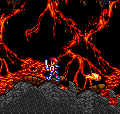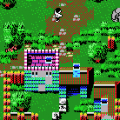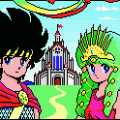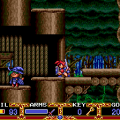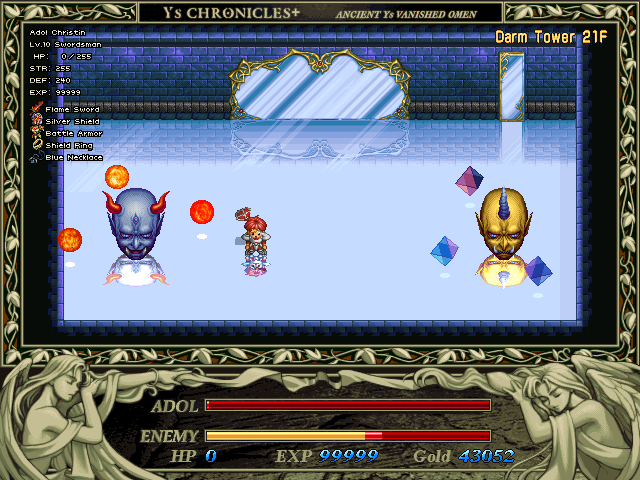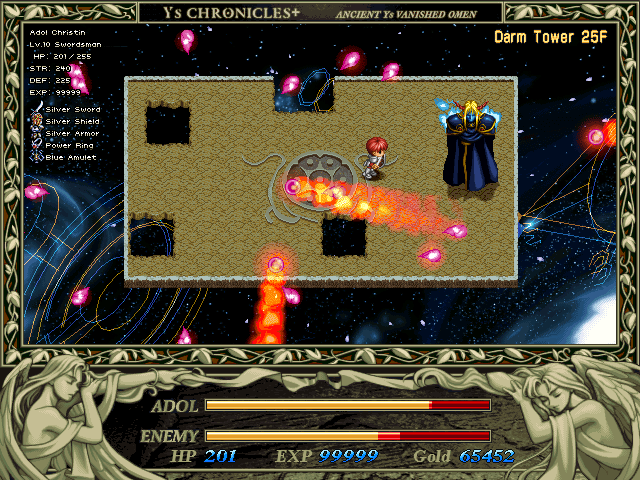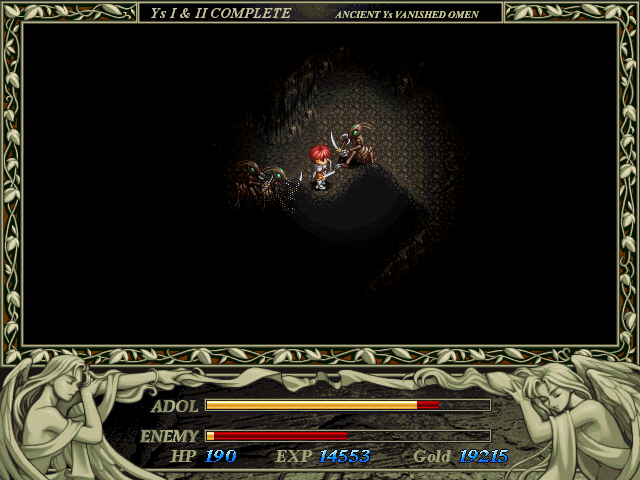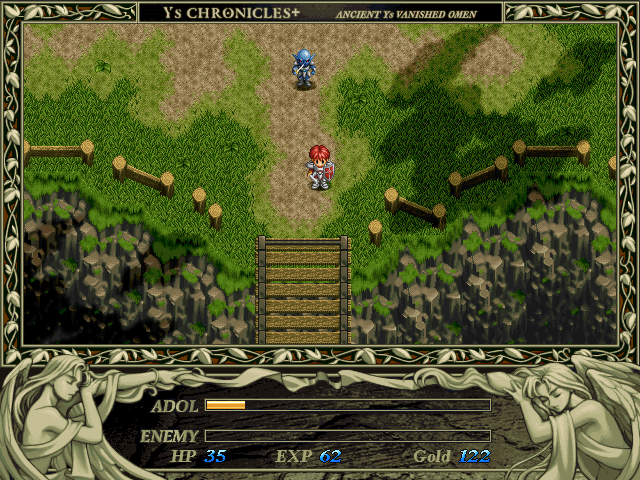
- Ys Book I & II
- Ys III: Wanderers from Ys
- Ys IV: Dawn of Ys / Mask of the Sun
- Ys V: Ushinawareta Suna no Miyako Kefin
- Ys VI: The Ark of Napishtim
- Ys: The Oath in Felghana
- Ys Origin
- Ys Seven
- Ys: Memories of Celceta
- Ys VIII: Lacrimosa of Dana
- Lacrimosa of Dana (Novel)
- Ys IX: Monstrum Nox
- Ys X: Nordics
- Ys Strategy
- Ys: The Call of Solum
- Ys Online: Ark of Napishtim
- Ys vs. Trails in the Sky: Alternative Saga
- Advanced Dogiemon
- Ys (Anime)

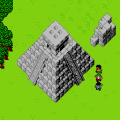
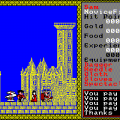
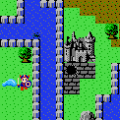
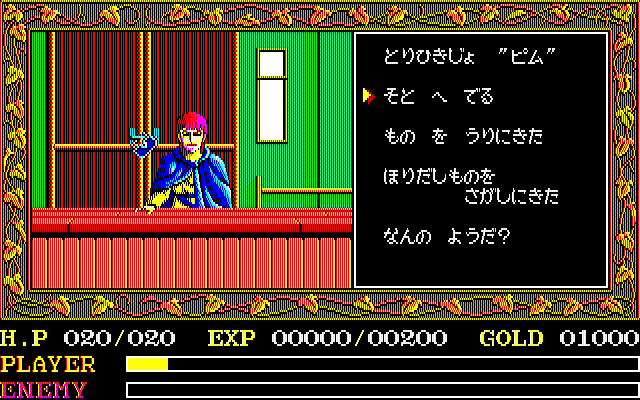
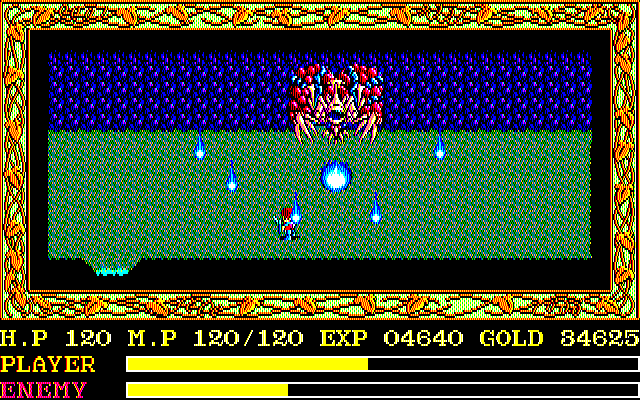
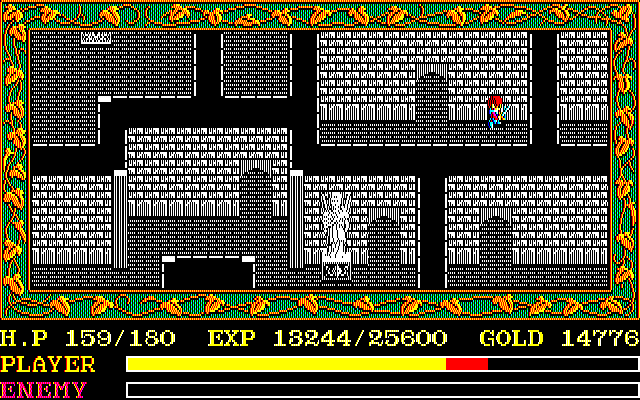
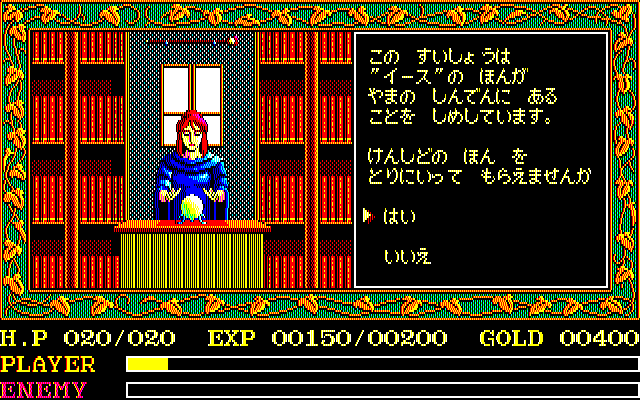
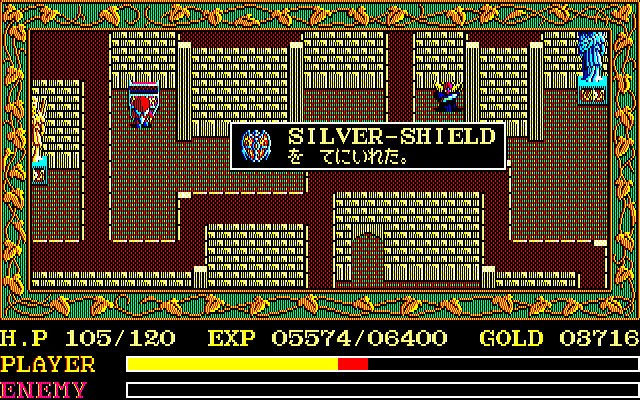
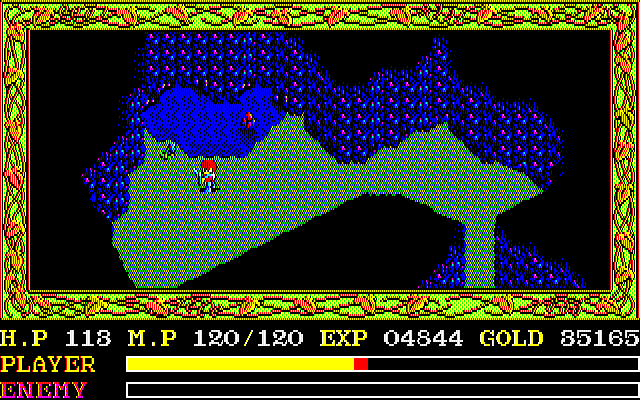
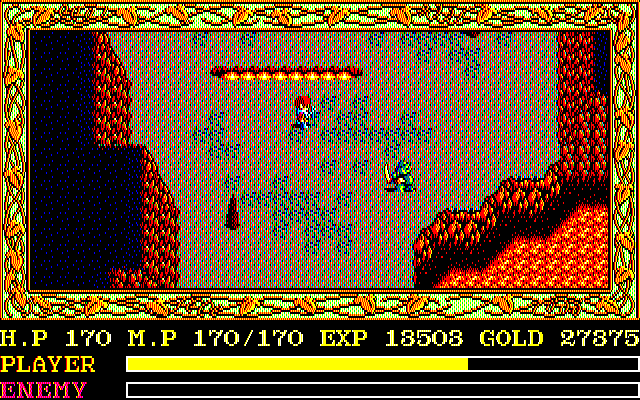
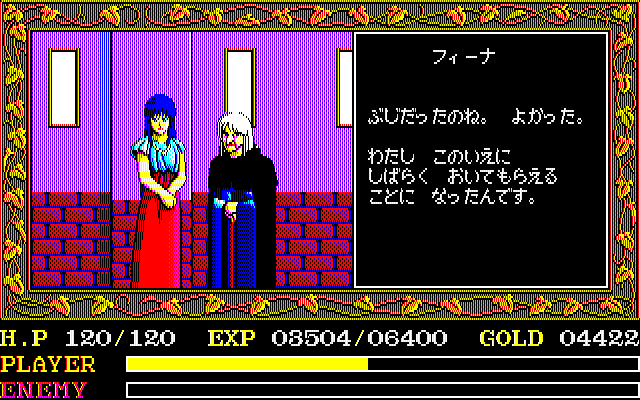
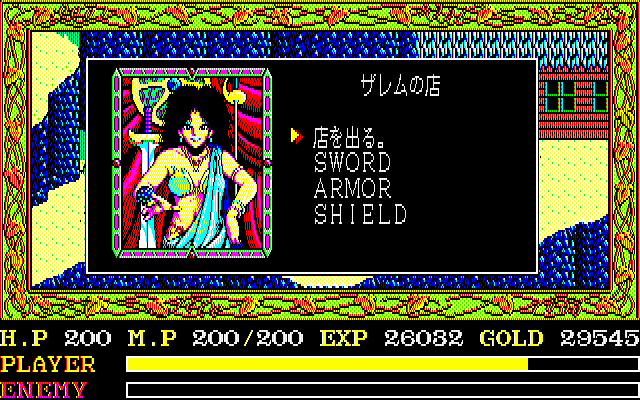
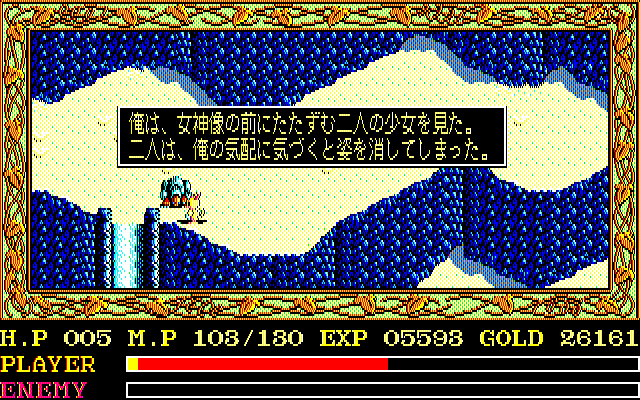
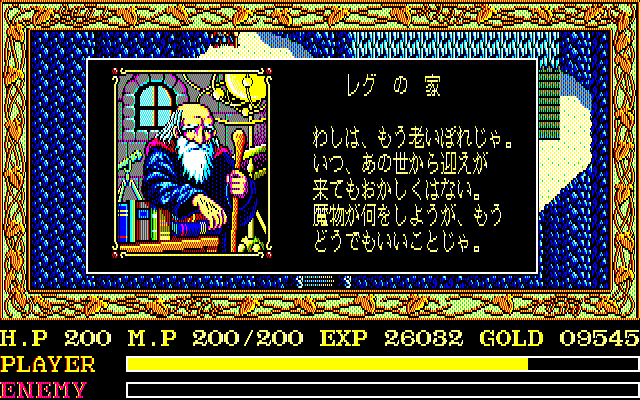
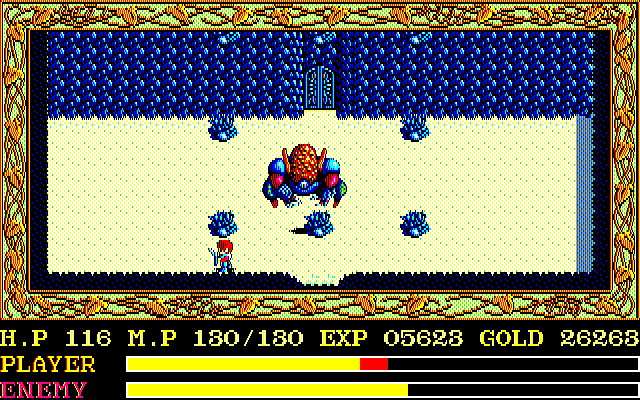
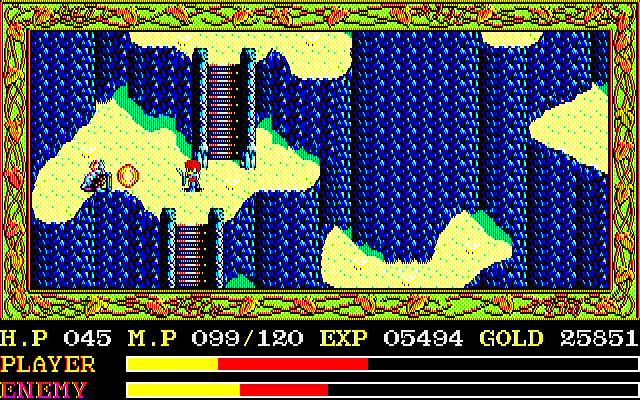
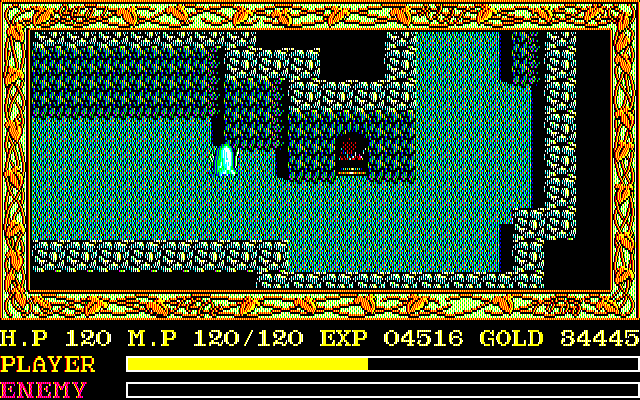
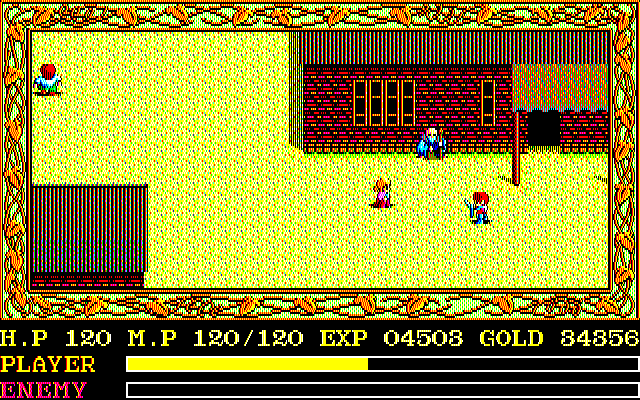
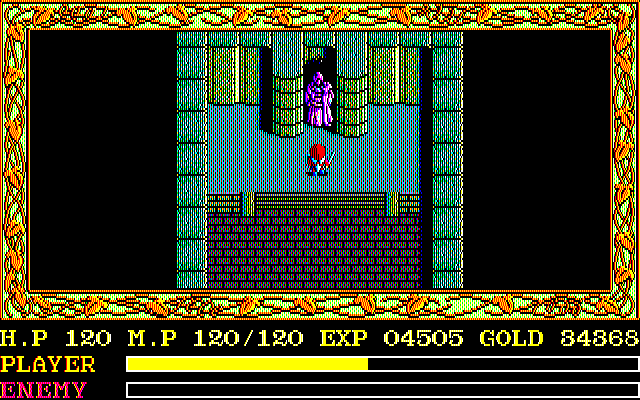
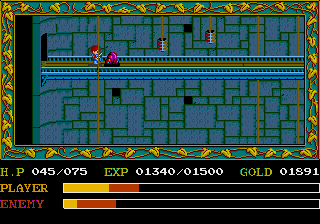
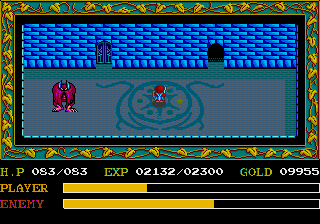
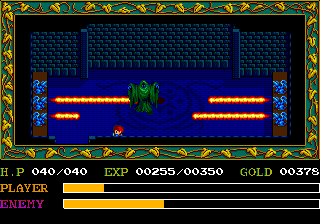
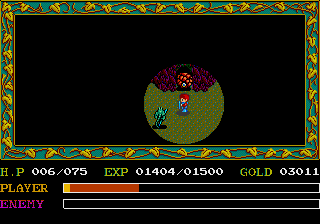
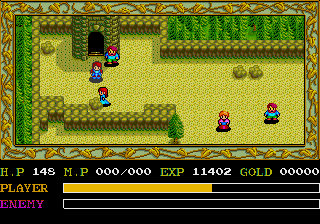
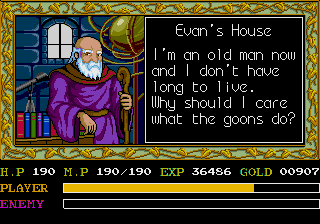
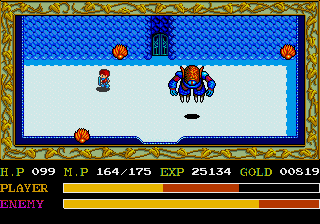
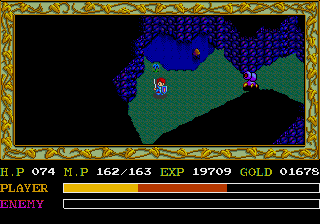
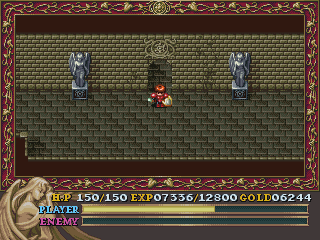
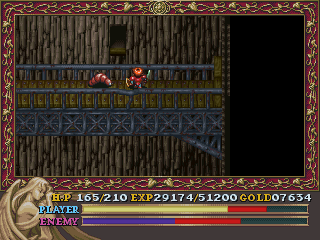
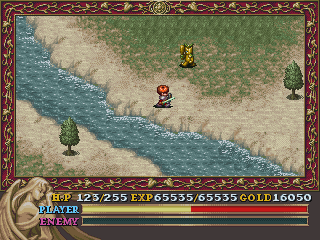
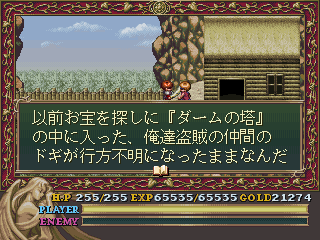
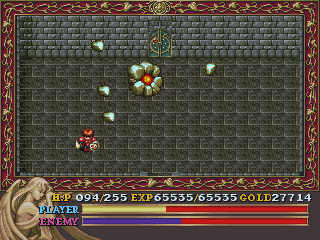
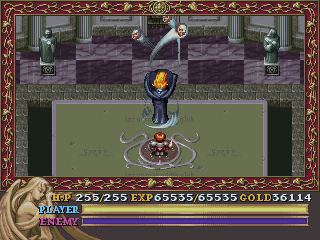
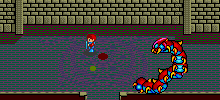
Ys (PC-88)
Falcom was one of the biggest players in the 1980s Japanese PC RPG scene, particularly with immense breakout hits like Xanadu, which sold hundreds of thousands of copies. But despite their enormous success, RPGs at the time were often dense and inscrutable, alienating to all but the most devoted gamers.
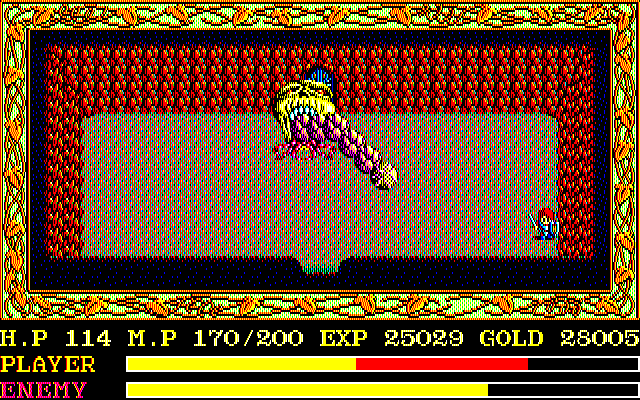
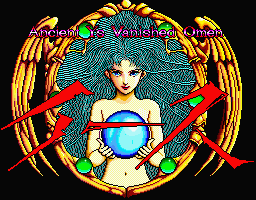
The Ys series was one of Falcom’s early attempts to make a more widely appealing role-playing game. There is still lots of combat, lots of dungeons to explore, and plenty of gold to collect and experience points to harvest. But it’s wrapped up together with fast-paced, action-focused gameplay, catchy music, vibrant graphics, and a strong storyline to tie everything together. Note that the title is not “Y’s” and there is no apostrophe, despite what some early marketing material may have indicated. Its full Japanese title – Ancient Ys Vanished Omens – is a tremendous grammatical quandary, but Falcom is often known for their awkward English.
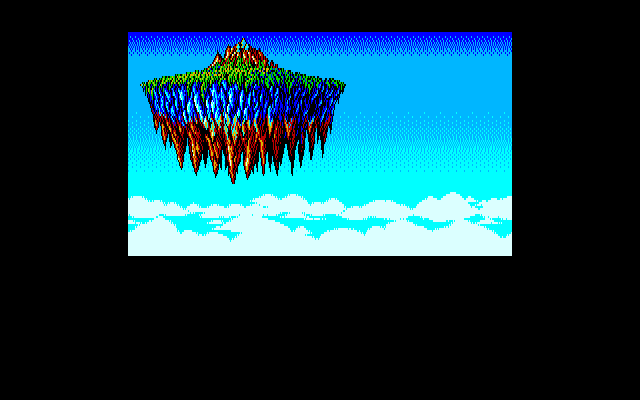
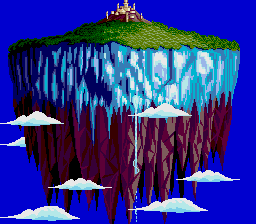
Ys (pronounced “ease”, with a soft ‘s’) is the name of a long-forgotten civilization that sits atop a floating island. The story stars the red-haired adventurer Adol as he explores and uncovers its secrets. While the first two games focus on the land of Ys, subsequent entries send Adol off to other lands only occasionally returning to its myth and lore.

Ys Eternal
Adol Christin
The star of Ys is Adol Christin, red haired swordsman extraordinaire. With nothing but his fiery mane, mad sword skills and extreme wanderlust, Adol travels the world, uncovering ancient civilizations, aiding villagers in need, and generally being an all-around good guy. Adol almost never speaks directly, and in most of the games where he does, he’s not voiced, outside of some battle yells and grunts. In the very first home computer releases, his illustrations appeared still a bit coarse with rather brown-ish hair, but his in-game look established his distinctive red hair. While the art style has changed over the years, the basic character design hasn’t. According to a tweet by Tetsuya Igarashi, who is credited as the manual writer for Ys, the name came from a manga with a character named Adrian. In Japanese, this is spelled “Adorian”, shortened to “Adoru” as a nickname, which became Adol in Ys. (The name of the manga wasn’t given).

Ys II

Ys IV (PCE)

Ys Seven
The name “Ys” came from a book called The Dictionary of Imaginary Places. This enormous encyclopedia is filled with folk tales of legendary places. Near the end, there’s a brief section on the city of Ys, located in Brittany, France, which was surrounded by dams and destroyed by floods near the end of the fourth century AD. The entry mentions that it’s close to the French town of Plomarch. Other Ys games (particularly Ys IV) feature a town called Promarock, which is a mangled version of this real town’s name. The original story doesn’t have anything to do with any city floating into the sky, however. It’s possible this element was inspired by Ghibli’s animated film Laputa: Castle in the Sky, which was released in Japan in summer of 1986, just a few months before Ys began development. Castle in the Sky itself was inspired by Jonathan Swift’s Gulliver’s Travels.
The continent of Eresia, where most of the Ys games take place, is based directly off Europe, sometimes very closely, other times more vaguely. Most of the early games take place around the area where France would be. The isle of Esteria from the first game might or might not exist – judging by its location it might be the Île d’yeu – but other games are set in various analogues to real places. The Dictionary of Imaginary Places also makes reference to Ys being close to the village of Plomarc’h, which appears in the games as “Promarock”. Ys IV takes place in Celceta, which lies somewhere around the Spain/France border. Ys V takes place in Afroca, which is naturally Africa, and features the city of Xandria, which is Alexandria. In Ys VI Adol ends up in the Great Vortex of Canaan, which is essentially the Bermuda Triangle, with a bit of the Atlantis myth sprinkled in. Ys Seven takes place in Altago, the equivalent of Carthage. Ys X includes a group of characters that are basically Vikings. All throughout the series, Adol runs in with the somewhat antagonistic Romun Empire, which of course is an extremely transparent allusion to the Romans.

Ys II (PC-88)
Even though all of the games take place in different regions, with a largely different cast of characters, there’s a firm sense of continuity through the game world. For example, Dogi, an extremely minor character in the original Ys (he busts Adol out of a prison) ends up becoming one of the primary characters in Ys III, and keeps popping in throughout the series, eventually becoming a playable character in Ys Seven. One of the central “characters” of the first game is the Roda Tree, which converses with Adol and helps him on his quest. Throughout later games, you can find fruit from this tree. Similarly, in Ys II, Adol finds the Celceta Flower to cure Lilia – and actually visits the country of Celceta in Ys IV, where he also returns to Esteria and meets up with many NPCs from the first two games. The overarching storyline focuses on an angelic race known as the Eldeen, who mostly died off several centuries before the events of the games. It’s a little tough to follow though, considering that, due to assorted games in the series being remade numerous times, there are a substantial number of retcons. There are also many, many ports of certain games (especially the first two) which have some slight storyline differences.

Dogi
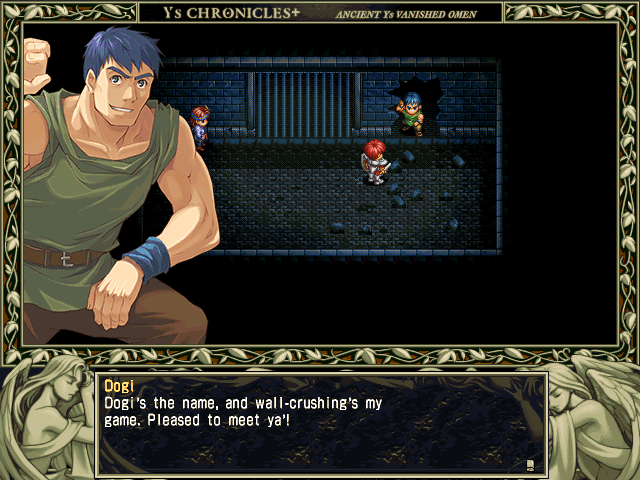
Dogi is the most frequently recurring supporting character. A minor character in the first game – the thief who saves Adol from the dungeon – he becomes more important in Ys III, as he leads Adol to his home town of Redmont. His role in all of the Ys games is pretty much just to break through stone walls, earning him the nickname “Dogi the Wallcrusher.” This skill is useful, because he often ends up saving Adol in the process. He was named Colin in the US TG-16 release of Ys Book I & II.

Ys III

Ys IV

Ys Seven
The storylines in the early Ys games are rarely very elaborate, but they are fun, in the classical sense. Adol adventures to a new land, where his reputation as a red-haired swordsman precedes him. Eventually he uncovers a lost civilization, along with assorted evil characters that wish to use their long lost magic and/or technology to rule/destroy the world. There are other recurring themes throughout – Adol getting shipwrecked, Adol getting tossed into prison and having to be saved by Dogi, and Adol attracting a young woman, whom he typically pays little attention to since he’s too busy saving the day. The Ys girls are much like Bond girls, discarded and unremembered in each passing installment (with the exception of Lilia, who makes it through a couple sequels) but it’s an amusing recurring element nonetheless. Starting with Ys Seven, the games become longer and the storylines more elaborate, probably to keep up with the Trails games, Falcom’s other headline RPG series.
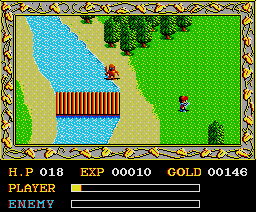
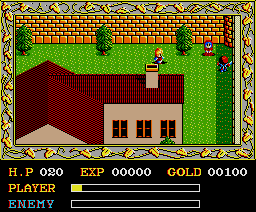
From a gameplay perspective, the early Ys differentiates itself from practically all other action-RPGs with its combat system – or, it could be said, the apparent lack thereof. Adol is far too badass to rely on an attack button. Instead, he kills bad guys simply by ramming into them. This might seem silly at first, but there’s a bit of technique to it. Adol can’t just blaze into bad guys head-on, as this will cause him to end up quite dead. Instead, he has to hit them off-angle. This can be somewhat difficult to do, because most of the early versions only support walking in the four cardinal directions.

Certain games in the series are pickier on this aspect than others – the early PC entries often require precise aim to avoid taking damage, while the 16-bit titles tend to be more lenient. Nevertheless, success mostly depends on Adol’s strength level. This means spending a majority of the time running around the landscape, plowing through bad guys like an invincible roving wall of destruction and collecting their luscious experience points. But there’s a subtle joy that comes with dispatching enemies so smoothly, similar to popping bubble wrap or stepping on crunchy autumn leaves. Since attacking enemies properly can be a bit difficult at first, the games grant a bit of leeway by letting health regenerate in outdoor areas, as long as Adol stands still. However, once he enters a dungeon, he’s pretty much on his own, relying only on what small amount of healing supplies he can bring. At least you can save and load the game at any time in most versions, so you don’t need to worry about replaying too much if you die.
There were plenty of RPGs in the 1980s where you attacked enemies simply by bumping into them, like T&E Soft’s Hydlide and Falcom’s own Xanadu. But Ys is more curious because it kept this system up through the early 1990s, at a time when other competing action-RPGs had more traditional “use button to attack” control methods. Ys finally evolved with the Super Famicom Ys V, but there’s a particular nostalgia for this old-school method.
The off-center mechanics of the bump system was actually the result of a programming bug. In the original plan, you would attack by walking into enemies, but due to the increased speed, it wasn’t much fun. However, at one point in development, there was a glitch in the collision detection routine that registered attacks that were off-center. The developers decided this was more fun than just ramming straight into enemies and kept it for the final game.
The combat may seem simplistic, considering much of what one does is to roam the landscape, ramming into every enemy in sight, but that’s really part of the fun. Ys doesn’t bog itself down with puzzles or aimless wandering. For the most part, they’re straightforward, no-nonsense adventures that are usually fairly short (by RPG standards) but still full of wonder and adventure.
It’s also impossible to talk about Ys without mentioning the incredible music. Since the first game, the composers at Falcom and their in-house JDK Band have put out some incredible music, often regarded in the same breath as legendary titles like Castlevania and Final Fantasy. They specialize in powerful tunes that makes grinding for levels like an intense workout training. They aren’t restricted to just boss fights either, as even overworld and dungeon themes are often filled with excitement. The Ys I overworld map theme “First Steps Towards Wars” and the Ys II introduction theme “To Make the End of Battle” are often regarded as some of the best pieces of video game music ever composed.
Ys II (PC-88)
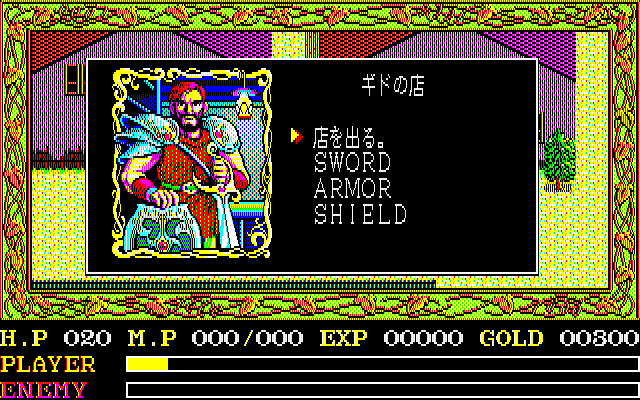
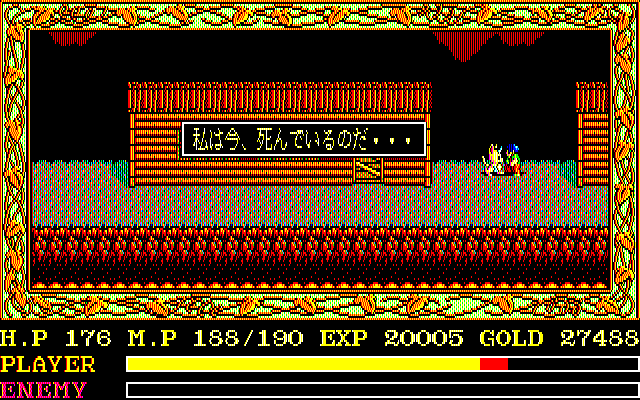
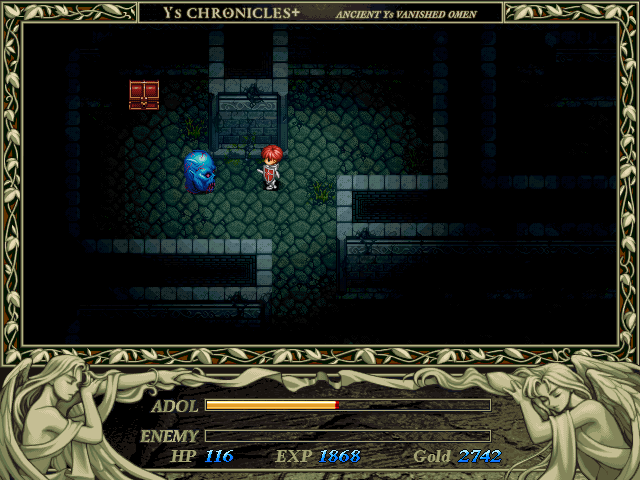
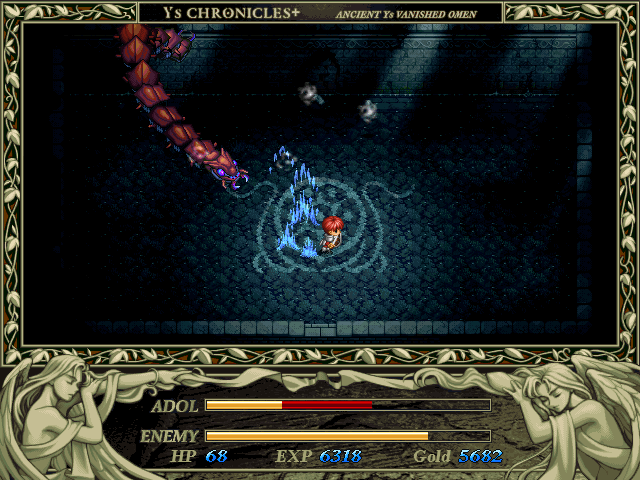
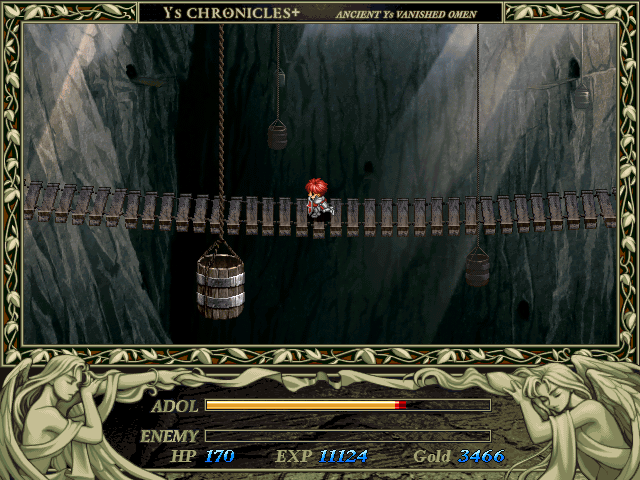
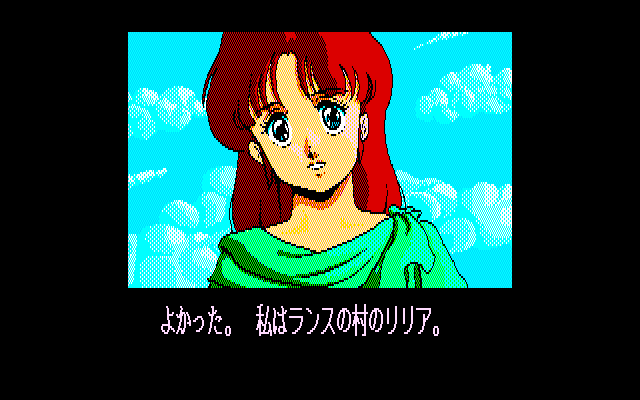
While the graphics seem simplistic – and they are, in the older games – back in the day, the character artwork in the shops was simply amazing. The TurboGrafx-16 version was one of the first games released on the CD platform, and was a fine introduction to show off some impressive anime-style cutscenes. The image of Lilia greeting Adol in the introduction to Ys II is one of the most well-remembered moments in 1980s Japanese gaming. Another major trademark of the series – the action taking place in a decorated window frame – was ditched for later games. While it added an interesting feel, the actual playing field ended up rather cramped.
Ys began its lineage on the Japanese home computer PC-88. spreading to other computers like the MSX2, FM-7 and X68000, and eventually received ports to almost every major console. Almost every new entry in the series mixes up the concept a bit: Ys III departed the furthest from the other games by shifting to a side view, but both of the initial versions of Ys IV (there were two entirely separate games released around the same time, plus two remakes later that shake things up even more) brought the classic overhead view back into play. Ys V drastically changed the formula by actually giving Adol an attack (and jump) button, while Ys VI brought the series into 3D, sort of. Finally in Ys Seven, Ys: Memories of Celceta, and Ys VIII, Adol gives up his lone wolf status, as players take control over a party of three characters, fighting on the field at the same time. For a series that’s a few decades old, it’s come a long way.
When it was first released in Japan, Ys was a massive success, with many conversions and sequels over the years. It was also their flagship series until it was overtaken by the Trails series in the early 2000s. Outside of Japan, the series had a bumpy start. The first game in the series was released in English for the Sega Master System by Sega and on PC platforms by Kyodai, but neither release gained much attention. Ys Book I & II for the TurboGrafx-16 CD, a compilation of the first two games, was well regarded by American magazines, but few actually owned the system to play it. Ys III made it to all three 16-bit consoles, but even at the time, this game was viewed as the black sheep of the series and didn’t win many fans. Ys IV and V skipped English releases completely, though the 16-bit versions have long been translated by fans. By the time Ys VI rolled around in the mid-2000s, every game in the series received official English releases thanks to the efforts of Konami, XSeed, and Nippon Ichi America, leading to a modest but devoted worldwide audience.
The primary developers of the first three Ys games were Masaya Hashimoto, the director, programmer and game designer, and Tomoyoshi Miyazaki, the scenario writer. The duo had previously worked on Asteka II (known in North America as Tombs & Treasure), an adventure game from Falcom released in 1986. After the development of Ys III, until they departed the company to set up their own company, Quintet, known for SNES games like Actraiser and Illusion of Gaia.
Other staff members include musician Yuzo Koshiro, who also provided music for other Falcom games like Xanadu, Legacy of the Wizard, and Sorcerian; musician Mieko Ishikawa, who stayed with Falcom to provide music for many many titles before moving into management; artist Tomou Yamane, who later joined Hudson and worked on the Tengai Makyou series; artist Takahiro Ohura, who worked on other games by Hudson and Quintet; and artist Ayane Koshiro, Yuzo Koshiro’s sister who worked on other games with their family company Ancient. Despite working on many other early Falcom titles like Dragon Slayer and Xanadu, Yoshio Kiya was not involved with Ys.
Ys (イース): Ancient Ys Vanished Omen / Ys: The Vanished Omens / Ancient Land of Ys / Ys I Eternal (イースI エターナル) – PC-88, PC-98, X1 Turbo, FM-7, MSX2, IBM PC, Apple II GS, Famicom, Master System, X68000, TurboGrafx-16 CD, Saturn, Mobile, Windows, PlayStation 2, Nintendo DS, PSP, Wii, Android, iOS (June 21, 1987)
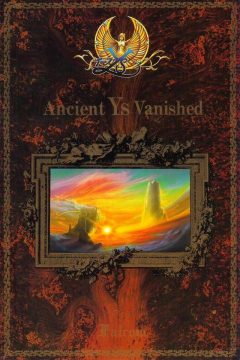
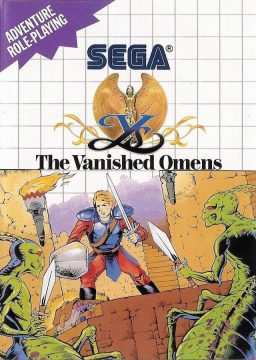
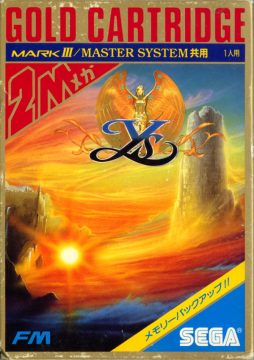
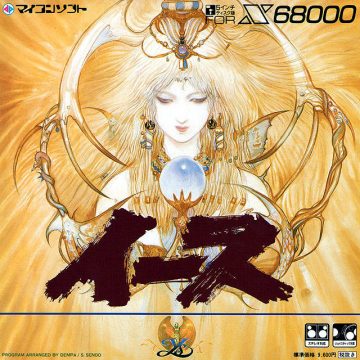
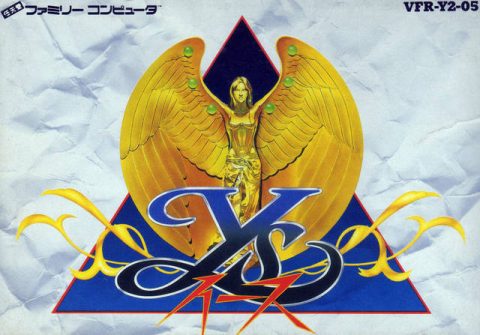
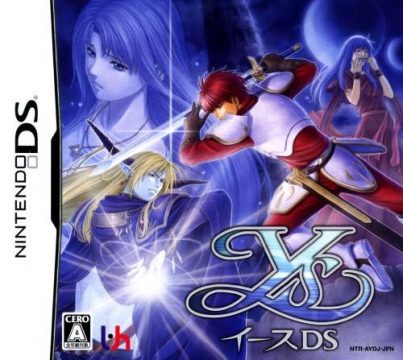
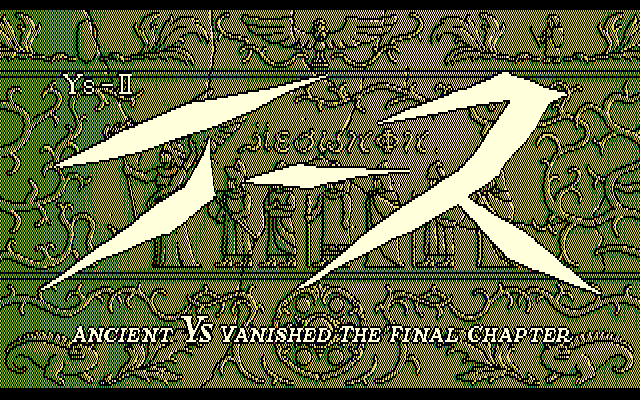
Ys II (イースII): Ancient Ys Vanished The Final Chapter / Ys II Eternal (イースII エターナル) – PC-88, PC-98, X1 Turbo, FM-7, MSX2, Famicom, TurboGrafx-16 CD, IBM PC, Saturn, Mobile, Windows, PlayStation 2, NDS, PSP, Wii (April 22, 1988)
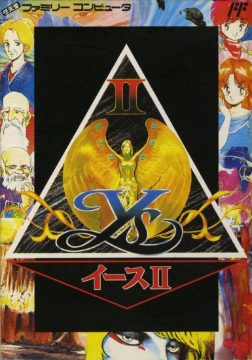
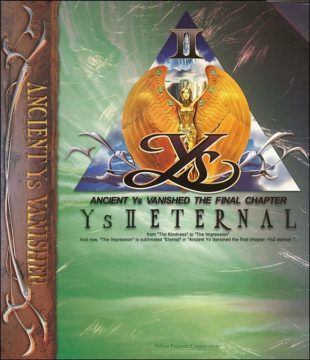
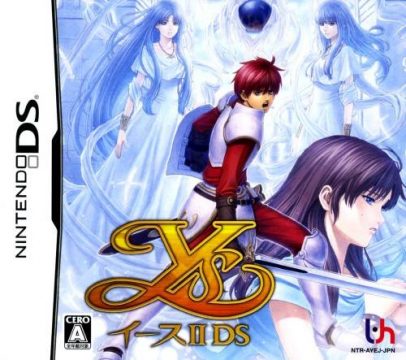
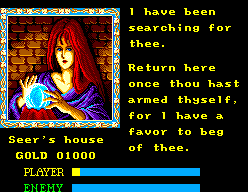
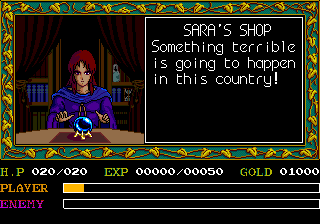
The first Ys game begins with Adol in the country of Esteria, where he has to uncover the mystery of the vanished land. With the help of a mysterious fortune teller, Adol begins to learn of six priests and two goddesses who ruled the land of Ys. Apparently by uniting the books left by the priests, one can unlock the secrets of the floating continent. Not only that, but a number of troubling things are happening, what with all the monsters running around, reports of a black-cloaked man, and the cryptic shortage of silver artifacts. Naturally, it’s up to Adol to investigate.
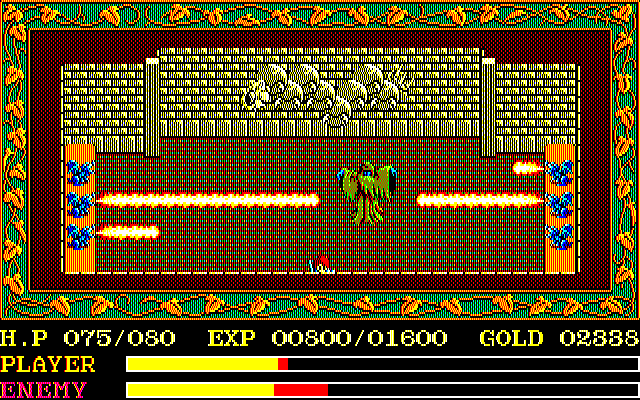
Ys (PC-88)
Along the way, you’ll run into the descendants of the priests, discover the goddesses, and find just why there’s a gigantic crater in the middle of the island.
Ys I Characters

Feena
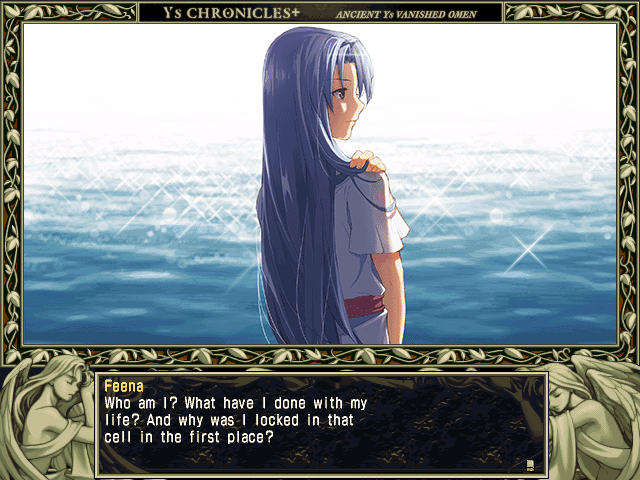
An apparent amnesiac whom Adol finds locked up underneath a shrine. Afterwards she stays at the home of Jeba, an old woman in Zepik Village. As it turns out, Feena is actually one of the two goddesses of Ys.

Reah
At first, Reah (also known as Lair or Leah in some translations) just seems to be a poet who’s looking for her lost harmonica. She is, rather unexpectedly, the other of the two goddesses of Ys. Before the game’s release, she was named Kolbellius, a reference to Golvellius, a Zelda-like action-RPG from Compile.

Sara
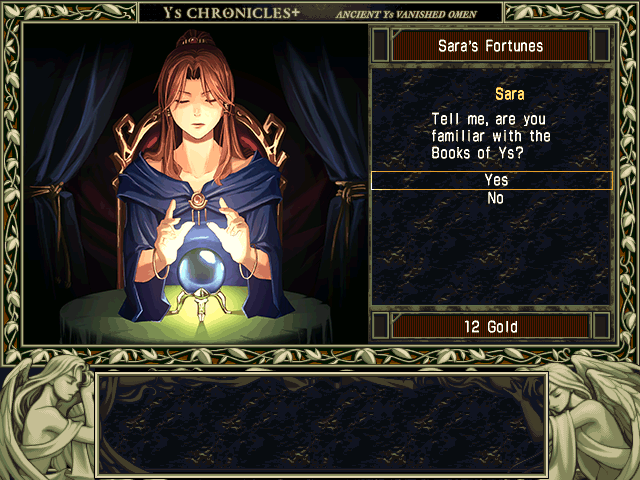
The fortune teller who first gets Adol started on his journey to find the six books of Ys. She is killed off halfway through the game, at least in the original game and Falcom’s later remake. In the TurboGrafx-16 version she is merely kidnapped, although Adol still never sees her again in the game. Her family remains prominent in Esteria, though: her aunt Jeba lets Feena stay at her home after the goddess is freed from her prison, and her cousin Goban leads the local gang of chivalrous thieves.

Goban
Sara’s cousin and leader of the resident band of chivalrous thieves. He doesn’t do much in the first game other than letting Adol into Darm Tower, but he returns both in Ys II and Ys IV.

Luta Gemma
In the original Ys I, he first appears fairly late in the game – Adol meets him in the prison cell in Darm Tower, where Luta, or Luther, helps him through some traps and puzzles. Ys Eternal enables players to make themselves acquainted with him earlier, by rescuing him from a monster attack in the field. As a descendant of a Priest of Ys, he returns for the second game’s finale.

Raba
An old man who also takes part in the raid on Darm Tower, alongside Dogi and Luta. He knows a lot of the mythology around Darm Tower and the vanished land Ys.

Dark Fact
Also goes under several other names, depending on the translation (alternate names include “Dark Dukt” and “Dulk Fukt”). He is one of the descendants of the priests of Ys – and also a bad guy, if the horns didn’t give that away.
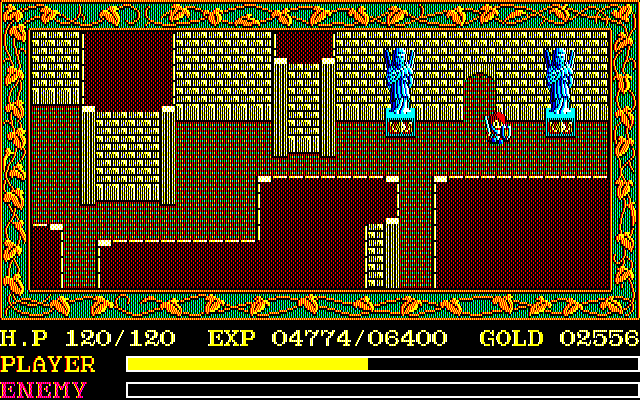
Ys (PC-88)
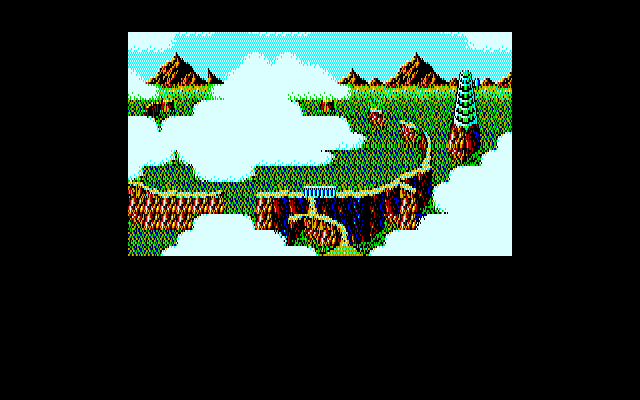
When it was first conceived, Ys was supposed to contain two chapters – an “earth” chapter, taking place on the ground, and a “sky” chapter, taking place on the floating island of Ys. At some point in development, Falcom determined that this was too ambitious for a single title and split these chapters into two separate games. Ys I & II are so closely intertwined that modern versions are bundled together as a single game. They use the same basic gameplay systems, after all, and the ending of Ys I, where Adol is teleported to the floating continent, is essentially the intro to Ys II.
However, as a result of this shift, there was a bit of an imbalance – the first Ys game is incredibly short, with only a tiny overworld, two towns and three dungeons. To make up for it, the final dungeon, the enormous 25-floor Darm Tower, was expanded to take up roughly half of the game’s play time, which is about four or five hours. Much of the game is simply spent grinding for levels, as dungeons and boss fights effectively require that you be at specific levels and have specific equipment if you want to proceed. Additionally, much time is spent running back and forth between towns, gathering and using items necessary to unlock the next part of the quest.

TG16
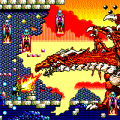
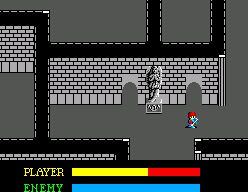
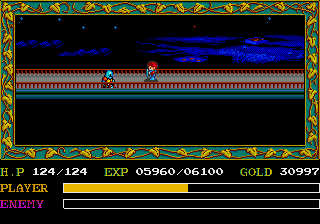
There’s also not much to the combat. Aside from the usual ever stronger swords, shields and armor, the only modifying element to add some tactical choice are several magical rings Adol can find. These may increase his attack or defense, allow him to regenerate health inside the dungeons, or make all the enemies slower. Secondary items are sparse, mostly just items used for ferrying about to other characters. The only really useful one being the Mask of Eyes, which turns the view to gray and allows Adol to see secret doors, but makes enemies invisible instead. The bump system is fun when dealing with minor enemies, but it proves to be a pain in boss fights, as it’s hard to tell where their weak spots are, and it’s equally as difficult to avoid damage. The final fight is incredibly cool though, taking place above a flying starfield as bits of the floor tiles drop away.

TG16
As a whole, Ys I just feels like a prelude to the real game – Ys II: The Final Chapter, which is, of course, far from being final.
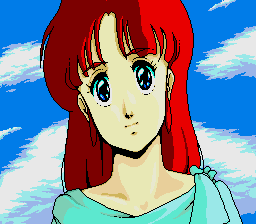
Ys II (TG16)

Ys II (TG16)
Ys II begins right when Adol defeats the evil Dark Fact, and is transported to the floating continent of Ys, where their civilization still thrives. Adol begins his journey through the ancient land, uncovering more of the mysteries of the six priests, and discovering (and eventually defeating) the evil that had been contained therein.
Ys II Characters

Lilia
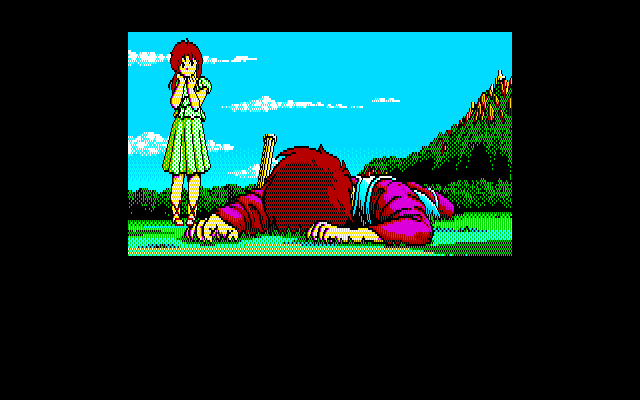
Lilia finds Adol lying in the field after he is catapulted through the sky. Although she is quite kind, she is also tragically unaware that she has a terrible illness that will kill her any day. After Adol repays his debt by finding the cure, Lilia develops a hilariously overbearing crush that’s powerful enough to bleed into the later games. Otherwise, she mostly serves as a damsel-in-distress.

Maria
Maria is kidnapped by some evil monsters to make a sacrifice, and her fiancé isn’t up to the task to save her, so Adol steps in to save the day.

Tarf
A young boy whom Adol saves from being imprisoned by the demons. He keeps appearing every once in a while with some piece of information.

Keith
The demon with the pedestrian-sounding name appears to be a traitor to his race. On their first encounter, Adol only hears of him through a stone wall, where he helps rescue a kidnapped village boy. Later, he supports Adol with further advice in the demons’ stronghold, Solomon Temple.

Gorto
The warrior guarding the entrance to the village of Ramia. His role in the plot isn’t revealed until the very end (even to him), and even then it’s just to complete the set of descendants to the six Priests of Ys.

Dalles
The cloaked leader of the demon army, who conducts gruesome human sacrifices in the temple, and makes it his personal goal to challenge and mock Adol, whom he considers a surprisingly worthy opponent. He also appears in Ys Origin. In some versions he looks like the Grim Reaper, other times his appearance is more human. His alternate spelling is Duless.

Darm
While his henchman Dalles does most of the dirty work throughout the game, the true enemy in Ys II is Darm (or Dahm, depending on the translation), who either wears or chiefly consists of an incredible mask.

Ys II (TG16)
While extremely similar on the surface, Ys II is much more fleshed out than its predecessor. It’s much longer, for starters. Outside the initial village of Rance, Adol explores the Ruins of Moondoria, the Sanctuary of Toal, the Rasteenie Mine, the Ice Ridge of Nolta, the fiery Moat of Burnedbless, and expansive Solomon Shrine. It’s a little more linear given that there’s not really an overworld area, but there are more than two towns, and so there are more folks to talk to.
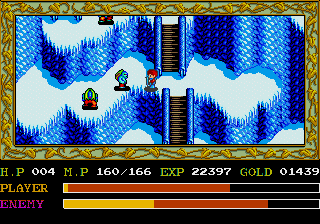
Ys II (TG16)
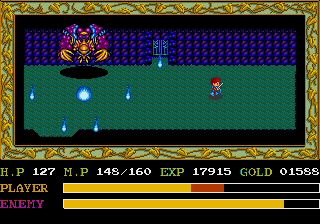
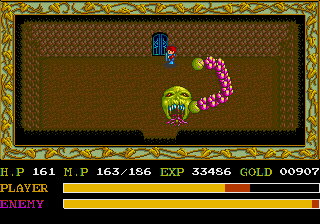
The biggest addition are the magic spells. With the flame spell, Adol can actually attack from a distance, making the whole battle system feel less arbitrary. The boss battles are more reliant on player skill and also allow a slightly underleveled Adol to succeed, making them less frustrating. That doesn’t mean that the latter few aren’t ridiculous fireball sponges even after a lot of grinding, though. Thankfully, it’s also possible to walk out of most boss fights if things get too heated, but afterwards the enemy is back at full health.
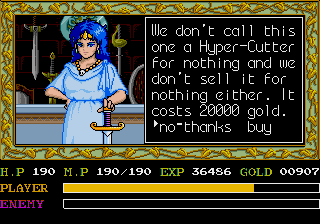
Ys II (TG16)
Far and away the coolest spell is Transform (called Telepathy in some versions), which turns Adol into a happy little red haired demon. Not only is he invincible to monsters (an element perhaps inspired by Pochi the monster from Falcom’s Legacy of the Wizard), but he can actually converse with them, discovering clues and lamenting their role as monsters. In a bit of dark humor, many of them fear the blade of the human Adol and mourn the family members that they’ve lost to him.
While it’s a longer game than the first Ys, it can also be exasperating. The Rasteenie Mine, taking place in a gigantic series of interconnected rooms, is a bit annoying, especially considering it’s the first area of the game. Similarly, the Solomon Shrines at the end are maybe just a little too long. But these enormous maps were expected of late 1980s RPGs, so it’s just something that comes with the era. And otherwise, Ys II is an excellent evolution of everything the first game was.

Ys II (MSX)
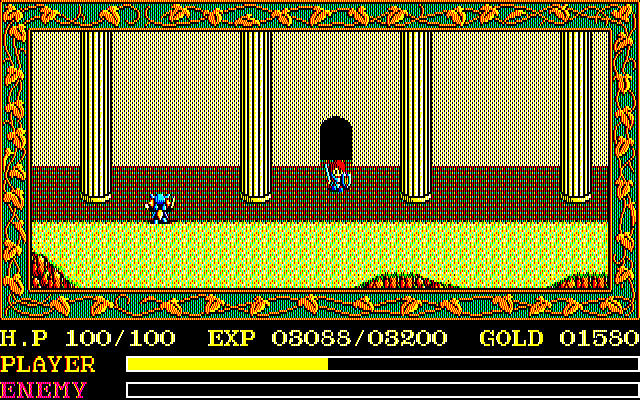
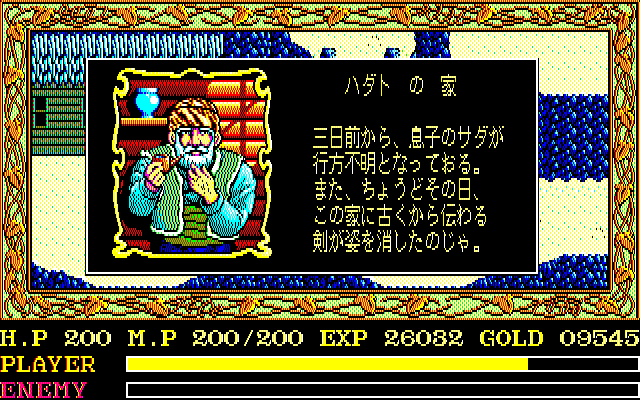
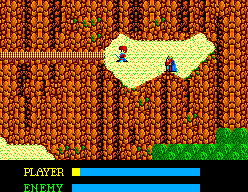
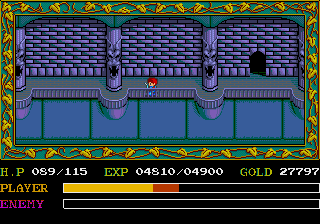
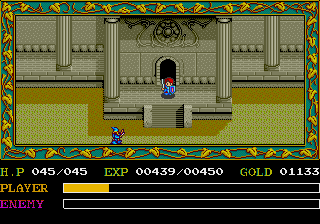
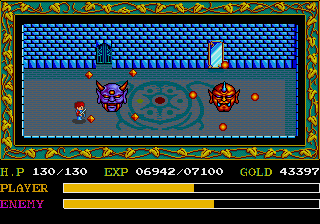
Both Ys titles originally came out on several Japanese computer systems, including the PC-88, PC-98, Sharp X1, FM-77AV and MSX. The PC-88 and PC-98 versions are similar, with the latter having better color depth. This version supports the FM synth sound card built into the PC-8801mkII SR, making for richer music than previous Falcom titles. The X1, FM7 and MSX versions are all basically the same, with lower resolution but cleaned graphics, and utilize slightly weaker PSG sound. The first game also made it to America for the IBM PC and Apple IIgs courtesy of Kyodai. The English names are also entirely different, with Adol being renamed Arick. Unfortunately the IBM PC version only supports internal speaker sound, so the effect of the excellent music is lost. Other than graphical and audio differences, the early computer versions are mostly similar. Compared to later versions, the gameplay is slow, the difficulty balance is off, and you need to spend a lot of time grinding.

Ys (Famicom)
Ys first hit the consoles for the Famicom in 1988, with Ys II following 1989. Some of the maps have been drastically redesigned in both games and there’s some extra music as well. Ys II also speeds up the gameplay quite a bit. Ys I has an extra quest on the overworld involving statues that can teleport you, and a second form of the final boss. Some of the old bosses also feature different attack patterns than the originals.

Ys (SMS)
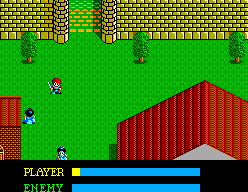
The Sega Master System game was the first to come out in America, under the title Ys: The Vanished Omens. Here the gameplay speed more matches the computer versions. Some of the dungeon maps have had their layout mirrored, and there’s some weird translations in the English version, as the hero Adol is known as Aron. The game box also spells the title as Y’s with an apostrophe, which isn’t correct.
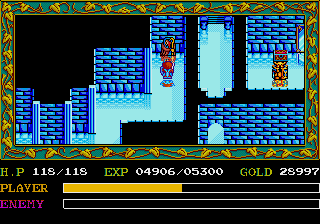
TG16
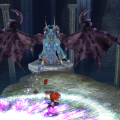
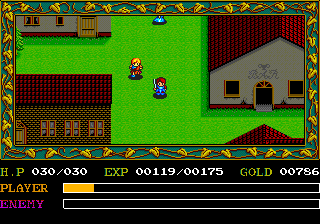
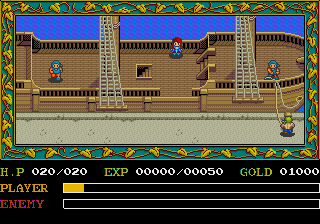
The 16-bit generation of Ys games began with a port to the TurboGrafx-16 CD, published by Hudson and developed by Alfa Systems. This was translated into English and released in North America as one of the system’s flagship titles. The first two Ys games are combined into one big adventure, with stats carrying over from one game to the next, with some level re-balancing to compensate. There are also a few additional scenes, like Adol getting off his ship at the beginning of the game), and more anime style artwork.
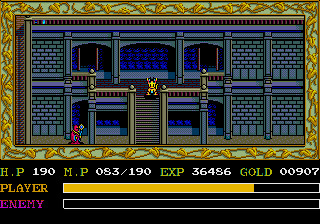
While the in-game visuals are still a little basic and the scrolling is somewhat choppy, the CD music really makes the game shine. Despite all of the future remakes of the first two Ys games, the TurboGrafx-16 version still contains the best arrangements of these songs. Many of these were based on the Ys Perfect Collection CDs, which were done by Ryo Yonemitsu. Some tracks are rendered in PSG, like the town theme, and the boss theme from Ys II, “Protectors” had to be discarded in favor of the theme from the first Ys, “Masters of Power”. There’s also a fair bit of voice acting, which is competently done compared to the other English CD-ROM games in the 1990s. This includes relatively well-known names like Alan Oppenheimer (playing the role of Darm here, famously known for Skeletor from He-Man), Jim Cummings (here as Dalles, known for countless Disney roles) and Thomas Haden Church (playing Goban, who soon starred in the TV show Wings as well as Sandman in Sam Raimi’s Spider-Man 3).
Ys II (TG16)
The gameplay speed has also been ramped up in the TG16 CD version. To compensate for the juiced up pace, the hit detection in combat is less fussy. Dying has been made less frustrating by the addition of checkpoints, instead of forcing players to restart or load a saved game like earlier versions did. Due to the rebalancing, level ups have less of an impact, but occur much more frequently, making the grinding feel a bit more rewarding. Until the Eternal versions came out, this was widely considered the definitive version of the first two Ys games.

Ys (X68000)
Only the first Ys came out on the Sharp X68000 computer in 1991, developed by Dempa. Much like the Famicom ports, it takes a lot of liberty with some substantially redesigned maps. Some of these decisions are a little weird, as the field is almost entirely gone, reduced to a tiny forest path from the first town to the second. This is one of the only versions to have realistically proportioned character graphics. It uses a weird CGI-like art style for the sprites, and some creepy vaguely realistic artwork for the shopkeepers. Still, the high res graphics are quite nice looking, and the game even uses a modified sprite for all of Adol’s equipment options, a feature otherwise only found in the much later Saturn version.

Ys (X68000)
Though the soundtracks to most versions are identical, certain versions include exclusive pieces of music. The Famicom version features several new songs, including a separate song for Zepik Village, a new track for the lowest level of the temple, a track for the mountain path, and an extra final battle track. The X68000 version includes two new tracks, including another completely new song for Zepik Village. The MSX/X1/FM7 port has a number of exclusive tracks too, including some new ending songs.
The original PC88 version of Ys also has several unused pieces of music, which were included in the sound test and released on the official soundtrack album. The introduction to the Turbografx-16 CD version, “Theme of Adol”, was based off one of these previously unused tracks. Ys Eternal reused some of these tracks at different parts of both games too – “Chase of Shadow” and “Dreaming” are used in Dark Tower in Ys I to break up the monotony a bit, and “Battleground” is used in the shrine in Ys II. The song “Tension”, which was only in the MSX, X1 and FM7 version, was also incorporated into Ys I. A full listing of the tracks and where they’re used can be found at Ys Music Files.

Ys II (Saturn)
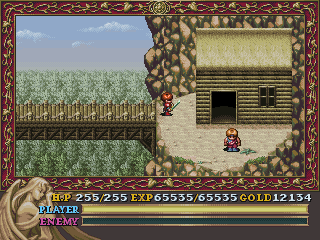
A few years down the line, JVC published two Falcom Classics compilations for the Saturn. The first package, released in 1997, contains a remake of Ys, alongside Xanadu and Dragon Slayer. The graphics are more detailed, but they’re all a bit drab compared to the bright palette of the TurboGrafx-16 game, despite some nice new character portraits. The music, despite being redbook, also pales greatly in comparison, with very underwhelming arrangements that lack the retro FM synth charm of the early games or the hard rock intensity of the TG16 release. There’s no voice acting or even much of an intro. But while the presentation screams “budget title,” the gameplay has at least been suitably beefed up. While it takes a long time to level up (like in the old computer versions), Adol can finally run, as well as move diagonally. As a bonus, a certain version of the Falcom Classics bundle comes with an additional CD. This contains a radio drama, as well as a video of one of the voice actresses taking a tour of the Falcom store in Japan (and losing terribly at a game of Ys).
Ys (Saturn)
The second Falcom Classics package was released in 1998, featuring a remake of Ys II, as well as Asteka II: The Temple of the Sun. It seems like JVC put a bit more effort into this one – there’s some voice acting, as well as an anime intro, and even scenes from the original Ys game with voiceovers, as if the publisher was trying to make an apology for the previous release. Otherwise, the enhancements are pretty much the same: more detailed graphics but less vibrant, and mediocre arrangements of the music. The second CD included with the limited edition simply has some music selections from Ys II and Asteka, since they aren’t redbook on the game CD.

Ys (Saturn)
While the Saturn versions are passable, they never quite lived up to their potential. Later in 1998, Falcom brought the original Ys game back to the computer, this time for Windows 98. Under the name Ys Eternal, this isn’t just yet another port, but rather a complete remake. All of the graphics have been redone in high-res (at the time meaning SVGA 640×480), with lots of nifty little added effects – you can see little sword swishes when Adol attacks, and enemies don’t just blink and disappear when they die, they splatter and fall apart in a cloud of blood and dismembered limbs. Cats, dogs, birds, crabs and other critters around the settlements do a great deal in making the world of Ys feel more alive. The new character artwork is all spectacularly gorgeous as well.

Ys Eternal (Windows)
But the real appeal is just how much expanded the game is. Instead of beginning in the town of Minea, Adol is washed ashore in the entirely new town of Barbado. There’s a lot of extra characters (and a few minor subquests), and while it feels a little tacked on, it’s nice to see the original game expanded. The overworld is now much larger as well, with a lot more to see and do. There are a couple of minor additions too, like having to guide Feena out of her prison below the shrine, and plenty of Easter eggs (including the slightly creepy ability to reveal Feena’s three-size body measurements.) Unfortunately, there’s no voice acting here either. The music consists of several new MIDI renditions, some of which are extended quite a bit. They’re far better than the Saturn version, but still not quite as good as the TurboGrafx-16 soundtrack or the Perfect Collection CDs.

Ys II Eternal (Windows)
Falcom published Ys II Eternal in 2000, with the same enhancements and even more detailed graphics. Since Ys II is a much longer game to begin with, the additions aren’t nearly as noticeable as they are in the original. However, the battle system has changed drastically. You no longer need to worry about hitting your enemies straight on – ram into them and you’re guaranteed to hurt them. Instead, enemies will blink every couple seconds and take a swipe at you – all you have to do is avoid those attacks. The bosses have also been redone to look absolutely amazing. In the towns, every single NPC is now referred to by name, and the game keeps a log with short descriptions of the people.

Ys I Complete (Windows)
In 2001, Falcom bundled both Eternal games, enhanced the graphics on the first title to make them match the brilliance of the second, and released them together under the name Ys I & II Complete, this time with a fully animated intro. For the first time players can choose from several difficulty settings to remedy the grinding issue at least partly. Also new is a time attack boss rush. The limited edition of this set came in a classy package designed like an ancient book, with gold letters on the cover. While the plans to release this package in America fell through, a fan translated patch eventually made the games playable in English and on non-Japanese Windows systems.

Ys II Eternal (Windows)

Ys II Eternal (Windows)
Perhaps feeling that console gamers had been neglected long enough, Digicube brought the remakes to the PlayStation 2 under the title Ys I & II Eternal Story. It’s a pretty straight port of the Windows version for the most part, with the graphics coming through remarkably well on a television screen. There’s an additional mode that rebalances the level up system, although it doesn’t combine the games like the TurboGrafx-16 version. There’s also a bonus “Dream World” where you can meet two additional characters named Misha and Jeanne. It’s really just a fancy front end for an artwork gallery and a sound test, although there are a few minor subquests that unlock stuff in this mode. Some other changes have been made to the weapon system, though. Normally, whenever Adol gets a new piece of equipment, the old one becomes entirely useless. Not so here, as each weapon has its own unique attribute. For instance, the Short Sword can be used to stun powerful enemies, leaving them vulnerable to be finished off with a more powerful weapon. Switching between weapons is as easy as pressing the shoulder triggers. It’s not a gigantic addition, but it adds a tiny bit of depth to the combat.

PlayStation 2
Other than that, voice acting has been added once again, although the MIDI arrangements for the music are still there, and the instrumentation isn’t quite as good as in the PC version. The only other real problem is the annoying amounts of load time. NEC Interchannel was going to bring this to America, but apparently Sony rejected it. The company went on to publish just two games – Culdcept for the PlayStation 2 and Tube Slider for the GameCube – before closing up their American division.

Ys I (DS)
These Eternal ports were used for the basis of Nintendo DS versions of the two games, released separately by Interchannel in Japan in 2008, and bundled together on the same card by Atlus in America in 2009. While all of the sprites are still in 2D, the background graphics have been changed to 3D, and very bad 3D at that. It’s quite pixelated, but at least the game moves quickly. The problem is that the screen is zoomed in so far that it’s hard to see the surrounding areas, and the map on the lower screen isn’t as useful as it should be. Also, the battle mechanics have changed a bit, too. In order to attack, you have to hit the “sword” button right before you collide – the angle of attack doesn’t really matter so much as your timing. It’s not bad, but it takes a bit of getting used to. You can also play with the classic “bump” mechanic, but only if you’re using the stylus controls, which work terribly. (It’s possible to simulate it with conventional controls by not wielding a weapon, but of course that reduces attack power.) Ys II introduces a multiplayer mode, a first for the entire series, in which players fight for orbs dropped by monsters.

Ys I (DS)
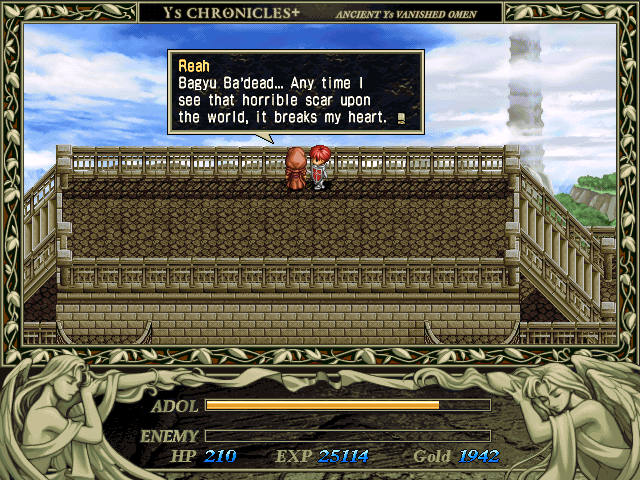
The music isn’t quite up to par with the PC release, but it’s actually slightly better than the PlayStation 2 version. There’s a new stage added to Ys I – Bagyu Ba’dead (AKA Vageux-Vardette, Bague Badet and Clifton’s Cliff, depending on the version), the crater where the floating island used to reside, which you visit in order to search for Sarah after exploring the temple. It’s short, but features a new boss. Otherwise, there’s not much new content – the rest of the artwork and movies are straight from Ys Eternal, although it’s missing the extra characters from the PS2 port. Both releases are a bit janky, but not terrible, and it’s the first time Ys I & II had seen official releases in English since the TurboGrafx-16 CD days, even if the translations done by Atlus aren’t quite consistent with other releases. (The Solomon Shrine is known as the Temple of Salmon, Dr. Flair is Dr. Fleah, etc.)

Ys I (DS)
Falcom went and outdid themselves in 2009 by releasing Ys I & II Chronicles for the PSP. This is yet another port of Ys I & II Complete, although it’s much better than the DS version, especially since it’s not only entirely 2D, but includes both games from the get go. The interface is redone so the gameplay takes up the whole screen, and there is an option to play with brand new character artwork, but otherwise, it is pretty much the same as the PC version. (It doesn’t include the extra area or boss from the DS version, nor the Dream World from PlayStation 2.) The coolest option is the ability to switch between three soundtracks: the original PC-88 FM synth music, the version from the original 1998 Eternal release, and a brand new set of arrangements done by Yukihiro Jindo, who did a similar revamp on Ys: The Oath in Felghana. They’re fantastic renditions with live guitars and high powered synth, and proudly stand up next to the TurboGrafx-16 versions in quality.

Ys I (PSP)
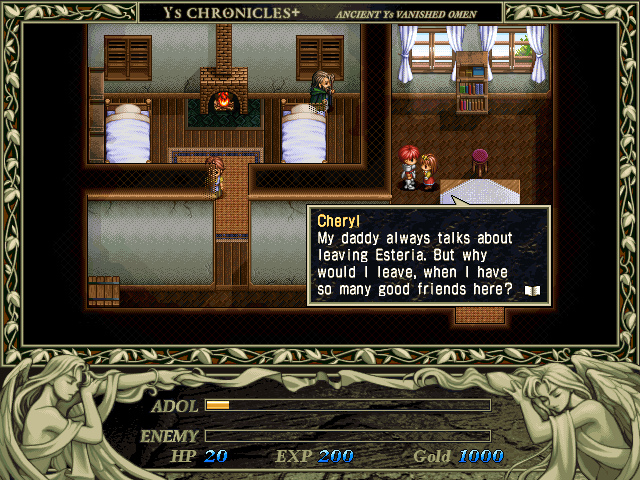
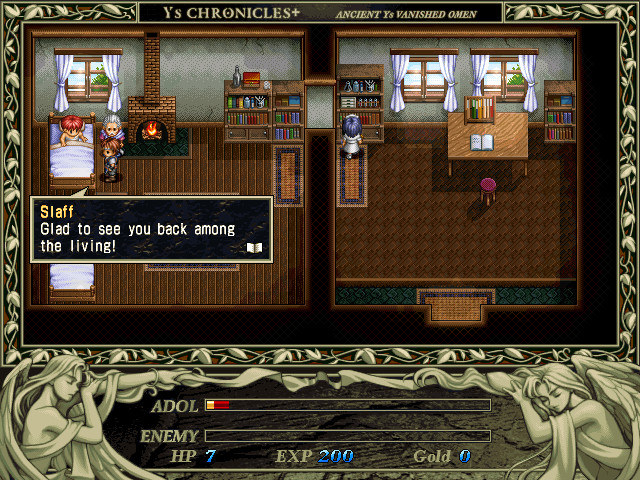
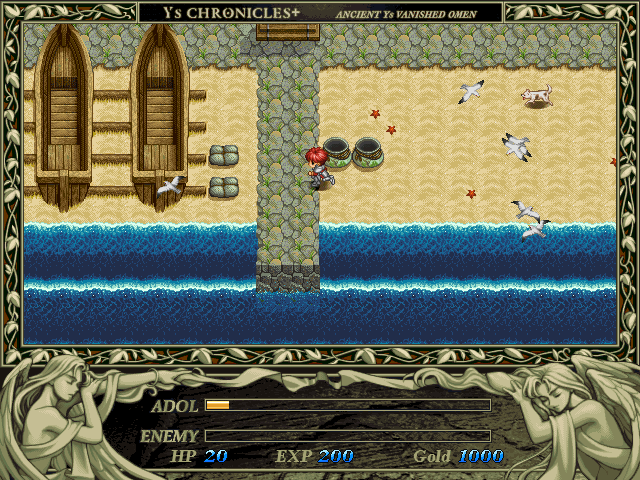
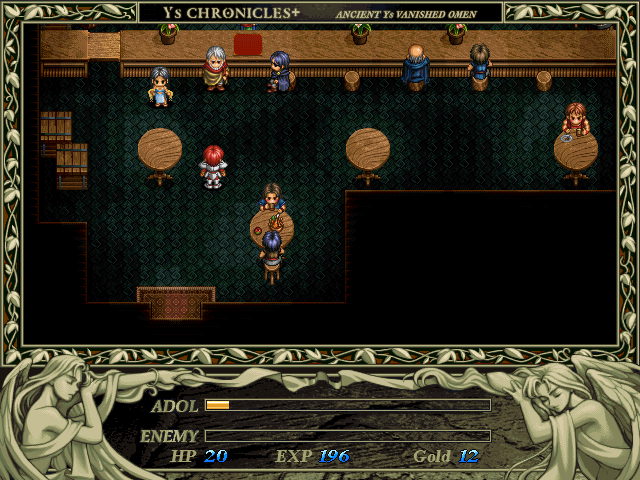
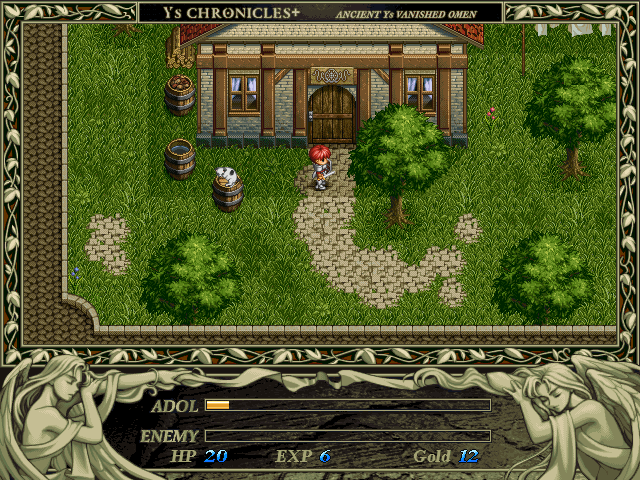
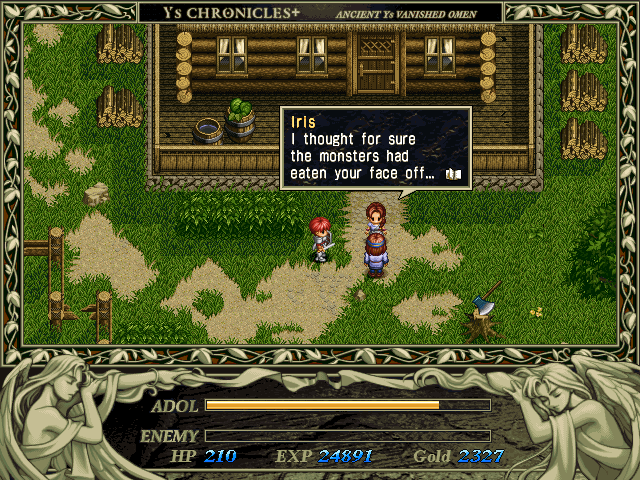
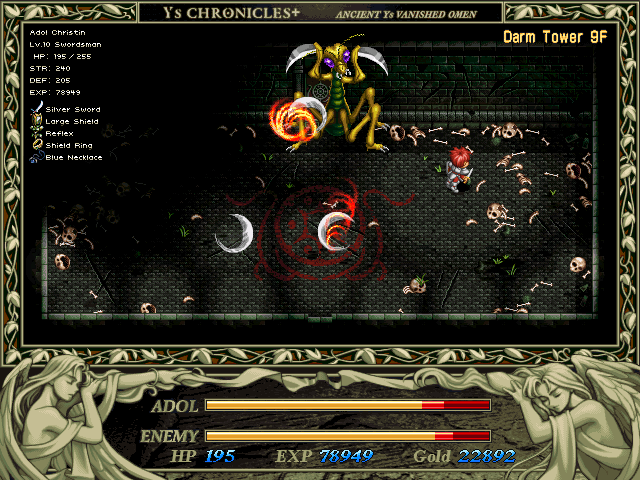
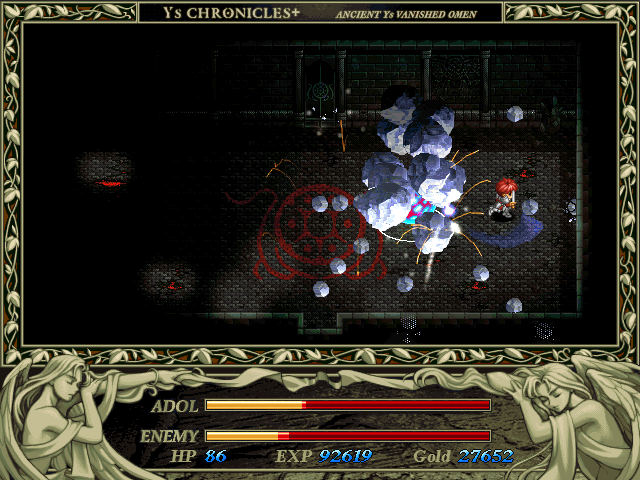
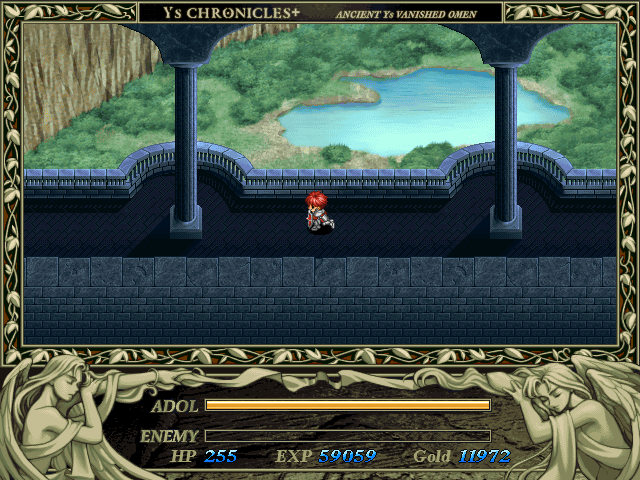
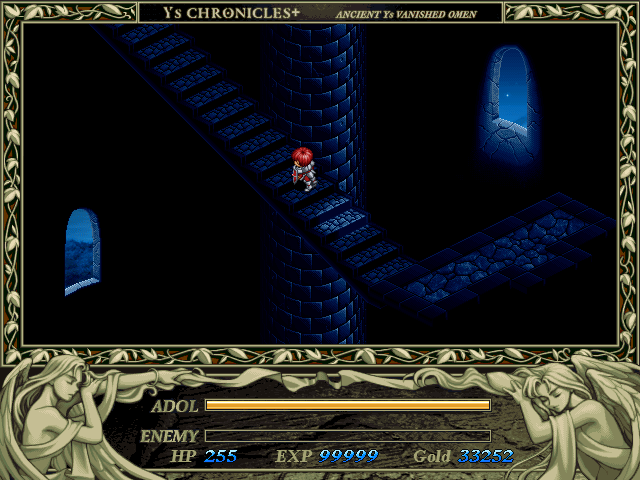
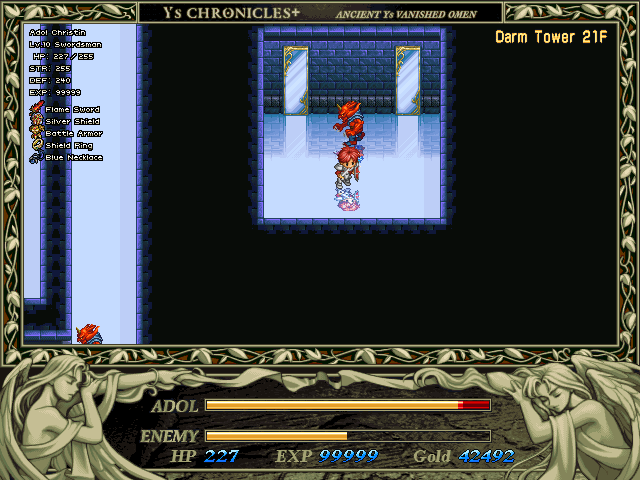
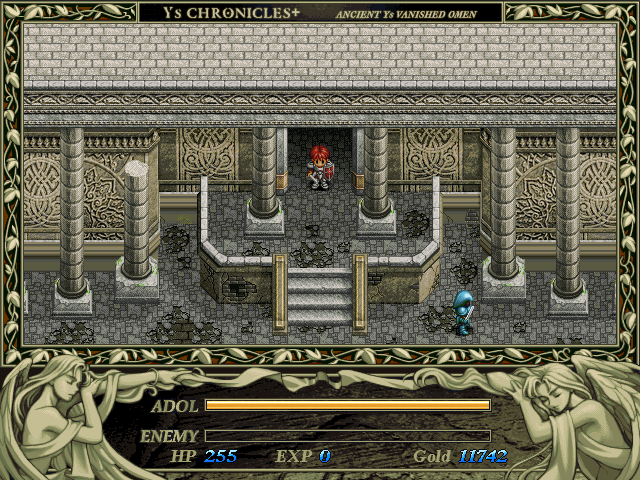
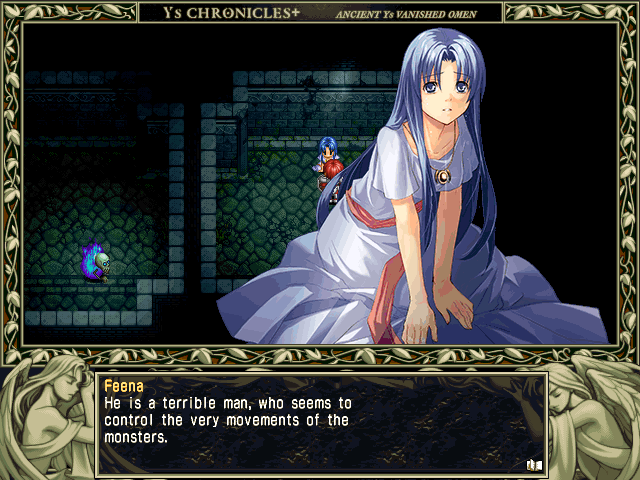
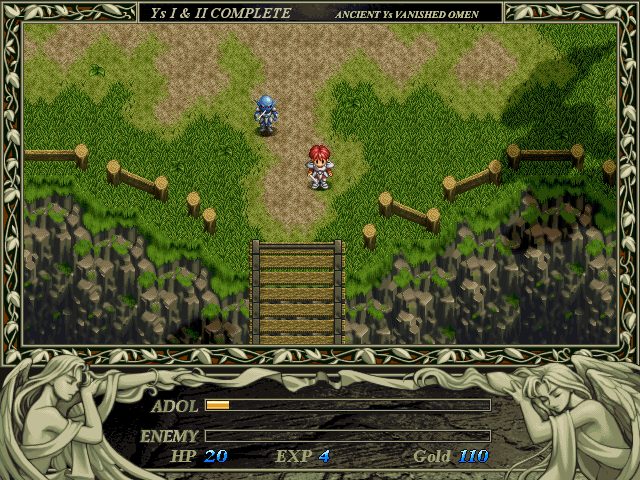
This was ported back to the PC and released by XSeed under the name Ys I & II Chronicles+. It supports both 4:3 and 16:9 modes, and is smoother than the PSP version. A different PC version of Ys I & II Chronicles was released in Japan, but it’s a lazy port that just takes the PSP game, cramped resolution and all, and sticks it on the computer.

Ys II (Chronicles)
Like many veteran Japanese software houses, Falcom is rather fond of bringing their franchises to the mobile sector, and there have been at least five different cell phone ports of Ys I. A first, low-res version of Ys Eternal was released late in 2002, published by a company named Cybird. Only half a year later followed another interpretation by Hudson, which is the only one based more closely on the old computer versions, and even followed up with the sequel. Then during the summer of 2004, Bothtec came up with yet another version, based on Ys I Complete.

Ys I (Mobile – 3D)
Then, Falcom teamed up with Taito and contract developer Barnhouse Effect, to bring both episodes as Complete versions. The first game was obviously based off the Bothtec release, but replaced the pixel art sprites for Adol and the monsters with some that look downsampled from the PC version. The same cooperation also brought about Shin Ys I 3D, a polygonal reimagining of the first game, and Adventure of Dogi, where Japanese players could hit the dungeons as Adol’s reoccurring companion.

Ys I Gaiden (Mobile – 3D)
Then, in 2015, Dotemu ported Ys Chronicles to iOS and Android platforms, with the first and second games released separately. The first uses a brand new, rather poor translation, while the second wisely licensed the XSeed translation.
Ys II Special (이스2스페셜) – IBM PC (1994)

Korean Cover
In 1992, Korean company Mantra obtained the rights to bring Ys II to IBM PCs. It took more than two years to get this version done, but it was more than just a mere port, as Mantra drastically redesigned and expanded the game into something completely new and unique. In fact, it’s far more fleshed out than even Falcom’s own remake Ys II Eternal. The promotional artwork was done by manwha artist Lee Myungjin (Ragnarok, Eojjeonji Joheun Il-i Saenggil Geot Gateun Jeonyeok). Naturally, all of the text is in Korean, so for Western gamers it’s hard to figure out what’s going on.

Ys II Korean
The plot takes elements from Falcom’s game as well as the Ys II anime, so Adol has to save Lilia from getting sacrificed at the beginning instead of finding her some medicine. There is a ton of entirely new content as well: Instead of visiting all the shrines for the six priests in the first dungeon, the structure of the quest is now more akin to Ys IV on the PC Engine. Every priest now has their own tower with a “Dark” form as the boss. The snow plains are now a sealed exile where criminals are sent, which means that it leads to a city of thieves, one of the new settlements. There is even a super secret new dungeon called Dangun’s Tower, where the mythical founder of Korea hands Adol the most powerful set of equipment.

Ys II Korean
Some of the mechanics have changed slightly. There’s now a sword button, although it’s still possible to ram into enemies if Adol’s level is high enough. Special items are now required to regenerate health or save the game anywhere, before finding them this can only be done by staying at an inn. Adol is sent back to the beginning of an area if he gets killed, so it’s not totally unforgiving. All of the maps have been completely redone, with much longer dungeons and bigger field segments. There is actually an area to explore in between the village and the ruins at the beginning of the game.

Ys II Korean
Some extensions seem to be there just for the sake of extension, though – the trinity of Sword, Armor and Shield is appended with a slot for Gauntlets, which does nothing but further boost the defense stat. Numbers in general get much higher, and Adol can be powered up to level 99. Towards the end the areas also become larger and duller. Some are also intentionally designed to be particularly annoying – it’s not unusual to notice on the 17th floor of a dungeon that one has missed an important key on the first one (without knowing it’s the first floor, of course, forcing you to comb through all 16 floors in between). The game also seems a bit confused about the world view of the Ys series, so it introduces more typical fantasy elements like elves and dwarves.
Characters

Aisha
Aisha is the first elf Adol meets, who takes him to the tribe’s village in the forest for bringing back her medal. She also supports him later. Not to be confused with the Aisha in Ys Seven.

Arisa
Arisa is the daughter of the elves’ leader, but she lives in hiding with an old woman in the snowy area. She eventually sacrifices herself to help Adol in a boss battle.

Ys II Korean
With all of the extra maps, there’s a bunch of new songs, and they’re just as excellent as the tunes Falcom composed – Kwon Goohee Kwak Dongil from team soundTeMP worked on the soundtrack. It’s too bad they never got rearranged or used in any other versions. The graphics are entirely new, although they closely resemble the PC Engine version of Ys IV.

Ys II Korean
It’s quite a good game, and could possibly have been the best version of Ys II, except for one major problem – the bugs. Crashes are common, and there’s even a point where progress is made impossible without using the item that allows saving everywhere – which can be easily missed and is not possible to backtrack to from the point in question. A CD version was planned to add voices and redbook music, although it never came to fruition. Neither did a tentative similar treatment by Mantra for Ys IV.

Ys II Korean