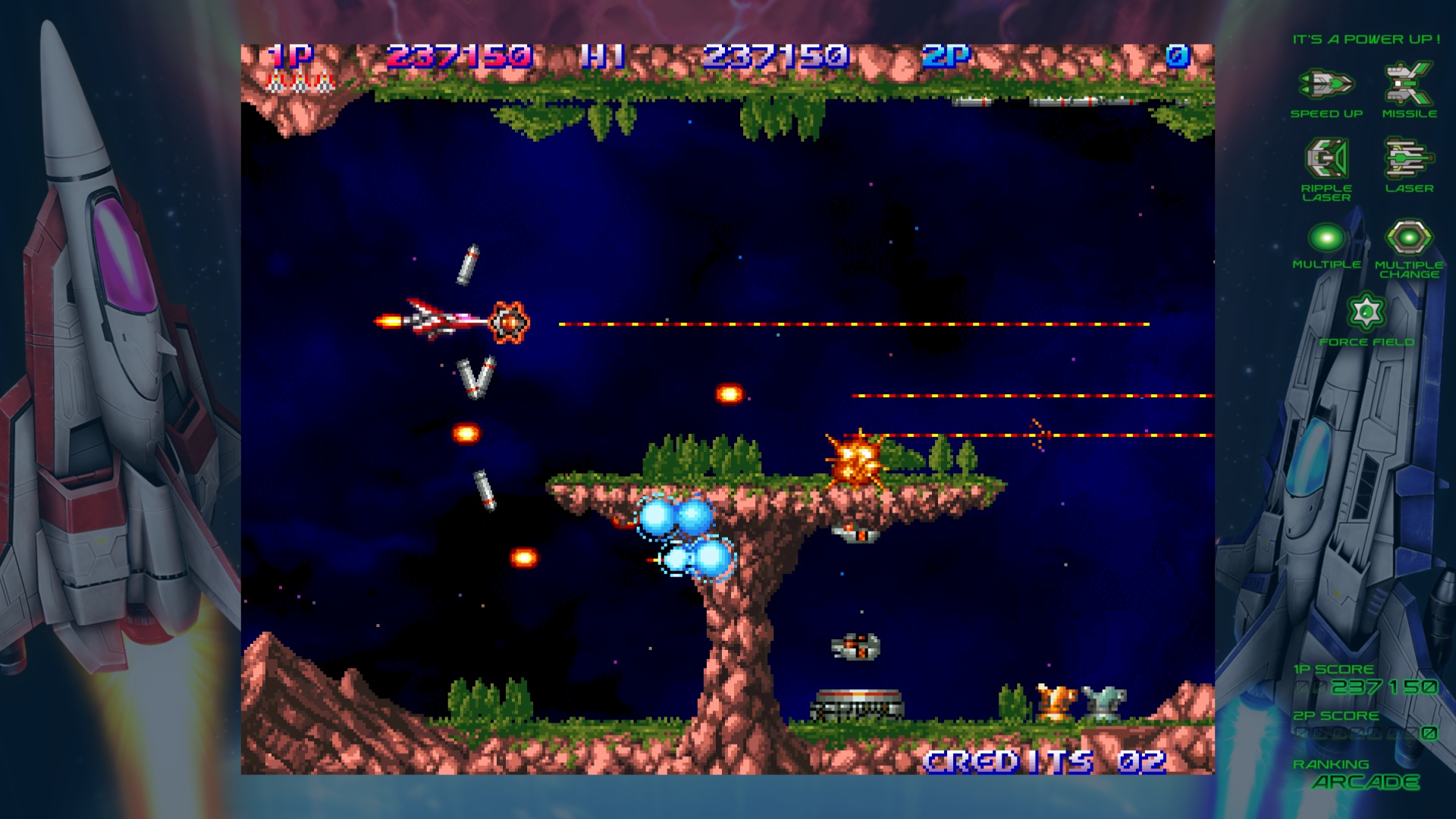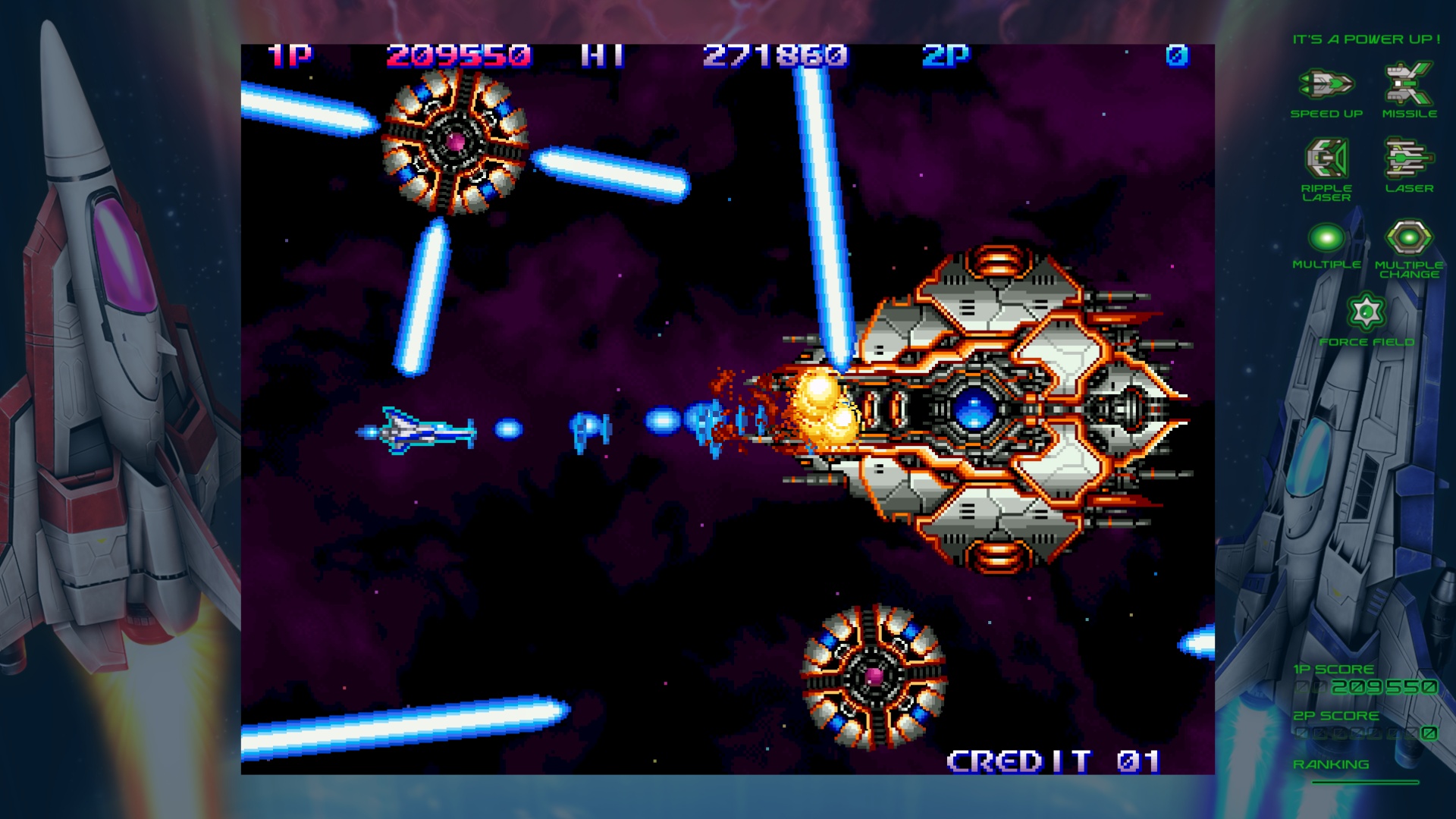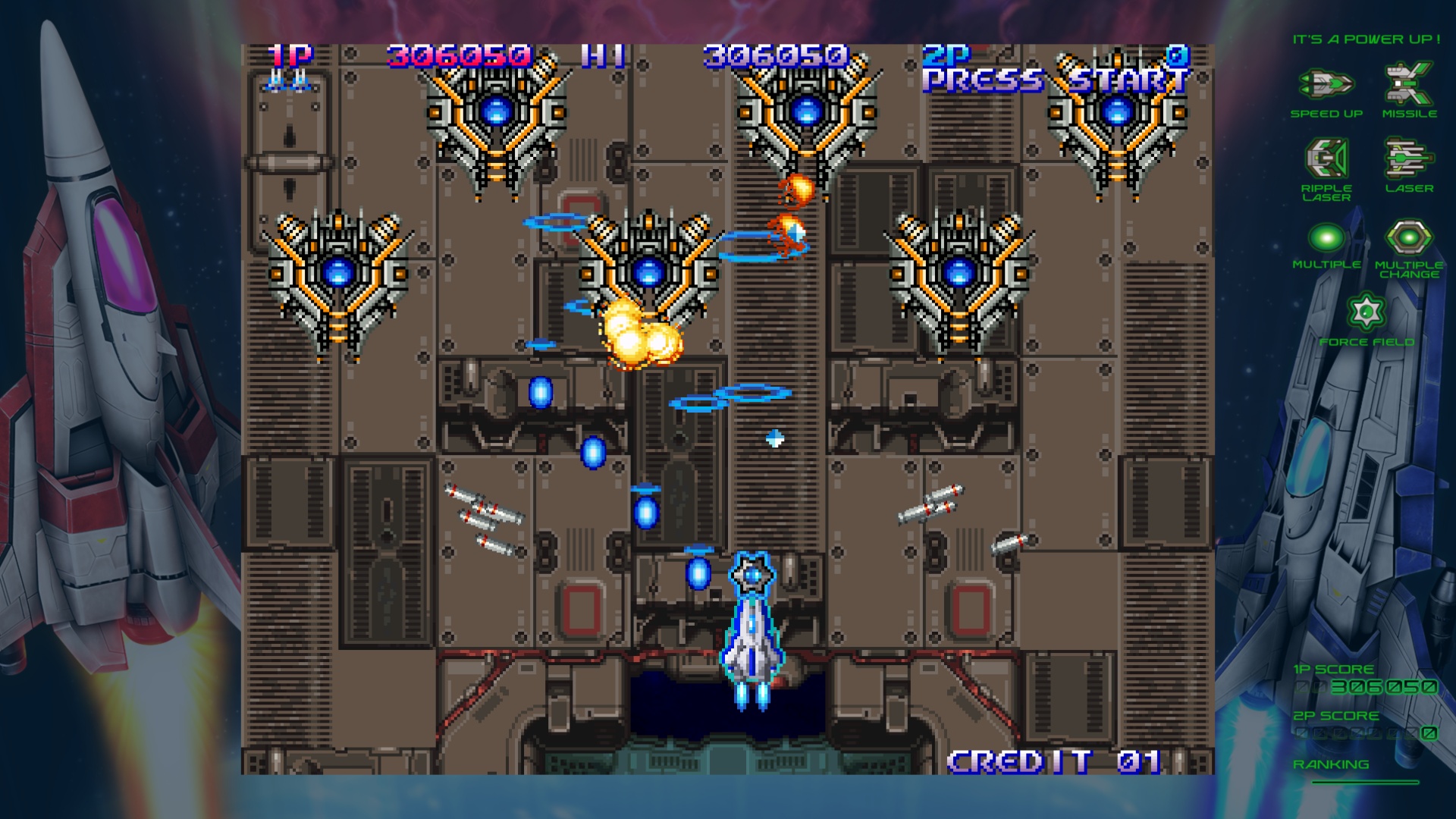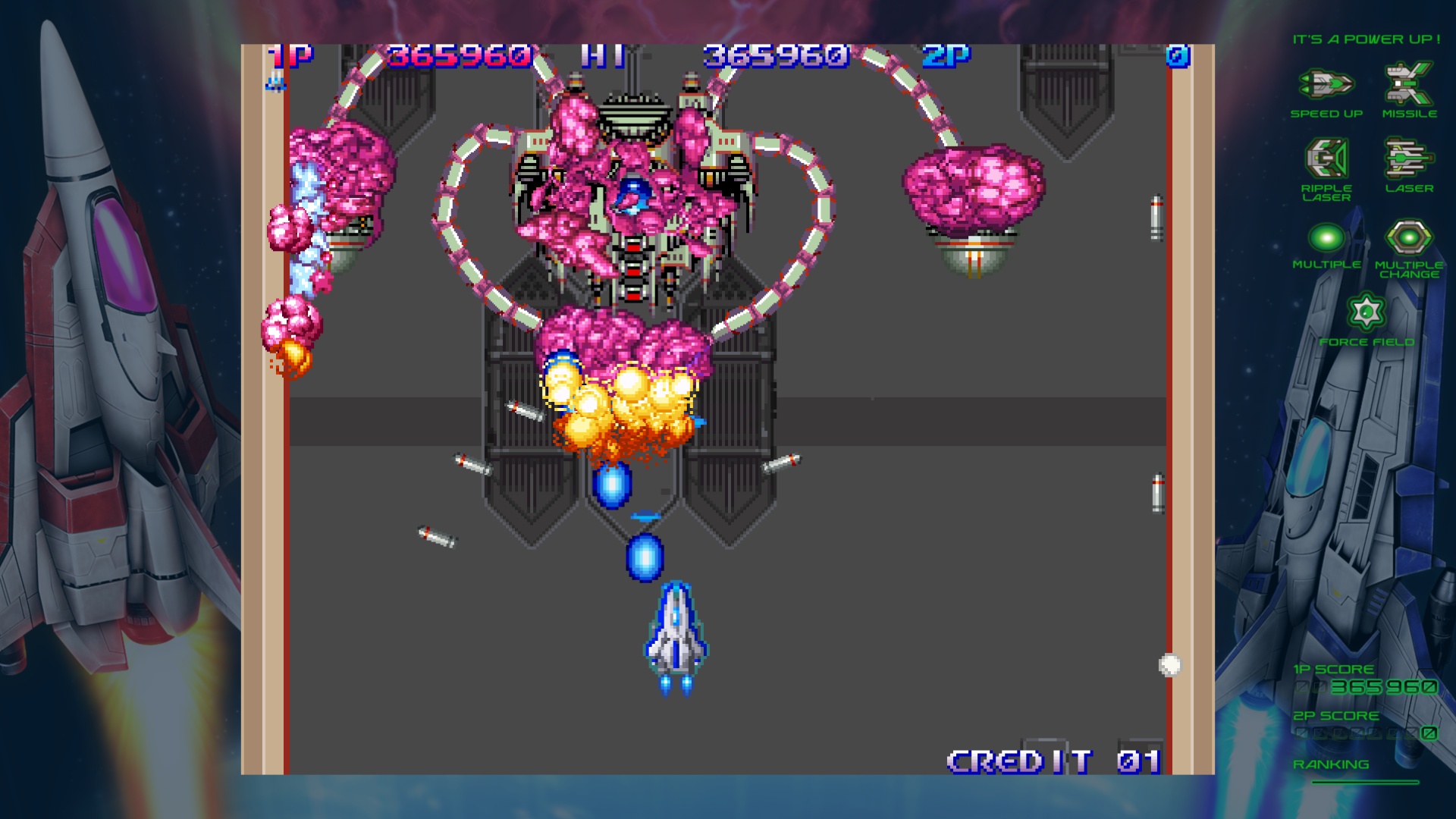
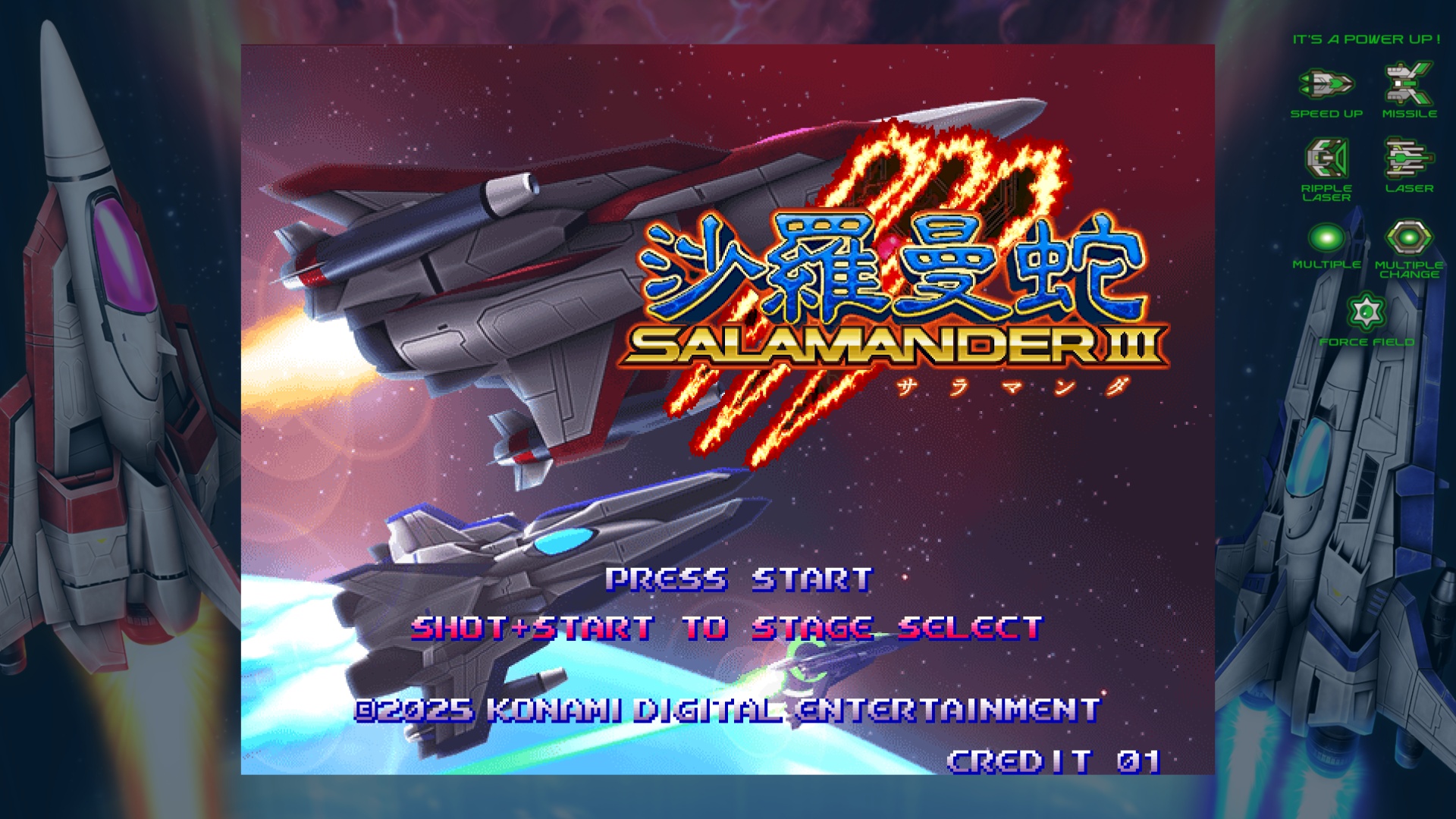
While M2 is largely known for their compilations, they also specialize in developing original retro-style remakes and sequels, like Fantasy Zone II DX for the PlayStation 2/3DS, TwinBee Da! on the PSP, and the three ReBirth (Gradius, Castlevania, and Contra) games for the Wii. Included in 2025’s Gradius Origins, Salamander III comes nearly thirty years after the previous Salamander and marks the first Konami shoot-em-up since 2011’s Otomedius Excellent. It maintains the key elements that differentiate Salamander from Gradius, including the straightforward power-up system, instant respawn, the two-player co-op, and the split between horizontal and vertically scrolling stages. According to an interview from Konami’s Ryosaku Ueno, M2 decided to make a new Salamander game because it features instant revivals, meaning it would be easier to balance (and therefore smoother to fit into the development schedule) than the game that used checkpoints like a Gradius game.
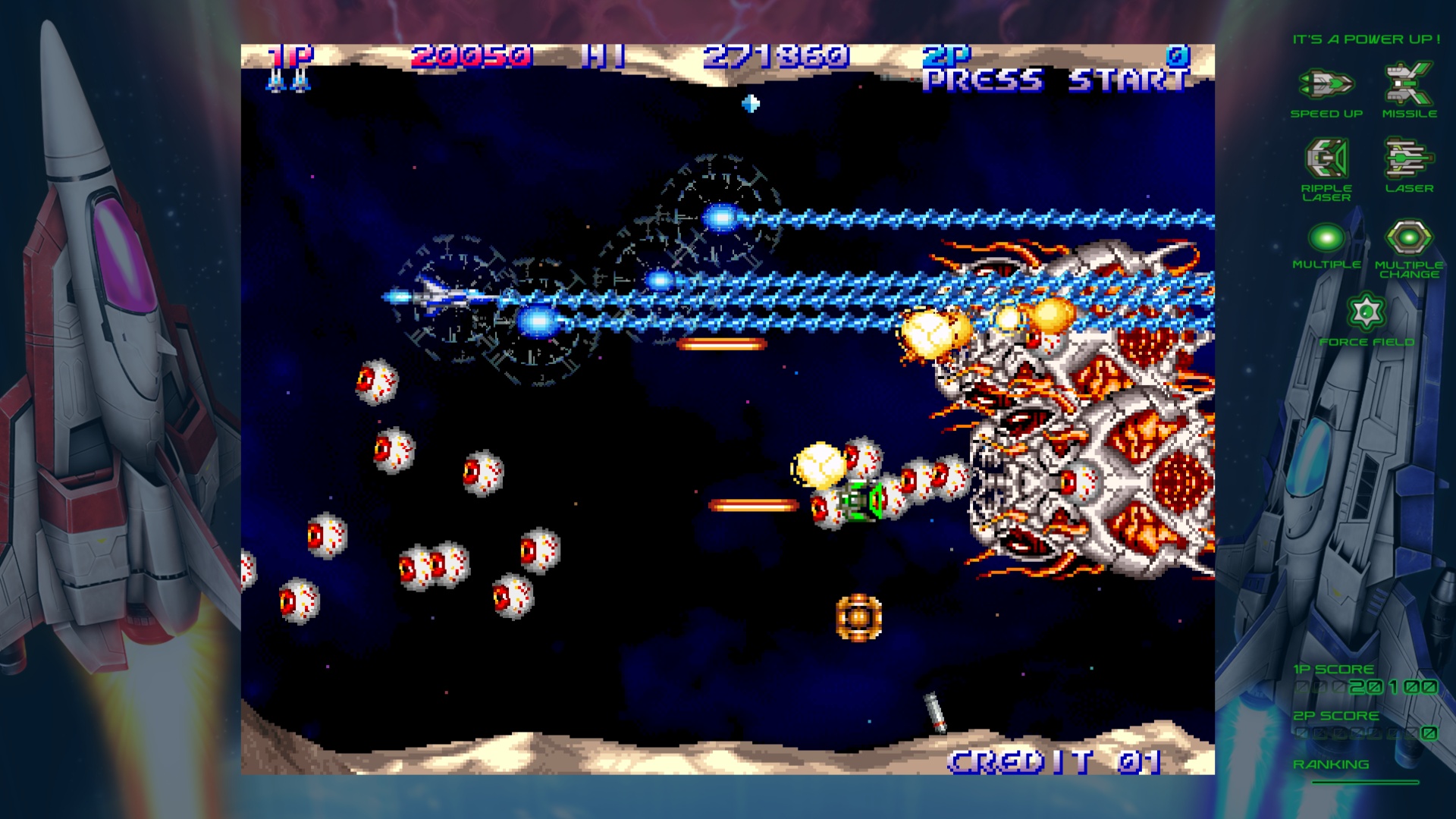
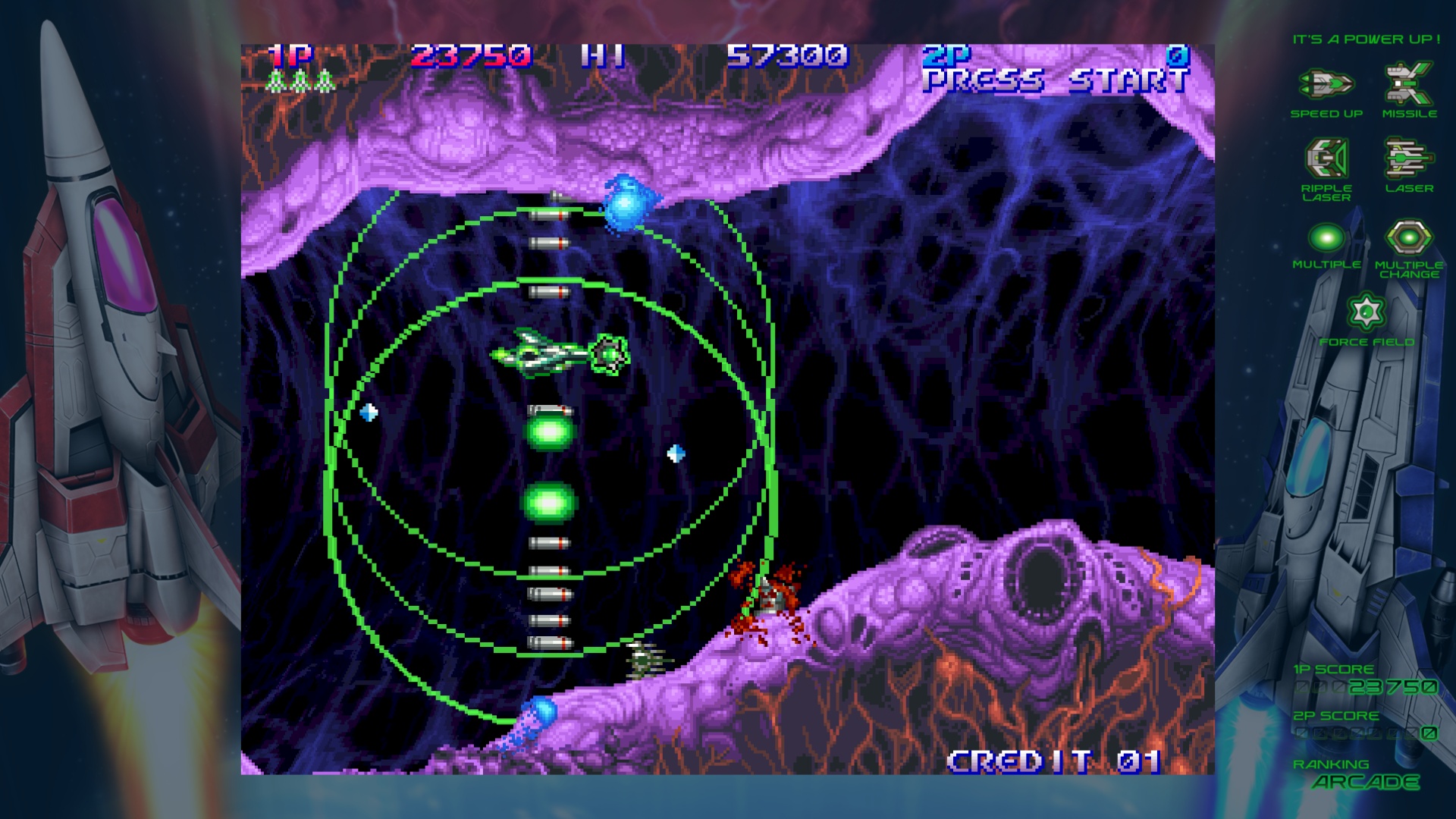
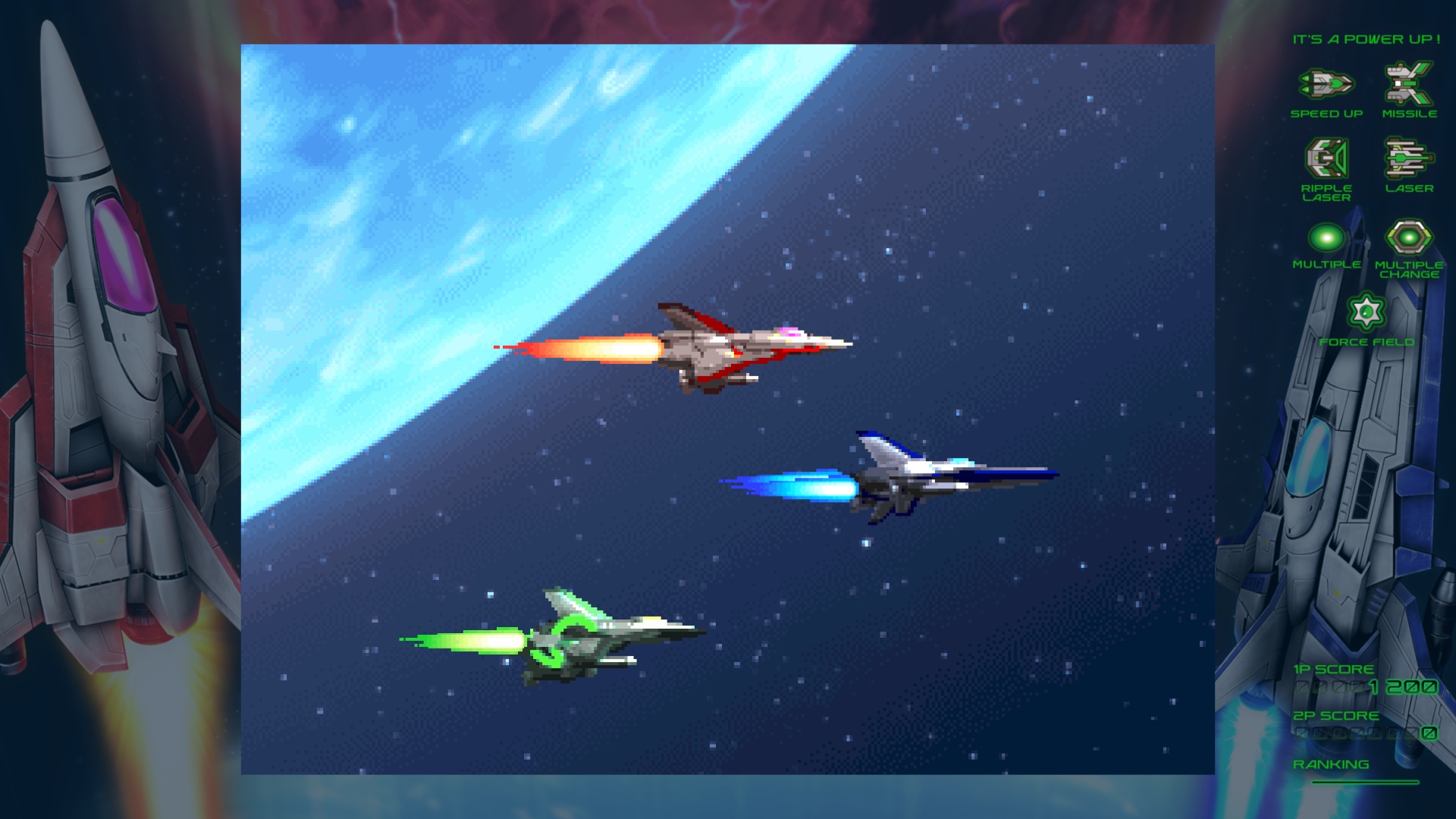
Storywise, Salamander III picks up right after the first Salamander, as Prince Latis has defeated the invading Zelos. Or, at least, he thought, because they’ve launched a second assault, so his younger sister jumps into the fray to defend themselves. You can pick from the Lord British Mk-III or the Vic Viper Type L (the “L” is for “Latis”), which are mostly the same with some slight differences between the standard and Ripple lasers. After beating the game, you’ll unlock the green-colored Gray Layer ship (based on the ship part of Esmeralda from Otomedius Gorgeous, which in turn was based on the Jade Knight from Gradius Gaiden). This has much different weaponry, including missiles that fire upward and downward, a Twin Laser similar to Salamander 2, and a Round Laser like the Jade Knight. There’s a new Change Formation power-up that makes your Options move in a snake formation, as in Gradius III. There’s also a new Burst attack, which temporarily powers up your attack, offering an eight-way surround-shot with your basic guns and stronger lasers with your other weapons. It stays active for a few seconds then temporarily depletes you down to your basic equipment before eventually returning to full strength.
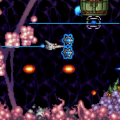
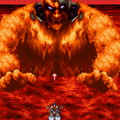
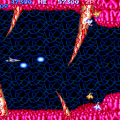
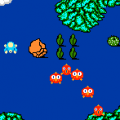
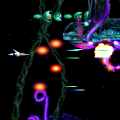
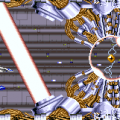
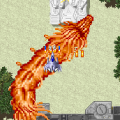
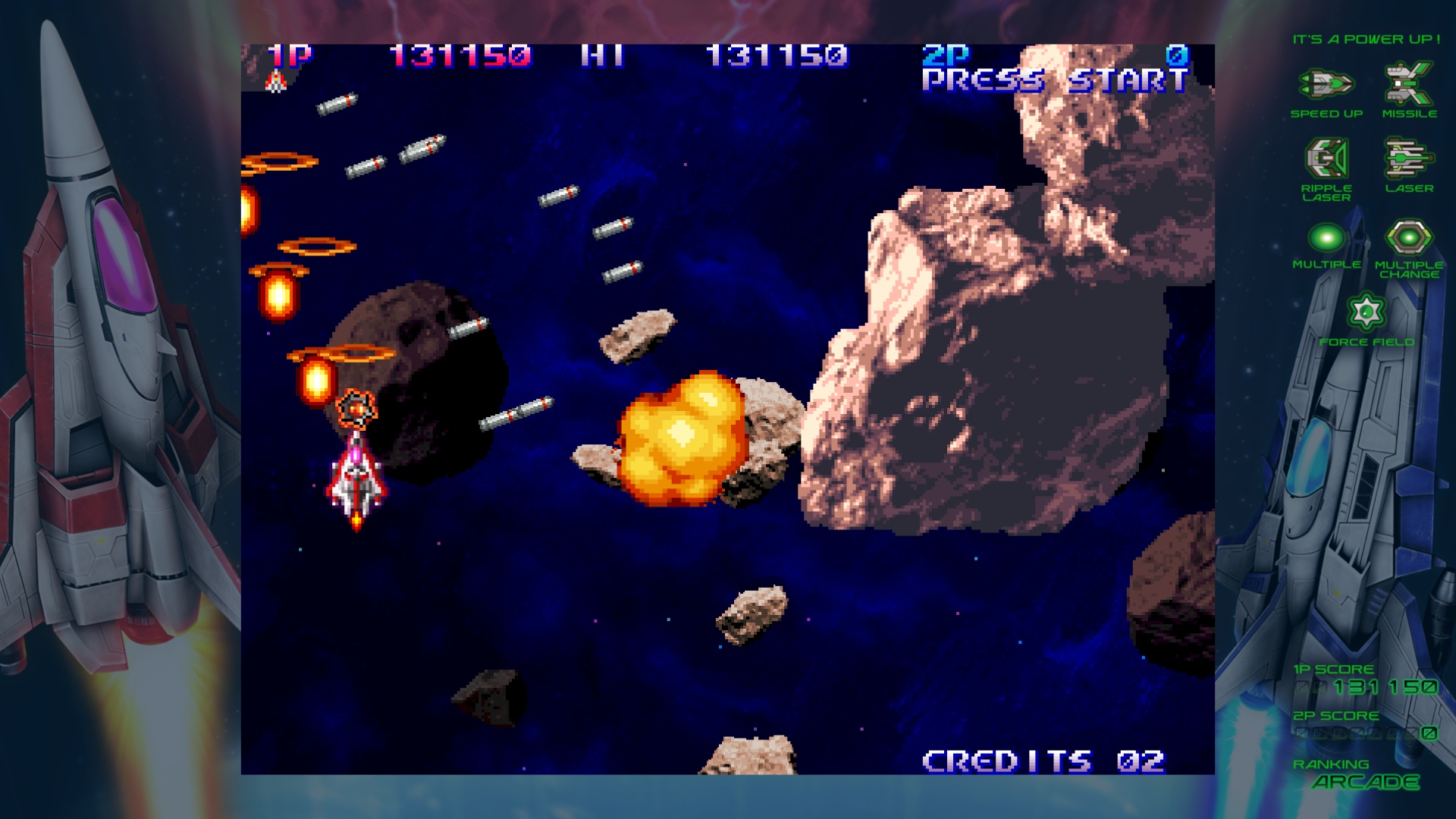
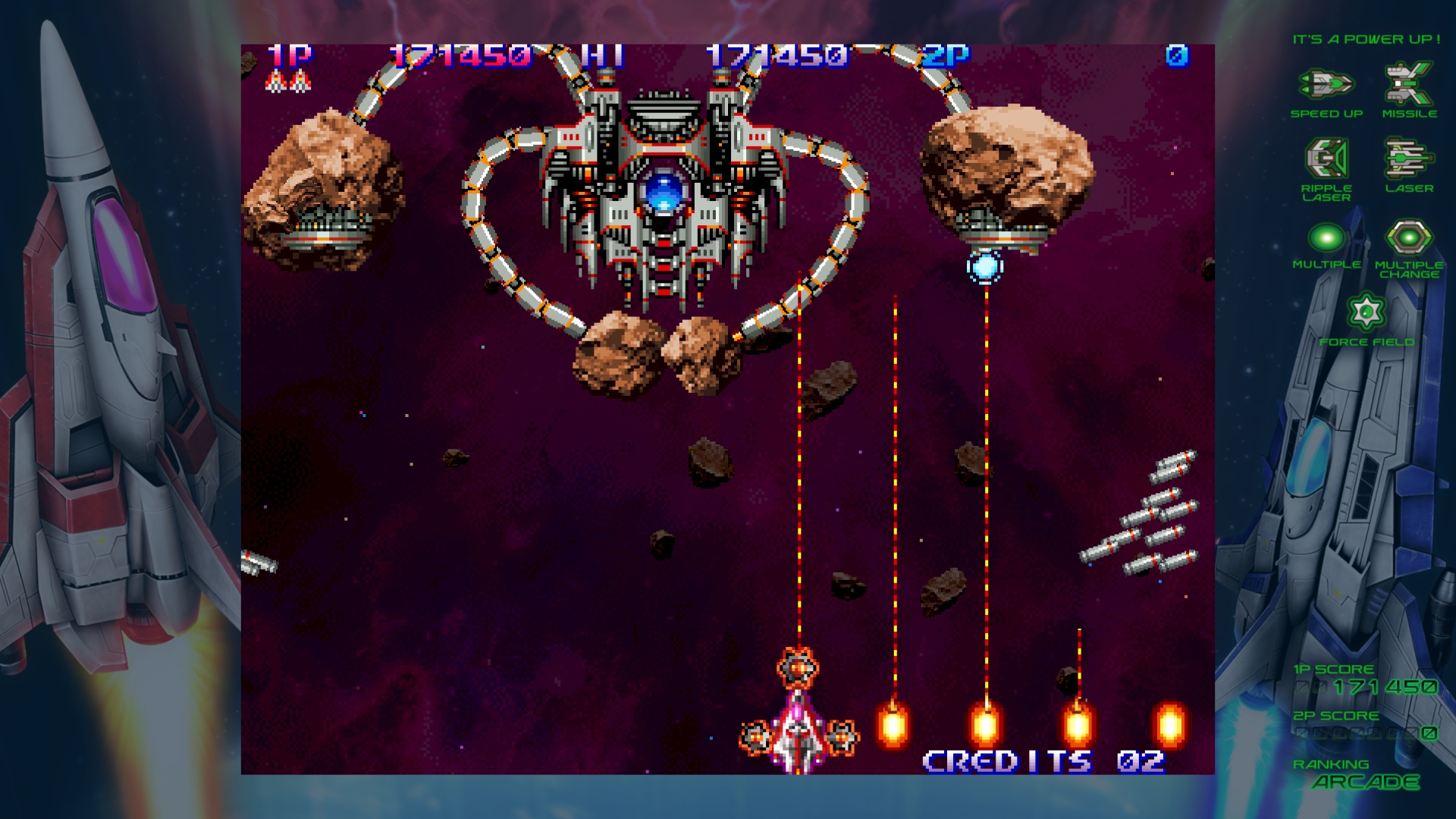
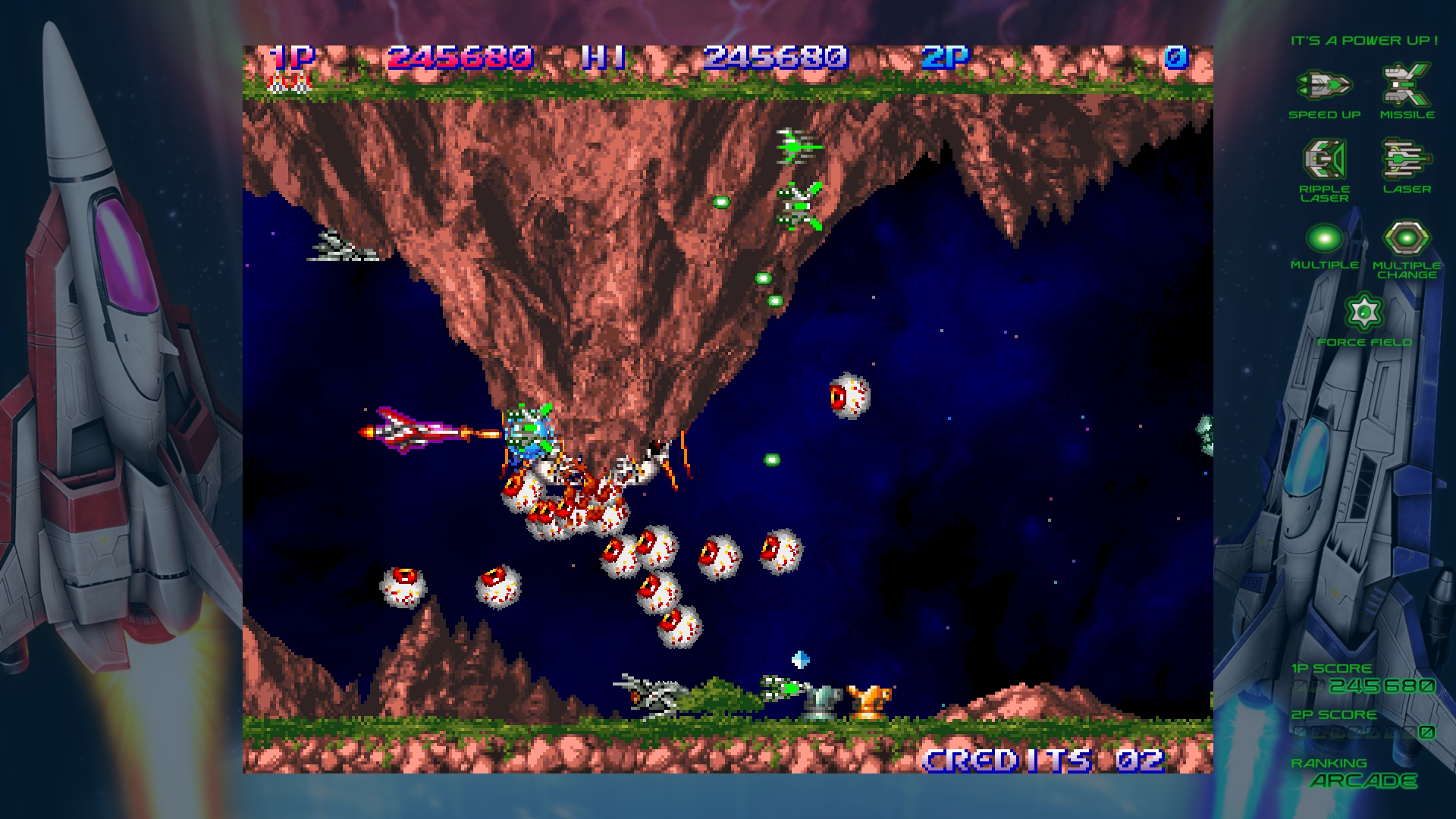
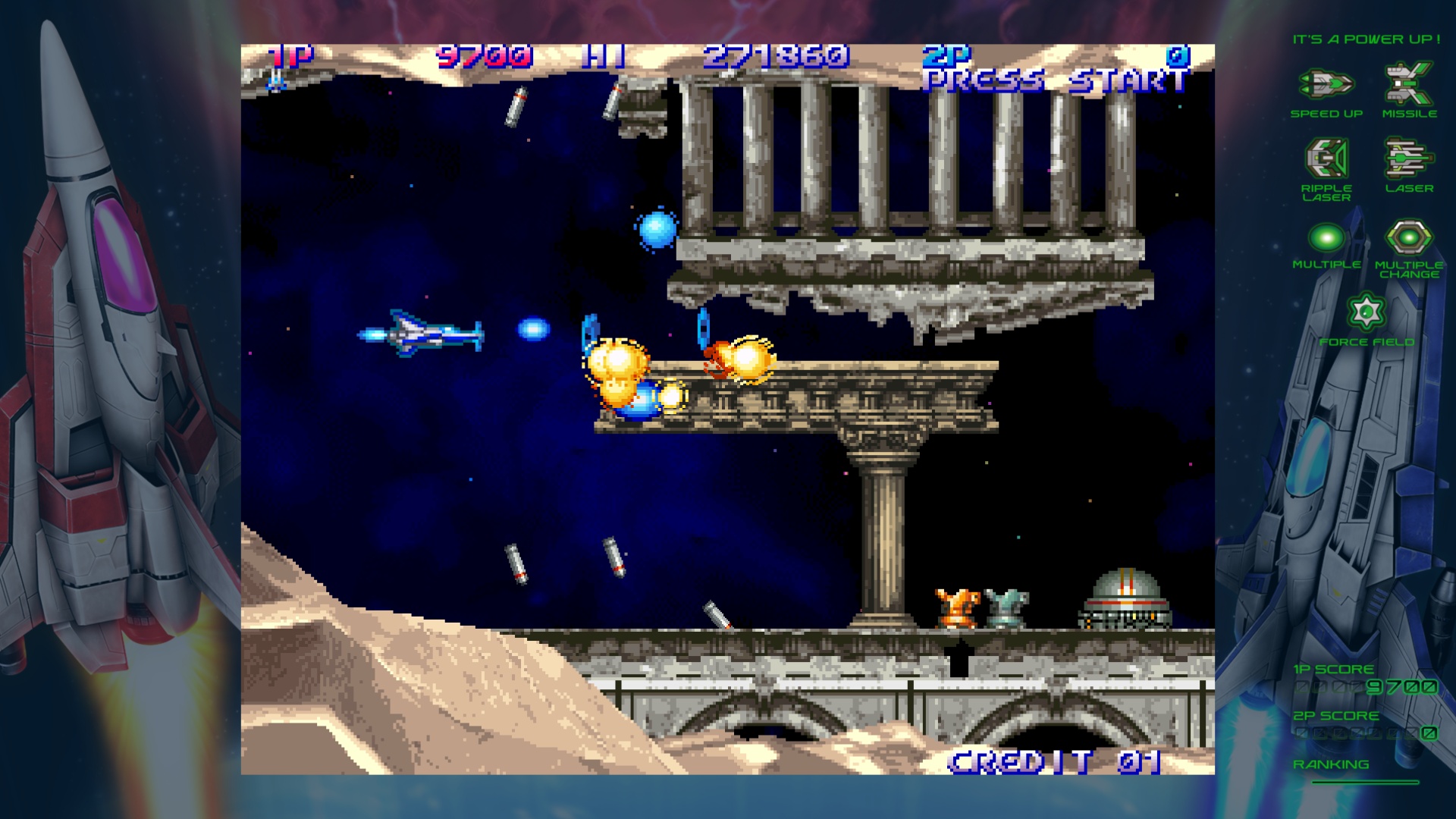
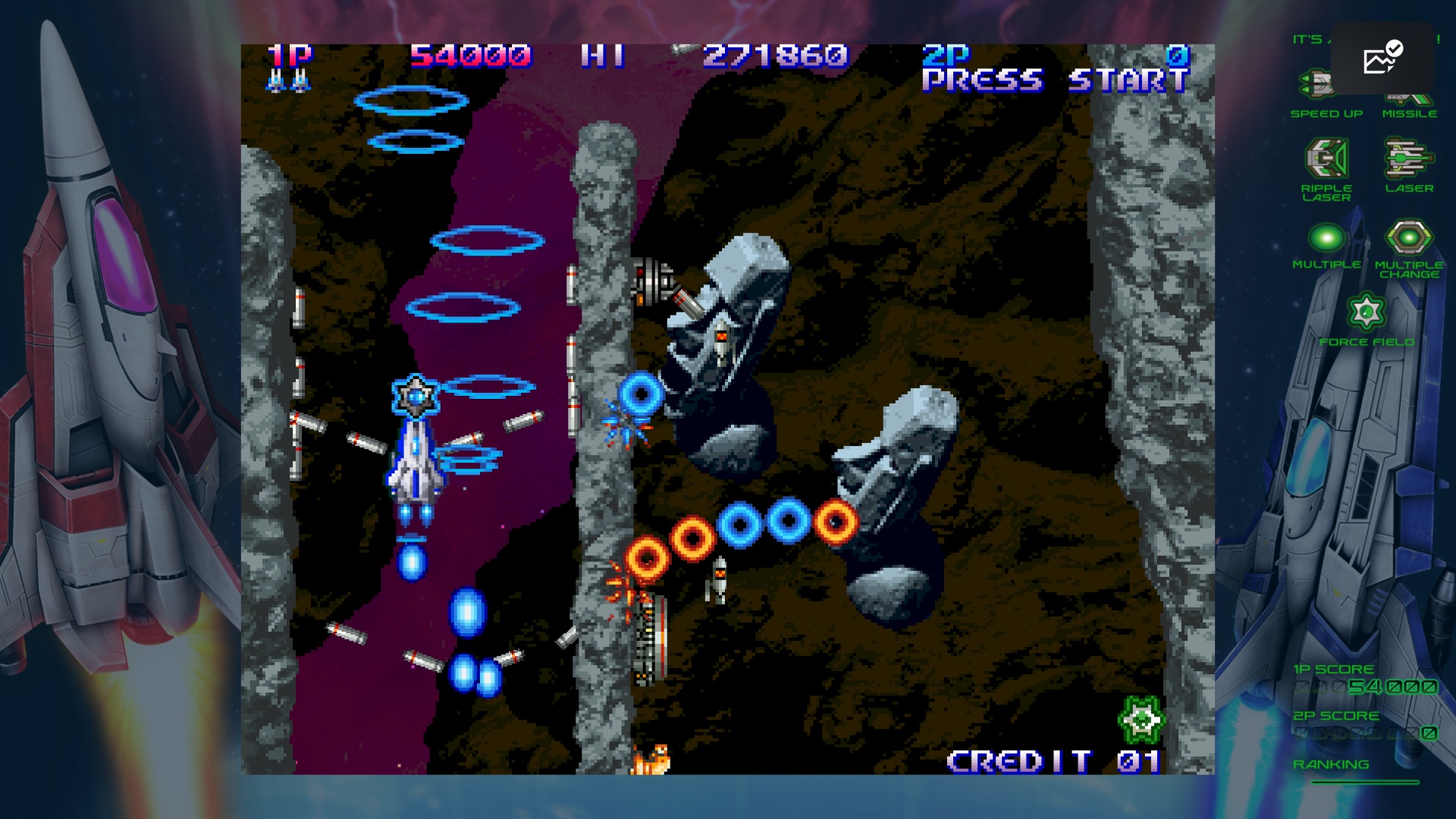
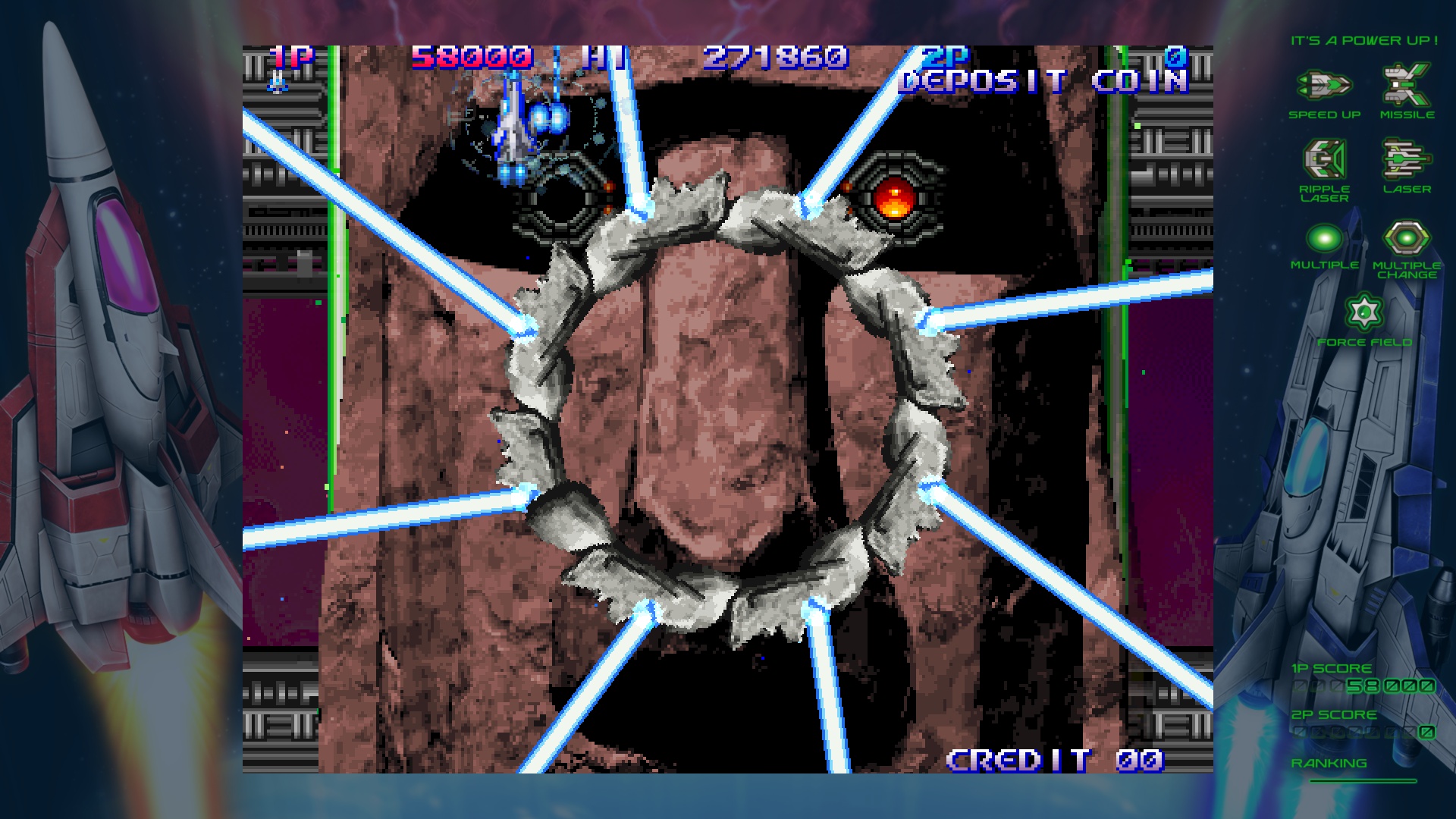
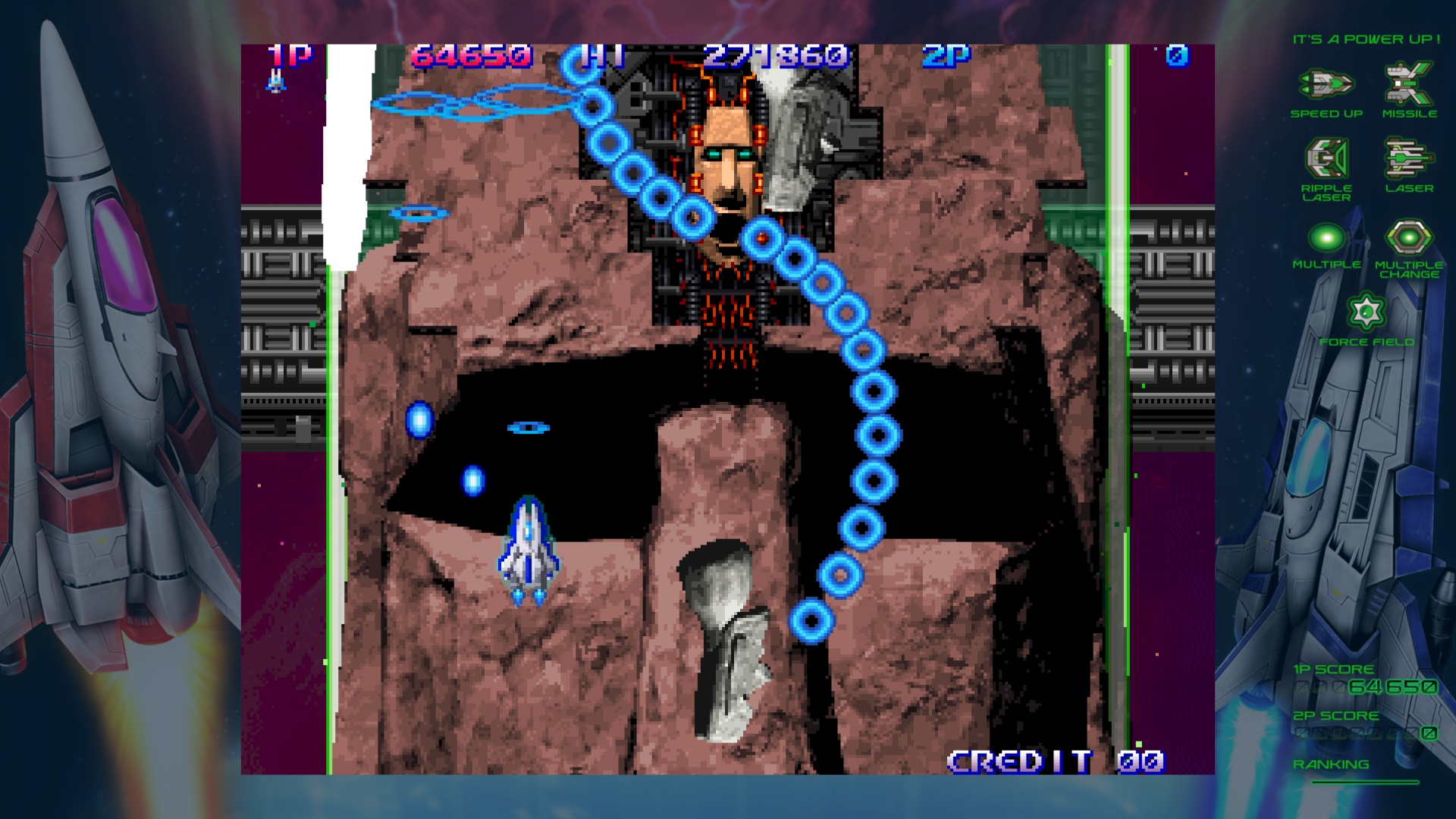
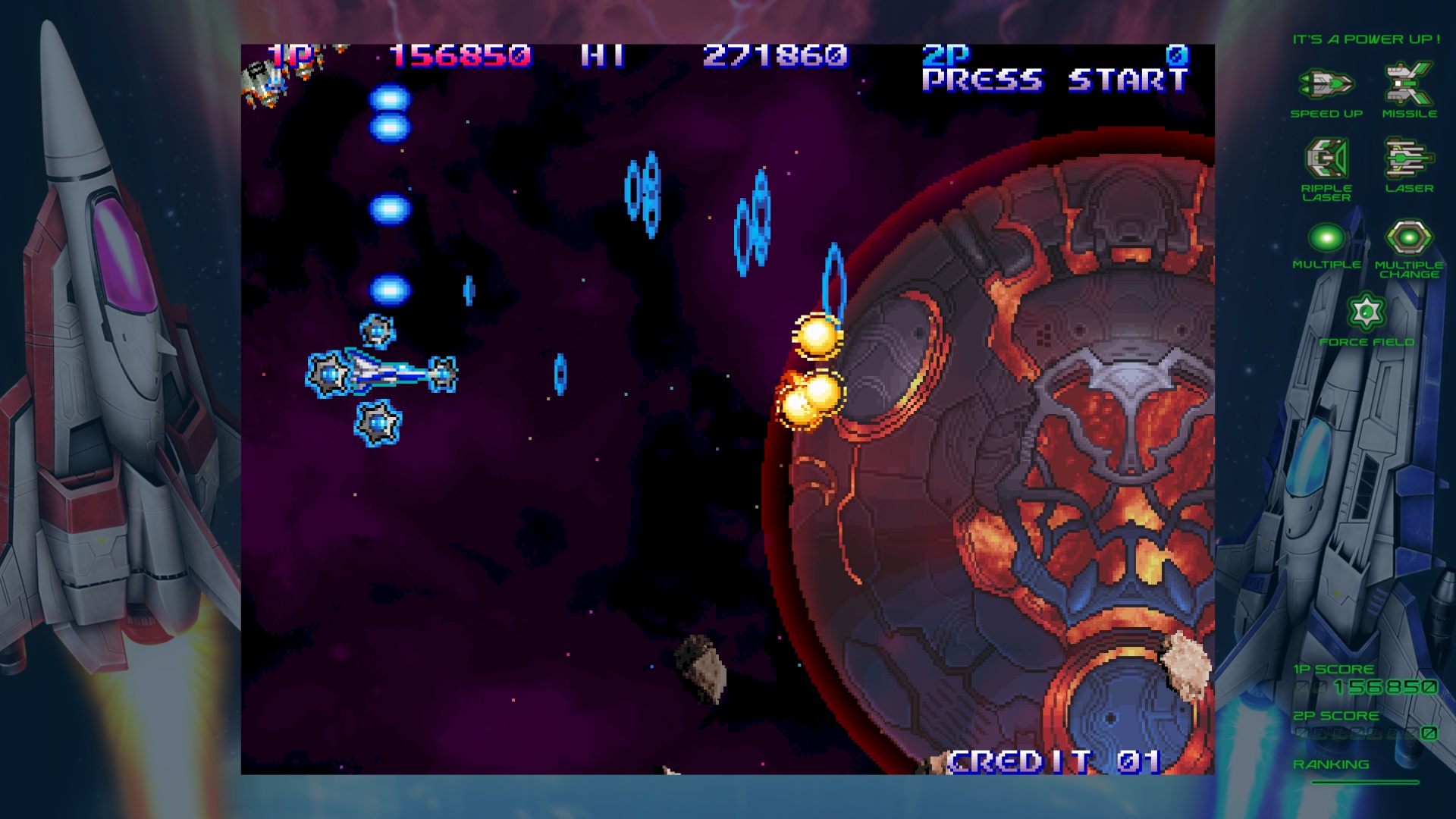
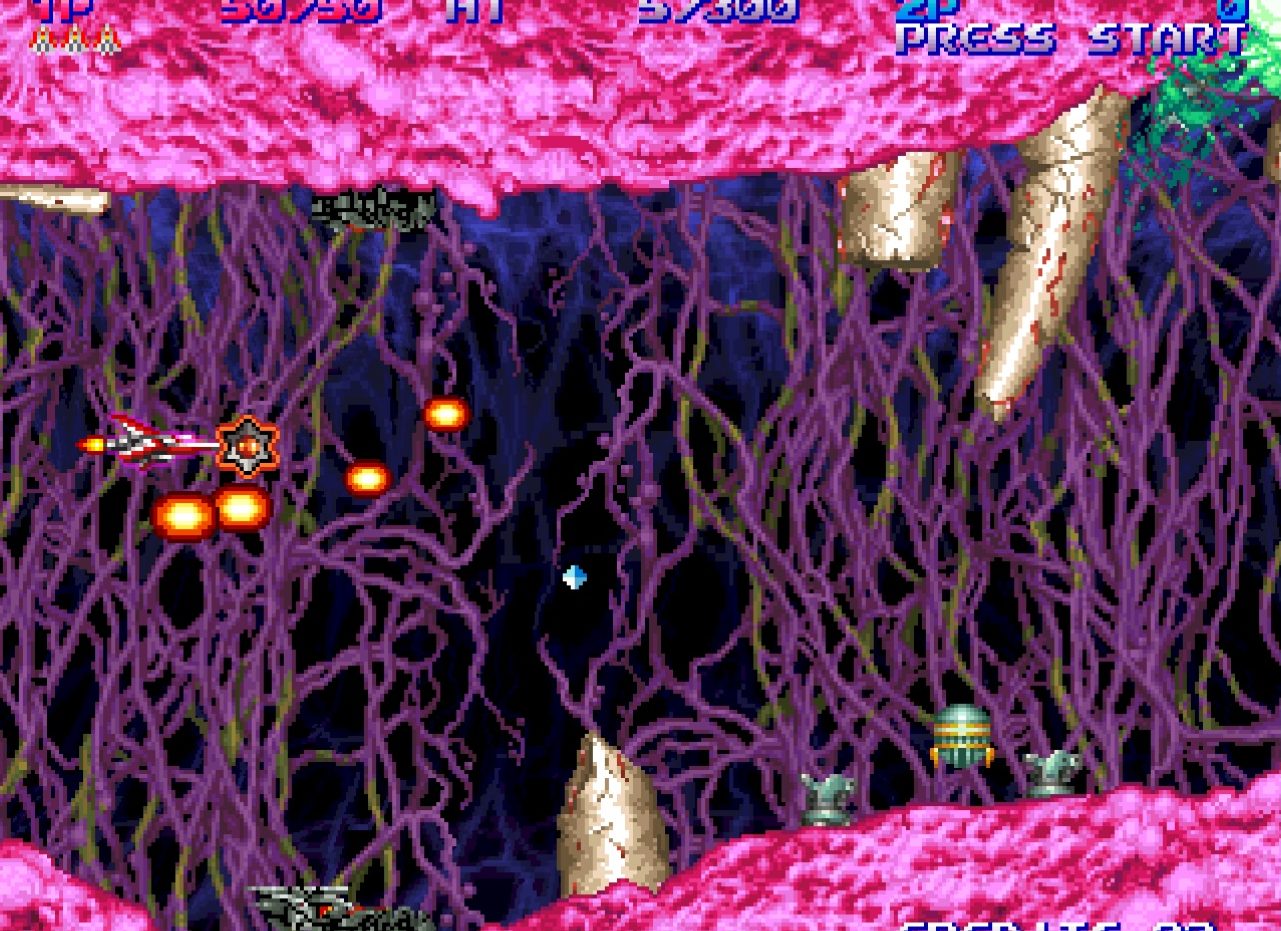
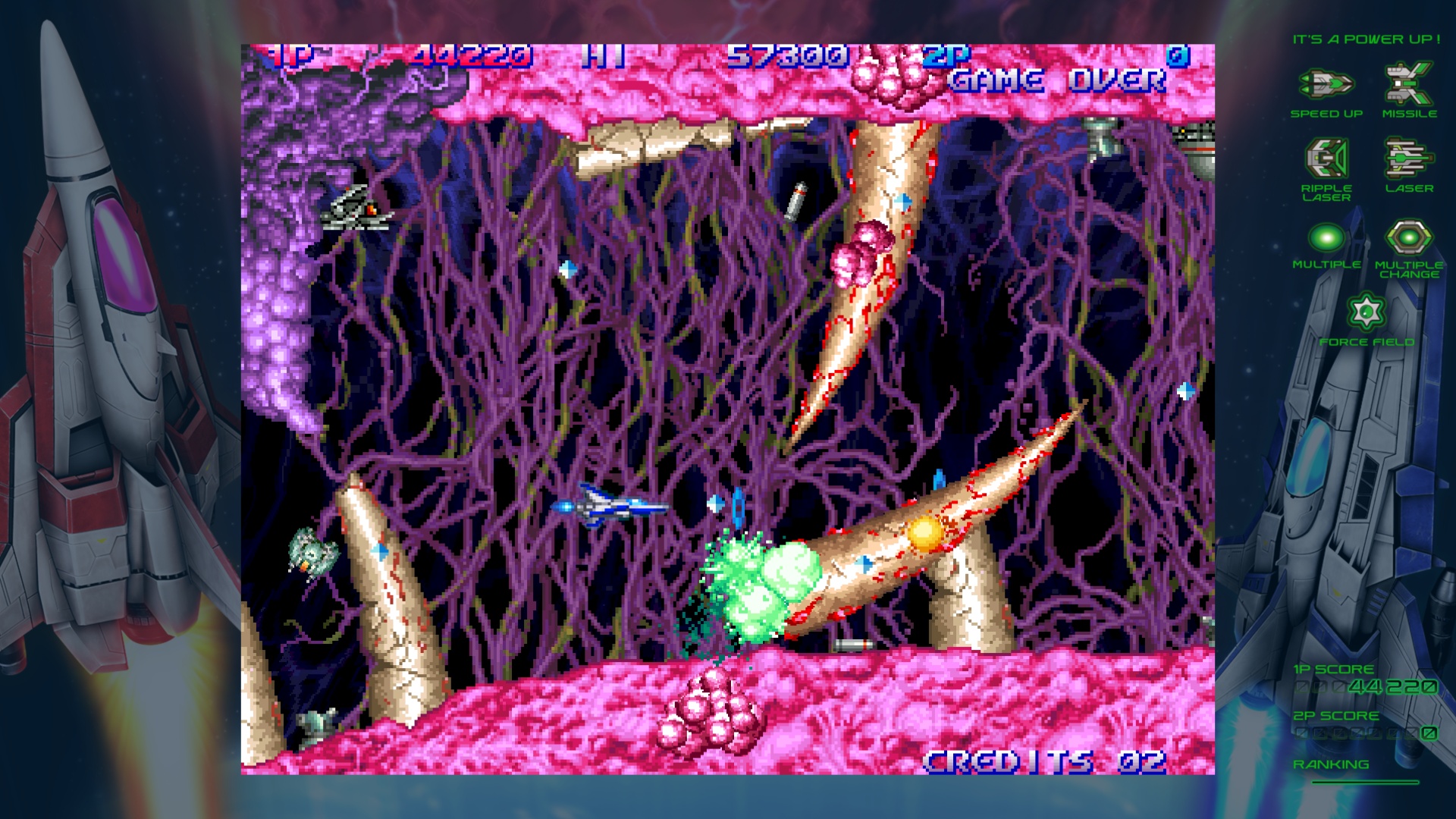
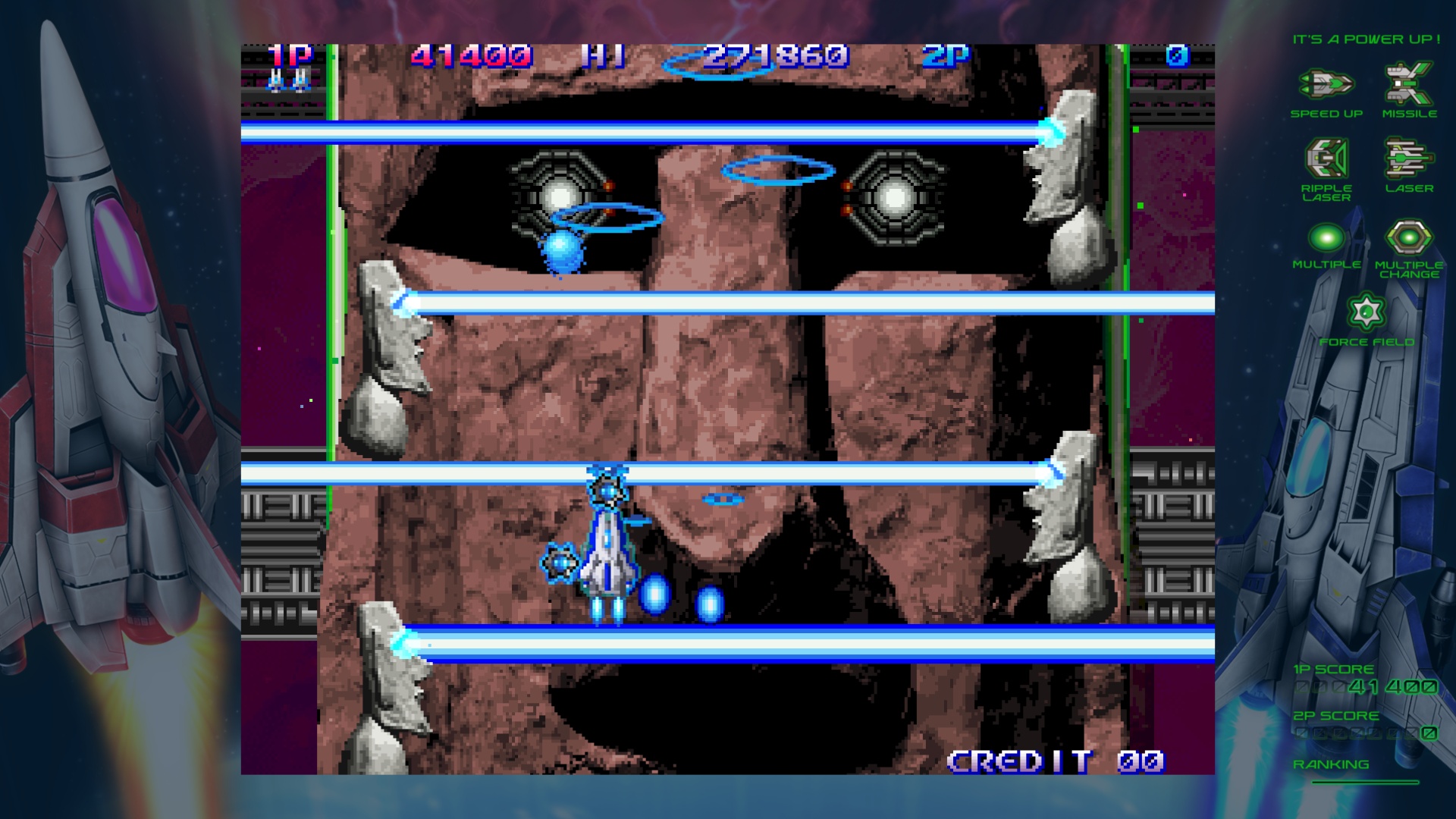
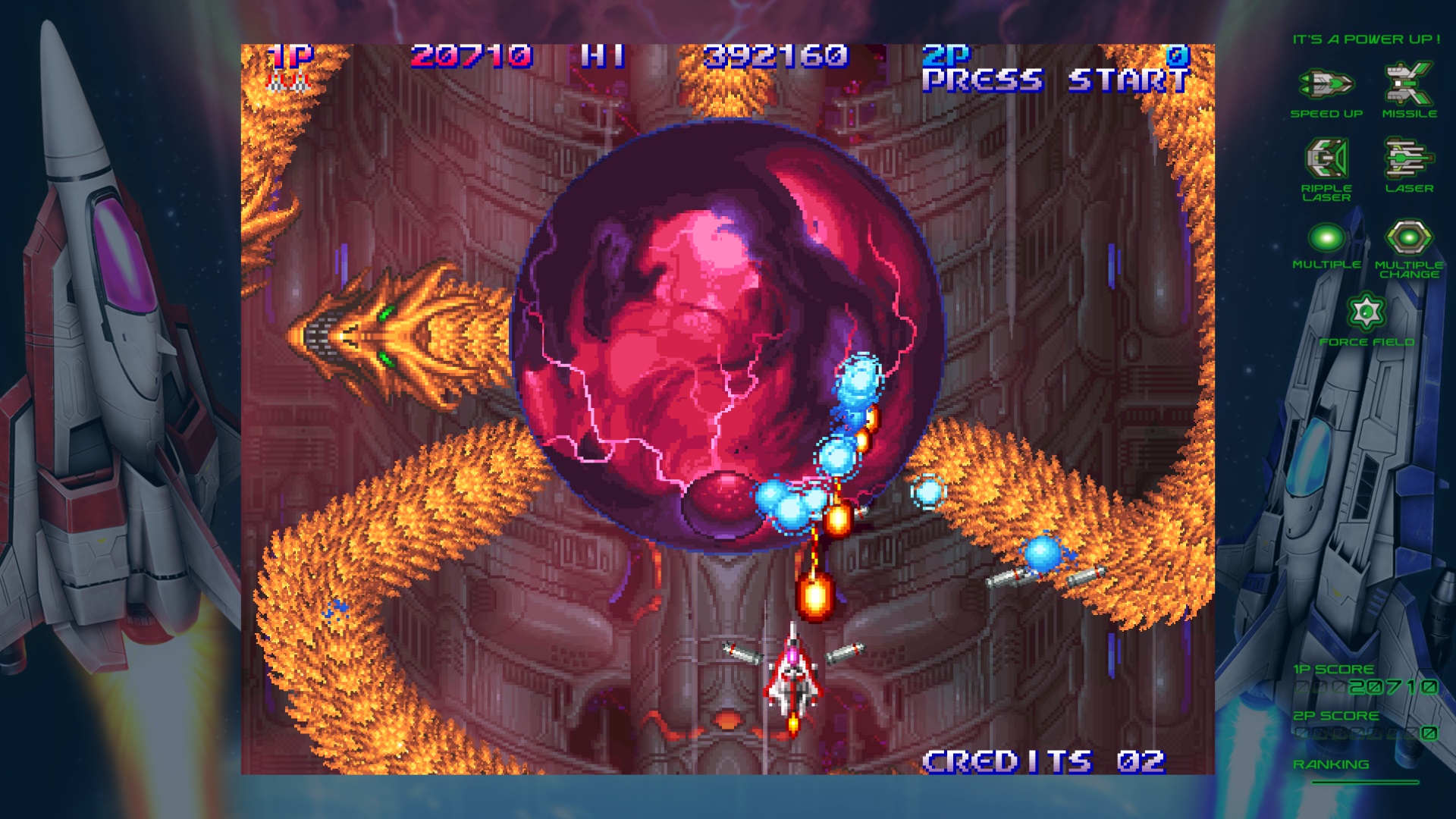
Rather than going with the computer rendered look of Salamander 2, this entry goes with pure pixel artwork, with some distorted warping animations occasionally shown in the background. Of course, you’ll find plenty of references to past games. The first stage is similar to the original Salamander, complete with enormous teeth, except you can knock them off with your shots. You’ll also uncover Moai statues hiding within the destructible muscle tissue. Part of the third stage is based on the opening level from Gradius, except the volcanos spew out eyeballs, while the other half channels the ruins level from the PC Engine CD port of Gradius II. The fourth stage ends with an enormous Moai head that’s approximately three screens tall, who is controlled by a smaller Moai head hidden inside its forehead. The fifth stage includes large orbs with gravitational pull, rather than shooting out flames as with past games. The highlight is the final battle against Zelos Force. In the original arcade Salamander, it didn’t put up much of a fight, as with many other Gradius final bosses, but here it puts up more of a fight with three different waves of dragon attacks. There’s plenty of creative stuff, although some areas just appear to be going through the motions, particularly the asteroid field in the second stage.
Compared to other Konami shooters, the difficulty is relatively gentle, generously throwing power-ups and score-based extra lives at you. The Burst attacks also let you make quick work of the bosses and make it much easier to recover after death. The invincibility window upon dying is a little short though, so you need to be careful with retrieving your dropped weapons. Subsequent loops are much, much more difficult and forbid continuing, though a level select option lets you play any stage you’ve previously reached.
The soundtrack is by Jane “chibi-tech” Nisperos, who also handled the music for M2’s Haunted Castle Revisited on the Castlevania Dominus Collection. Using the sound of Salamander 2, there are plenty of original tunes mixed with classic motifs, along with arrangements of songs from both games. All of it has that distinct Konami shooter sound, living up to its storied legacy. There’s also lots of digitized speech shouting out item names.
According to the menu in Gradius Origins, Salamander 3 was designed as if it would’ve been released in 1998. Had it been developed back then, it probably would’ve been seen as decent, but much like Salamander 2, it feels more like a remix of past ideas than its own game. But in 2025, an era with an absolute dearth of Konami shooters, it’s a splendid homage that feels like a homecoming.