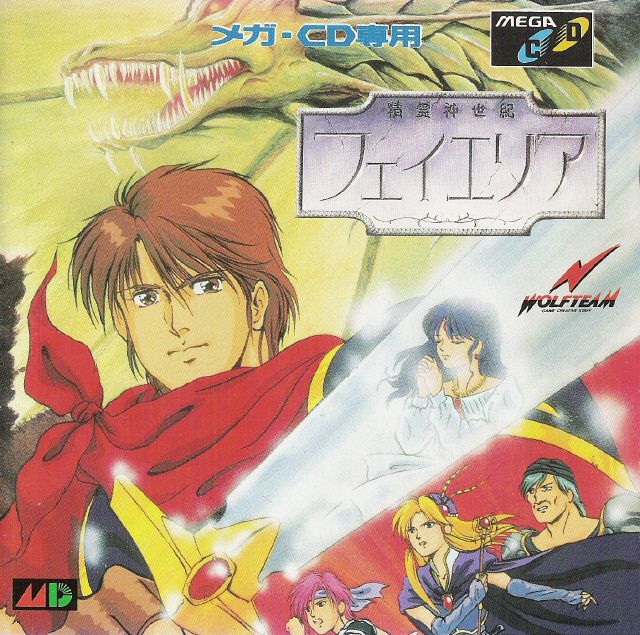
Mega CD Cover
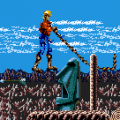
Lunar: The Silver Star was meant to be the big Mega CD RPG in Japan, but it wouldn’t be released until summer 1992, more than six months after the expansion’s launch, and early adopters needed something to keep them busy. The first RPG for the platform was Funky Horror Band, a simple title so slapped together that it could be beaten in just a few hours. This was followed up by Wolf Team’s Seirei Shinseiki Fhey Area (“Spirit God Century Fhey Area”), released in February 1992. This was not the first RPG by the developer, as it was preceded by the Arcus series for PCs (which themselves were later ported to the Mega CD), but it was their first effort for home consoles.
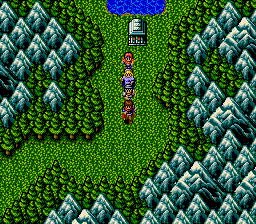
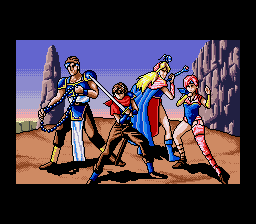
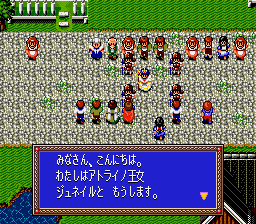
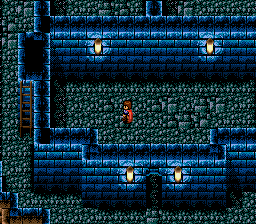
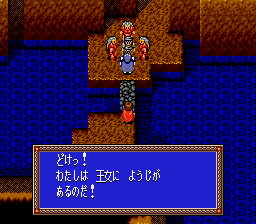
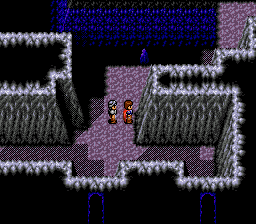
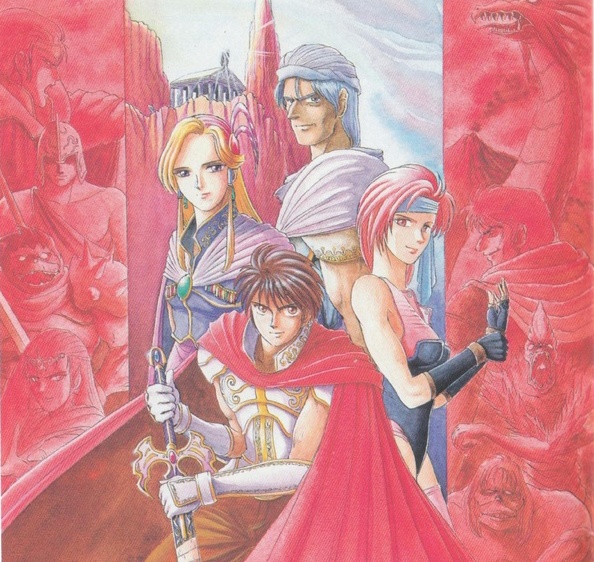
The game takes place in the fantasy land of Fhey Area, where a young man named Rayfel meets the princess in his humble village. She reveals to him that he’s the descendant of the legendary Spirit Knight, who saved the kingdom from a devastating war 1,200 years in the past. Before there can be any celebration, she’s whisked away to a nearby tower, an early mission requiring that Rayfel prove himself in combat. After rescuing her, he begins a quest across the kingdom, recruiting three other party members, to defeat the generals of the Demon Dragon Army.
Characters
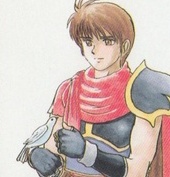
Rayfel
The hero of the game and descendent of the Spirit Knight. He’s strong with physical attacks but middling with most magic.
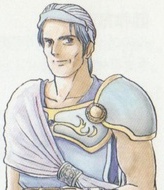
Talfoh
A warrior-priest who’s also the captain of the Atlantean Kingdom’s guards. He has strong attacks and excels in healing magic.
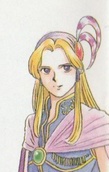
Rian
A brilliant magician with weak physical attacks but can effectively wield almost any type of spell.
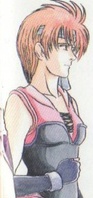
Shifon
Rian’s sister who’s a skilled martial artist, a powerful bruiser but fails at magic.
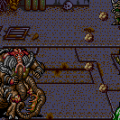
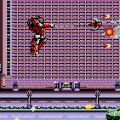
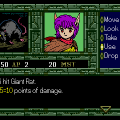
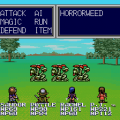
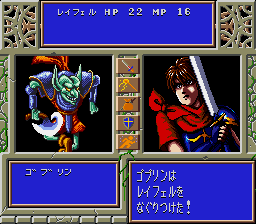
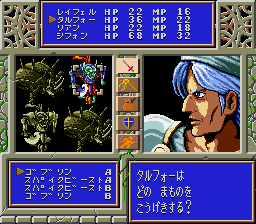
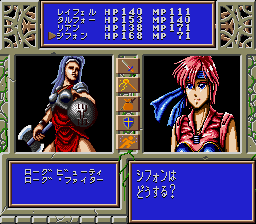
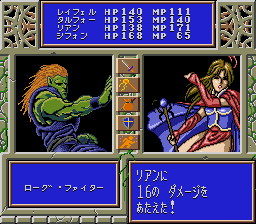
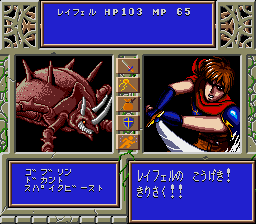
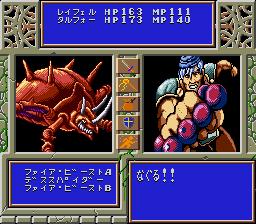
The most notable feature of Fhey Area is supposed to be its combat system, which shows close-up portraits of the characters as they trade blows, with the enemies on the left and player characters on the right. It’s certainly meant to be more cinematic than the first-person perspective of Dragon Quest or the small sprites of Final Fantasy. The Square PC game Cruise Chaser Blassty from several years earlier in 1986 pulled this off and it looked pretty cool. Alas, Fhey Area underwhelms because these images are barely animated, showing only a handful of static poses accompanied by some screen shaking and other visual effects. If these were better animated, it really would’ve showed off the storage capabilities of the Mega CD, but as it stands, it looks like something that could be pulled off on a cartridge.
The battle system itself is pretty standard, with a few small tweaks. Every time you attack with weapons, you pick how you want to strike – for example, with Rayfel, the “slash” command is weak but consistent, and has an excellent chance of hitting the enemy, “stab” has high damage but hits inconsistently, and “swing” can attack multiple enemies with random damage. In practice, however, it doesn’t add much to the strategy and only slows things down. Magic is a bit different too, with spells broken down to different classifications, with some characters excelling in certain areas over others. Spells will always work if the character is proficient in that class, but there’s a high chance the magic will fail if they’re unskilled. But again, ultimately this doesn’t affect your strategy much though, because you obviously shouldn’t cast spells with characters that are weak with a particular magic.
And you’ll be fighting a lot in Fhey Area. Random battles are constant, and you’re stuck dealing with CD load times whenever monsters attack. Even though you can set the battle speed, they still take a while to play out, especially given the clumsy menus you need to wade through. The damage calculations vary wildly, and leveling up is glacial. This is the sort of RPG that could be completed in an afternoon if it weren’t for all of the tedium to pad things out.
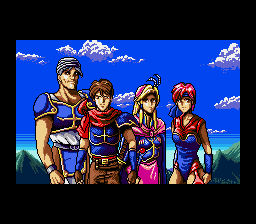
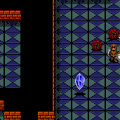
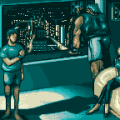
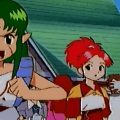
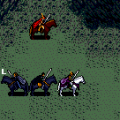
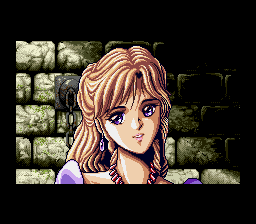
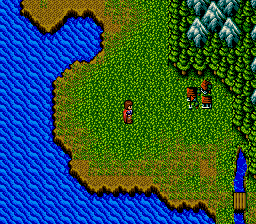
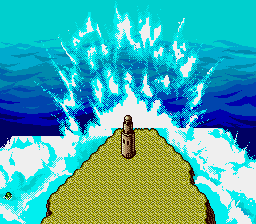
Additionally, CD RPGs typically used the extra space for voiced cutscenes, which at least made these games feel like playable anime and gave some extra personality to the cast. Fhey Area has only two real cutscenes – the introduction and the ending, with the only speech coming from the narrator. (To be fair, the narrator is Banjo Ginga, one of the most prominent voice actors who specialized in this type of role.) The character artwork isn’t bad, and you get more close-up views of your combatants than you typically would in other 8- and 16-bit RPGs, but it’s certainly lacking the characterization you would find in Lunar or Tengai Makyou. The only things that otherwise qualify as cinemas are brief cutscenes showing various kinds of natural disasters – waves crashing, flames blasting, earthquakes rumbling – but these are shown on the overhead world or dungeon maps, as opposed to showing close-ups of the characters, so they aren’t exactly impressive.
The game’s saving grace is its CD audio soundtrack by Motoi Sakuraba, a prolific composer who got his start working on Wolf Team titles and was later known for RPGs like Tales of Phantasia, Star Ocean, Golden Sun, Shining Force III, and many, many more. Despite this being one of his earlier works, he still has his signature style, ranging from peaceful town themes (which here includes a pleasant female chorus) to intense battle themes. It’s probably better to view Fhey Area as a music album than a game anyone would actually want to play.
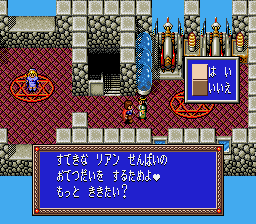
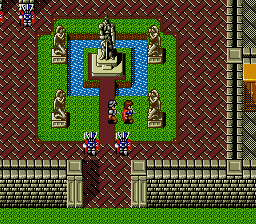
For those who actually do want to make their way through Fhey Area, for whatever reason, there’s a debug mode that makes the game manageable. Start a new game, exit your house, and look for a girl named Sana (サーナ).
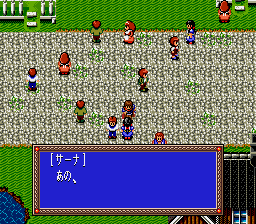
Talk to her three times, then walk to the gate at the north end of town. Take one step outside of it, then walk left. Walking slowly so you don’t exit the town, move up and left until you find a secret passage in the woods. Talk to an invisible man and you’ll get the Upside-Down Ring (逆立ての指輪) item.
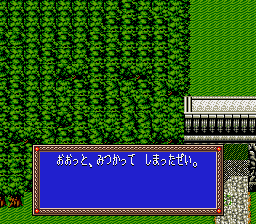
Use this item, then enter the Options (せってい) menu, and change the message speed (メッセージそくど) to MIN ten times, then set it to “Fast” (はやい) once. You should get a message that you’ve obtained the Bara (バーラ) and Dat (ダット) magic scrolls. Now when you enter the Options menu, you’ll see a fourth command called Debuk (デバック), which lets you cheat in various ways. The quickest way to beat the game is to enable all four characters, set them at max level, and turn off random encounters. A full walkthrough can be found here.
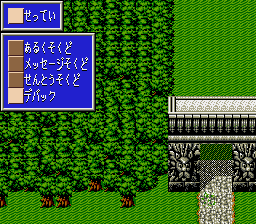
Debug Mode Commands:
にんずう – Number of characters in your party (1 through 4)
レベル – Characters’ levels
ブロック – Block – Lets you set some parameter but it’s unclear
あたり – Collision detection (turn off to walk through terrain)
せんとう – Battles (turn off to disable battles)
ざひょう – Display map number and coordinates
フラグ – Enable and disable various event flags – untested
バーラF – Turns off and on – unclear
Links:
Sega Retro – Manual scans from here