Art
Eschatos is a game that boils down shoot-em-up gameplay to its bare essentials: shoot enemies, dodge bullets, battle bosses, score high, don’t die. It’s old-school and familiar, but also deliciously refreshing in its simplicity and honesty in a world filled with overly complex games that pride themselves in the depth and breadth of their mechanics; a reminder of how fun for everyone shoot-em-ups can be, regardless of age or skill level – of how the simple joy of shooting down alien ships was fundamental in the shaping of the videogame industry, and how this simple fun should have never been left behind in its evolution.
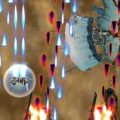
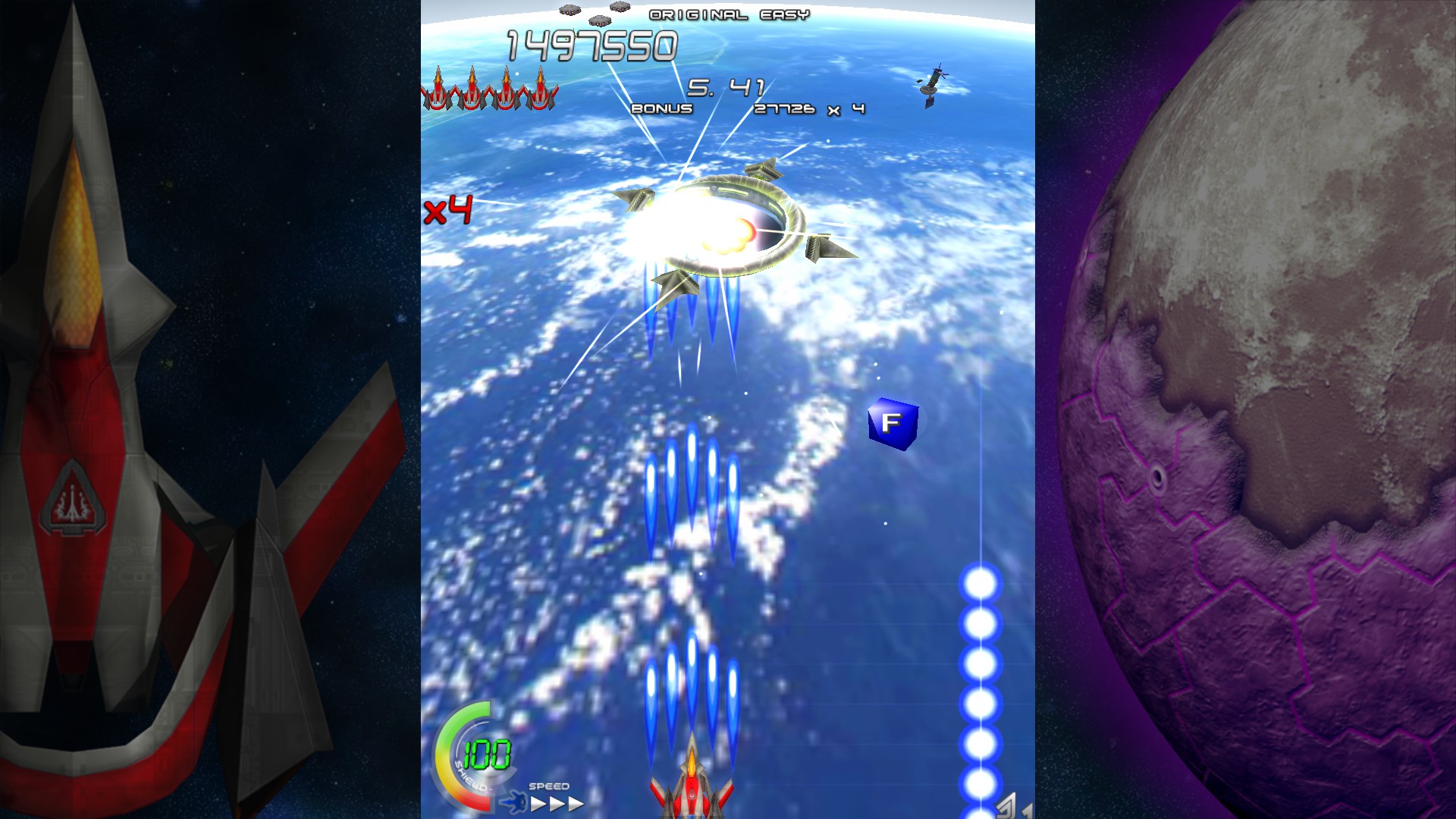
The player ship’s armaments in Eschatos are a simple forward-firing shot, a wide shot with much shorter vertical reach and a bullet-canceling regenerating shield that can be activated either by holding down both fire buttons simultaneously, or with its own dedicated button. The main challenge in all of the game’s four modes is using this limited arsenal to the best of your ability, destroying as many enemies as possible, but each mode adds a wrinkle to either the scoring system and/or the general game flow, as to make them unique and worth playing: Original and Advanced could be considered the two main modes, with Time Attack arguably being a secondary mode, what with its lack of an Endless difficulty option.
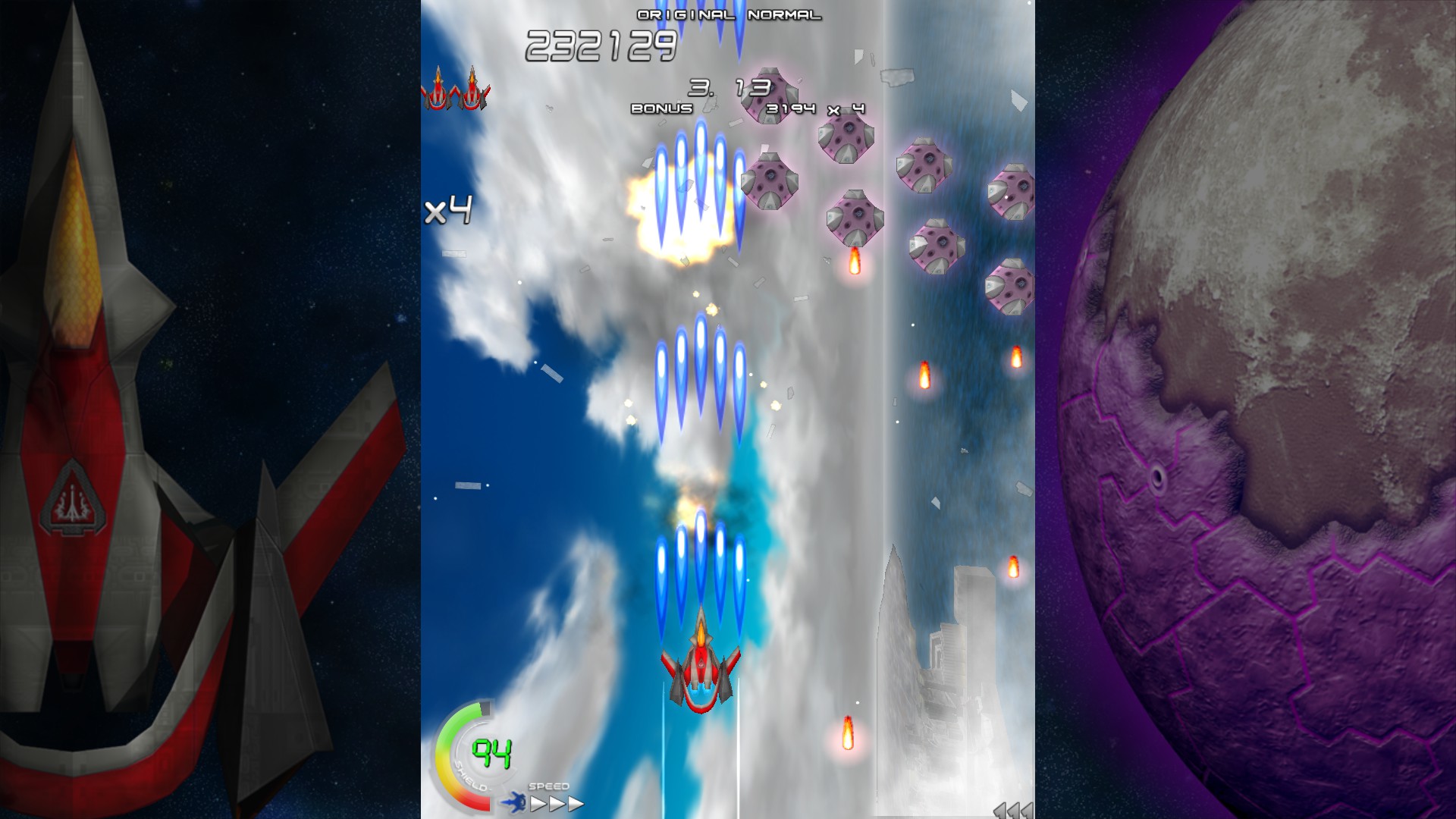
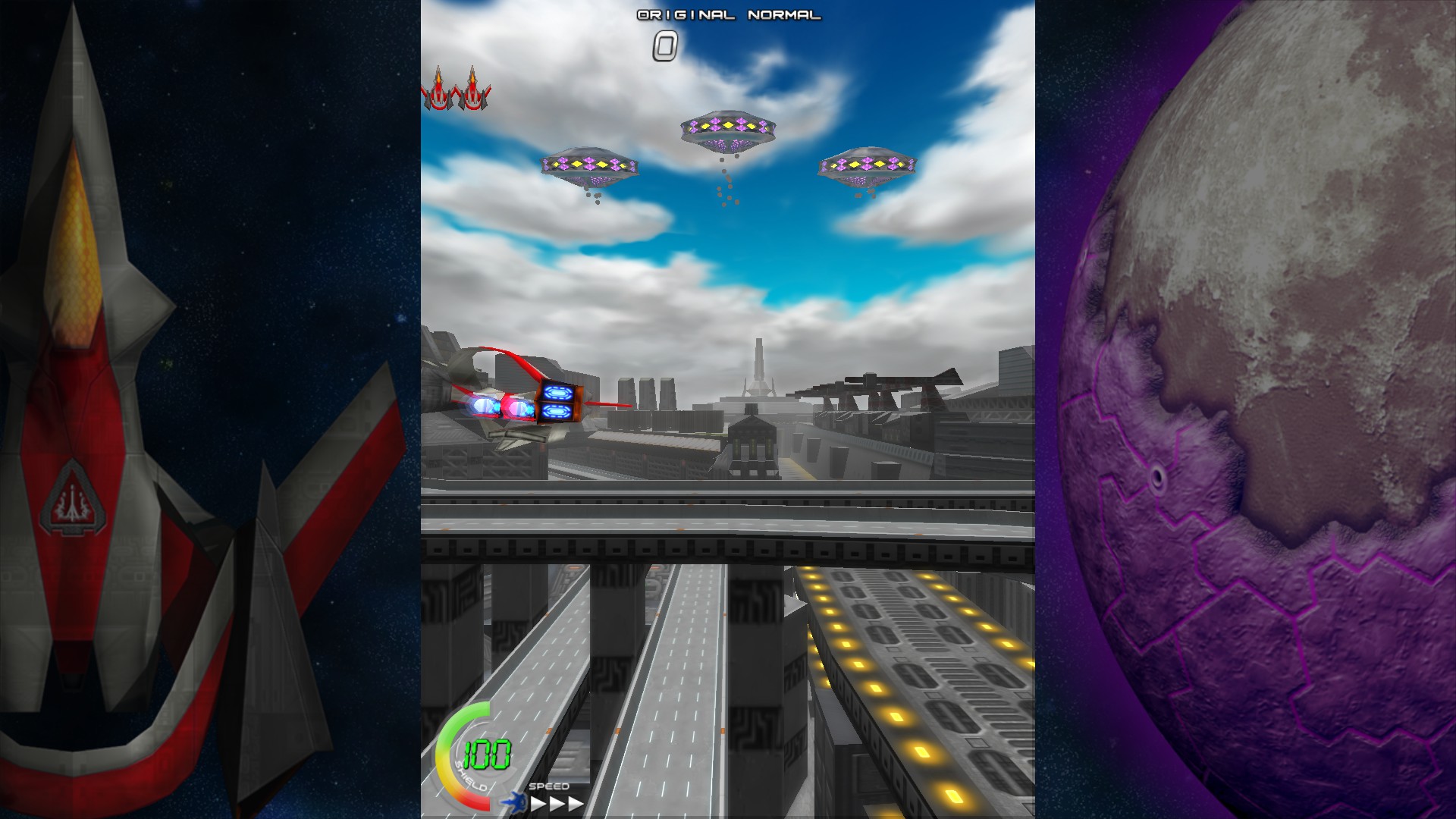
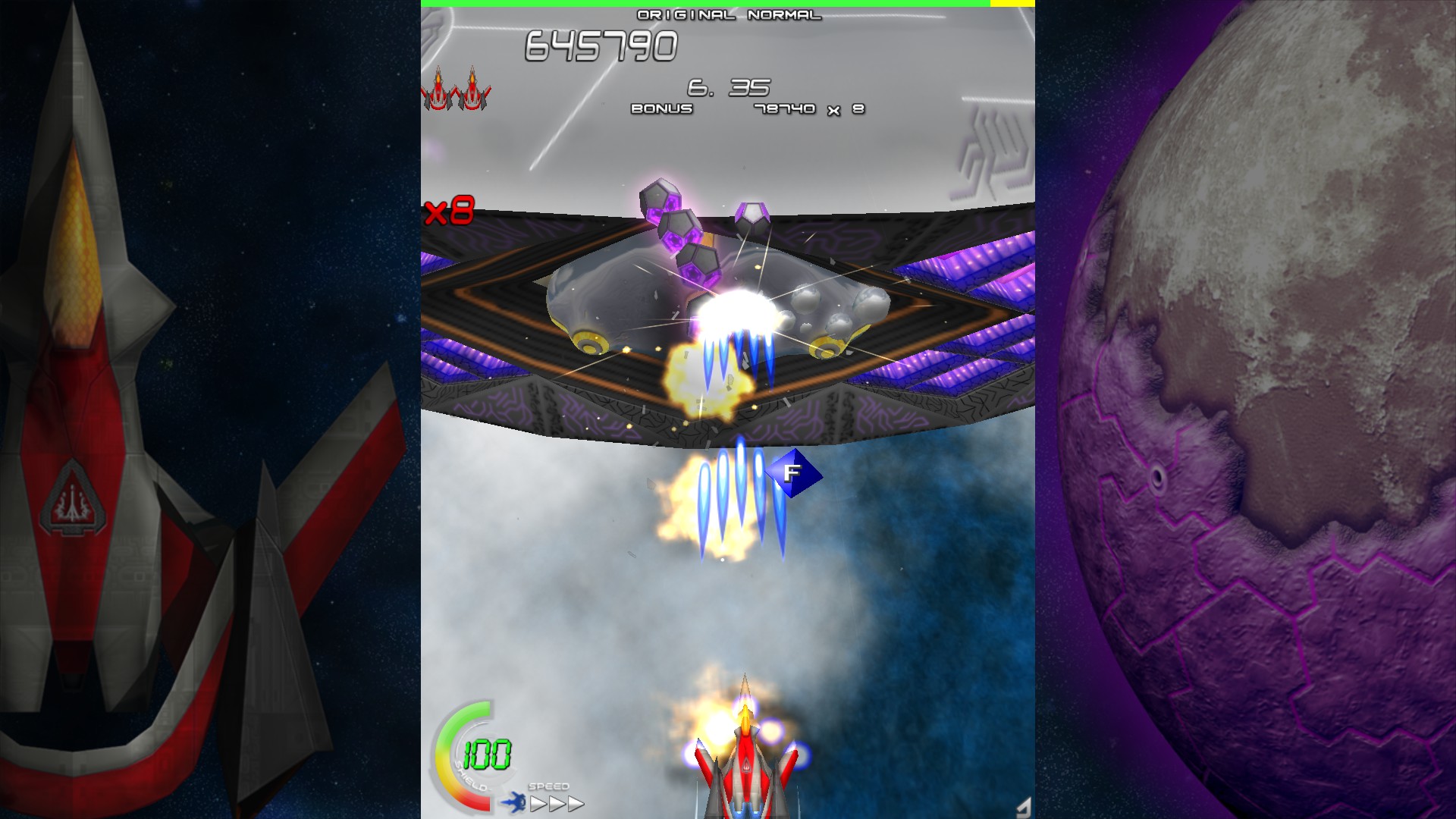
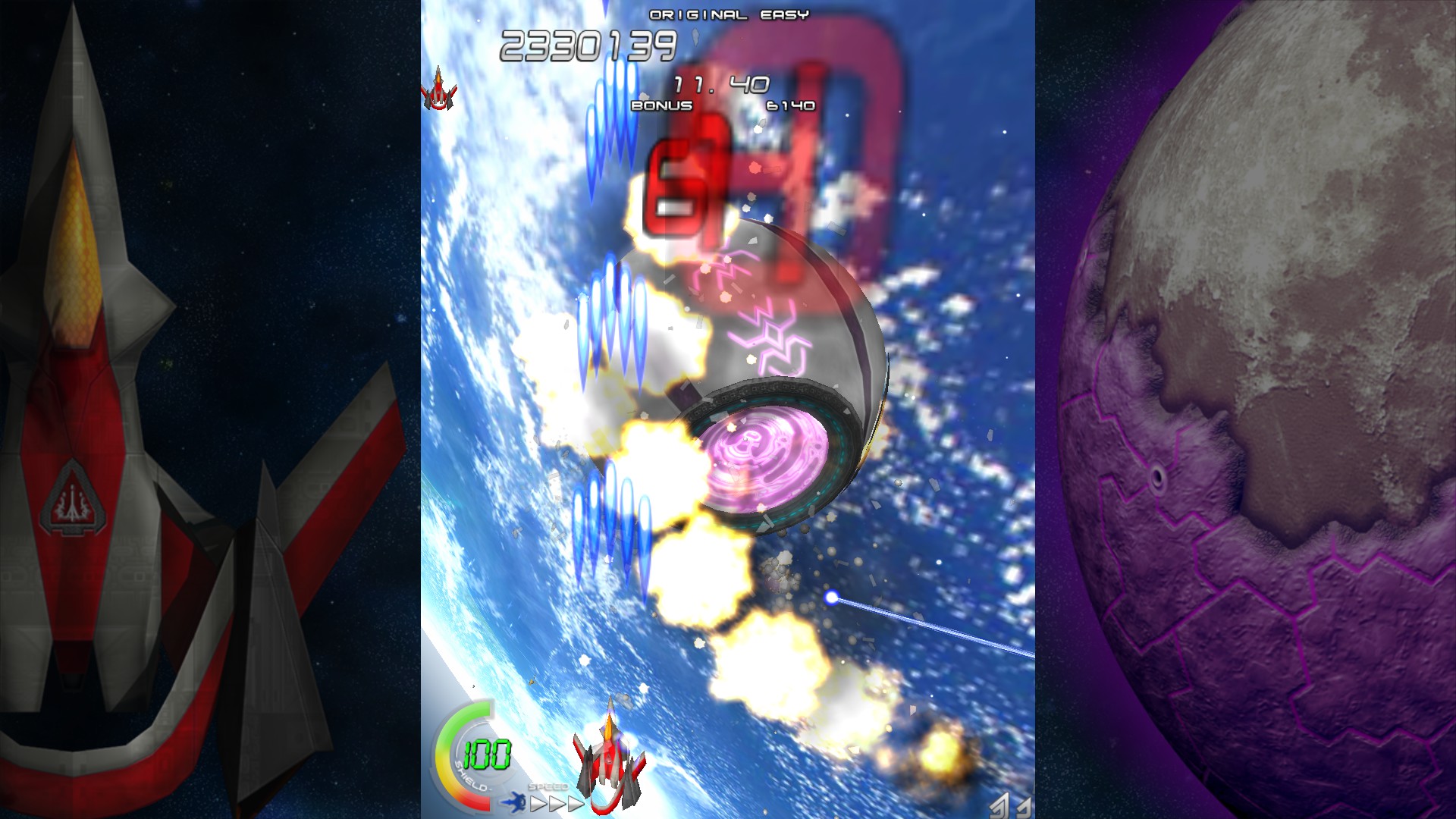
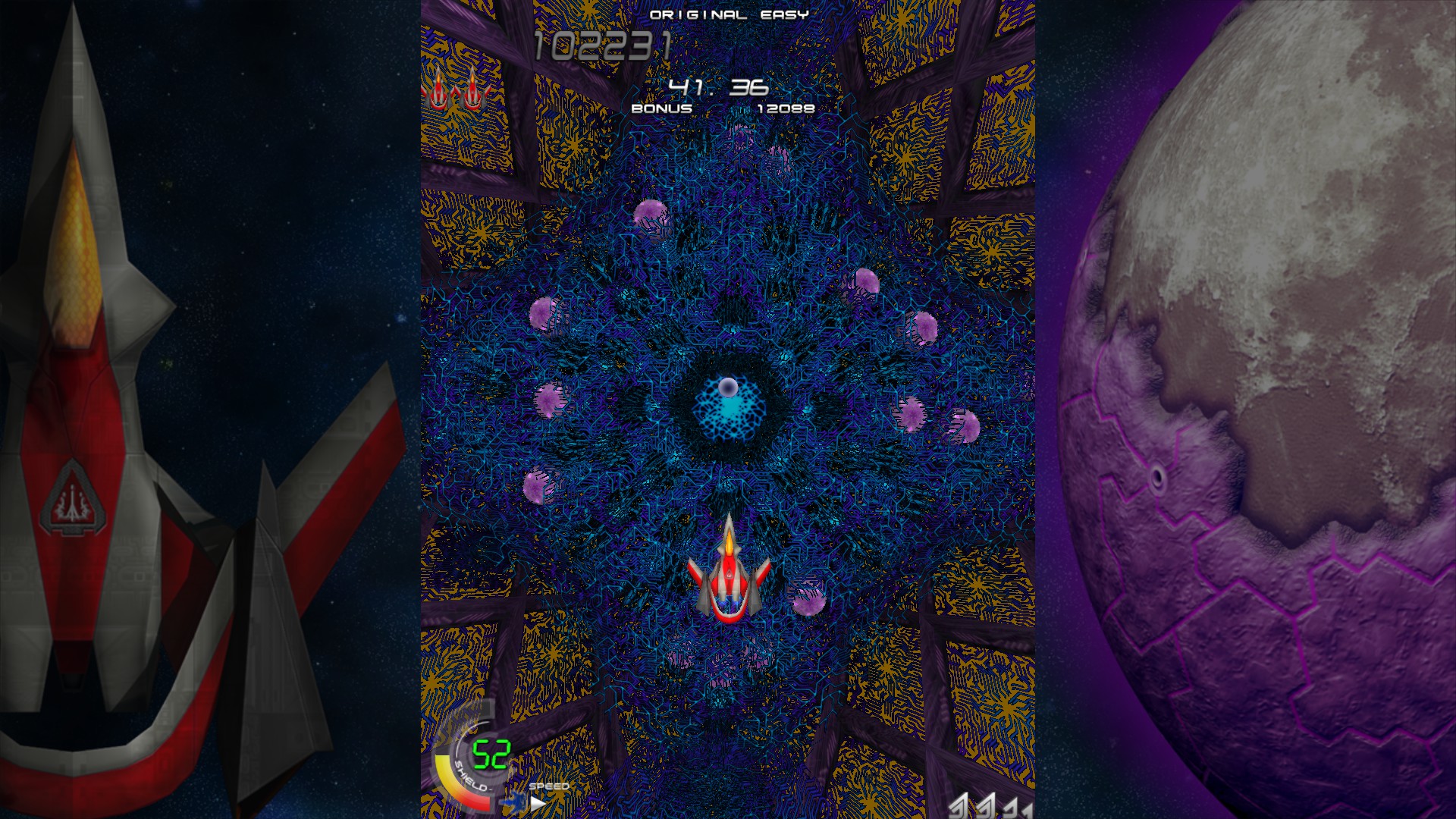
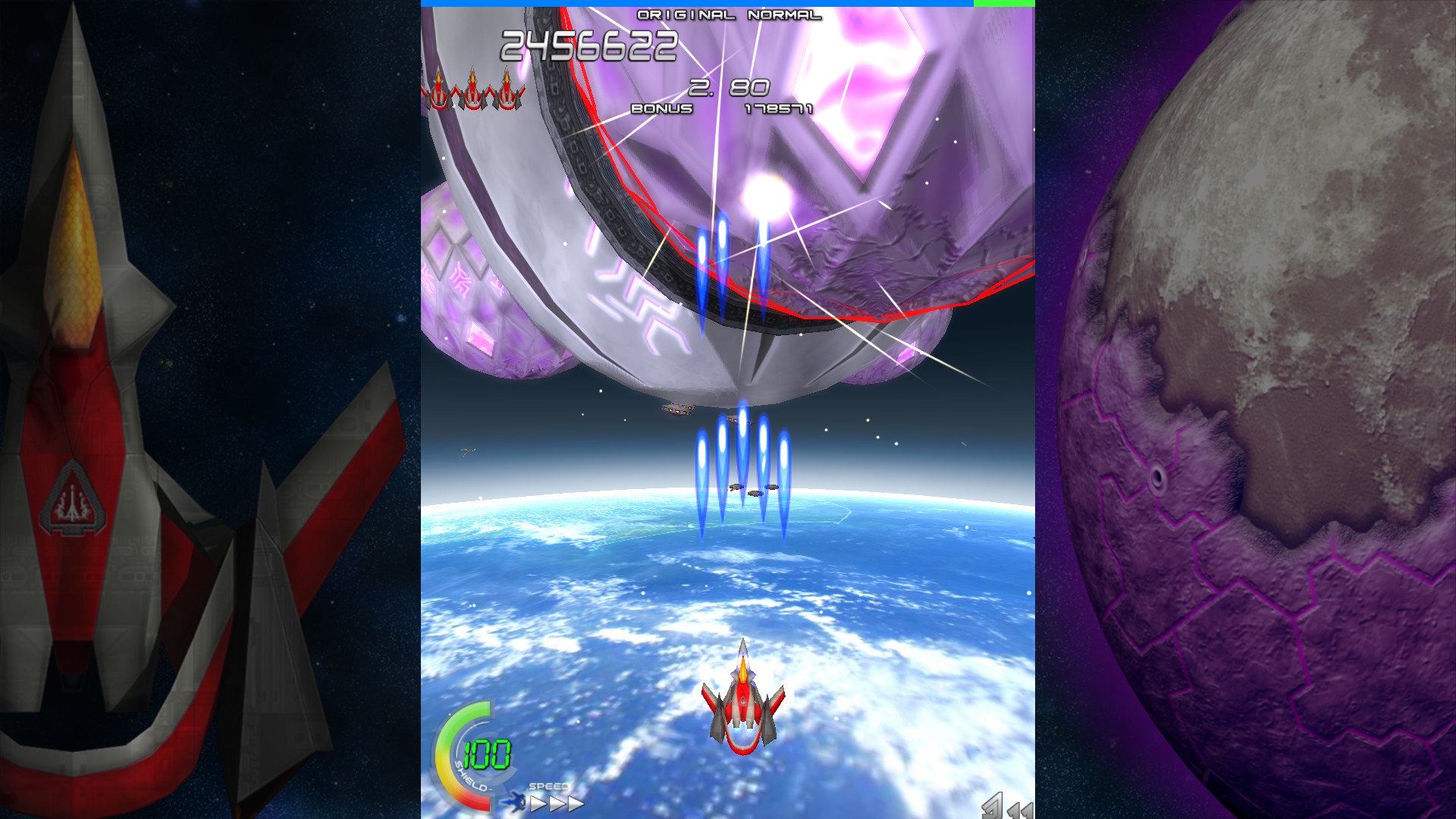
Original Mode is all about destroying enemy waves as quickly as possible to raise your score multiplier and letting none escape, as to not decrease it, with greater score bonuses being granted the faster you succeed in such a task. Time Attack removes scoring from the equation but makes it so that progression operates on arcade racer logic, with time being added for each Area cleared and 1-up item collected and deducted for each life lost – with a Time Over ending your game prematurely, regardless of how far you’ve progressed. It’s also the only mode with a Rank system in place, with the game getting more difficult depending on how much time you have left in your countdown; the difficulty increase here isn’t as granular as in other games with such a system, as the algorithm’s steps are all based off Original and Advanced’s four selectable levels: Easy, Normal, Hard and the unlockable Hardest.
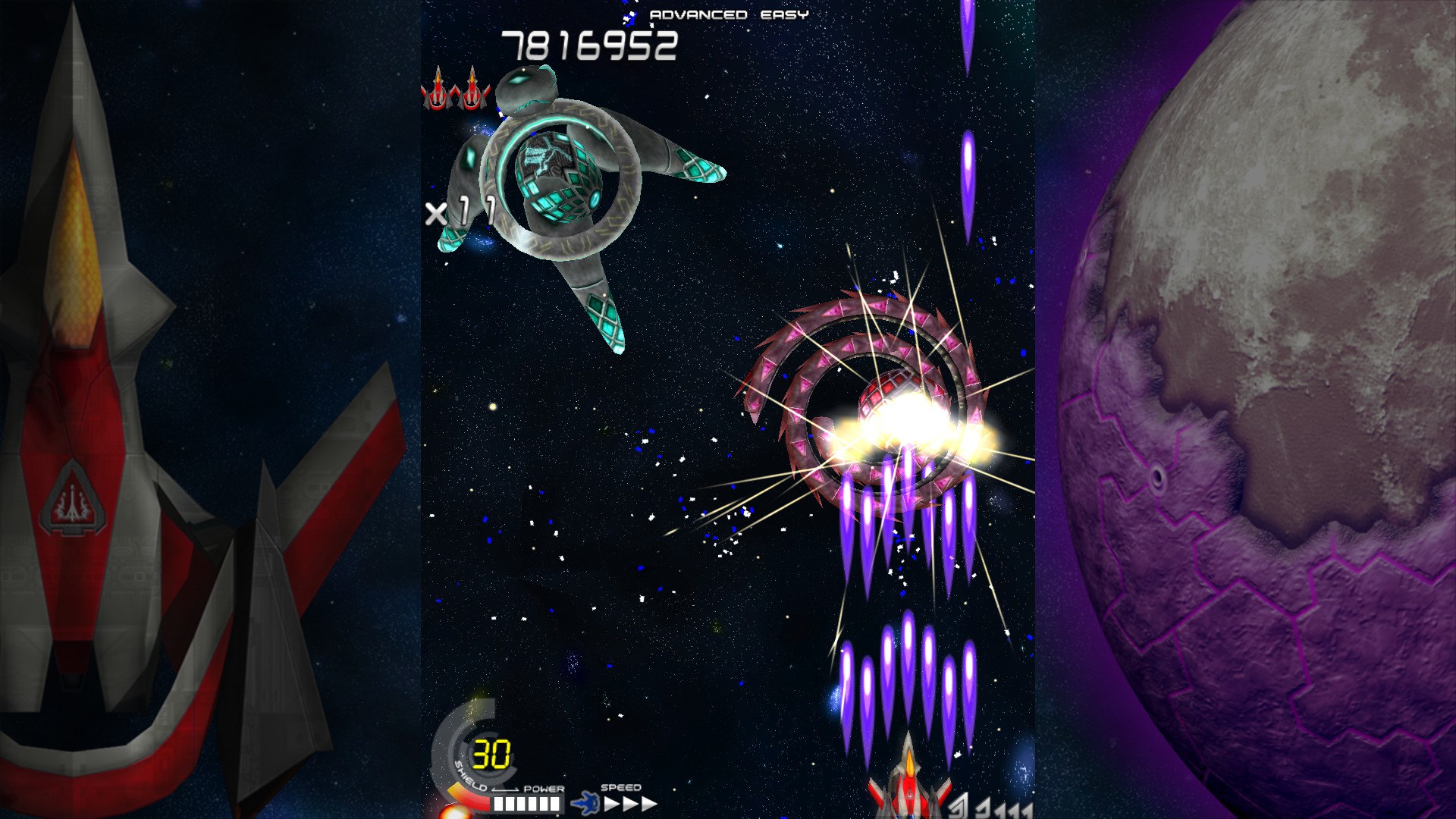
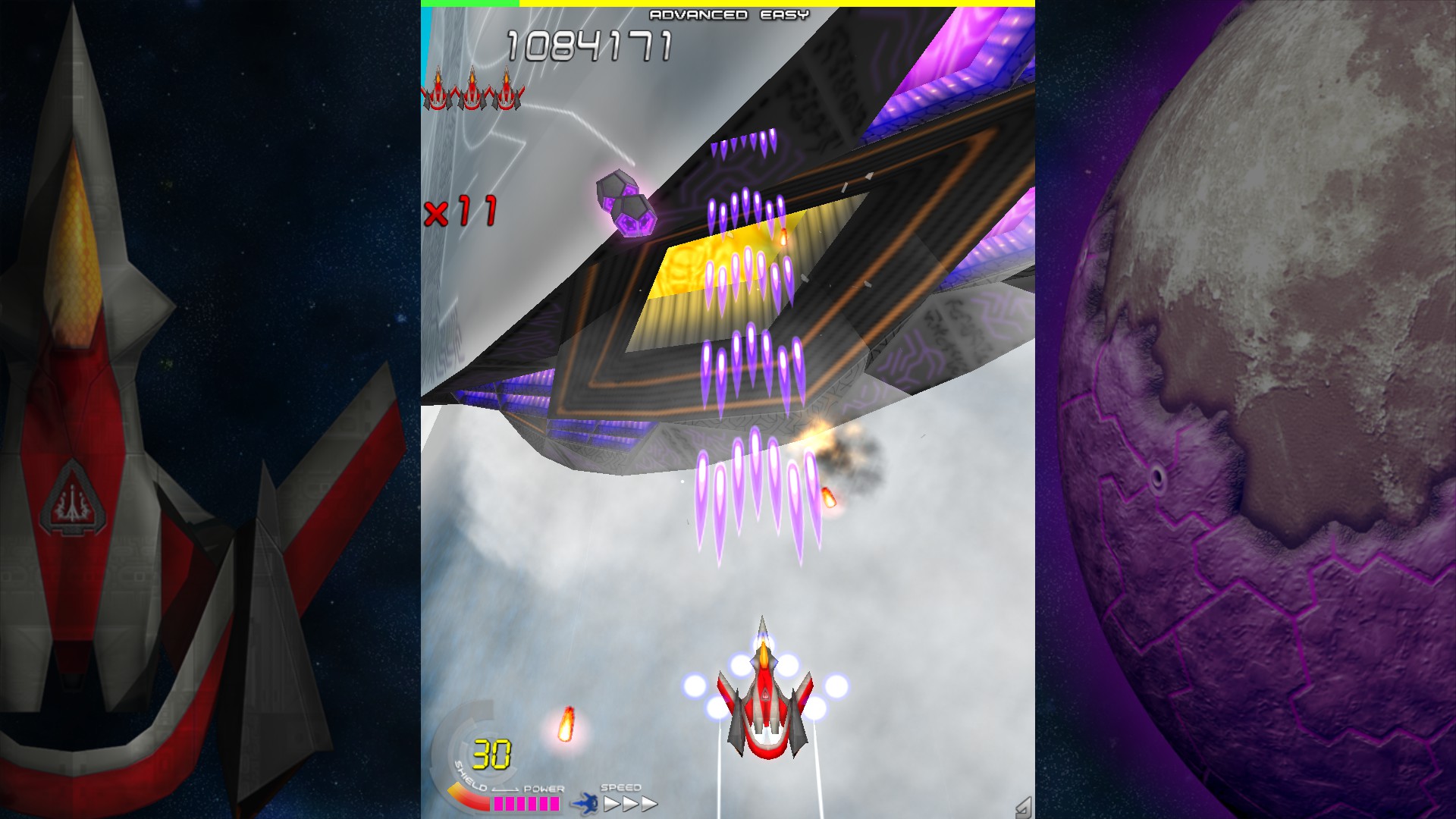
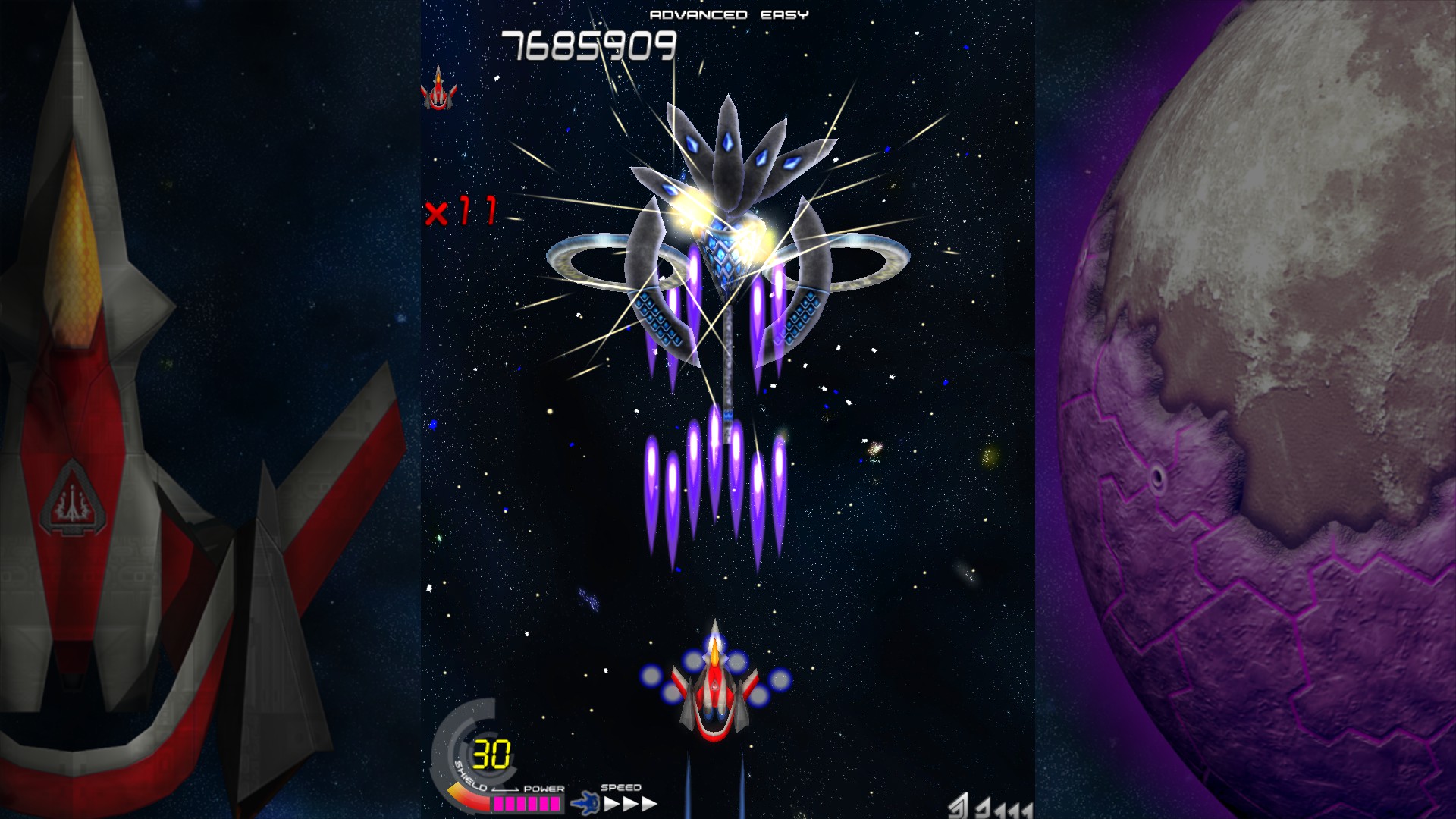
For players who feel that Original mode is too simple, preferring a little bit more meat in their shoot-em-up’s bones, Advanced mode may just do the trick – by reworking the scoring mechanics to require a bit more thought put on how the game is played. The rules for raising the score multiplier remain the same, however, wave clear bonuses are removed in favor of score items obtainable by bullet canceling. The player ship starts off way less powerful than it does in either Original or Time Attack modes, but can quickly surpass such “default” power level through the collection of powerup items, which also raise the multiplier by one step when collected; these, however, aren’t the only new pickups carrier enemies can drop, as a new, yellow-golden variant of the Flash Bomb item is also added to their Advanced Mode rotation: these not only clear the screen of bullets when collected, like their regular blue counterparts, but also converts them into score items which fly directly to the player, which, with the right timing, can lead to massive score payouts.
This could lead one to think that constantly baiting out big enemy fire patterns for huge item jackpots is the path to success in Advanced Mode, but collecting Flash Bombs of either type reduces both the score multiplier and the player ship’s power level by one step – which creates an engrossing risk/reward gameplay dynamic: do you collect Flash Bombs regularly to survive for longer and get more score items? Or do you embrace the risk of coming and staying under heavy enemy fire in exchange for higher firepower and overall larger scores – if you are skilled enough? Add to that the fact that the power/duration of your shield is inversely proportional to the power level of your weapons, and you get a combined powerup and scoring system that shows that you can have depth and simplicity in your shoot-em-up – without overdoing it towards either side.
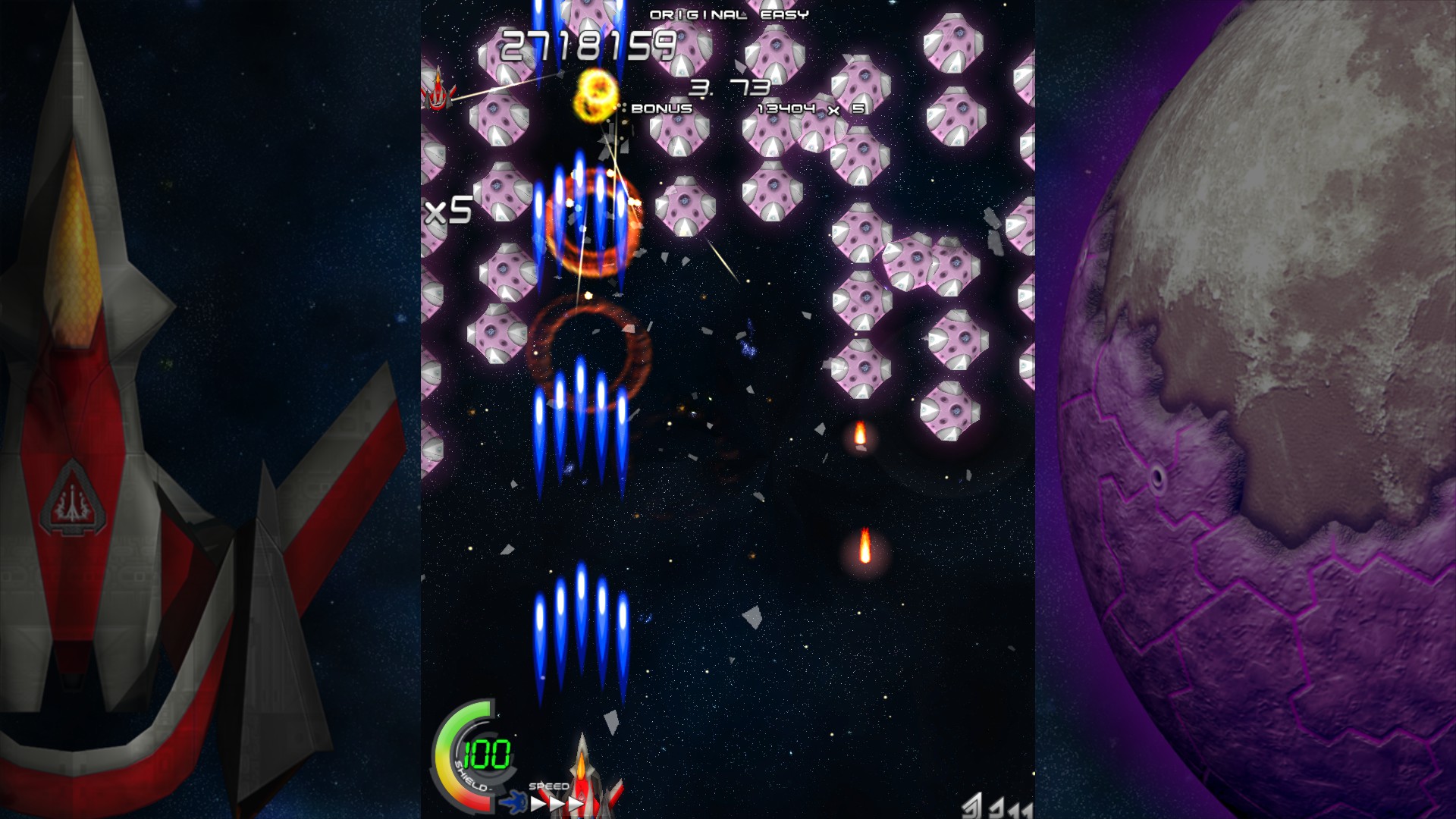
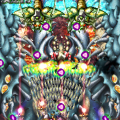
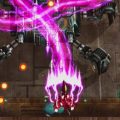
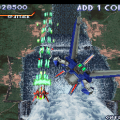
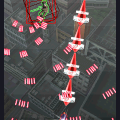
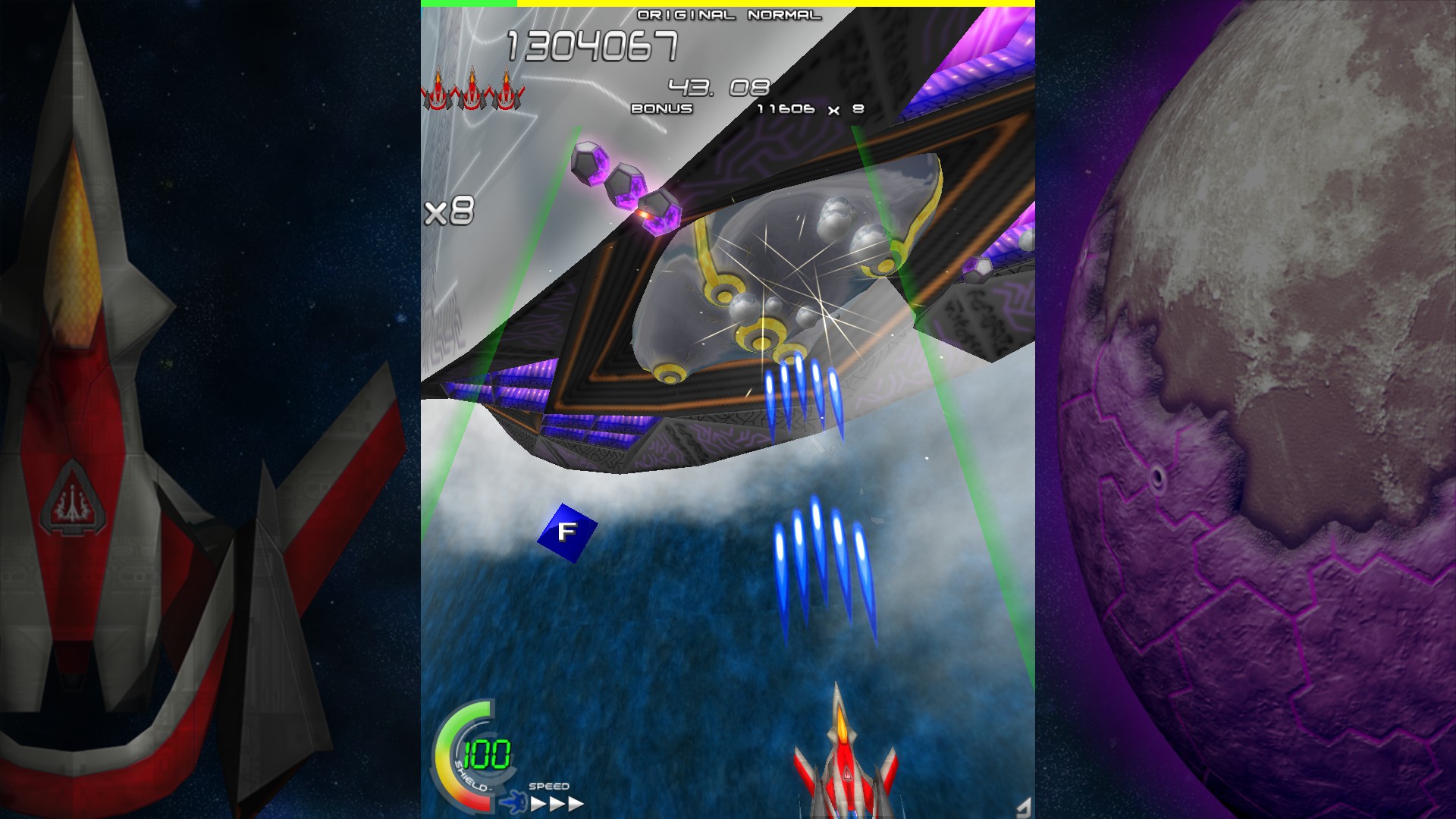
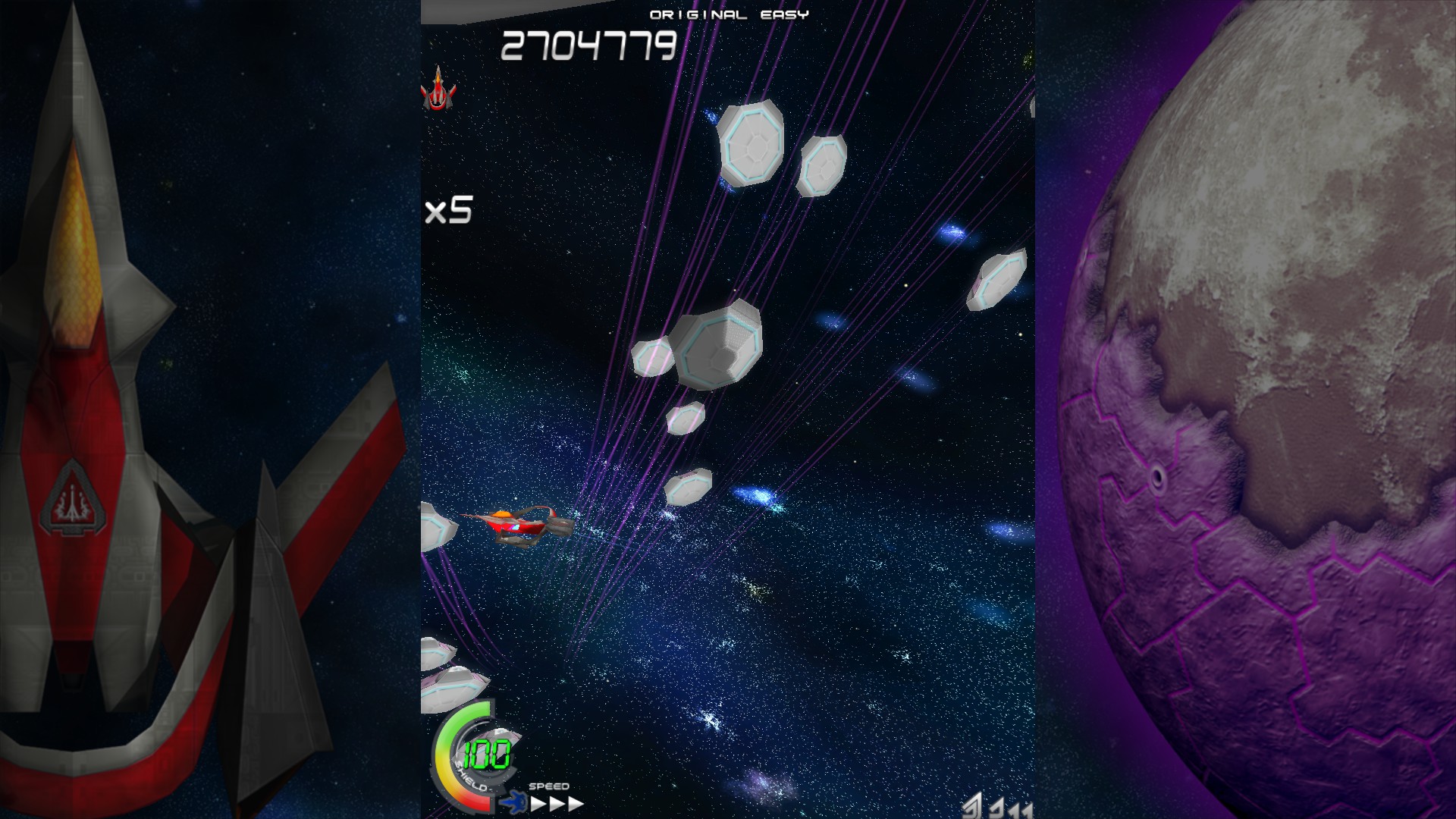
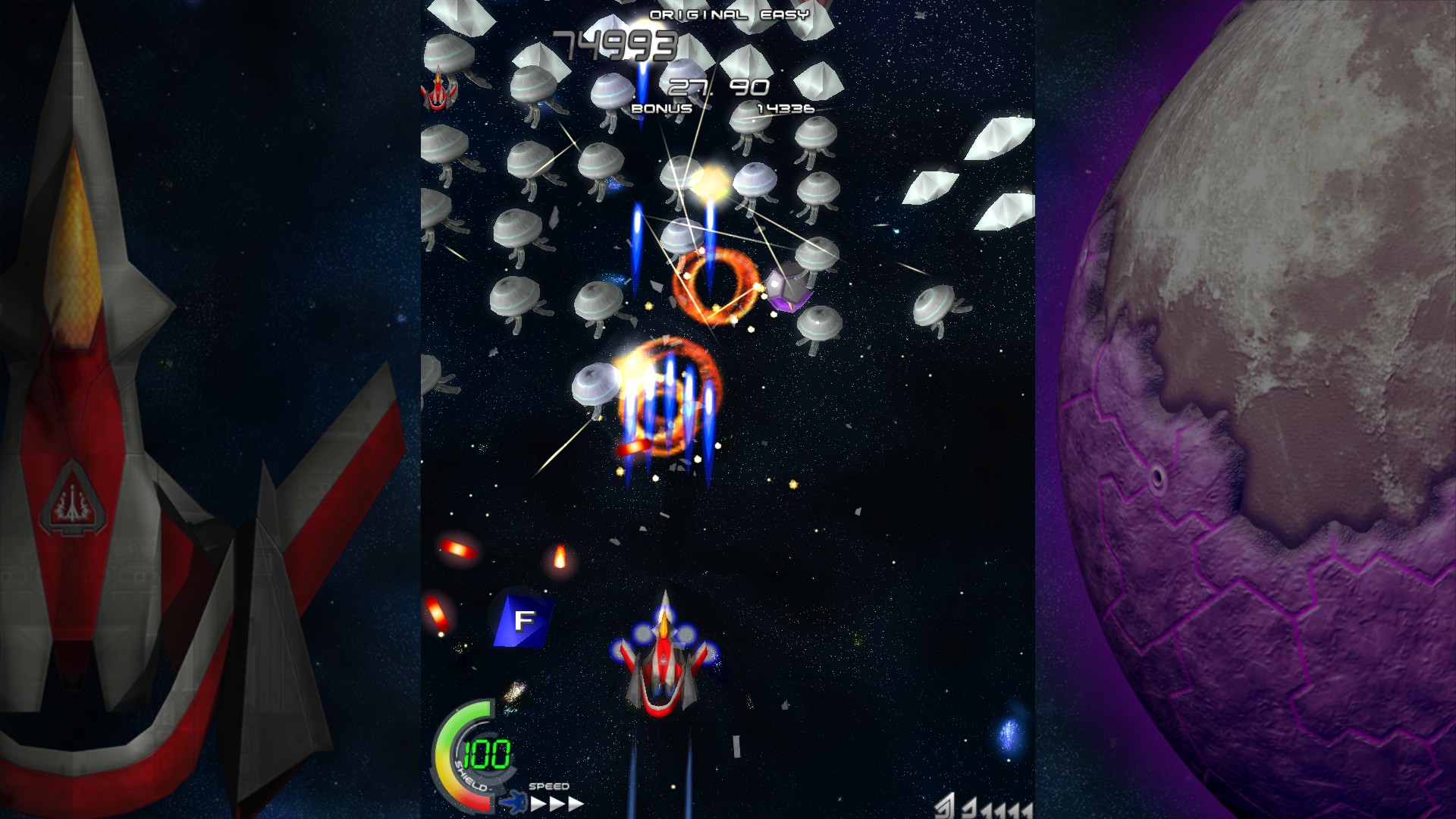
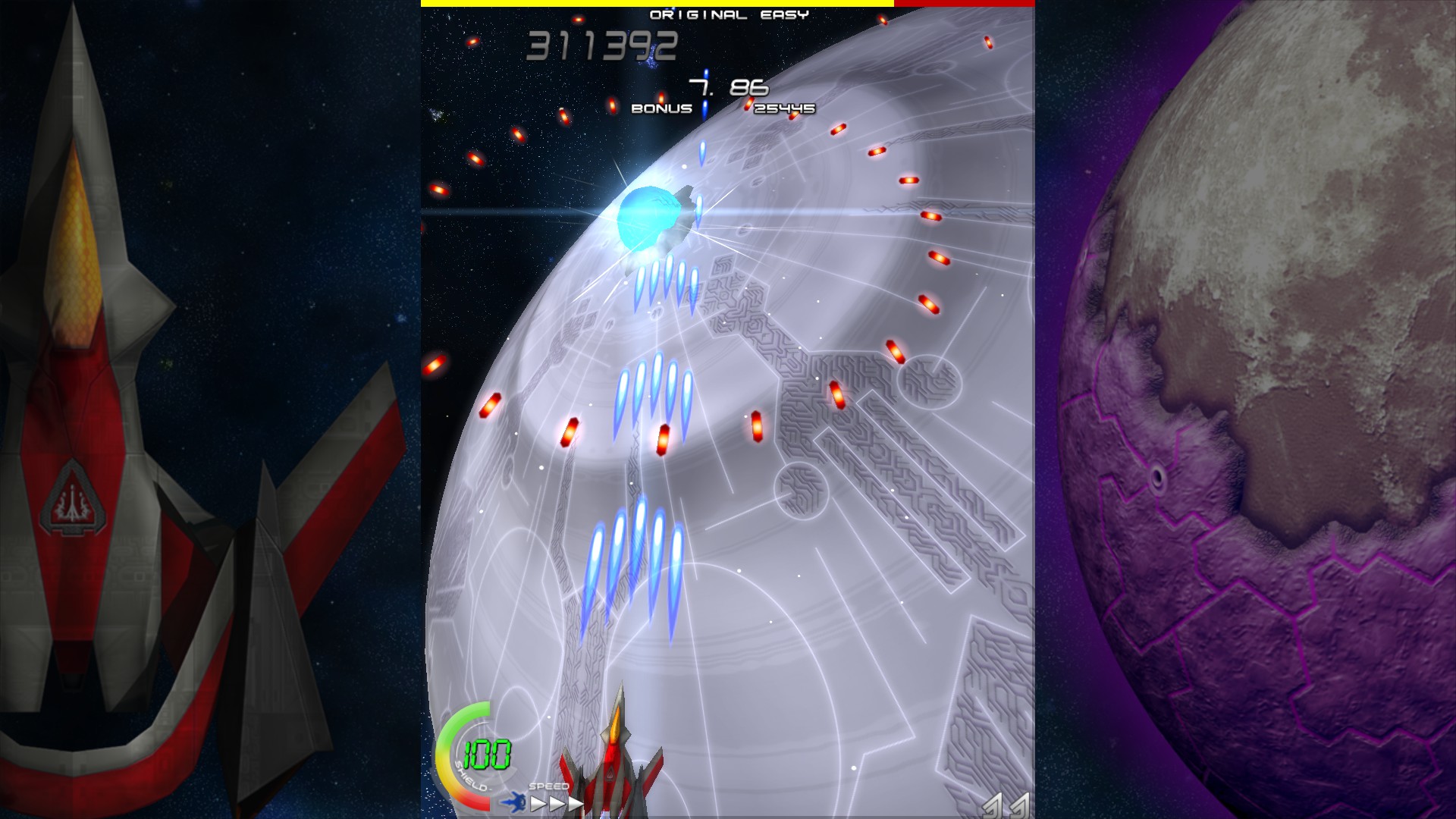
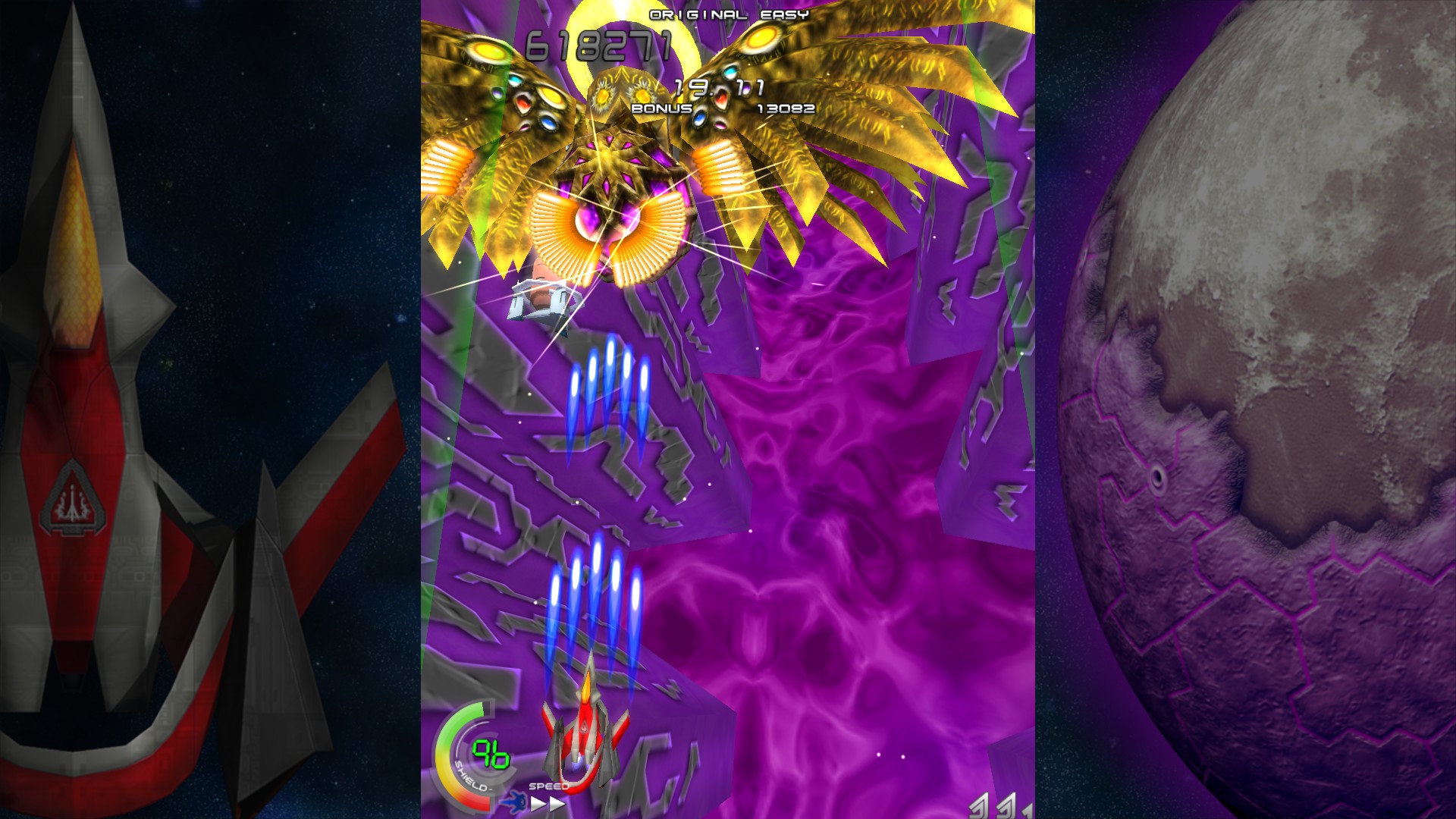
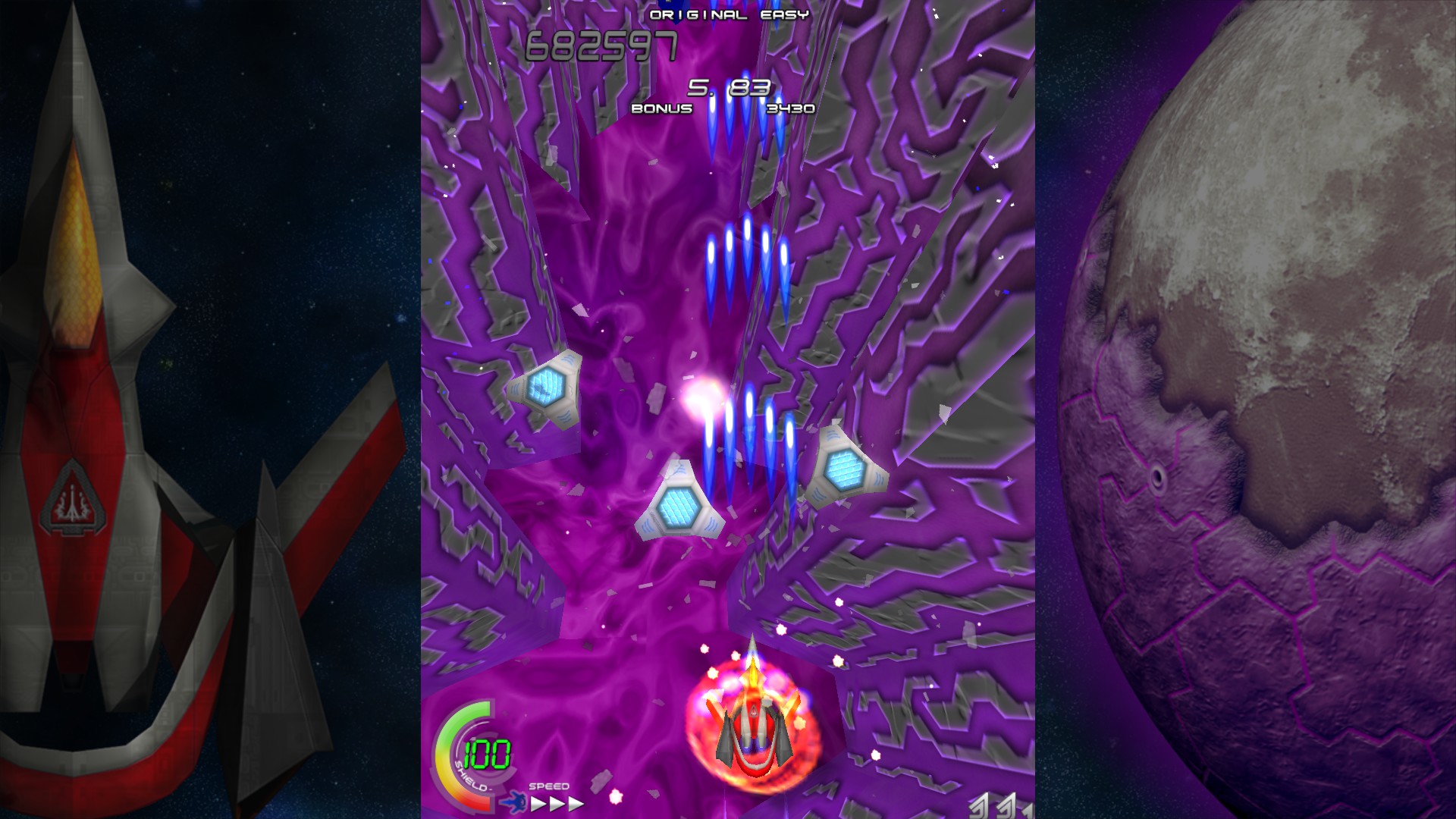
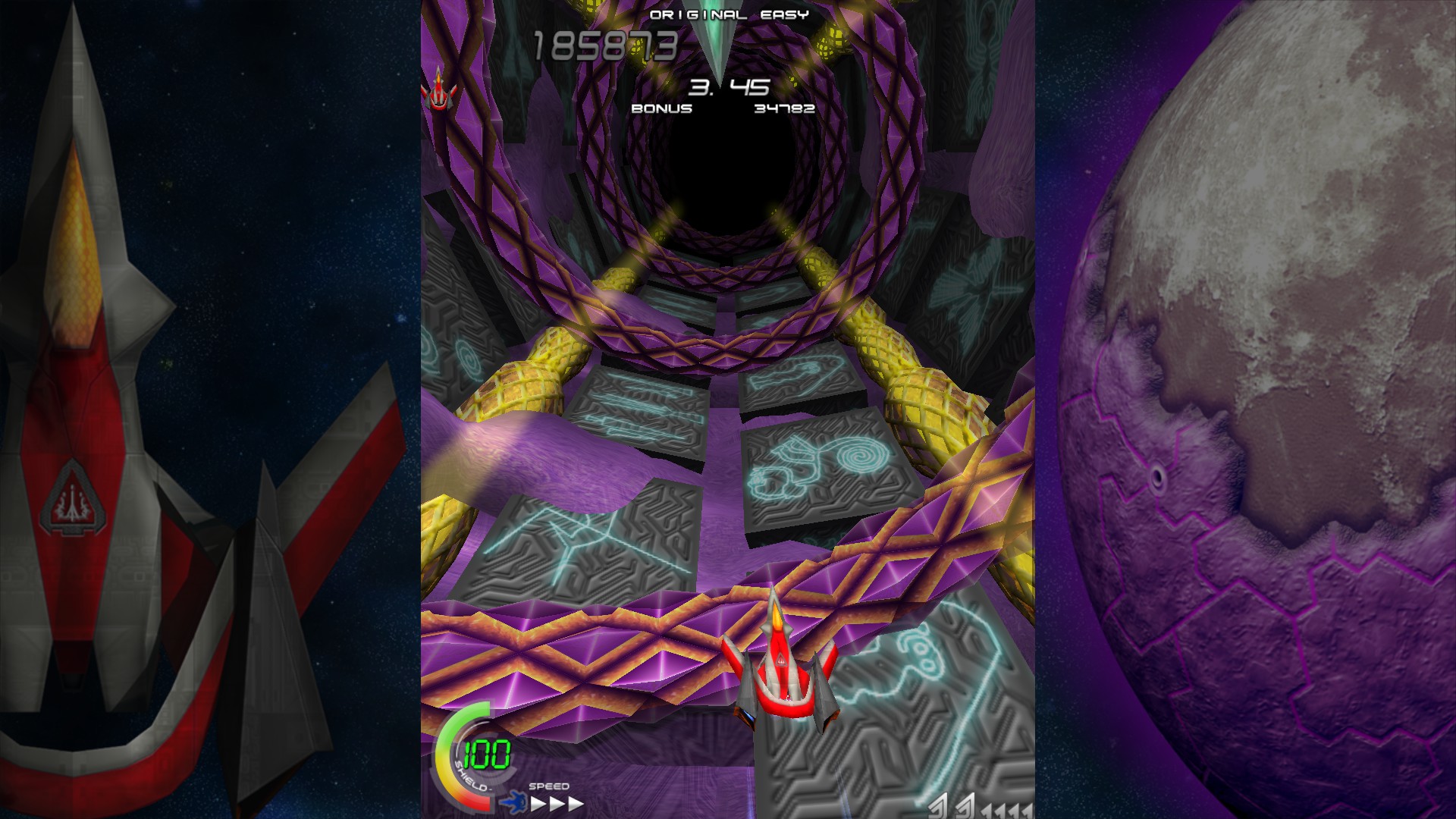
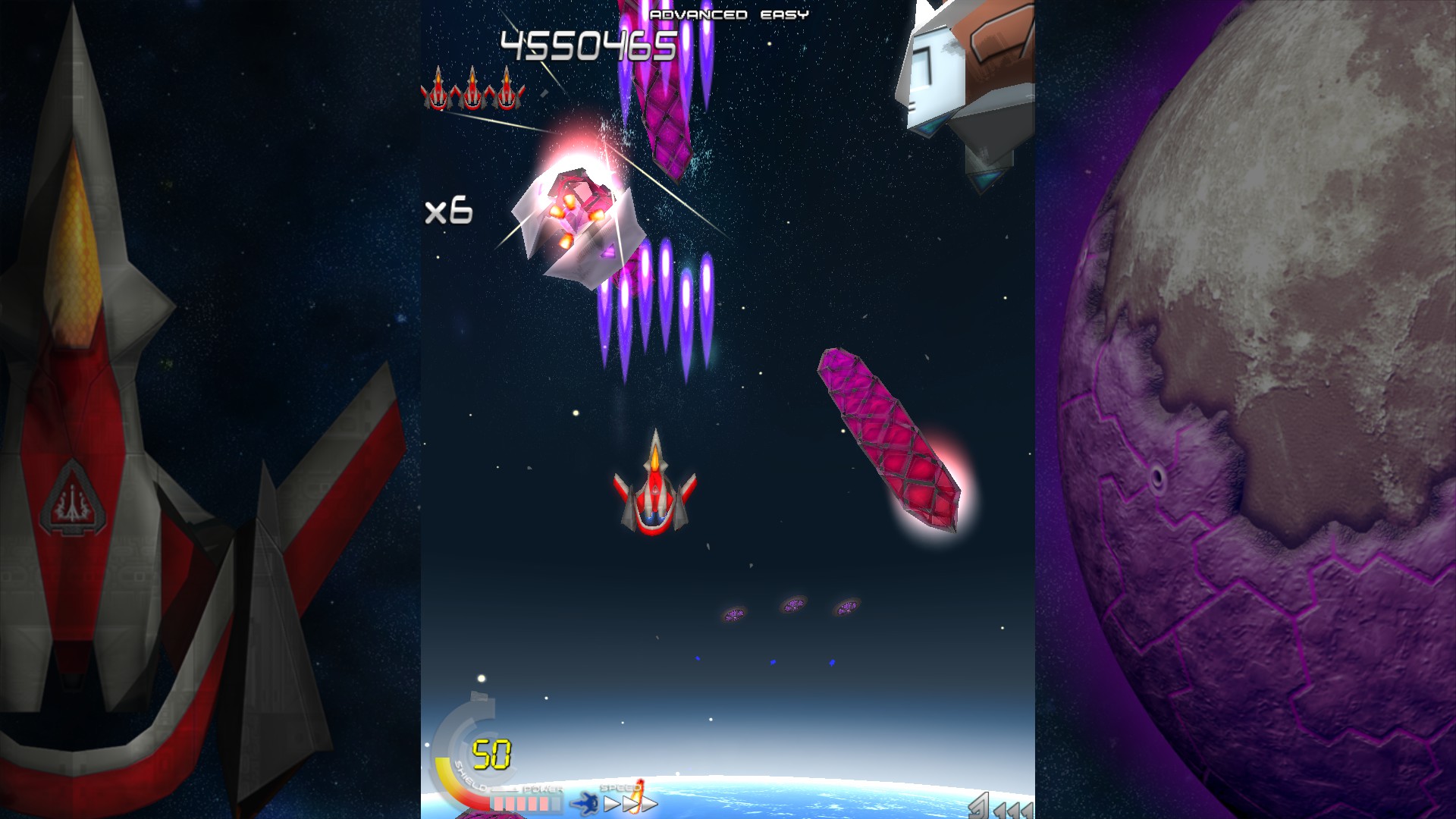
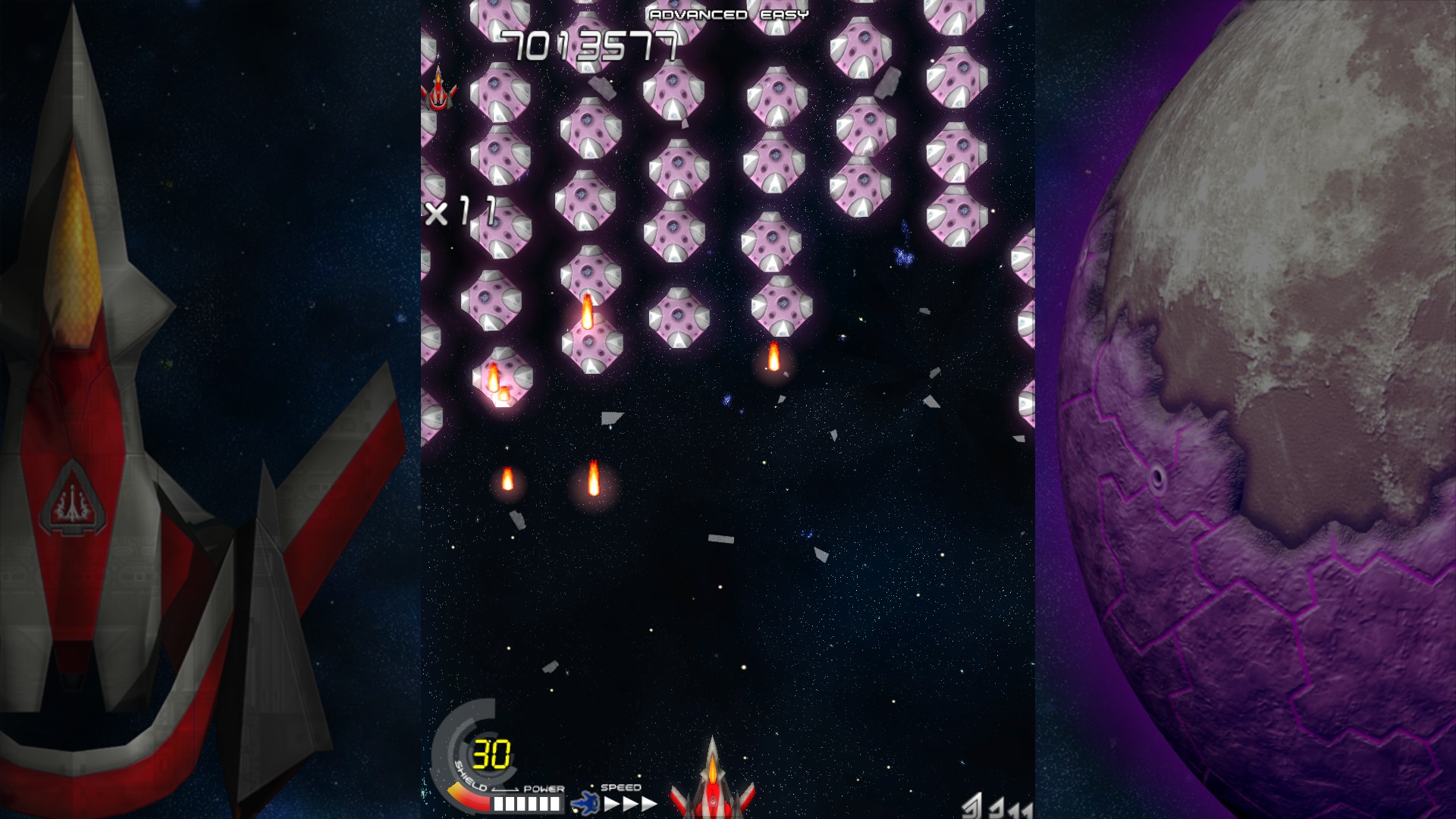
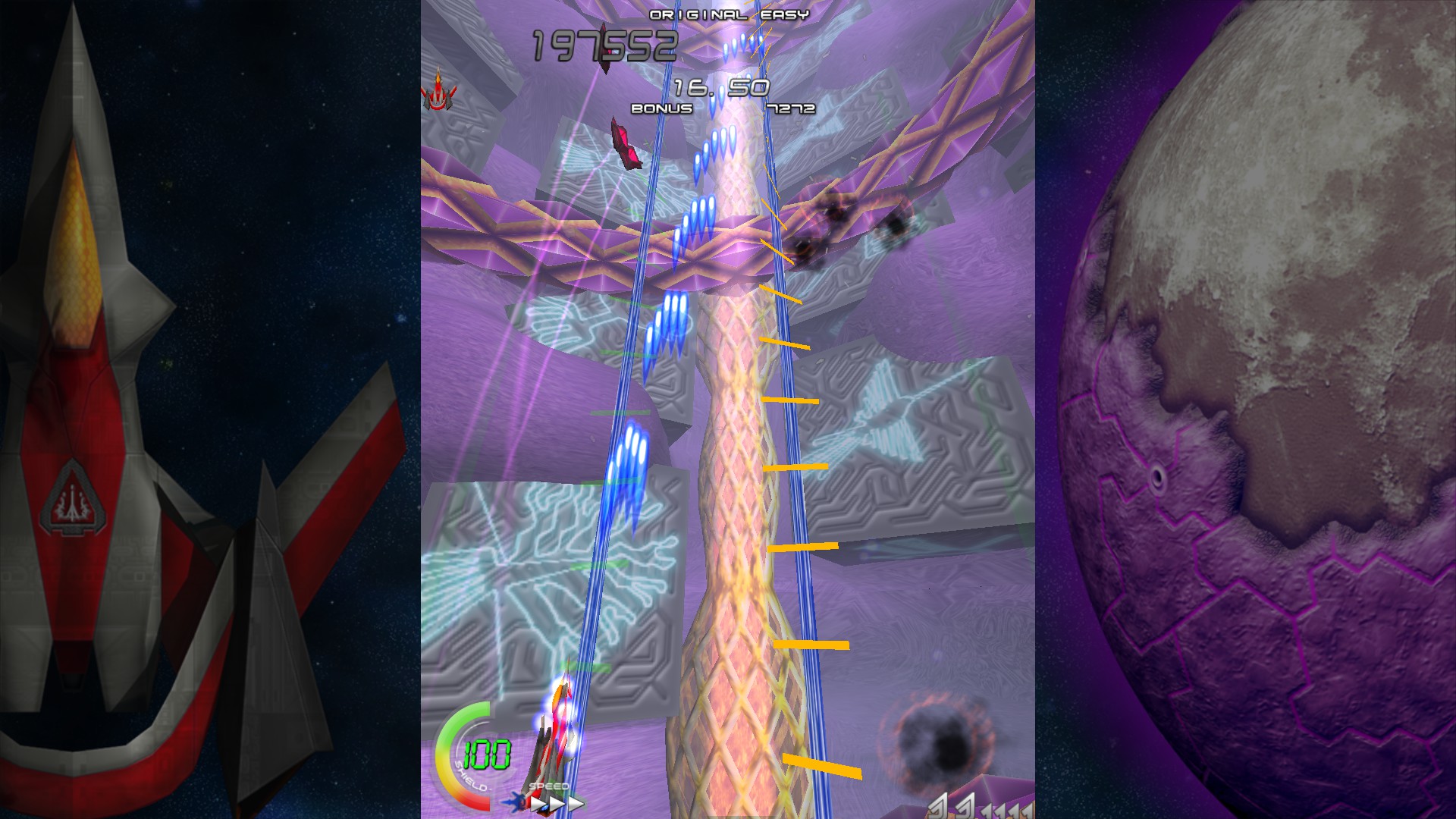
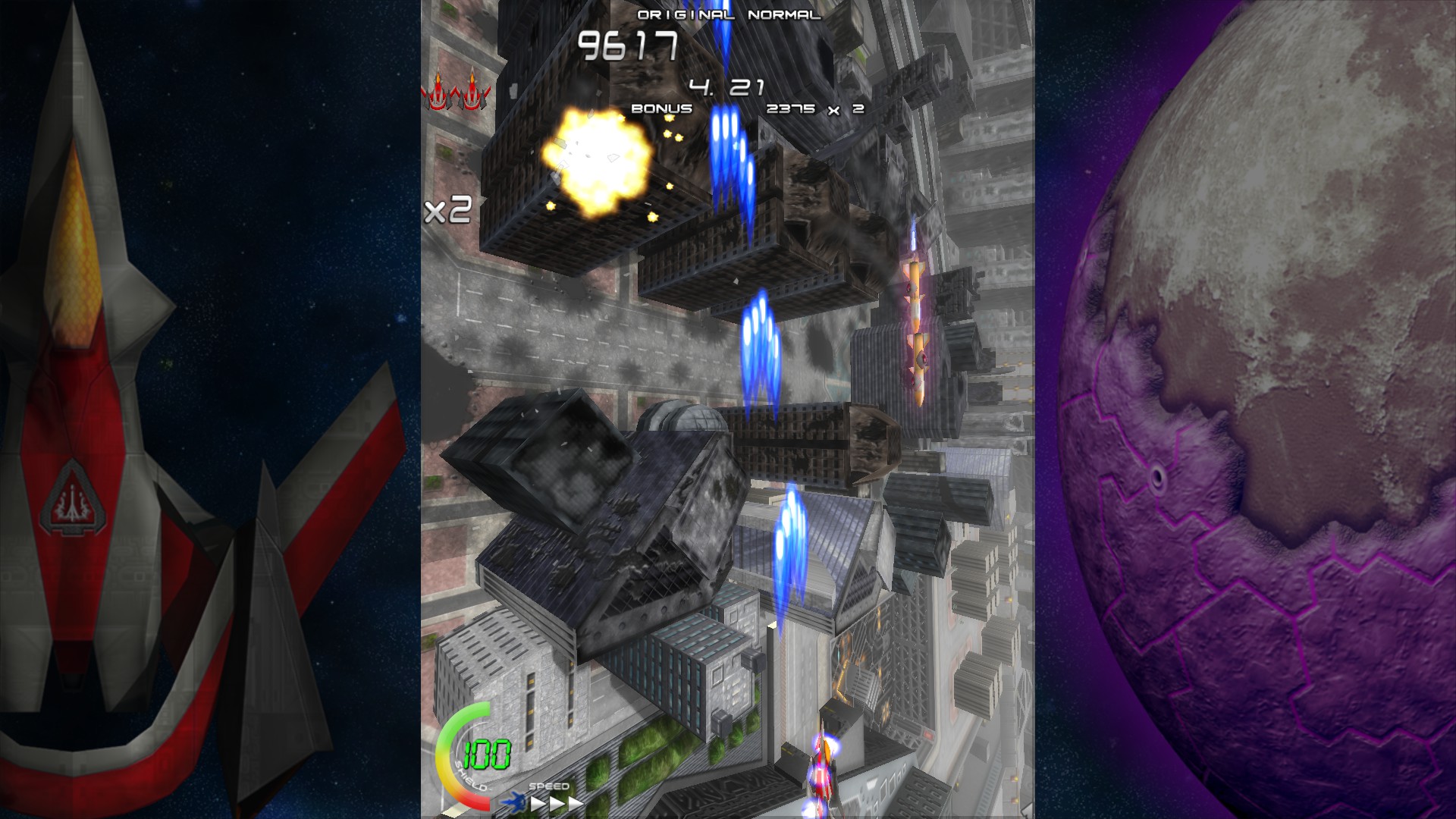
One constant in these three wildly different game modes is the amazing level design you will be treated to as you blast through wave after wave of enemy alien ships. There is no terrain to maneuver through and not many static, ground-based enemies to destroy in Eschatos, but what the game lacks in environmental interaction, it more than makes up for in how beautifully designed its enemy patterns are: zakos fly in and out of and all over the screen with hypnotic, dance-like movements, bigger enemies always come in accompanied and with plenty of firepower to spare, and unique miniboss encounters gradually grow more and more frequent as the game progresses.
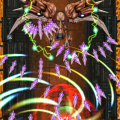
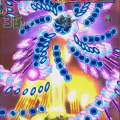
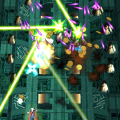
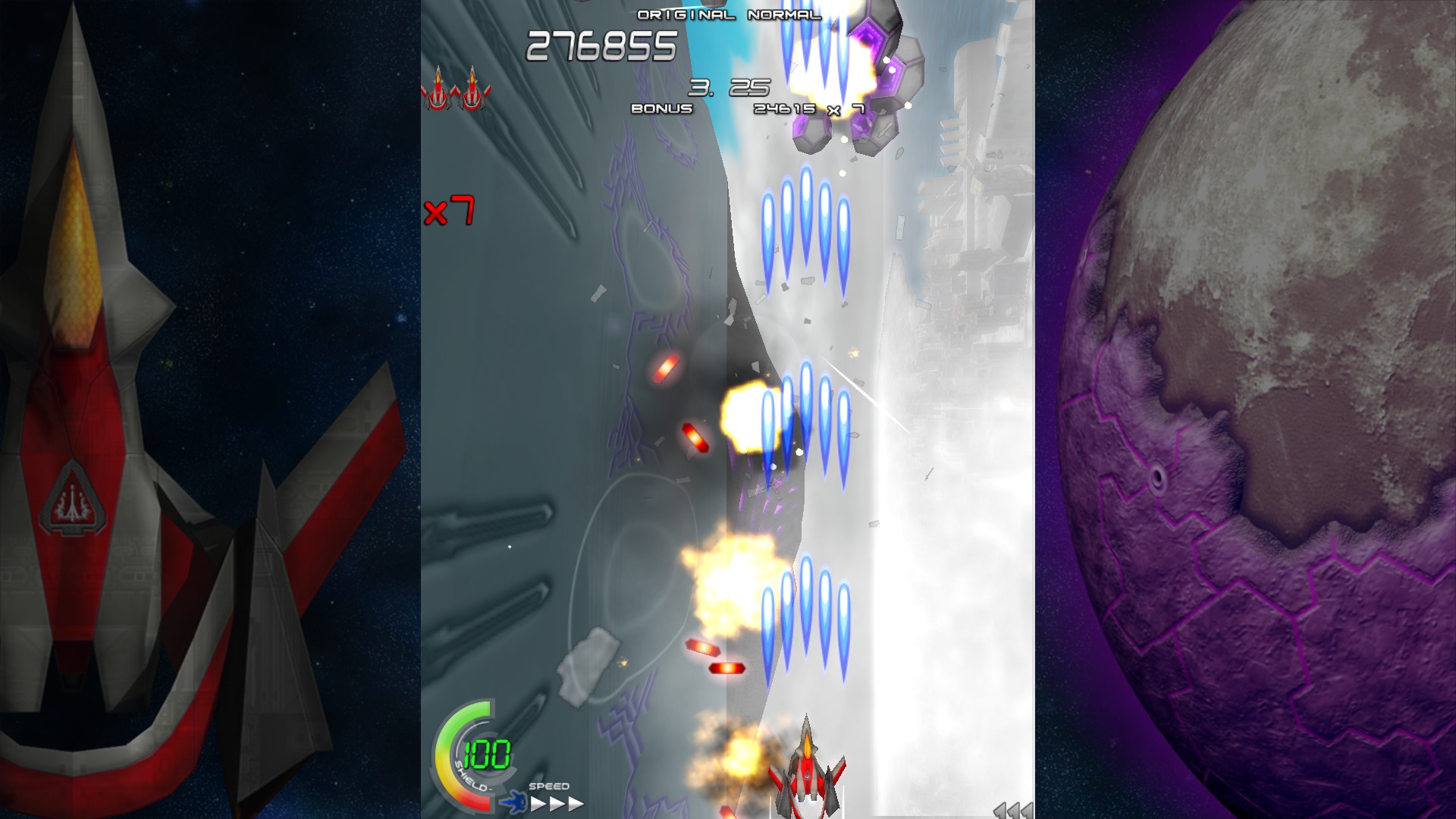
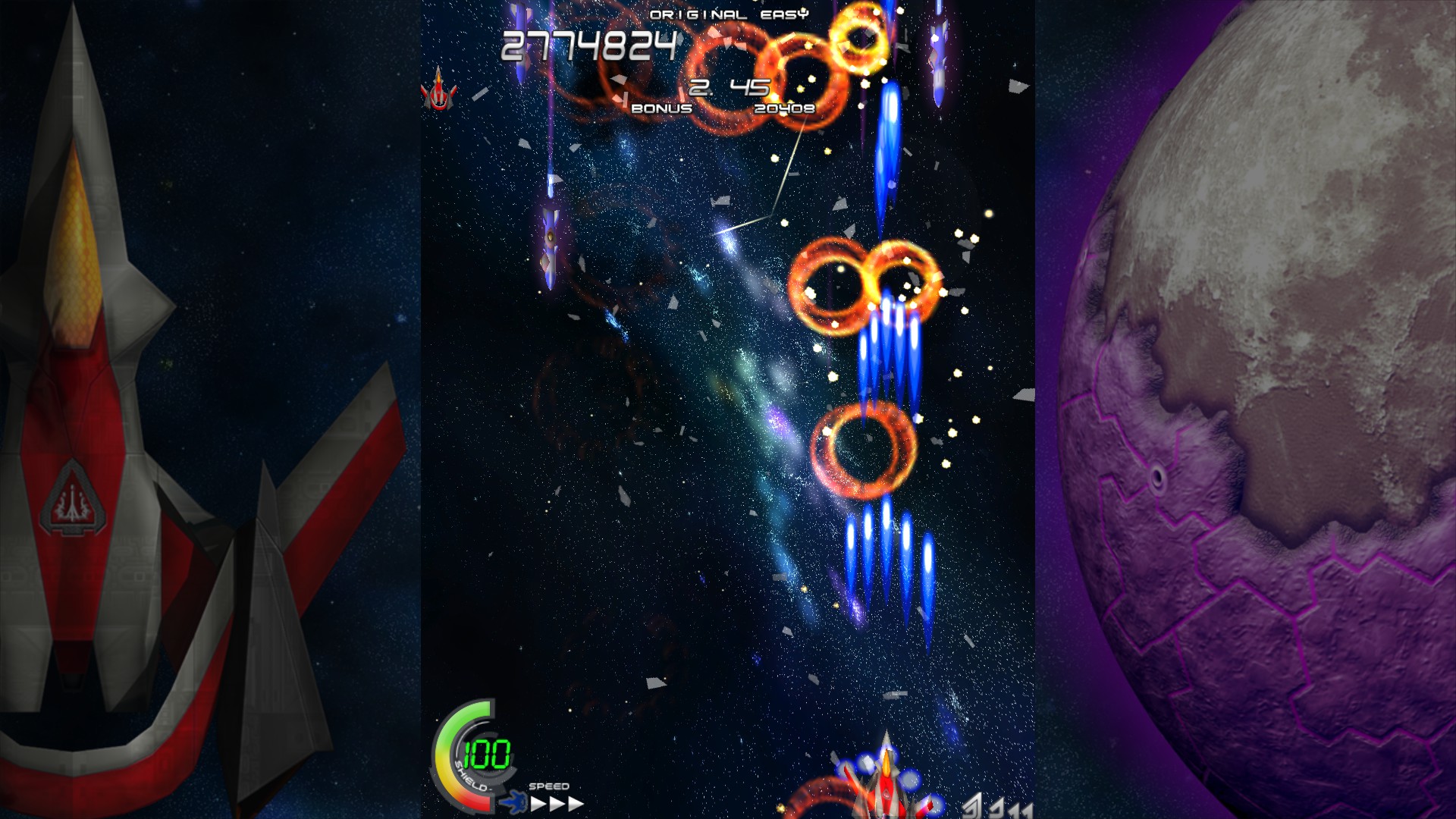
The bullet patterns strike a perfect balance between being dense and being fast, and are more often than not aimed at your ship’s general position, which makes guiding them using your movement an essential skill you’ll have to learn quickly to survive, especially in the higher difficulties. It all makes for a frantic, fast-paced game that pushes you to play aggressively, moving all over the screen to destroy enemies as quickly as possible while dodging stray bullets and occasionally diving headfirst into the danmaku to grab those juicy, juicy score bonuses and the rare WonderWitch collectibles. Complimenting all of this are some wonderfully punchy and effective sound effects and low-budget graphics that have an (un?)intentional retro feel, but do their job in being clearly visible and discernible at a moment’s notice beautifully – all without any noticeable performance hitches.
The star of Eschatos’ presentation, however, is its incredible soundtrack by veteran composer Yousuke Yasui. A frequent collaborator to Shinji “Sampling Masters MEGA” Hosoe of Namco, Arika and SuperSweep fame, Yasui has been working on the field of VGM since 2000, composing for games ranging from Eighting’s line of licensed Naruto fighters to Itadaki Street and 3D Dot Game Heroes, but for Eschatos (and Mamorukun Curse!, another 2008 run-and-gun which he worked on), he went on a different direction than his usual work’s and busted out the Yamaha 2612 soundchip to compose a masterpiece that perfectly matches the game’s retro charm and elevates the experience of playing it to a whole new level. FM synth, being the ancient, flexible and incredibly beloved technology that it is, was the basis for many great soundtracks in arcade, console and computer games, and Eschatos’ deserves to be counted among the greats of its 80s and early 90s heyday.
The patches/instruments used bring to mind Konami’s and Raizing’s, arguably the two developers who best used Yamaha’s technology in their output, but the compositions themselves pull from many other era-appropriate inspirations – Technosoft, SEGA, Toaplan and Taito, just to name a few – to create a varied, blood-pumping soundscape that goes along with the frantic shooting action like very, very few other collections of tunes do. Due to the game’s general structure, in which bite-sized Areas (twenty-six in total) flow seamlessly into each other with only occasional background environment changes, the number of tracks heard in-game is fairly low, but what is present is all of incredibly high quality, with the major boss theme in particular perfectly capturing the intensity of fighting a well-designed shoot-em-up boss through its heroic, energetic melody that drops all pretense of being menacing or ominous in favor of just being plain fun.
Eschatos was primarily developed by a developer known as M-KAI, who cut his teeth on shoot-em-up development with MSX2 titles like Pleasure Hearts. He then moved onto the Wonderswan to develop Judgement Silversword with the WonderWitch development system. While these were 2D games owing to their hardware, Eschatos is the natural evolution of these titles but given a modern 3D sheen.
Eschatos was first released on the Xbox 360’s Live Arcade service, bundled with its two direct predecessors Judgement Silversword and Cardinal Sins: Judgement Silversword Recycle Edition. It took four years to be released on PC through Steam, this time as a standalone release, and six more for it to arrive on the Nintendo Switch and PS4, also separate from Silversword and Cardinal Sins. Wherever and however you play it, Eschatos is light, quick, pick-up-and-play shoot-em-up fun with more than enough meat on its bones, gameplay that’ll keep you coming back for more and a soundtrack that absolutely can’t be missed.