
- Bomberman Series Introduction / Bomberman (1983)
- 3-D Bomberman
- Bomberman (1985)
- RoboWarrior
- Atomic Punk
- Bomberman (1990)
- Atomic Punk (Arcade)
- Bomberman II
- New Atomic Punk: Global Quest
- Bomberman ’93
- Super Bomberman
- Hi-Ten Bomberman / Hi-Ten Chara Bomb
- Bomberman ’94 / Mega Bomberman
- Super Bomberman 2
- Super Bomberman 3
- Wario Blast: Featuring Bomberman
- Bomberman GB 2
- Bomberman: Panic Bomber
- Super Bomberman 4
- Saturn Bomberman
- Bomberman GB 3
- Bomberman B-Daman
- Super Bomberman 5
- Atomic Bomberman
- Neo Bomberman
- Amazing Bomberman
- Bomberman 64
- Saturn Bomberman Fight!!
- Pocket Bomberman
- Bomberman Fantasy Race
- Bomberman World
- Bomberman Wars
- Bomberman: Misobon Roulette
- Super Bomberman R
- Super Bomberman R Online
- Super Bomberman R2
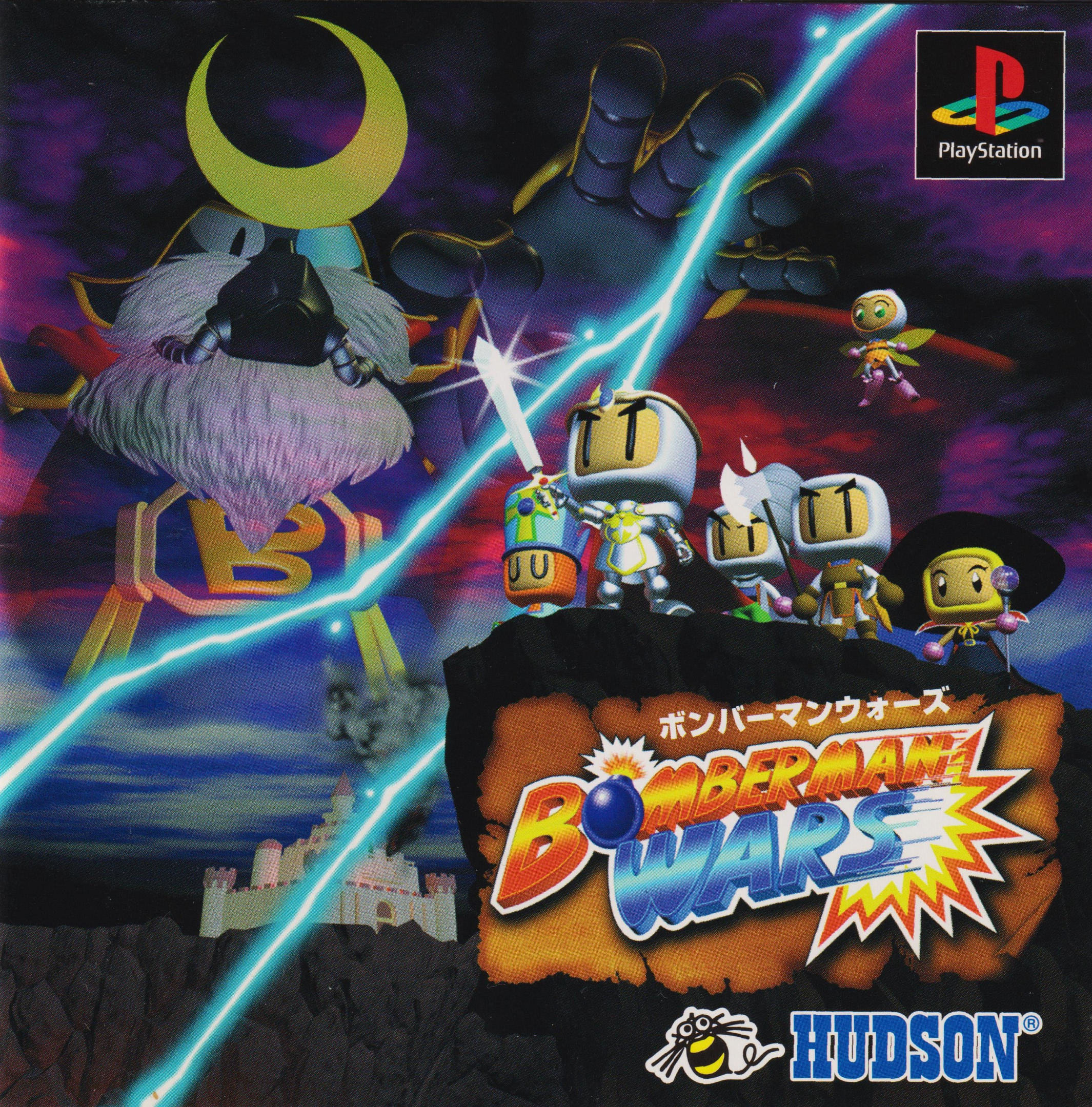
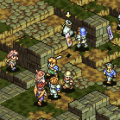
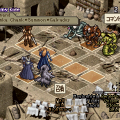
While there are plenty of entries in the series that do unique and interesting things, none of them are quite as distinct as Bomberman Wars. This is the sole game in the entire franchise to adopt the strategy genre and even its take on said genre is unusual compared to its contemporaries. It’s also the only entry in the series that’s playable on both the PlayStation and Sega Saturn. Instead of Jun Chikuma’s ever-enjoyable tunes, Bomberman Wars deploys the kind of soundtrack you’d expect to hear in something like Final Fantasy Tactics, giving it a feel closer to that of a fantasy epic. Despite being a prequel to Bomberman World, it’s developed by a different team (Metro, who also did Pocket Bomberman) and most of the staff specific to this game have no clear and/or previous credits on earlier entries in the series. All of these factoids combine to create a game with a voice unlike any other in the series, one that’s quirky and comes off as undercooked once you get used to it, but so interesting that it’s well worth experiencing.
Bomberman Wars begins with a lizard man attacking a town of Bombers, only for it to be foiled by Bomber Hero and his band of allies. After doing so, Bomber Hero is crowned Bomber King and watches over the land until a premonition of the evil Dark Bomber and his Dark Force Bombers spurs him into action once again. Being a strategy game, you might expect there to be more plot, but this intro is all you get for the game’s runtime, which is disappointing considering the potential the setting brings. However, the lack of storytelling does allow the game to offer a non-linear structure. Your goal is to defeat the Dark Force Bombers by completing battles on the world map that will lead you to the corners where they reside. Every battle won unlocks more battles on adjacent squares, so with efficient selections, you only need to play around half of the 25 maps to clear the game. Bomberman Wars lacks RPG elements like leveling and equipment management, so there’s no recommended approach per se, but since Dark Bomber challenges you on the map where you defeat the fourth Dark Force Bomber, it may be in your best interest to pick the map that allows for the easiest victory.
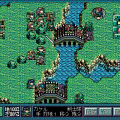
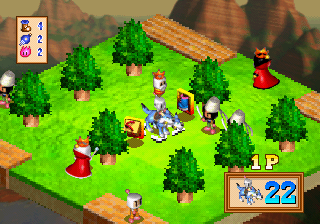
Battles in Bomberman Wars are less like Final Fantasy Tactics and more along the lines of tabletop games like chess and shogi. Each player gets a Bomber King and four other Bombers of their choosing and the goal is to either eliminate the other player’s king or all of their other characters so the king is alone and effectively checkmated. Bombs are obviously how you do this, but since this is a turn-based game, you have to utilize them in an entirely different fashion. Whenever a bomb is placed, a 5-turn timer counts down by one at the end of each player’s turn, and once that timer hits zero, it’ll blow up and trigger any other bombs that happen to be in its radius. What makes trapping foes even possible is that Bomberman Wars heavily restricts your options when it comes to movement and bomb capacity. Characters can only move in straight lines and can’t pass through bombs or other Bombers, so getting away from bombs can take more than one turn. Once you place a bomb, you’re completely defenseless until it blows up, so if you’re too hasty with your actions, a patient opponent can use your bombs to set theirs off at the worst possible time for you.
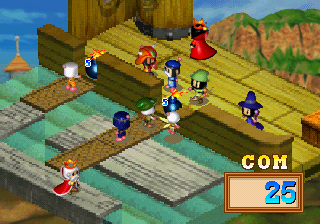
What lends Bomberman Wars much of its potential strategy is its diverse roster. Each Bomber has differing stats as well as an ability that’s almost always unique. For example, the Bomber Cleric has the ability to increase a bomb’s timer by one. Bomber Giant can pick up other Bombers and put them down and Bomber Monk can shove characters forward, making them both powerful units when it comes to manipulating the board. More mobile units like Bomber Fairy and Bomber Ninja can bypass terrain entirely, making them ideal for zeroing in on the enemy king. Some units, such as the Bomber Fighter, Bomber Witch, and Bomber Prince don’t get abilities at all, but they get superior movement and/or the ability to place bombs multiple spaces away to compensate. The Bomber Archer can shoot bombs to reduce their timer by one and the Bomber Musashi can instantly bring a bomb’s timer down to one by slashing it directly. Winning battles earns you money for buying items back at the castle, which range from temporary stat boosts to granting a second turn and even allowing you to force sudden death to occur. Winning a battle without losing a unit gets you even more cash, but items are never essential for victory and it’s easy to make enough money to hit the cap no matter how recklessly you play, so this idea does little to stop you from steamrolling your opponents with rushdown strategies that trap and take out the opponent’s king quickly.
While there’s a definite thrill in knowing you’ve completely outplayed your opponent with a series of smart moves, Bomberman Wars doesn’t offer enough variety or countermeasures to make its novelty last over the course of the game. There are 25 maps, but many of them offer terrain that does nothing to change up how you play. Aside from the rare hazard of interest like lava tiles that make bombs explode right away, most levels consist of flat terrain that doesn’t threaten either side. Some of the more ambitious levels do have potential chokepoints to utilize and rivers that only a couple of characters can cross, but these mostly just slow the game down since your options to get around them are limited.
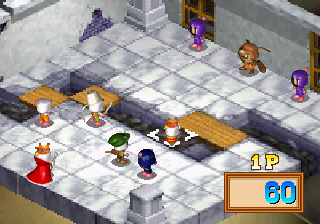
Soft blocks and power-ups are a factor as you’d expect, but they’re much less impactful than you’d hope. While the power-ups include all the hits like remote bombs, hearts, and mounts (which are now a dragon and cerberus with enhanced mobility!), getting to them requires you to place a bomb, flee, wait a few turns for it to explode, and then return, which is often not worth the trouble when there are faster ways to win. The enemy AI is also inconsistent, sometimes pulling off effective synergies but just as often neglecting power-ups in reach, playing too passively, and finding odd ways to KO themselves. When it comes time to fight the Dark Force Bombers and Dark Bomber, their superior mobility and abilities (including line bombs, instant detonation, and removing bombs from play entirely) can make them tough, but they’re still prone to the same mistakes as normal foes and are taken out in just one hit all the same.
Despite its flaws, Bomberman Wars is certainly worth a look just to experience such a unique spin on the series. It’s easier to learn and much shorter than most other games in its genre, so it’s a good option for newcomers or Bomberman fans who don’t normally play strategy games. It’s also a game that may work better when playing against another human that can make use of character combos and reactive play in ways the AI simply cannot. The multiplayer options are barebones, with only a handful of stages available to you, but they at least offer unique designs and all of the characters playable in the main game are playable in multiplayer as well. While Bomberman Wars never got a follow-up, it lived on for a small period of time in the comic “Minna-san! BombermanDesuyo!!”, which was written by Gen Sato and ran in Comic Bon Bon for a few years. This comic was mostly about various hijinks, but three of its chapters were based specifically on Bomberman Wars. The comic had Bomber Kid (from Super Bomberman 3) isekai’d into the world of Bomberman Wars where he would go on to fight some of the Dark Force Bombers before the story ended inconclusively.
Links
https://randomhoohaas.flyingomelette.com/bomb/media/minasan/#32 – More information on “Minna-san! BombermanDesuyo” from Ragey’s Totally Bombastic Bomberman Shrine Place