- Operation Thunderbolt
- Operation Hanoi
- Operation Wolf
- Operation Wolf 3
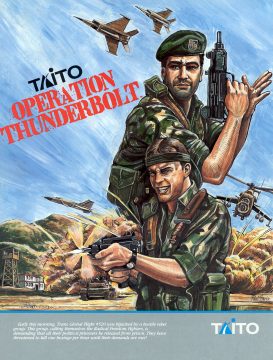
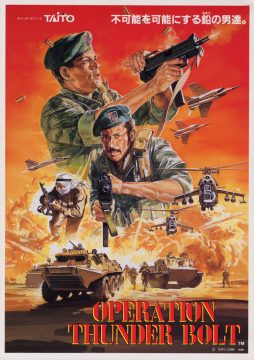
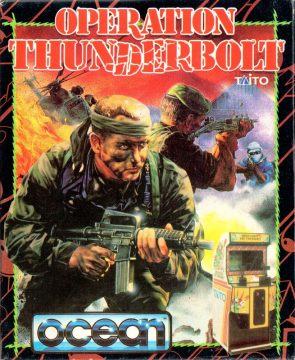
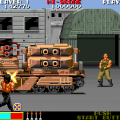
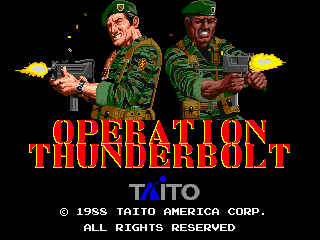
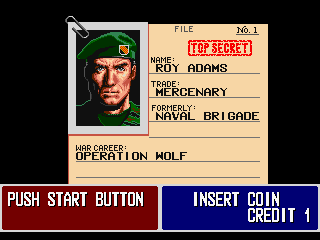
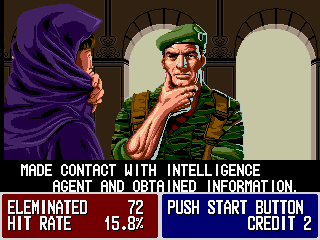
Coming just a year after Operation Wolf, this sequel makes many changes over the original even though the basic concept is the same. New to this is two-player co-op mode, as Roy Adams is called back into action along with his Green Beret comrade Hardy Jones. Their mission? Track down some terrorists that hijacked a plane and landed it in the northern African country of Karubya. This plot is likely taken from the real-life Operation Thunderbolt in 1976 (and also inspired a movie the next year), when a civilian plane was taken over by Palestinian/German terrorists and landed in an airport in Uganda, and were rescued by Israeli forces.
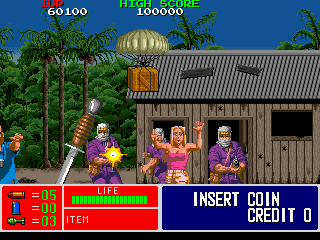
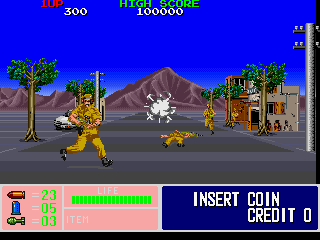
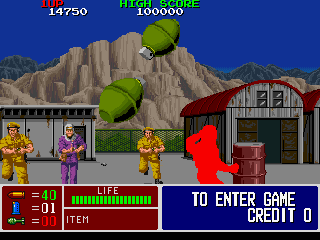
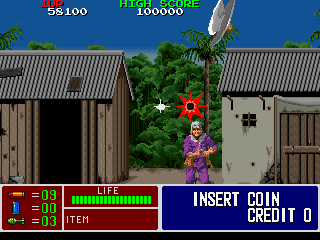
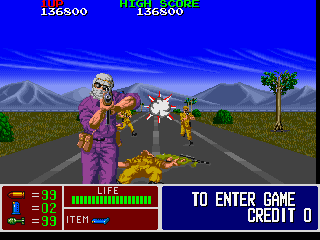
Beyond the second gun added to the arcade cabinet, Operation Thunderbolt also changes from using a light gun to a positional gun This is effectively a controller that detects the position of the gun based on its movement, similar to a mouse. The main benefit is that it removes the constant screen flashing that was present in the original light-gun based arcade game. The status bar is also moved from the right side to the bottom, as in the NES/SMS ports of the first game. There are no longer enemy quotas, and you simply complete the stage when you reach the end.
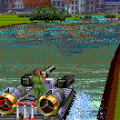
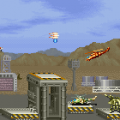
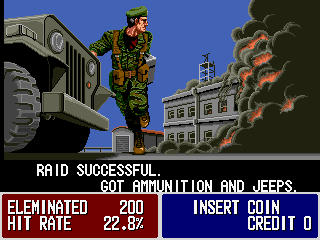
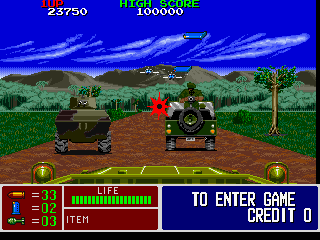
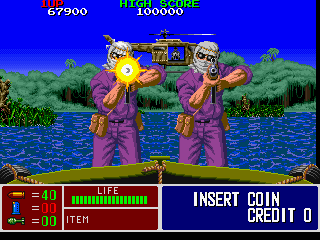
There are eight stages now, though the stage selection is gone. Some stages are 3D, as your soldiers march forward along a road, driving a car, or riding in a boat while shooting enemies, using sprite scaling effects similar to racing games of the time. Sometimes the sprite scaling doesn’t look right, resulting in characters that look much smaller than they should be, particularly the dogs. Other stages scroll horizontally in one direction, as with the first game. Items are dropped in boxes from the top of the screen (presumably parachuted in by friendly forces), and enemies now drop items too, rather than them being placed along the ground. Beyond ammo, grenade, and health restoratives, you can also find bulletproof vests to reduce damage and laser sights that indicate where you’re aiming (another benefit of positional controllers versus light guns).
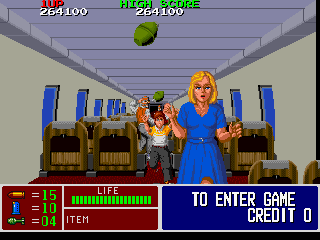
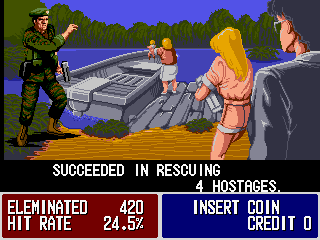
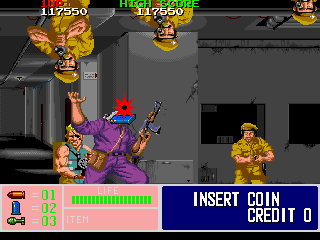
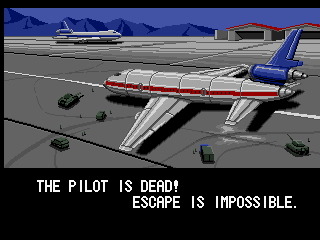
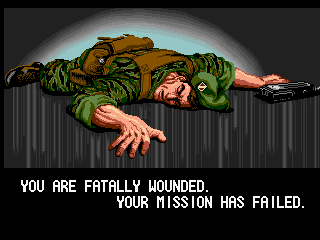
A few stages have hostages that you can rescue for a small health boost. The final stage is a 3D stage that takes place in the hijacked airplane, as you march through the aisles and shoot terrorists. Once you reach the cockpit entrance, you face off against the terrorist leader, who tries to use the pilot as a shield. If you kill the pilot during this face-off, you’re doomed to a bad ending, since there’s no one to fly the plane and escape once you’ve taken down the baddies. There are no second chances either, so you’d best make sure you’re a good shot!
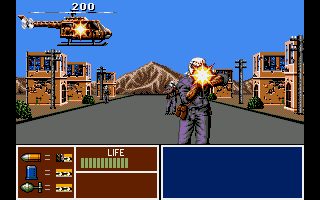
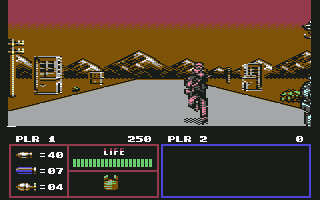
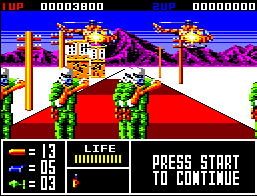
Operation Thunderbolt was ported to several computers, including the Amiga, Atari ST, ZX Spectrum, Amstrad CPC, Amstrad GX4000, and Commodore 64. Their quality is about the same as the ports of Operation Wolf, with the ZX and CPC versions running a little too fast and too cluttered with enemies, while the Commodore 64 version is less overwhelming.
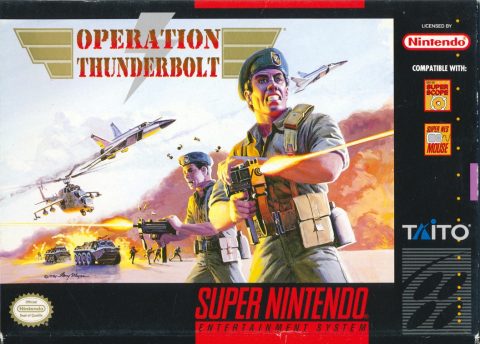
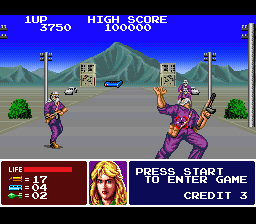
An SNES port was released in North America only in 1994, six years after the arcade version. This includes support for the controller, mouse, and Super Scope 6 light gun. There’s also quite a bit more story included here, with relatively lengthy introduction and pre-mission cutscenes. Instead of the American commandoes from the arcade release, you can choose from six different characters of various nationalities. You can also select the order of the first three missions.
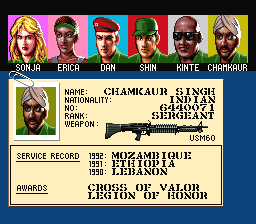
SNES
The game and levels haven’t changed much. The graphics look close to the arcade game, but the animation is quite choppy, and it doesn’t utilize any Mode 7 scaling effects for the 3D levels, which is disappointing. Operation Thunderbolt appears the Taito Legends collection for the PS2/Xbox/Windows and Taito Memories Joukan II for the Japanese PS2. An arcade-perfect port is also featured on Operation Night Strikers, with its SNES conversion included as DLC.
Links
Gaming Alexandria – Source of SNES cover
Screenshot Comparisons
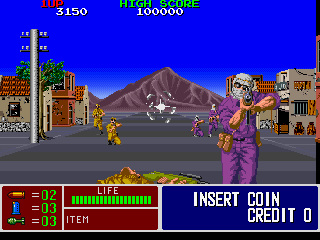
Arcade
SNES
Amiga
Commodore 64
Amstrad CPC
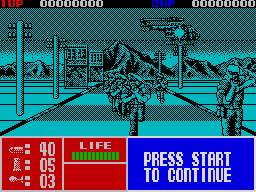
ZX Spectrum