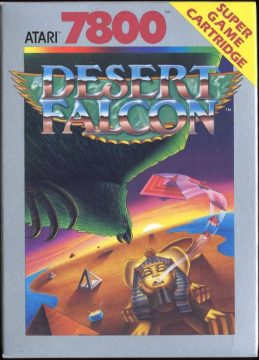

In 1984, Atari was in trouble. The Video Game Crash of 1983 had taken its toll on the industry in America, and it seemed that the end was near for Atari’s two console lines, the 2600 and 5200. This didn’t stop Atari from announcing a newer, more powerful console, the 7800, in mid-1984. Developed by GCC for Atari, it was to be released that year, along with several ports of arcade games Atari had already released (and re-released) for their previous consoles. It received a very limited early release, but then a monkey wrench fell into the works.
Jack Tramiel (of Commodore fame) bought Atari in mid-1984, and immediately halted production of the 7800. Then, in 1985, Nintendo released the NES, which over the next few years proved that the home video game industry hadn’t died in America, it had just been in hibernation. Tramiel finally gave the 7800 the green light for production in 1986. It was launched as a lower-priced alternative to the NES, and Atari did their best to entice consumers with “all new” arcade ports of games like Dig Dug, Joust, and Ms. Pac-Man, while also advertising that the 7800 was backward compatible with the entire 2600 library (which would benefit those that still had their 2600 games). However, Atari did have some new games in the pipeline, such as ports of Food Fight, Pole Position II, Ballblazer, and an original game that was referred to as both “Sphinx” and “Nile Flyer” in the initial 1984 announcement. It finally saw release in 1987, but by then had been renamed Desert Falcon.

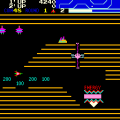
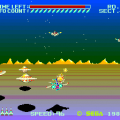
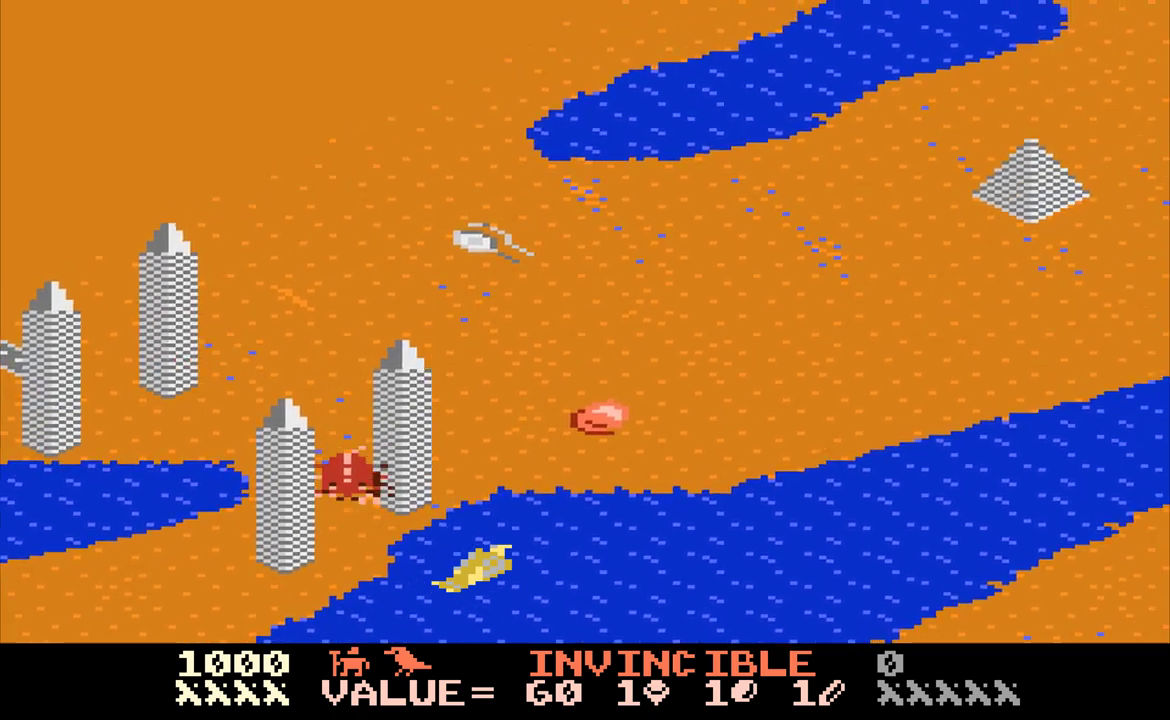
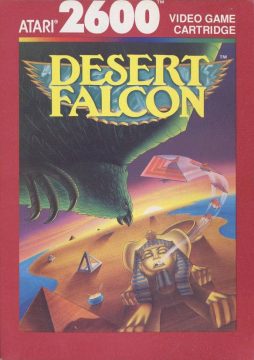
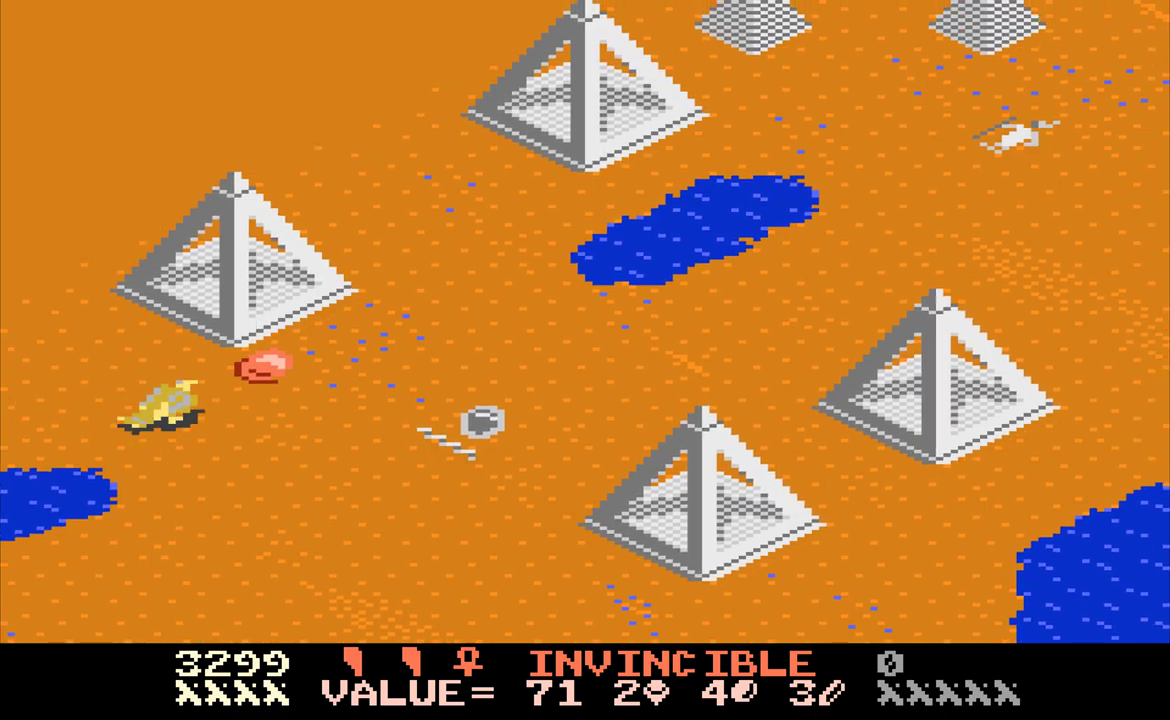
Desert Falcon can basically be described as “Zaxxon in the desert,” and while that’s not a completely inaccurate description, there are additional elements that set it apart from Zaxxon. You play as the Desert Falcon, on a quest to retrieve the Pharaoh’s lost treasures. Golden Eggs, Silver Ingots and Gems are scattered across the desert sands, along with various hieroglyphics, all of which can be picked up. Standing in your way are all sorts of flying and crawling enemies, as well as the enormous Howling Sphinx. You can hop, swim and fly, but you’re armed only with arrows. You can gain additional (temporary) powers, called Super Powers, by picking up the hieroglyphics. These powers are activated by pressing the second button on the 7800 controller. Each combination of three hieroglyphics gives you different powers. For example, pick up an Ankh, Bowl and Sun, and you might have the Invincibility Super Power. Get two Bowls and a Feather, and you’ll get points instead. On higher levels of difficulty, not all of the powers help you. Some, like Shackles and Broken Wing, will limit your abilities by hobbling the Falcon. Luckily, aside from points, the Super Powers don’t activate automatically. On top of that, the screen will show you the name of the Super Power you’ve collected, and if it’s one you don’t want, you can collect more hieroglyphics until you get one to your liking.
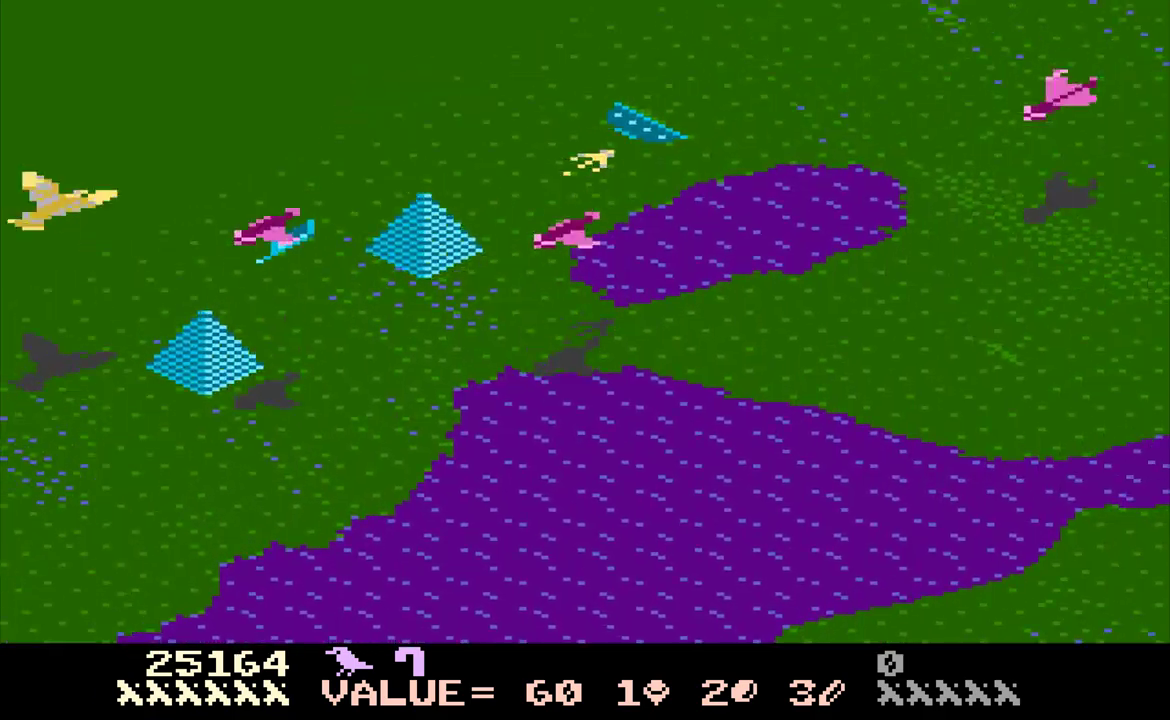
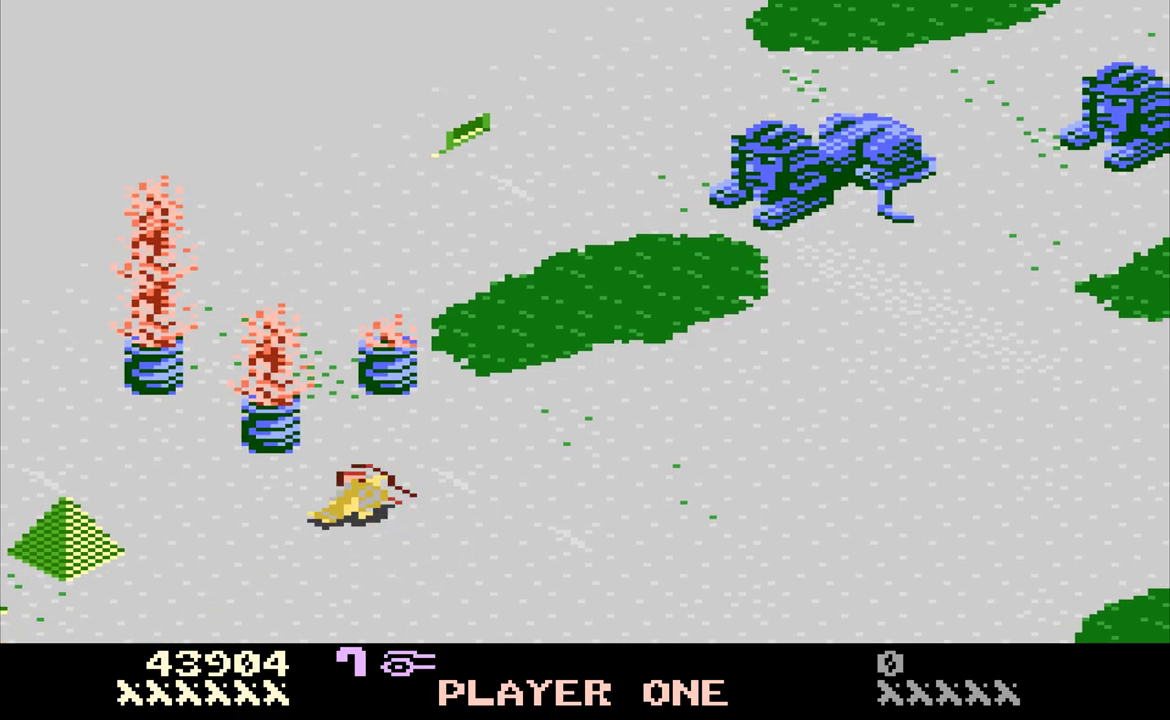
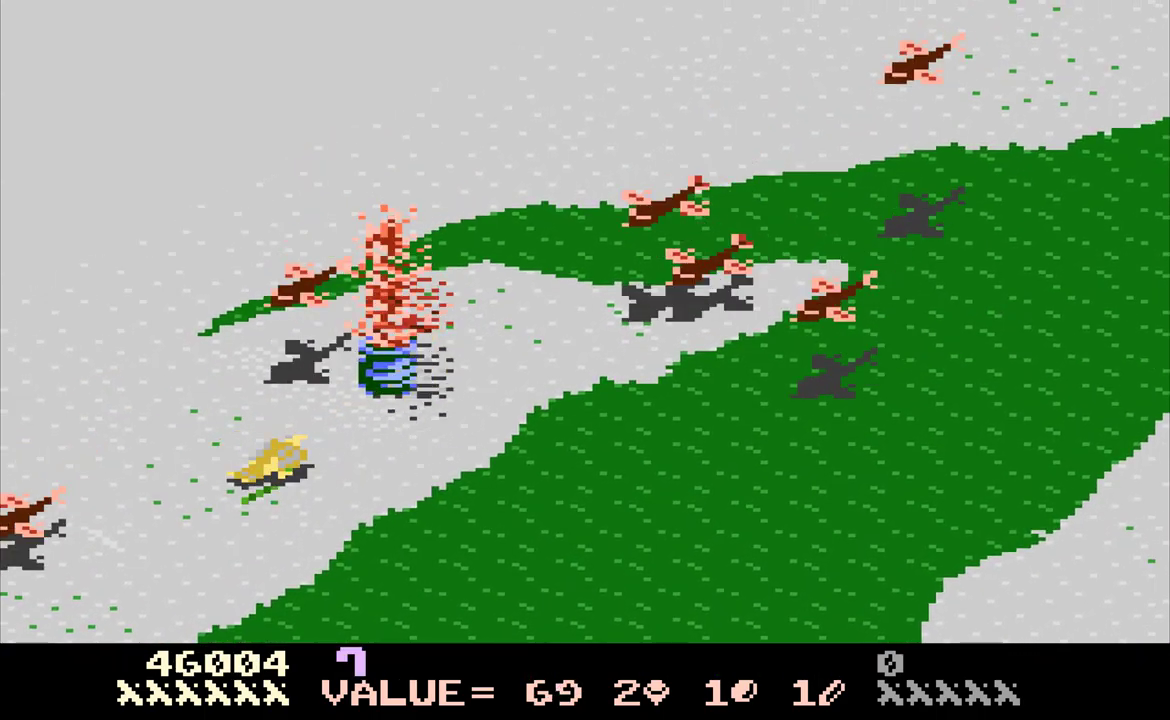
Of course, the desert is crawling with Desert Guardians that want to make a meal out of the Falcon. Burrowing Uwes, which will burrow underground until they surface right in front of the Falcon, and Phantom Gliders are some of the most common in the early stages, but the further you go, the more aggressive the creatures get. New ones join the fray: Vultures, Flying Fish, Scarabs and Warrior Phleas among them. The Scarabs in particular will swarm the Falcon en masse, the rest will make a beeline for it. The desert is also covered in obstacles, like half-finished pyramids, fire pots, and Mini-Sphinxes. Collide with any of them, and lose a life. You’ll encounter the occasional oasis while you fly the desert, which the Falcon can swim in. This is a good place to avoid most of the ground-based enemies, as they can’t swim, but the flying ones can still kill the Falcon.
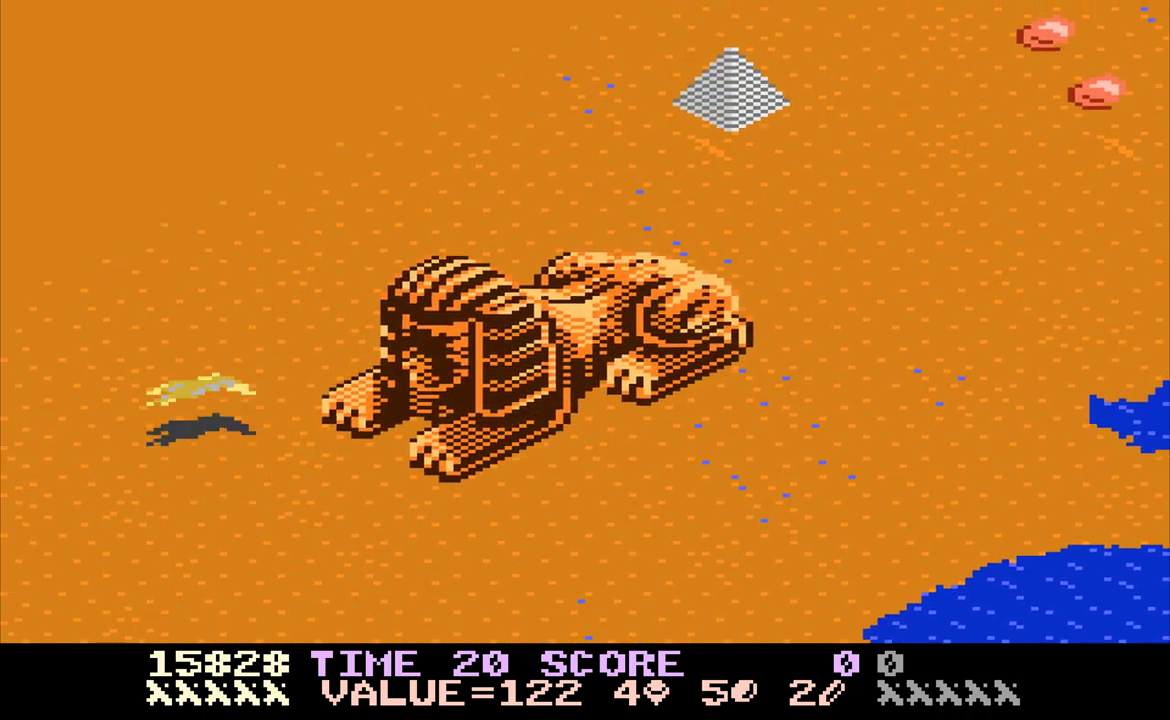
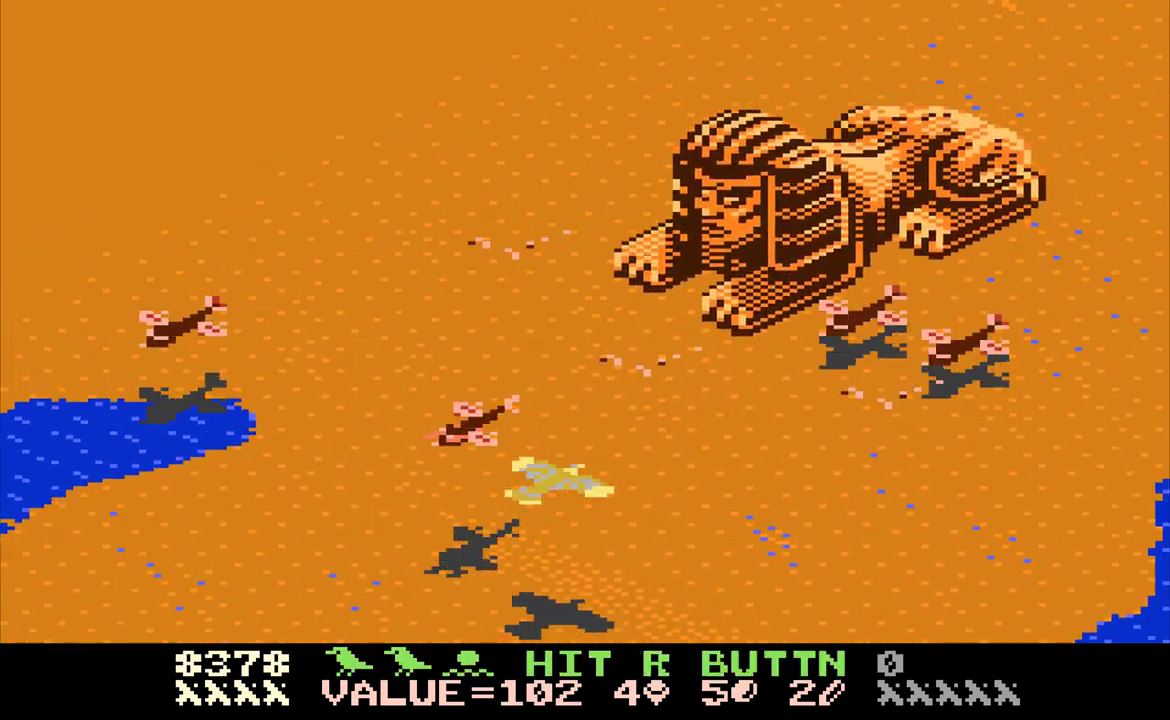
All of this eventually leads to the boss battle at the end of each stage, which is a giant Howling Sphinx. It constantly spawns enemies and shoots darts out of its eyes. The only way to defeat it is to blast it directly between the eyes (or alternately, find and keep the Kill Sphinx Super Power until you reach it), which will cause its face to explode. Once it’s dead, you’re taken to a bonus round where you collect as many treasures as you can before time runs out and you’re warped to the next stage. There is no ending to Desert Falcon, it just goes on and gets harder with every stage.
Desert Falcon was also released for the Atari 2600 and XEGS (and by extension, the Atari 8-bit computer line). The 2600 version is playable, but lacks the details that the other two versions have. However, the Howling Sphinx is included, which is impressive for the console. It’s a little harder to play this version, because unlike the 7800, the 2600 joystick only has one button, which you have to double-tap to activate a Super Power (the XEGS version has the same issue). The 7800 version is the best looking and playing of the three versions, with all of the graphic detail you’d expect from the 7800; however, the sound is identical to the 2600 version, as both versions use the TIA chip in both consoles to generate the audio. The XEGS version is a definite downgrade, falling somewhere between the 2600 and 7800 versions. The graphics aren’t as detailed, there’s less color on-screen and the game plays a bit fast, if choppy.
Screenshot Comparisons

Atari 2600
Atari 7800

XE