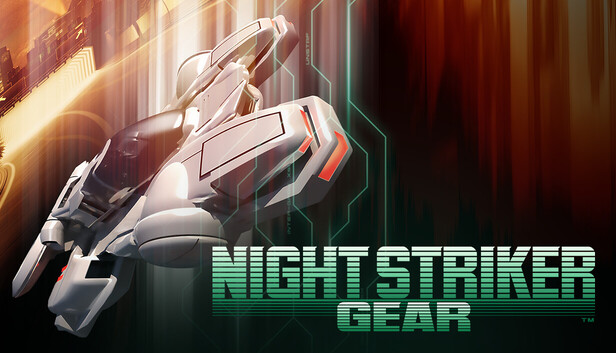
Taito’s 1989 rail shooter Night Striker took heavily after Sega super scaler games like Space Harrier, but gave its own twist with its slick futuristic cyberpunk setting. More than 35 years later, M2 brings it back to the 21st century with Night Striker Gear. It was directed by Hiroshi Iuchi, the former Treasure developer who helmed the legendary shoot-em-ups Radiant Silvergun and Ikaruga, bringing some design expertise to update the classic rail shooter formula. The game basically works the same – you control the flying Inter Gray through a futuristic city, and beating a little allows you to pick from two branching paths, leading to several different endings.
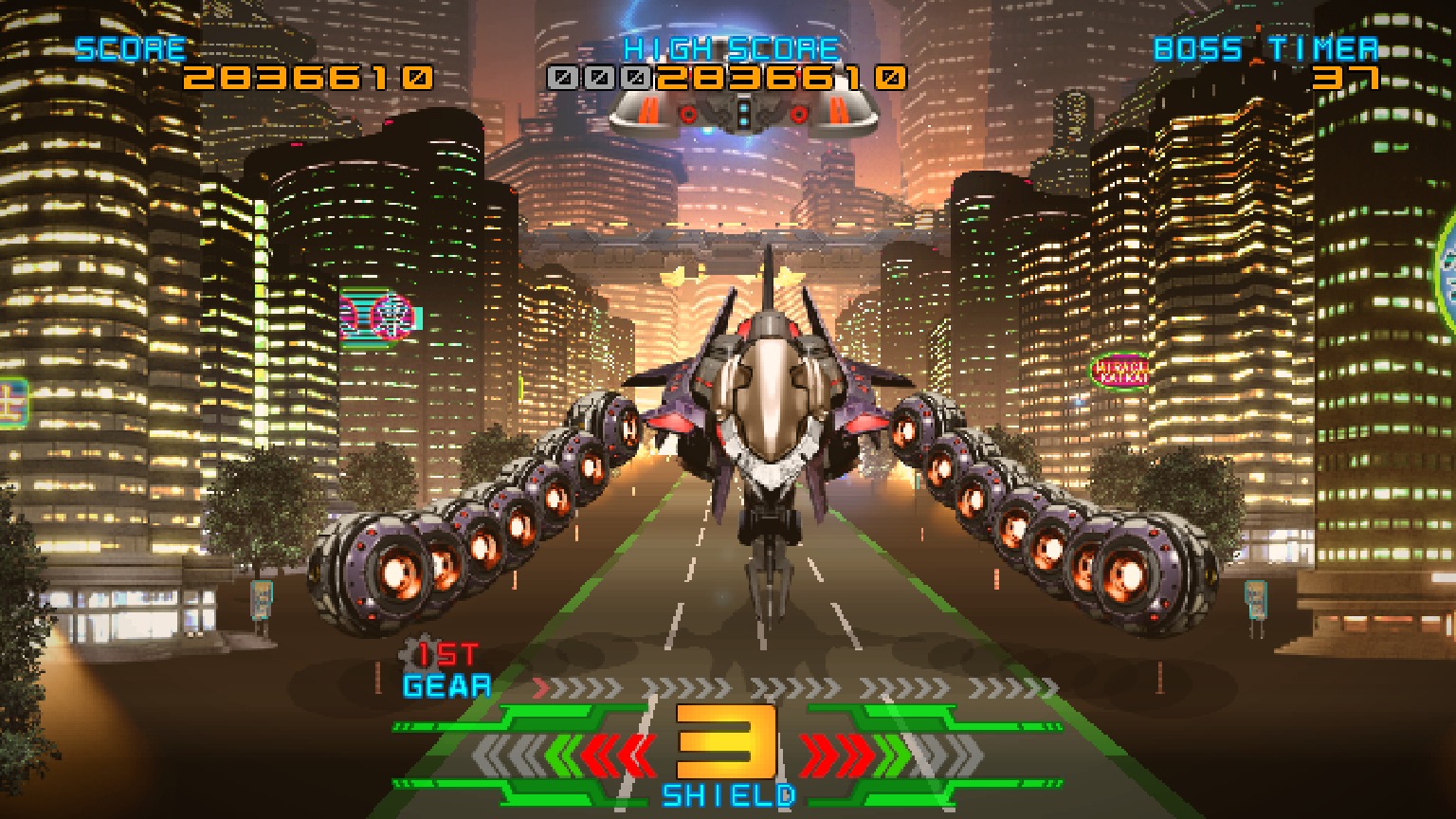
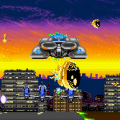
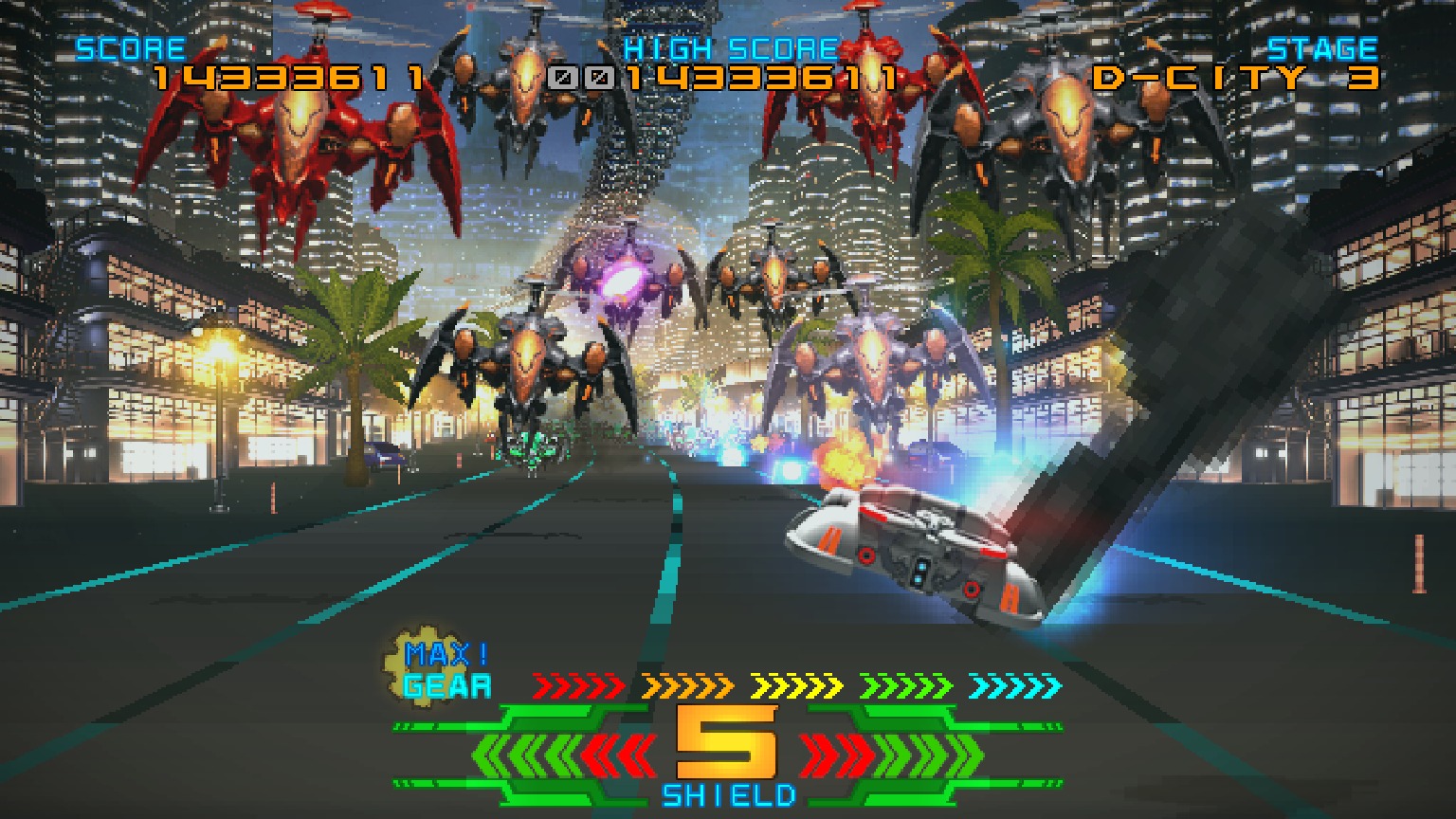
There have been a handful of indie revivals in the same genre, but most of them either stick to the classic pixel retro style (Top Nep, Missile Dancer 2) or just switch fully to 3D (Asura the Striker). Night Striker Gear instead uses high resolution 2D sprites for everything. It’s a little unusual at first, considering the chunky misshapen pixels play such a huge part in the nostalgia for these super scaler games, but the crisper visuals really do look incredible in motion. The stages are also much more densely packed – the original game created its cityscapes using only a handful of buildings, since that’s all that 1980s arcade technology could display while still keeping up the pace. But without those technical limitations, the streets are lined with dozens of structures, adding to the 3D illusion while still using the same basic scrolling techniques. Plus, Night Striker had such long lasting appeal because it oozed style, capturing some of the best vibes that 1980s video game cyberpunk had to offer. Night Striker Gear replicates this perfectly, with color palettes and graphical effects that give the stages the same bright urban glow. The game even keeps the same enormous text that warns you when your shields are running out and helpfully reminds you when you’ve died. The music is fantastic too. Most of the tracks go for a dramatic orchestral style, but at least one of them features some unusual synthesized vocals, the kind that would fit alongside any number of classic Zuntata tracks.
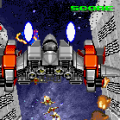
The stronger hardware allows for a game that not only looks better, but plays better too. The 16:9 playing field allows for a wider range of movement and makes the original seem claustrophobic in comparison. Enemy patterns are faster, denser, and more elaborate – watch for the baddies that rotate in three dimensional rings. Bullets are much more numerous too, though they’re typically spread out enough to make them manageable to dodge. The action does occasionally become overwhelming, especially when trying to fly through small gates, but your strong shield helps make up for these errors.
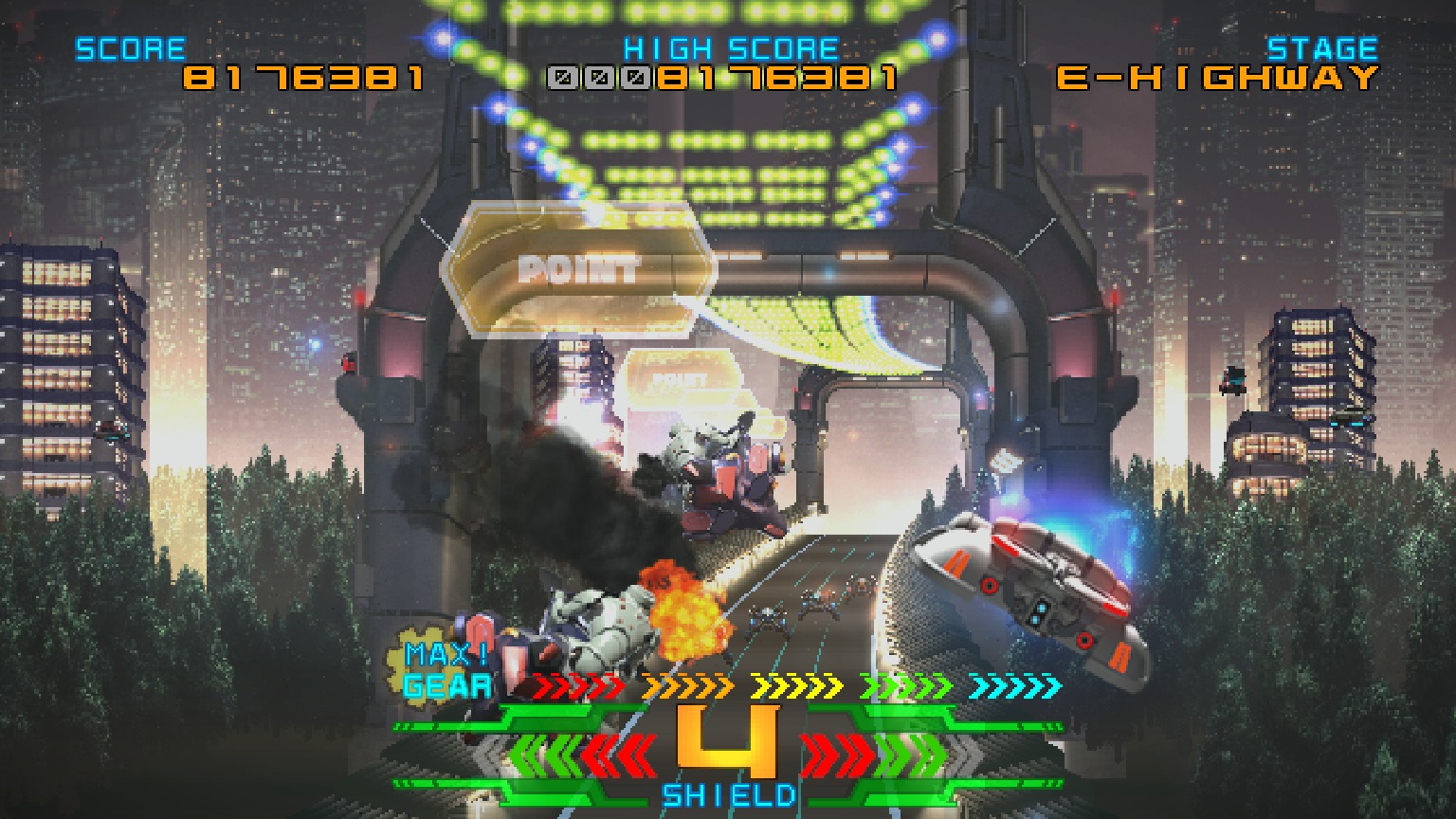
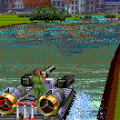
Other gameplay changes are well considered – if your car is blocking an enemy, it won’t fire at you, greatly cutting down on the number of cheap deaths. Many enemy formations also have red captains, and destroying them will cause the whole group to explode. Every once in a while, you’ll also find a little droid that will replenish one shield stock if you manage to destroy it. Shooting enemies also builds up a Gear gauge, allowing you to temporarily transform into an enormous mecha that wields powerful homing shots. Stages also have bonus pickups that can either increase your score or add to your Gear gauge. As with all the best shoot-em-ups, there’s some strategy in picking the best time to transform – do you want to use it for dense enemy patterns, allowing you to destroy them all easily, or would you rather save them for boss battles to take them down quicker?
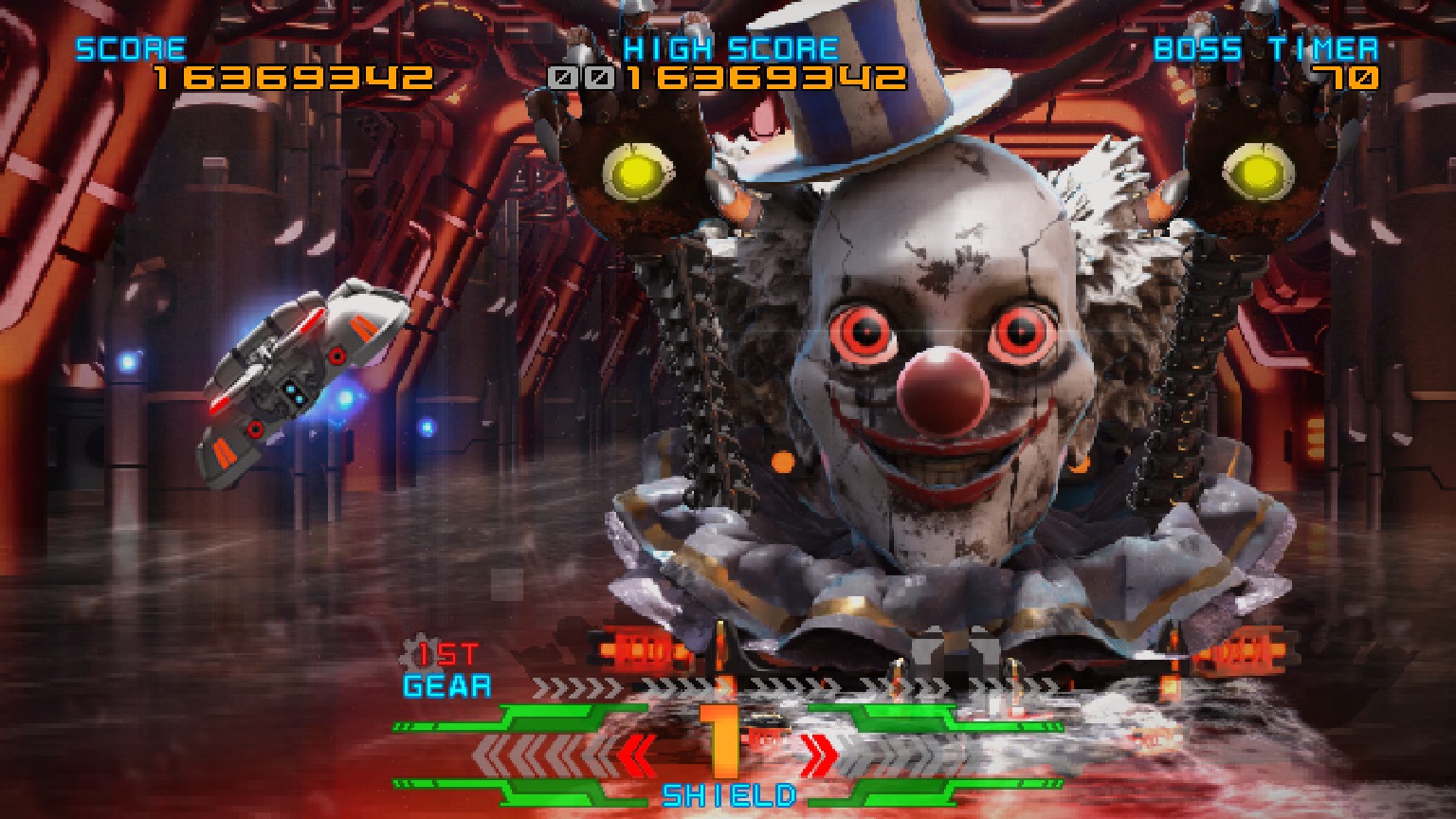
The boss battles in the original Night Striker were similar to the ones in Space Harrier, but here they’re far more elaborate – you’ll fight enormous mechas that attack with their extendable arms, you’ll chase a tractor-trailer down a tunnel as you destroy it piece-by-piece, and you’ll even fight an enormous sandworm, recreating a battle from the first game. It’s here where the Treasure influence is most noticeable, especially in the five final boss fights against the so-called Devas, each leading to their own ending.
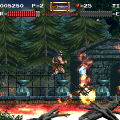
The downside is that the game is pretty short. Night Striker had 21 stages, whereas Night Striker Gear only has 11; in the first game you played six in a single run but here you only play four to reach the regular finale. Moreover, many stage backgrounds are recycled, changing just the color palette. This was also the same in the original game, but it still had a wide variety of stage types – this sequel has three types of cityscapes, plus the desert and sewer stages; the game could’ve used at least one or two more level types. The stages themselves, however, are slightly longer and definitely more elaborate, considering that they each have a miniboss and full boss fight at the end, so a full run is slightly longer than the original game at about fifteen minutes.
Still, beyond the score chasing, there’s plenty of challenges to be had. Even the Easy mode will probably prove challenging with just the three credits provided, though you get more as you play longer. There is a hidden twelfth stage, Area G, unlocked if you manage to destroy enough enemies in at least one stage, which also reveals the true ending. This also unlocks the B-side mode, which challenges you to play all of the stages in a row rather than choosing them. Along with this is a Pacifist mode which disallows you from shooting entirely, instead focusing on dodging fire.
Even though it could’ve used more visual variety, what’s here is utterly brilliant, a nearly perfect upgrade to a cult classic. And mechanically, this is one fantastic rail shooter, maintaining the depth and pacing that make all of the classic arcade games so enthralling. The original Taito may be long gone, but their games are in the best hands with wizards like M2.