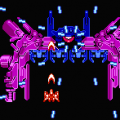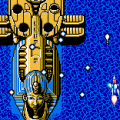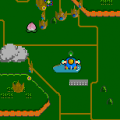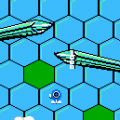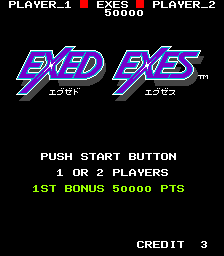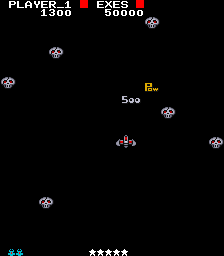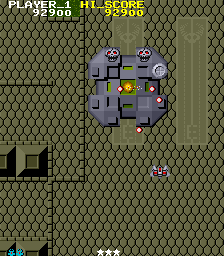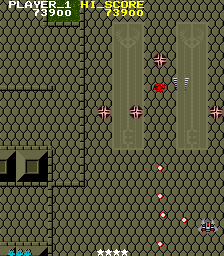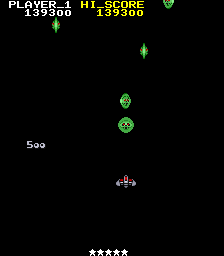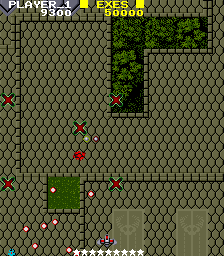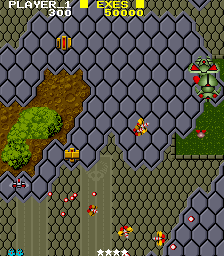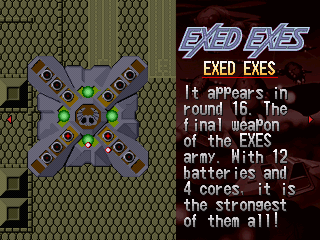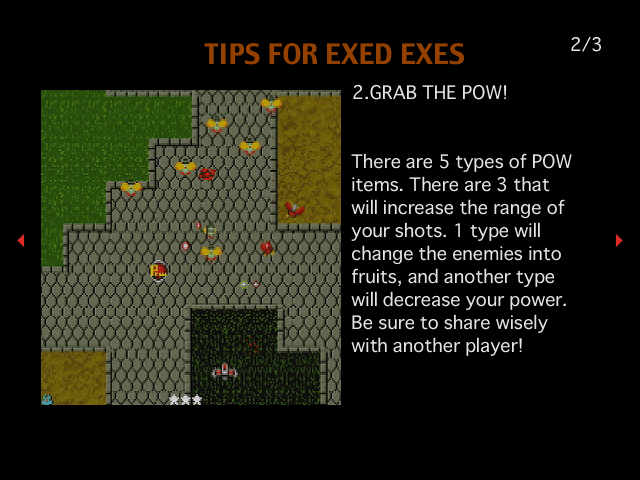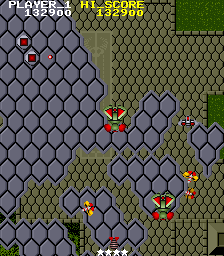
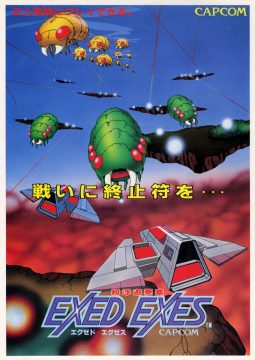
After the creation of Vulgus, Capcom continued to pursue the shoot-em-up genre. 1942 was a big success and sequels would soon follow, but before then, Capcom got a little weird with Exed Exes. Its strange name refers to the final weapon of the Exes, an invading insectoid force that the ships called Colonel Issue and Sergeant Issue have to do battle with. Exed Exes sets out to do things differently than anything Capcom put out previously and concurrently, including Section Z, Capcom’s other 1985 shoot-em-up. In some ways, Exed Exes bridges the gap between Vulgus and 1942 by incorporating ideas from both, but it just as quickly foregoes what made those games work to stand out in other ways. It’s also an uncommon case of a mid-80s shoot-em-up that doesn’t follow the Xevious formula, making it feel even more like a curious experiment. The game was distributed by Memetron in North America as the more easily understood “Savage Bees”, though the game never caught on in the US the way it did in Japan.
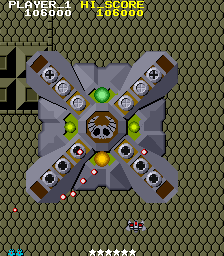
Exed Exes has some light, surface-level similarities to Vulgus, but as soon as you get your hands on it, it’s clear that it’s a whole different thing. Most noticeably, your ship is extremely slow to the point where it’s just barely capable enough to dodge projectiles and collect items as they fall. You’re also limited to just one type of projectile and it doesn’t even cover the full length of the screen when you move backwards while shooting. You can collect power-ups to improve the distance of your shot, but these are lost upon death and they’re fairly uncommon in the first place. They were even nefarious enough to throw in a power-down item as well, though you’re at least given 10,000 points if you happen to grab it. The only concrete advantage you’re given is through the “Mega Crash”, a limited option which doesn’t actually damage enemies but instead cancels all bullets onscreen. These are replenished upon continue or by collecting Sakichi stars that show up after hitting certain point thresholds. You get a healthy amount of them overall, but the biggest threats in Exed Exes are usually the enemies who are eager to fly right into you anyway, so it can feel like an inadequate band-aid for a bigger issue.
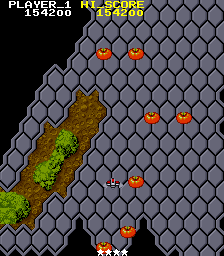
Exed Exes stands out compared to contemporary games through its choice in setting and tone. Years before DonPachi or Mushihime-sama hit the scene, Exed Exes pits you against swarms of bees and other bugs that attack from all sides. Like the Galaxians before them, these bugs have strength in numbers and the player will often find themselves overwhelmed. When combined with the honeycomb-style backgrounds and extremely short but ominous looping soundtrack, Exed Exes ends up feeling more like a horror game about diving into the belly of the metaphorical beast and attempting to fend off a horde against impossible odds. Many of its design choices, like them or not, also feed into this unusual feeling of helplessness. Your low mobility means you can’t just run away, your limited firepower means the bugs are always a threat, and the fact that the music only changes to signal incoming boss fights means you truly never get a moment’s reprieve.
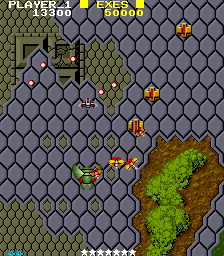
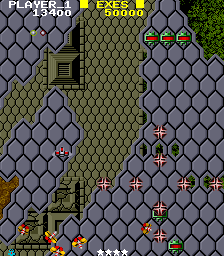
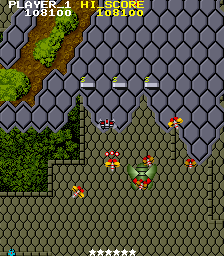
Compared to Vulgus, Exed Exes places more emphasis on the composition of enemy formations, giving them distinct roles while also offering quite a few different types. Some enemies fly in from the top and dive after you as you’d expect, but others such as the flies love to come in from behind and shoot projectiles while also following the player. Ground installations like turrets deny the player space, beetles that charge at the player from all directions force them to duck and weave, and big bugs similar to the big enemies in Vulgus are tanky enough that you’ll often have to decide whether or not you ignore them and focus on smaller enemies. The synergies on offer are similar to games like Star Force, but ExedExes’s molasses-level movement speed once again makes this idea feel worse than it otherwise should. Exed Exes does allow for two player simultaneous co-op, so splitting the responsibility of fending off the insect menace with another player will help ease the burden.
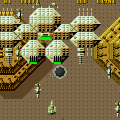
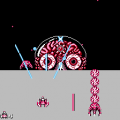
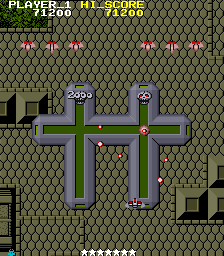
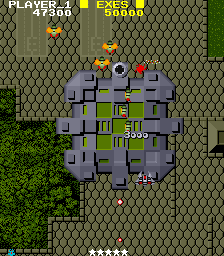
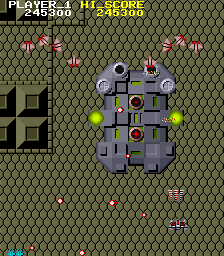
Boss fights are much more frequent compared to other games around this time, occurring at the end of every level. Boss fights pit you against large machines (that are sometimes shaped like letters) with turrets mounted on them. To win, you can either eliminate everything on the boss or wait long enough until they leave, though you won’t get a point bonus for doing the latter. Early bosses only have a few turrets to worry about, but later ones will be decked out with more that are also much sturdier to boot. To spice up these encounters further, you’ll also have to deal with an infinite swarm of enemies harassing you as well, a trick that Capcom would continue to employ in their future games like Captain Commando and Warriors of Fate. These boss encounters are welcome ideas for sure, making ExedExes feel bigger and more exciting, but once the game starts repeating encounters and making you fight multiple bosses per stage (the final level is an example of a boss rush before Mega Man), they quickly wear out their welcome.
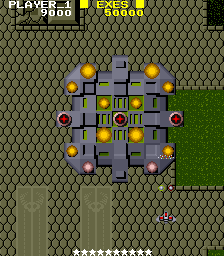
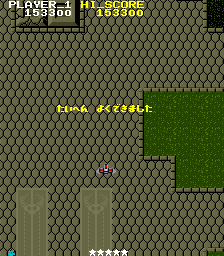
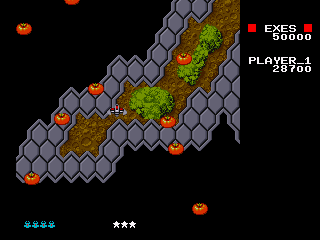
Aside from the slow movement speed, ExedExes’s biggest problem is that it’s simply far too long for how limited it is. Vulgus looped infinitely, but a loop was very quick, whereas Exed Exes expects people to play for over an hour to complete a loop. Exed Exes is 16 stages long, after which it’ll give the player a congratulatory message and start looping again. It is possible to counter-stop the game by hitting 10 million points, but doing this will take over two hours of sustained high-level play, which is likely more than people will want to commit to such a repetitive game. Exed Exes is also lacking in the creative scoring systems of Vulgus, instead mostly relying on accumulating kills. There are some hidden items, though, and “Hi-Point Zones” offer brief but welcome opportunities to grab POW icons and turn enemies into point-granting fruit. Exed Exes was definitely a standout game for 1985 in terms of the creativity of its choices, but depending on your taste, it can feel like one step forward and two steps back from Vulgus and 1942. Capcom never revisited Exed Exes in any substantial way, but Colonel and Sergeant Issue appeared one last time as part of Captain Commando’s attack in Project X Zone 2.
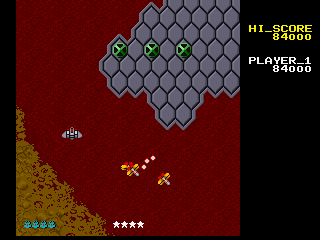
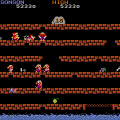
Capcom Generations 2 (PS1)
Like many of Capcom’s arcade games, Exed Exes has had no shortage of re-releases. The first time the arcade version was brought home was on Capcom Generation 3 for the PlayStation and Saturn, which offers niceties like remixed music, a tate mode option, and bios for all the boss enemies. This version was also made available on the third disc of Capcom Generations in Europe. The port seen in Capcom Classics Collection Vol. 1 for PS2 and Reloaded for PSP is essentially identical to the Capcom Generations version as well. A PC version (emulated via MAME) was made available via Capcom Coin-Op Classics Series 1, which was also bundled with a HanaHo Hotrod arcade stick. Capcom Arcade Cabinet on the Xbox 360 and PS3 is one of the most robust options, going as far as to offer a bunch of settings for a “Casual Mode”, such as more forgiving hurtboxes, longer range shots, and faster movement speed for the player. Aside from a rotating appearance in Street Fighter 6, Capcom Arcade 2nd Stadium is the newest way to play Exed Exes and offers all the modern quality of life you would want alongside some score and challenge modes you can tackle to get placed on the online leaderboard.
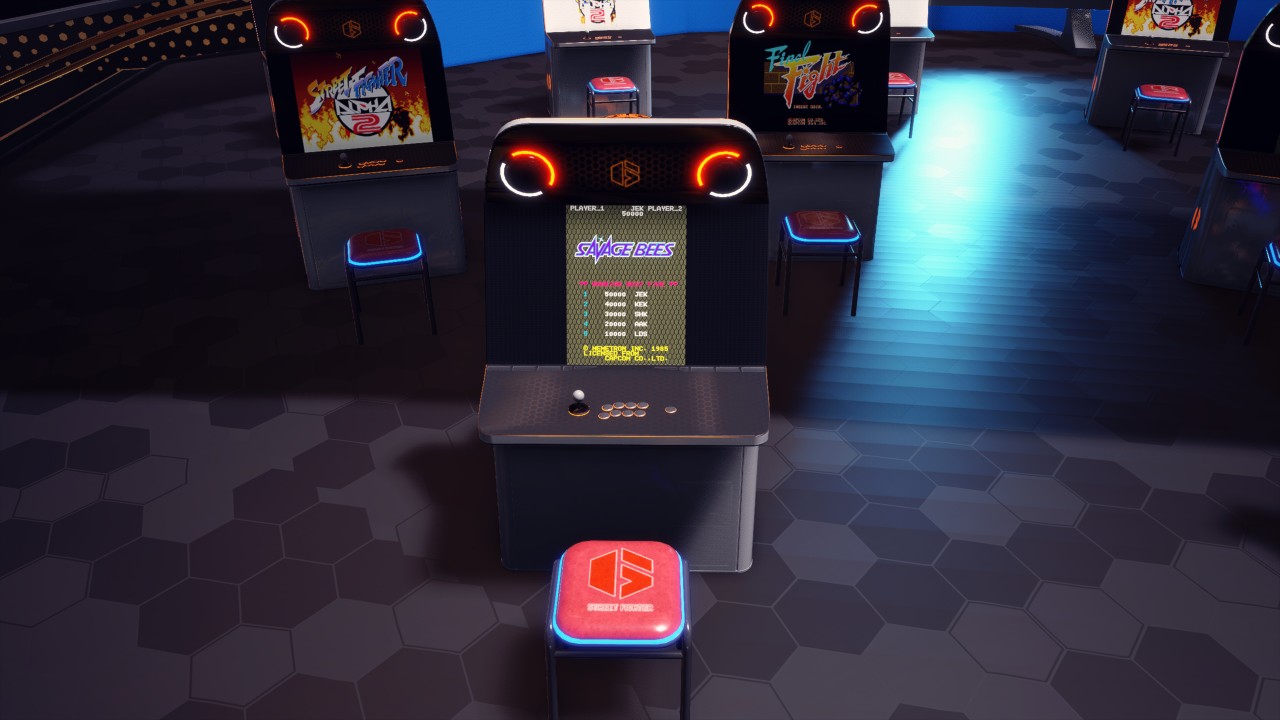
Street Fighter 6
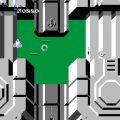
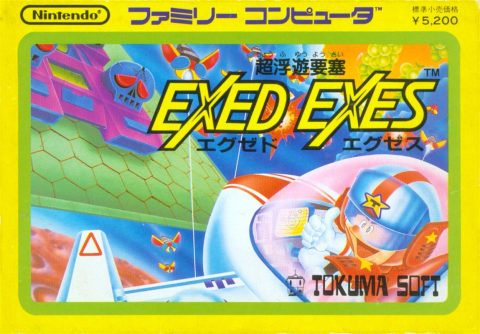
The only port Exed Exes received that wasn’t just the arcade version was on the Famicom, which was published by TokumaShoten and developed by the notorious Micronics. TokumaShoten was chosen as the publisher by Capcom in order to get around Nintendo’s limitations on the number of releases companies could put out on their platform. As for the quality of the conversion, anyone familiar with Micronics already knows the answer. The Famicom version moves at a lower framerate, looks and sounds far worse, and suffers from an absurd amount of flickering to the point that active bullets can become invisible. If you can stomach it, though, it is an easier experience overall with some interesting differences. The enemy density is lighter and the game is far less reliant on back attacks, making many sections a lot more bearable. Extra lives are awarded much more frequently and you still have infinite continues and two player co-op. Boss reinforcements are usually Yashichis, which are much easier to deal with than flies, and several of the boss types from the arcade original (including the actual Exed Exes) don’t show up at all. You can no longer counter-stop the game, but if you reach certain score thresholds and then get a Game Over, the game will give you mysterious passwords that are linked to an external contest. TokumaShoten awarded players who mailed in these passwords with special labels (Silver, Gold, Platinum, and Royal) that they could then put on their carts to show off their accomplishment. The highest tier was only awarded to ten players and the tiers above Silver are very rare as well, so they naturally command massive prices on the secondhand market.
Screenshot Comparisons
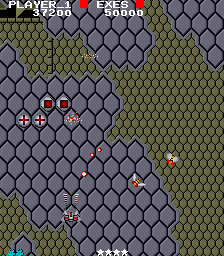
Arcade
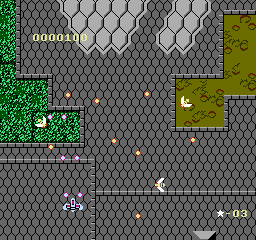
Famicom
Links
https://www.youtube.com/watch?v=ci4dIKvjrTQ&t=83s – Demonstration of Captain Commando’s attack in Project X Zone 2
https://famicoms.net/blog-entry-3036.html – Blog post from Orochi of Famicom no Neta discussing the TokumaShoten contest