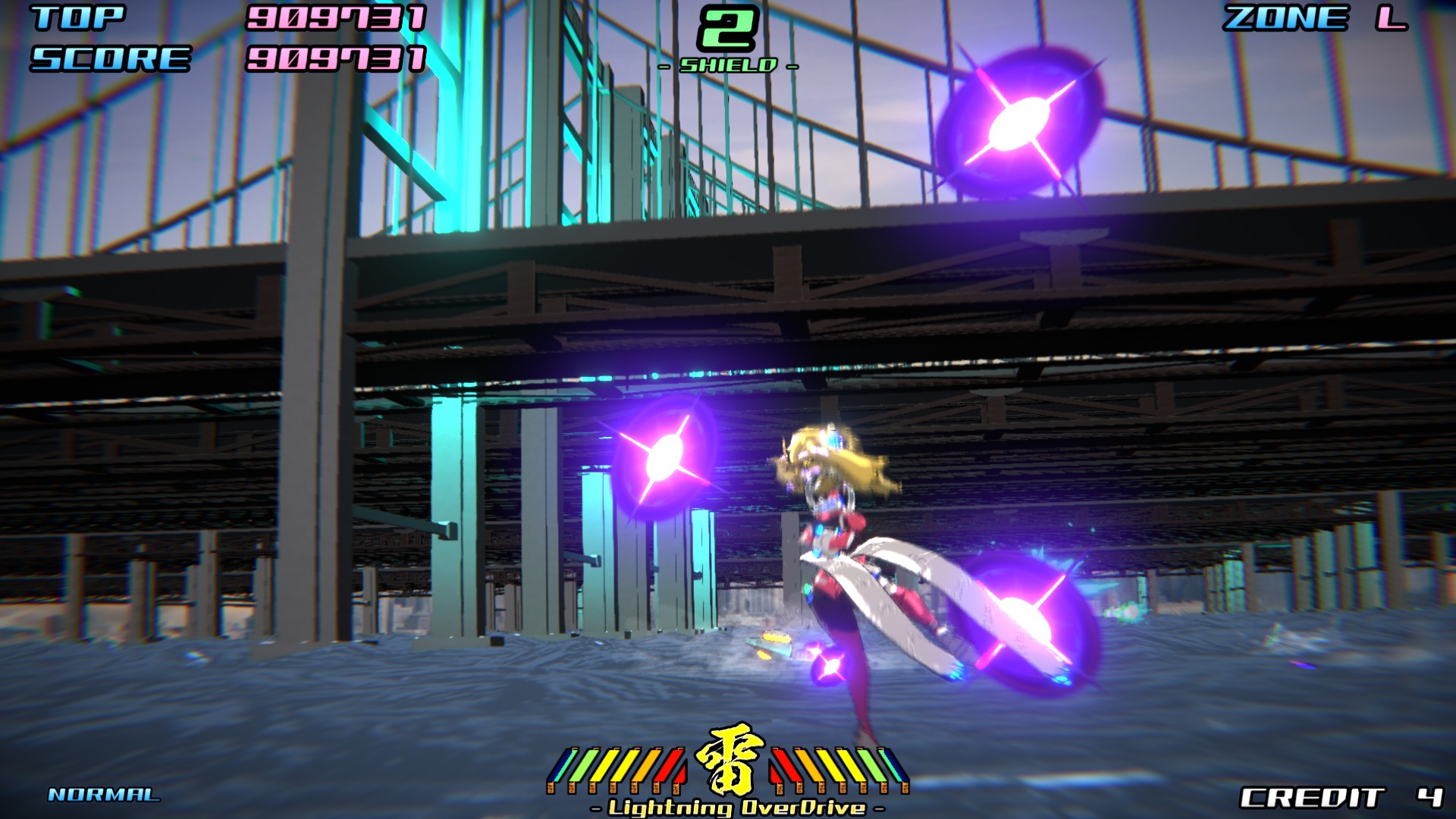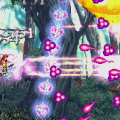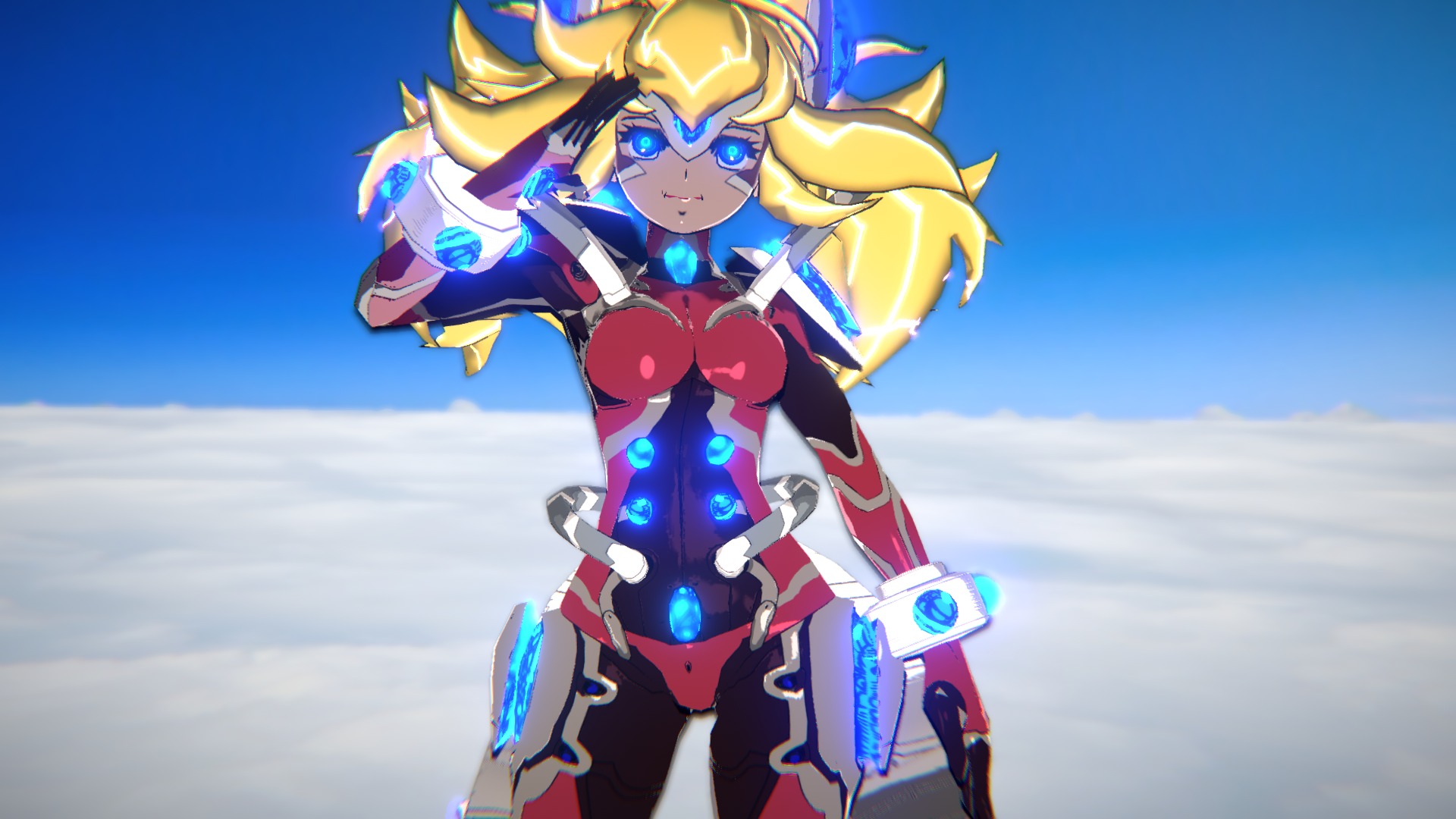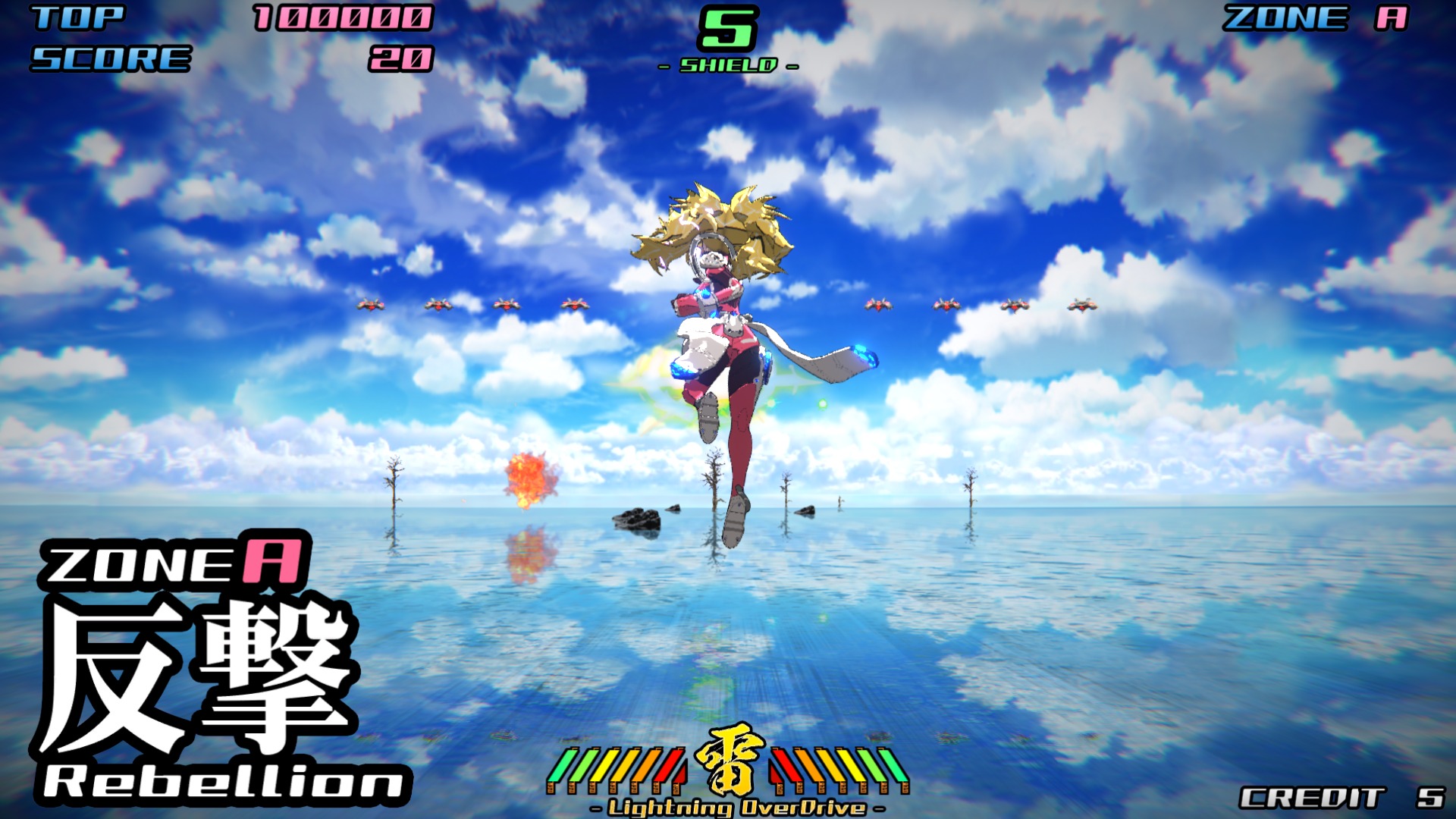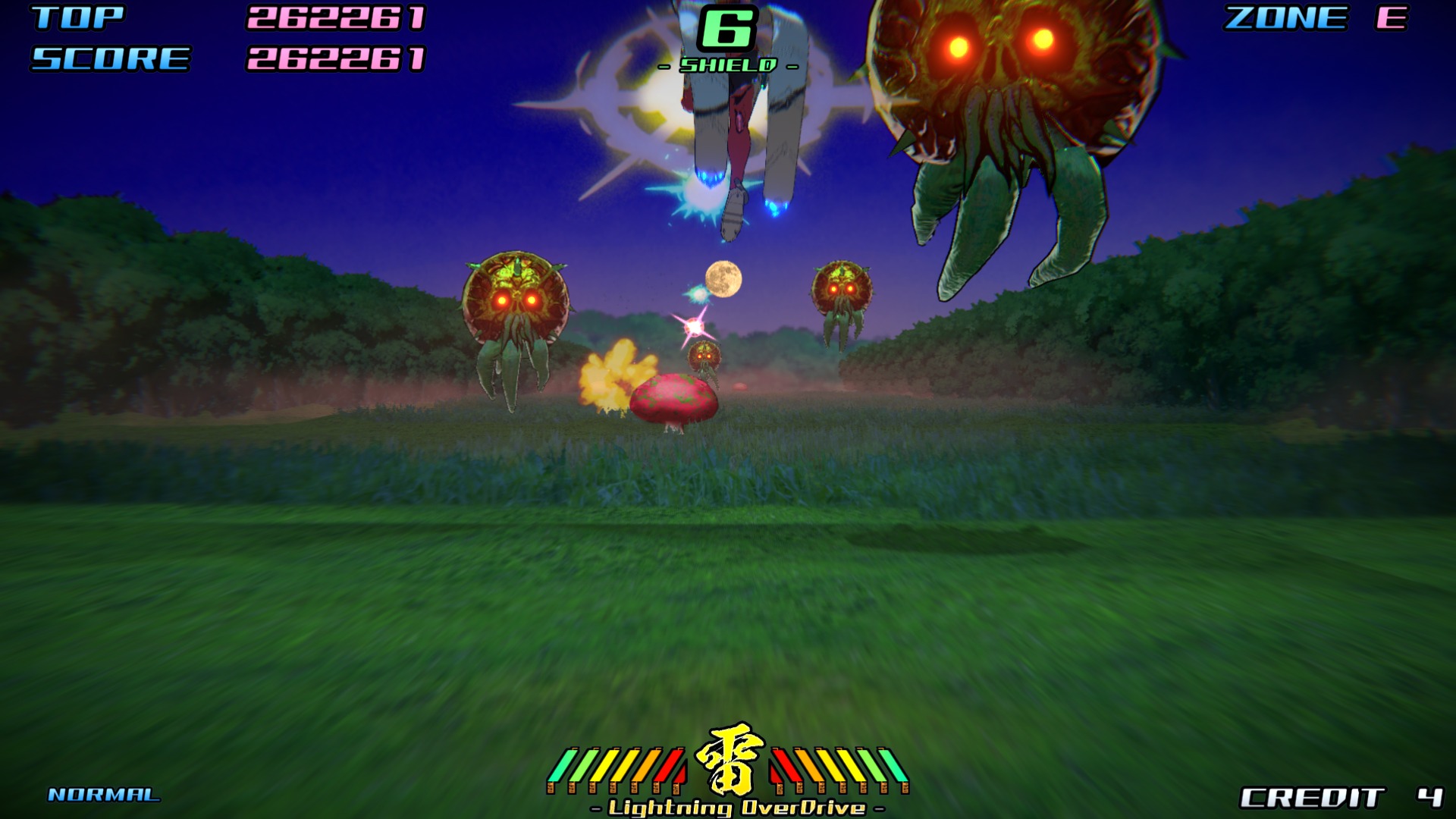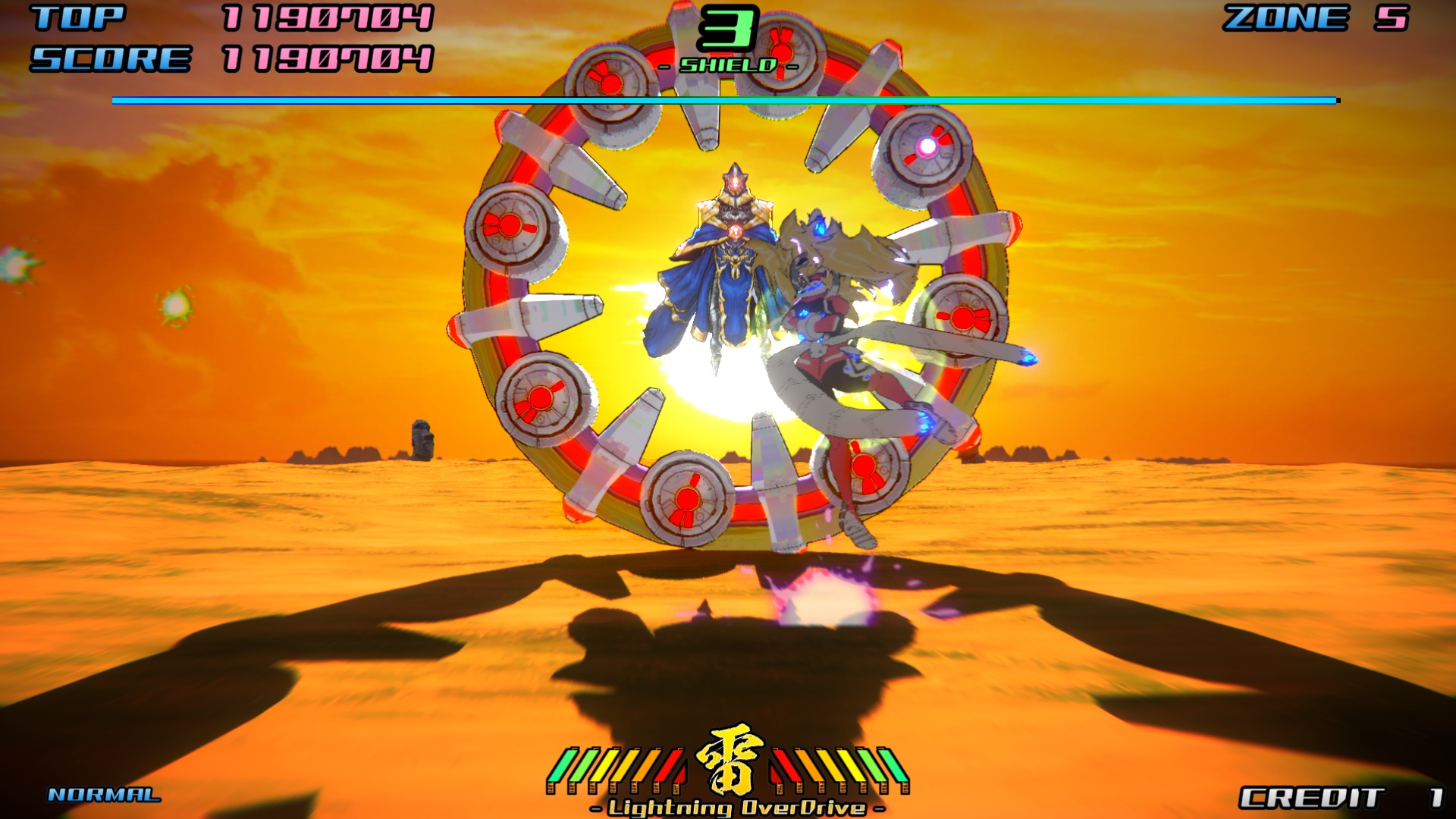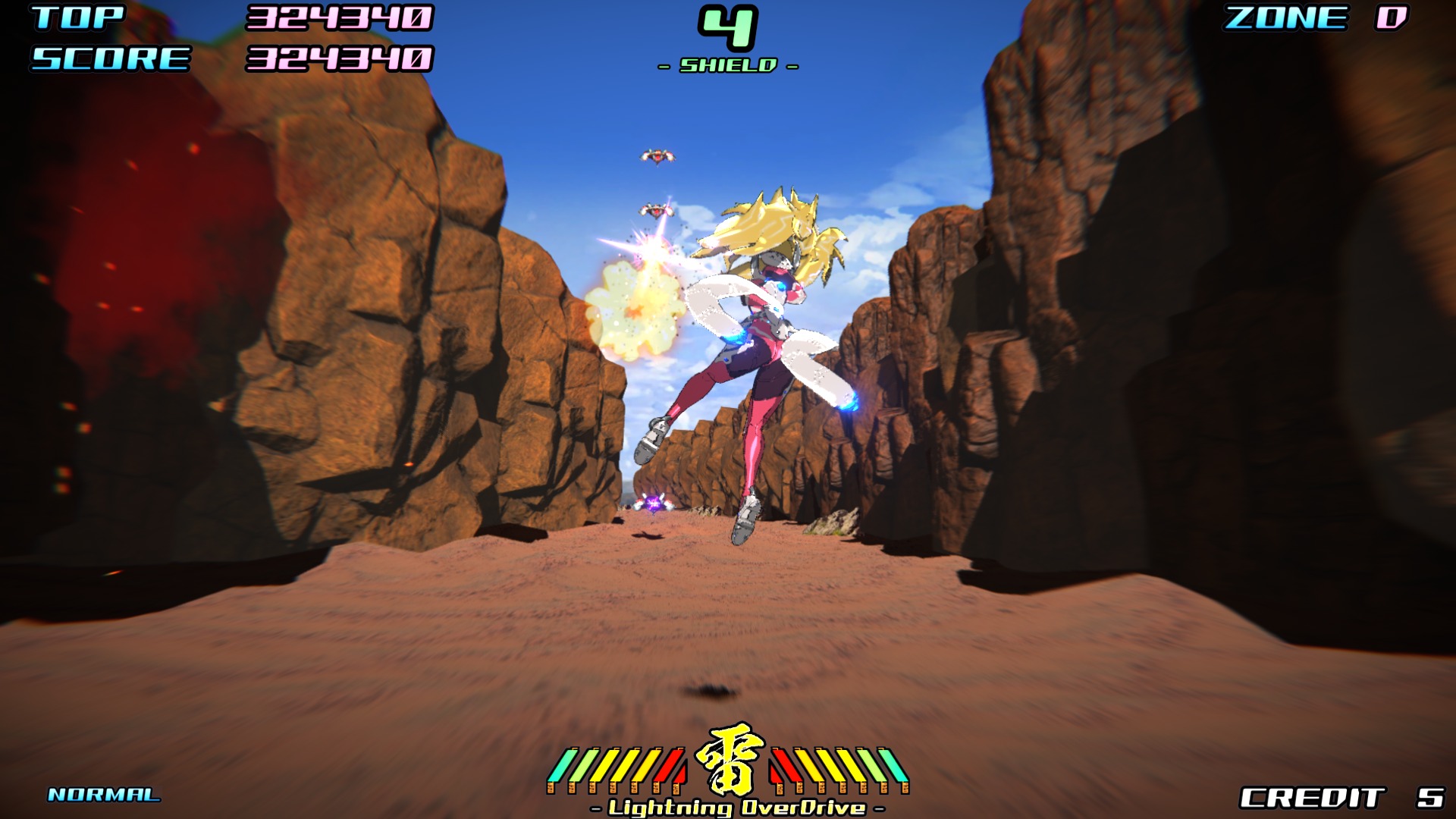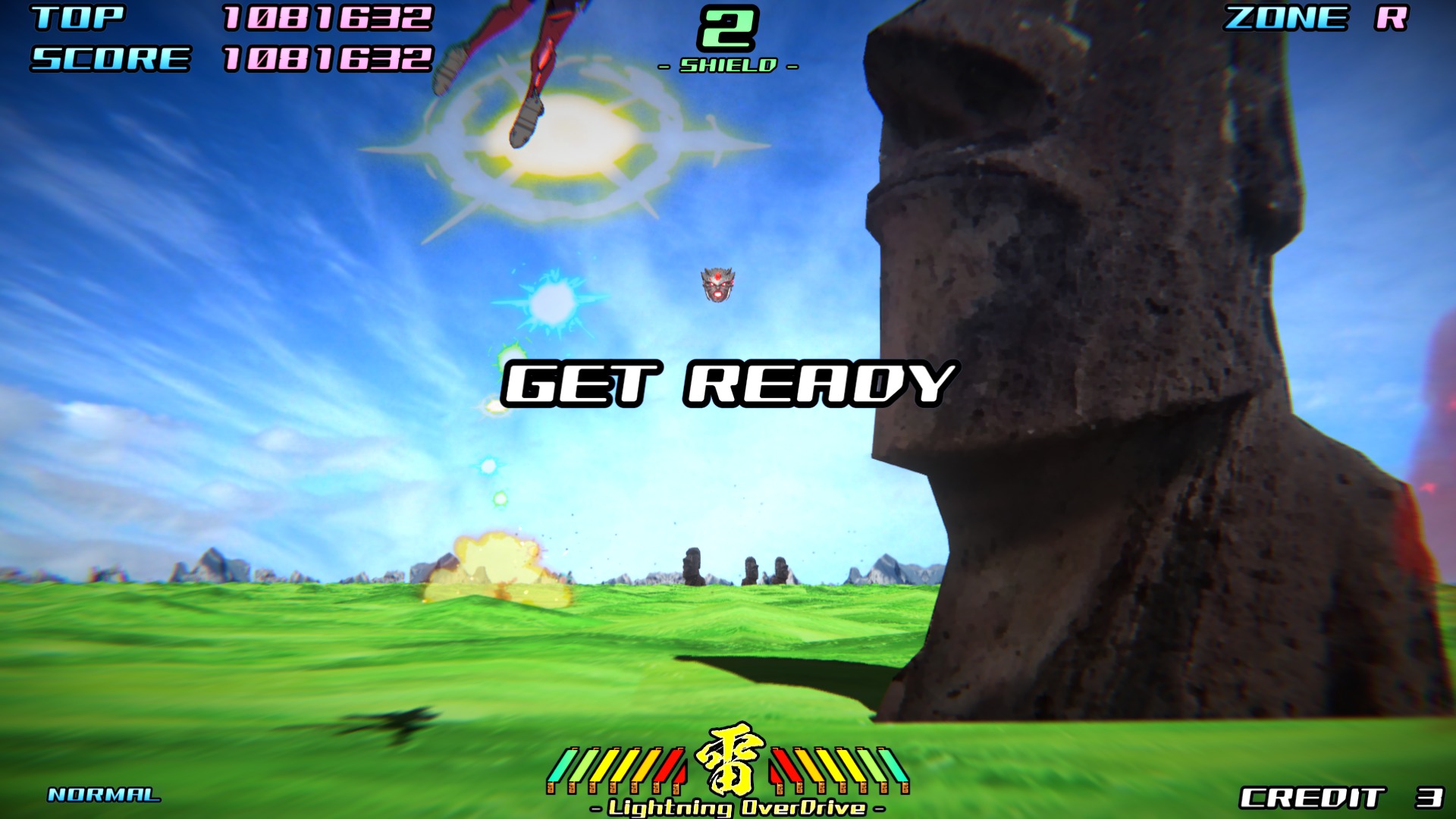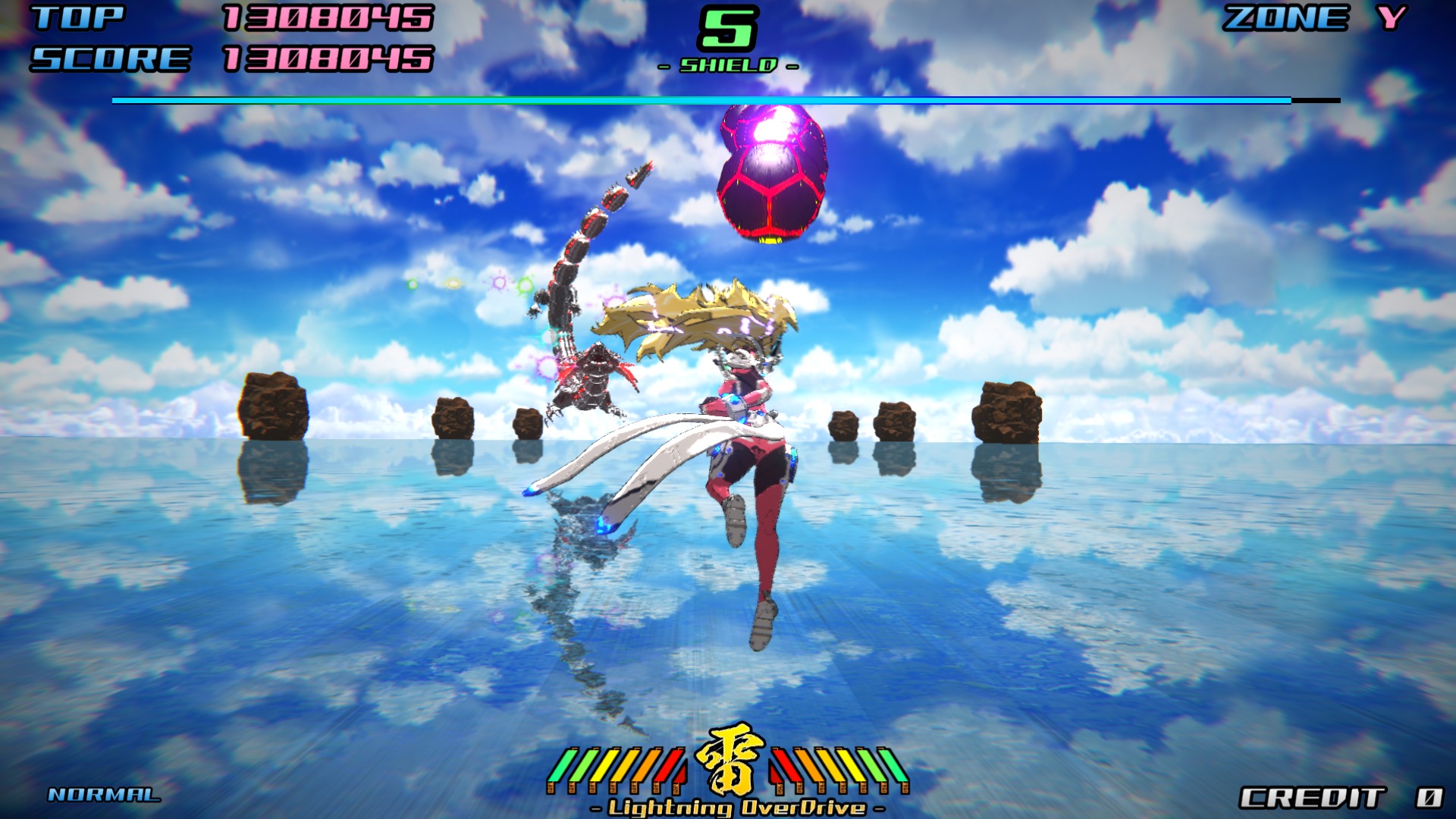
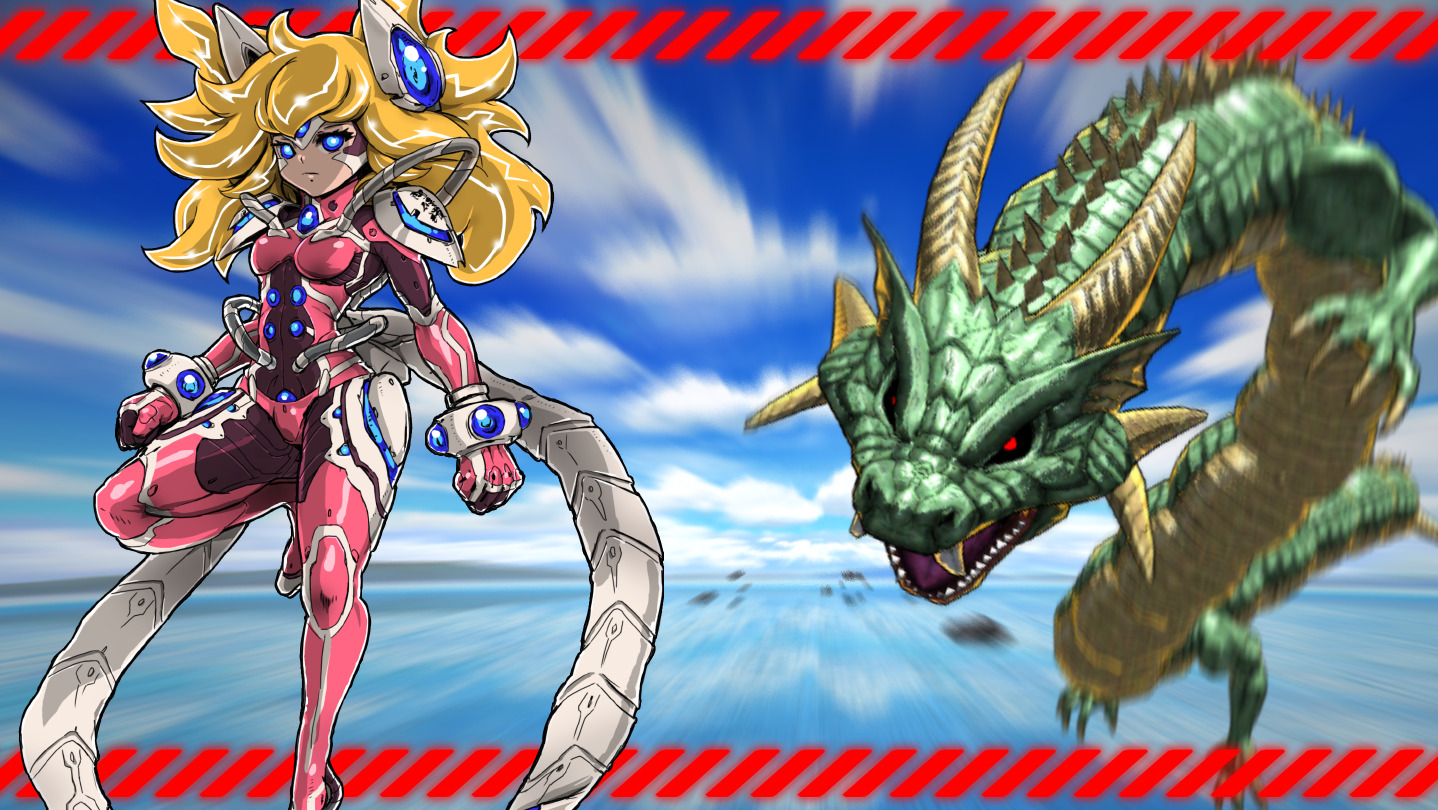
It’s not officially associated with Sega, but Asura the Striker may as well be “Space Harrier 3”. It moves to fully 3D graphics, ditching the famous checkerboard ground patterns for more realistic textures, and it features a sexy blonde gal instead of a handsome blonde guy, but it plays almost exactly the same. The first level even features similar enemies, right up to the pattern of the jets, the bulb-like robots that open and close their shells to fire, and the flying dragon boss. You’ll also notice squid-like foes and large rock faces, here represented with the classic Easter Island Moai head.
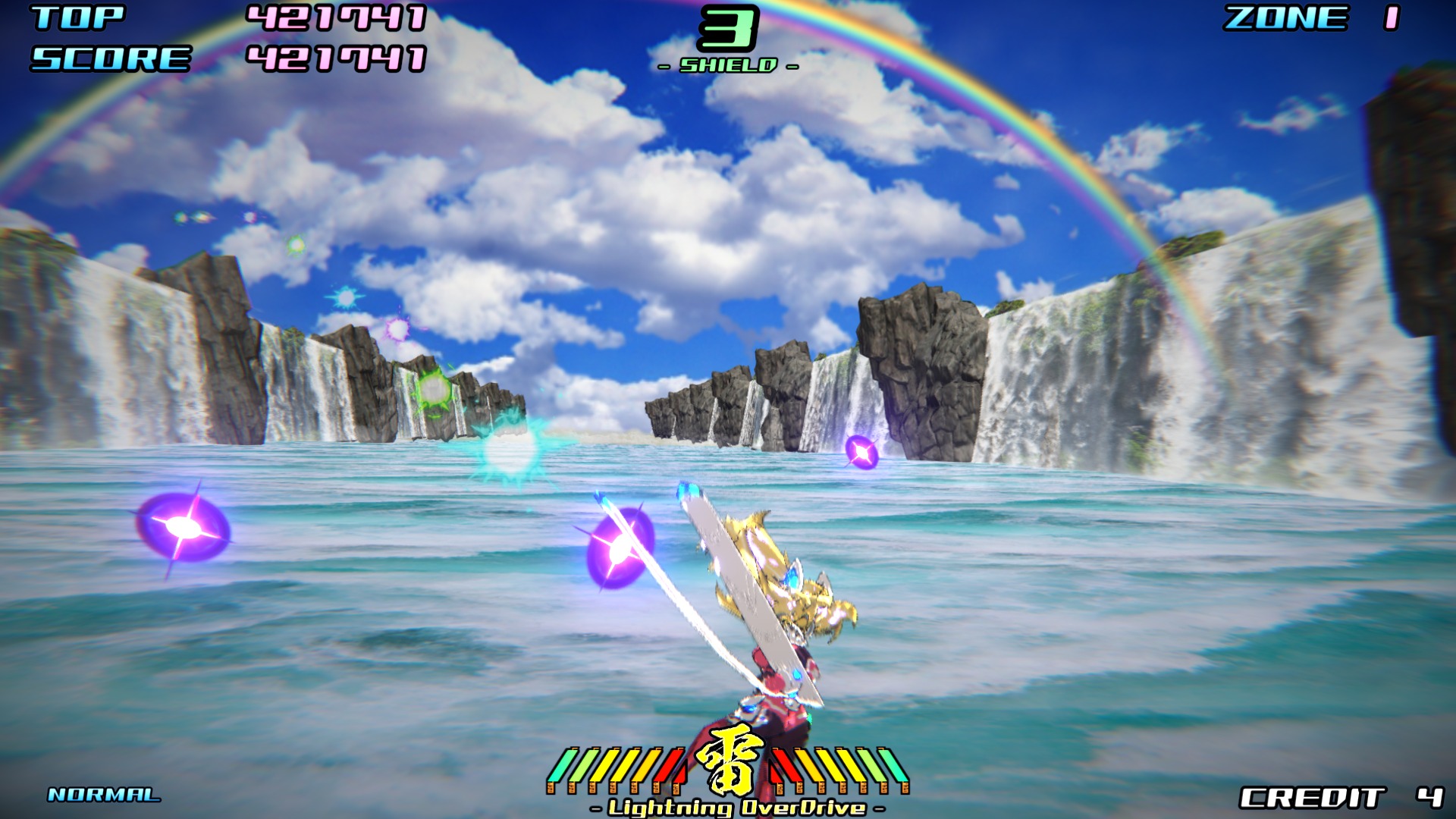
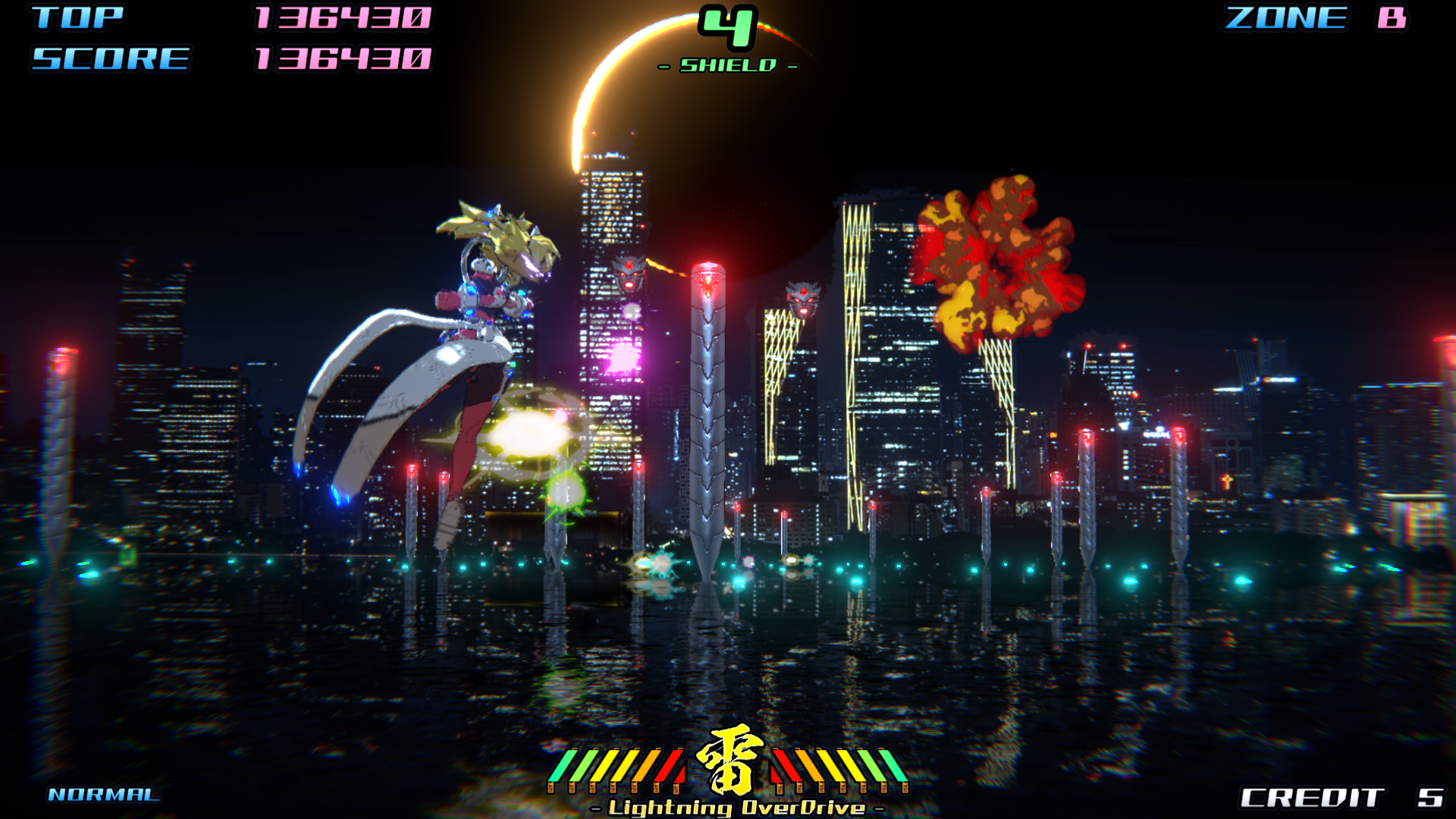
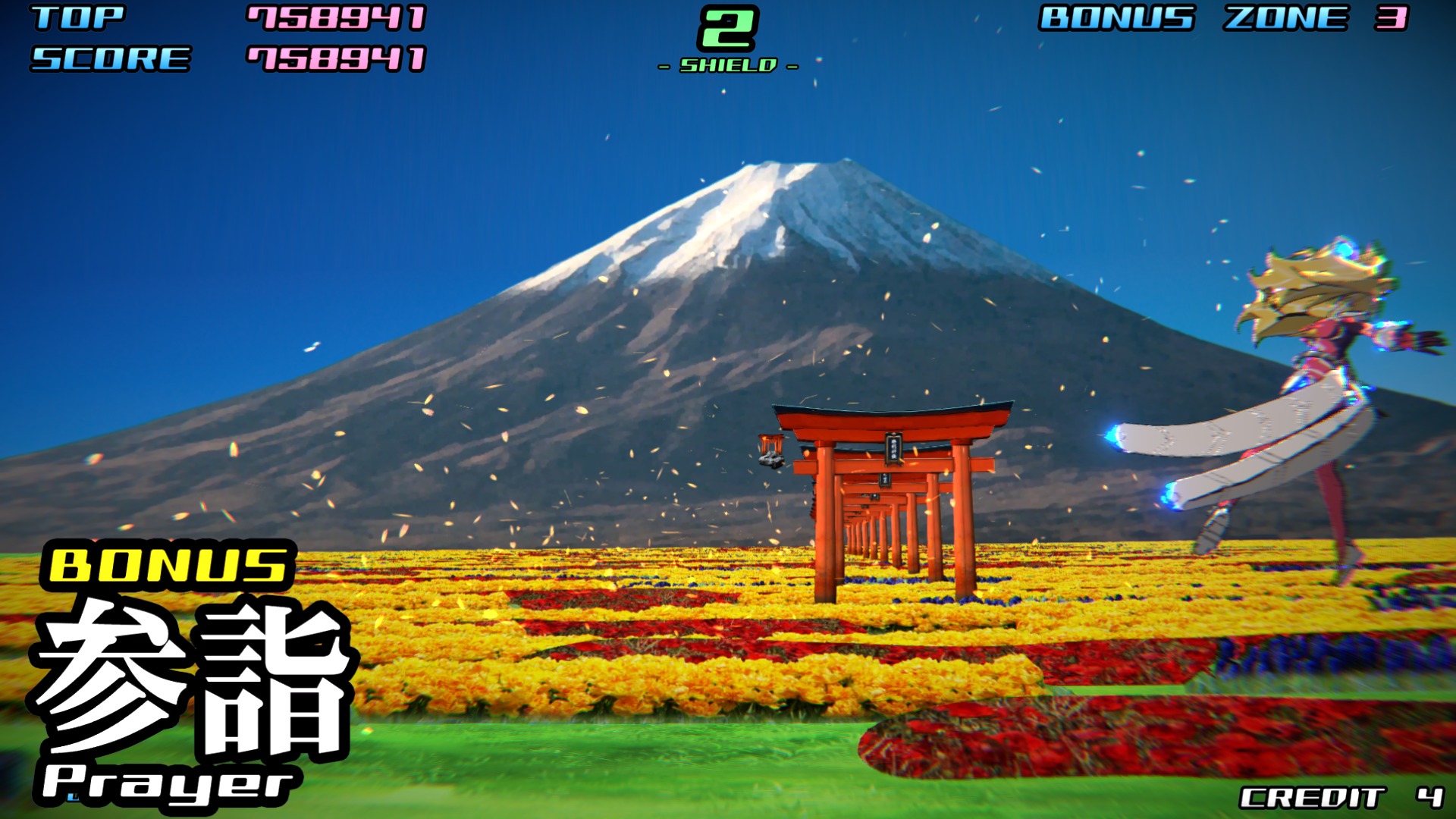
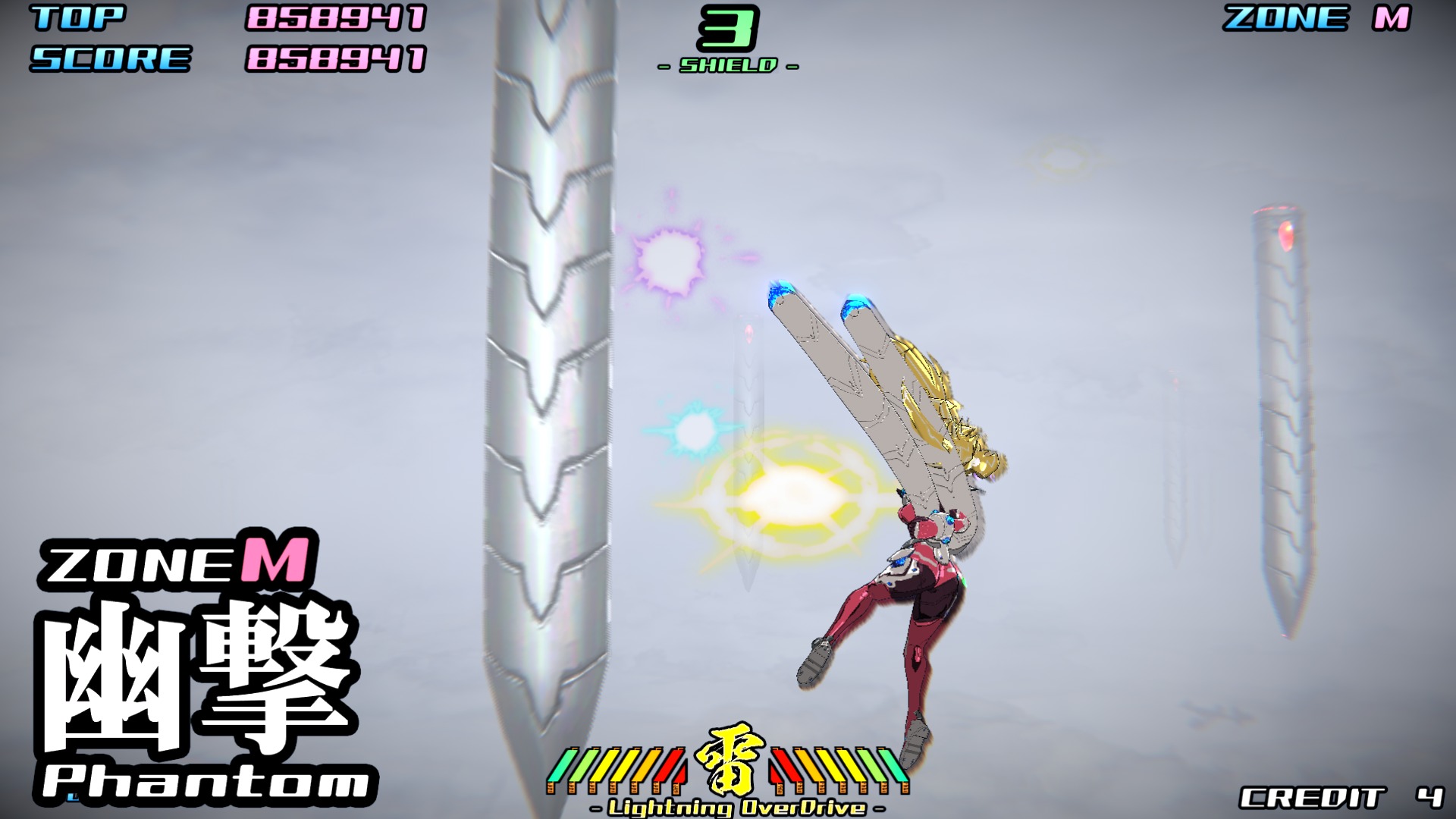
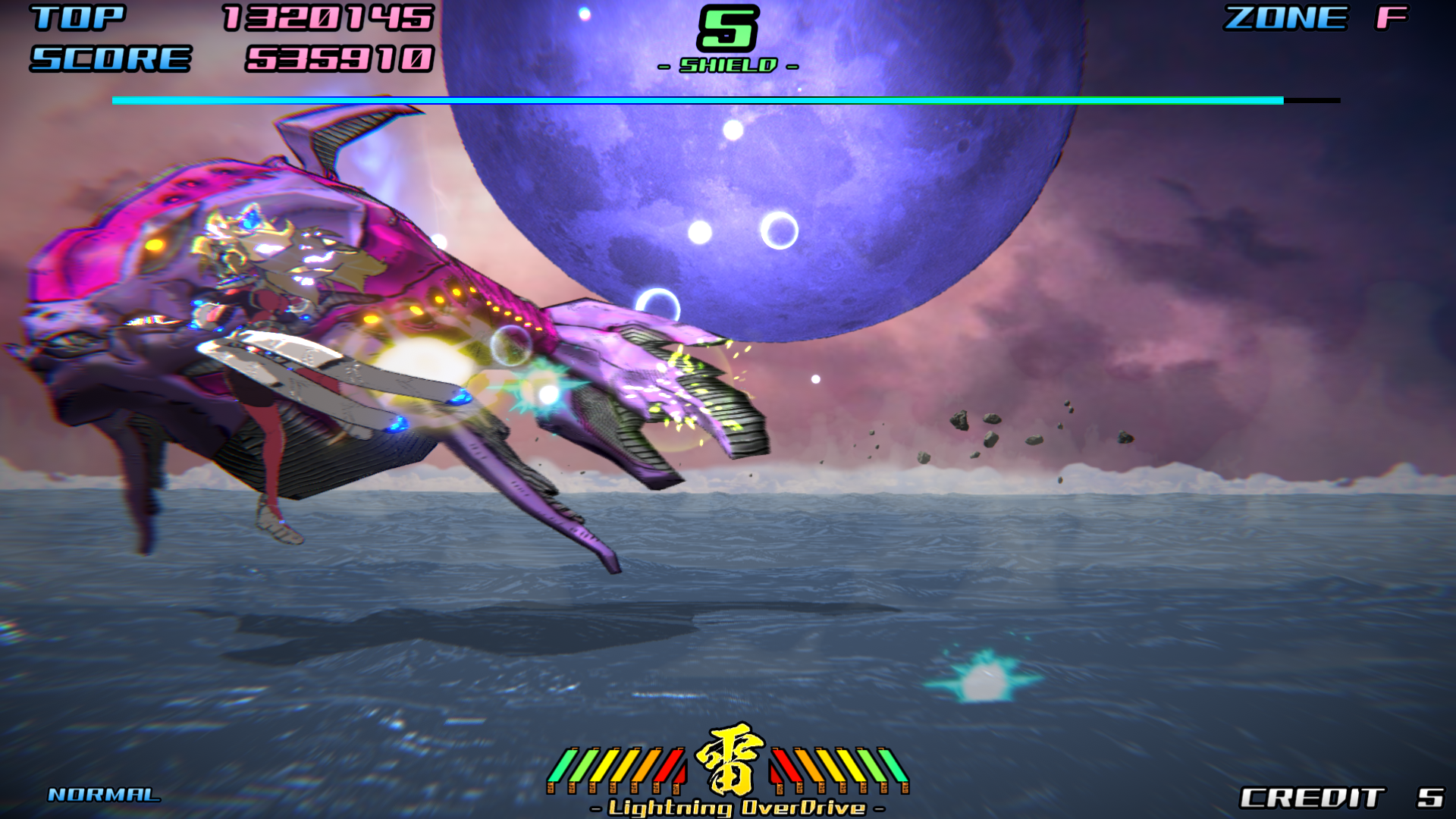
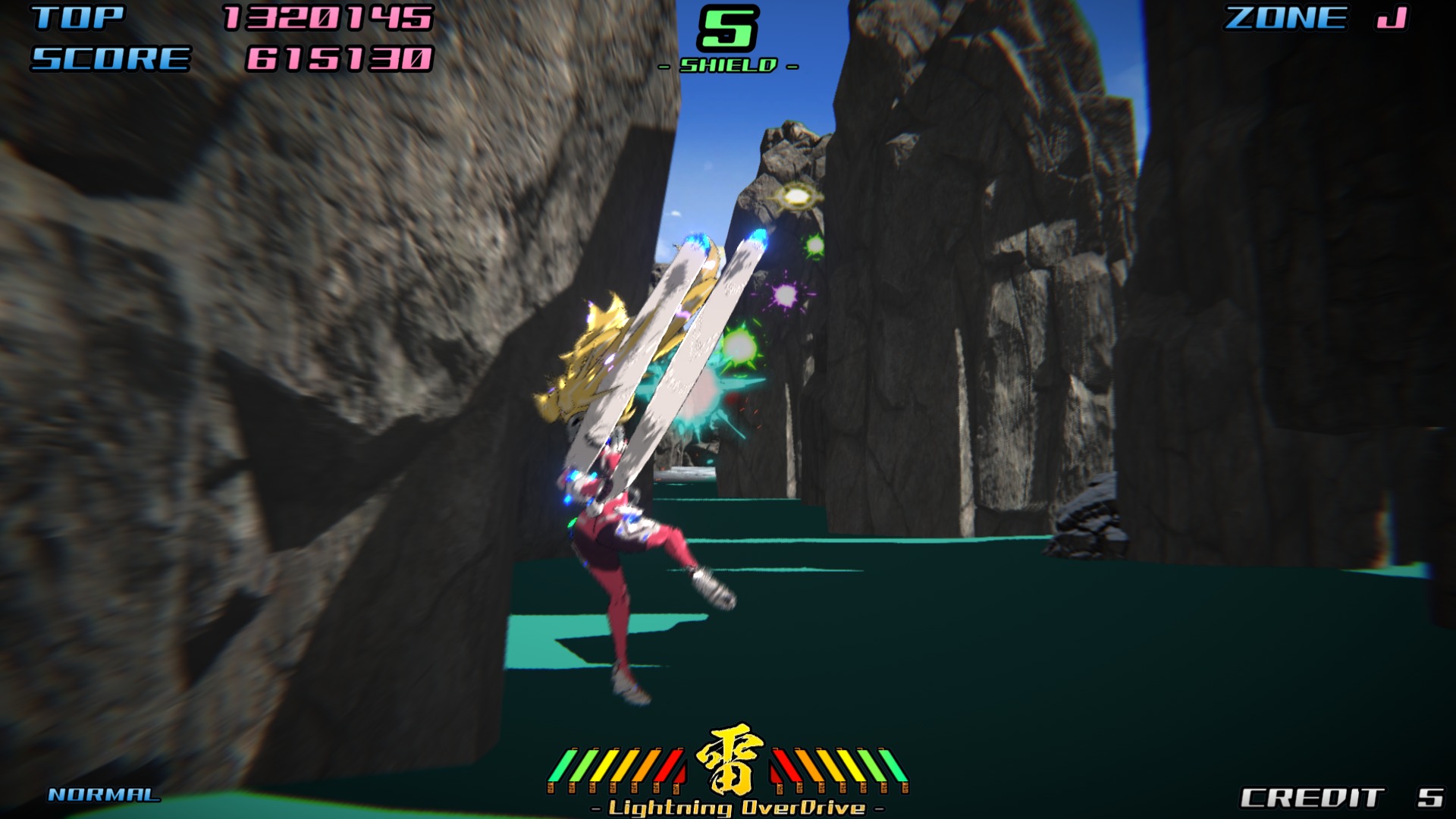
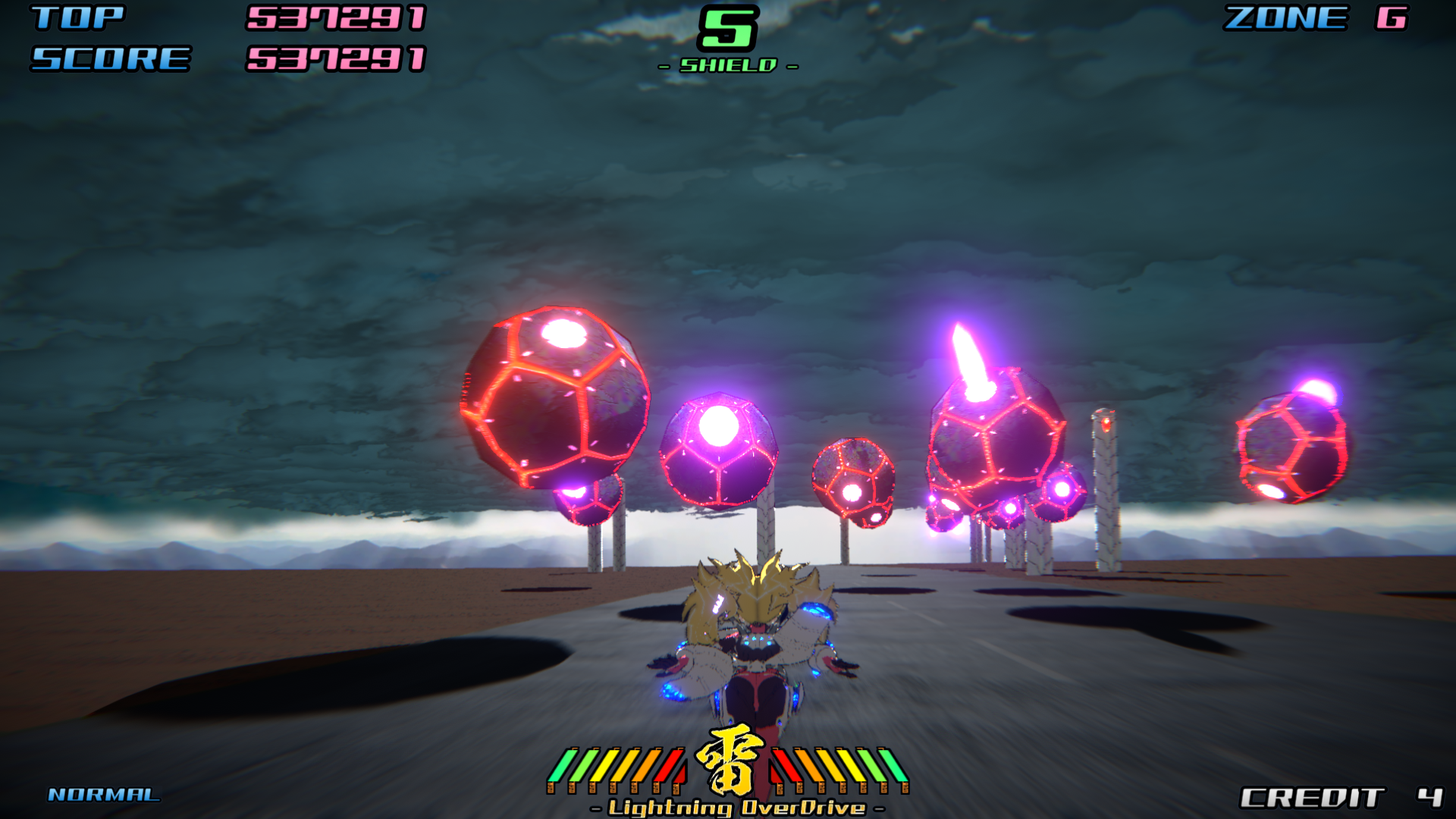
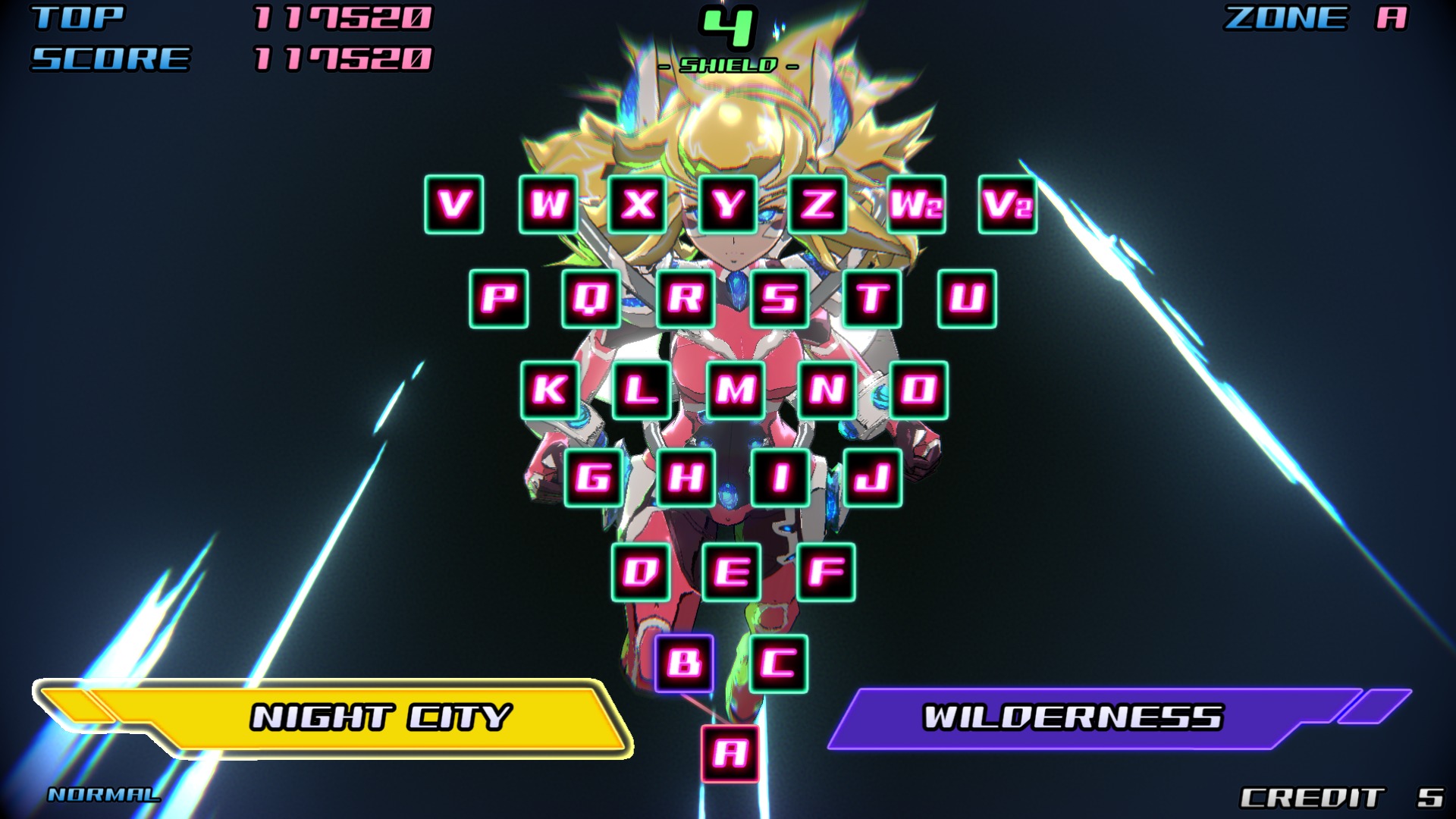
From there on out, the game gets a little more original. Borrowing from Sega’s OutRun (or perhaps Taito’s Night Striker, a similar 2D/3D shoot-em-up), you can choose from two branches after completing each stage, making for 28 levels altogether. While some of the themes repeat with slight variations, there are quite a few neat levels – one takes place in a nighttime city (an allusion to Night Striker), a few have you zooming through canyons (like the special stages in After Burner). One level takes place across a highway as gigantic rolling balls try to crush you, another features rainbows and waterfalls. One city stage features a comical number of extension bridges you need to fly under, while other aquatic stages include enemies that hide beneath the surface. Most of these are cool ideas, but there’s one stage that takes the tunnel zone from Space Harrier, complete with obstacles popping in from above and above, also flooded with fog. It’s a miserable experience and absolutely worth avoiding on your playthrough. There’s also a bonus stage that has Mt. Fuji in the background as you fly through red torii gates for bonus points. The whole experience is never quite as trippy or fantastical as Space Harrier, but it has its own ingenuity that makes it stand out, and it looks great considering it’s developed by a tiny indie team. There’s a wide variety of music tracks, some of which inherit classic FM synth while others feature Vocaloid singing.
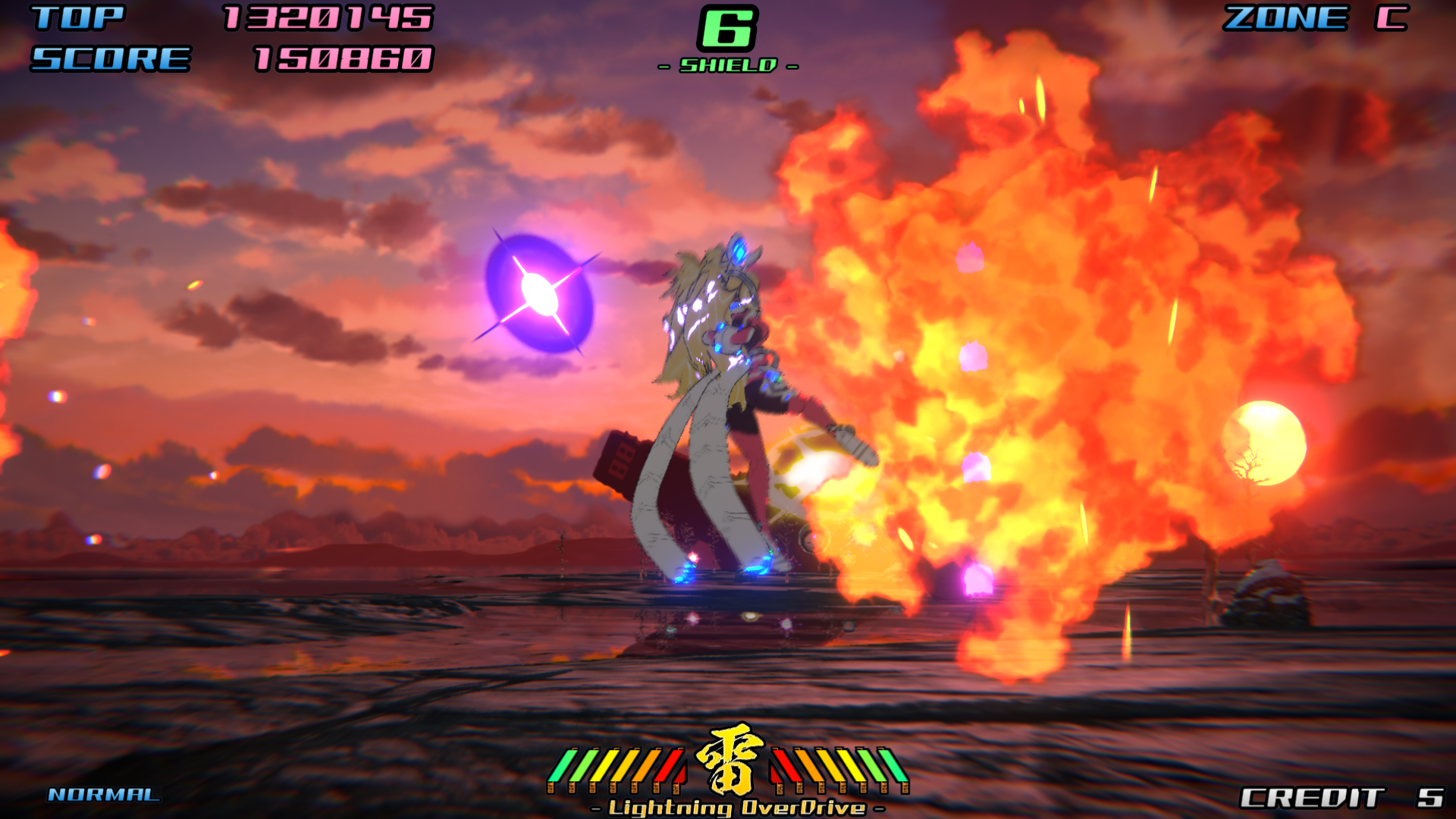
In addition to your main gun, you have the ability to slow down time with the Lightning OverDrive, which is handy to get in some extra shots on bosses when they fly close, or dodge through thick waves of enemy fire. You also have a Shining Knuckle, a short-range attack that needs to be charged up before you can unleash its power. However, using this attack is not all that intuitive, and the extra damage and points it gives rarely seems like it’s worth the effort. It would’ve been interesting to use it as a defensive countermeasure, but this is only used in a few boss battles to knock back missiles. It also highlights a basic issue inherited from Space Harrier: it’s still difficult to judge distances and collisions, so you’ll sometimes end up slamming into foes that you thought you could punch, or fumble into enemy fire that you thought you could safely dodge. It’s just something you have to get a feel for.
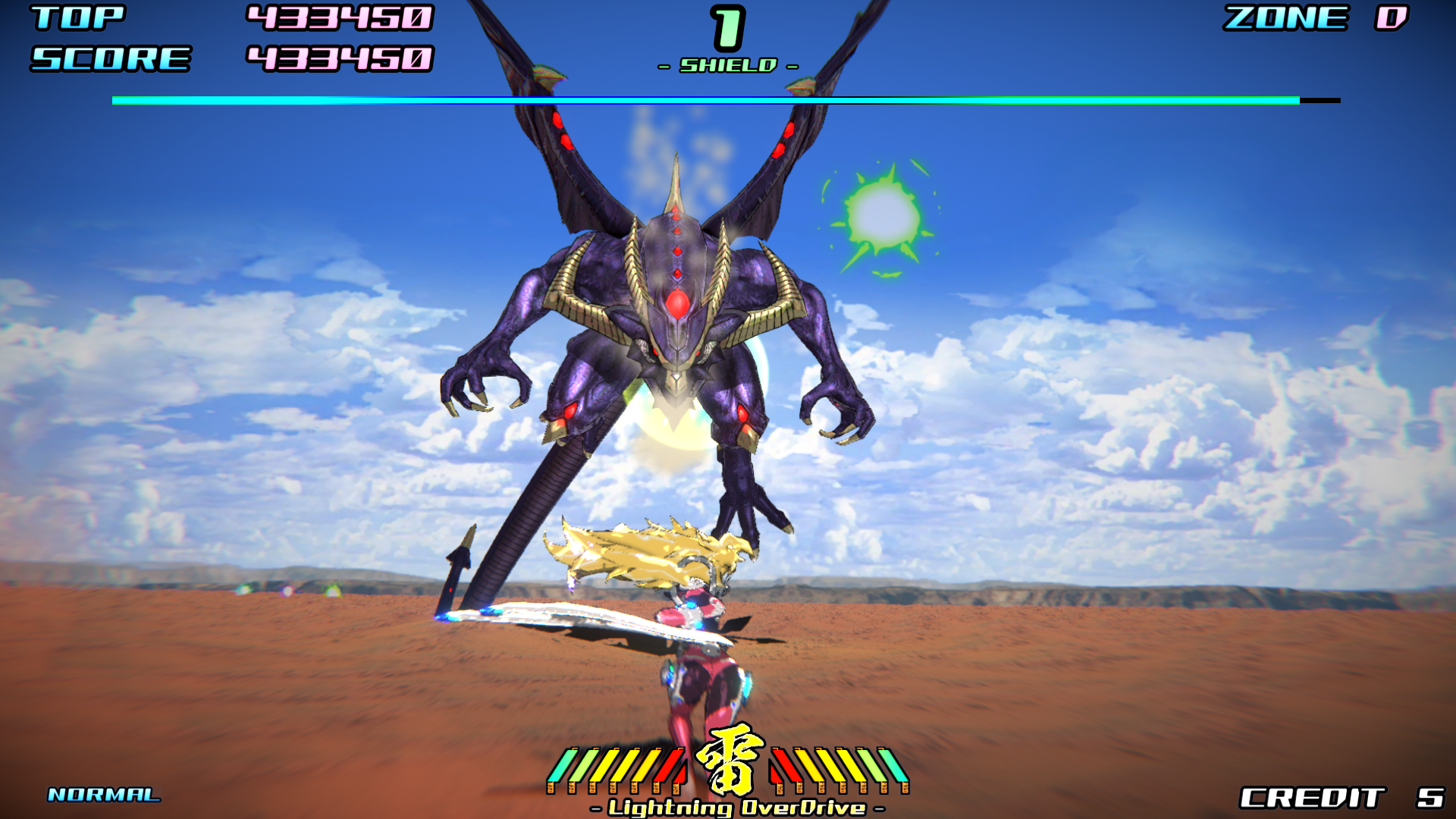
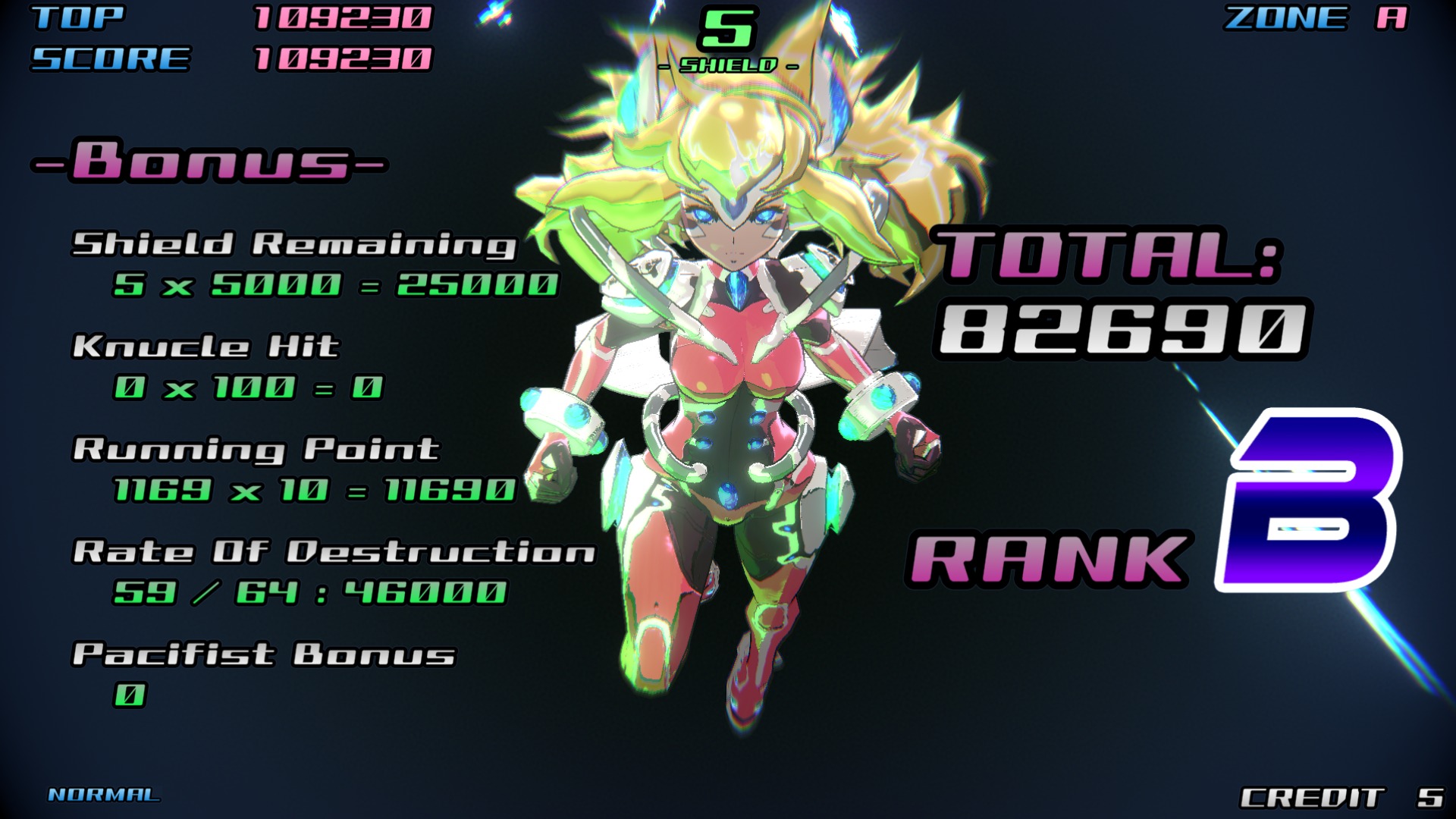
The game has quite a few extra scoring opportunities, granting bonuses for taking down whole enemy waves, killing enemies using the Shining Knuckle, and giving added points for running on the ground rather than flying. You have shields rather than lives (plus several credits), and you’re regularly rewarded with shield replenishments when finishing stages or meeting score thresholds. It’s a reasonable experience to make it through the end, though an easy mode lets you ram into obstacles without taking damage.
There’s a limit to what you can do with the Space Harrier formula – it’s why successors like Panzer Dragoon, Planet Harriers, and Air Twister went in different directions to change the level design and pacing. But with these constraints, to take a game from 1985 and update it for 2025, Asura the Striker is about the best one could hope for.