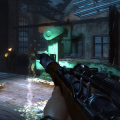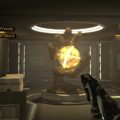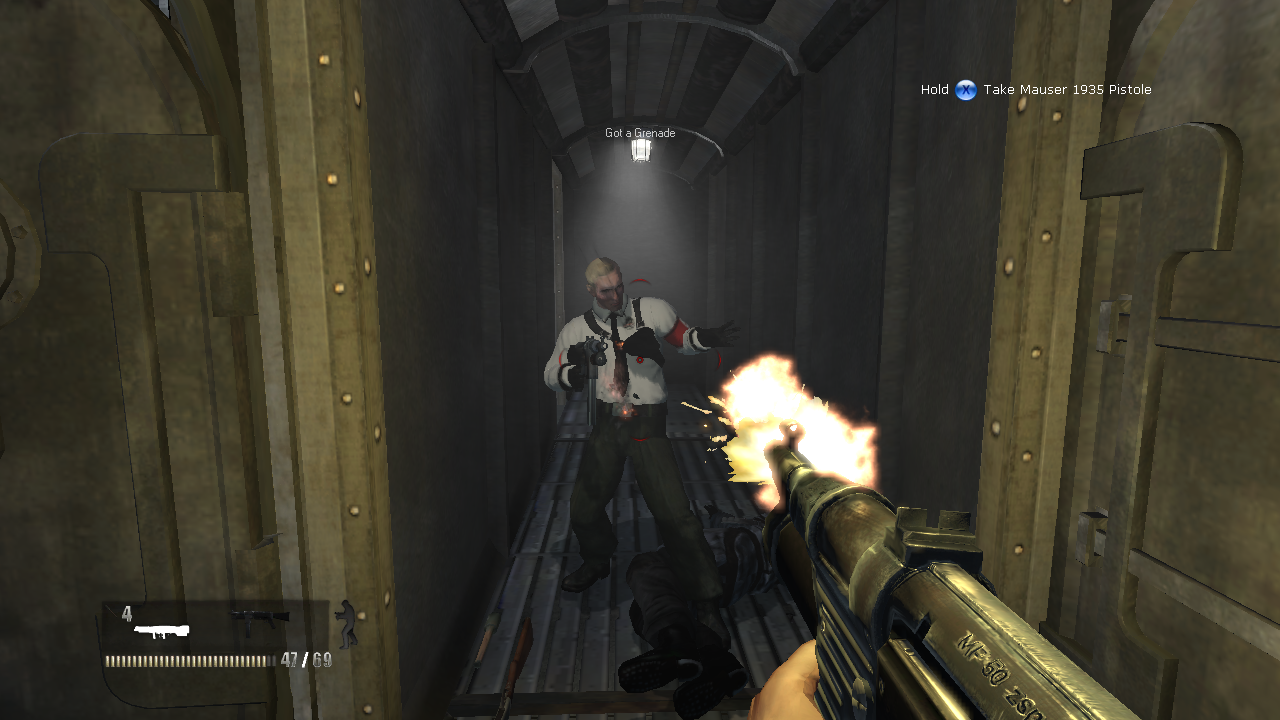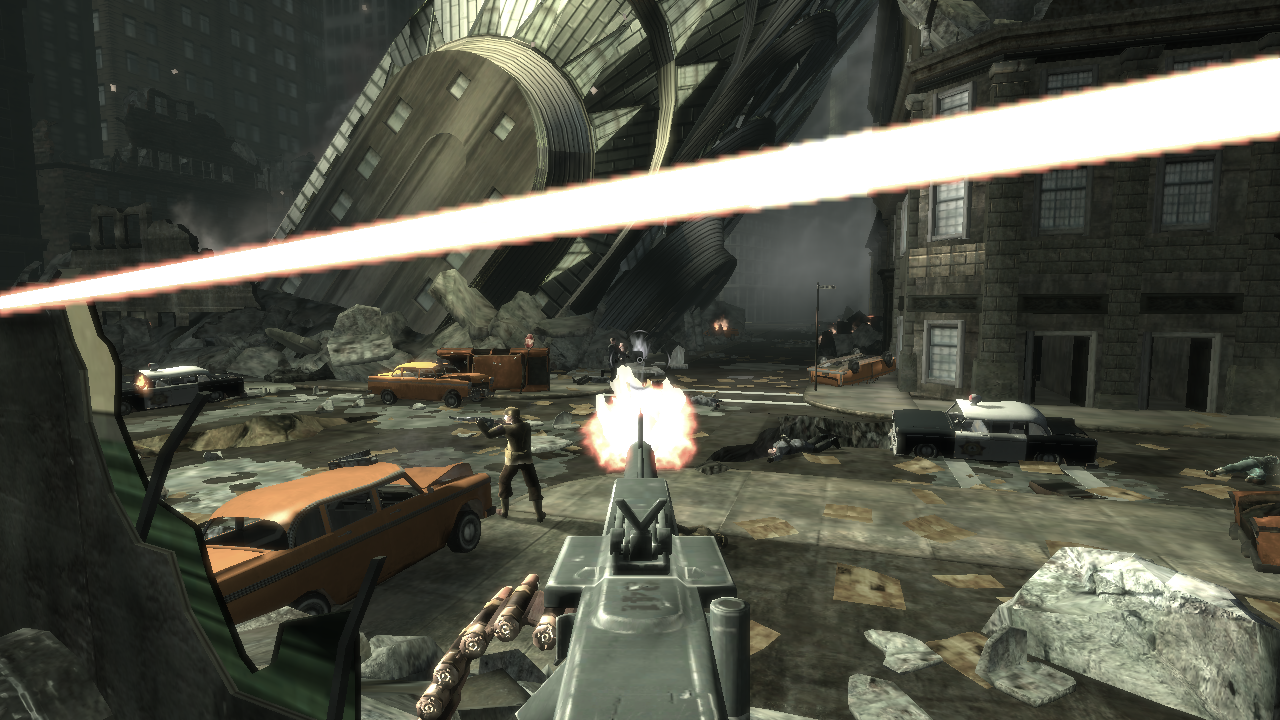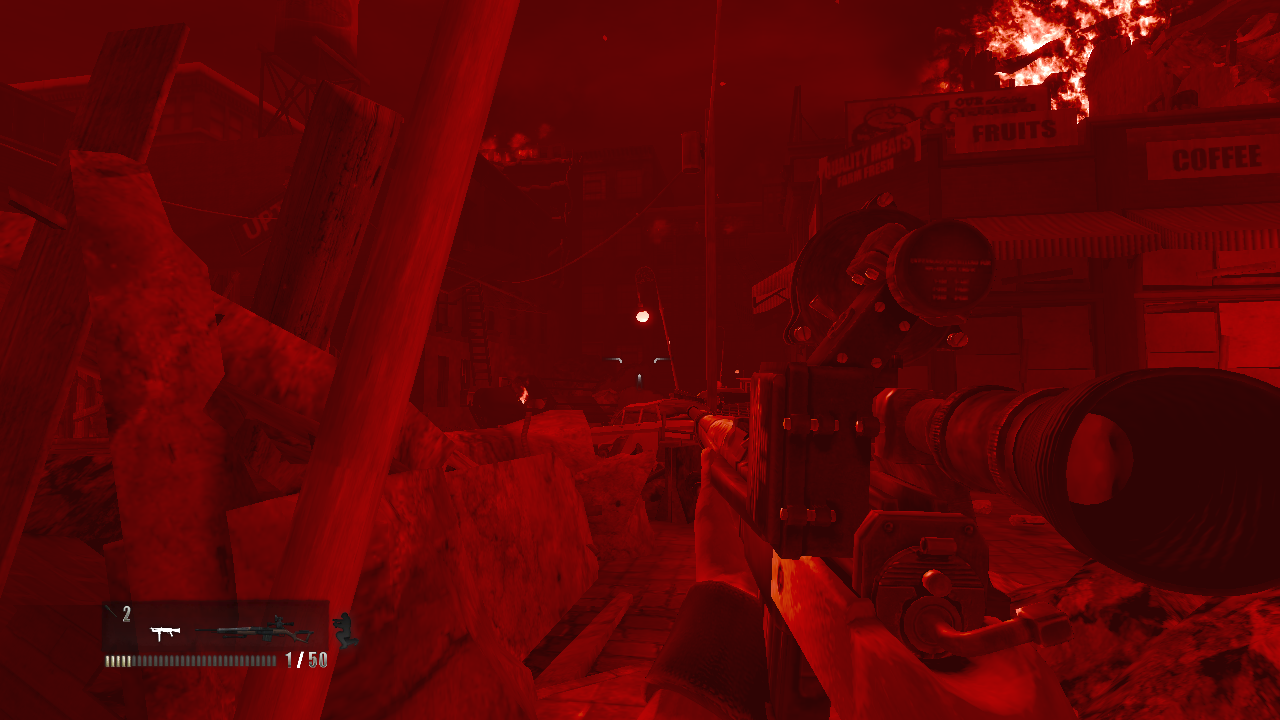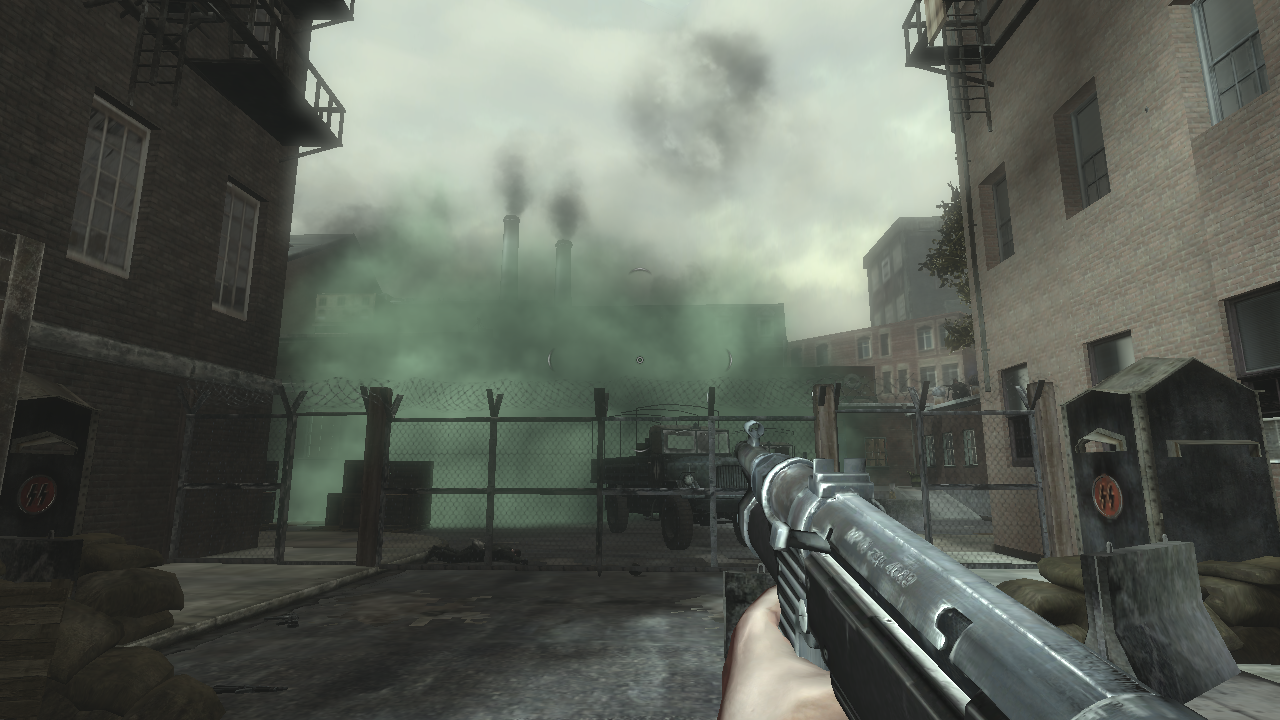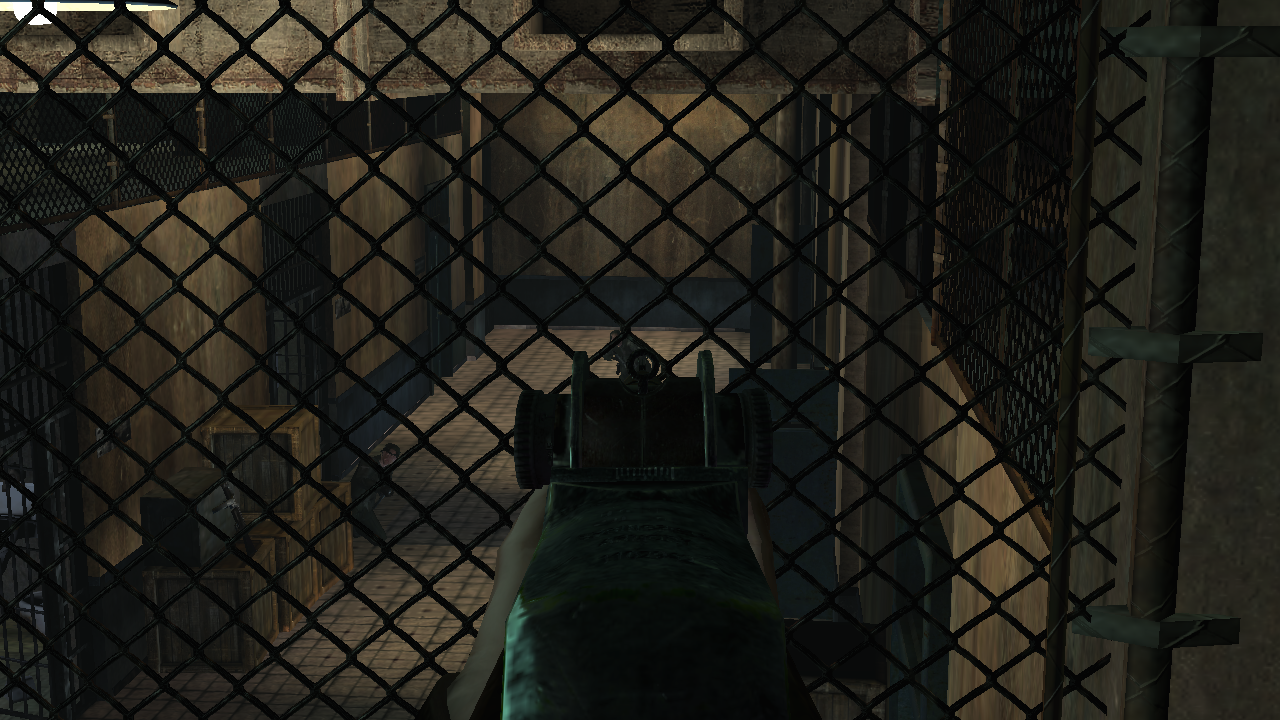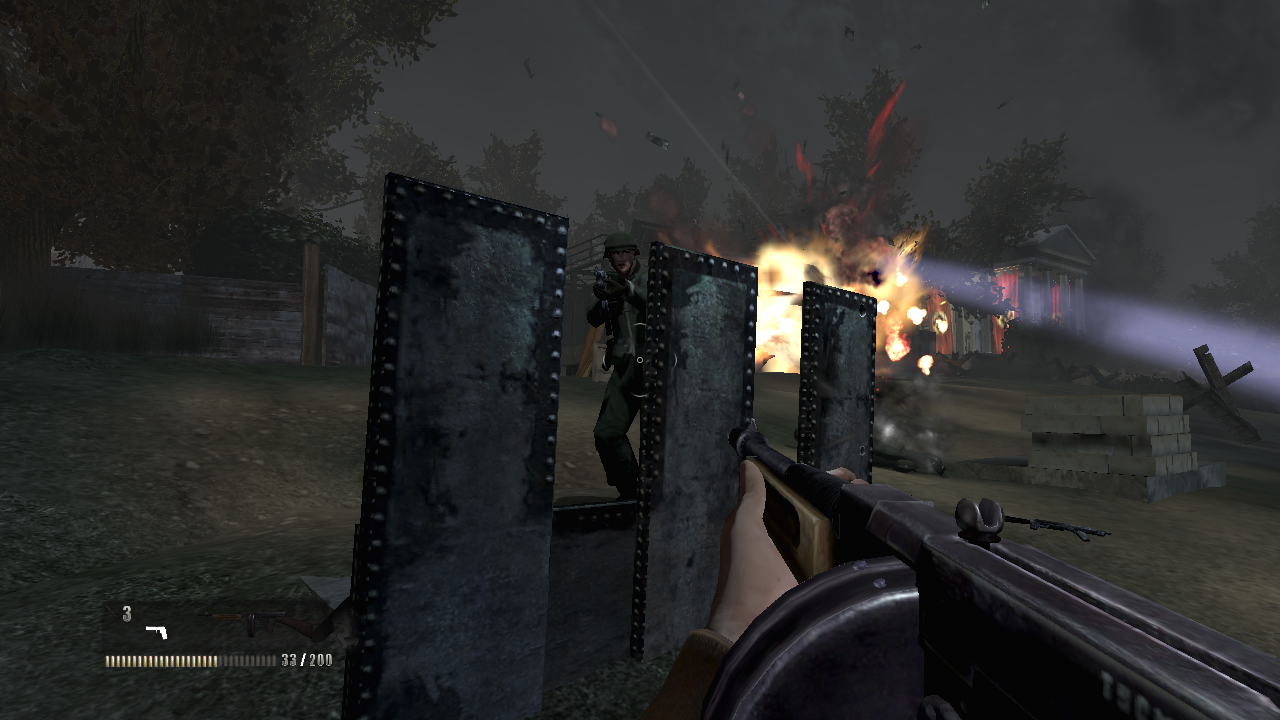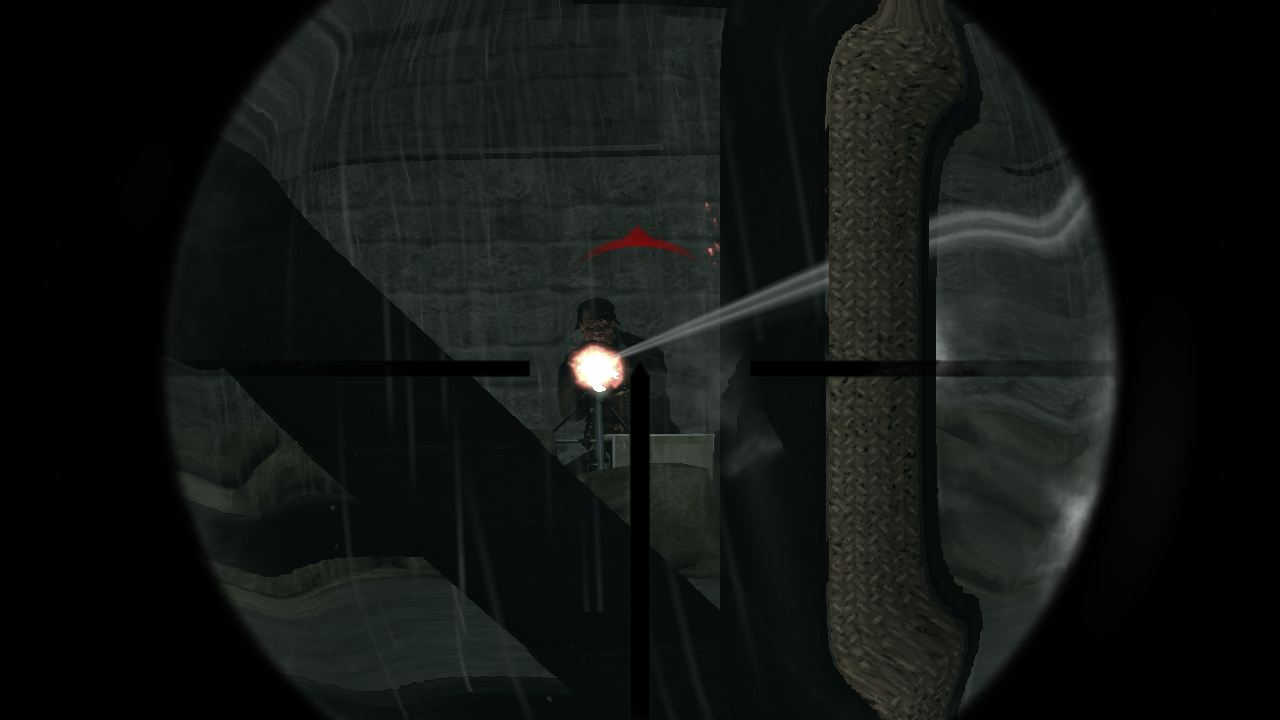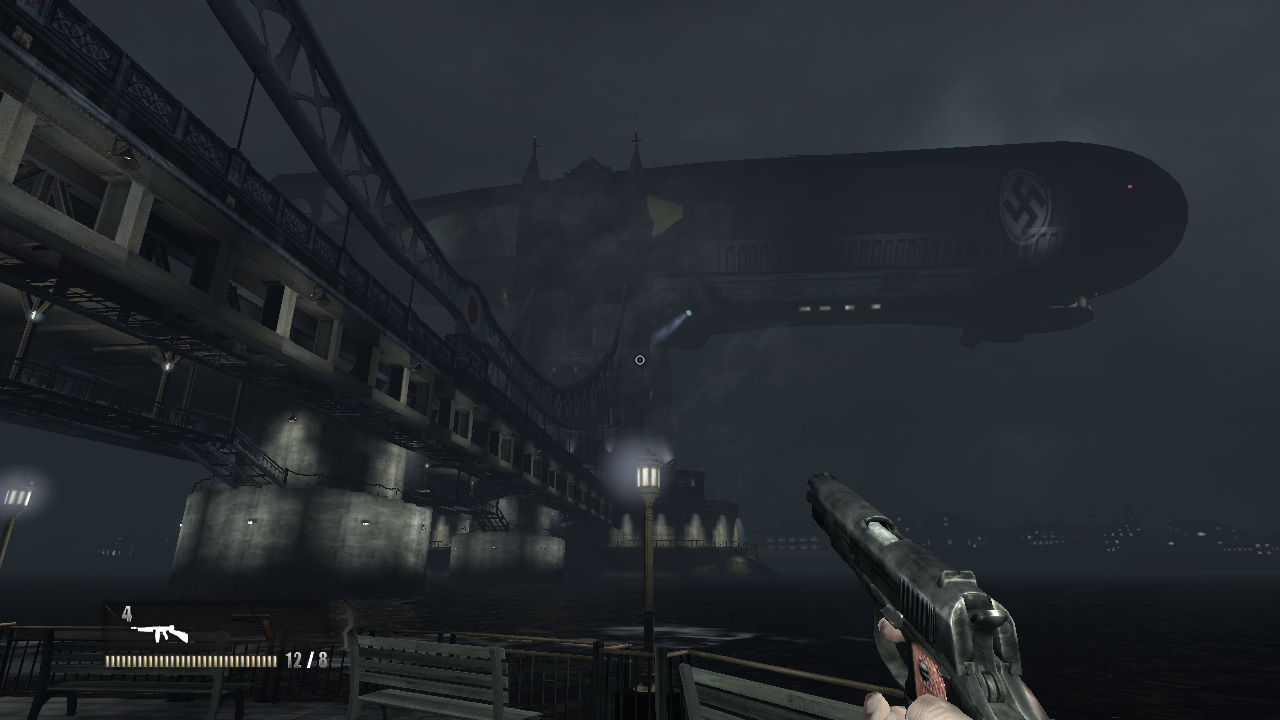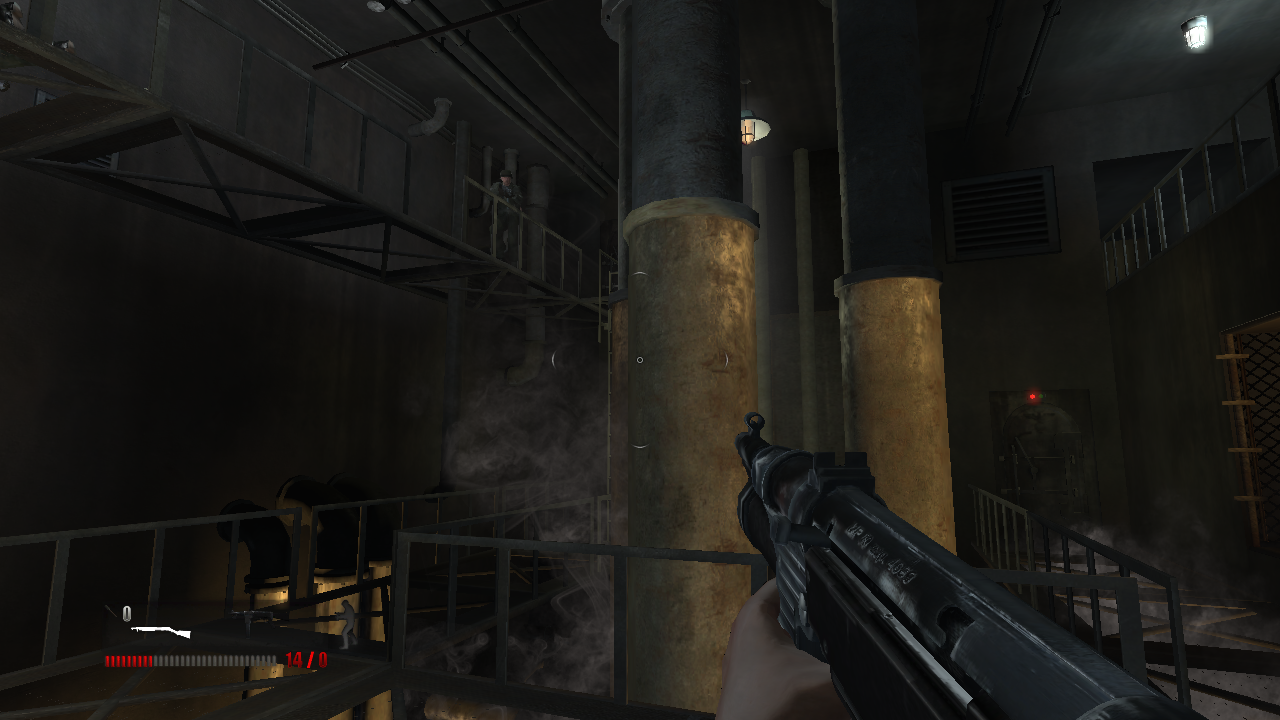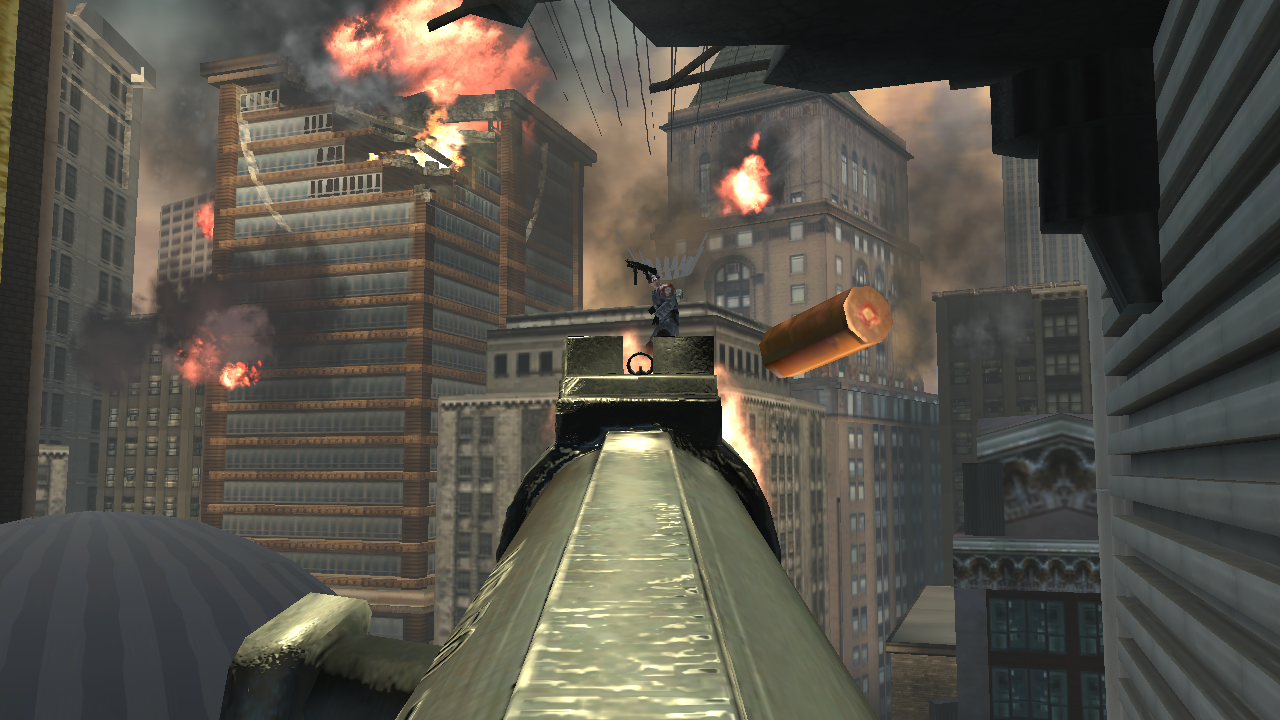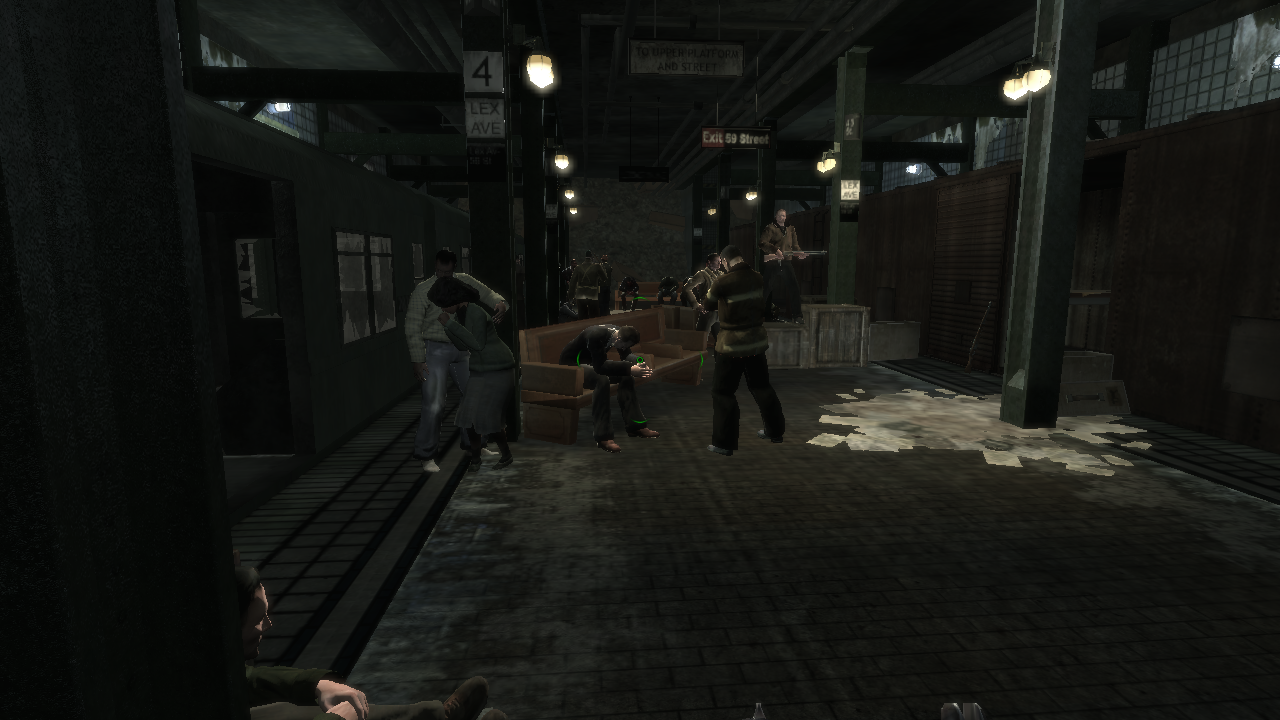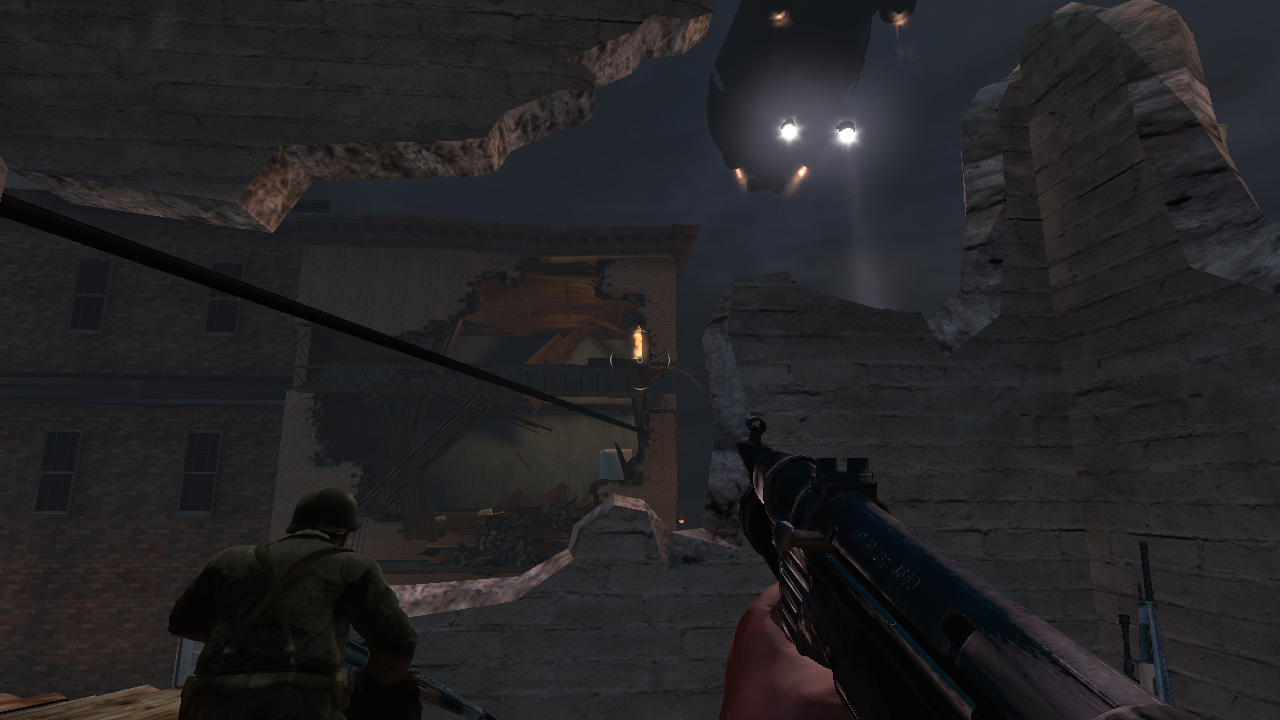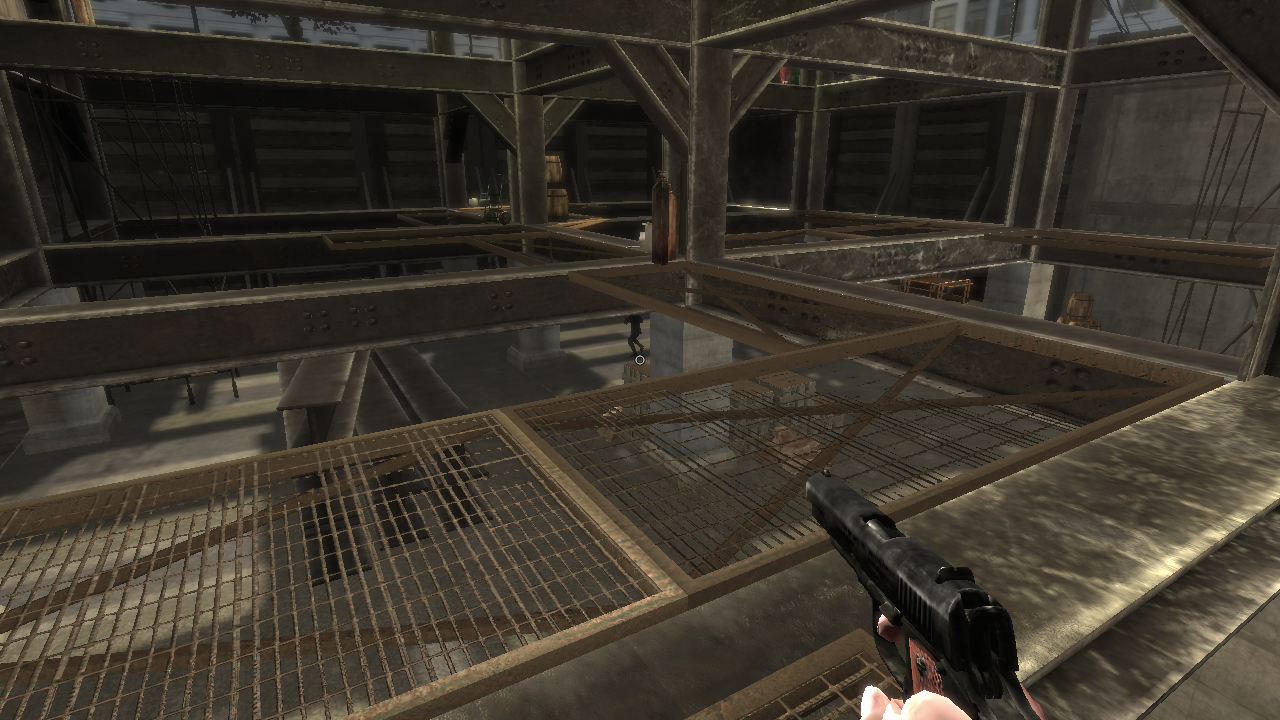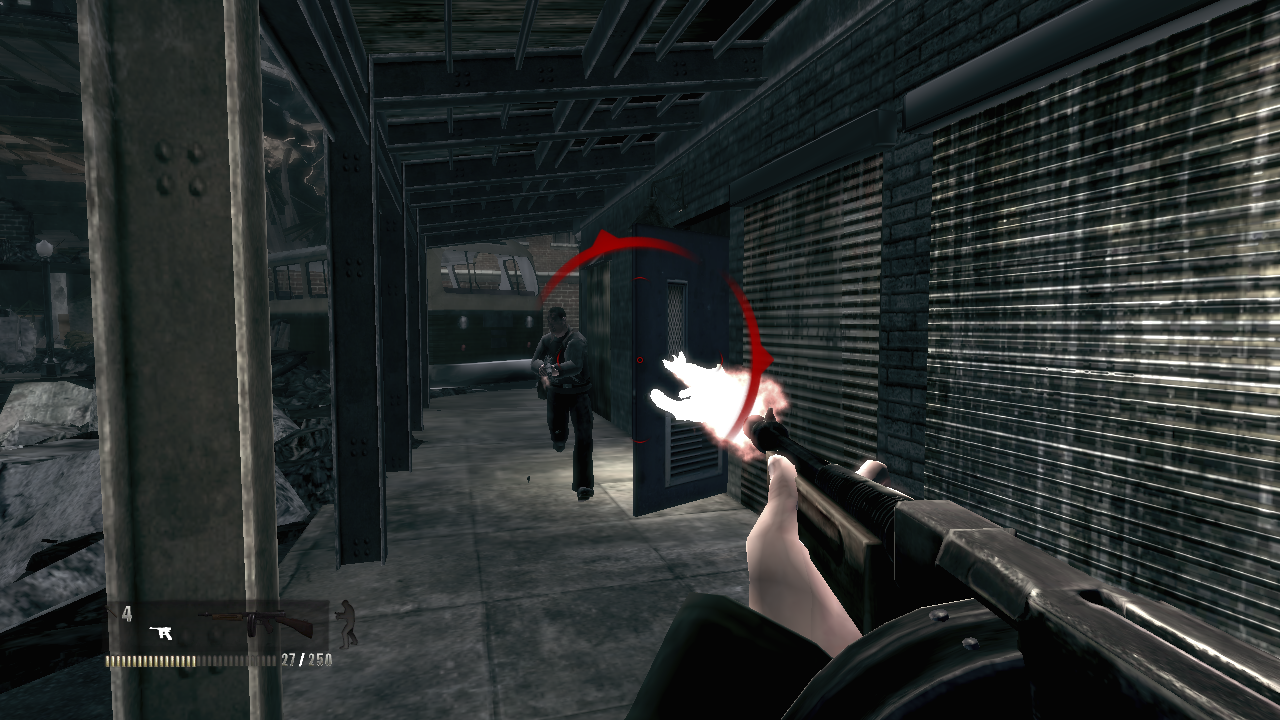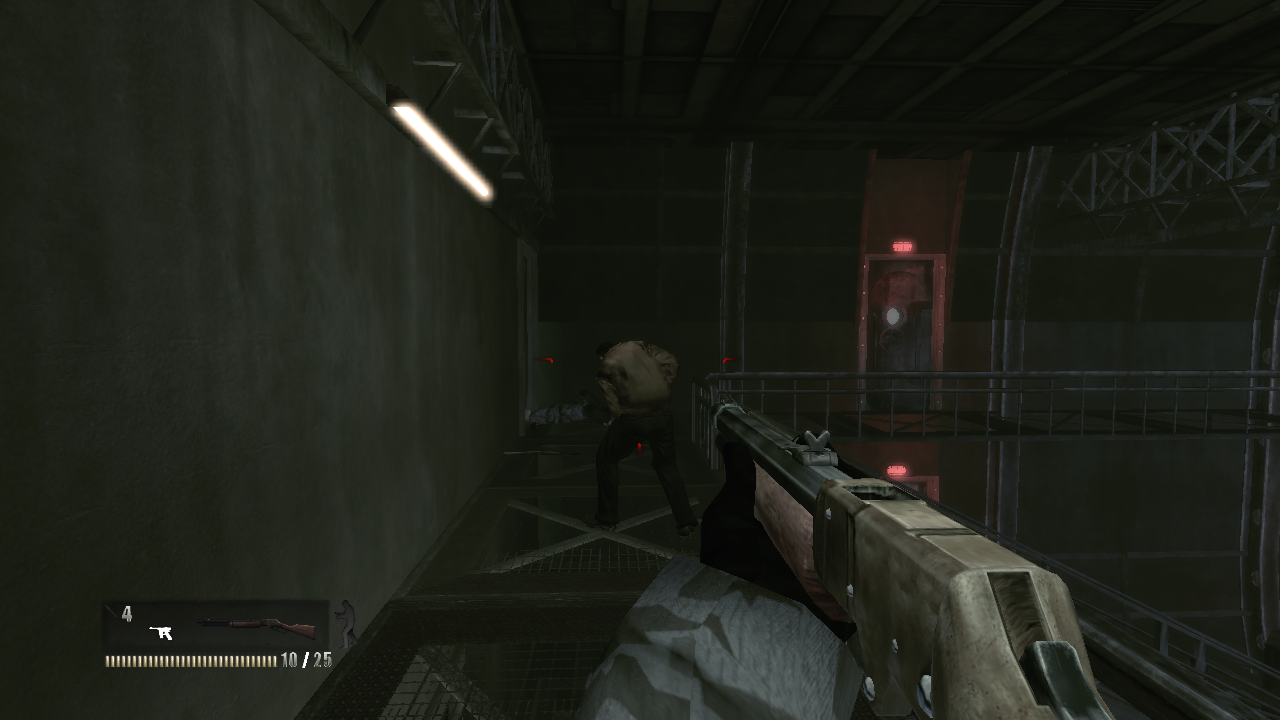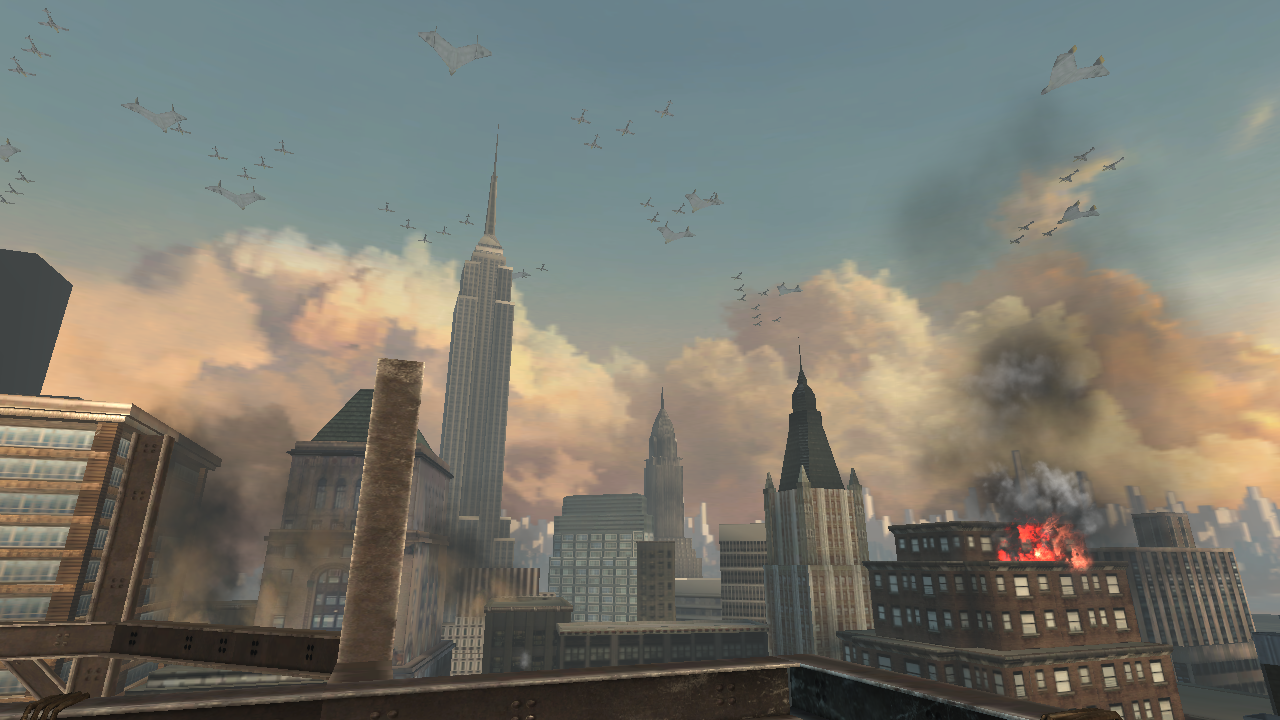
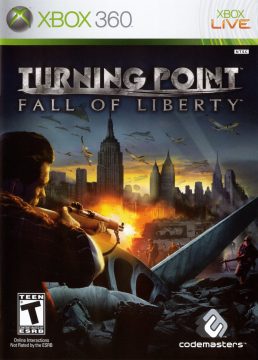
Turning Point: Fall of Liberty is a disappointing game. An interesting footnote in developer Spark Unlimited’s brief existence and one of the last gasps of the 2000s World War II shooter craze, it’s a title that wants to be ambitious by pitting you as an everyman against an advanced Nazi army taking over America. But perhaps due to a troubled development cycle, it doesn’t have the space to let those ideas develop into much more than a middlingly repetitive shooter with very threadbare characterization and plotting.
The whole thing is hinged on a surprisingly detailed premise, though most of this is conveyed solely through manuals and other external sources such as the fictional “International Journal” newspaper on Codemasters’ website. Turning Point is metaphorically named for a real-life taxi incident involving future British Prime Minister Winston Churchill, supposing he died instead of being merely injured and leaving Britain without a strong leader during the Second World War.
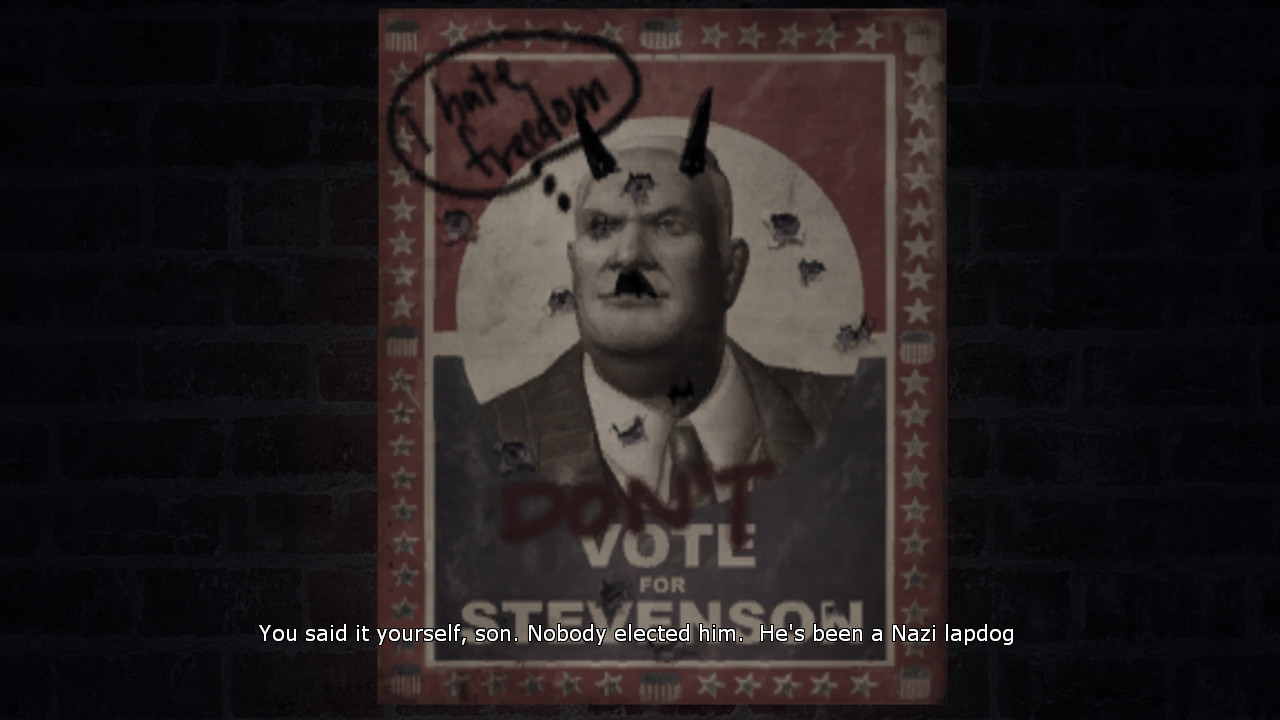
As the 40s rolls on, Britain and the rest of Europe, North Africa and even Russia fall to Nazi Germany and its allies until they become a new global superpower to rival America, who have kept to themselves through an anti-war isolationist policy. But that tense peace breaks one morning in 1953, when the east coast is invaded by Nazis, with plans to take over the whole country. You play as Dan Carson, a construction worker in New York when the invasion begins, and it’s up to you to join the resistance and fight back.
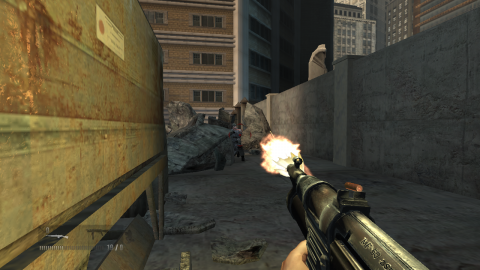
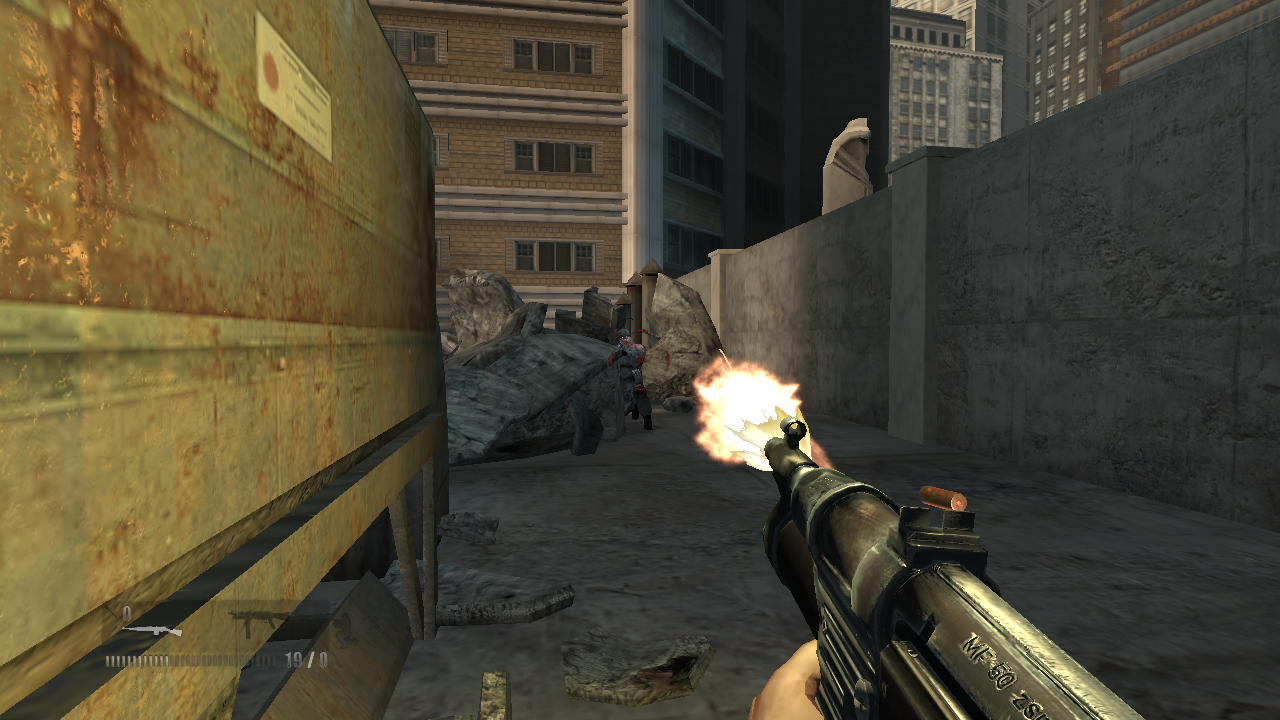
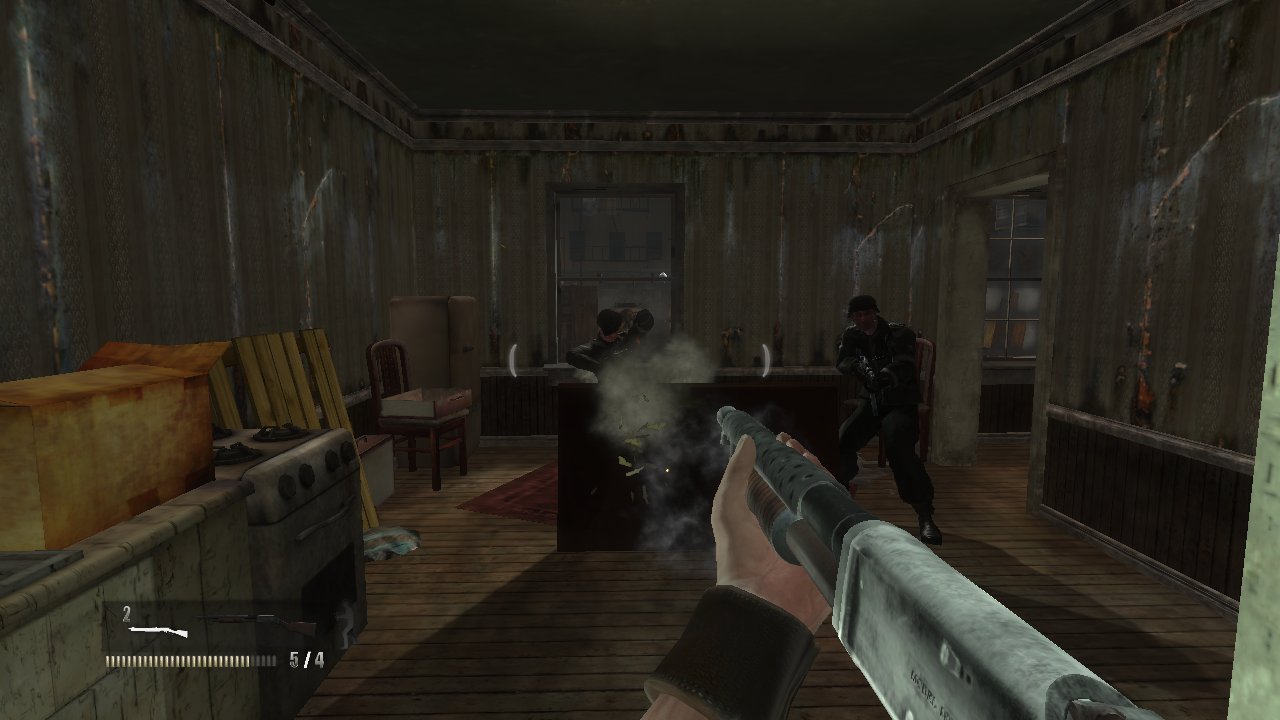
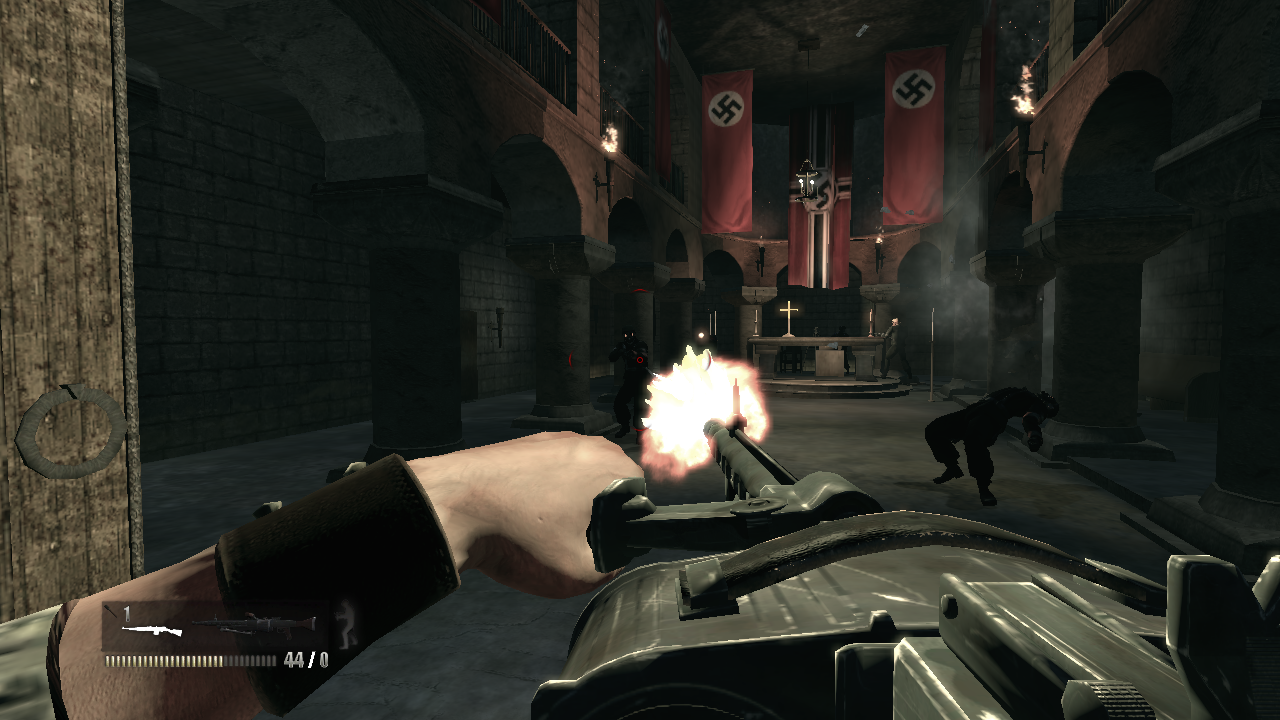
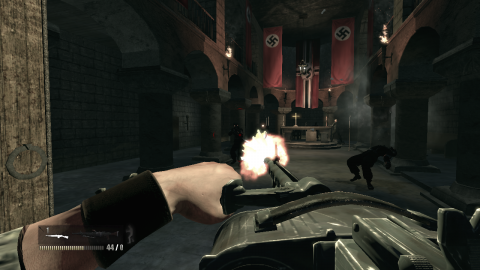
This plays out through a very typical of the era first-person shooter, going through linear levels where you shoot Nazis and complete some sort of objective at the end. You’ve got two weapons and grenades, you can crouch and sprint, and can aim down your gun’s iron sights for more precise shots. The only major addition is how Dan’s implied hands-on attitude from being a construction worker are brought out in a few mechanics.
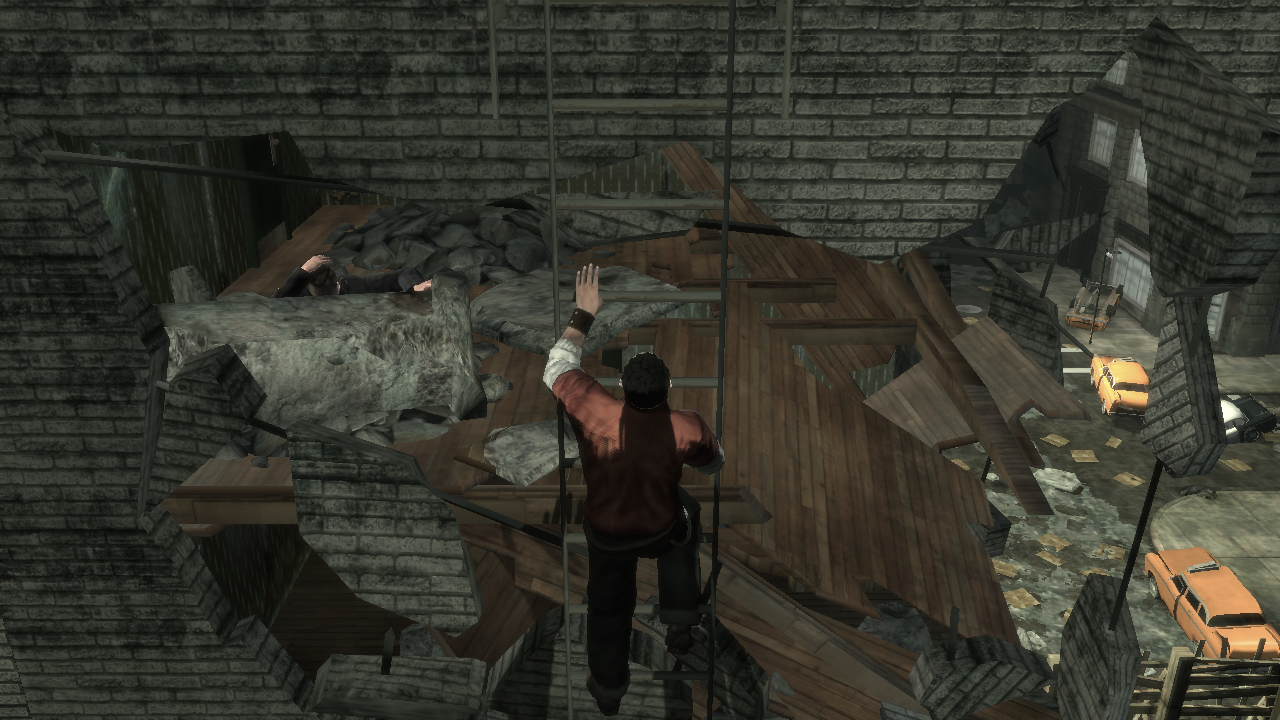
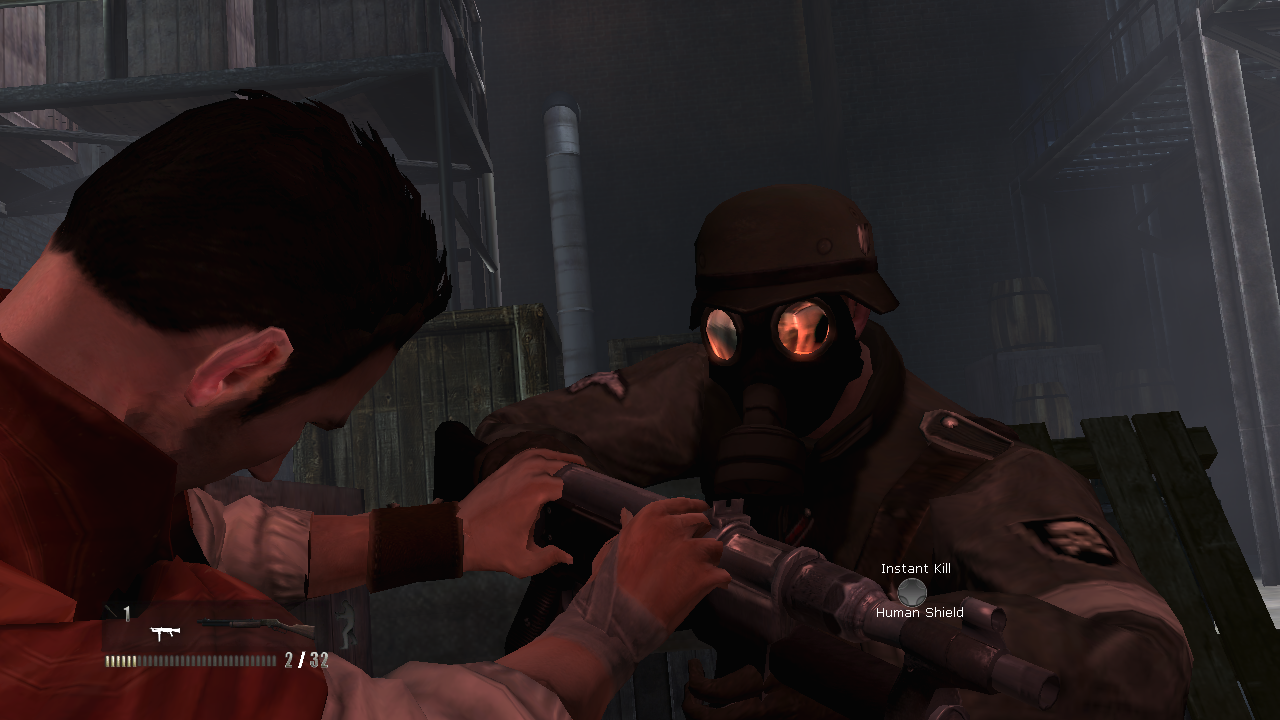
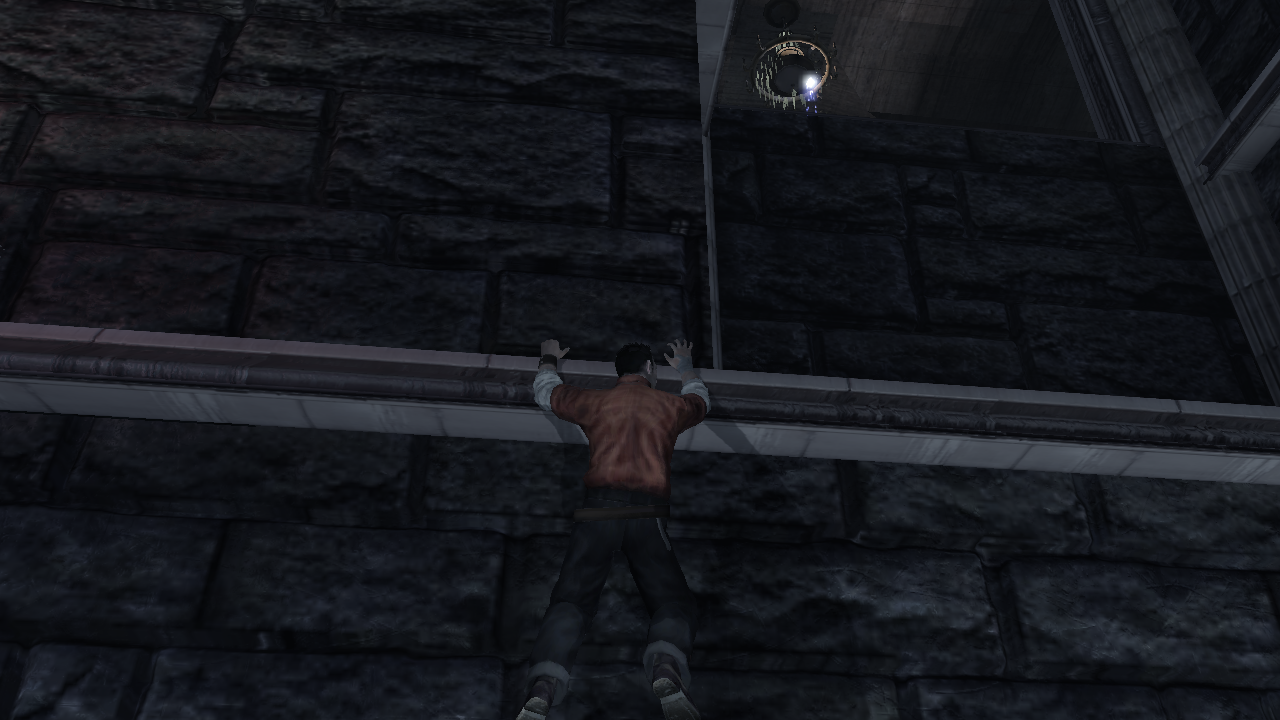
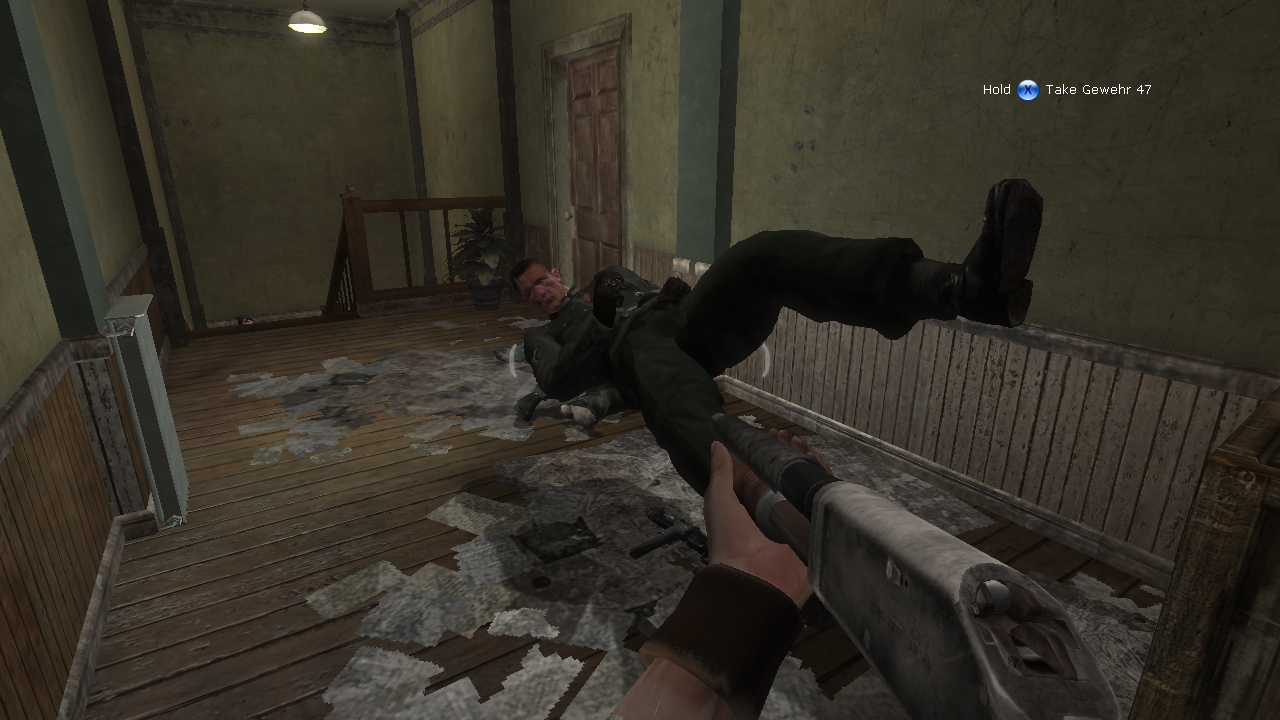
You can climb across overhanging drainpipes and ledges, and grapple enemies up close to kill them instantly (with occasional environmental kills) or use them as a human shield to get some extra shots in. They vary up the gameplay a small bit but are rather undercooked, as you mostly watch animations without much else happening. Triggering the grapples is annoying because you both have to be standing for the grapple icon to appear, and there’s no standard melee attack if you’d rather not deal with the hassle.
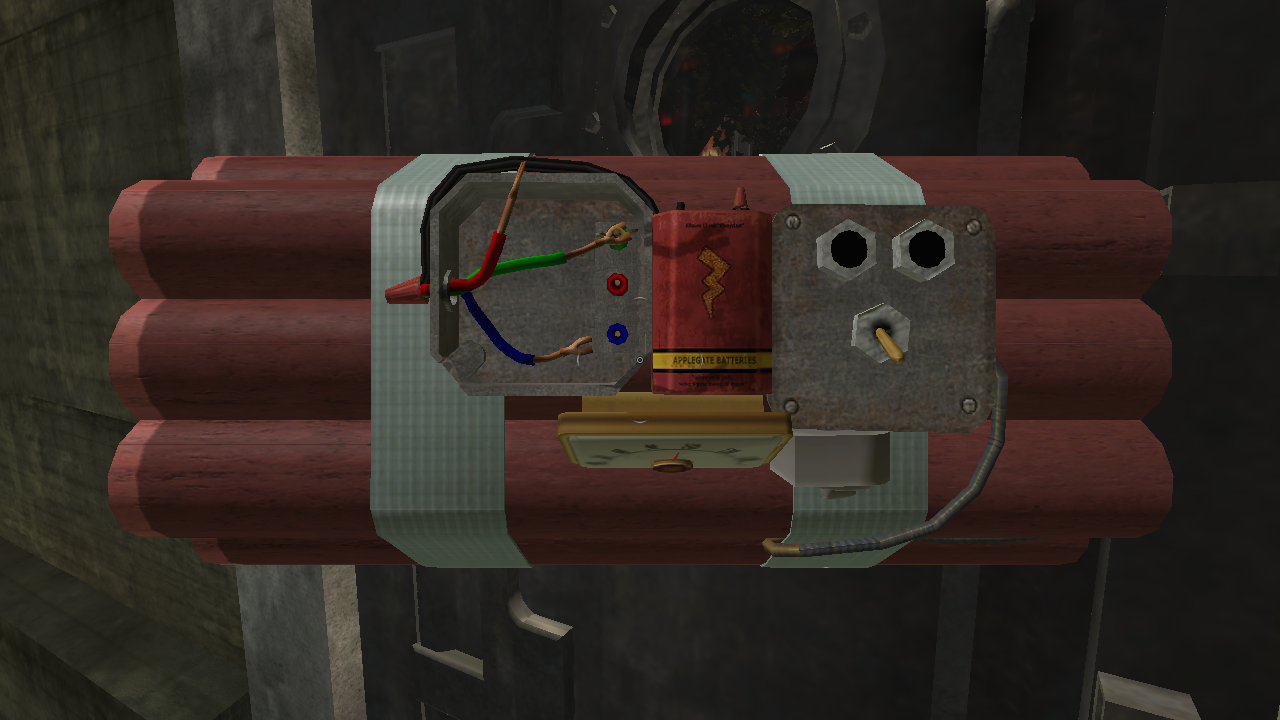
It’s functional but limited, and that goes for the gameplay in general. You have your usual weapons like rifles, machine guns, shotguns and rocket launchers at your disposal (though ammo is rare for every other gun besides the MP 40), there’s the odd sequence where you’ll plant and trigger explosives to blast doors or tanks, and occasionally have some allies assisting you in combat. What’s missing is the variety normally seen in these kinds of shooters.
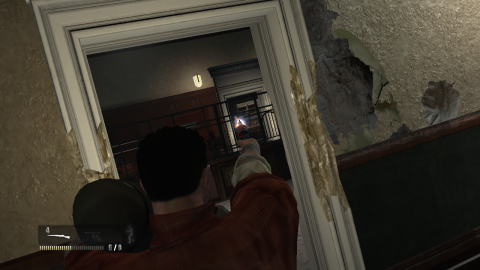
There aren’t any vehicle sections, you don’t get different types of missions like protecting characters or sneaking around, and levels stick to being close-quarter affairs inside corridors. Even if you don’t like escort missions or stealth segments in those other shooters, they added a contrast to the main gameplay and created more memorable sequences that Turning Point sorely needs to offset its flat samey gameplay.
Not helping is a lack of polish that drags the experience down. It’s quite easy to get stuck on objects, aiming sensitivity is either far too slow or fast with the limited options available, the reload button frequently stops working, the framerate can often chug during firefights, and crashes are frustratingly common (especially on the console version). Even in smaller details, like the lack of conveyance in level designs, the haphazardly stingy checkpoints, or the near-complete absence of any optional extras beyond a couple of cheats and unlockable art galleries, the game feels frustratingly hollow.
There’s also a multiplayer mode, but with only four maps and solo/team deathmatch modes, it’s not really worth bothering with. Just as well, seeing as it’s LAN and online-only with no bots, and those online servers have long since been shut down following GameSpy’s closure in 2014. LAN multiplayer is still possible, though highly unlikely without a lot of organization given that the PC release was delisted from Steam at some point in the early 2010s.
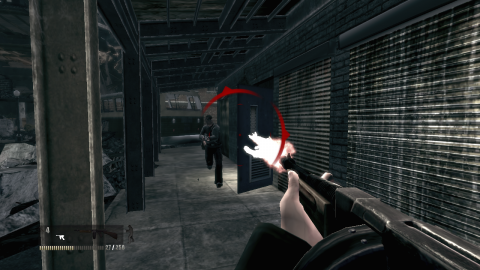
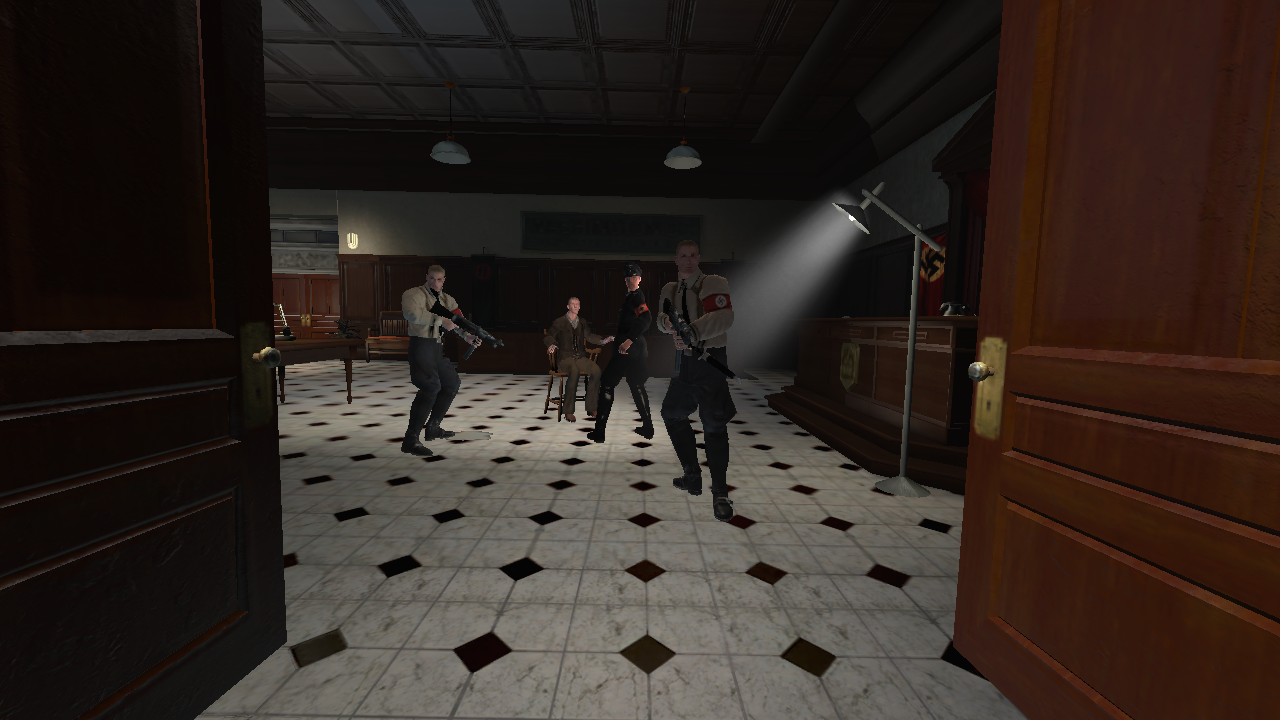
The only part where Turning Point could stand up is in its storytelling, yet that’s perhaps the weakest aspect due to how threadbare it is. While there’s a lot of detail in the set-up, what it ultimately amounts to is a very basic pulpy “fight the Nazis” story with disposable characters who mainly exist to order Carson around. Cutscenes and dialogue are very minimal after the first couple of stages, and even the ending occurs very abruptly without any kind of denouement to cap things off.
It’s not like there needs to be some kind of in-depth or thematically potent story, despite the concept of “Nazis taking over America” and even an interview with Spark Unlimited’s CEO discussing the game like it has something to say. But there’s so little going on here, which is a shame because things get off to a relatively decent start. When you’re on the backfoot in New York and Washington, trying to escape the chaos and simply survive, there’s a palpable tension as buildings crumble, people get shot and your comrades are overrun.
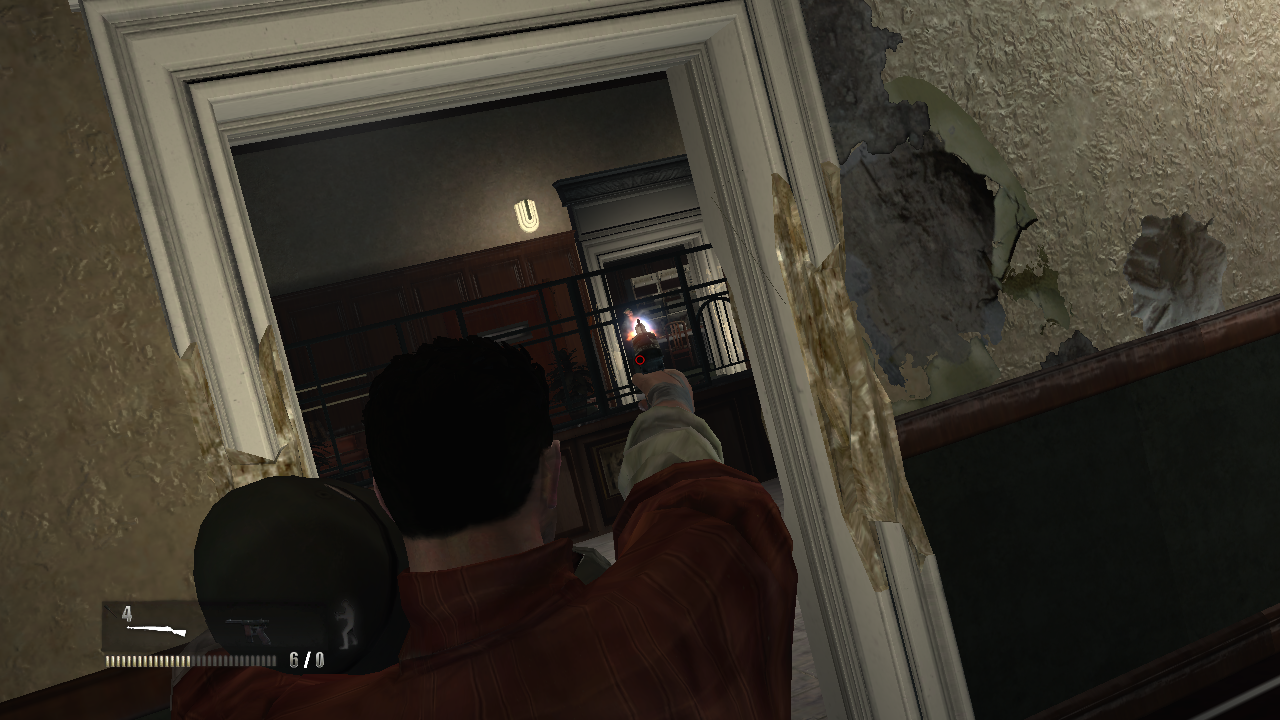
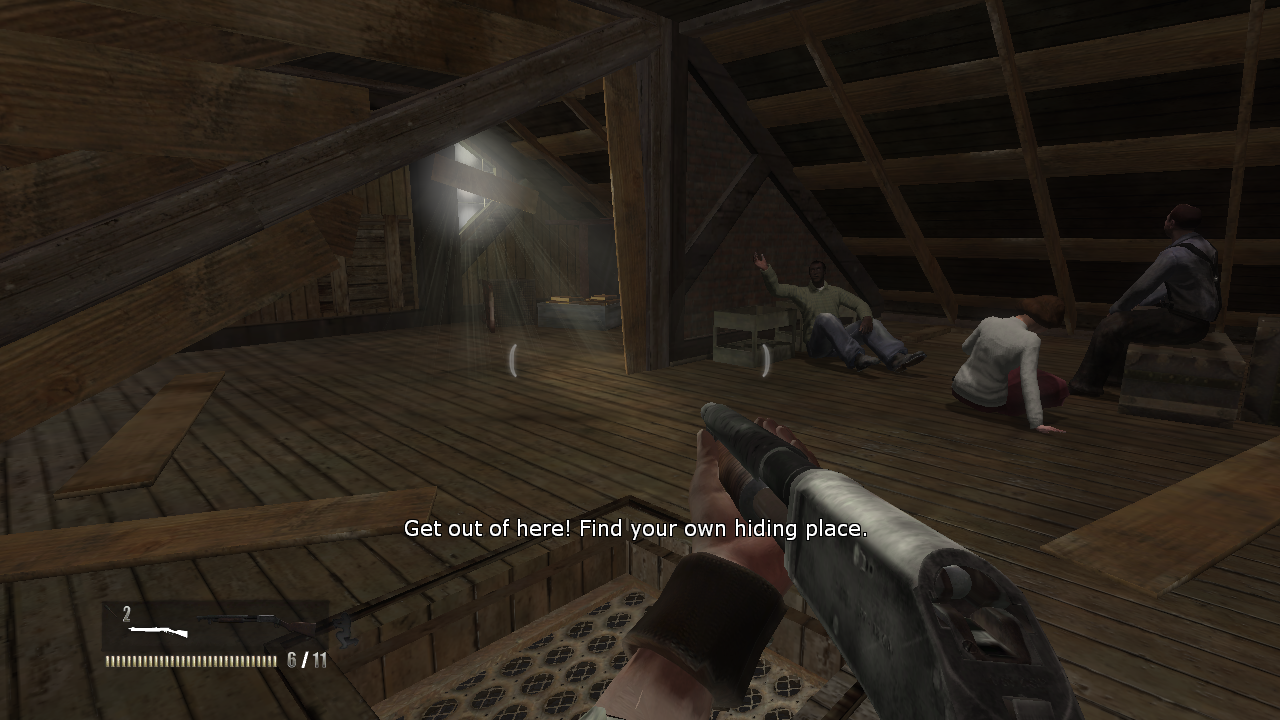
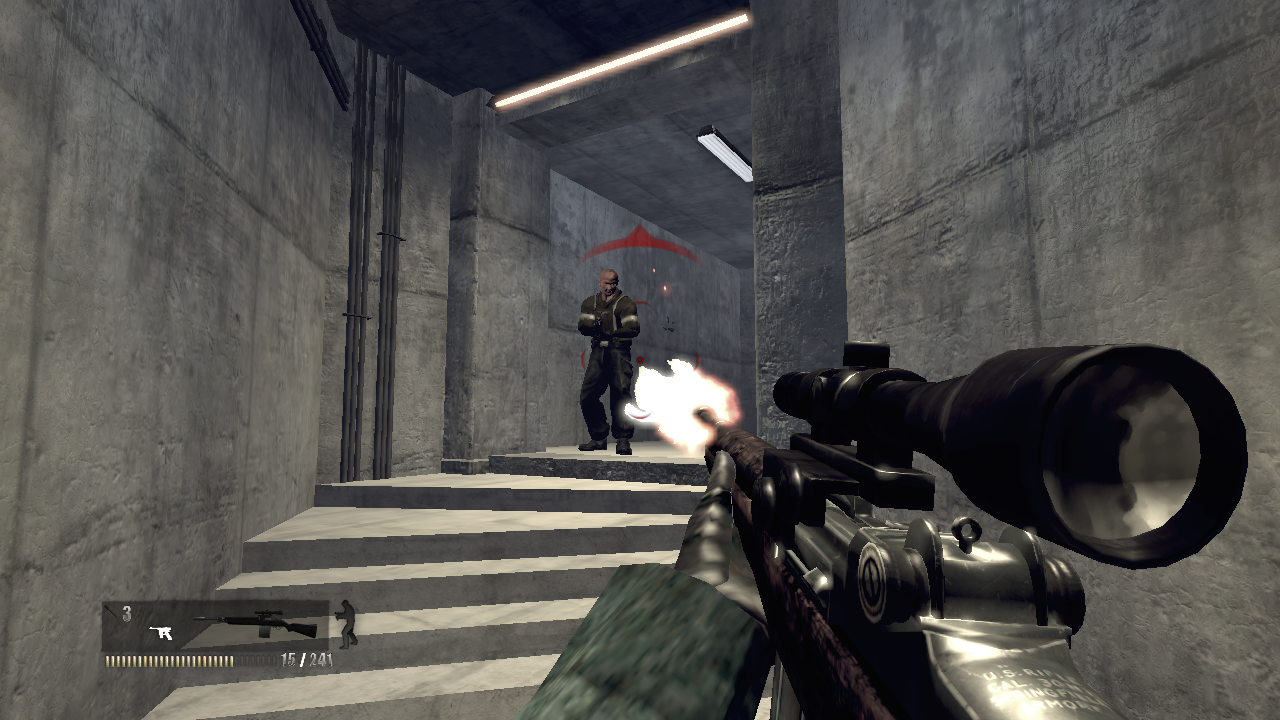
The early stages keep you moving between different situations, with one memorable sequence in Washington taking you from a scrappy gunfight to escaping a tank to skulking through apartments full of scared citizens as mournful music plays in the background. Then after the midway point, things start to turn around and you begin to fight back, confidently pulling off operations against the Nazis. That sense of progression is appreciated, but that unfortunately leaves the back half feeling flat as you’re constantly shooting the same old Nazis in generic facilities and bases.
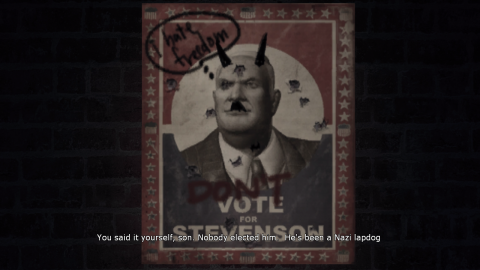
That flatness gets further accentuated by the presentation, where you’re fighting through drab dreary urban environments with little variation. Although it fits the bleakness of the situation, and there’s a satisfying tactility added by the lightly destructible objects and walls dotted around, the visuals feel overly bland. For some, the highlight will be the orchestral soundtrack provided by Michael Giacchino and his cohorts, then known for composing the Medal of Honor games. The music does its best to appropriately fit the mood of any given scene, with a solid amount of orchestration to amplify those emotions. But it sounds too much like other WWII shooters to stylistically stand out, which is the game’s problem overall.
Turning Point is not terrible, but it’s certainly underwhelming. It plays and feels like dozens of Nazi killing shooters, without any of the polish and variety seen in those games, and it lacks any sort of personality that distinguishes similar resistance-driven titles like the newer Wolfensteins or even Freedom Fighterst. If you need more games about shooting Nazis, which is always welcome, this will do the job if nothing else. Shame that it couldn’t express its ideas very far.
Links
The first of 12 entries in the “International Journal”, a fictional newspaper on Codemaster’s website that built up the backstory of Turning Point – https://web.archive.org/web/20081212232038/http://www.codemasters.com/turningpoint/newspaper/week1.php
An interview with Spark Unlimited CEO Craig Allen discussing the game and its supposed themes – https://www.gamedeveloper.com/business/exploring-the-rhetoric-of-war-a-turning-point-interview
Special thanks to TaxOwlBear for providing feedback on the article, and for helping me figure out how to play LAN multiplayer to get the multiplayer screenshots.