By Robert Greene and Kurt Kalata

Hydlide, an early Japanese RPG, is a huge victim of circumstance. Developed by T&E Soft and initially released in 1984, Hydlide was one of the first Japanese developed RPGs, along with Falcom's Dragon Slayer and Xanadu. Based loosely on the original Ultima games, it's a simple action-RPG where a lone player character runs around a game world, ramming into enemies to attack, finding items, and gaining levels. While it's well regarded in Japanese circles as a true classic, it's largely been deemed a joke to the English speaking audience.

While Hydlide was a great innovator in 1984, it didn't reach American audiences until 1987, when the NES port was published by FCI. This was several months after Nintendo released The Legend of Zelda, a much more refined, far more advanced take on the action-RPG formula. In comparison, Hydlide was irritating difficult and frustratingly vague, with terrible graphics, repetitive music, and an awkward combat system. Two other Hydlide games released later also faced ridicule - Super Hydlide (a port of Hydlide 3) for the Genesis, for featuring similarly substandard graphics and wonky action, and Virtual Hydlide for the Saturn, with silly looking digitized graphics and an abysmal frame rate.

So yes, the Hydlide games are definitely a victim of their age. Taken in context, though, they're actually rather fun little games, providing you have the patience to stick with the simplistic gameplay. If nothing else, they can at least be admired for inspiring Falcom's far superior Ys series.

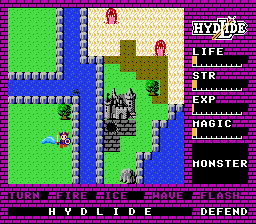
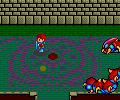
Hydlide (NES)

Hydlide (MSX2)

Hydlide - PC-88 / Sharp X-1 / PC-66 / FM-7 / MSX / MSX2 / PC-98 / NES / Windows / Mobile (1984)

American NES Cover

Japanese MSX Cover

Hydlide (NES)

The original Hydlide features a hero named Jim, who inhabits the magical world of of Fairyland, the setting of all future Hydlide games. It's his jon to rescue the fair princess Anne, who was split into 3 fairies by the demon Varalys/Boralis, who shows as a major villain in all of the other games. You must rescue the fairies, then defeat the evil demon.

The gameplay is just like Ys I or Legend of Zelda, except without any of the depth, music, or story.. You run around, basically bumping into enemies to damage them, much akin to Ys. You switch between Attack mode and Defend mode with the press of a button, trying to inflict damage and stay alive yourself. Being in attack mode raises your attack, but drops your defense, leading to swift death if you're not careful. In fact, you'll be faced with your character's death pretty often, although thankfully there is a soft continue.

Unlike Ys, which required you to hit enemies in a certain manner, there is no strategy to this tactic, and it's all dependent on your statistics. You level up, gain magic spells, and try to assemble various items scattered about the realm. There are no inns or characters you can interact with on a friendly basis, so your health and magic basically regenerate as you stand still, also akin to Ys.

The land has marked areas and wraps around all sides. The world is only five screens tall and six screens wide, for a total of about thirty screens. You have to do a bit of (loose) puzzle solving and a lot of trial and error exploration to find the items and fairies you need to win. In the NES version, magic does play a vital role - enabling you to attack certain enemies that can only be beaten with magic, or burning down certain bits of the landscape.

Hydlide is quite difficult, though I imagine not too much harder than Zelda 1 for the NES without clues. Some of the quests are simple - in order to get the lamp to see underground, you need to defeat the vampire...but before you can even touch him, you need to find the cross. Other puzzles are much more obscure - you need to burn a tree to get into Varalys Castle, for instance, or destroy a stone to drain a lake and kill a dragon. Since Fairyland is a pretty small world, if you take your time and try poking into every nook and cranny, you might be able to figure certain puzzles out. Some enemies like the twin wizards and the aforementioned water dragon require a bit more thought and effort to defeat. The translation work is confusing on one item in particular - the "Fake Medicine" which acts as a one-shot auto revive, and is needed to beat the last boss. Other than that, there's not much text or story, other than what's listed in the manual.

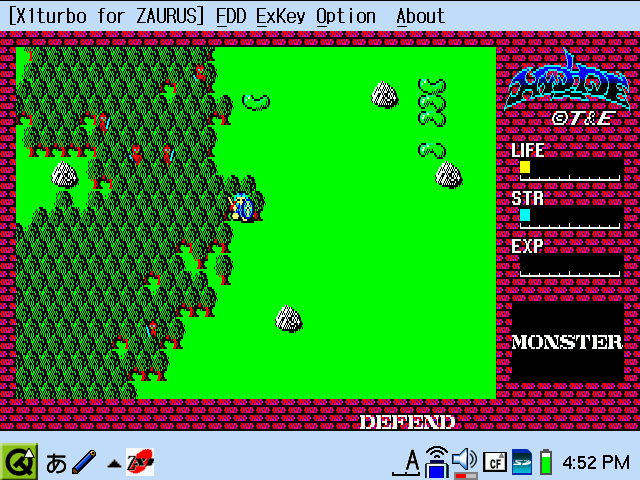
Hydlide was first released for the PC-88 computer in 1984, which has terrible, ear piercing sound. The X-1 version adds scrolling, and the PC66 version, while having lower resolution graphics, has joystick control and an actual soundtrack, however primitive. The MSX version adds slightly better sound and uses a password system. The F7 version is much simpler due to the crappy controls, but it adds a few extra enemies. The MSX2 version is much the same as the MSX version but with improved colors. The PC-98 version is the same as the PC-88 but with various speed settings. The Windows arranged version is essentially the same as the PC-88 version - you can switch between modes on the fly - but has improved, high res graphics and an actual soundtrack.

The only version familiar to non-Japanese gamers is the FC/NES version, known as Hydlide Special in Japan and simply Hydlide everywhere else. It's very similar to the PC versions, but it's upgraded to include magic spells, and uses the theme music from Hydlide 2 - the one more widely known as the Indiana Jones theme ripoff. The game has about four total tracks - the main theme which comprises about 99% of the music you hear, the password entry theme (the game is password saved), the final boss music which appears on the screen where you fight the final boss, and finally a shorter version of the main theme for victory.

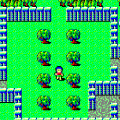
Hydlide (NES)

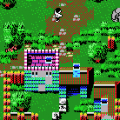
Hydlide (NES)

Hydlide (NES)

Hydlide (NES)

Screenshots Comparisons

PC88
MSX
MSX2
Sharp X1
NES
Windows

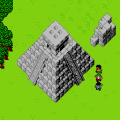
Hydlide II: The Shine of Darkness - MSX / PC-88 / X1 / FM-7 / MZ-2000 (1986)

Japanese MSX Cover

Hydlide II (MSX)

Hydlide II (MSX)

Released in 1986 for the PC-88, X1, FM-7, MZ-2000 and MSX computers, this is the only Hydlide game to never make it Stateside in any form, though it did see European release with official MSX emulation using WOOMB.

The game's plot involves an evil crystal deep underground creating monsters. You, the player, are summoned to Fairyland from Earth (in a plot device ripped from the Ultima games) and set out to destroy the crystal and put an end to its evil. Varalys, the big bad of the first game (well, the big bad of the first game after the gameplay itself) shows up as a guardian near the end too. Not too dynamic of a plot, but at least you're treated to a few screens in Engrish detailing it to a remixed version of the Hydlide theme.

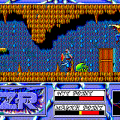
From a gameplay perspectice, Hydlide II isn't that far of a jump from the original. You can switch between attack and defense and ram into enemies to damage them. In the first Hydlide, you could do marginal damage while in defense mode. Here, there is changed to complete defense. You also have the option of pressing 0 to engage friendly certain "monsters" in conversation. You'll likely go into attack mode, trade blows with an enemy, then have to recoup out of the way a bit to regain health, and repeat. If you're in a dungeon with narrow passage, it turns into a slogfest unless you can find ways to evade the enemies.

There are a few more traditional RPG elements, including a couple of towns, complete with places to buy equipment and train characters. The overall effect produces a much more grindy game than the original since you're now fighting to buy equipment as well as merely level up to take on the big bad.

The game introduces the mortality system found later in Hydlide III. Your character can be aligned with Justice, Normal, or Evil. Like in its sequel, you lose morality by hurting good monsters and gain it by fighting only evil ones. The distinction between good and evil monsters is a lot tougher in this game, so you can find your morality (labeled FORTH, probably for Forthrightness) dropping quickly if you are not selective in what you attack. For the most part, if it's human, you're best off not attacking it. Unlike in Hydlide III, where morality only plays a role in taking out one of the bosses, being evil causes good monsters and townsfolk to ignore you. This in turn denies you clues, equipment, and training.

Trainingis a new element designed to add depth to the gameplay. While leveling increases your HP, improving your strength and magic statistics require training. Strength training in particular involves a neat little fighting minigame that has the finesse of mashing "Y" until you win or are knocked clean, placing it somewhere behind Karate Champ. Your performance in this proto-fighting game and how many rounds you're willing to go affects your strength gain. Since it takes a while to earn the 3,000 gold needed to increase this stat, you're likely to repeat this to clear several rounds in a row. Training in magic is more straightforward - a simple exchange of GP for MP.

The game has a few status effects related to items and terrain. As in the first game, standing on open fields will cause your health to slowly fill back up. Standing in deserts, forests, or graveyards will cause your health to go down instead, forcing a lot of hit and run tactics to move around, heal up, and move on to explore initially. Thankfully your health slowly regenerates in the dungeons too.

There is also the Darkside effect. When certain enemies are attacked, they drop a black crystal. While this item is necessary later in the game, holding onto it stops your health from regenerating. It can be dropped, thankfully (by selecting it and hitting "D"), but it's also a fairly common drop with some of the evil enemies on the overworld. Memories of picking up the Ruby in the Uninvited come to mind, though there's at least some indication of what is causing your trouble here.

The game also has a time option, allowing you to speed up and slow down gameplay. This would be refined later in Hydlide III/Super Hydlide with the use of an in game clock setting day/night cycles and a need to sleep and eat. Here, it merely affects the speed of gameplay and can make leveling and exploring go faster. Unfortunately the game demands grinding and it's still a chore.

The game still involves the wonderful "puzzles" of the first, including running into random rocks and gravestones to find locations. In dungeons, treasure chests and stairways are invisible, requiring the player to run into the walls/corners to locate them. This adds to both the challenge and the overall annoyance factor of the game. The lack of any clear guides has made progression rather difficult, so if you wish to advance further into the game than around the overworld and the first few dungeons, I suggest sawing off a rabbit's foot or three.

What to make of this game? Its gameplay is pretty unchanged from the first, but it's a much grander adventure. While the first gets a pass as a short, somewhat charming adventure, Hydlide II's ambitious scope drags out the game's flaws - unlike the first one which was a muddy little gem of modest proportions, the size of this game means that the coprolite has not fossilized all the way through, to the woe of the dedicated player. A few important features, time and morality, are carried over to the third game, but this one is much closer in spirit to the first Hydlide, as a opposed to the more Zelda oriented style of play in Hydlide III/Super Hydlide.

Most of the PC versions are very similar. This is the only Hydlide game that has not been updated or remade for any other platform.

Hydlide II (MSX)

Hydlide II (MSX)

Hydlide II (MSX)

Hydlide II (MSX)

Hydlide II (MSX)

Hydlide II (MSX)

Super Hydlide / Hydlide 3: Space Memories - MSX / MSX2 / PC-88 / PC-98 / X68000 / Famicom / Genesis / Windows (1987)

Japanese FC Cover

Japanese MSX Plaque

European Mega Drive Cover

Debuting in 1987 for the PC-88, MSX and Famicom (and remade in 1989 for the Mega Drive, again for the X68000 and PC98 with the subtitle "Special Version", and later again for Windows), the Genesis version of this game actually made it to America, titled Super Hydlide. It's a marked improvement over the original in terms of game play, sound, and pretty much everything. The only exceptions are the graphics, which are a bit better, but still seem very low tech, especially in the 16-bit version. The basic story involves a mysterious fissure into deep space appearing, followed by a swarm of monsters threatening to engulf the land. You, the lone hero, must get to the root of the troubles and save the universe.

A lot of improvements have been made - Super Hydlide features opening cut scenes, as well as a ending that is playable using a secret trick. There are actually townspeople to converse with as well. There is only a loose connection to the previous games, as Varalys appears as the game's penultimate boss, sealed in a cavern and carrying the item needed to enter the final area. Fairies make a return as well, with one being a necessary companion in the final battle. The gameplay is a bit closer to Zelda this time - you can actually see your sword or projectile on screen, so you don't need to run into enemies anymore. It still feels a bit awkward, as you run up to an enemy and jam the attack button, hoping that you'll kill it before it kills you. It also carries over the morality meter from the previous game Some monsters you encounter are good and will not attack you. If you are careless (or just greedy for experience) and slay them your morality meter will decrease. This generally has no bearing on game play, but a full morality meter will enable the player to defeat Varalys a lot easier when the time comes to confront him.

You're given the choice between four distinct character classes at the beginning of the game - Fighter, Thief, Monk, and Cleric. The Fighter and Thief are melee types, while the Monk and Cleric are spell casters. Like traditional RPGs, you have a variety of weapons, shields, helmets, and armor you can equip - ranging from simple items, up to the almighty fairy armor equipment, the flame sword and lightsaber weapons. In addition to ranged and melee attacks, there are a total of twelve spells in the game, ranging from basic healing and teleportation, to attacks and special buffs. The fighter and thief can only cast six of these, while the Cleric and Monk may cast all twelve.The game implements a rather annoying weight system, limiting both what you can carry in, as well as what your character can use for a weapon. If you're overloaded, you will find yourself unable to move. This makes managing items, and even money, even more important. You need to be careful with what you discard to free up weight, since there are certain items you will need by the end of the quest and if you're careless, you can screw yourself royally.

Hylide III also features a time system. Each day is broken in 24 hours. You will need to munch on rations twice a day and sleep to avoid eventual fatigue, which decreases your hitpoints. Sleeping is primarily done at inns, which in turn allow you to save your game. You have an option to slow or speed up time by adjusting the menu, making traveling, leveling up, and some fighting a bit easier. While the time system is innovative, it limits the amount of exploration you can do at one time, forcing you to set up camp around a city to eat up and rest, lest you collapse in the middle of the vast overworld.

Generally the game presents a fair amount of challenge - partly from the weight and time mechanics, enemy difficulty, and the fact it does also allow you to die instantly if you fall off certain platforms (which can be a real pain near the end of the game). There are four boss battles, the last of which may requires a rather innovative solution (you need to leap into the boss' mouth to deal the death blow). These encounters are fairly hard, and do require some skill so you can emerge victorious. Like Ys, your menu becomes inaccessible while fighting a boss, making it imperative you have the right items equipped, etc.

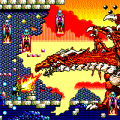
As mentioned, Hydlide III is an overall improvement from the first two. The music tracks for the Genesis version are quite good, fitting in with the game's theme and being catchy in their own right. While the weight and time system can be a pain in the rear at times, especially when attempting to level up, it does score points for innovation. Starting out can be rather hard, given you're required to hunt enemies to gain the money needed to rest and eat just to stay alive (there are a few Easter eggs for quick experience and cash found in FAQs and walkthroughs that I would recommend for new players). It is a sharp learning curve, but the game is fairly rewarding, having an ending that was for the time innovative as well. There is nothing like finding out your ultimate enemy was a five eyed frog named Kaizack who created the universe and decided to terminate everything once it grew beyond his control, making its ending almost up there with the likes of Phantasy Star II. For a villain he is both spiteful and memorable in his dying monologue. Finally, a word needs to be said on the graphics, as these may be the ugliest out there for the Genesis.

All in all, it's a good, but not great game, and while it's definitely not a "must play" game, it is usually maligned as being the sequel to "that awful NES game". In that regard Super Hydlide has not received the credit it deserves as it is able to stand on its own.

The "Special Version" editions for the PC-98 and X68000 were released a few months before the Genesis version, and uses the Famicom edition as their base. They include improved graphics, new maps and new characters. The Windows remake is based on the PC-88 version, and just includes upgraded graphics (the best of any of the versions) and a fully rearranged score.

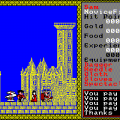
Super Hydlide (Genesis)

Super Hydlide (Genesis)

Super Hydlide (Genesis)

Hydlide 3 (MSX)

Hydlide 3 (FC)

Hydlide 3 (FC)

Screenshots Comparisons

PC88
MSX
Famicom
Genesis
Windows

Virtual Hydlide - Saturn (1995)

American Saturn Cover

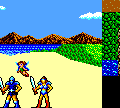
Virtual Hydlide

Virtual Hydlide

Hydlide attempts to enter the third dimension with Virtual Hydlide, released in the early days of the Sega Saturn, and published in the USA by Atlus. And oh, what a sad, sad game it is. It's not entirely 3D, because while the environments are made of polygons, all of the objects - including your character, the enemies, trees and items - are all digitized 2D sprites.

Virtual Hydlide tries to emulate the simplicity of the original game by ditching the character creation, class systems, morality meters and real time flow of the second and third games - the only real element retained are the shops and the weight system. In other words, it's a pretty basic fetch quest. What makes it unique is that the landscape is randomly generated each time, theoretically allowing for completely different adventures each time. In reality, the quest is still structured the same no matter what, and the maps look practically identical anyway. At least you're given guidance, in the form of both a compass and a full map, that lets you know where your next destination is. You spend a lot of time running around the huge, empty field, but eventually find your way into a castle, an underground cave, some old ruins, a volcano, and other typical dungeon areas. The ultimate goal is to collect three fairies, which hold the soul of a kidnapped princess, as shown in a cheesy live action video opening sequence.

The term "virtual" is used very loosely here, because everything about Virtual Hydlide looks incredibly ridiculous. The frame rate is extremely choppy when running around the field, but drops into the single digit range any time you enter an indoor area - 3D was never the Saturn's strongpoint, but we've seen Jaguar games with smoother action The camera often loses track of your character in tight confines, making it nearly impossible to attack enemies. The main character sprite is very poorly animated, although in the game's defense, each piece of equipment will result in a visible change. Still, there's no way he won't look like a total dork, especially with the light blue Fairy Plate armor.

The combat is a total mess. Since all of the sprites are 2D, there's absolutely no sense of depth, so all you can do is trudge up to an enemy and slowly slice at them, hoping your awkward attacks hit. Like the old games, you can heal if you stand still, but only on the overworld. Otherwise, you'll need to stock up on herbs and antidotes. You only level up by completing story elements, but fallen enemies will also slightly increase your score, which can be exchanged for weapons, armor, and other items at crystals found around the land.

The actual quest is fairly short and can be beaten in a few hours. That's okay though, because it's hard to play more than half an hour without getting a headache. Still, there's a certain Z-quality charm in the whole ordeal, if only because watching your stiffly animated hero zoom across the empty, foggy plains at 10 frames per second is a remarkably trippy yet strangely engrossing experience.

Virtual Hydlide

Virtual Hydlide

Virtual Hydlide

Virtual Hydlide

A PC compilation disc released in 2001 includes the PC-88 versions of all three Hydlide games, as well as the remakes of the first game (which had initially been released separately) and the third game (released for the first time in this collection.) It also includes a museum with various data and interviews. Thanks to Fletcher Arnett for tassisting with these!

Links

Hydlide Museum Official site data from the Hydlide 1*2*3 disc.
Flying Omelette - Hydlide Review of the NES game.
Flying Omelette - Virtual Hydlide Review of the Saturn game.
Sega-16 - Super Hydlide Review of the Genesis game.
Dona Dona Kikinagara A Japanese fansite devoted to MSX games.

Hydlide III (X68000)

Back to the index