- Edna & Harvey: The Breakout
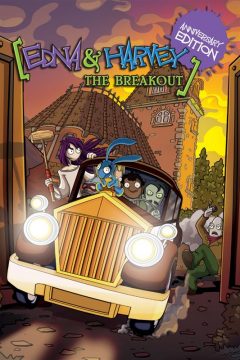
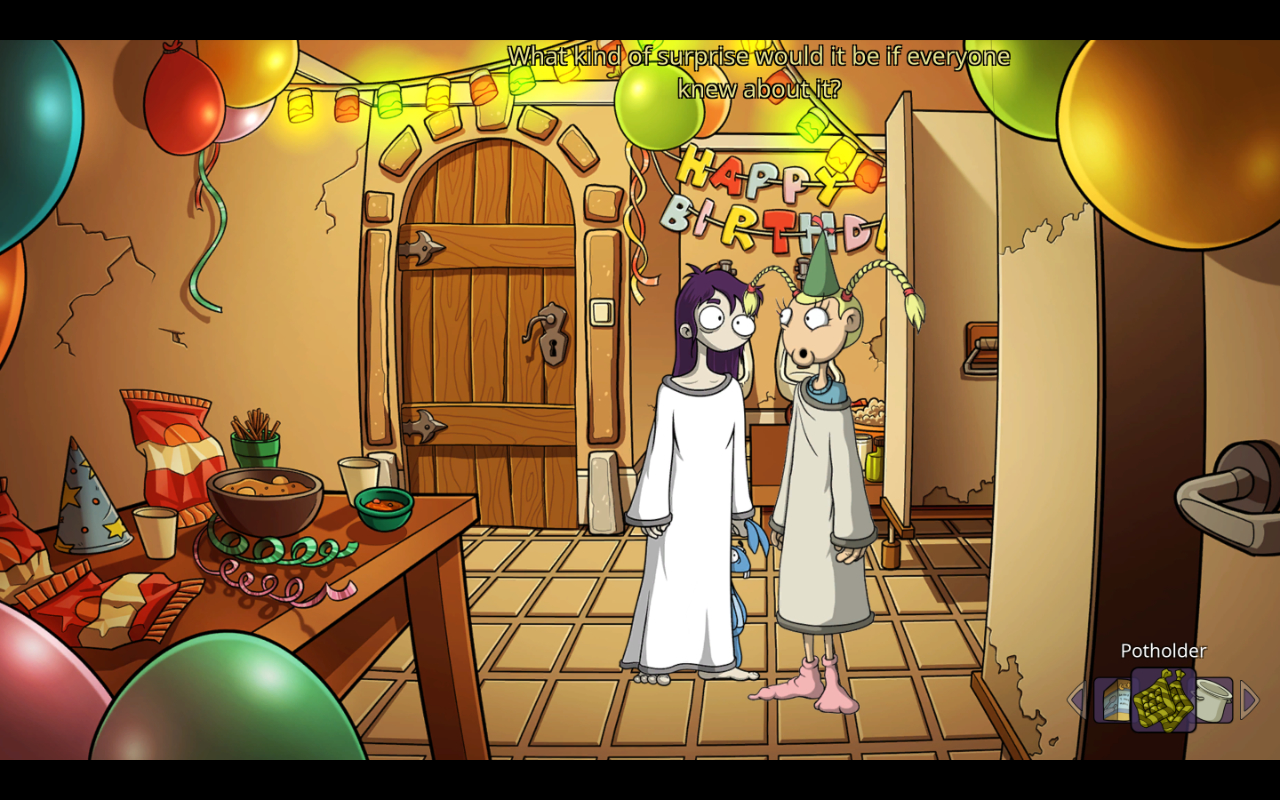
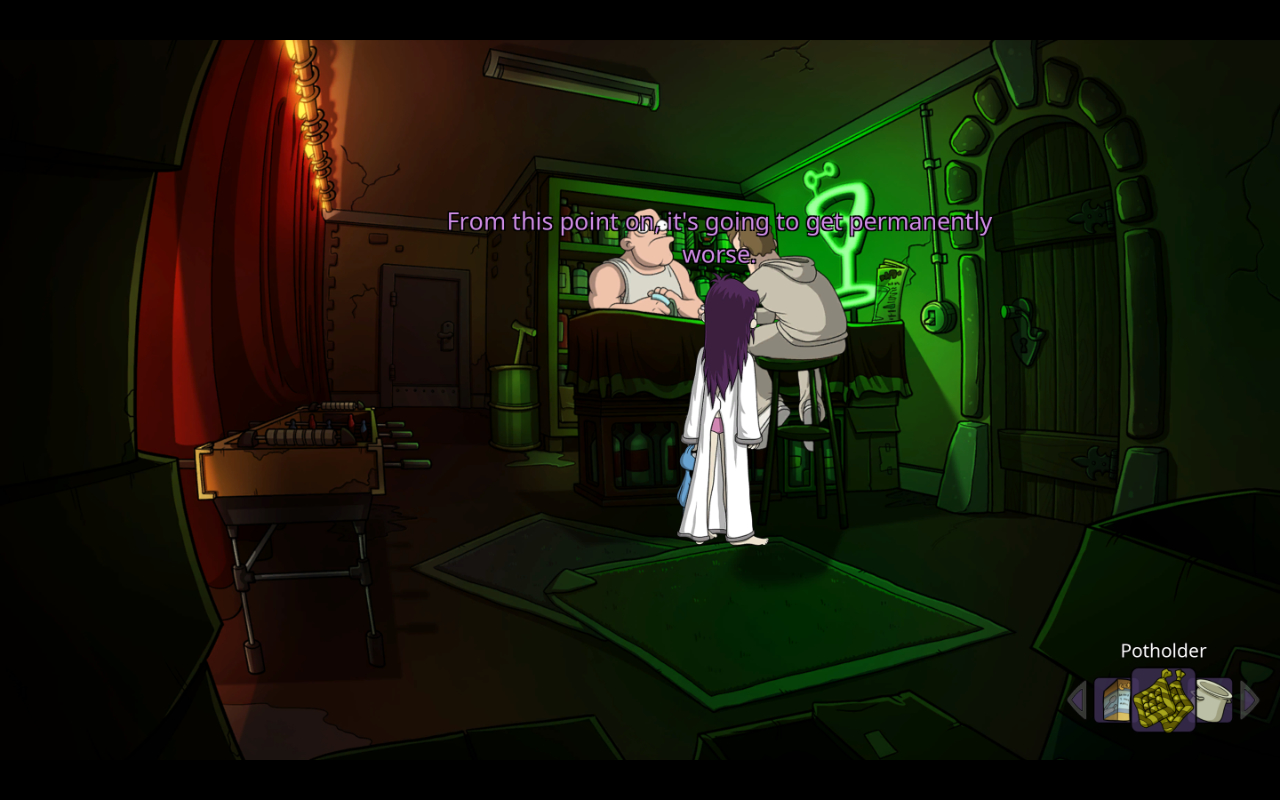
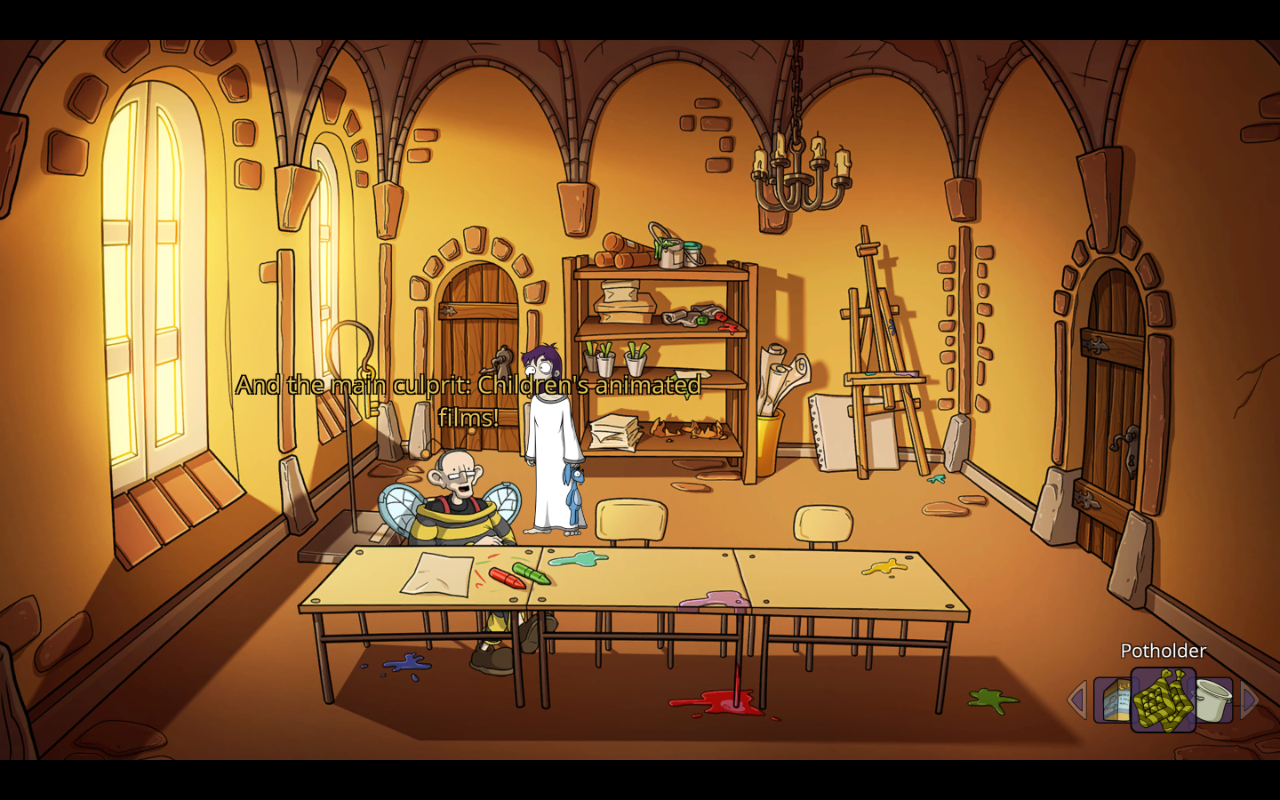
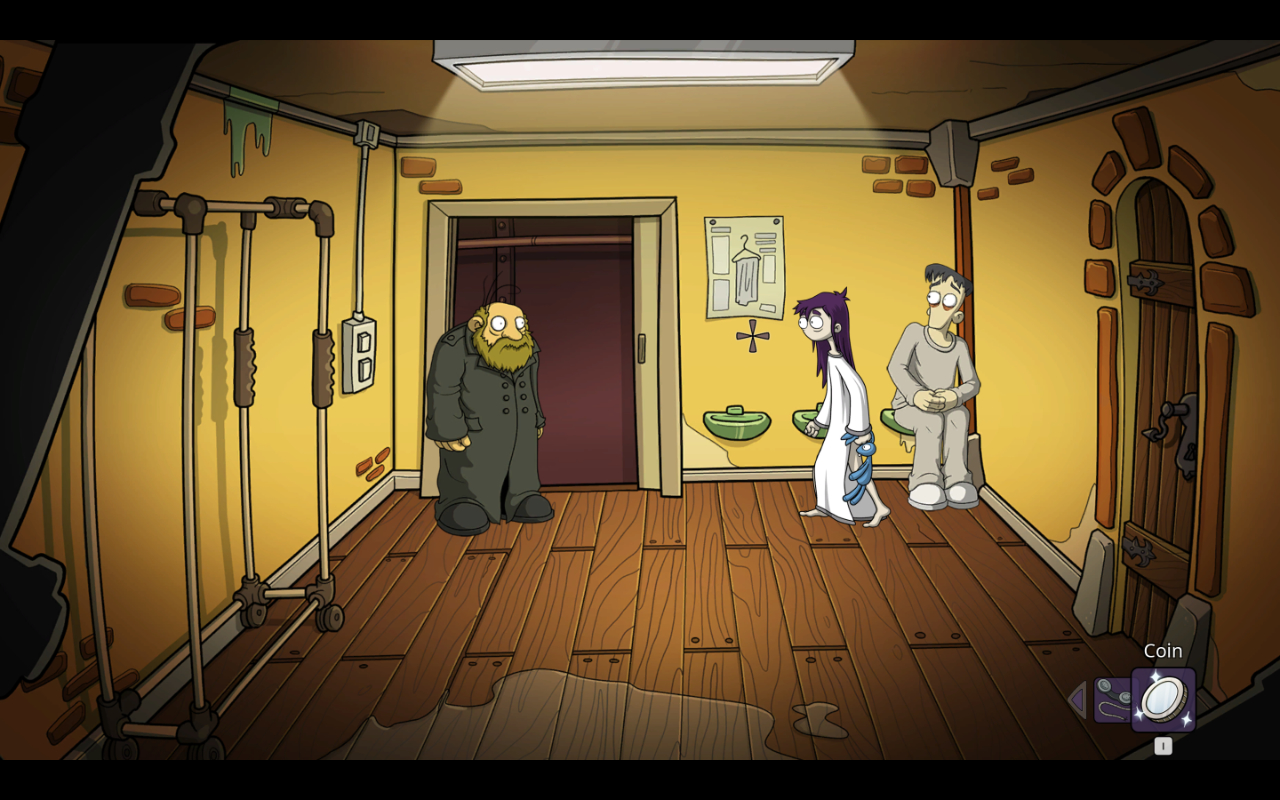
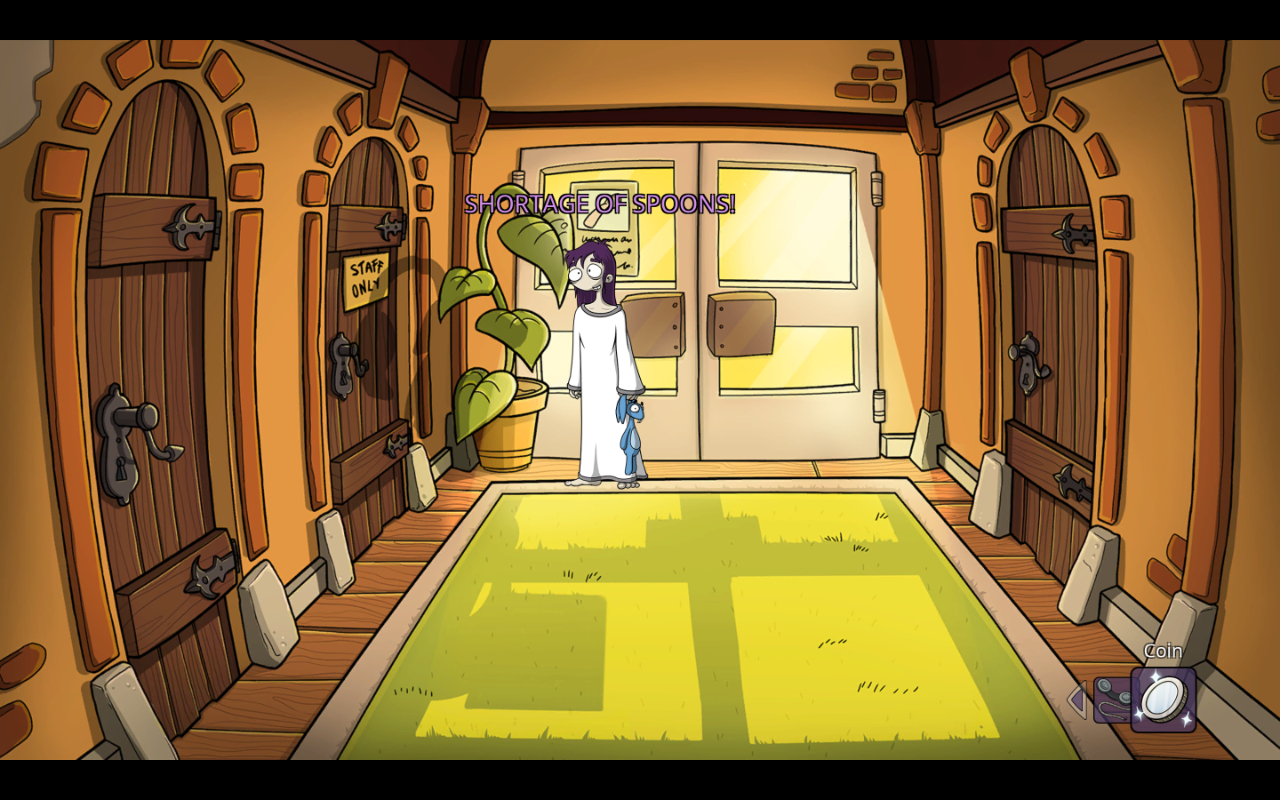
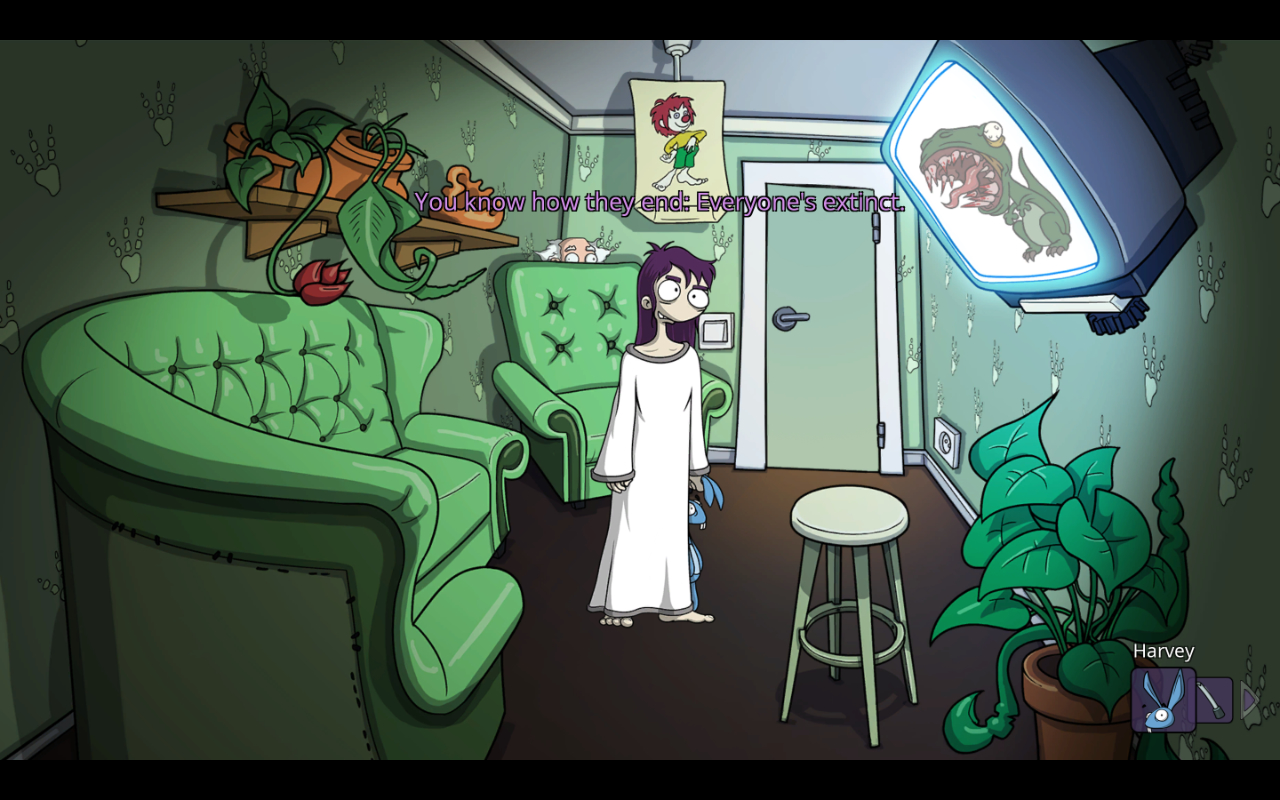
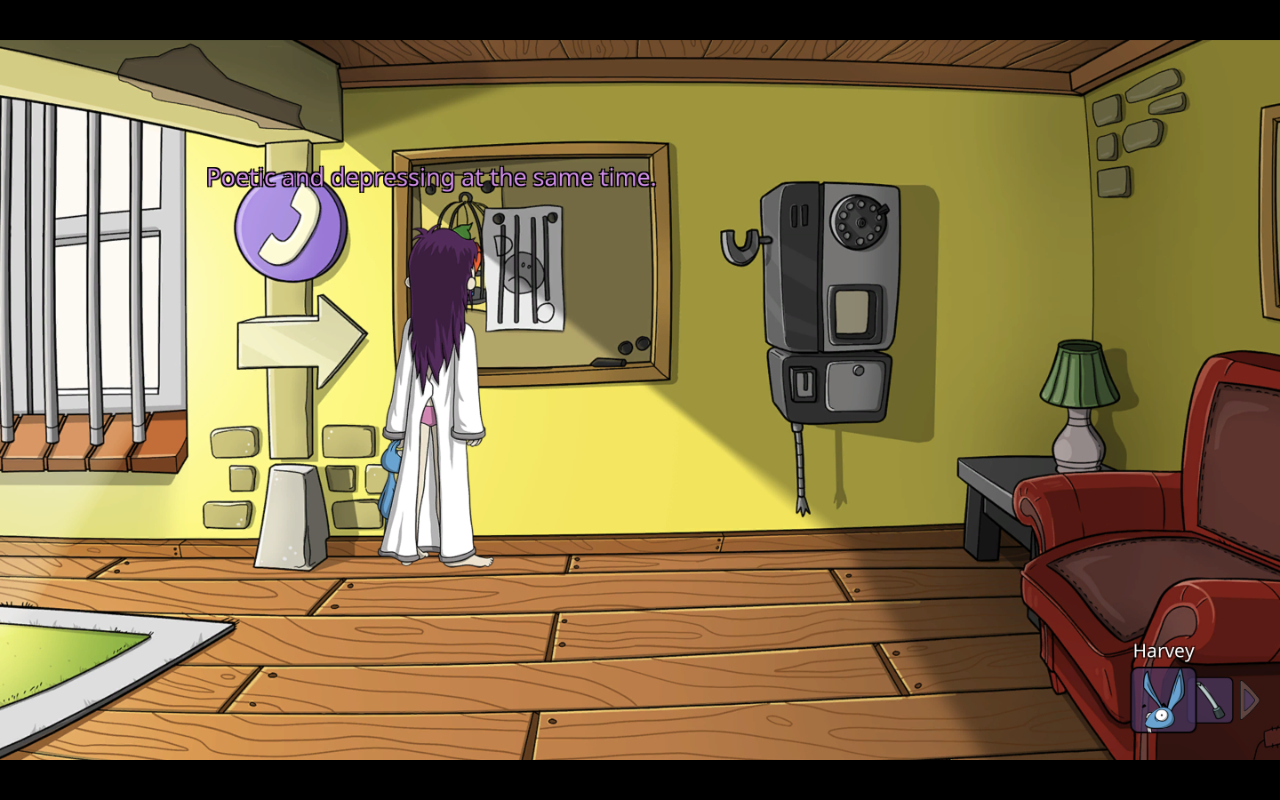
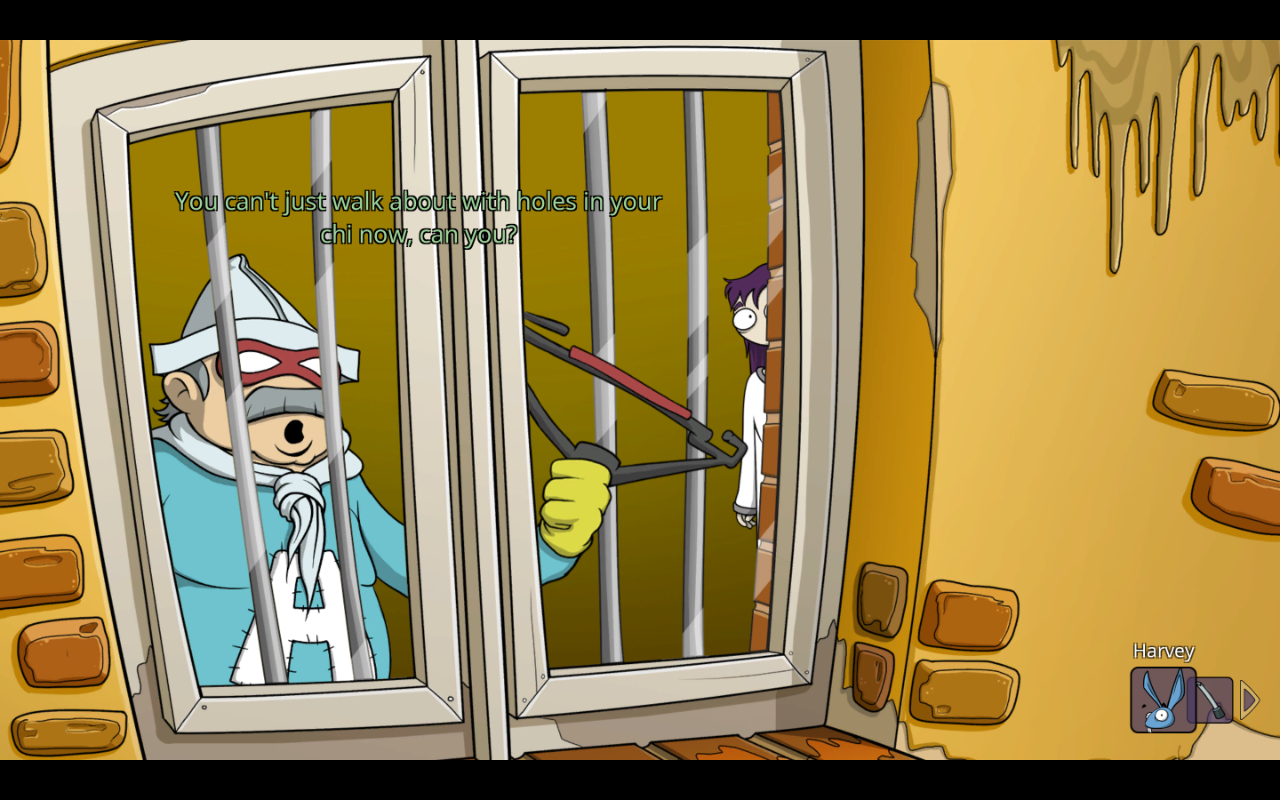
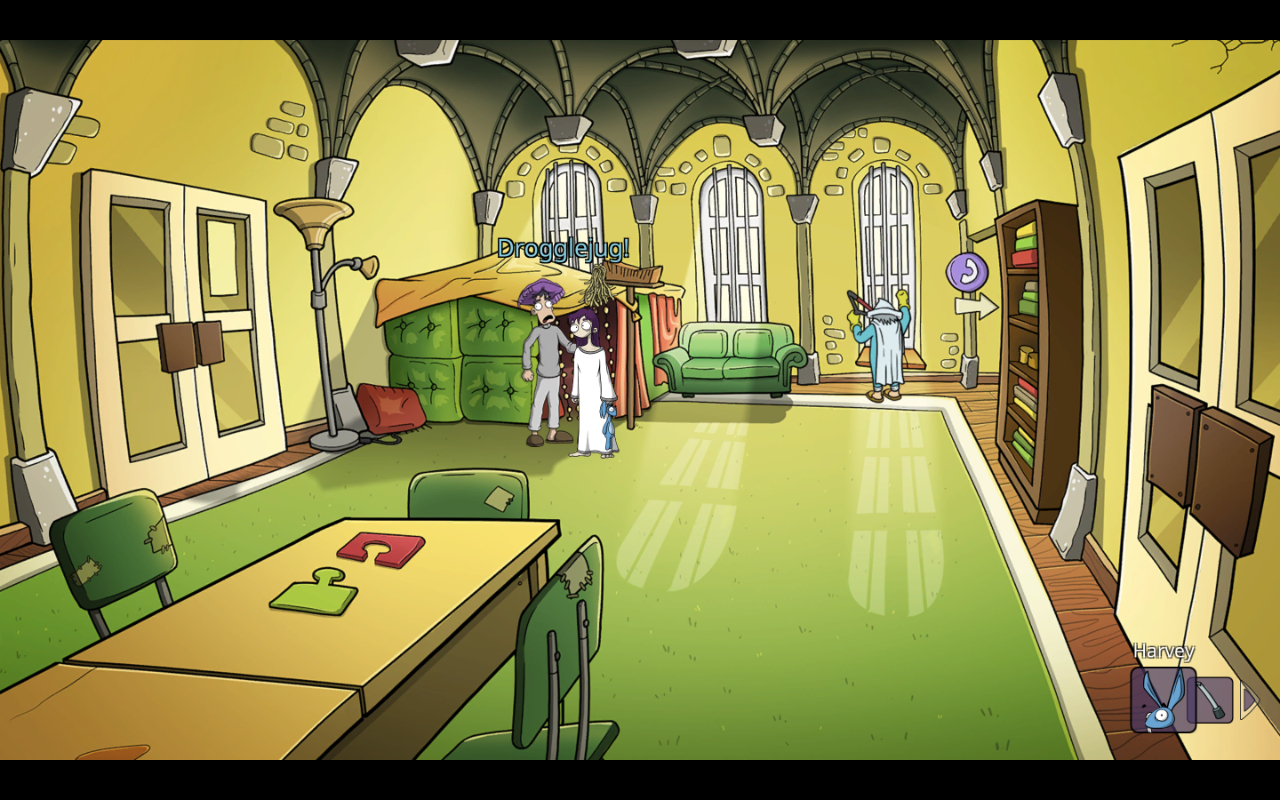
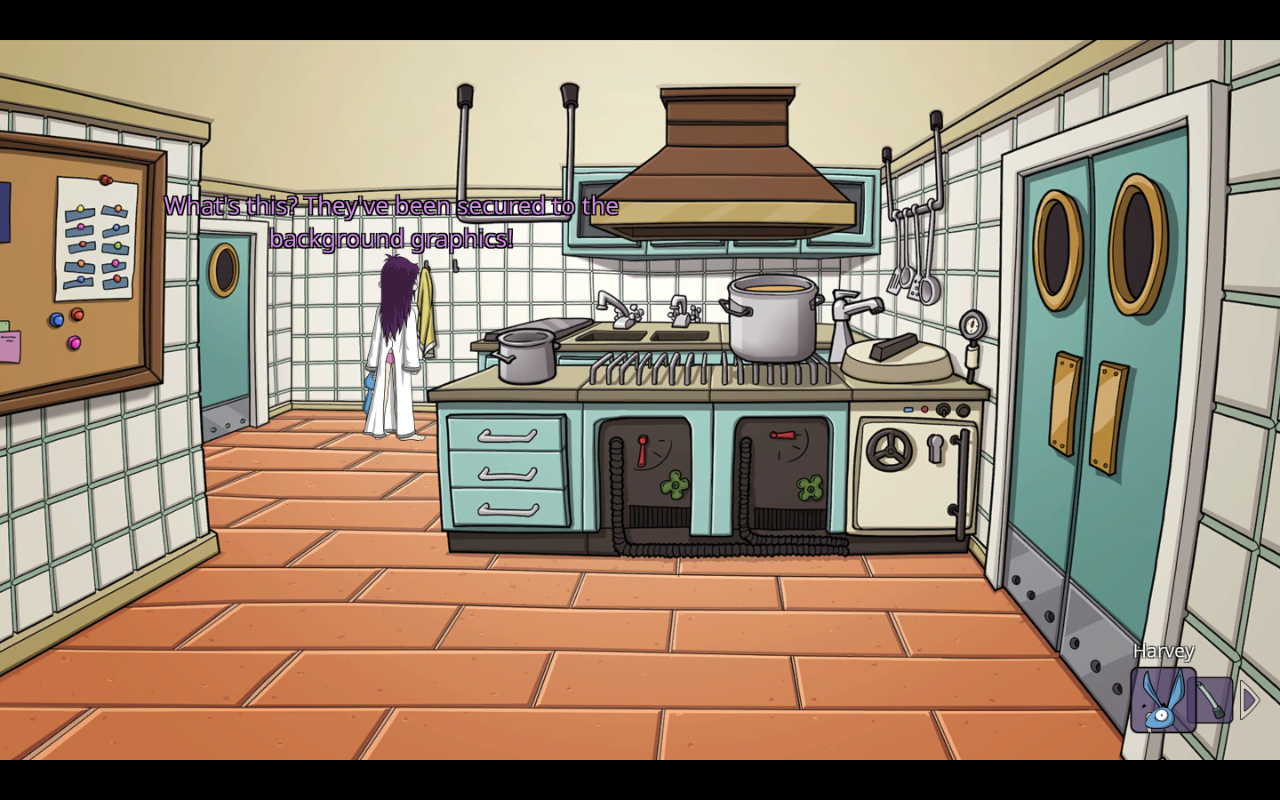
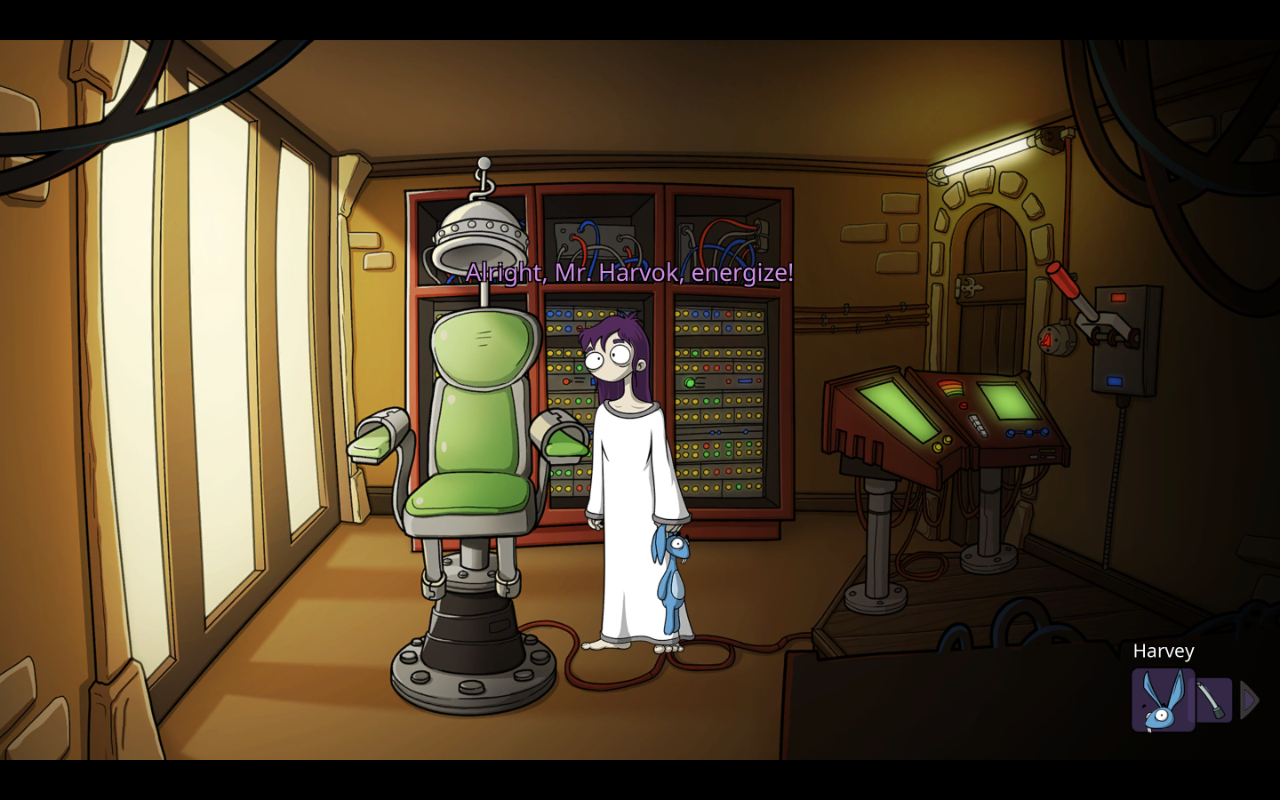
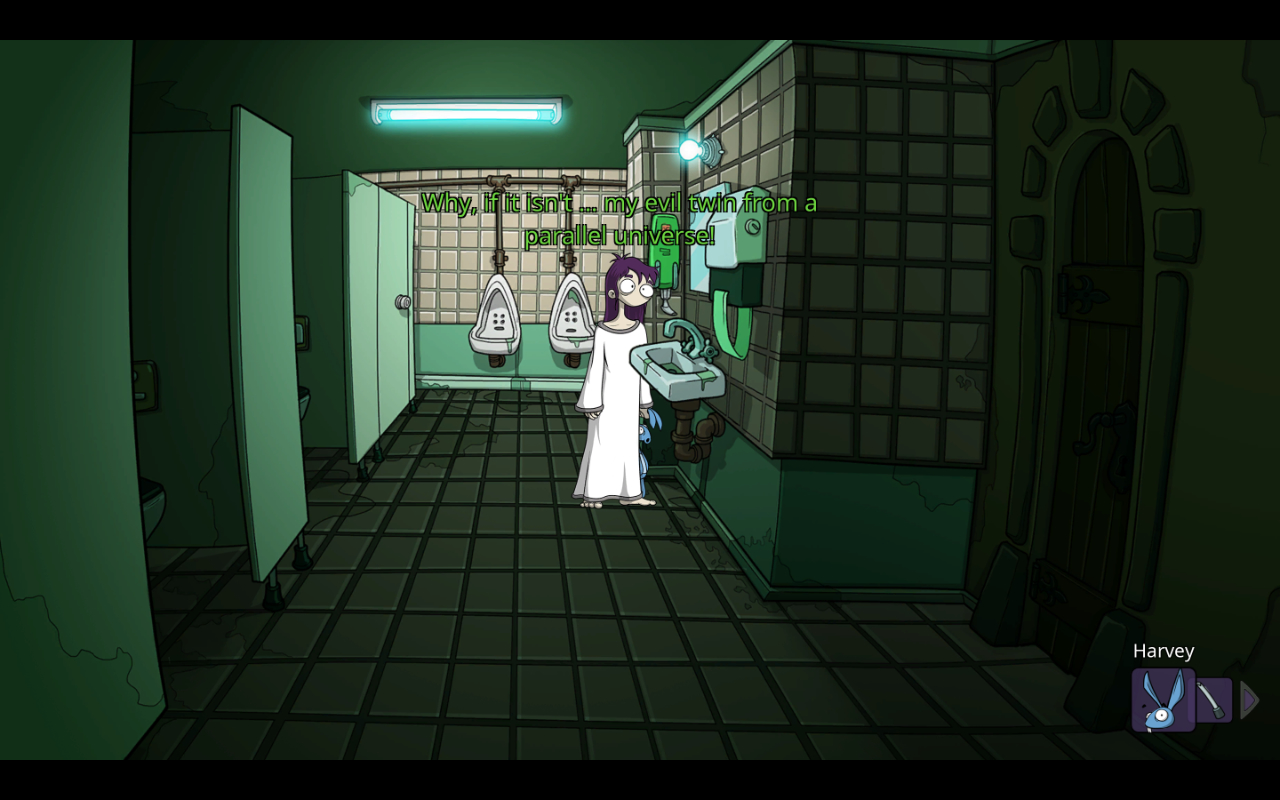
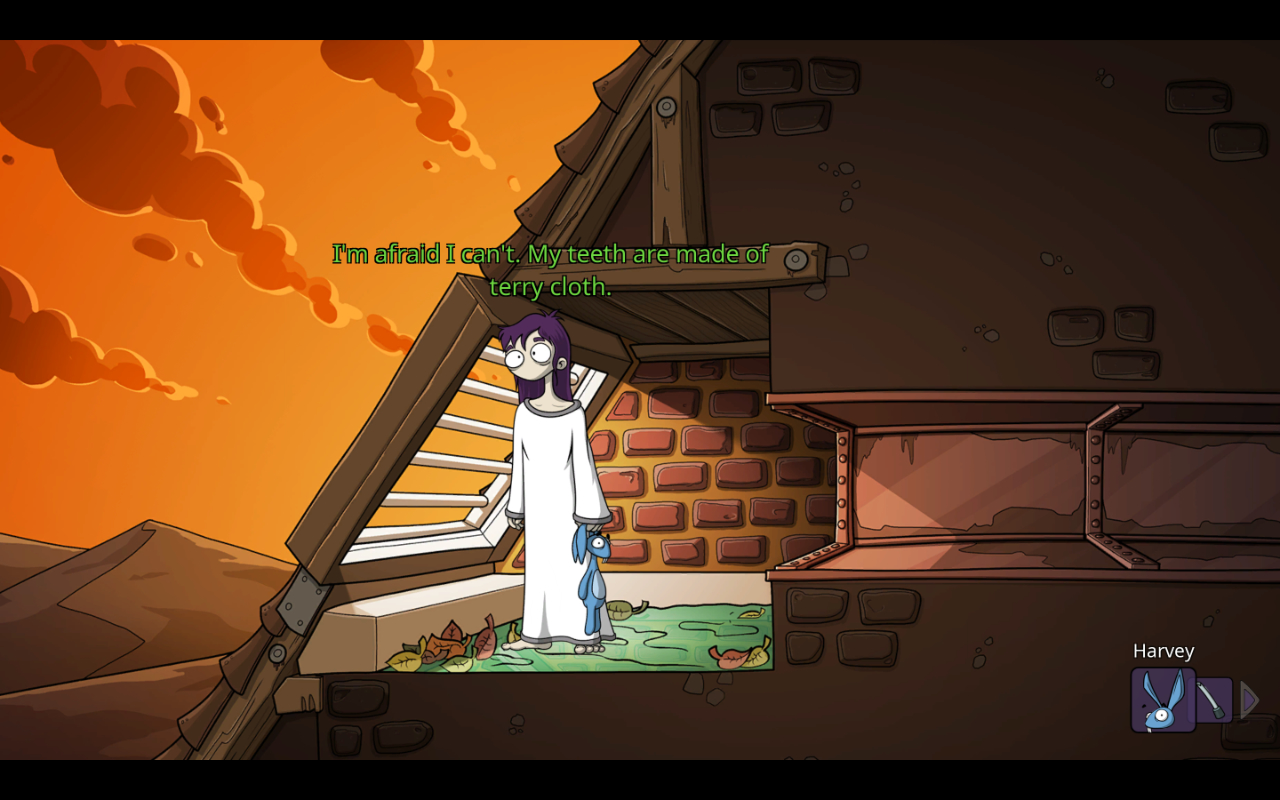
Screenshots used for this article, unless stated otherwise, are from the 10th anniversary remake, which redid all the illustrations and backgrounds to look better on widescreen monitors.
Daedalic Entertainment, once one of the torch bearers for classic point and click adventure games in the late 2000s and early 2010s, is not doing so great these days. In fact, they pretty much don’t exist as a developer anymore, if anything at all, and you can blame the death nail being the infamous Gollum disaster. The studio’s founder and creative lead also left around the time of the game’s development to go back into his old music work, which was probably the time it became clear the soul of the place was gone.
Jan Müller-Michaelis, aka Jan Baumann, aka Poki, was one of the most interesting creative leads in the modern gaming world, for good and bad, and you could really tell when a script had his unique, if at times edgy white boy, touch. We’ve covered about all his gaming work before, with two exceptions: The first original series he would help steward is Edna & Harvey.
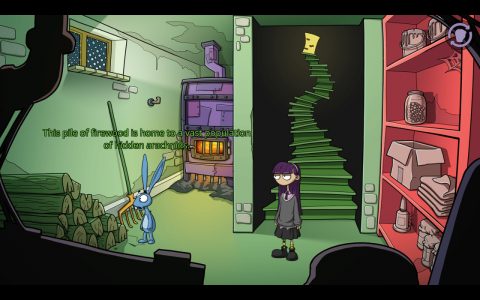
With Daedalic in the state it is in now, it felt appropriate to finally take a look at these two games, and you might be surprised by how very much Poki was in his zone even this early on. The first game from the studio, Edna & Harvey: The Breakout is a genuine love letter to old adventure games (very specifically LucasArts) that still manages to go to some very unexpected places, a quality the studio would manage for many years.
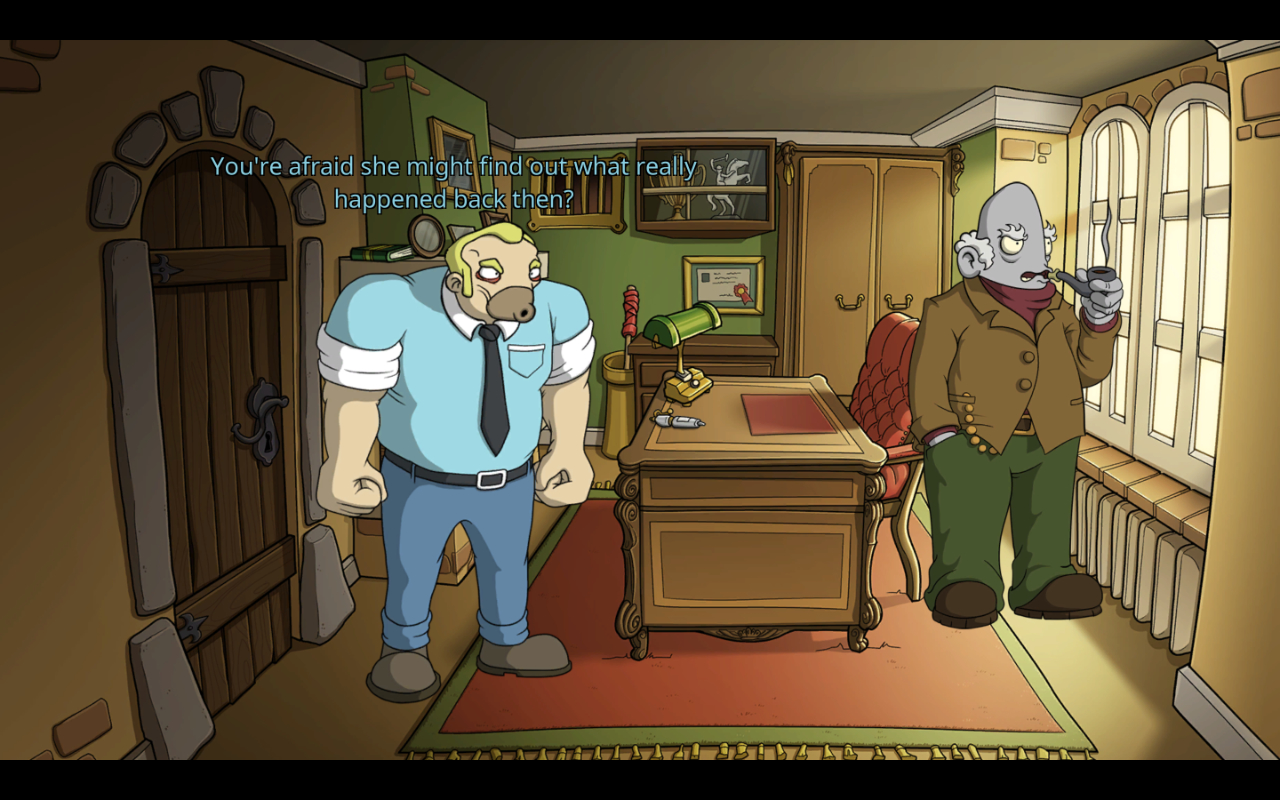
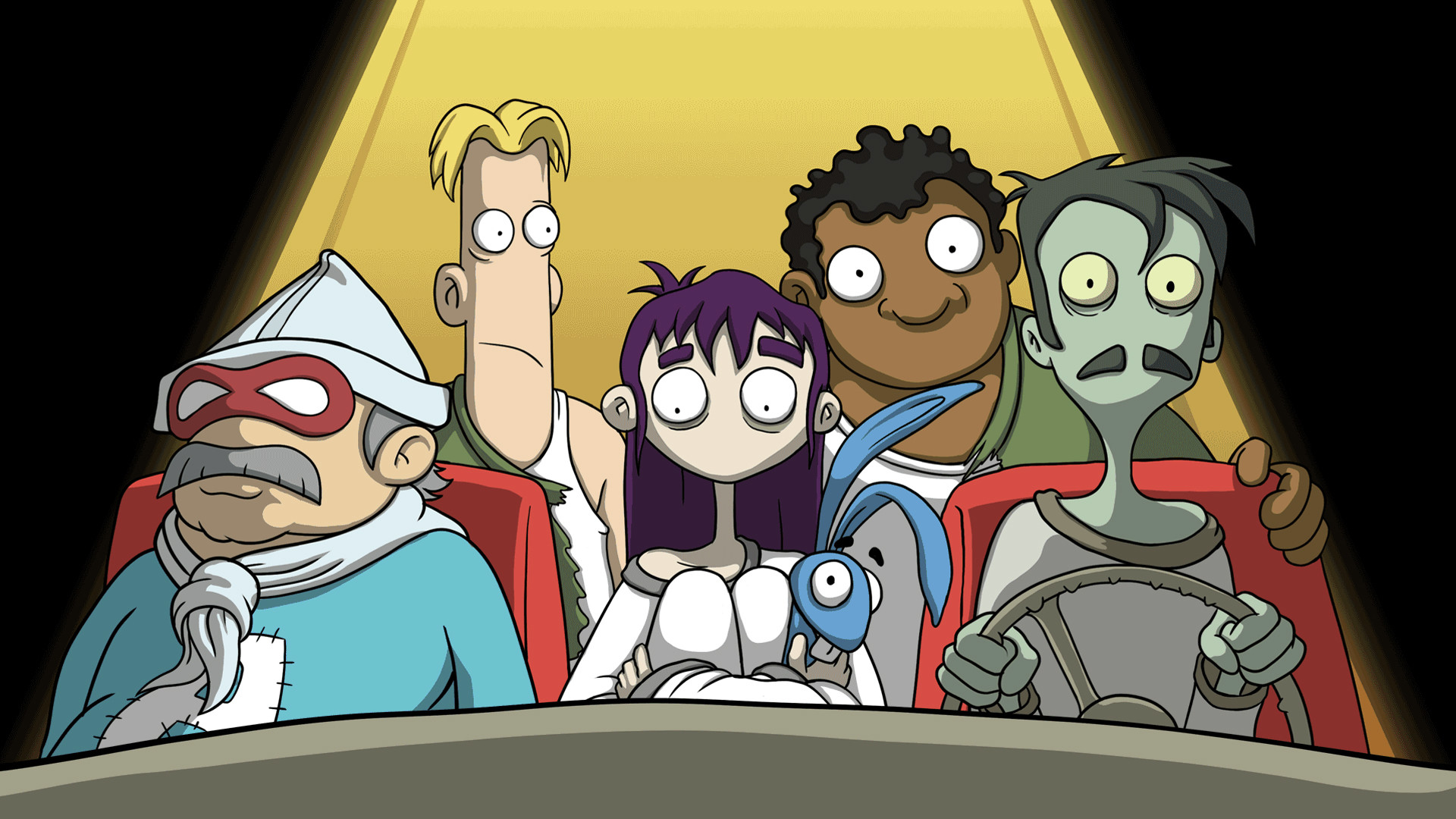
The story follows a girl named Edna Konrad, being kept in an asylum for reasons unclear to her. Thanks to her stuffed rabbit that she imagines talks to her, the titular Harvey, she does manage to understand that whatever led her here has something to do with the corrupt Dr. Horatio Marcel in charge of the place. After a trip to his office, she realizes her situation has something to do with the death of Dr. Marcel’s toad of a son and her father taking the fall for that. The two become motivated to figure out the truth, escape, and bring Marcel to justice, though that first requires doing various ridiculous point and click puzzles around the asylum’s eccentric patients.
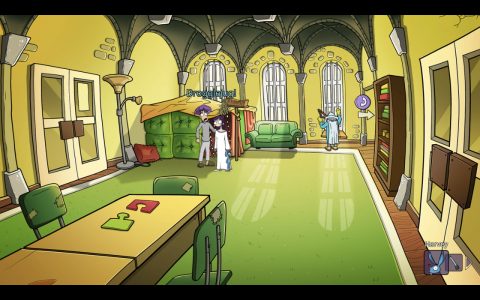
The Breakout gives a strong first impression. Edna and Harvey make for a fun and likable duo of weirdos, having the necessary zany quality for the comedy while both being grounded in their motivations. You do want to root for them, which makes later revelations in the game’s final chapters hit very hard. Even the wacky asylum patients get some characterization and layers that make several of them sympathetic, often for the sake of a joke, but it goes a ways to making them all likable as people and not just wacky gags. There’s some powerful Monkey Island energy here, a dash of the first and second game, along with Michaelis’ understanding of character and tone switch ups.
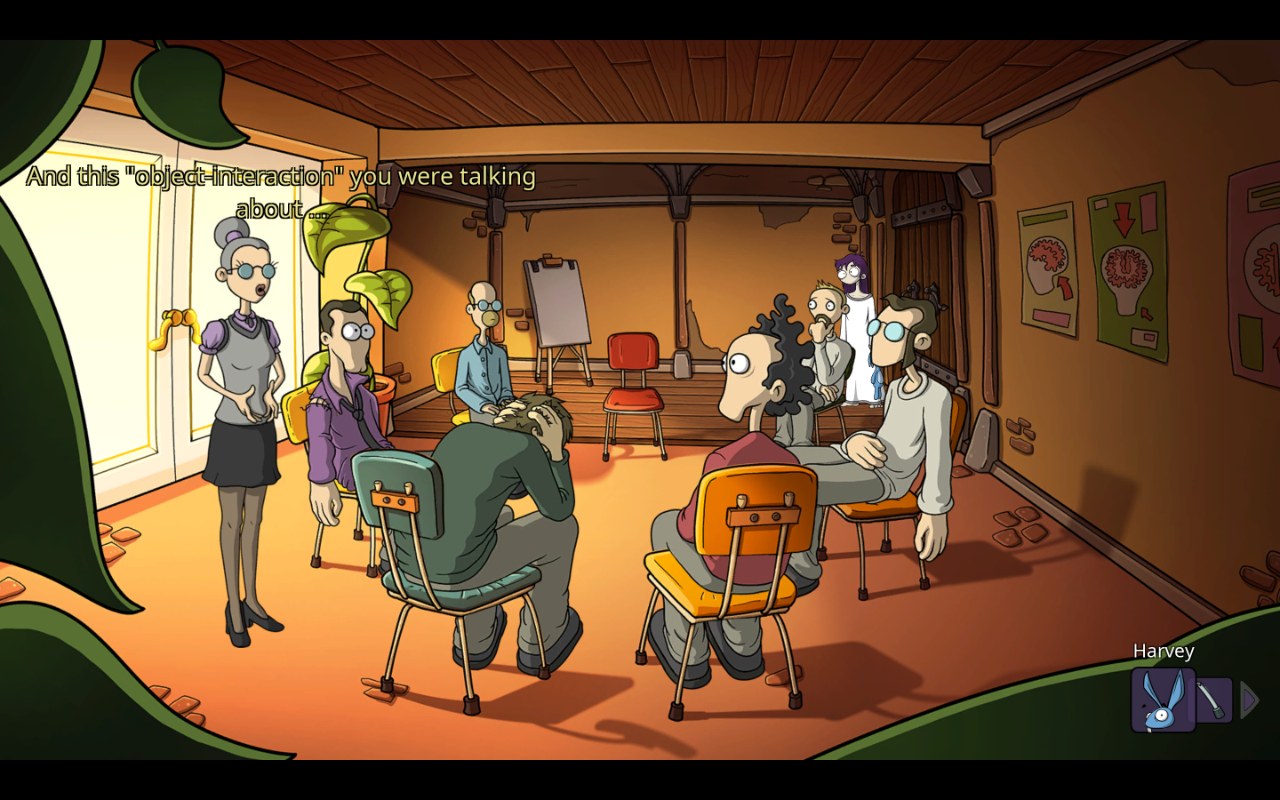
Even for a first go around, Michaelis already established what would be his game writing signature of re-contextualizing twists and a bit of meta exploration of established point and click adventure tropes to genuinely meaningful effect. Some of his lesser tendencies to lean into shock or offensive humor are more reeled in here, thankfully. It helps that he takes time to poke fun at himself with a guest appearance as a patient in group therapy for game designers (“This is for the really messed up cases”), putting himself in the asylum with the surprisingly humanized (if wacky) patients.
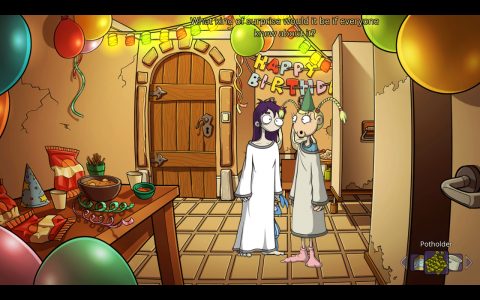
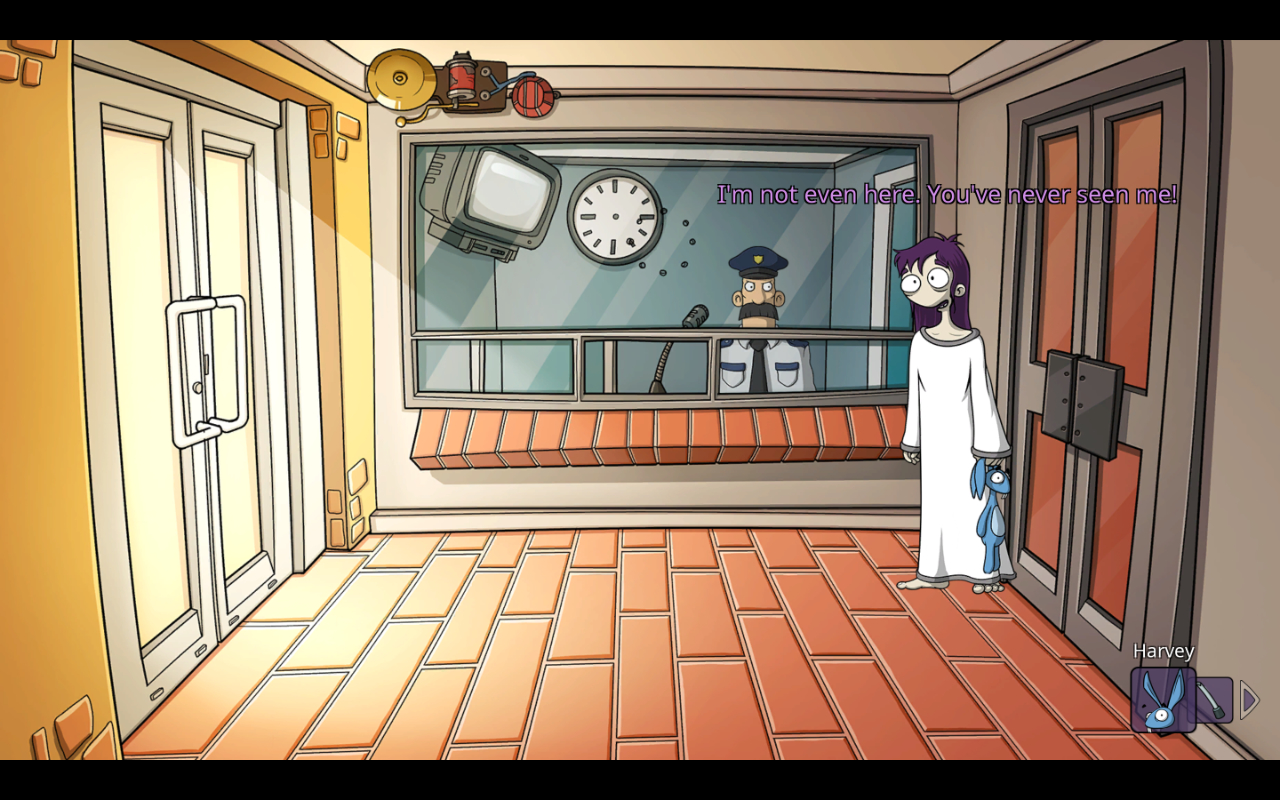
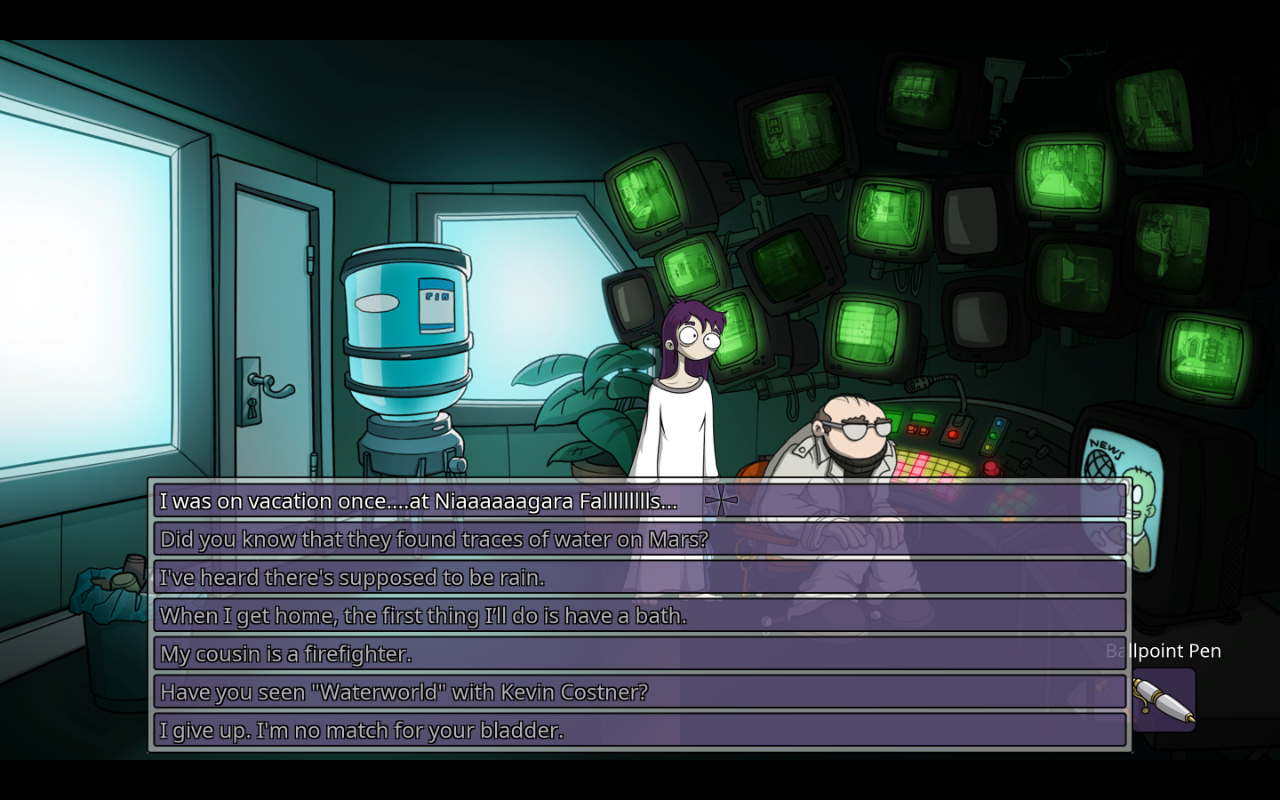
It helps there’s a ton of just flat out hilarious bits, most of them completely optional in surprisingly long dialog trees. A major stand out is definitely the guard in the camera monitor room who really has to pee, and you can probably piece together the comedy that ensues (though you may not expect a reference to Kevin Costner’s Waterworld). The game isn’t terribly long, but the open ended nature of exploring the asylum and the mess of things and people to interact with really help sell scope in the adventure.
It also helps that it knows how to handle tone shifts, like a particularly strong scene where Edna has a mild breakdown after finding a shrine dedicated to Marcel’s son. Despite how terrible the kid is in flashbacks, it’s made very clear that his death had a huge effect on everyone involved, Edna included, and really helps push how much you want to see her succeed. The fact he’s still getting insulted by both Harvey and a crying Edna the entire time helps keep the comedy present without overpowering the drama, a difficult balancing act managed well.
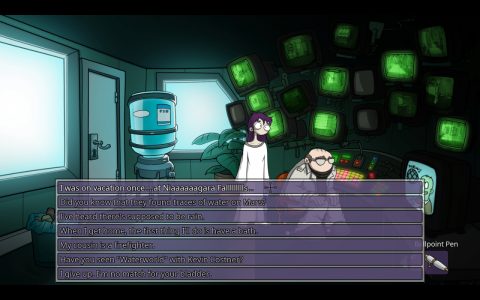
Puzzle design is also quite solid for a Daedalic title. There’s generally good pacing and puzzle grouping most of the time, and the story is paced into proper chunks that gets rid of unnecessary items. That said, there are points where it starts to drag due to having to navigate the asylum. It’s a pretty big layout with a lot of doors and floors to keep track of, and it starts to get really tedious once Marcel arrives with his extra men. Guards get placed in awkward spots, requiring Edna to either have to vandalize a car or mess with a gumball machine in order to move around the lobby area, a central point you need to visit to move through some important spots. When you don’t know exactly where you need to go next, it gets exhausting. Thank goodness the last two areas are more compact.
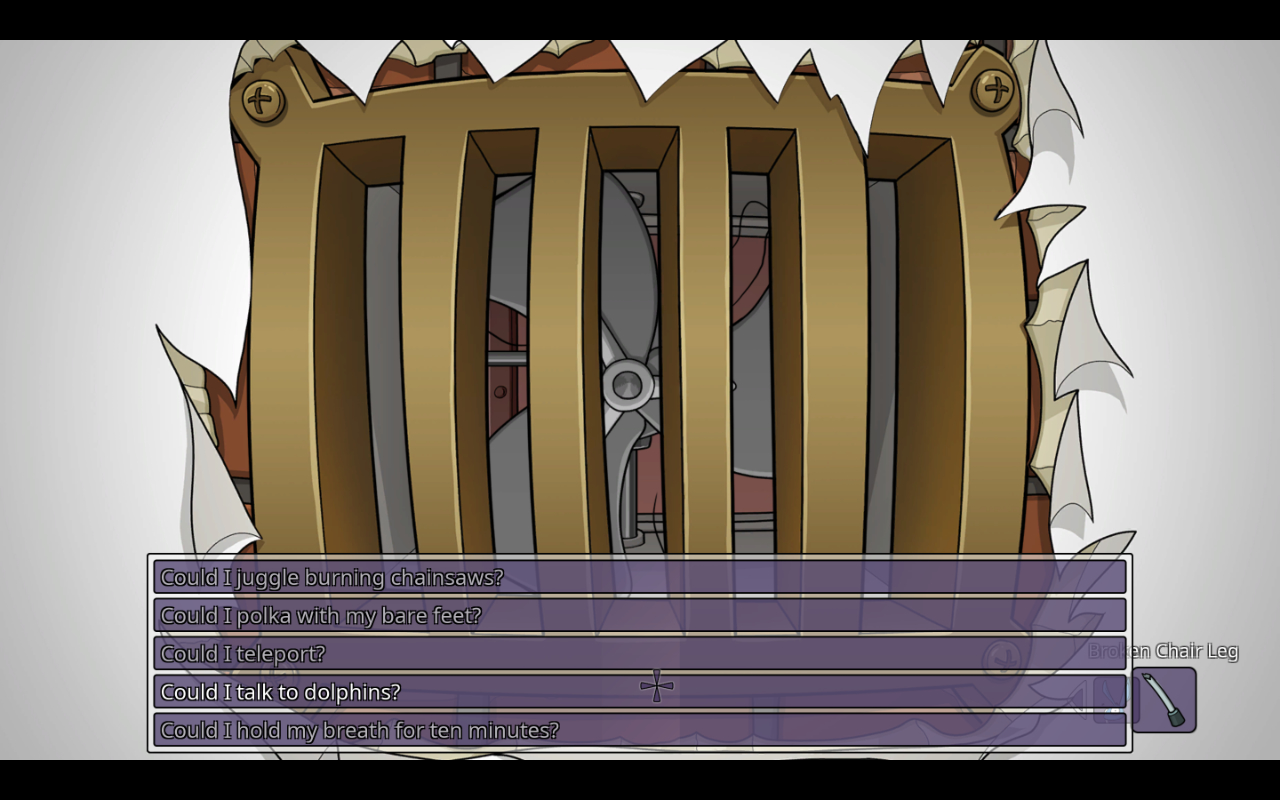
Something interesting about this game is that we don’t have the usual stripped down Daedalic design. Instead of simply having an inventory and streamlined click interactions, we get an old school “verb” interaction system. Edna has a variety of actions and ways to interact with things, and Harvey brings an even larger layer to it, as he can sort of change the property of an item being used by making him use it. There’s an absurd number of actions you can take – which is encouraged by the even more absurd number of unique lines for trying something. That definitely helps sell just how large the game feels, and thankfully doesn’t cause puzzles to drag often since most have pretty sensible solutions, or reward you with tons more jokes for experimenting.
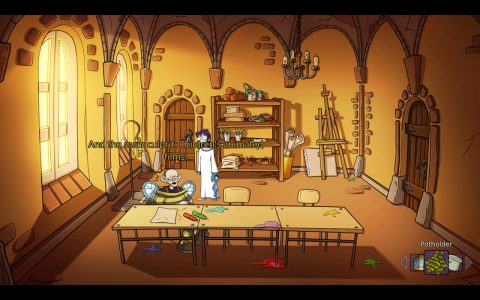
There’s also some unique flashback scenes called “tempomorphing” scenes where Edna explores a moment in her memories with Harvey’s help. The gimmick is you get direct control of both a child Edna and Harvey, each having actions they can do to help solve puzzles and learn new information. They work more as a storytelling hook than a solid puzzle mechanic, though. The one interesting shake up is from a memory about a time in class where only Harvey can move around freely, with the clever solution being finding things to distract Edna so she can be put in a closet where they can work together on something. It’s about as unique as these sequences get, which is odd with how much focus is put on them as a unique mechanic.
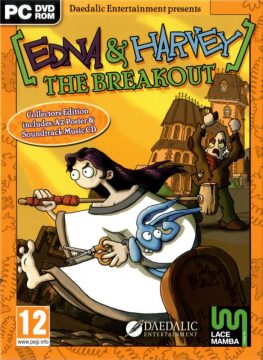
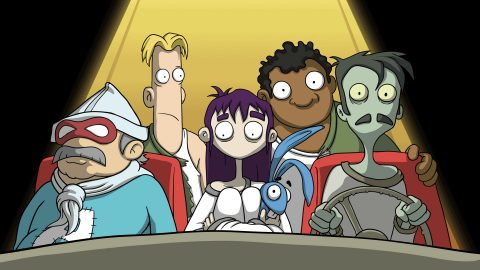
There’s two versions of the game out there now – the original and a 10th anniversary edition. The original really shows its age with a lack of widescreen support, and that’s not even getting into the rough doodles used to represent the characters. You can tell this was early in Michaelis’ career, the exaggerated and goofy eyes and mouths common in the later Deponia art is present but extremely crude. One need only look at Edna’s barely defined bare feet in her sprite to see the lack of polish.
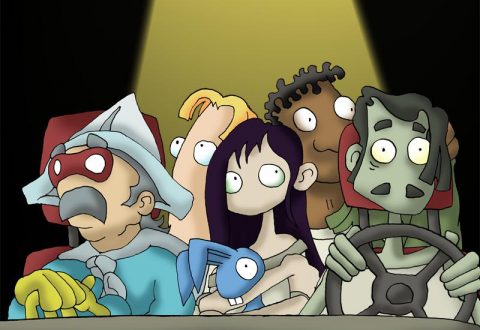
Original Version
Anniversary Edition
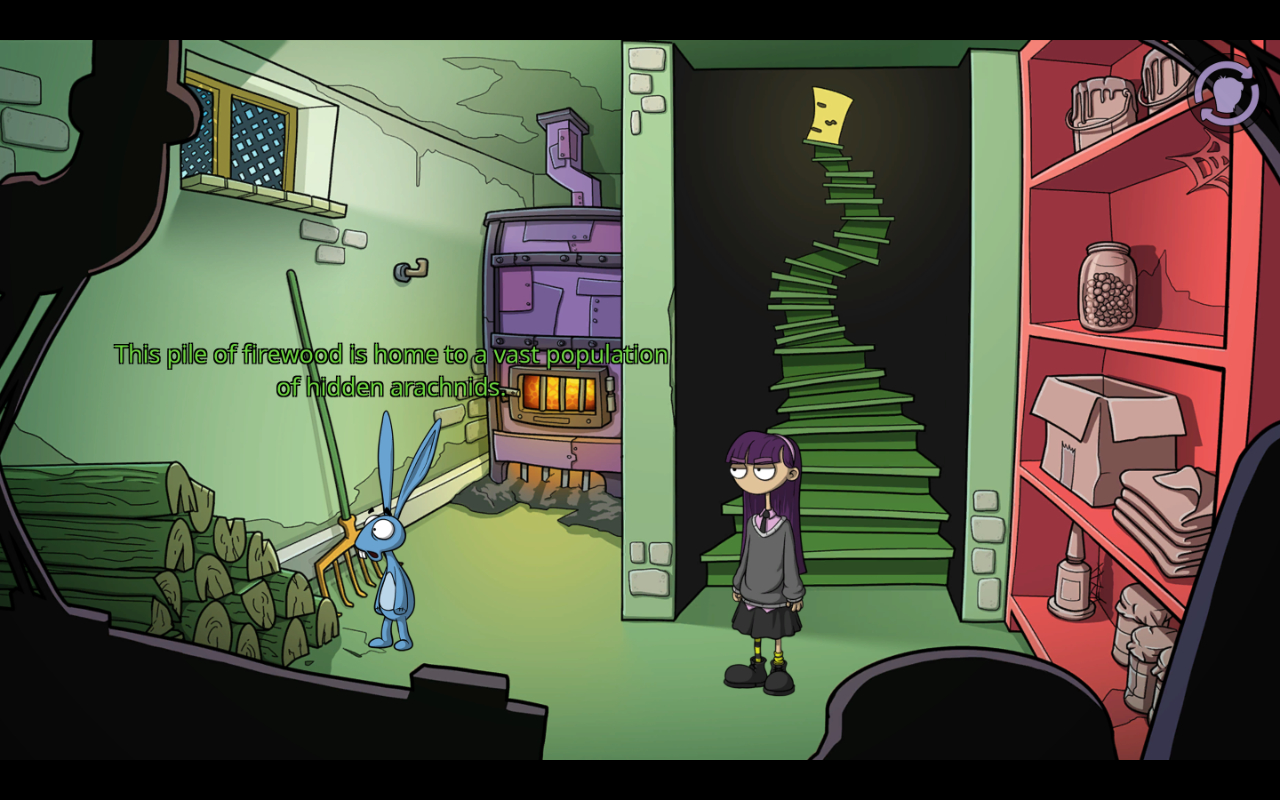
The remake version redraws everything, giving widescreen assets and moody lighting and shadows for the backgrounds and characters. The designs of the characters remain mostly faithful, but the details are touched up in the sketchier spots. The one significant change is that Edna’s original angry looking default pose has been switched with a more oblivious expression that better fits her actual character. Music does its job, and we have the usual iffy but expressive English dub we expect from Daedalic, though with no vocal theme from Michaelis this go around.
The game holds up quite well with its remake version, and well worth a look. While it has an odd pacing issue by over-complicating exploration in the second half, it’s an overall enjoyable time that might make you feel something unexpected once the story reveals its hand. Definitely go for the 10th anniversary release, especially for its touched up translation.
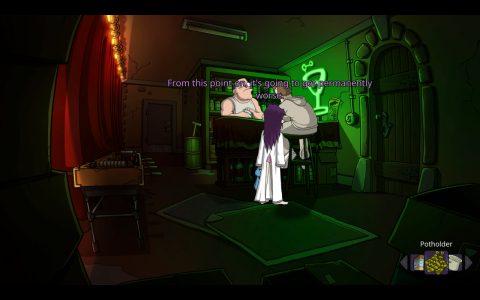
As for that sequel…well, it wasn’t supposed to be a sequel, it kind of isn’t a sequel, but it definitely is one of the most interesting games the studio ever released, for a lot of bizarre reasons.