

How much can change in a few years. While it had never really died, the adventure game genre experienced a massive resurgence in the late 00s thanks to the popularity of handheld and mobile devices and a greater ability for developers of all walks to self-publish their games via digital distribution. The immense success of Broken Sword 1 and 2’s re-releases, especially the mobile versions, put Revolution in a financially and creatively secure position to create the first game in the series since Angel of Death.
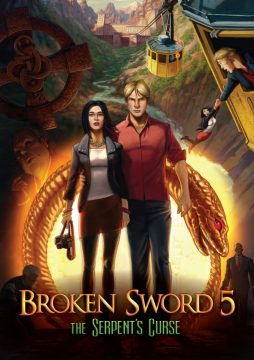
No more 3D action-adventures, this was going straight back to the classic point-and-click style that defined those original titles. And with additional funding provided by a Kickstarter campaign, Revolution were able to make it as big a comeback as they could (though they were hampered by a somewhat sluggish development process). Eventually the sequel would be released across two parts as Broken Sword 5: The Serpent’s Curse, a pleasantly enjoyable but safe adventure game throwback.
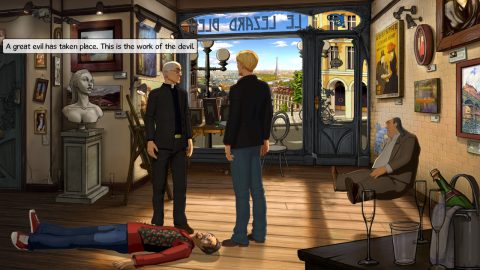
George has managed to find work as an insurance assessor, and is invited to an art exhibition at Le Bleu Lizard in Paris. Of course Nico’s there to report on the exhibition, but they barely have time to catch up when a pizza delivery man bursts in with a gun. He takes one of the paintings, an enigmatic religious work named “La Maledicció”, and shoots the gallery owner dead in the process. George’s insurance company is responsible for “La Maledicció”, so George and Nico try to recover the painting and apprehend the killer. But it’s never that simple, is it? In typical fashion, the painting hides a deep world-altering secret – this time rooted in the history and beliefs of Gnosticism – that will take them across Europe to London, Catalonia, and Iraq.
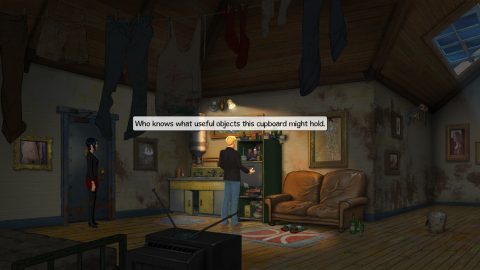
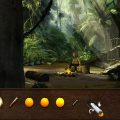
The Serpent’s Curse returns to the point-and-click gameplay style seen in the first two Broken Swords, using a cursor to move around, talk to people, interact with or examine objects, and use items you’ve picked up in your inventory. After the awkward controls and constantly shifting cameras of the 3D games, it’s pleasing to return to this simple and effective interface.
That’s not to say it plays exactly the same, as it carries over the hint system introduced in 1 and 2’s more recent ports. At any time, you can hover the cursor over the top of the screen and click on a question mark that gives you a hint on how to solve whatever puzzle you’re stuck on, with the option to bring up increasingly blatant tips if you’re really stumped. While it means puzzles aren’t as baffling anymore, it’s a much appreciated option that allows everyone to enjoy the adventure and atmosphere at their own pace.
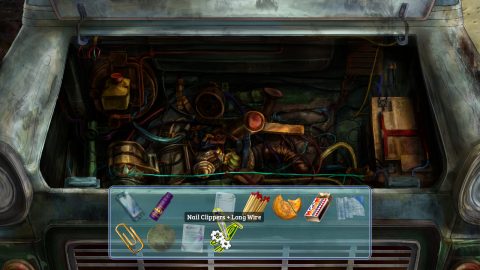
And it’s likely that you might need to use it, because there’s an impressive variety of puzzles. Plenty of them require the standard using or combining of items, with straightforward solutions and advice to garner by examining the area or talking to people. But as the adventure goes on, you’ll encounter a good number of uniquely designed conundrums that require paying close attention in order to solve them. Some of these can be unfortunately tedious, which isn’t helped by how the glacial animation speed drags things out.
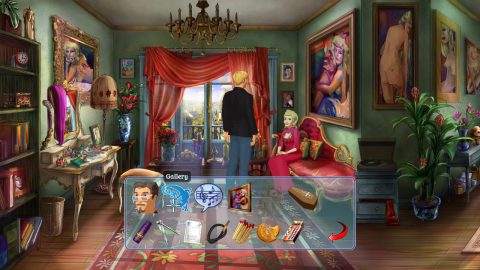
However, there’s a couple of removals that are more keenly felt. For example, you no longer have a diary to keep track of the plot and what you need to do. That’s a shame considering it also gave you some extra insight into the characters’ thoughts, and while there’s a character gallery that provides a quick overview of everyone you meet, it isn’t the same. A bigger change is that you can’t die; there’s never any situation where you’ll be placed in mortal peril and have to react quickly.
Although Broken Sword was never eager to kill you, the risk of death helped to heighten the stakes, and its absence here makes for a more comfortable time but one where the threats carry very little weight. This really harms the villains in particular, who are already quite bland and paper-thin. That they can’t hurt you, combined with how infrequently they appear, results in them lacking much presence and lowering the weight of what’s happening despite the usual world-threatening conspiracy.
The Serpent’s Curse in general has a more relaxed feeling, with a slow beginning as you get reacquainted with the gameplay and feel of old-school Broken Sword. You bounce back and forth between a few locations, though you spend perhaps too much time in the art gallery. That gentle pace is quite nice, livened up by a few charmingly odd folks you encounter like a philosophical café waiter who hates all beverages beyond black coffee, the useless forensic investigator Navet, and Hector Laine, the pompous art critic you got drunk back in The Smoking Mirror.
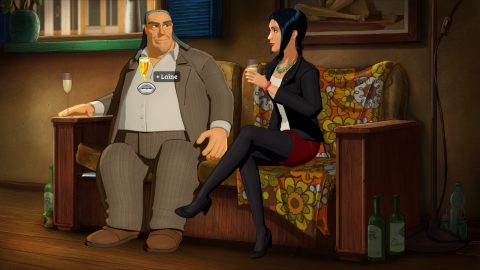
In fact, there’s a whole bunch of familiar faces returning from the first two games (with the rare allusion to happenings in 3 and 4). Laine’s the best of these, as he gets a significantly expanded role for the first half, while everyone else is doing their usual thing. Sometimes that works and it’s fun to catch up with them again, while other times it feels more like they’re here simply to tug on nostalgic heartstrings. One character in particular threads that line so finely it could go either way depending on the player.
But that leisurely speed works against the game once you get into the second half, where the true mystery starts to unravel and takes you to locales full of history such as an abandoned villa and a hidden monastery. Things are moving, but you’re spending a good while in each area and hanging around a smaller bunch of boring characters. The main conflict is rooted in fascinating real-world history as always, the problem is that it plays out in a fairly generic fashion.
The writing overall is better than Angel of Death, but it lacks the sharp wit seen in the first two titles. Conversations can often feel overwritten and flavorless, and while there’s plenty of funny moments, they’re usually more chuckleworthy than gut-busting. At the very least, it’s nice that you can finally show so much of your bulging inventory to characters again, with many distinct reactions for each item and when you show them (most amusing is George’s newfound cockroach buddy Trevor).
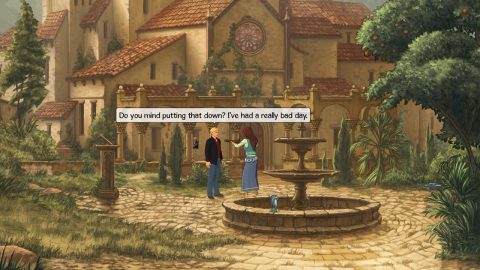
The dialogue’s helped by a solid voice cast who deliver convincing, if occasionally hokey, performances that bring the characters to life. It’s always a joy to hear Rolf Saxon as George, and as to be expected Nico has a brand new voice though it’s pretty decent. Helping to provide more familiar vibes is the return of Barrington Pheloung as the composer, providing a mix of rearranged music from the early titles and brand new tunes that gently punctuate the many steps of your adventure. This would be Pheloung’s last work on the series before he passed away in 2019, so it’s good that he got the chance to make his musical mark last time.
Visually, the game goes for something of a mixed media approach, with 3D cel-shaded characters rendered as sprites presented against vibrantly pretty hand-drawn backgrounds. Details such as real-time highlights and shadows allow the characters to blend naturally into their world, which helps to offset the more rudimentary animations. Sometimes there’s so much detail in the backgrounds that it’s easy to miss important objects, though that won’t be a bother to more experienced adventurers.
The Serpent’s Curse is certainly an improvement over Angel of Death, presenting fans with a comforting return to form where a lot of the appeal is getting to play a new Broken Sword in the old style. That novelty perhaps isn’t as strong now as it was at the time, considering there hasn’t been a new game since to firmly solidify Broken Sword as being “back”. But with a new title on the way in the form of Parzival’s Stone, along with a new port of the first game, hopefully there’s a more definite future for the series in sight.
SOURCES:
Revolution: The Quest for Game Development Greatness (2022), by Tony Warriner