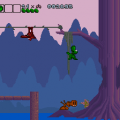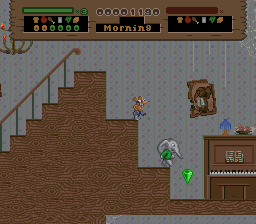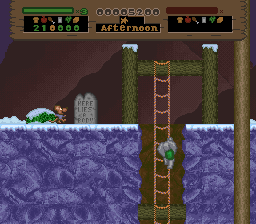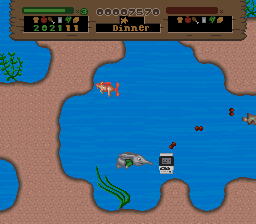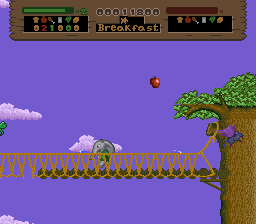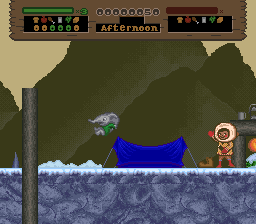
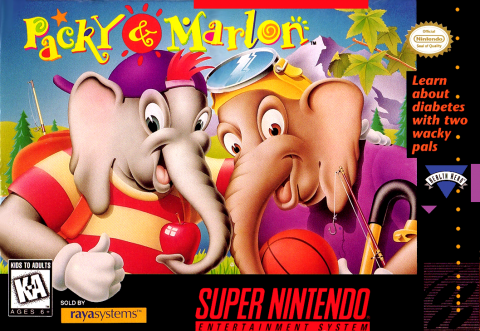
As part of Raya System’s “Health Hero” series of educational action games, WaveQuest created two platformers for the Super Nintendo. While Bronkie the Bronchiasaurus delivers a decent introduction to managing asthma through an okay platformer, Packy & Marlon isn’t able to do the same in its attempts to help players understand and manage diabetes. There’s a lack of meaningful information and consequences provided, and the underlying game is so sluggish and repetitious that it’s hard to recommend.
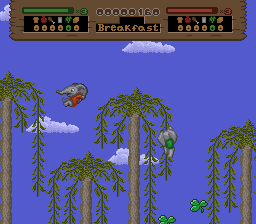
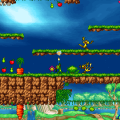
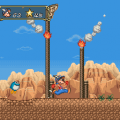
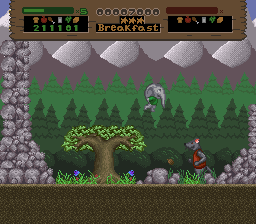
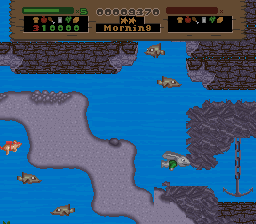
Packy and Marlon are a pair of pachyderm pals attending a diabetic summer camp, but disaster strikes when all the food and medical equipment gets pillaged by rats. It’s up to you to explore the summer camp and rescue that equipment, which are hidden throughout 24 stages that you’ll need to explore by walking, jumping, climbing, and sometimes swimming. You can deal with the various enemies wandering around by jumping on them or shooting them with water, along with more powerful projectiles found in certain areas.
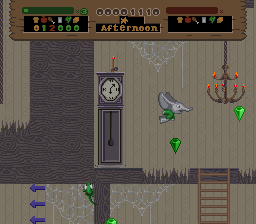
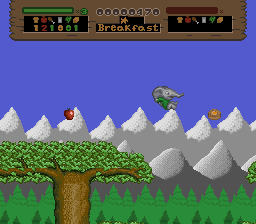
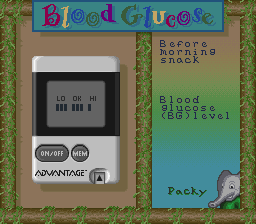
Along the way, you’ll also need to manage your diabetes by maintaining your blood glucose level. Before each stage, you measure your BG level; and depending on the time of day, give yourself an insulin injection. Then you’ll be given a list of the specific types of food you should try to eat, in accordance with your dietary requirements for that time of day. As you explore the stage, you’re supposed to find and eat the right types of food dotted around, though you can also eat similar foods if they share a nutritional value (eating apples as a “fruit” instead of bananas).
However, you should be careful about how much you eat, which is indicated by a bar underneath your health meter that shows the six categories of food. Each one has a colored number showing the number of times you’ve eaten a food in that category, and it changes depending on whether you’ve eaten too little (orange), the right amount (green), or too much (red). Certain foods contain a combination of values, such as breakfast cereal containing a mix of cereals and dairy, but you can consult a logbook with the select button to keep track of what each food offers.
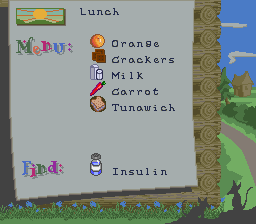
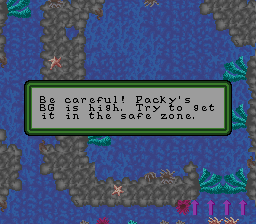
In theory, this should teach players how to manage their meals. However, there’s no punishment for eating too much or too little. When you beat a stage, you’re simply told that your BG is at a certain level. The lack of consequences also applies to injecting the insulin, which is surprising when you can choose to take variable doses depending on the time of day. Although the game points out that it isn’t the final word on managing diabetes and that you should form a plan with your doctor, it’s still careless to not show the results of improper care in a more tangible way.
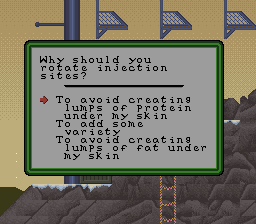
Elsewhere, the game tries to teach the player about diabetes through a series of questions asked by friendly characters. There’s three of them in each stage, and you’ll earn an extra life if you correctly get all their questions. This is useful enough since you only have three lives, and you need to beat all three stages in each chunk of the camp to earn a password to resume your progress. But the characters can be easily ignored and you’re strangely not given any information on the questions beforehand.
Given the game’s young audience and yet its insistence on asking a variety of questions ranging from social situations to medical terminology and personal habits, it’s bizarre to not bother teaching the player what they should know. Like with managing your BG, it ultimately doesn’t matter since there’s no punishment for getting a question wrong. You’ll be told the correct answer in a tiny screen that can accidentally skipped over. While questions repeat often enough that you can eventually learn the right answer, it’s a very hands-off approach that doesn’t feel right for the message this game’s trying to convey.
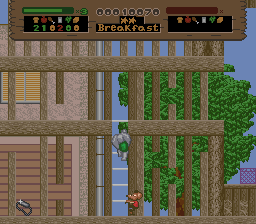
As an educational title, it only gives a very general look at diabetes, and not a particularly helpful one at that. Sadly, it’s not much better as a platformer. Movement is very stodgy, with it taking some time to stroll around or even do some jumping. You’re not able to jump off ropes when climbing, and the stages too often require you to shimmy off the very top and use your largely useless mid-air glide to reach platforms.
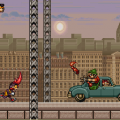
Dealing with enemies is quite awkward. Jumping on them often hurts you if they’re doing an attack, and projectiles are so small they end up flying over most enemies. Even when you do hit them, there’s no visual or audio feedback to show you’re doing any damage until they vanish in a puff of smoke. Annoyingly, this also applies to the bosses you must face at the end of each stage. It’s a war of attrition to be shooting them endlessly while doing their attacks, made even worse by how dying takes you back to the beginning.
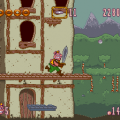
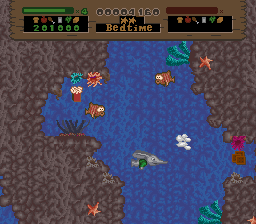
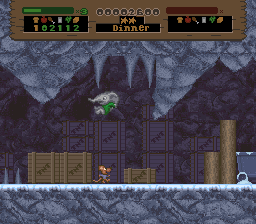
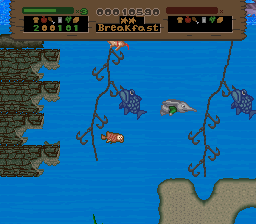
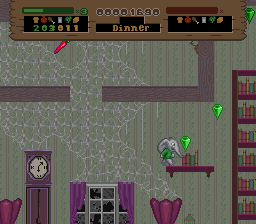
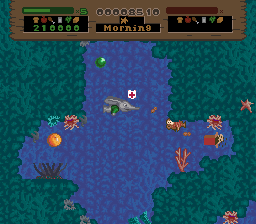
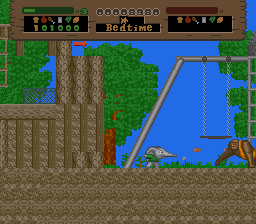
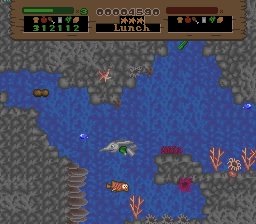
Yes, stages have to be completed in a single life, which wouldn’t be so bad if they weren’t such a slog to play through. There’s a handful of biomes, from forests and haunted houses to playgrounds and lakes, that each feature unique obstacles and enemies. However, the level designs drag and repeat themselves, with the labyrinthine underwater stages being particularly tedious. You have to find the medical equipment in order to open up the boss fight at the end, and some of these stages are too long-winded for their own good.
There’s some appreciated touches, like how you can play each area’s three stages in any order or the co-operative mode where you and another player can play as Packy and Marlon at the same time. Admittedly, the camera stays with player 1 and doesn’t try to accommodate player 2, who will reappear nearby if they’re offscreen for too long with a bit of health removed. But Packy & Marlon is too annoying and boring to recommend for platforming fans.
In terms of its presentation, it’s a nice touch how the background colors change for each area depending on the time of day. However, the actual locales and creature designs are unremarkable, and John Bartelt’s soundtrack grates with dull compositions undermined by flaccid instrumentation. Surprisingly, this received a PC port in 1998, though it seems to be a straight conversion with the only differences being new sound effects and CD music.
Special thanks to Bobinator for being able to get the PC port running.