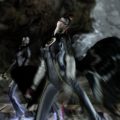
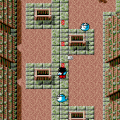
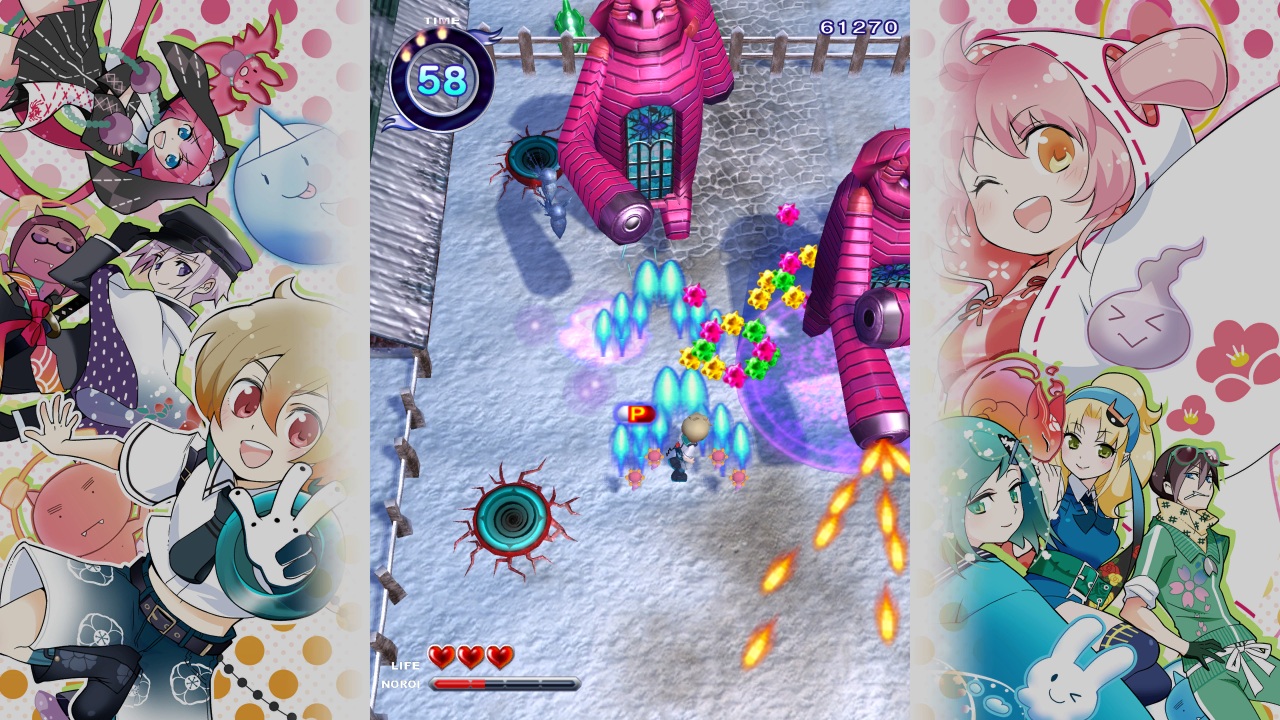
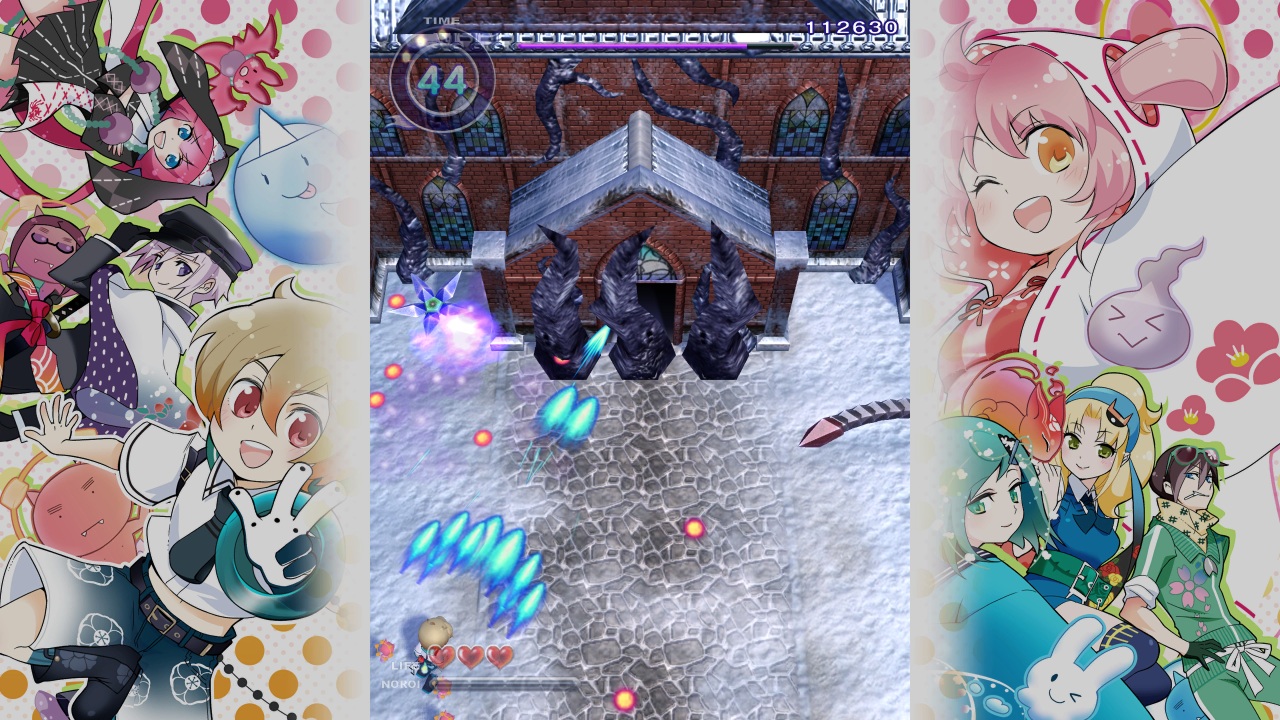
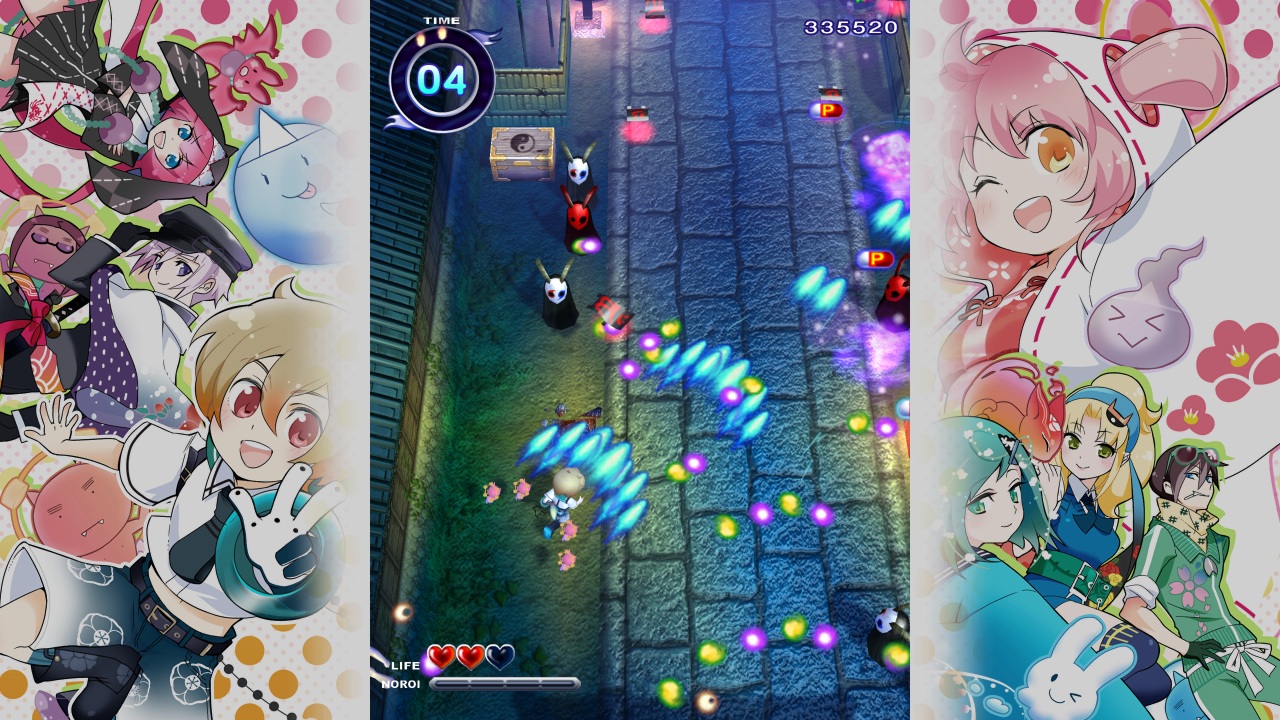
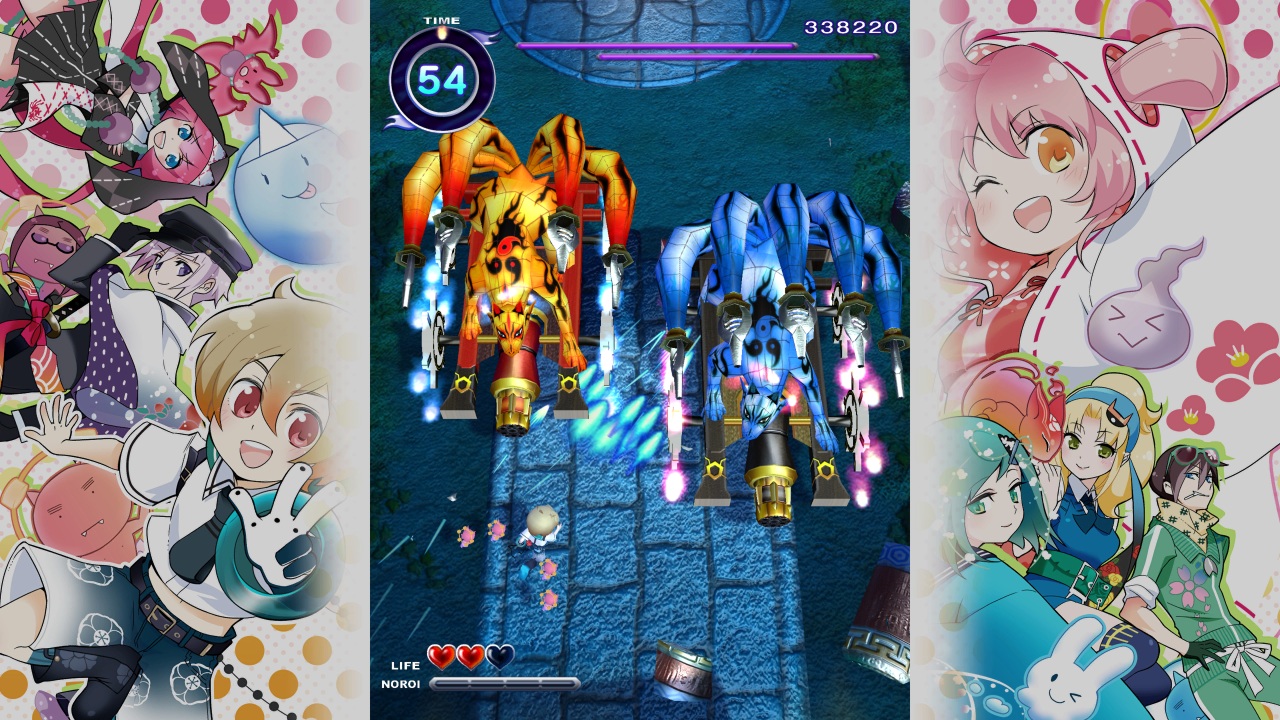
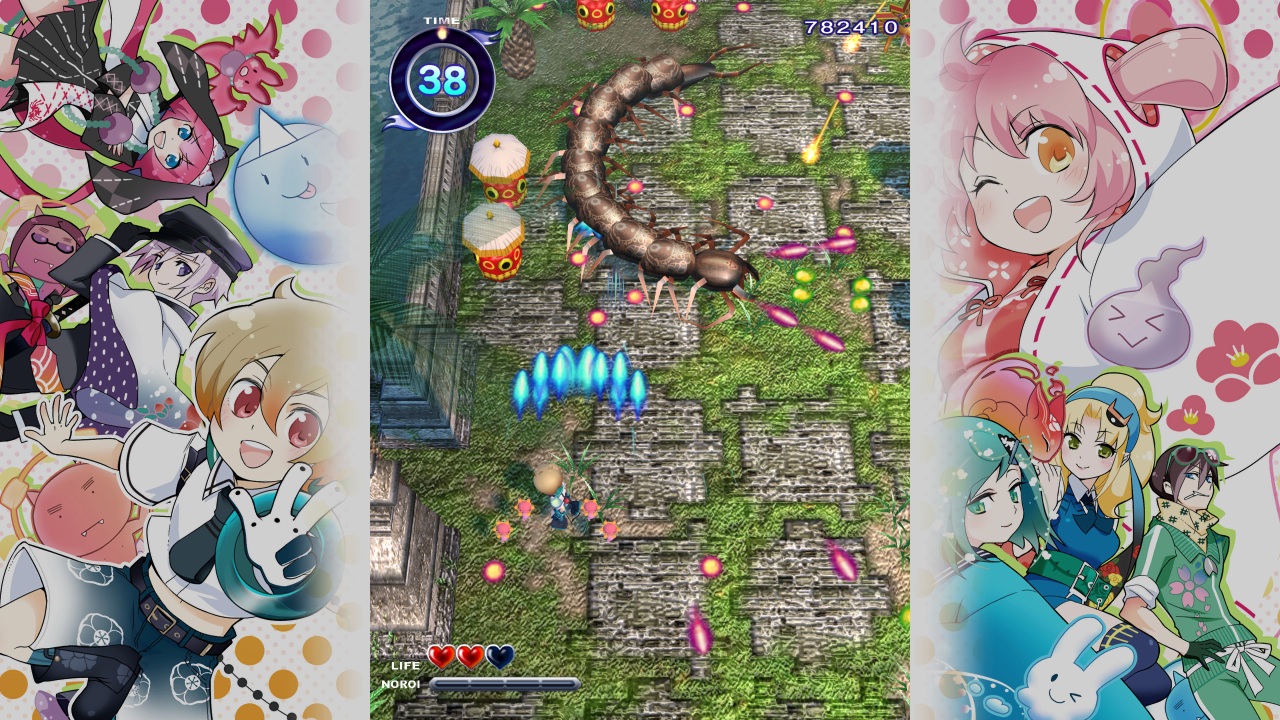
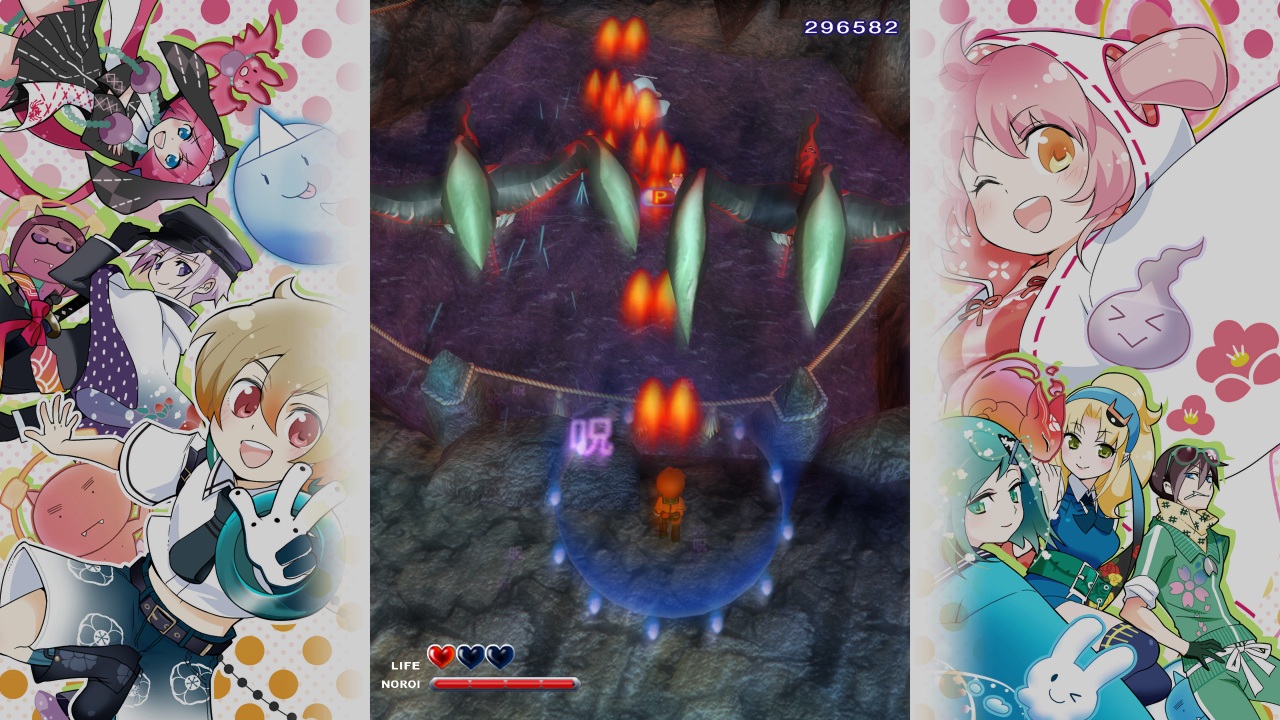
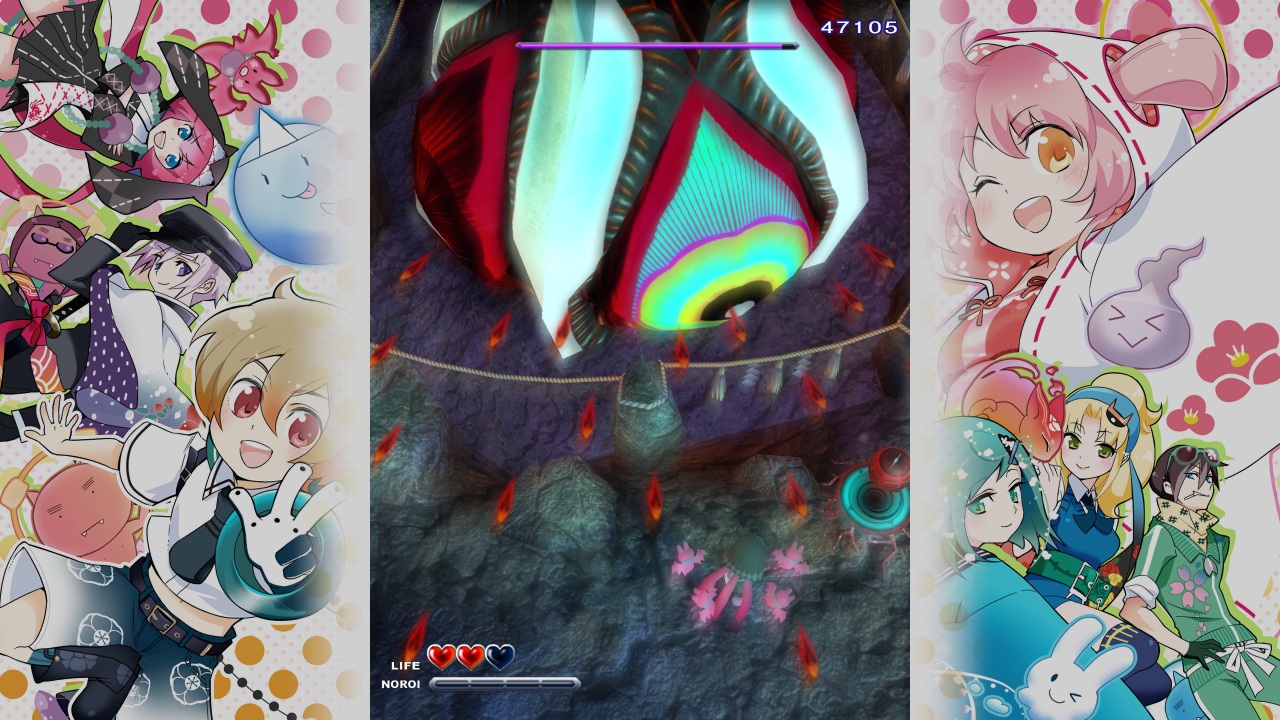
Mamoru is just an ordinary schoolboy, who seemingly perishes in an accident. When he wakes up, he’s accosted by the kooky shrine maiden Fululu, who’s assembled three other souls and tasked the squad with saving the underworld from invading forces. Developed by G.rev (Border Down, Under Defeat) and Gulti (Raiden Fighters Aces), Mamorukun Curse! can be seen as the spiritual successor to Taito’s Pocky and Rocky, as they both feature cutesy characters and Japanese mythology, mixed with overhead run-and-gun gameplay. This is appropriate considering that G.Rev was founded by ex-Taito members. The Japanese title translates to “Mamoru-kun Has Been Cursed!”, but the English title shortens it.
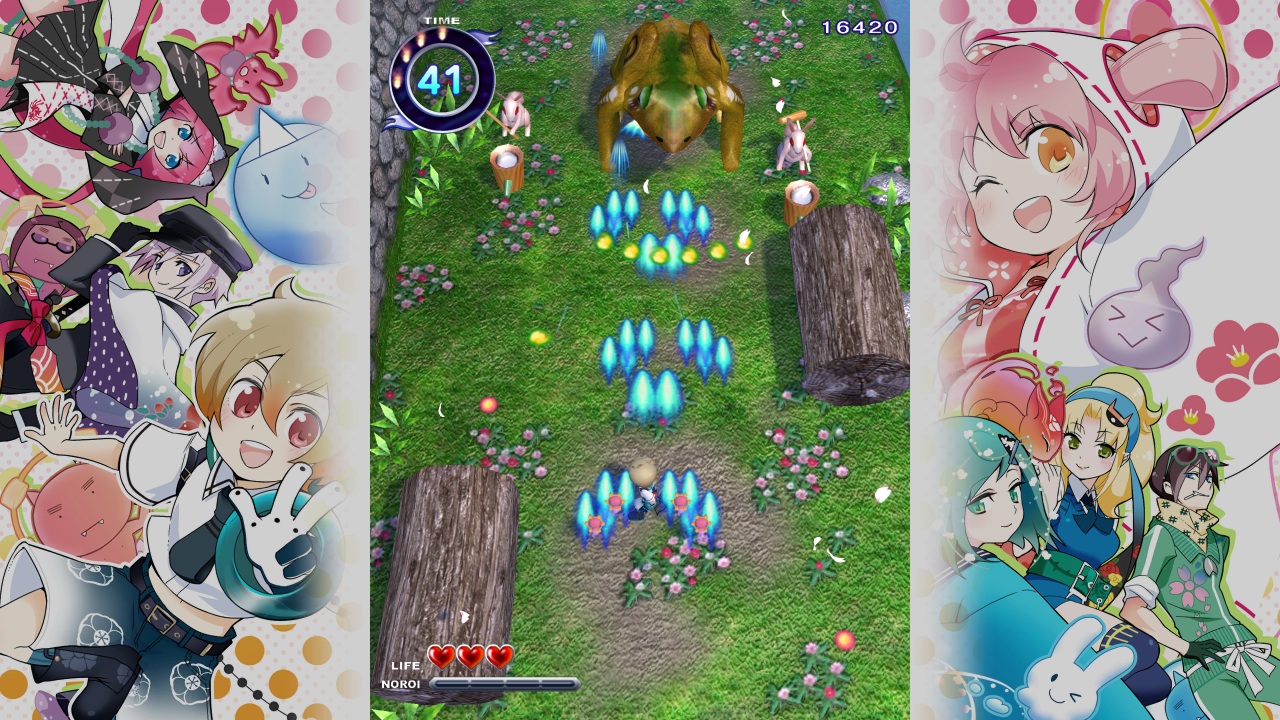
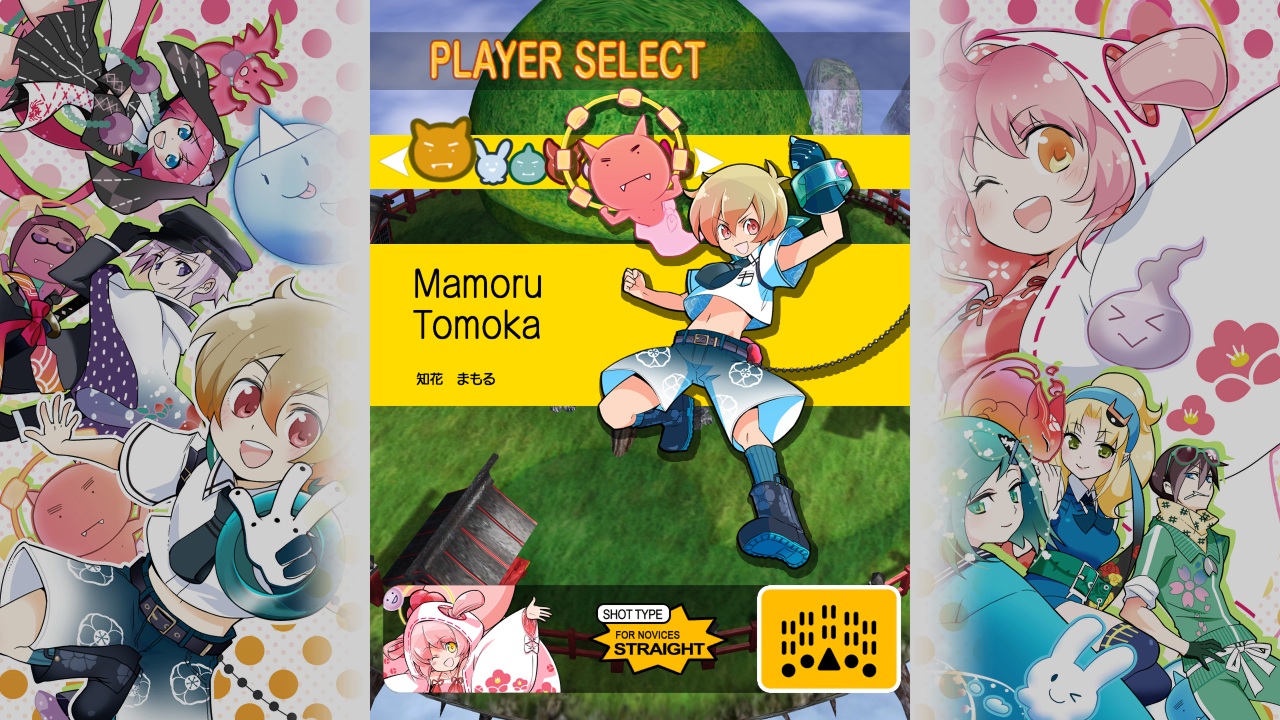
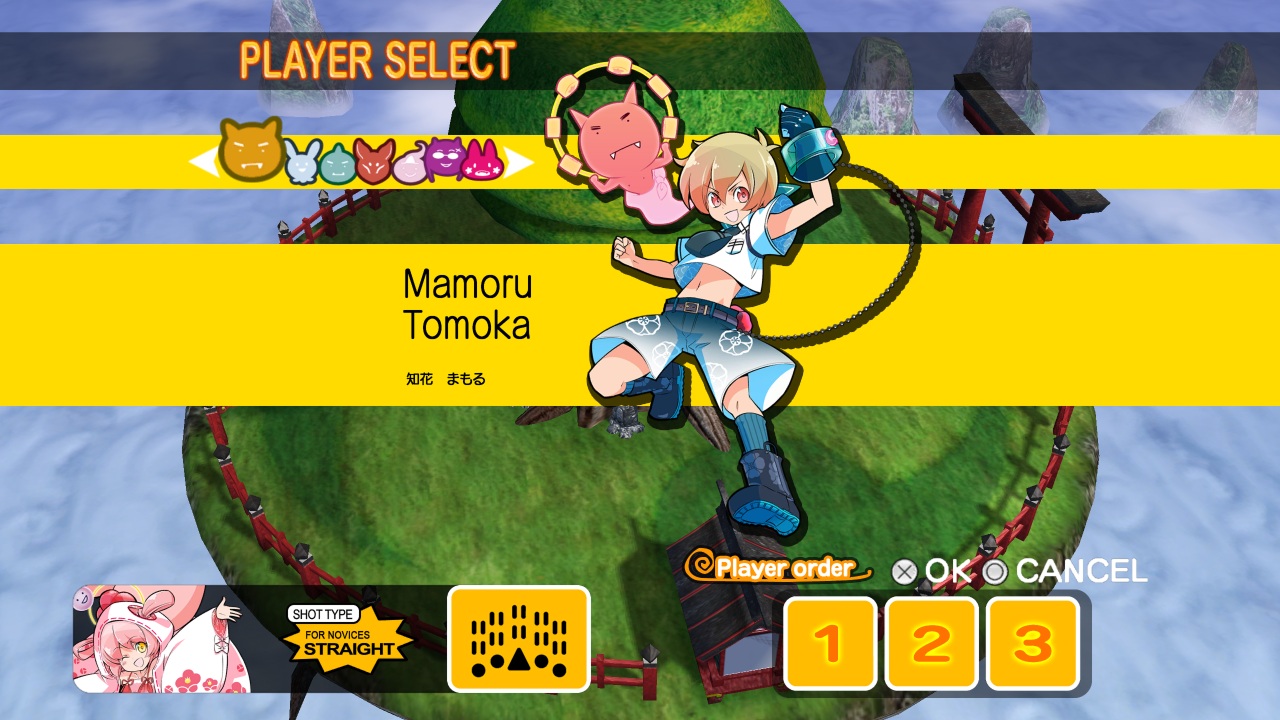
Each of character wields their own element, with unique rapid firing patterns and familiars that supplement their attacks – Mamoru has the power of lighting, kimono-clad schoolgirl Mayuno uses snow, tough guy Narai has wind attacks, high school girl Beniko wields fox fire, and Fululu has the power of flower. The character selection screen offers suggestions to which characters are best for novices or experts. By holding down the fire button, you can also lock your shots while moving in different directions.
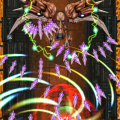
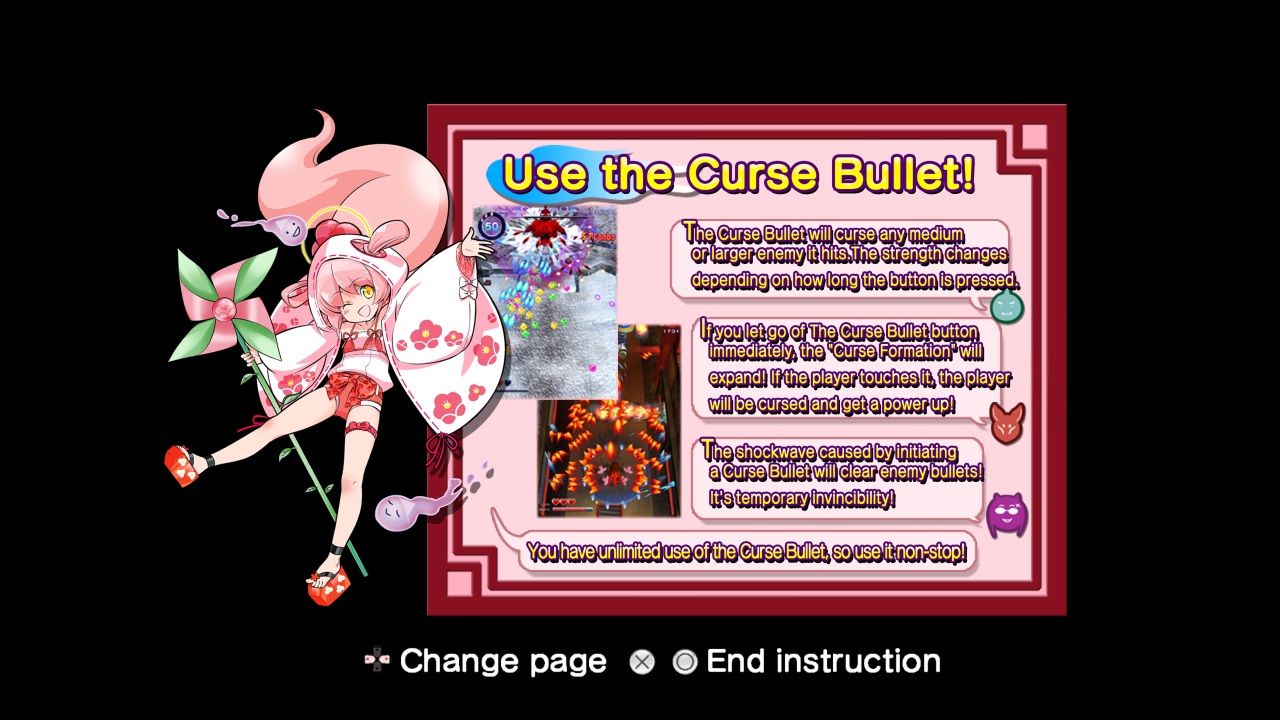
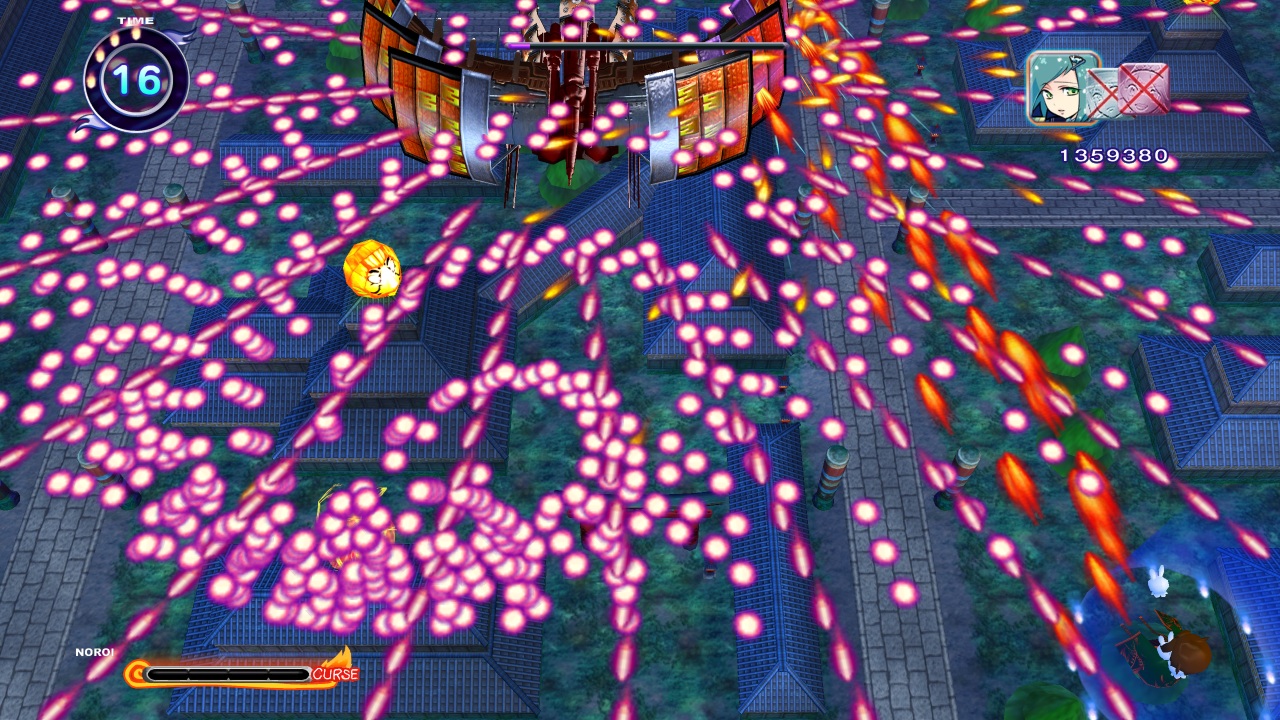
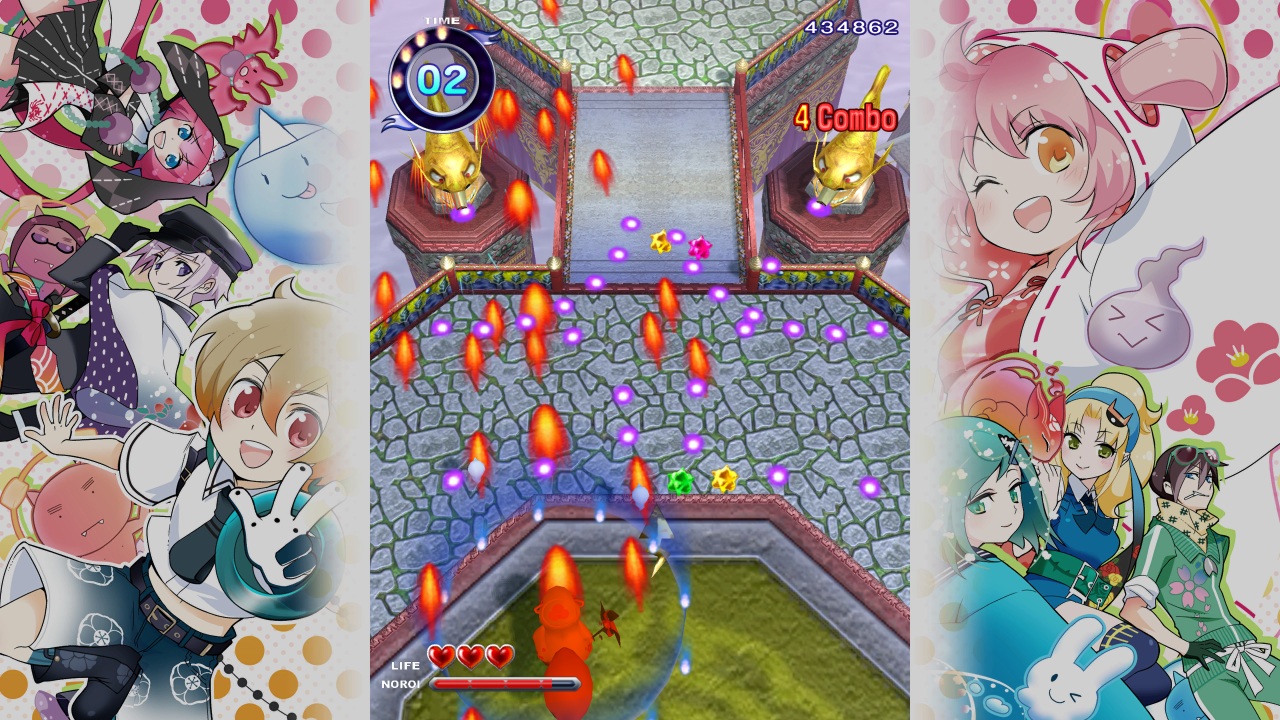
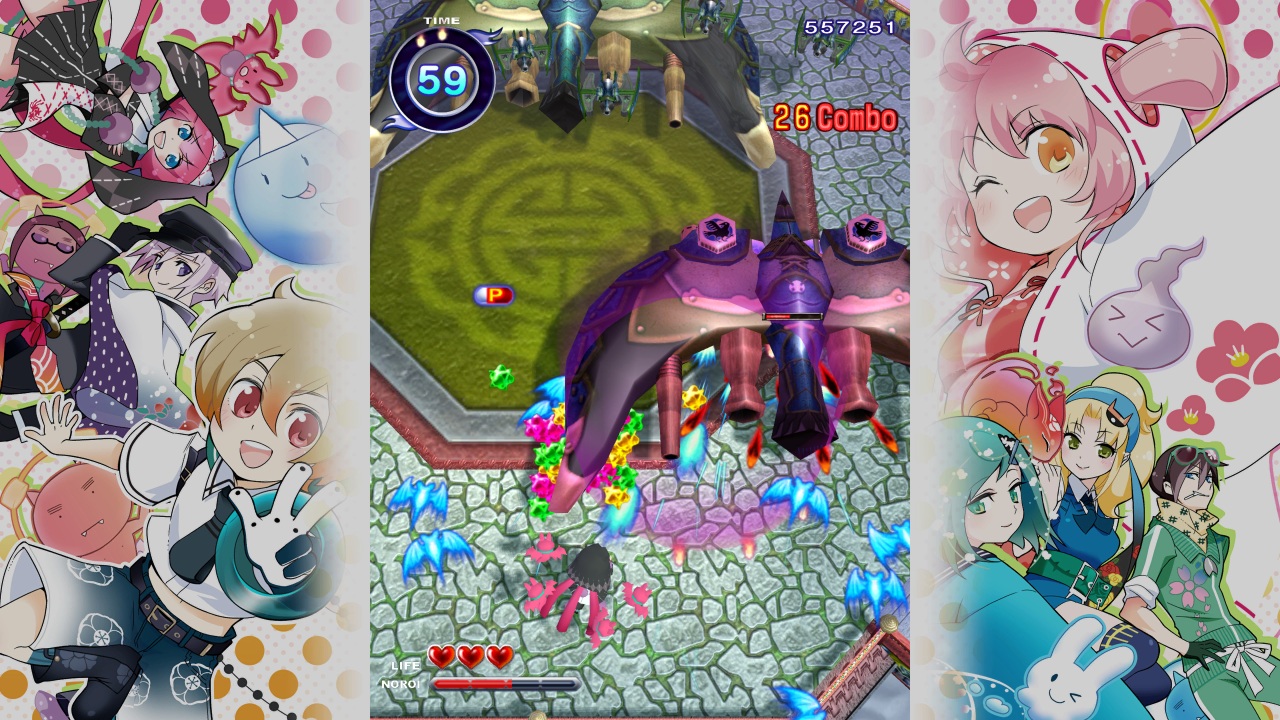
Beyond the main attack, your characters also wield the Curse bullet, the game’s main system and source of the game’s title. When you shoot enemies with it, it’ll curse them, which changes their attack patterns and also turns their bullets into konpeito candy score items when defeated (and can also fire additional revenge bullets). The Curse bullet can be charged up, with stronger enemies requiring a more powerful bullet to curse, plus it’ll cancel all enemy bullets on screen when you fire it. Additionally, when you use the weakest Curse bullet, it’ll create a small circle when it hits the enemy. If you step inside it, you’ll become cursed, which massively increases your firepower and your speed for a short period of time. The downside is that this only last for a few seconds, after which there’s a cooldown where you can’t fire Curse bullets at all, plus it degrades your main shot by one stage. The Curse bullet pulls triple duty as the main source of your strength, as a defense mechanism due to the bullet cancelling, and the primary method of scoring. As such, you’ll need to learn to use it effectively.
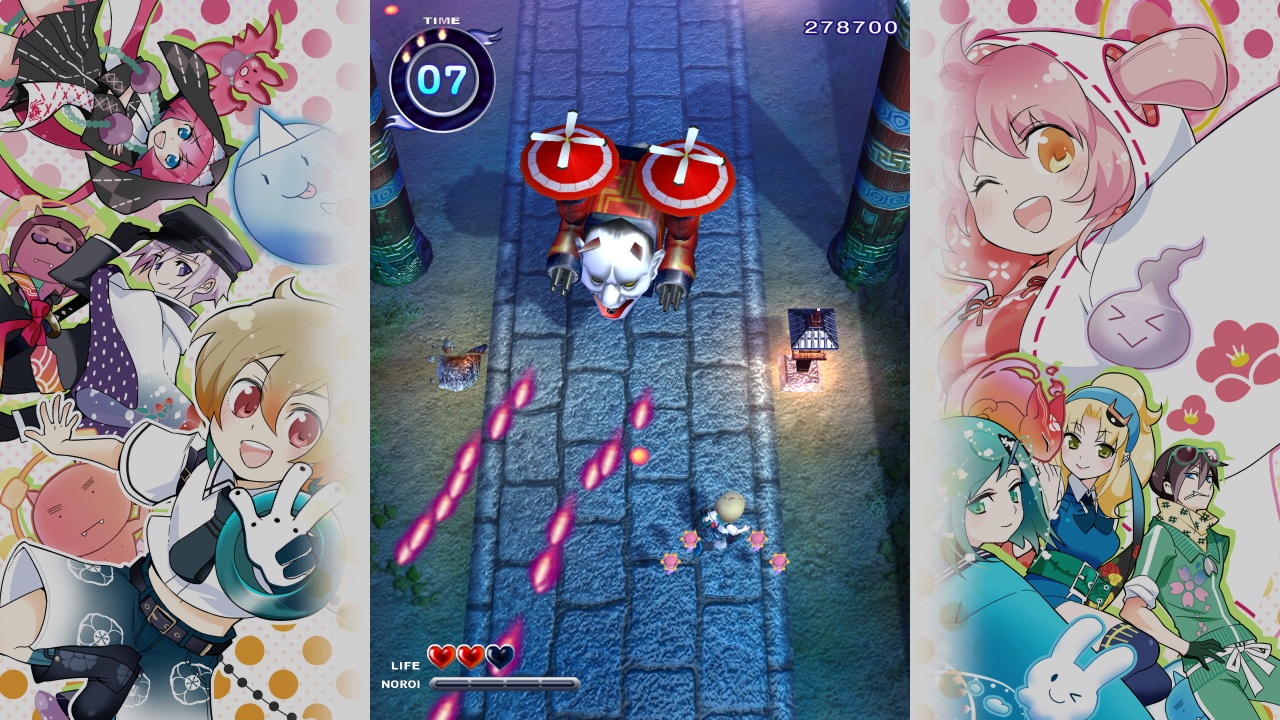
Making things more complicated is the time limit. When you begin the game, you have five minutes to make it to the end of the game. You’ll find time replenishments scattered throughout the stages, plus you get extra seconds added to the clock when you finish a level. If you run out, you’ll be accosted by grim reaper-like characters until you die. Additionally, if you complete a stage with less than a minute left on the timer, then you’ll automatically get sent to a final boss encounter, leading to a bad ending.
The timer is a curious addition, since it forces you to curse your character as often as possible so you can quickly blaze through the stages. But it’s also at odds with the scoring system, since it requires that you slow down and curse enemies to extract points from them. It’s only after a few playthroughs that you can get a grasp for how to balance the two. It seems like the timer was added to make the action more intense, because otherwise you could easily take your time walking through the stages. There are plenty of bits of scenery you can shoot, hidden items that hold power-ups, and alternate paths through the stages, but again, you can only appreciate these on subsequent playthroughs, since otherwise you’ll be rushed through them. You can change the timer or disable it totally in the option menu, though this also prevents you from logging high scores.
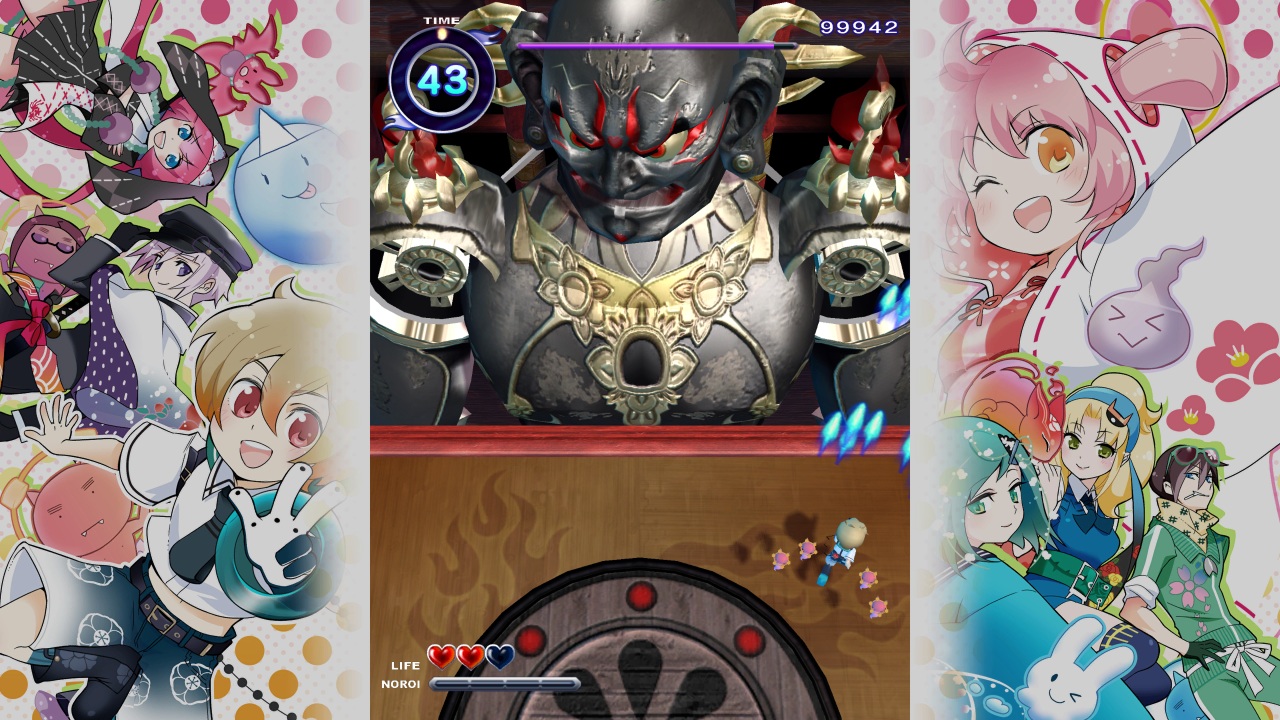
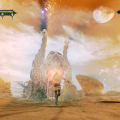
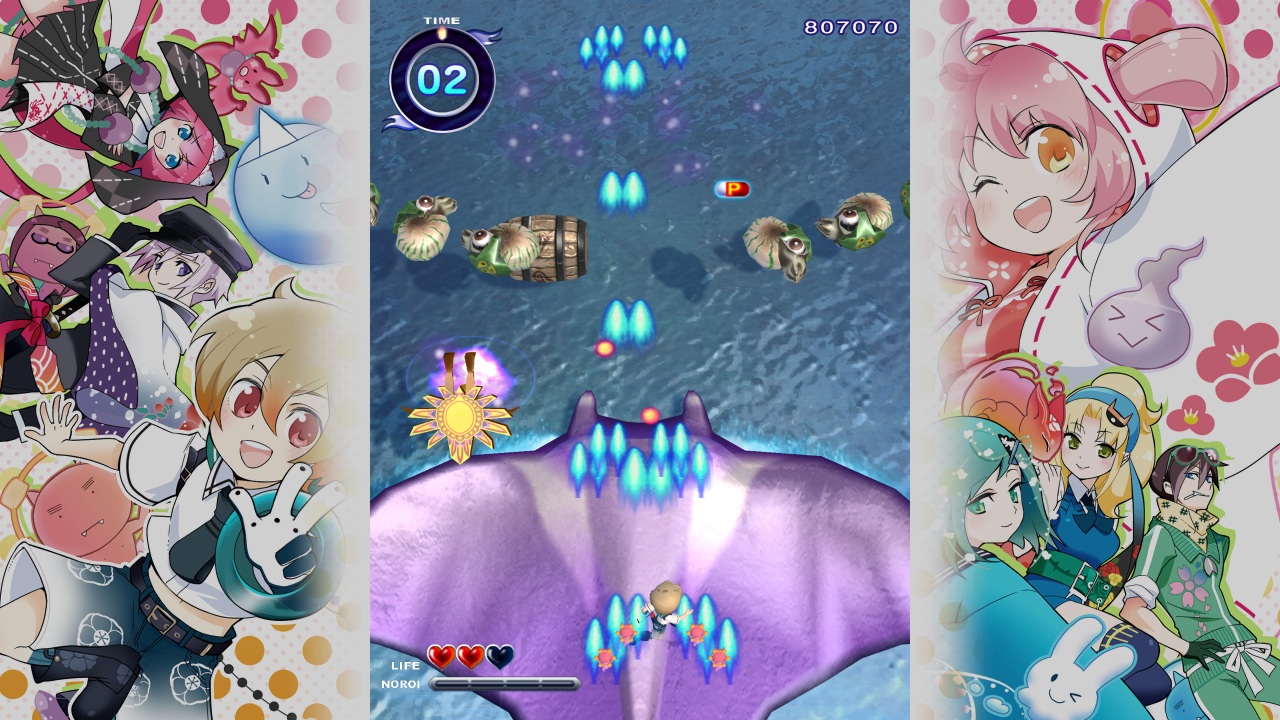
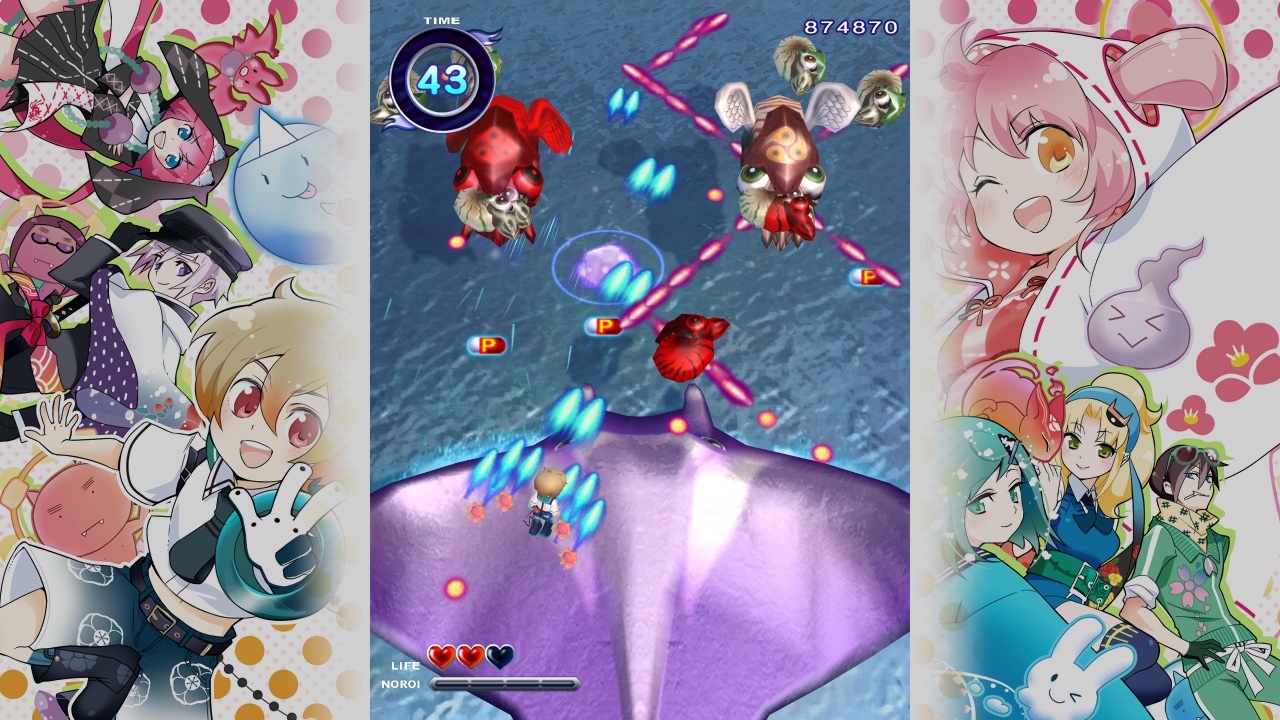
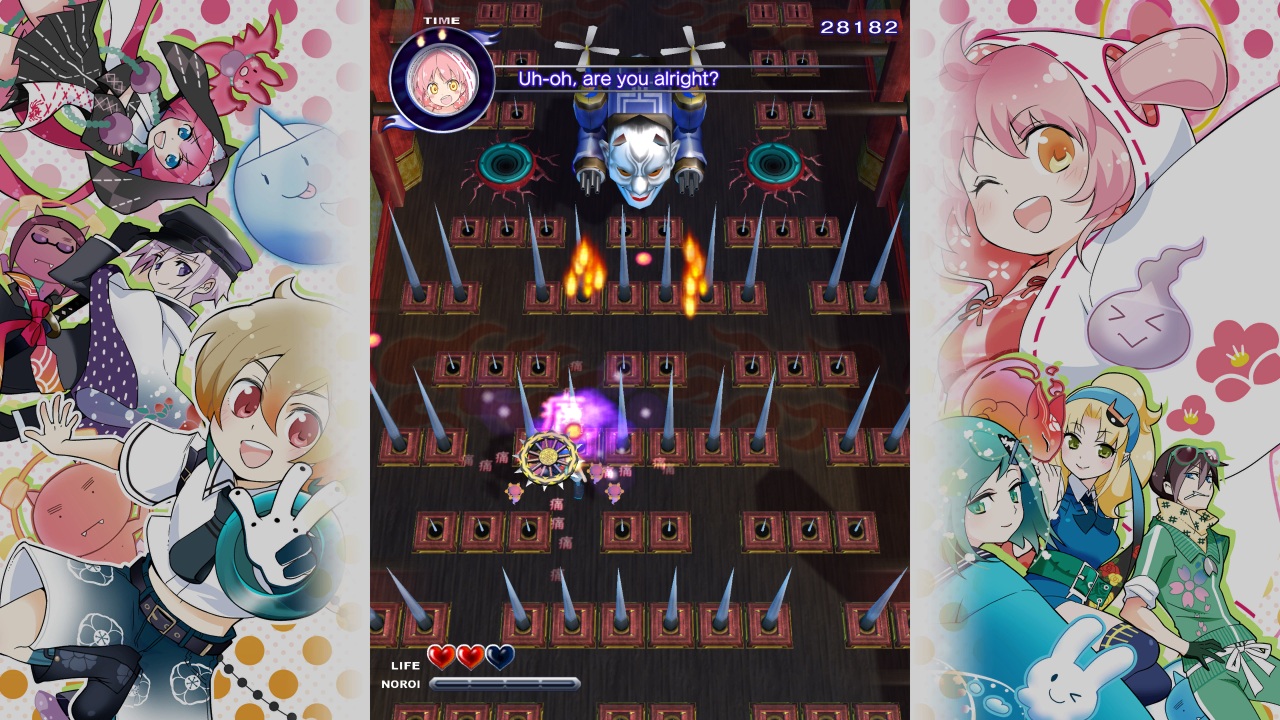
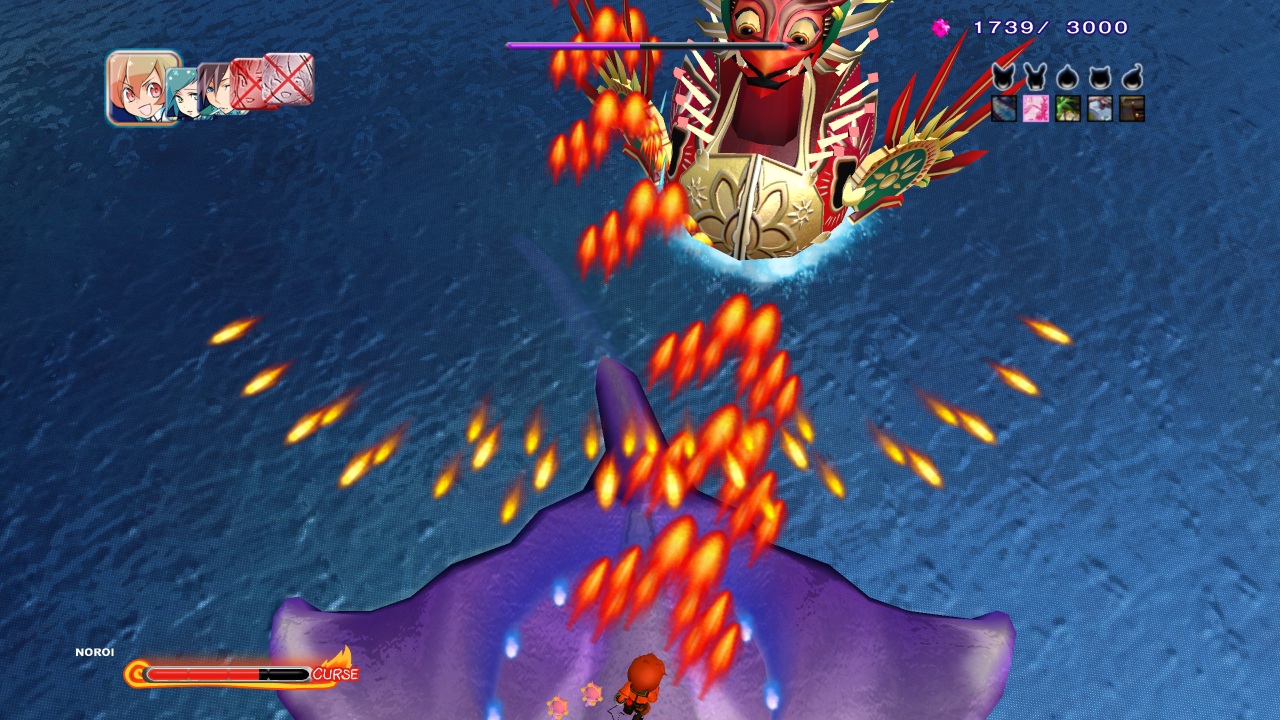
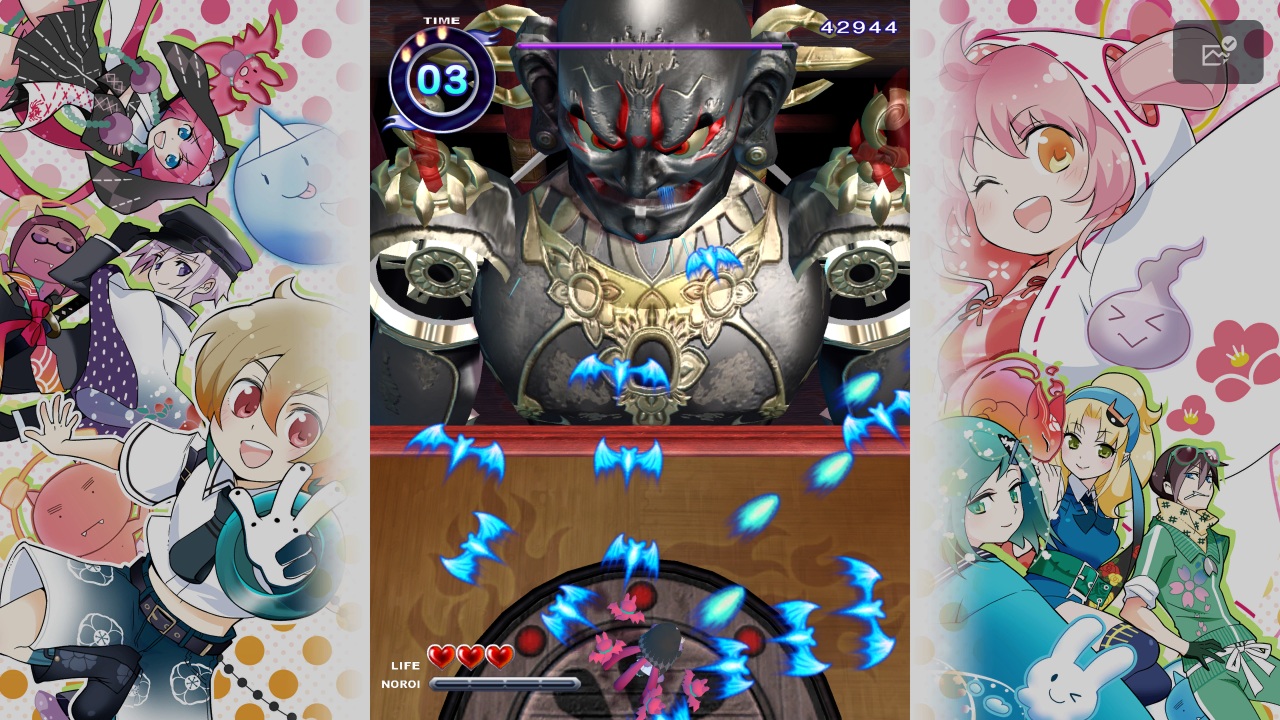
Mamorukun Curse! also has an unusual stage selection system. Each new game begins with a brief shoot-em-up prologue stage, after which you can choose from five levels – the Home of the Cherry Blossoms, which transitions from spring to winter land over the course of the stage; the Entrance to the Underworld, where you stroll through shrines at nighttime, the Aerial Garden, the amusement park of the underworld; the Southern Temple, where you spend most of the stage riding on the back of an enormous manta ray and take on a fleet of pirates; and the Karakuri Castle, which is filled with traps and houses a giant mecha at the end. The stages increase in difficulty as you continue, but you only need to play four out of the five before moving onto the last battle. Additionally, you can also opt to replay boss battles at a higher difficulty, which is a good way to get extra points and gain some extra time, as long as you complete them quickly. There’s also an additional extremely tough boss battle you can fight, as long as you’re up for the challenge. Adding in these extra boss battles is unusual since it encourages artificially extending the playtime for those playing for score.
The timer and the extra boss fights are curious design decisions, as if the developers didn’t have faith in its core gameplay and decided to staple on some extra stuff to get people to play it a specific way, or perhaps capture hardcore players. As a result, the game feels a little cluttered. It didn’t really need these either, because the core shooting and movement feels great on their own. There were so few run-and-guns during the early 2000s, and Mamorukun Curse! gives something fresh with its breezy pace and dense-but-not-quite-bullet-hell attack patterns. G.Rev wasn’t exactly the most prolific developer, but all of their titles had their own unique flair while updating arcade classic gameplay, and this game excels just as much as any of their other titles.
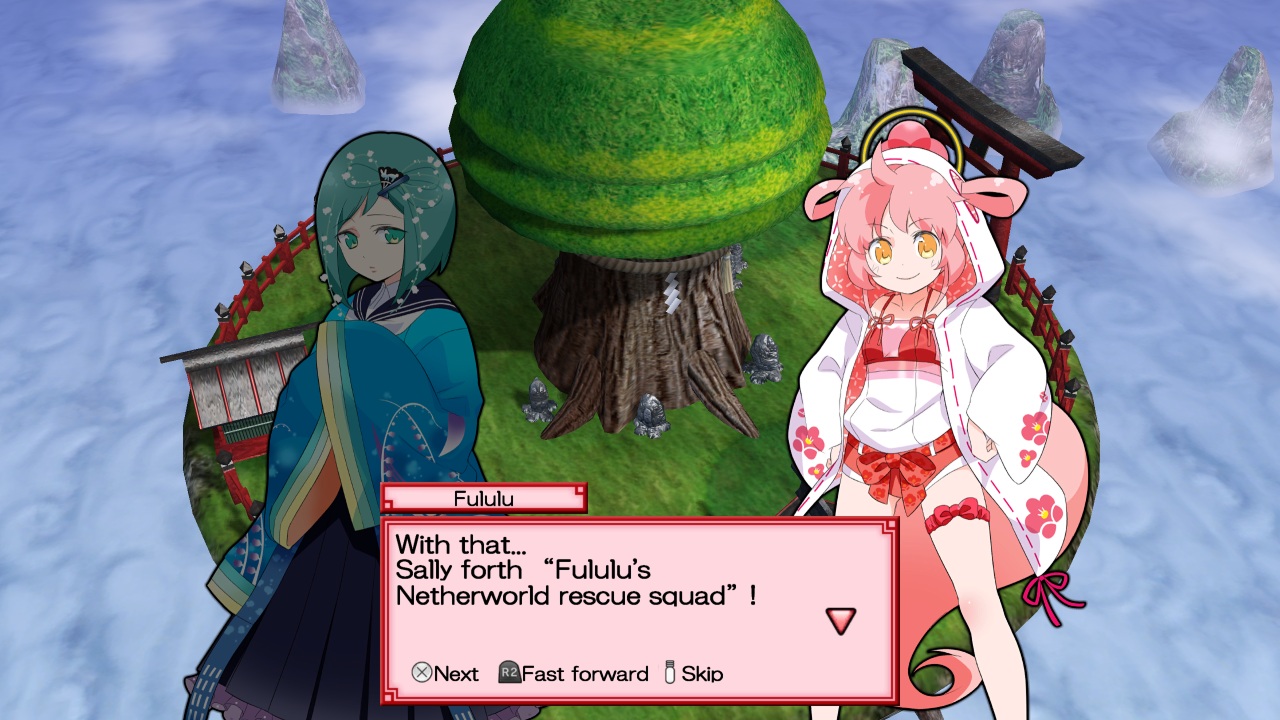
Plus, Mamorukun Curse! just oozes charm. The game was first released in arcades for the Naomi arcade board, and while it certainly looked dated even at the time, is filled with cute characters and colorful environments. It’s also bolstered by the fantastic soundtrack from Yousuke Yasui (Eschatos), whose distinct retro FM synth style creates some immensely catchy tracks like the absolute banger “Yo-Kai Disco”. The vocal sound effects do grow repetitive though, especially the squeaky commentary by Fululu. The character designs were provided by Mizuki Takayama, who also supplied similar cutesy shoujo manga-esque designs for Senko no Ronde. There are quite a lot of character dependent illustrations for the level end and ending screens.
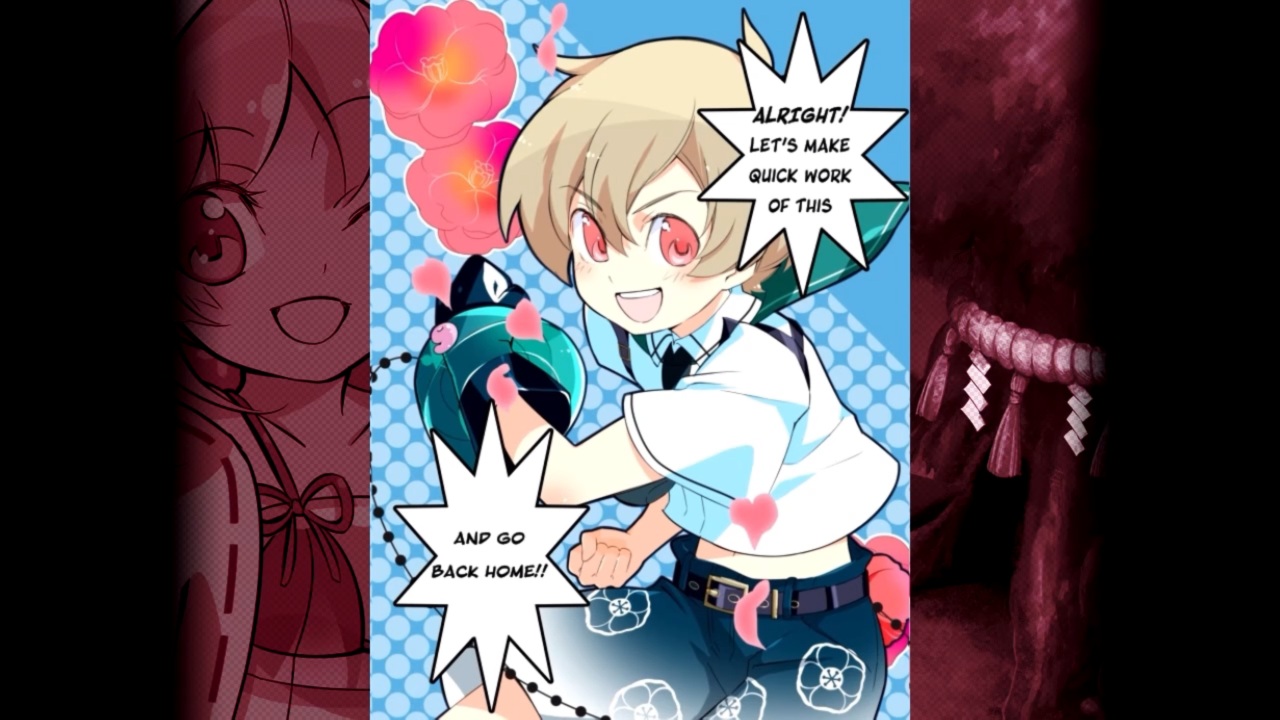
Mamorukun Curse! was first released in Japanese arcade in 2008, with an Xbox 360 port following shortly thereafter, which benefits from HD visuals. This also adds Fululu as a standard playable character (she’s a hidden character in the arcade game) and adds two DLC members to the cast – demonic nun Nowa, who wields the power of the night, and partners Narukami Lukino and Karel Werfel, as a crossover cameo from Senko no Ronde. There are also alternate costumes for all of the characters. This release also adds a Story mode featuring comic book-style panels and dialogue between the five main characters, as well as a unique structure. Rather than featuring a standard lives system, when you die, you cycle to the next character, and picking up health restoratives or gaining enough candy items revives a fallen hero. The timer is gone here, too. While you can play through the stages normally, this won’t lead to the best ending; instead, each stage has certain enemies you need to destroy, plus you need to kill each level boss with specific characters. Obviously this is a problem if that character is dead, but the game saves after each stage, so you can always just reload the game if you need to give it another shot. There also aren’t any real clues as to your goals here, so reading a FAQ is highly recommended.
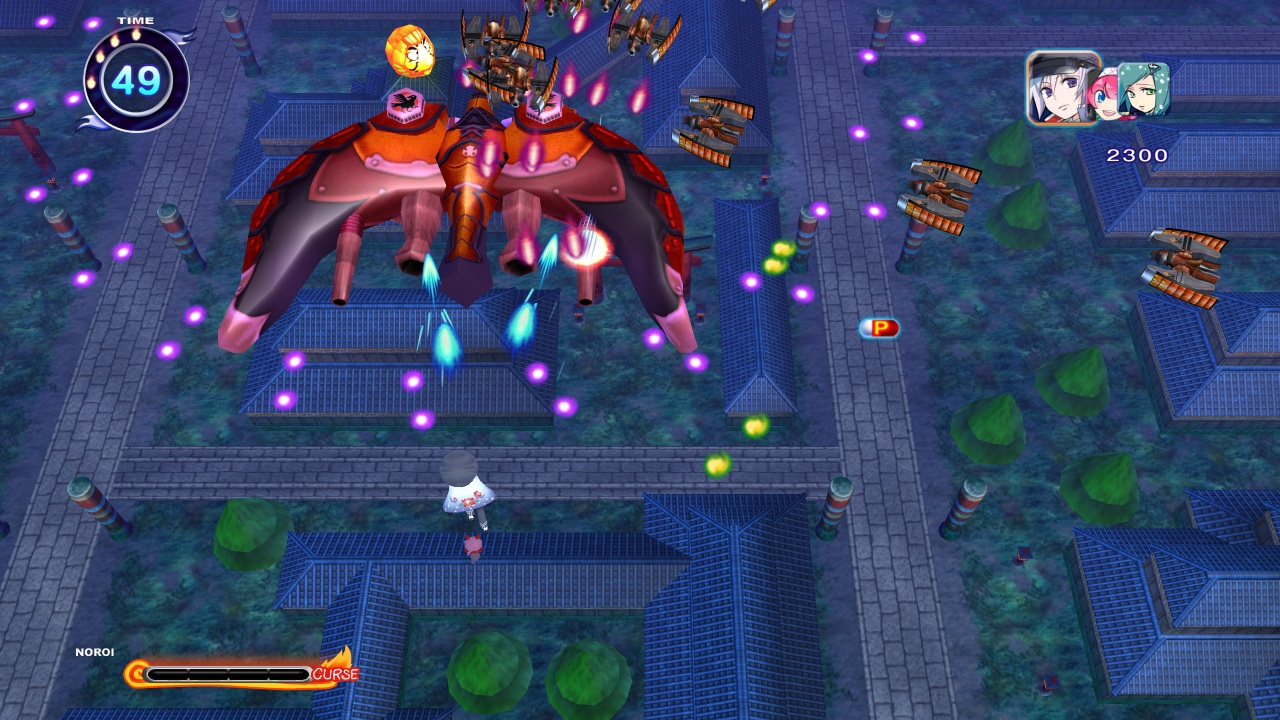
The game was then ported to the PlayStation 3, now subtitled Meikai Katsugeki Wide-ban (“Underworld Action Wide Version”). While given a physical release in Japan, it was also released internationally as a downloadable game, with an English translation. This includes everything from the Xbox 360 port, along with the two DLC characters included as standard. New to this mode are Challenges Course which features several different level configurations and preset character rosters. This also changes the vertical orientation to a 16:9 widescreen presentation. The HD port of Under Defeat also featured a similar widescreen mode, which was nearly unplayable due to the cramped screen vertically scrolling screen. But Mamorukun already let you move and scroll in all directions (except backwards), and the screen isn’t zoomed in too much, so the action still feels natural.
This was then ported again to the PlayStation 4/5, Xbox One, Switch, and Windows, now titled Mamorukun Recurse! This includes everything from all previous ports, along with added galleries, training modes, and new arranged music. But the biggest new feature is the ability to aim in any direction with the second analog stick, resulting in controls that feel much more fluid and flexible. Considering the game always required that you move and shoot in different directions, it’s actually surprising that it was never included in previous home ports, and it makes the run-and-gun action feel far more fluid.