The Silpheed series consists of five distinct games which have very little connection to each other (plus a collection of mostly similar computer ports of the original). In fact, the Xbox 360 release is titled Sylpheed with a “Y”, and is described as a spiritual successor rather than sequel. Apart from all being set in outer space and featuring shooting, they’re surprisingly disparate in terms of story, design, style, quality, and even the companies involved. While GameArts’ name is associated with all of them, other companies have also been involved; Synergistic, Treasure, SETA, Anima, Sierra, Sega, Working Designs, Capcom, Square-Enix and Microsoft have all played a role in the computer and console releases, either as co-developer or publisher. As for the little documented and unique release for Android devices, GungHo and Pyramid are also featured on the splash screen.
Despite the series now being mostly forgotten, and poorly documented, it was significant for a few reasons. The first release reached the US thanks to Sierra On-Line, and it was part of their successful venture in bringing Japanese computer games to the west, including titles such as Thexder and Sorcerian. It featured a phenomenal soundtrack, which really pushed people’s perceptions of computer game music. The Sega CD follow-up was touted as Sega’s answer to Star Fox in some circles, with impressive use of polygonal visuals and plenty of hype. Meanwhile, the 360 release features epic free-roaming space battles which have yet to be equaled on consoles, in terms of size and numbers of craft.
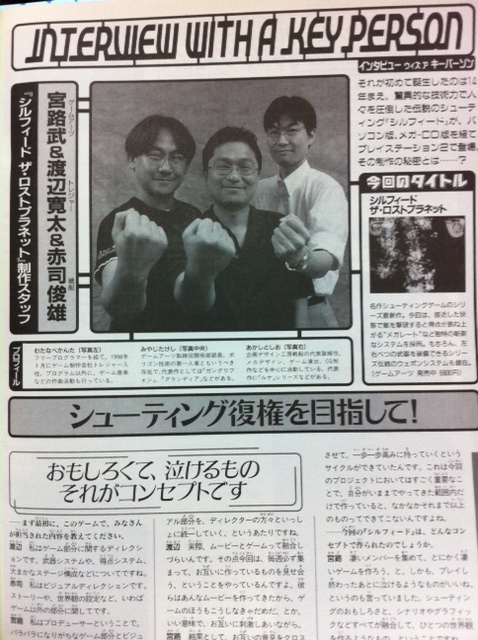
Pictured centre during development of Lost Planet: Takeshi Miyaji (deceased July 29, 2011) Image Source.
More than that, it’s an obscure Japanese property which has transitioned from computers to consoles, through several hardware generations, and made the jump to both HD and mobile gaming. As a result, different generations of gamers will have a fondness for the name for different reasons. Lasting over a quarter of a century, the sheer staying power of the Silpheed brand is impressive, especially given the tremendous difficulty Japanese developers have encountered with each successive hardware generation. Furthermore, Silpheed‘s creator, the late Takeshi Miyaji (宮路 武), has an impressive portfolio of work, including Thexder, the two Sega CD Lunar RPGs, the Saturn GunGriffon games, and the first two Grandia RPGs.
The five main installment in the Silpheed series won’t appeal to everyone, but they’re a fascinating, eclectic collection in Japan’s gaming history.
Released in 1986 for the Japanese NEC PC-88, Silpheed: Super Dogfighter was a vertical shmup developed exclusively for home use, as opposed to being an arcade port which was common on computers and consoles at the time. Other notable shmup releases back then included Uridium (C64) and Darius (arcade). Designed by Takeshi Miyaji at GameArts, who found tremendous success with the previous year’s Thexder, Silpheed tasked players with shooting down fleets of enemies, destroying space-fortresses and saving the galaxy from terrorists.
As explained in the localized manual: “In the year 3032, an abandoned space shuttle built by an unknown alien race was discovered orbiting Pluto. By careful analysis, Earth’s scientists and engineers were able to duplicate it, making the colonization of other worlds possible for the first time. This colonization gave rise to the Milky Way Union. Xacalite, the brutal outlaw leader of a gang of interplanetary terrorists, has seized a newly-built battleship, GLOIRE, as the first step in a plan to take over the Union. An emergency call has been received from the main defense base: they are under attack by Xacalite, who needs the planet destroyer missiles stored there to complete his plan. There is no time for the Union to form a defense fleet. The supercomputer YGGDRASSIL has decided the best chance for defeating Xacalite is for YOU to attack GLOIRE in a Super Air Fighter SA-08 Silpheed prototype.”
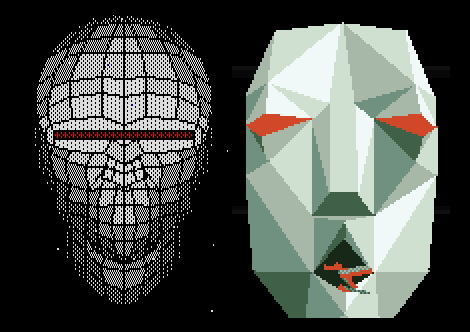
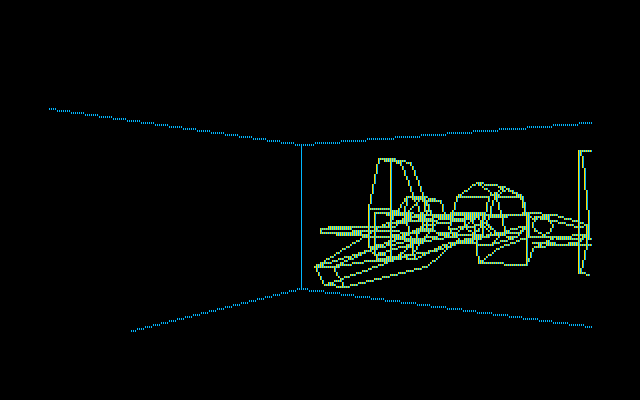
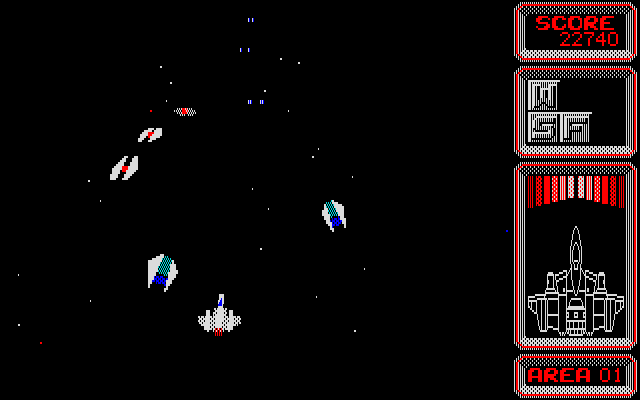
Several things set Silpheed apart from its contemporaries. Instead of a flat 2D perspective, like other shmups, it used an oblique view of the battlefield, with scaled objects getting smaller towards the top of the screen, converging into a central area on the horizon. Facilitating this effect was the fact that every enemy craft, as well as the player’s ship, was built from simple, flat-shaded polygons, making the game genuinely three-dimensional. Considering that the Sega CD sequel would be compared to Star Fox on the SNES, it’s worth noting how many similarities Star Fox actually had to the original 1986 Silpheed, from the giant polygonal head that greeted you at the start, which Andross resembled, to the style of the 3D graphics and wireframe take-off sequence. Plus, not forgetting, the fact that Star Fox was based on the GameBoy game X, also by Argonaut, and which also featured a disembodied, polygonal head.
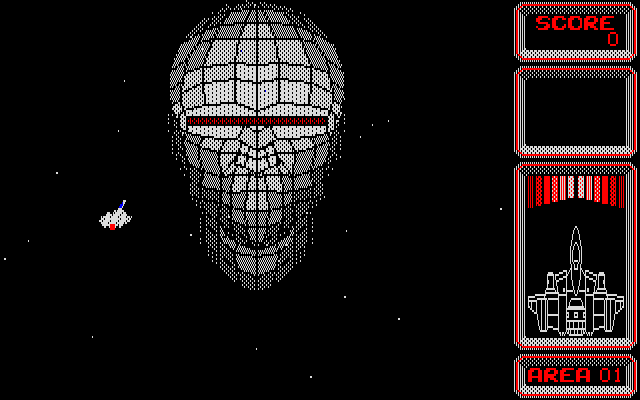
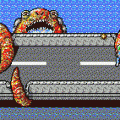
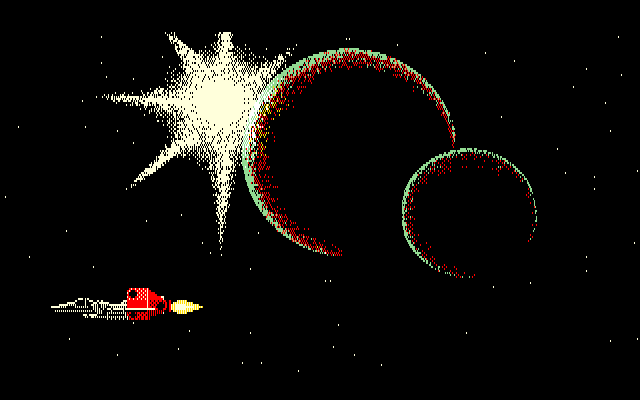
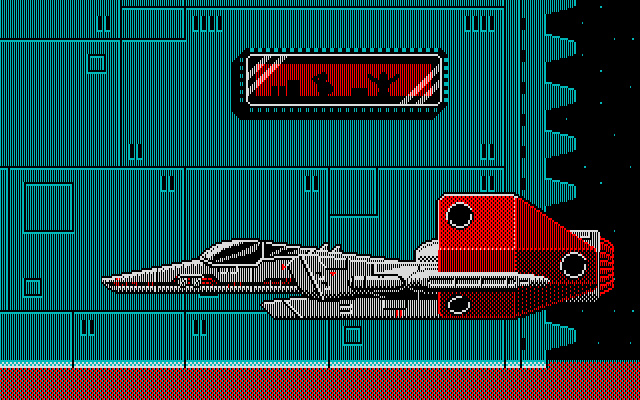
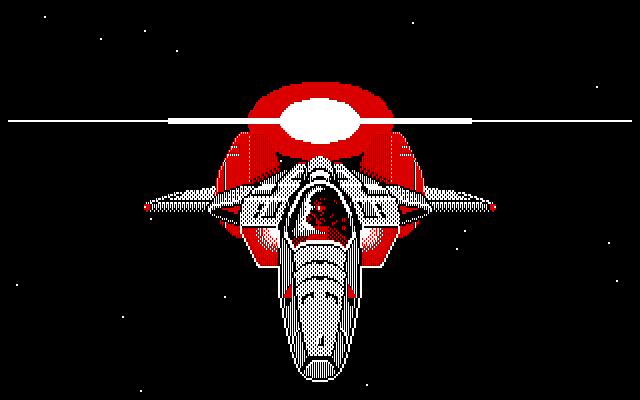
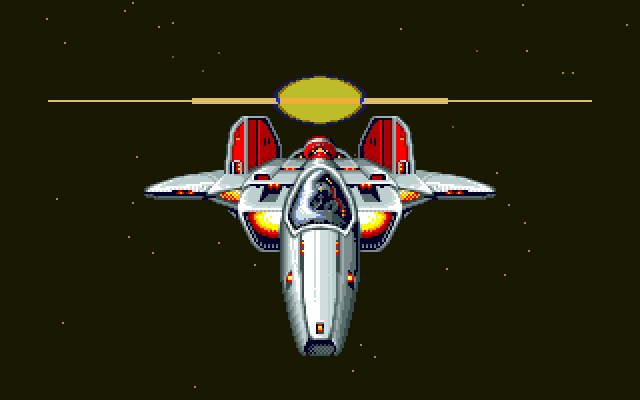
Levels themselves are divided into either outer space or inside giant enemy fortresses (which are built into an asteroid, and introduced via a small cut-scene). When in space, enemies perform a variety of tactical maneuvers while you shoot them down and try to collect power-ups released from red orbs. For a bit of variety, these levels sometimes take place among asteroids, or outside of a slowly turning planet. The planetside background would have been impressive in 1986, since as it moves you can see rivers winding between hills and so on. The fortress levels are the game’s highlight, placing you inside a simple vertical maze, requiring that you blast through force-fields, take down large enemies blocking the route, and weave between obstructions. Every five levels or so there’s also a cut-scene, showing the Silpheed craft against some kind of animated background.
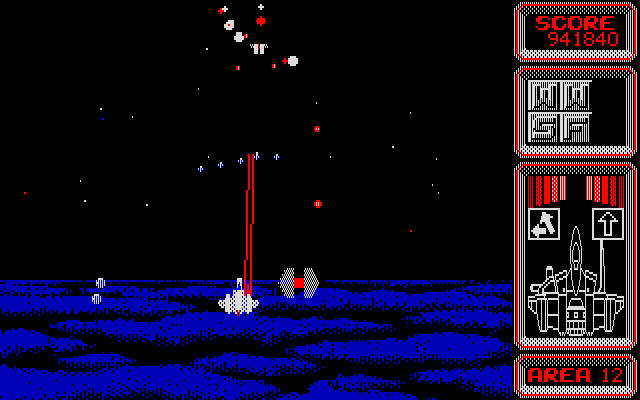
Another unique aspect of Silpheed, for its time, is how weapons and shields function. There are five weapons to choose from and, once acquired, any can be attached to the left and right wing. For wide-spread attacks, go with a double phalanx combo, or perhaps mix and match the laser cannon on the left side with the auto-aiming beam on the right for power and homing attacks. Games like Gradius also allowed weapon selection, but not in quite the same way. Things get interesting when you take damage, since rather than one-hit deaths, you have a shield which slowly depletes. When completely drained, further shots will damage parts of your ship with little debris falling off. Afterwards, one of your wing weapons will cease functioning, then the other, leaving you with just a generic weak beam. Further damage will take out your thrusters, slowing the ship, and then only afterwards do you finally die. This is probably still one of the coolest things about the original Silpheed, since even after taking a lot of damage, and down to the final shot, it feels like you can still make it with a bit perseverance. And, should you actually complete a level after facing near death, the victory is all the more satisfying. Afterwards you return to base to change weapons and recharge some of the lost shields.
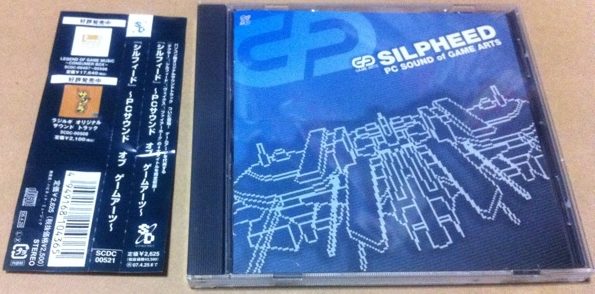
The music, as already mentioned, is astounding. It received two OST releases, and is well worth listening to. According to silpheed.org the above pictured OST came out April 26, 2006, and is a compilation containing music from Thexder, Silpheed, Tactical Gladiator Veigues, and Fire Hawk (aka:Thexder The Second Contact). If you follow the link it’s available to download. For those rocking it really old school, there’s also a cassette tape release from 1986, titled Synthesizer Grade Up Version (front / back). Don’t expect a digital download of that any time soon! Apparently the DOS release of Silpheed was even bundled alongside the Game Blaster sound card from Creative, back in 1989, to showcase the card’s capabilities. Audio was impressive all around. In all versions apart from the CoCo release, there was also digitized speech! The game’s antagonist would introduce himself when appearing as a giant disembodied head. The DOS version’s dialogue sounded garbled, but the Japanese original was almost audible.
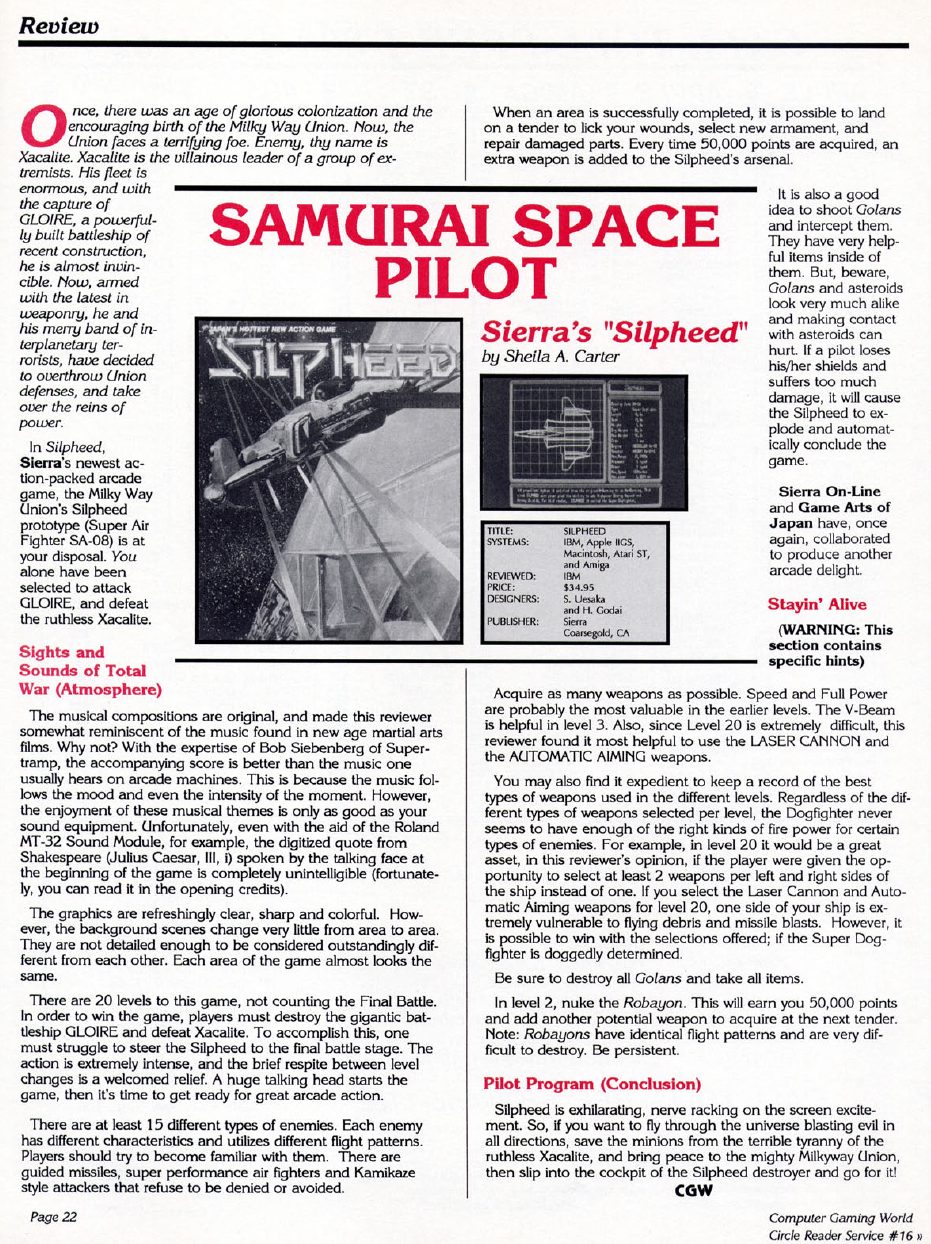
Computer Gaming World 62, Aug 1989
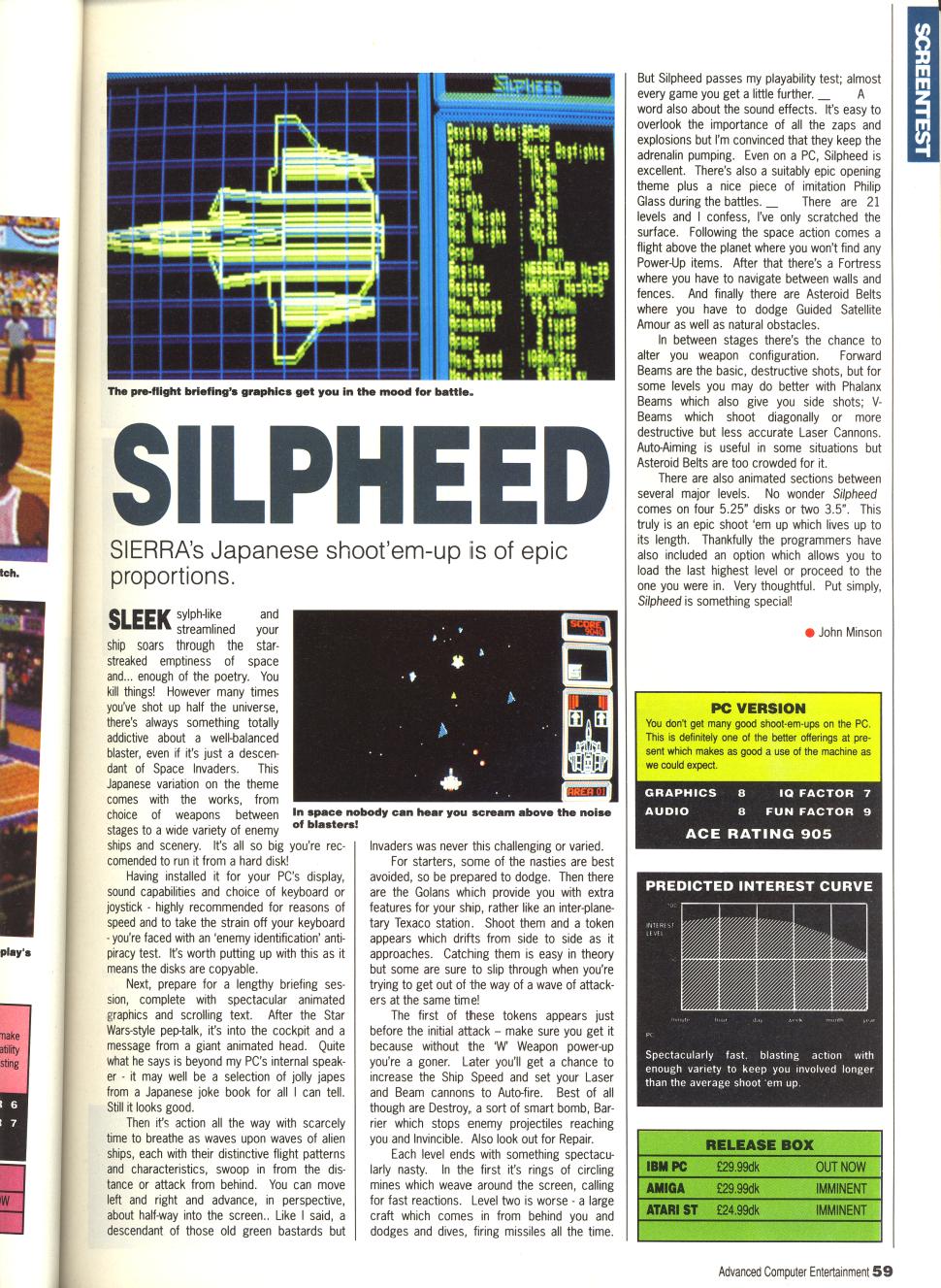
Advanced Computer Entertainment 24, Sept 1989
Given the context of the era, and what was available for home use, Silpheed would have blown people’s minds. It did a lot of impressive things which only later would become commonplace. Today though, it hasn’t aged so well. For one thing, it’s surprising that the oblique viewpoint survived for the subsequent sequels on Sega CD and PS2, because as any shmup veteran will attest, it makes spatial awareness and judging the distance between enemies, projectiles and power-ups almost impossible. It’s not too bad if you keep your ship at the bottom of the screen and play it like Galaga, but if you travel upwards, perhaps to grab a power-up, movement becomes erratic and any kind of precision is impossible. Aiming is also tricky, requiring you to spray-and-pray rather than be accurate. The real problem though is that it’s just not very interesting. When you’ve seen the outerspace, planetside and fortress areas once (available within the first four levels), you’ve seen the entire game, which then repeats for 20 levels. There’s very little enemy variety, and bosses are generic palette swaps of the same slightly-larger-than-normal enemies. Once you’ve got a forward laser and the phalanx shot, you don’t need to bother with the other weapons. By the end, even the music starts to get repetitive.
Western magazines at the time loved the DOS and Apple ports by Sierra, and rightly so, given the context of the era. The controls are extremely smooth, even with a keyboard, and the action is relentless. Anyone curious about the series, however, is probably better off starting with the vastly superior Sega CD sequel, which is similar in many ways, but has a lot more variety in terms of music, level design, enemies and bosses.
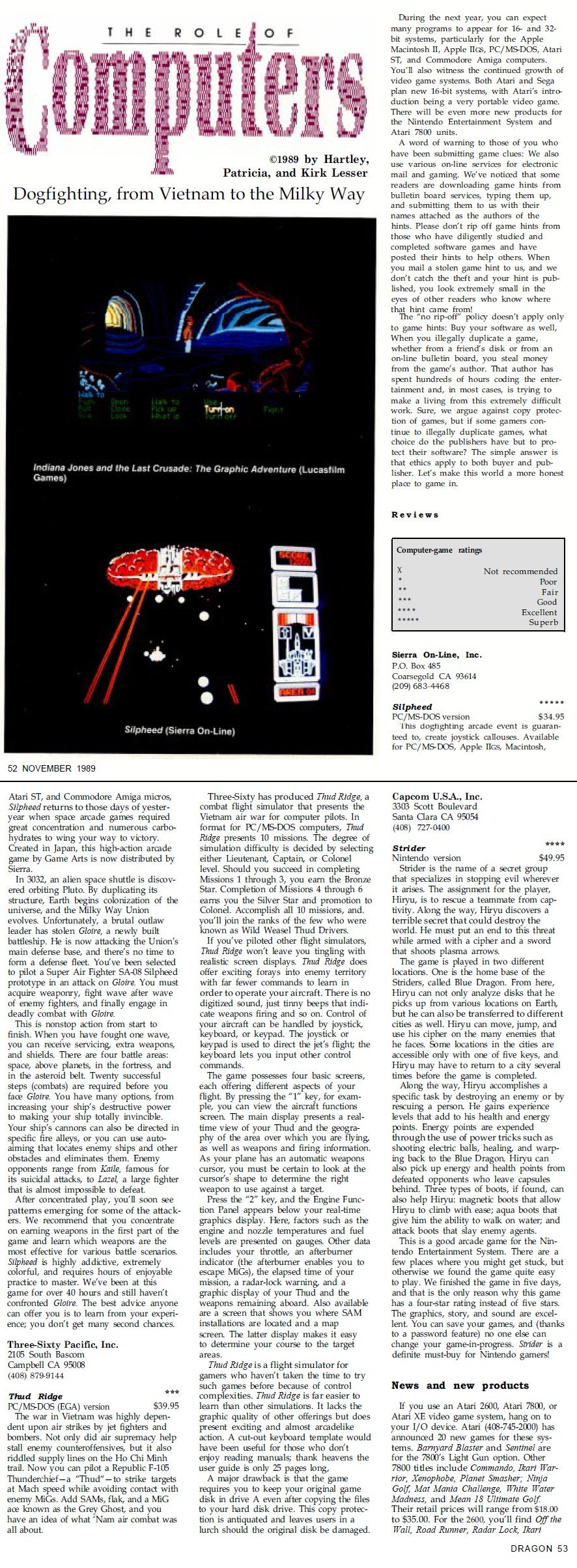
Dragon 151, Nov 1989
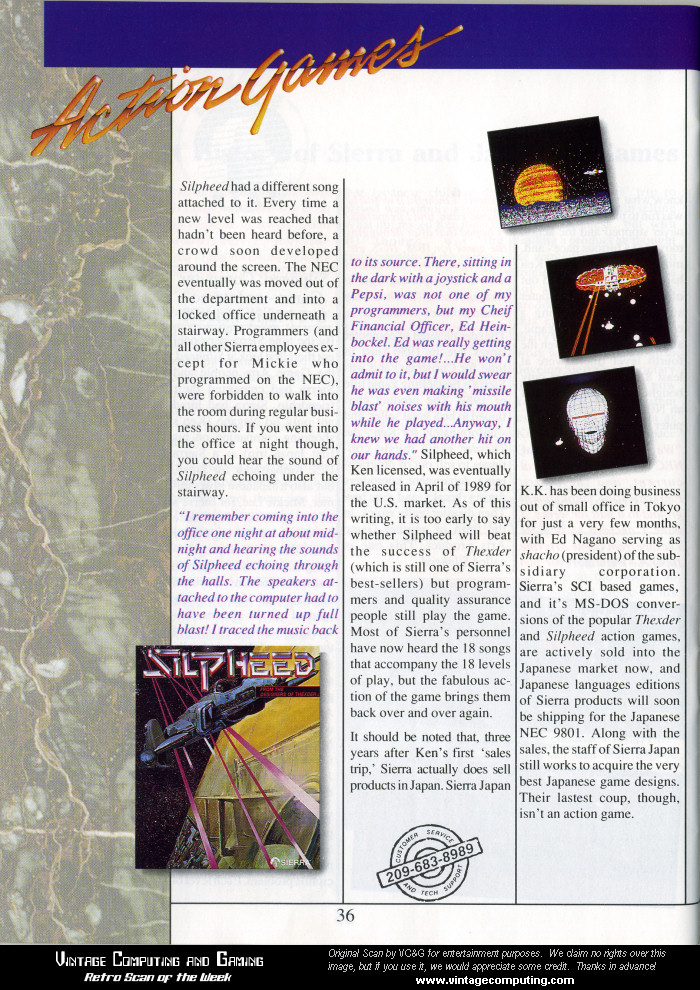
Sierra product catalogue (1989), via VC&C
Version differences
The FM-77AV, DOS and Apple II ports are nearly identical to the original PC-88 release. The graphics are the same, with vertically interlaced columns of pixels, and the audio is still impressive across all of the formats. The DOS version especially makes a good showcase for sound cards on old computers, and is even better than the PC-88 original, with a wider range of sounds. The FM77AV port is slightly improved over the others, with a redrawn intro and cut-scenes, using a fuller color palette. It looks damn slick, though the rest of the game is the same as before. There were also planned Atari ST and Amiga releases, mentioned in the manual for the other versions, plus covered in a variety of computer magazines such as ACE. They never turned up though, and trawling Atari and Amiga websites yields no further info.
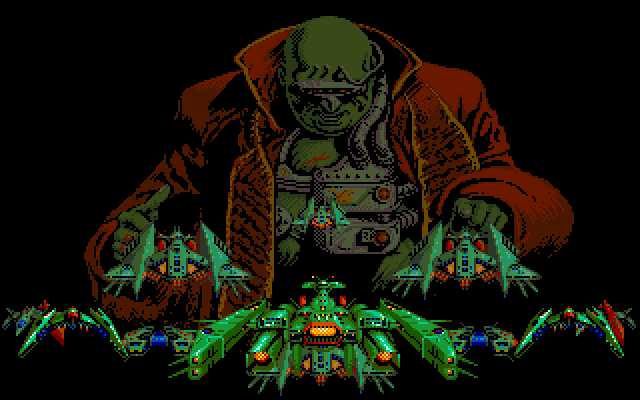
The antagonist Xacalite as shown in the FM77AV intro
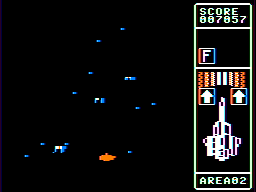
The TRS-80 CoCo version, which comes on a cartridge, is the most interesting port – or perhaps that should be most shockingly awful in the history of computers (though there is a legitimate reason why). Using the Model 2 CoCo, the resolution is scarcely above that of an Atari 2600. There’s constant flickering, and for a computer whose name is a portmanteau of the words “color computer,” at best it seems to produce about four colors and not with any decent results. There’s not even a proper title screen when you boot the game. Plus, all the missions appear to be set in space, presumably because the fortress and planetside levels were too advanced to be recreated. Worst of all is that the music is gone – all you’ve got is a farty “ping” when shooting. Ported by Synergistic, it is indescribably terrible.
This, however, is when playing it on a Model 2 CoCo. According to www.lcurtisboyle.com, you can plug the same cartridge into a Model 3 CoCo for an improved experience. Though based on the screenshots provided, it doesn’t improve things much – the fortress levels are downgraded to a generic trench run (Youtube video) without any obstructions, and there still doesn’t seem to be any planetside missions. The accompanying text explains this: “Silpheed is an arcade game that was a cross-platform hit. It is a 3-D space game, with 2 distinct levels: flying through space, and flying through a trench (similar to The Force). The CoCo version was on a ‘fat binary’ cartridge that contained both the CoCo 1/2 version, and an enhanced CoCo 3 version. Unfortunately, due to the decision to make it one cartridge, it had to be severely reduced in size to fit (both versions had to fit on one 16K ROM), and a lot of the extra features that the DOS version had are missing in the CoCo version.”
Having said all this, however, it’s perhaps unfair to criticize the game too much. One of the men behind both versions on the CoCo was Robert Lindsley; he was only 17 at the time, and it was his first game. He worked alongside lead programmer Daron Stinnett, and even blogged about it. It’s easy to unload on a bad game, but when one of the guys behind it was just a minor, is that really fair to do? As Robert explains: “My entire life for the next three months was creating and entering hex codes into the Tandy CoCo 3. I was working 16 hour days and loving it. The characters were created using graph paper, adding up the hex values and entering them into the code. I had done this type of work before, but had never done it professionally. Level data was much the same way. You figure out the direction you want the enemies to go and enter the values into the code. Since the games were on cartridges it was a huge pain to test out full versions. Daron and I were working side-by-side. A lot of nights we would be until 11 or 12 at night.”
Emulating
Unless you intend to use the original DOS or Apple hardware, or really want the improved music of the DOS release, you’re better off just emulating the PC-88 version, which loads easily and has English text anyway. If you’re emulating the other systems you’ll have the added complication of installation and hardware configuration for DOS, or trying to get the fiddly XGS Apple emulator running, since online disk images are in 2mg format (KEGS, its variants, plus MESS are all also reported to work). DOSBox requires you to first boot up the configuration file and set the audio and graphics options, save, then exit and reload with the actual game file – make sure to use a GUI like D-Fend Reloaded. Regarding the FM77AV port, you’ll need the XM7 emulator,. Make sure Disk A goes in Drive 0, and Disk B in Drive 1. If you want to emulate the CoCo version: apart from the game being abysmal, most CoCo emulators are a complete pain in the ass to use and have a pathetic GUI. Although MESS is pretty good, it doesn’t seem able to load Silpheed in CoCo3 mode.
Minigames
In the grand old tradition of many PC-88 releases, there are two hidden minigames on the Silpheed disk. Though accessing them is a bit tricky. In the above provided ZIP full of goodies is a file called DISK-BASIC.D88. Let’s assume you’re using the M88 emulator. Load the emulator, set it to MODE V2, go to DISK and then DRIVE_1, load the DISK-BASIC.D88 file and then choose RESET under FILE (or hit F12). It’ll ask, “How many files?”, but just ignore this and hit enter and wait until it brings up the copyright text. Go to DISK, then DRIVE_1, then select CHANGE_DISK and load the Silpheed.d88 file. Do not hit reset or anything else. After doing this, go back to DRIVE_1 and select 2_DISK_b from the inserted Silpheed.d88 file (this is disk 2 basically, but it must be in DRIVE_1). Now, once back in the emulator, type one of the following exactly as it’s shown, WITH the speech marks:
RUN “XACALITE”
RUN “SILPHEED2”
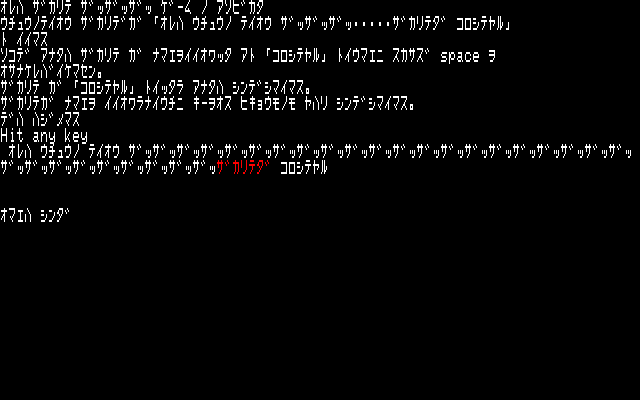
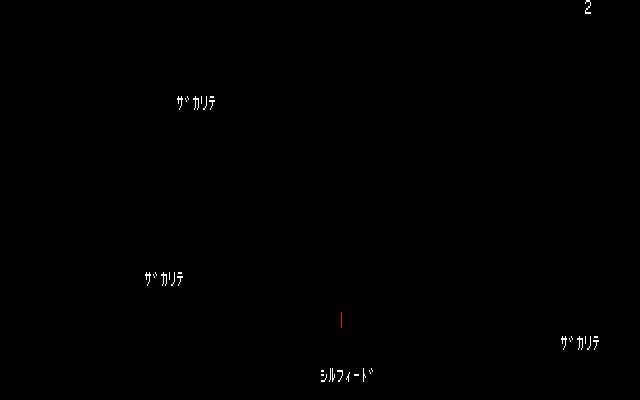
Assuming you did it correctly it will load one of the games. Xacalite appears to be… Well, I’ve no idea what it is. Some kind of quasi-text adventure? Hitting anything brings up a paragraph of text and a funeral dirge. Silpheed2 is an ASCII-based vertical shmup. The Japanese Katakana word for Silpheed moves along the bottom, left to right, and fires either *, V or | at oncoming words which spell Xacalite in Katakana. It’s as dull as it sounds.
Links:
Silpheed.org – extremely excellent fan-site with lots of information and comparisons.
Review – Compute! Issue 112, Sept 1989, p60
Youtube – video showing the CoCo 3 trench run
CoCo version – info on the TRS-80 CoCo port.
Robert Lindsley – development of the CoCo versions
Many thanks to Silpheed.org for cataloging information, and also VG Museum for use of screenshots, and the Tokugawa Forums for explaining the BASIC minigames. Additional emulation help courtesy of Tokugawa’s Starscream. Also, thanks to the lcurtisboyle website for screens and information on the CoCo release
Comparison Screenshots
PC-88
FM-7
PC-88
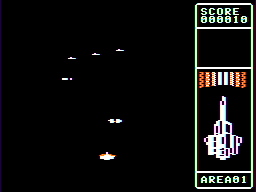
CoCo 1/2
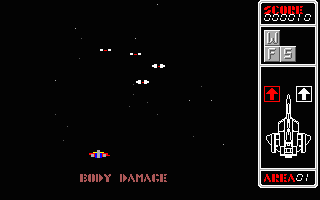
CoCo 3
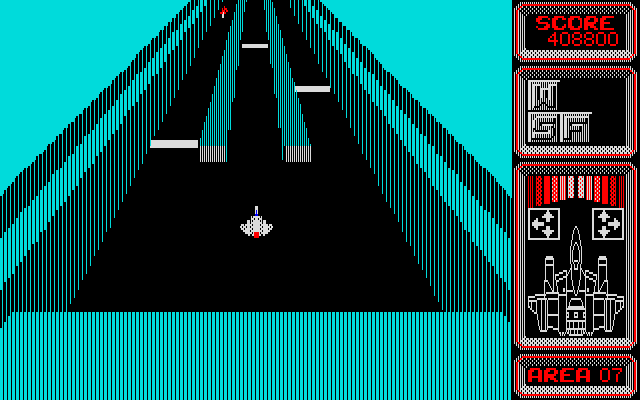
PC-88
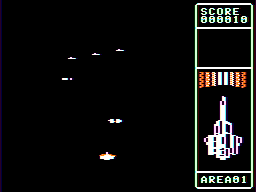
CoCo 1/2
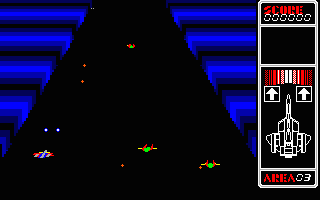
CoCo 3
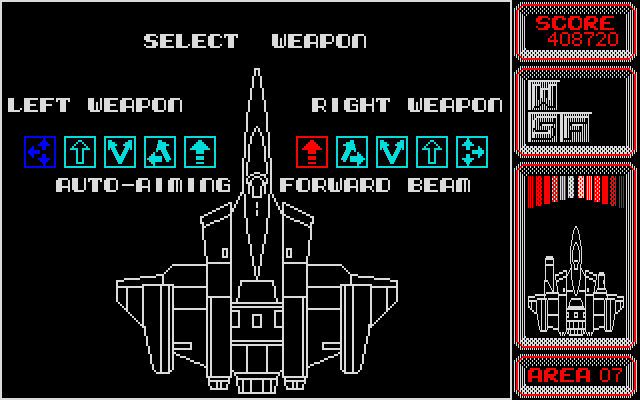
PC-88
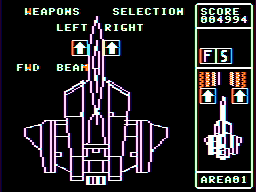
CoCo 1/2
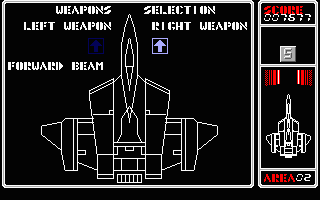
CoCo 3