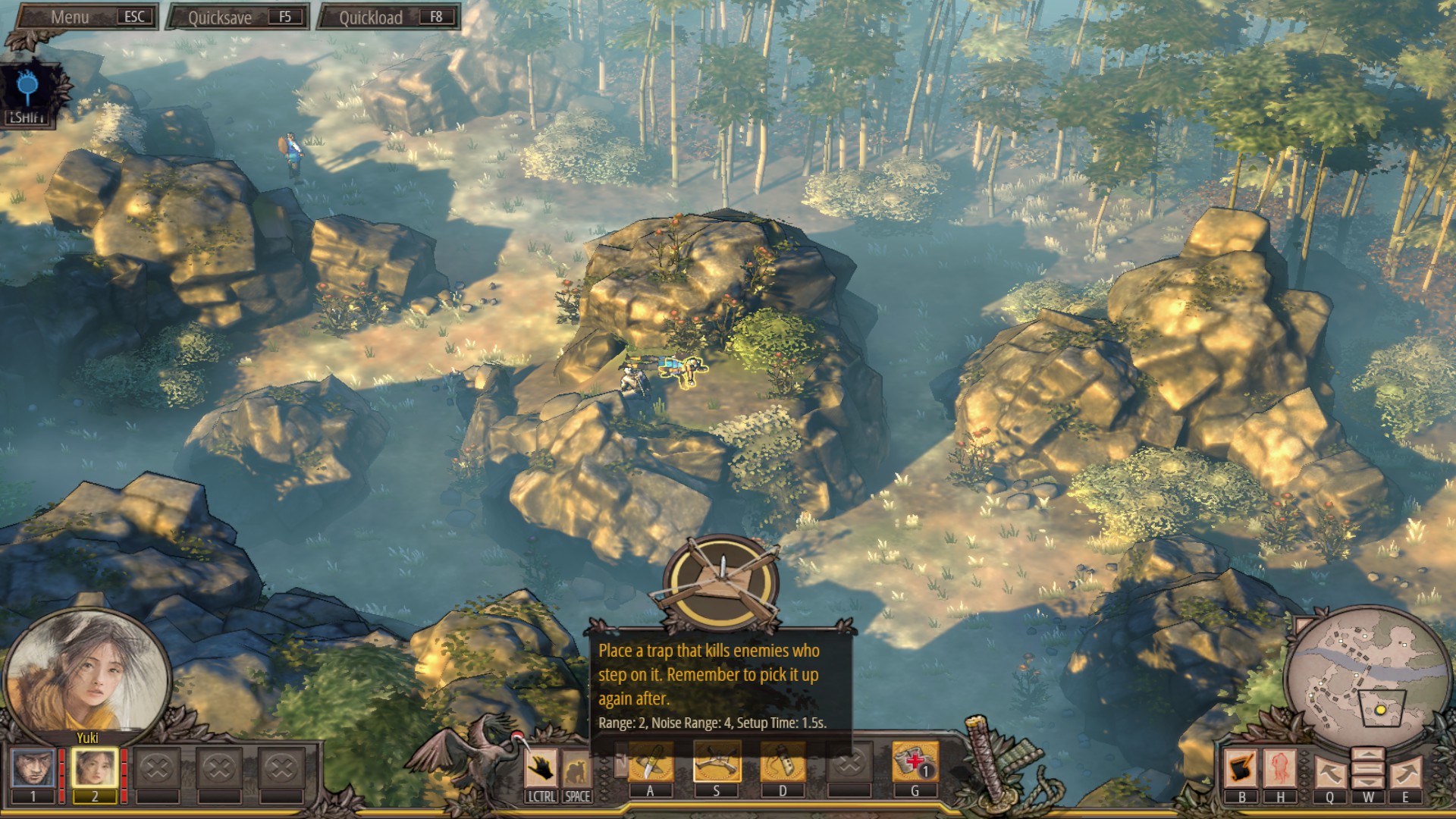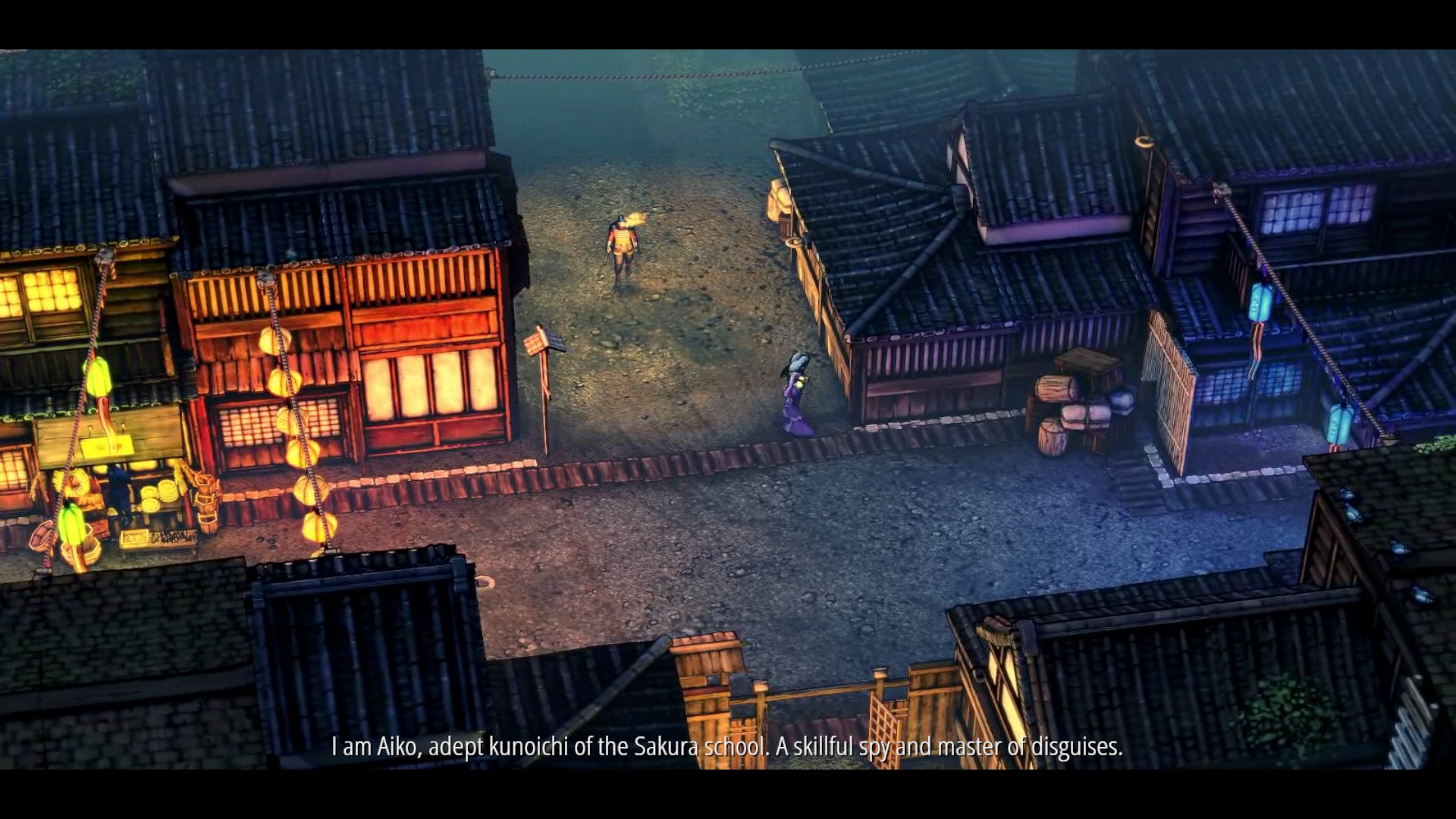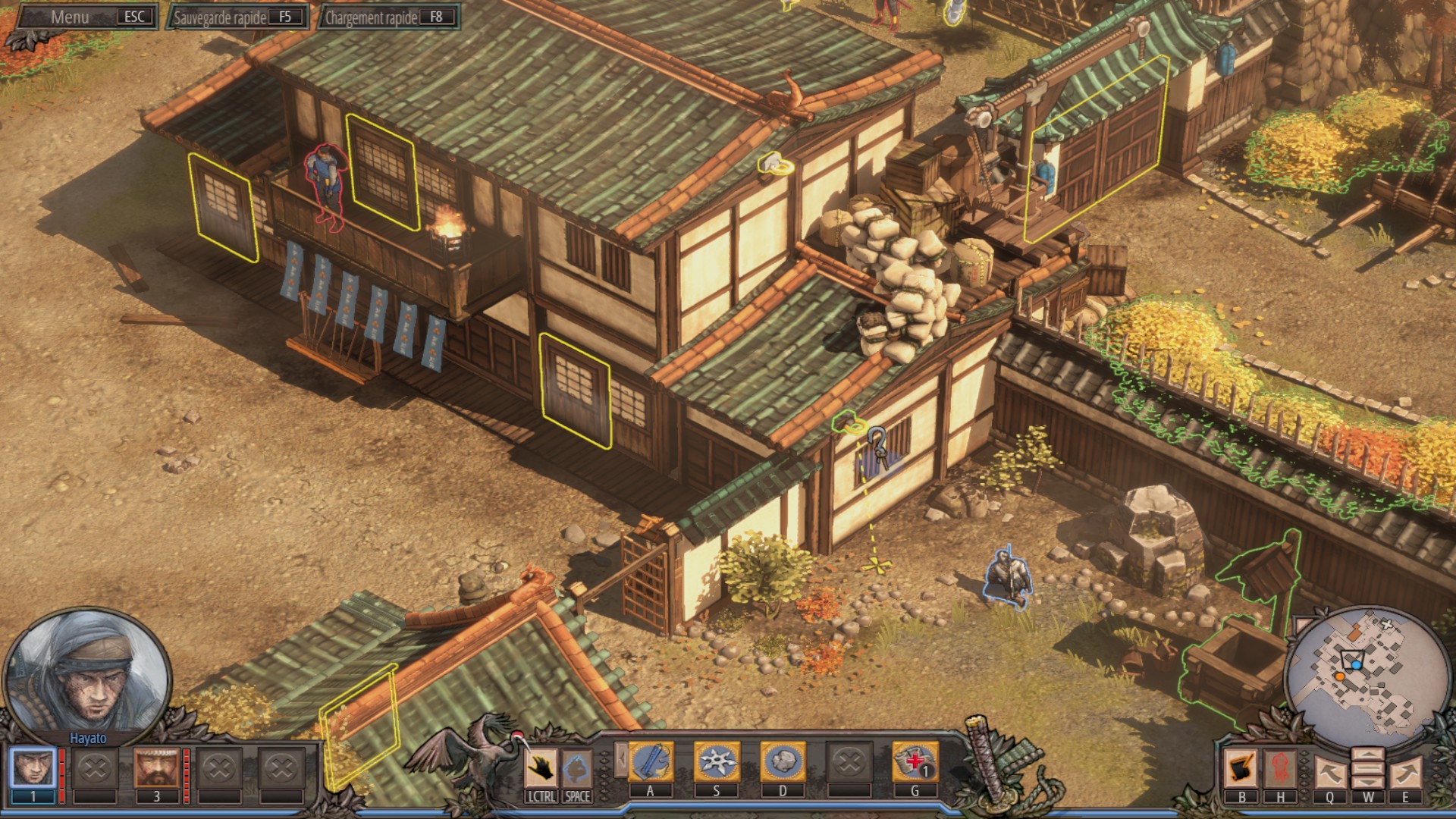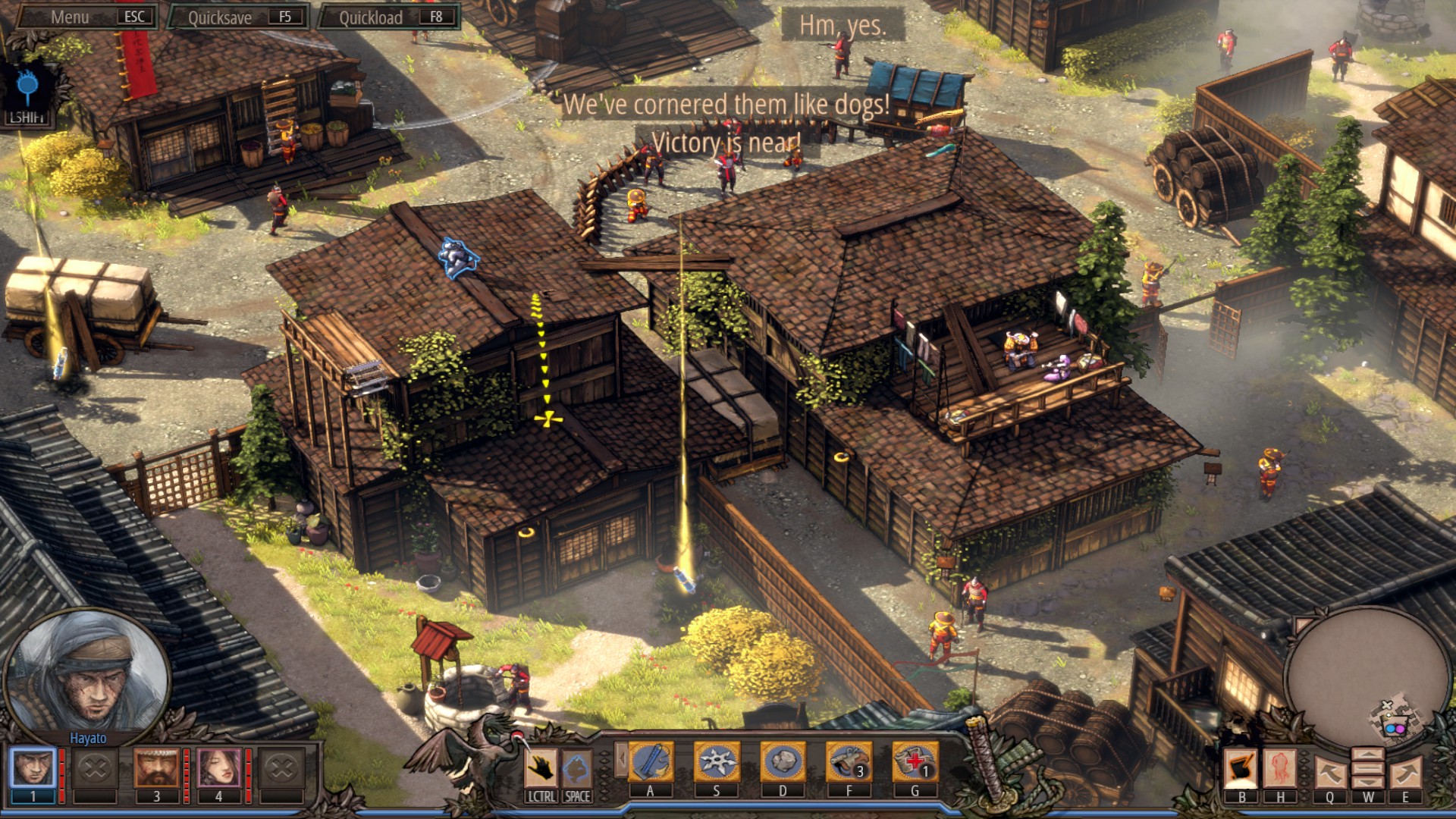
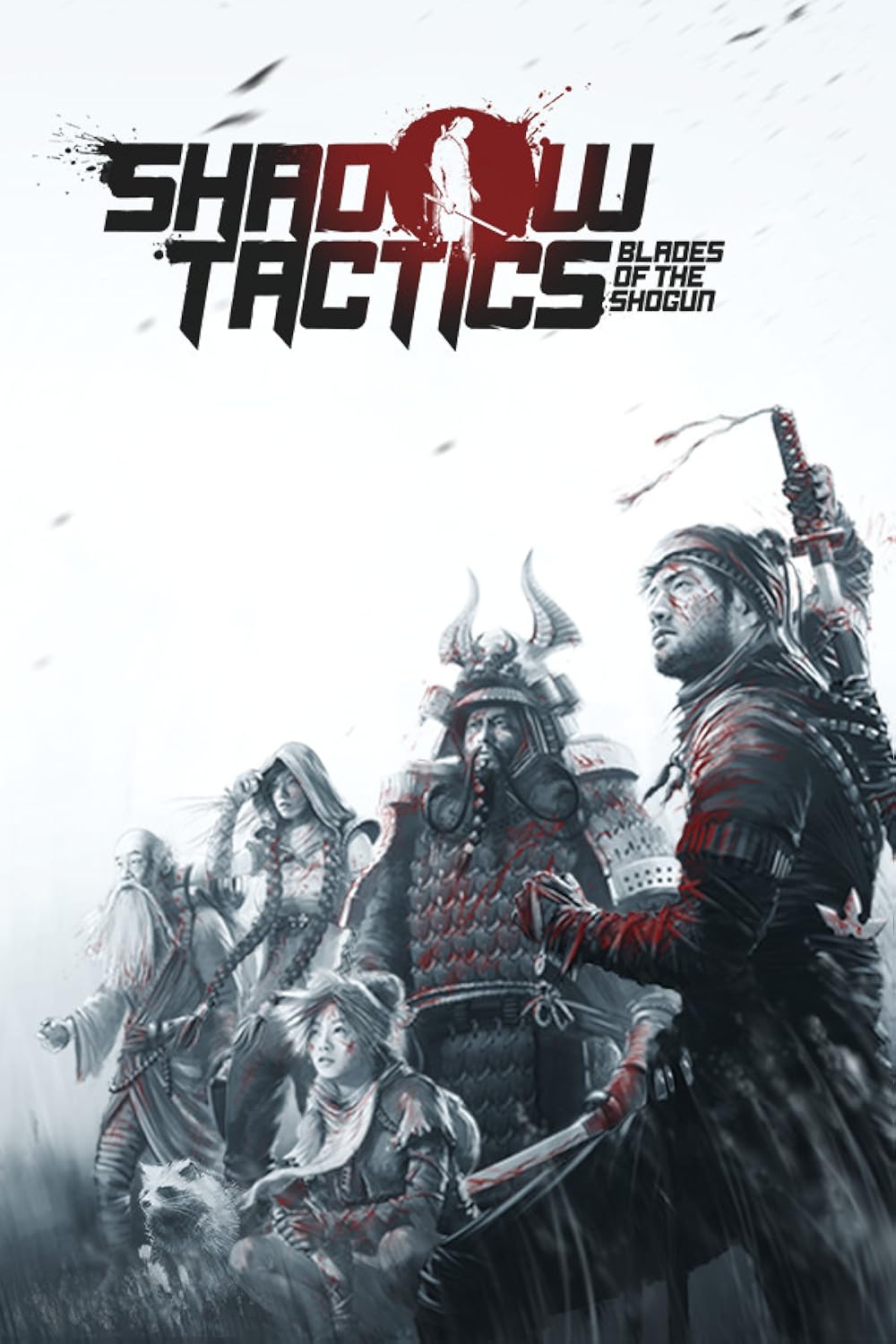
The “stealth-oriented real-time tactics” genre is a very specific one that is familiar to a lot of European PC gamers of the late 1990s and early 2000s. The genre was essentially birthed in Spain by Pyro Studios’ WW2-themed Commandos and its sequels, which were hugely successful, but Spellbound Studios from Germany proved worthy rivals with their western-themed Desperados and a few others. After a dozen or so games, the genre had essentially died out by 2005; however it experienced a bit of a revival after the 2016 release of the excellent Shadow Tactics: Blades of the Shogun by German studio Mimimi, a love letter to the genre that has its place right next to Commandos and Desperados.
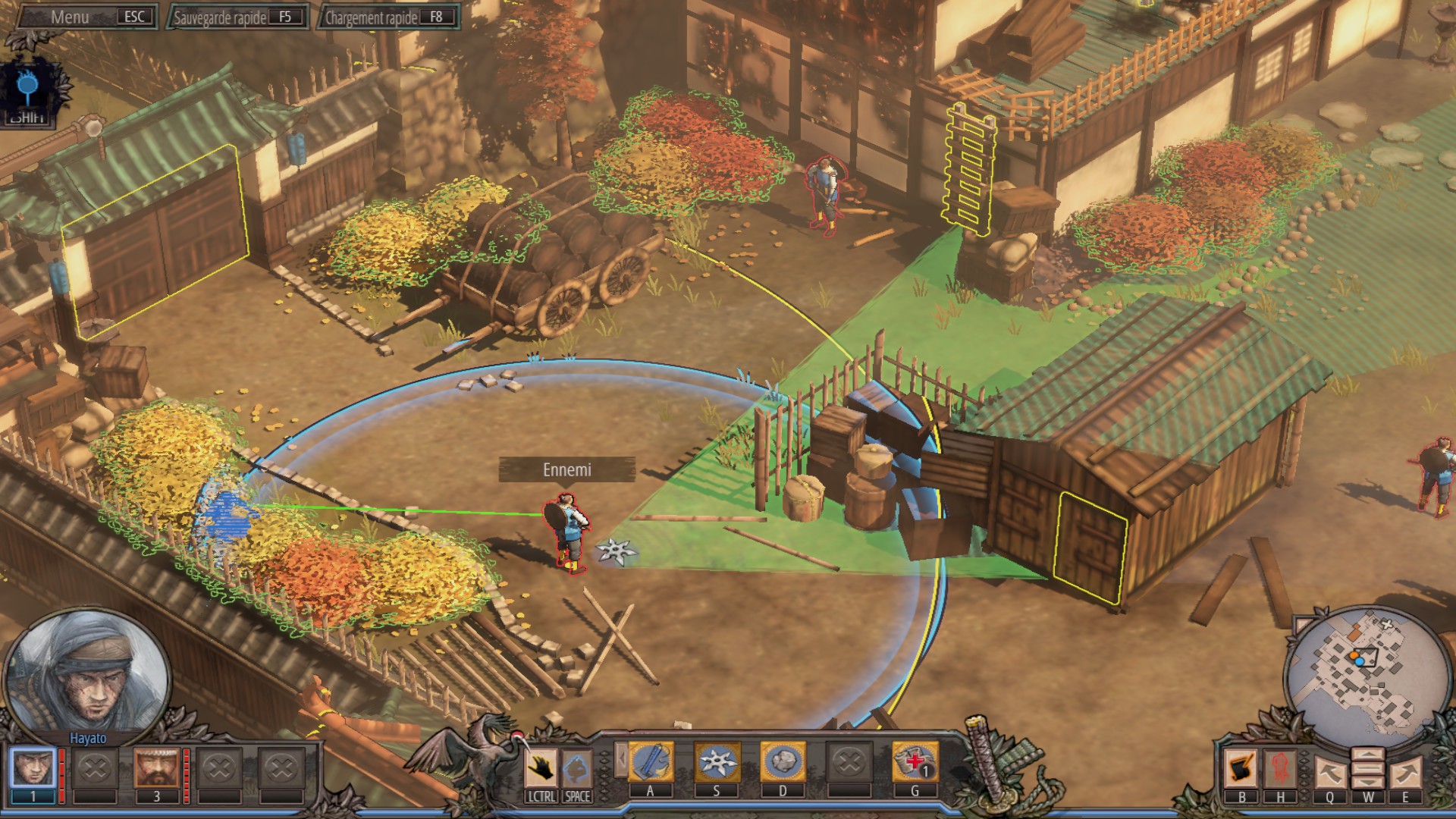
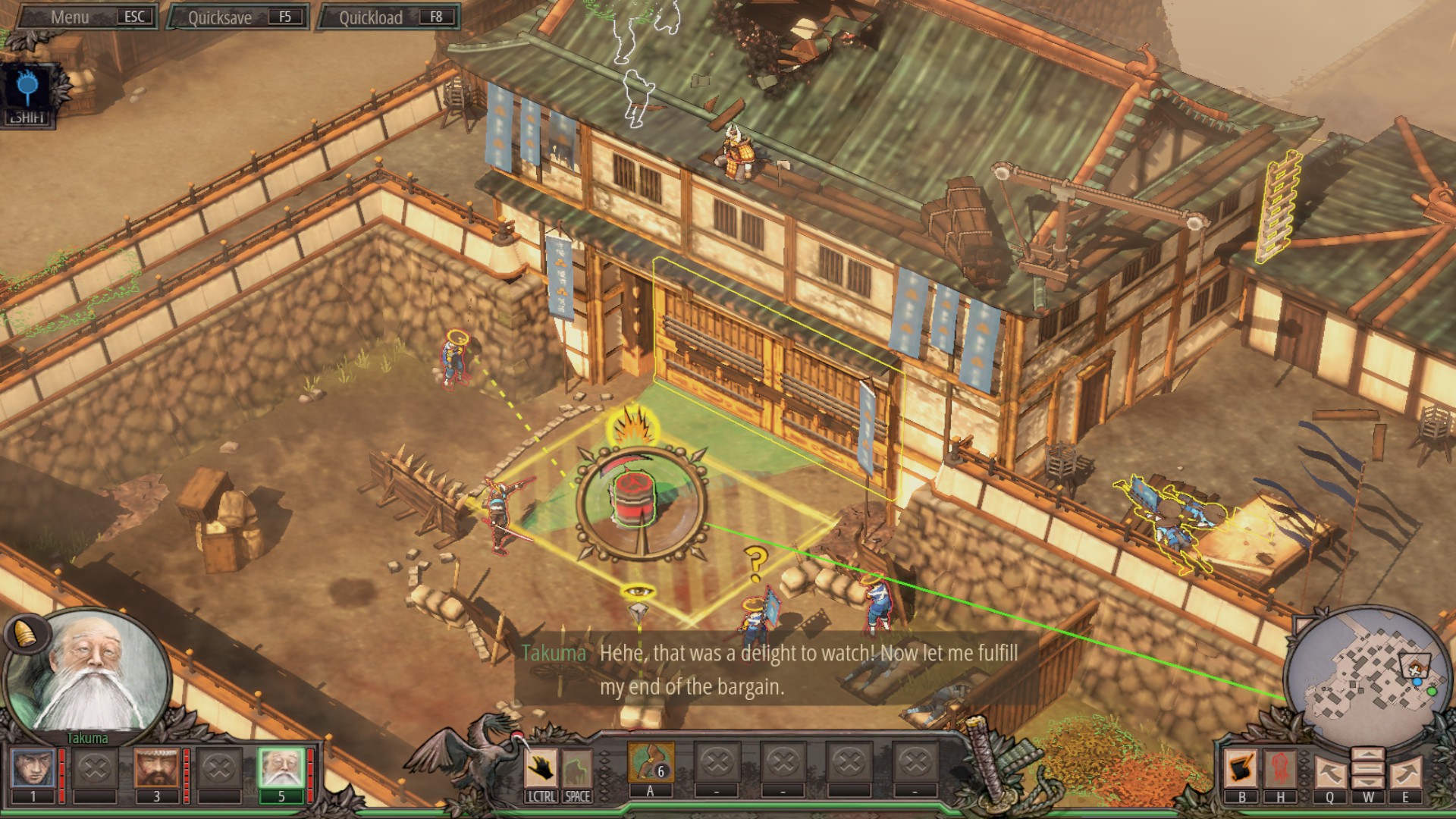
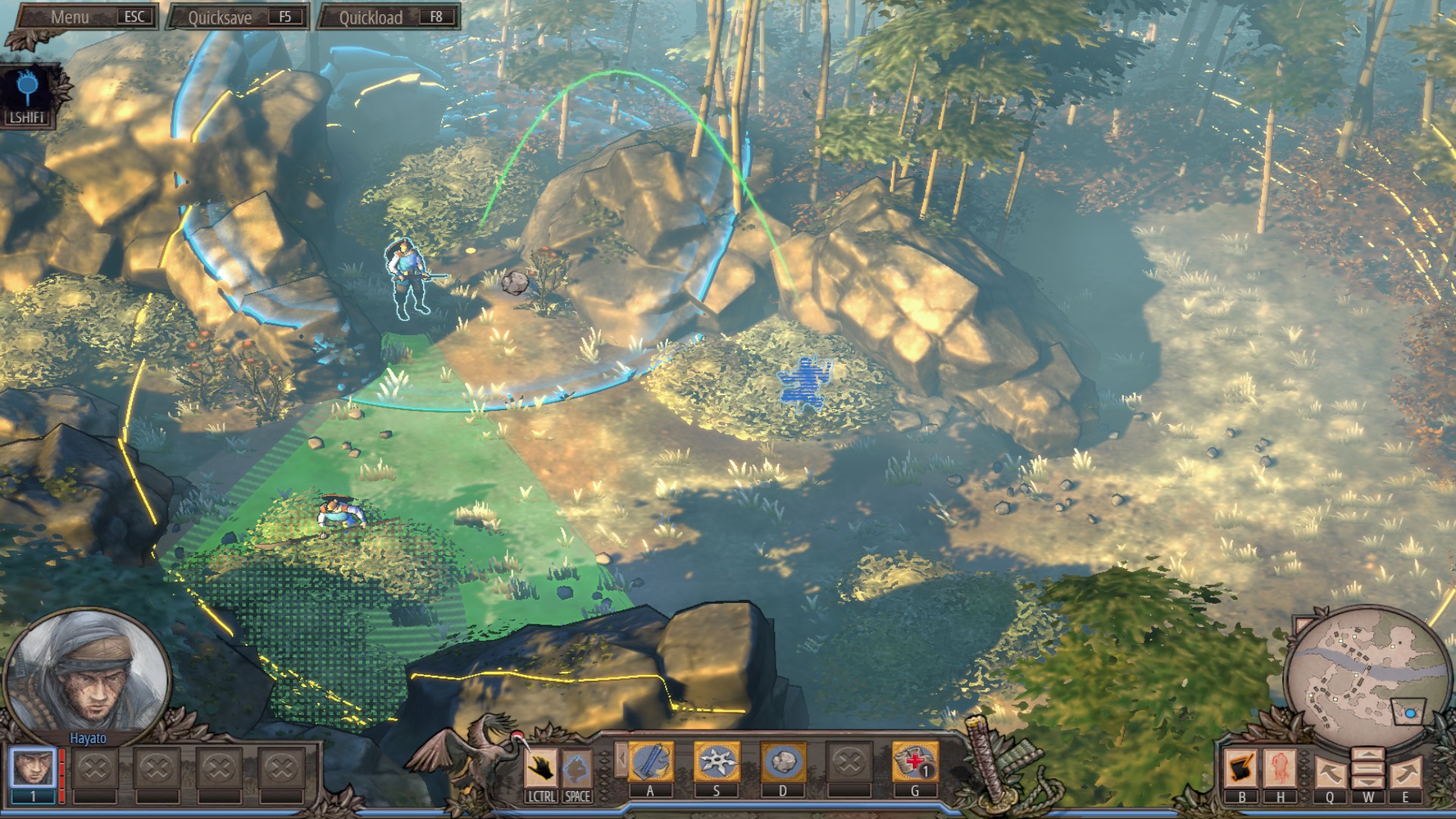
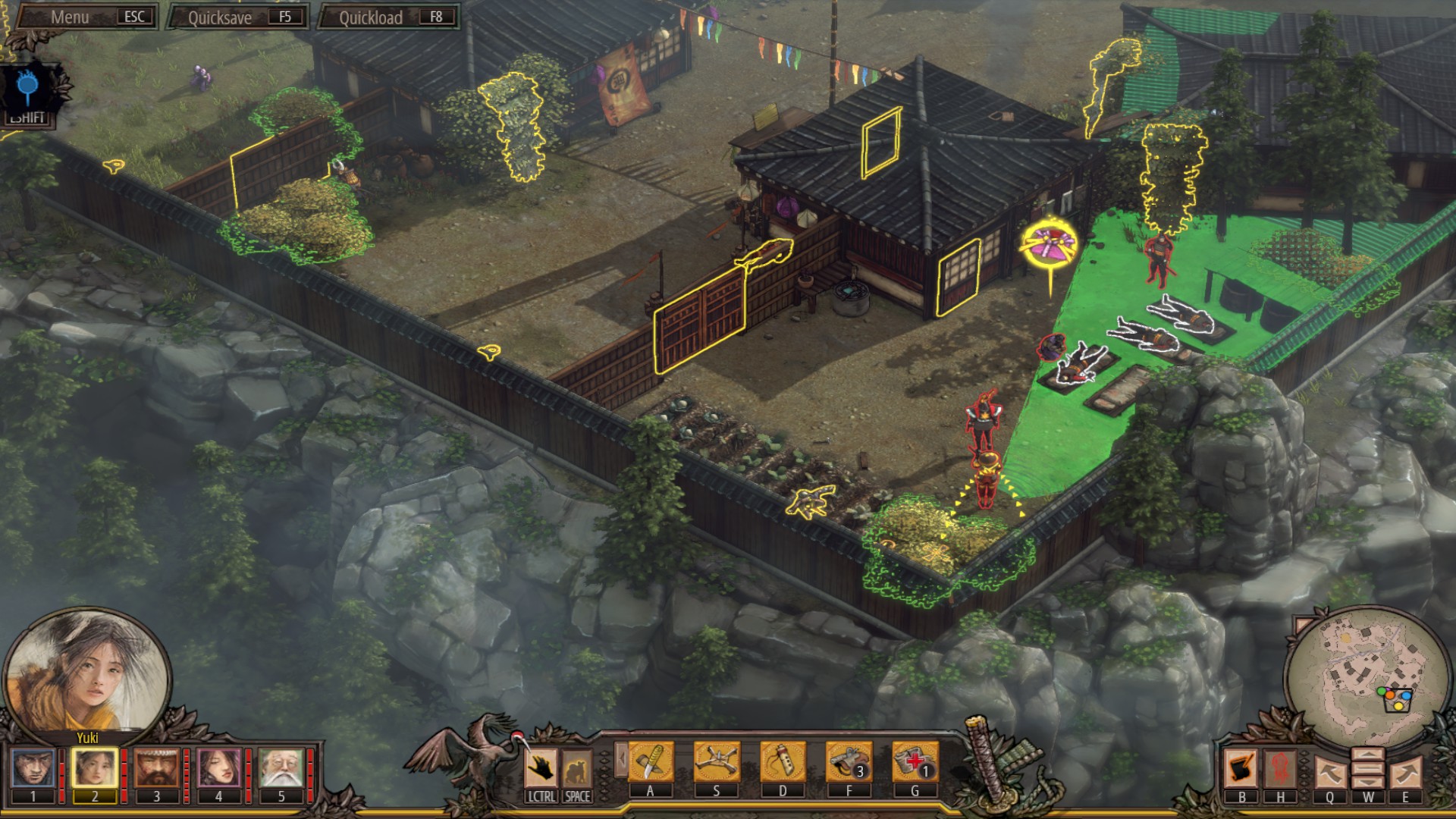
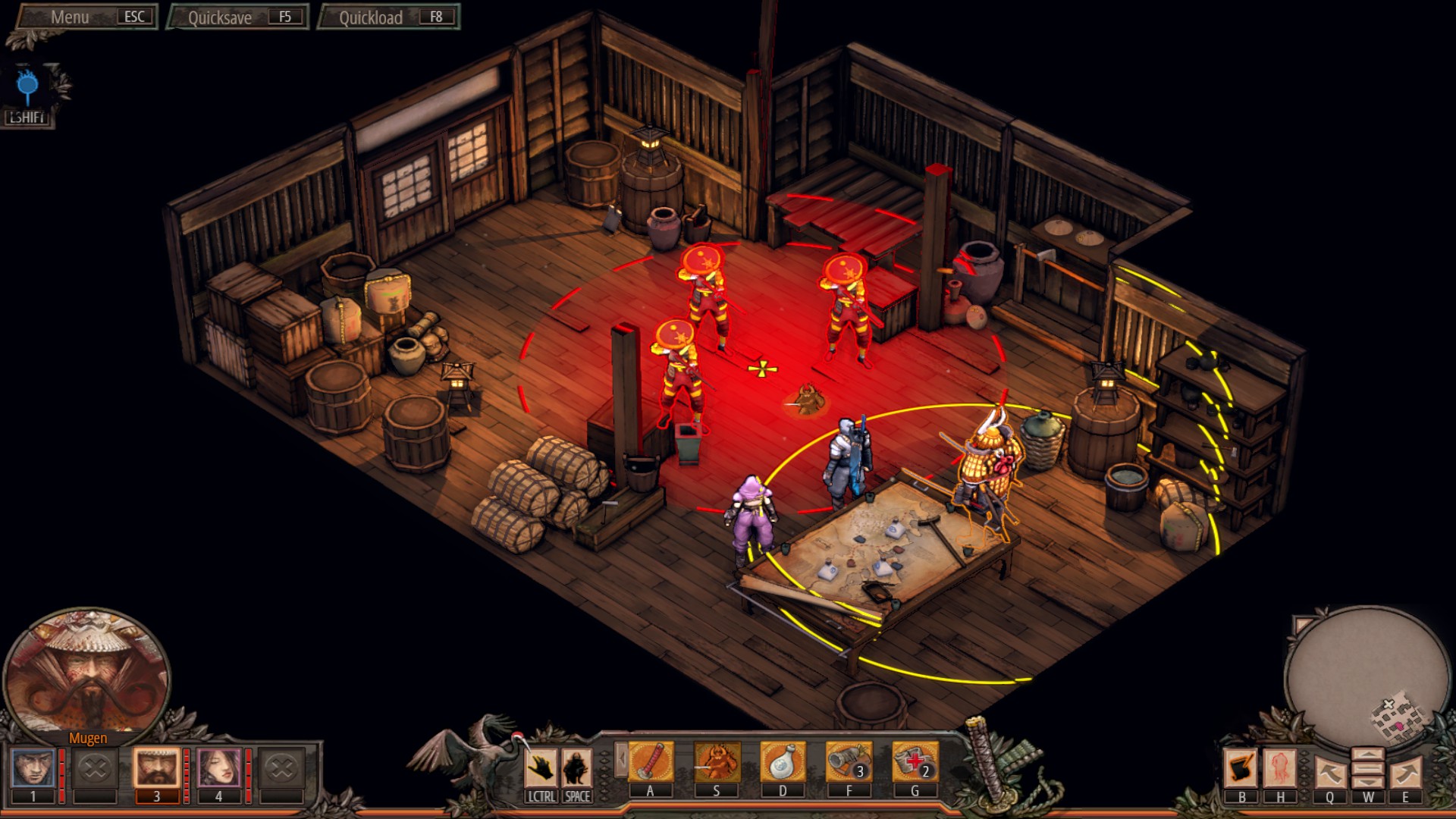
The genre typically places you as the head of a small platoon, each different character with different abilities, infiltrating a map in enemy territory to accomplish a variety of objectives, from freeing one of yours to assassinating a military figure or sabotaging a specific structure. The isometric view allows you to move your characters with a click of the mouse, and study the enemy guard’s patterns, i.e. their patrol route and their viewcone; from then, you devise a plan, usually requiring you to perform some time-sensitive action, like knocking a guard out and carrying its body somewhere else before his mates come back from patrol. The positioning and behavior of the guards (usually tied to their rank – generals will not get distracted as easily) creates lots of small-scale puzzles (hence the “tactics”) and you need to figure out how to peel at the enemy’s positions layer by layer.
Shadow Tactics follows this basic recipe but with great flair with respect to specific gameplay choices and variations there exists within the genre. The character’s personalities feel familiar, but their specific abilities have been balanced very well – hence, more than previous games, you will need to leverage the whole squad and combine their skills at various points. A lot of the abilities and gameplay choices are borrowed from the Commandos and Desperados series, but skillfully adapted to match the context of feudal Japan: the harpoon from Commandos: Behind Enemy lines is a shuriken; the cigarette pack from Commandos: Beyond The Call of Duty is a bottle of sake; the quick action “let’s sync our clocks” mechanism from Desperados is now a Shadow Mode; the dog in Commandos 2 is now a tanuki. But Shadow Tactics‘ borrowing is very thoughtful and carefully considered; for instance, firearms are all heavily bullet-constrained, disabling the strategy of “shooting in the air and seeing who comes” from all the other games; and a number of innovations from Commandos 2 and later (exploring buildings, inventory management, searching bodies, etc.) are out of scope, which is smart as it helps avoid overwhelming the players with features. It plays like classic Commandos/Desperados, but with the best skills/abilities taken across the genre.
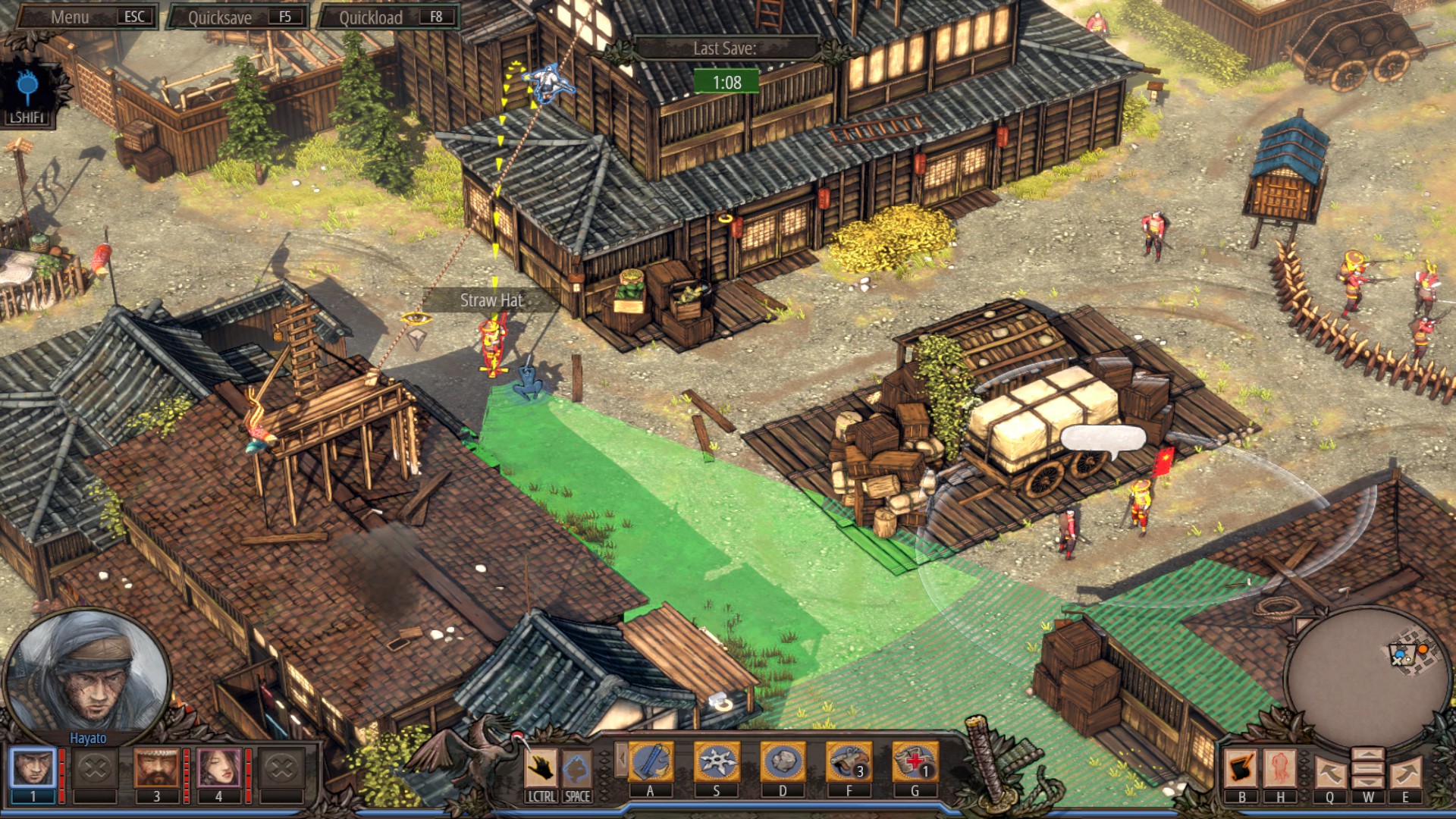
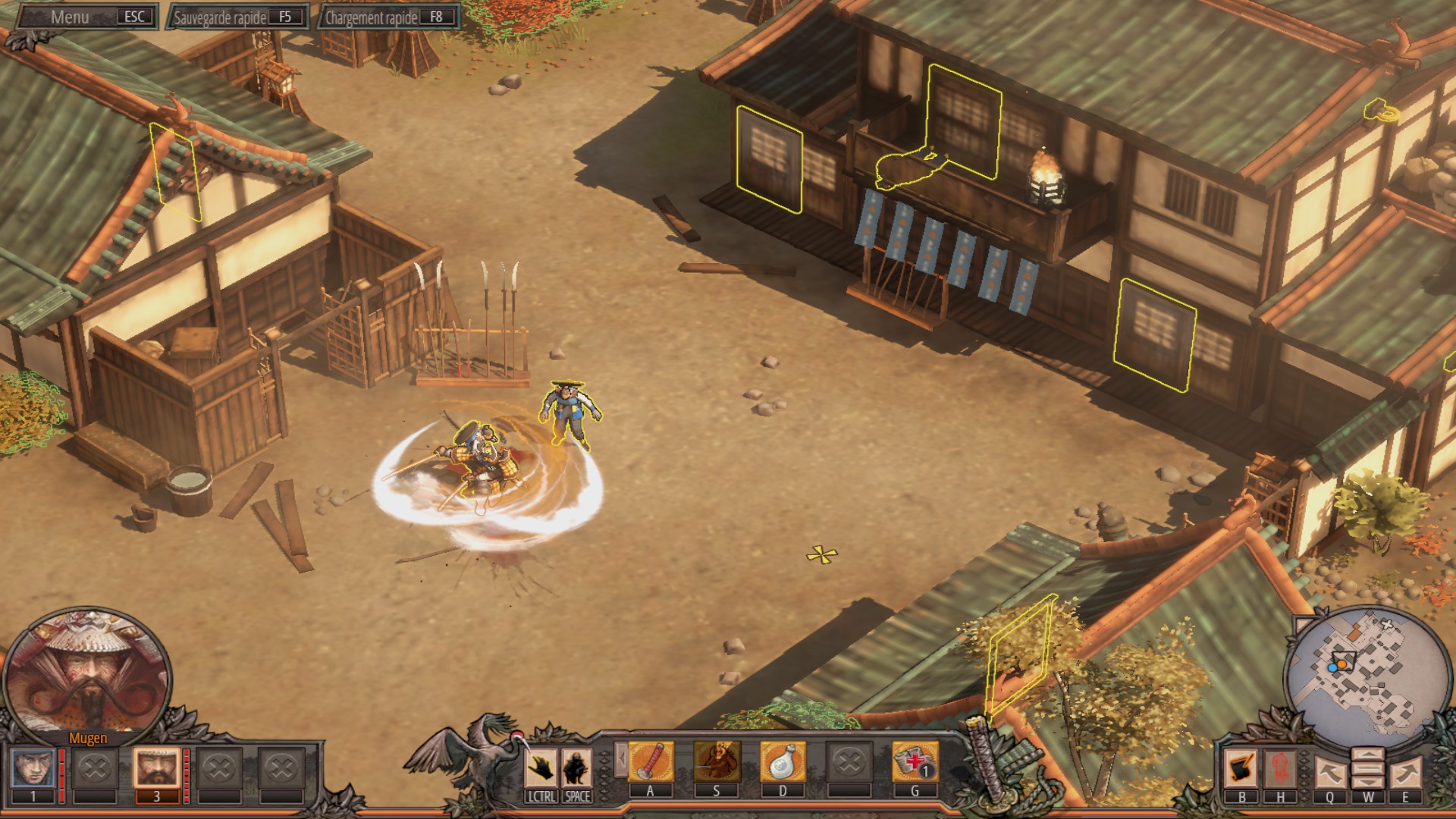
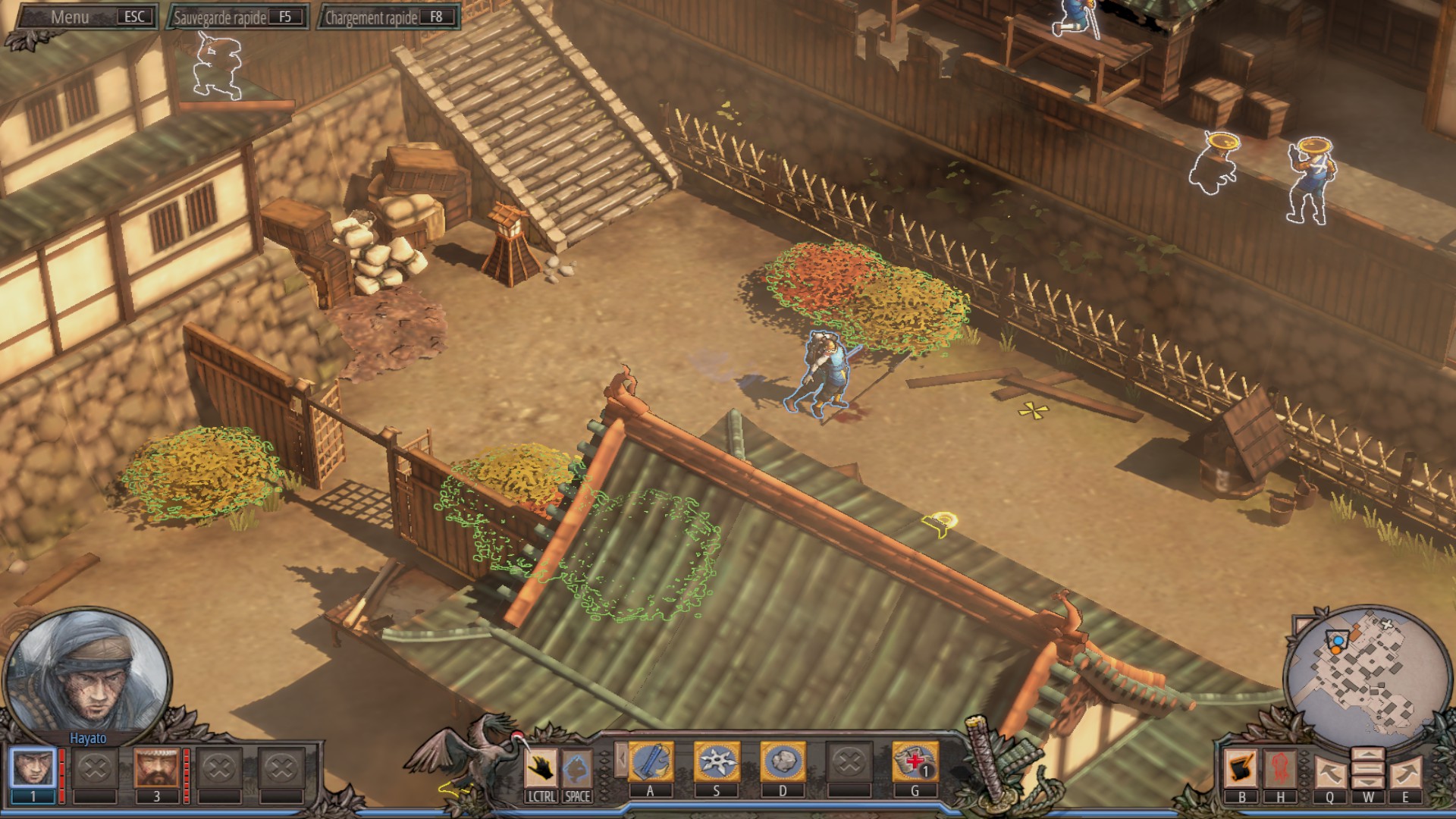
And more than just remixing classic elements, the game also successfully innovates in several aspects, in ways that supports and leverages its setting very smartly and only makes the atmosphere more cohesive. There is a lot more emphasis on climbing buildings, running on roofs, tightroping above streets, and the possibility of diving onto an enemy for a quick sword-based kill, which is perfect for a setting involving ninjas; you have a samurai with long swords that can perform a zone kill by whirling its swords around; and enemy samurais that cannot be killed by regular attacks, and either require your samurai’s swordfighting abilities or a dangerous two-phase takedown that overall make them formidable foes that you are scared of, which isn’t something present in other games. Other new gameplay features include dying durations (some actions make enemies go down faster than other, helping you avoid detection, or precluding some methods), torches in night missions that give enemies the ability to see you and your actions clearly (and noticing a torch that died out, and coming to light it back up), listening in on conversations as a sub-objective, and hiding in bushes and thickets (they are everywhere, and hiding a body in a bush makes it disappear for good, which helps). The mechanics are introduced little by little (new characters, new situations) without getting overwhelming (looking at you, Commandos 2), and without being one-time use gimmicks, with at least two-to-three missions leveraging each of these mechanics.
Overall, the game is clearly favoring the stealth aspect (which is the core of the genre – making the least subtle approaches effective in Commandos 3 led to outcry that the genre was dumbing down), and to that end gives you both new tools, and new challenges (such as the mechanic that new enemies will keep spawning every time someone raises the alarm). This makes the game very cohesive, really focused on making you progress through new variations and new challenges, but without being too hard. The difficulty is quite progressive, and working through the missions takes time (about two or three hours per map) and some creativity but nothing unsolvable as there are often several approaches and directions to an objective. The final mission is beautifully paced, starting with a big difficulty spike, with very tight timings and enemies constantly looking at each other, then relenting towards the end, feeling more like a victory lap, which is a great way to end the game. Additionally, Mimimi includeed several great ideas to promote replayability: the game has adjustable difficulty levels (which add more enemies and make things more challenging), speedrunning goals, and additional badges giving you additional constraints (or sometimes just Easter Eggs) and will be great for completionists.
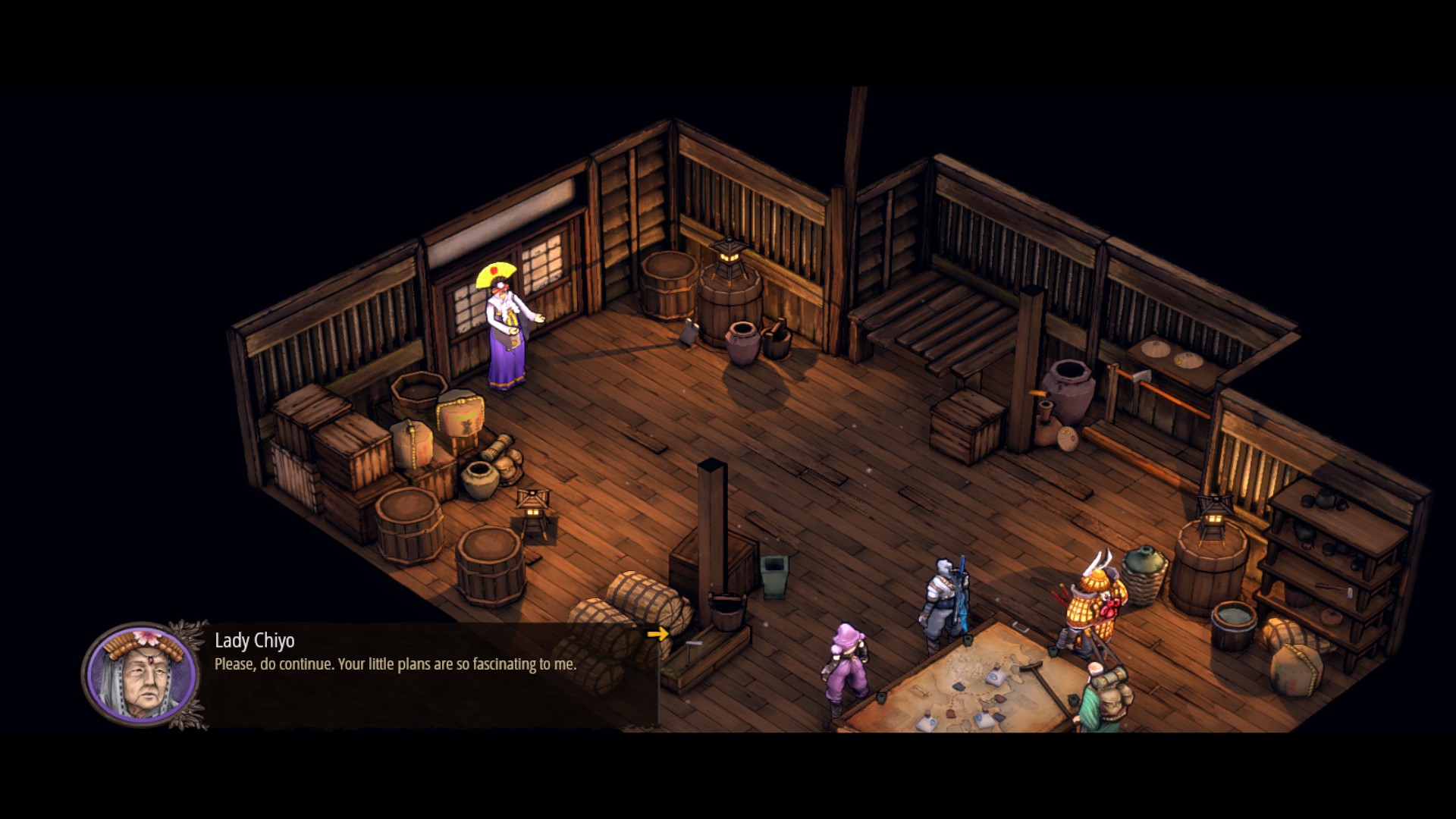
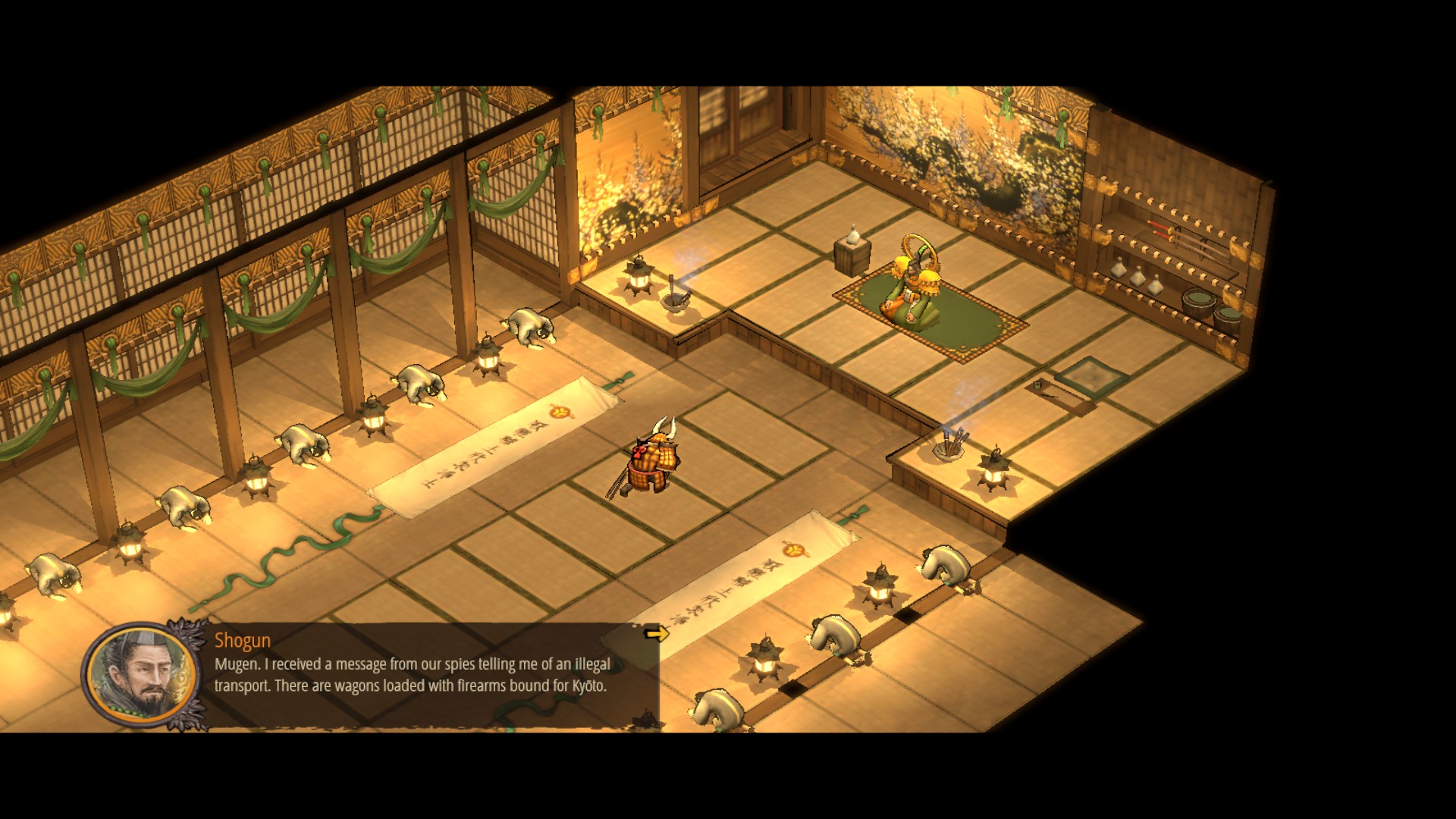
The game takes the Desperados approach of having the missions follow a cohesive story, instead of a set of unconnected missions. It is hard to comment on the faithfulness of the representation of Japanese feudalism and its culture, but the game does seem to have done its homework regarding its setting (including some very good Japanese voice acting), and the story feels very fitting to the setting. But setting plot aside, there is a dramatic flair to the narrative beats that is remarkable. This is a game that will drop you in active combat zones, show civilian massacres in the rain in rice paddies, imprison your whole team at the top of an icy mountain, and much more – there’s an emotional intensity through the game that is commending and rather bold, as it is somewhat unusual for the genre. The tail end of the story in particular is great, and the game is not afraid of having a thoughtful, nuanced, and almost bittersweet ending – definitely not your usual “American superhero” ending.
Finally, a word on graphics and audio. The game is not shooting for high-polygon models and complex effects, which makes sense, as the game inherently requires a certain degree of distance for the birds-eye view. There are variations (night, day, weather) that do allow for some nice-looking effects, but overall the game relies on high-contrast palettes with some cel-shading and flat surfaces, and isn’t meant to be demanding on your system – and in fact some framerate stutters does happen near the end of the game, when too many enemies are on-screen. The characters are 3D, and are sufficiently expressive and noticeable to allow visibility into the type of enemies (and infer their behavior); scenes can only be rotated 90 degrees at a time, much like in Commandos 2. But the game’s artistic direction does shine: the environments and maps show a great deal of variety, with some very detailed and consistent settings that heighten the atmosphere of the game, while sometimes venturing into impressive structures and design. The music and sound design is a highlight, with some very satisfying sound effects, great voice acting, and very appropriate music that never feels repetitive.
The game was released for Windows, Mac, and Linux in 2016, and ported to PS4 and Xbox One in 2017. By all accounts, the console versions are very competent ports, although the controls seem to take a while to get used to, with the camera controls and cycling through character’s skills with the triggers a little too cumbersome for quick reaction times.
All in all, Shadow Tactics has earned its place at the top of the genre, standing on the shoulders of illustrious predecessors and managing to be even better than them; it is a heartily-recommended entry into the real-time stealth tactics genre. The game feels like it was made by a team with a deep knowledge and love for the genre, that nonetheless made very smart choices regarding the game design and mechanics to make it both fun and very consistent with their setting, and at the same time were not afraid to make bold moves, in particular regarding the game’s atmosphere and story. It all pays off, and the game can rightfully be credited with sparking a bit of a revival for a genre that was functionally dormant for over a decade.
Mimimi also released a standalone expansion to the game in 2021, Shadow Tactics: Blades of the Shogun – Aiko’s Choice. Unlike other expansions (for instance Commandos: Beyond The Call of Duty), the game does not introduce any gameplay changes; the engine and the characters are also the same. The story is a little detour within the Shadow Tactics story, focusing on Aiko and a ghost of her past; it is made of six missions, although three of them are very short and just an opportunity to advance the plot or create a nice moment. The other three missions are rather meaty, but rarely difficult if you have finished the base game; they do take some thoughtfulness, but no major challenge or twist worth noting. The last mission introduces some interesting and fun one-time mechanics in the form of traps that can be activated, but is otherwise not complicated. One downside is that the game sometimes drops the framerate in a way that was absent from the base game – as if a layer of polish/optimization had not been applied as meticulously as with the base game; but the game remains playable at all times. Overall, this is a seven hour diversion if you wanted to spend more time with the characters and the mechanics, but otherwise fairly skippable.
Related Articles at HG101:
 Command and Conquer Generals
  Kohan: Immortal Sovereigns
  Command and Conquer 3: Tiberium Wars
  Command and Conquer 4: Tiberian Twilight
  Gangsters 2
  Command and Conquer: Red Alert
  Command and Conquer: Red Alert 2
  Command and Conquer: Red Alert 3
  War Times: European Frontline
  Empires: Dawn of the Modern World