- Ultima (Series Introduction)
- Akalabeth
- Ultima I: First Age Of Darkness
- Ultima II: Revenge of the Enchantress
- Ultima III: Exodus
- Ultima IV: Quest Of The Avatar
- Ultima V: Warriors of Destiny
- Ultima VII: The Black Gate
- Ultima VI: The False Prophet
- Ultima VII Part 2: Serpent Isle
- Ultima VIII: Pagan
- Ultima Underworld: The Stygian Abyss
- Ultima Underworld II: Labyrinth of Worlds
- Arx Fatalis
- Worlds of Ultima: The Savage Empire
- Ultima Worlds of Adventure 2: Martian Dreams
- Ultima IX: Ascension
- Lord of Ultima
- Ultima Online
- Ultima: Escape from Mt. Drash
- Ultima: Miscellaneous
- Richard Garriott (Interview)
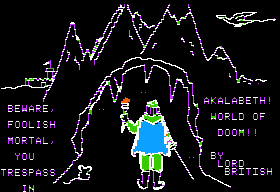
Akalabeth (Apple II)
Back in Houston, Texas in 1977, a 17-year-old nerd is putting the finishing touches on the 28th version of his pet project. It’s a computer game combining his love of Dungeons & Dragons and J.R.R. Tolkien into a fantasy adventure of knightly questing against foul dungeon-dwelling monsters. Thanks to his summer job at a local Computerland store, he now has access to a sparkling-new high-tech machine called an Apple II, a magical device with outstanding graphics capability that put the previous machines he’d been working on to shame. By the time he’s done his game, D&D28b, for the first time has real graphics, a view of the world’s dangerous monster-filled dungeons through the player’s eyes. D&D28b is a hit with his friends, and impresses the manager of the store so much that he convinces him to offer it for sale. It only sells a few copies, but one of those manages to get to a major software distributor out on the west coast called California Pacific, who, impressed, fly the teenager out to sign a contract for publishing rights. The program, now called Akalabeth (named after a chapter of Tolkien’s Silmarillion) is a hit, selling 30,000+ copies, but he’s not one to sit and rest on his good fortune. That autumn, the teenager starts classes at the University of Texas, and with his roommate begins writing another game to top his previous success.
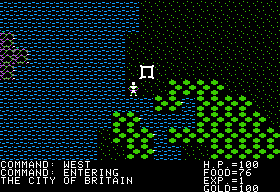
Ultima I (Apple II)
That teenager was a young Texan named Richard Garriott. The game was a modest little role-playing game called Ultima.



Richard Garriott – (left to right) dressed as Lord British, in the FM Towns port, and at a more recent E3
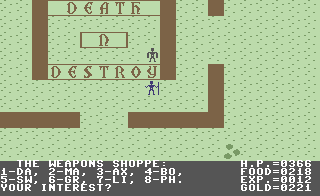
Ultima II (C64)
Ultima is one of the great-grandfathers of computer gaming, spanning twenty years from the dawn era of microcomputers in 1979 to the big-business era of 1999 and with spinoffs still being produced; the first installment was released in ziploc bags with hand-printed cover and manual, and the last as a big-budget production of the then-largest video game company in the world. There are more than twenty entries in the series, and ports and versions of Ultima have been released on every major computer system from the Apple II to obscure Japanese systems to fan ports on Java-enabled cell phones. The games were massive sellers, mind-bogglingly influential and the origin of nearly every conceit, expectation and mechanic that we now define computer role-playing games by.
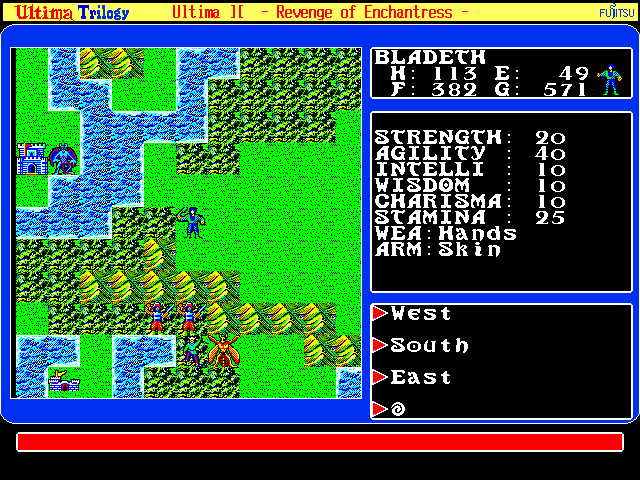
Ultima II (FM-Towns)
In Ultima the player, called the Stranger from Another World and later the Avatar, is transported from Earth to the fantasy world of Britannia at the behest of benevolent monarch and author alter-ego Lord British to fight the forces of injustice. One of the game’s defining conceits is that the character you are playing is you, your own stand-in; it is you who travels to this new land to right wrongs and have grand adventure, making lifelong friends along the way and growing to be part of this far-off land. Starting with the fourth game in the series, Britannia’s geography becomes largely stable, and it really does become a familiar world, changed by the passage of time (and graphics technology) that you watch develop in response to your actions. A town in Ultima IV grows and changes and might become a bustling metropolis by Ultima VII, or a deserted ghost town, and landmarks like Castle British, the wizard’s town of Moonglow, and the dark depths of the Great Stygian Abyss are visited many times over the course of the series. Starting in the fourth installment, Ultima also focuses less on simple amoral hack-and-slash treasure hunting like that which was (and still is) popular in most so-called ‘role-playing’ games, and introduces a system of Virtues which the series would follow thereafter. Virtues are Britannia’s understanding of ethics, and one of the primary jobs of the player is not just to stop evil by wit and arms, but to uphold the Virtues and embody what it means to be a hero for the grateful people of Britannia. Complex stories and worlds that challenge the player’s sense of morality and justice form the largest part of Ultima‘s appeal and are undoubtedly the games’ greatest contribution to the art.
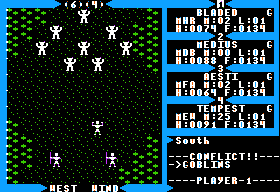
Ultima III (Apple II)
Unlike the ‘roguelikes’ of the college mainframe making screens out of ASCII characters, Ultima had eye-popping, high-tech computer graphics. Unlike the pure hack-and-slash dungeon crawling of Wizardry and its many clones, Ultima had increasingly intricate and adult plots and stories. Unlike the massively-multiplayer online games popular today, Ultima had more noble goals than accumulating loot and relentlessly grinding for random crap so you can go grind for more random crap somewhere else. Ultima games never failed to be complex in both technology and the human element, pushed both to lofty heights and blazing the way for the entire computer RPG genre. There are few CRPGs today that can’t trace their heart and soul back to Ultima. Each entry is a holistically unique game, improving on their predecessors in both code and storytelling, and to follow Ultima through the ages is not only to see the evolution of the microcomputer as a platform from the dawn of the home computer era to today, but also to play some fine games that are, in a distressing number of ways, still unsurpassed thirty years later.
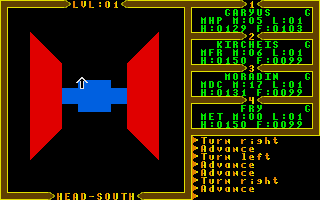
Ultima III (Atari ST)
Richard Garriott, Lord British & Origin Systems
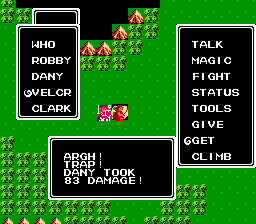
Ultima III (NES)
Ultima, like many series in computer gaming’s dawn era, is distinctly the product of a particular author whose name is inextricably tied to their work. Back in the days before hundred-developer teams with million-dollar budgets working for gigantic corporations, games were largely the work of individual programmers, hackers whose joy was programming and squeezing all the little tricks they could out of new computer hardware . A discussion of Ultima is inherently also a discussion of Ultima‘s primary author and creative force, old-school hacker and medieval enthusiast Richard Garriott. Much like with Leisure Suit Larry and Al Lowe, SimCity and Will Wright, Commander Keen and Tom Hall, or Civilization and Sid Meier, Ultima is and will always be Richard’s baby; he created it, directed it, and even when they were being made by giant teams, his personality is stamped all over every one.
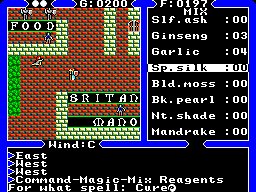
Ultima IV (SMS)
Richard Garriott was born in 1961 in Cambridge, England, but was raised in Texas. The son of an astronaut and an artist, Richard always had a taste for the more creative hobbies like art and games. Growing up in the ’70s, he was turning teenager at just the right time to be introduced to the magic of computer programming, the creation of entire worlds with lines of arcane code like the casting of spells with magic words. During high school, having already finished the sole available computer course, he and several friends designed their own self-study classes using the school’s one teletype machine (a terminal connected through telephone wire to a hulking giant of a machine elsewhere); the teenage Texan had an insatiable appetite for computers. His parents encouraged his love of programming and sent him to a computer camp in 1977 where further history was made. Another student there seemed to believe that Garriott spoke with a British accent (in Richard’s own words, it was because he said ‘Hello’ instead of ‘hi’ as a greeting), and was therefore given the nickname British. Richard adopted the name for his Dungeons & Dragons characters, and the ruler Lord British featured in his early Dungeons & Dragons-based computer games. Eventually Lord British became Garriott’s own author alter-ego in his programs, and every Ultima game save two includes him in some capacity, usually as a major character. In the 1980s Garriott increasingly played up this image, and took to appearing in full medieval regalia at conventions and public appearances, and answering to the name himself.
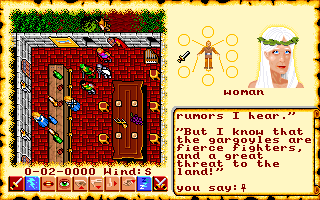
Ultima VI (IBM PC)
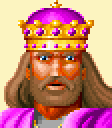
Lord British
British’s fictional biography grows more complex with each game along with the world, as the storytelling abilities of Garriott and his staff improved. Hailing originally from Cambridge in the United Kingdom, a young man stumbled accidentally into the land of Sosaria through a magical Moongate portal, and met the ranger Shamino, a native. Shamino introduced the young man to magic, and gave him a name based on the description of the lands he came from: Cantabrigian British. Young British quickly set about making a name for himself by campaigning against the forces of the dark wizard Mondain, and by the time of the first Ultima game, commands a kingdom as Lord British. It is Lord Cantabrigian British who is directly responsible for the appearance of the player-character in the world of Sosaria, by idling wishing for a champion while holding a magic amulet and thereby summoning the Stranger. By the time of Ultima IV, Lord British is the sovereign ruler of the world, now named Britannia after him, united peacefully after a long age of darkness and conflict. Throughout the Ultima series, he is the patron and ally of the player-character (first the Stranger, now the Avatar), responsible for summoning him to the world, and granting quests, advice, hit-points and other necessities.
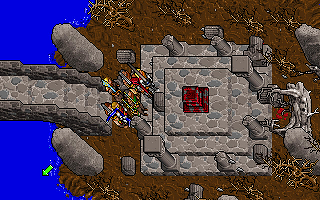
Ultima VII The Black Gate (PC)
Just as inseparable from Ultima as Richard Garriott and Lord British is Origin Systems, the company Garriott helped found. Ultima has had numerous publishers in the long span of time the games have been produced. Originally self-published by the author, they were first picked up by small software distributor California Pacific Computer in the late ’70s. For a single installment the series was picked up by Ken and Roberta Williams’ Sierra On-Line; this didn’t last long before Richard Garriott, along with his brother Robert and fellow Ultima programmers Ken Arnold and Charles ‘Chuckles’ Bueche founded their own publishing company, Origin Systems, which distributed the rest of the Ultima series as well as other well-received games. In 1992, Origin Systems was purchased by corporate giant Electronic Arts and became one of their divisions, until the company’s shutdown in 2004. The story of the rise and fall of Origin is as inextricably tied to the series as Lord British and will be discussed in more detail as it becomes pertinent.
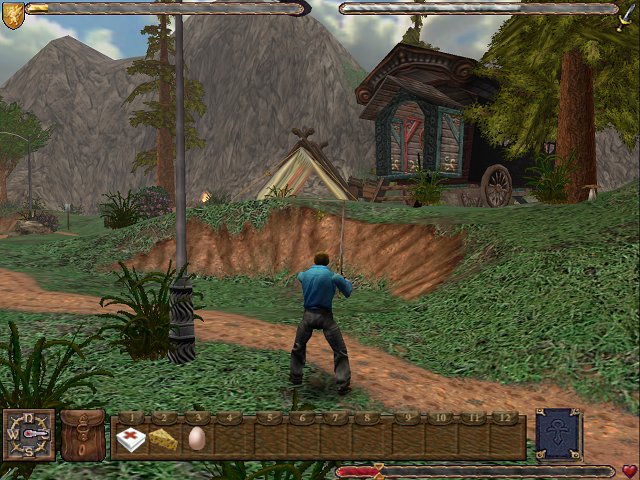
Ultima IX
The Britannian Virtues
Lord British’s most significant contribution to the fictional Ultima world, and one of Richard Garriott’s most significant innovations in computer RPGs, are the Britannian Principles and Virtues, a philosophy of ethics governing just behavior. The Jedi Knight games had lightside/darkside, and all those new Bioware games the kids play have their choice of moral paths, but Ultima preceded them all by making ethics a core part of the games. The player-character of most Ultima games is the Avatar, who through hard work and effort has become incarnation of these Principles and Virtues. The Avatar is summoned in the time of Ultima IV to become Lord British’s paragon and an example to the rest of Britannia by embodying the virtues, and for the rest of the series they are significant to how the player is expected to behave, as well as determining various game-related mechanics and the world’s geography. After Lord British’s reorganization of the world, each of the eight virtues receives an associated city-state and shrine as center of study and each available character class (and thereby, companion) strongly identifies with one of the eight virtues.
Honesty: The scrupulous respect for truth – the willingness never to deceive oneself or another. The town of Honesty is Moonglow on Verity Isle, where the Mages seek the truth of the world through scholarship and magic.
Compassion: Nonjudgmental empathy for one’s fellow living creatures. The town of Compassion is Britain, where the Bards sing songs and tales to show hospitality for those seeking audience with Lord British.
Valor: The courage to act in support of one’s convictions, to stand your ground for the need, and not for the consequence. The fortress-town of Jhelom is where the Fighters of Britannia train their bodies and minds in pursuit of Valor.
Justice: The devotion to truth tempered by love, and the equal treatment of all under the law. The Druids, seekers of justice, operate the Britannian High Court in the forest-city of Yew.
Sacrifice: The courage to give of oneself in the name of love, valuing the lives and virtue of others before yourself. The Tinkers of mountain-town Minoc are not just the leading machinists of Britannia, but the students of sacrifice, housing and aiding the land’s poor.
Honor: The courage to stand for truth against any danger and odds, and regardless of circumstances. In Britannia’s southern grasslands the Paladins of Trinsic quest to gain and uphold Honor and defend the truth.
Spirituality: The concerns of your inner being, being at harmony with truth, love and courage. The Rangers of the island-town Skara Brae meditate upon inner harmony on their quests of understanding. Spirituality in the Ultima world is not necessarily tied to religion, as in ours, but means more the understanding of the self.
Humility: Understanding your place in the world, not according to your own accomplishments, but according to the intrinsic value of all people; recognizing the worthiness of all beings. The city of Shepherds, New Magincia, is a city populated by humble people who understand the danger of arrogance, and is built upon the ruined foundations of the original Magincia, City of Pride.
The eight Virtues are further combined into three overarching Principles, representing their meaning: Courage, Truth and Love. Honesty is pure Truth, Compassion is pure Love, Valor is pure Courage, Justice is Truth tempered by Love, Sacrifice is Love given with Courage, Honor is the Courage to uphold the Truth, Spirituality represents the seeking of all three, and Humility is independent of them all. Each virtue additionally has an associated magic runestone, and a representative mantra to chant while meditating (BEH for justice, for instance).
In addition to the Britannian virtues, Ultima also includes other virtue systems used for various effects and world flavor during the games. The Gargish virtues of the Gargoyles in Ultima VI, the Ophidian Virtues of the Serpent Isle in Ultima VII Part 2, the Zealan beliefs of Ultima VIII, and even self-parody as in the bard Mandrake’s virtues in Ultima VI (wherein the principles are Wine, Women and Song, in various combinations of which creating the virtues of drunkenness, sensuality, harmony, lust, laziness, dance, indulgence and happiness). The mantra of deliciousness? YUM.
The Companions Of The Avatar
Time in the world of Ultima works strangely; people from our Earth age very slowly in Britannia, and certain individuals are very long-lived, having survived many ages. Many characters appear from game to game despite the passing of time in Britannia. Though many appear as early as Ultima I as one-off NPCs, they really become individuals by Ultima IV and gain a more distinct personalities in Ultima V and thereafter. Though the world may change with the passage of time, it is always a comfort to come upon an old friend to trust and laugh with in Britannia, and several of these characters become very familiar over the course of the games.
Garriott’s games are packed full of references to his real-life friends, and particularly those from the Austin-area branch of the Society for Creative Anachronism which he has long been associated with. All of these Companions of the Avatar, like Lord British himself, are based on real people; personal friends of Richard Garriott from school or the SCA, Origin employees or occasionally Ultima fans. Many have contributed to the games in some way or another as well. The companions are just a sampling of the real people referenced throughout the series.
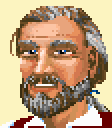

Iolo FitzOwen and Gwenno Gwalch’gaeaf, the Bards
Bard and bowyer (a maker of bows and crossbows), Iolo and his wife Gwenno are an inseparable pair. Both first appeared in Ultima I as generic jesters, and appear in most of the games thereafter. Iolo is a good friend of Lord British and famous for both his music and his skill at creating crossbows, which are prized throughout the land. He is rarely far from his wife Gwenno, a lighthearted and multitalented woman fond of singing and dancing, who also writes the lyrics for his compositions. Iolo and Gwenno are based on husband and wife pair David R. Watson and Kathleen Jones, friends of Richard Garriott from his local chapter of the SCA, who go by the pseudonyms Iolo and Gwenno, and in real life made crossbows and composed; their composition ‘Stones’ is used multiple times in the series. The real-world Iolo currently runs an internet store selling his crossbows and has written a monograph on the subject. Kathleen Jones sadly passed away some years ago.

Shamino Salle Dacil, the Ranger
The first man encountered by a young Lord British when he fell from Earth to Sosaria, and who introduced him to magic. In the first Ultima, Shamino was the name of one of the generic Kings giving quests in the castles, but by the time of Ultima III he had become a simple woodsman in British’s employ, charged with mapping the world. In subsequent games, he becomes the good friend of the player-character, often the first companion encountered and a famous fighter with swords or bows as well as a deeply spiritual, inward-looking man. Shamino is based on Richard Garriott himself, and is the name he uses in his activities with the SCA. Akalabeth, the first game in the series, was originally credited to ‘Shamino Salle Dacil’ before being published by California Pacific Computer, and Shamino’s portrait is Richard’s own face.
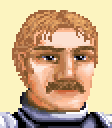
Dupre, the Paladin
First encountered in Ultima II, as a bizarre random NPC wandering Jupiter selling ducks. Starting in Ultima IV, Dupre became a major character in the series, the mayor of Trinsic and a stalwart and honorable fighter who jumps at the chance to join the player in a grand quest. Dupre is responsible for saving the player’s life at the start of Ultima VI, and is well-known throughout Britannia for being something of a connoisseur of alcohol, eventually writing an in-game book on the subject. As a bit of a running gag, Dupre is often shown to have a strange relationship with ducks. Dupre the Paladin is based on Richard Garriott’s personal friend Greg Dykes, who serves as the model for his portraits in later games.
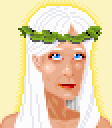
Jaana, the Druid
A Druid of Yew, and a person in perpetual unrelenting pursuit of Justice. Jaana was the major organizer of the resistance in Ultima V, and in later games offers her services as a healer and agriculturalist to Britannia, though jumping at the chance to join the player in his quests. Jaana’s real-life counterpart is one of Richard Garriott’s friends by the same name.

Katrina, the Sheperd
Katrina the Shepherd is the only survivor of Magincia, city of Pride; after the town was razed by demons, she was the only one to be left living among the hordes of penitent undead and spirits. Katrina was later one of the founders of New Magincia, and over the centuries of Britannia is mostly found in the humble occupations of farming or tending sheep. Always willing to quest with the player if asked, Katrina has no real ability in magic or combat, but serves as a solid moral center for the party. Katrina’s real-life counterpart is a personal friend of Richard Garriott who goes by the name Trina.

Julia, the Tinker
A mechanical genius with a famously violent temper, Julia’s technological skills and understanding of sacrifice become gradually more important to Britannia as the series continues from her introduction in Ultima IV, and her wanderlust and boredom with the easy life lead her to becoming a willing quest companion again and again. According to an interview in Prima’s strategy guide for Ultima IX, Julia is based on a girl whom Richard Garriott once dated. More details on the real Julia are hard to come by.

Mariah, the Mage
A young mage eager for adventure, Mariah joins the player for the first time in Ultima IV and later becomes a notable scholar of magic. She can only join the party in Ultima VIand V, but remains a major NPC and source of information in later games. Mariah eventually comes to join the Britannian Council of Wizards, and it is Mariah who helps the player translate the texts of the Gargoyles in Ultima VI. Mariah’s real-life counterpart is Michelle Caddel, who was Richard Garriott’s personal secretary at Origin.
Geoffrey, the Fighter
Also known as Geoffrey the Giant, a 6′ 5″ warrior who eventually becomes Lord British’s personal bodyguard and captain of his knights. Geoffrey rarely has opportunity to join the player after the fifth game, becoming preoccupied with leading Lord British’s armies, though his sword-arm remains a thing of legend thanks to the aid he provides the player on his quest to become Avatar. Geoffrey’s real-world counterpart is Jeff Hillhouse, Origin Systems’ first and last employee (hired in 1983, fired when Electronic Arts closed Origin Systems in 2004).

Chuckles, the Jester
Lord British’s beloved jester, Chuckles the Bumble has a record of game appearances to match the Companions, appearing first in the second game and then in almost all of the ones after. Bouncing between amusing and irritating mannerisms, Chuckles is usually found in the entrance of Castle British welcoming visitors with jokes and pranks. He is quite a wise man under his foolish exterior and often has useful clues or information, though they must be pried out of him with patience. Chuckles’ real-world counterpart is Charles Bueche, a long-time friend of Richard Garriott’s from high school, and one of Origin Systems’ founding employees. The real Chuckles is responsible for many of the Commodore 64 and Atari 8-bit ports of the early Ultima games.
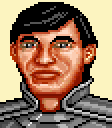
Sir Sentri
Appearing in various myriad roles from Ultima II onward, Sentri is at first a prisoner, and later an explorer in Lord British’s employ, Baron of Serpent’s Hold, fighter by the player’s side and swordmaster. In Ultima V, Sentri is one of the rebels against Blackthorn’s rule who will join the Avatar as a companion, and he continues to join your party frequently for the rest of the series. Sentri is based, again, on a friend of Richard Garriott from the SCA who goes under the pseudonym of Dominic Sentre.
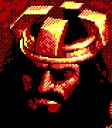
Blackthorn
Introduced as a major villain, Lord Blackthorn was once a good and just man and a confidante of Lord British, who took rulership of Britannia following the regent’s absence in Ultima V. Though Blackthorn had the best of intentions, corrupt influences turned him into an iron-fisted tyrant who instituted a perversion of the Britannian justice system. After the events of Ultima V, Blackthorn goes into exile to seek atonement for himself. In Ultima Online, he is renamed Blackthorn, and is portrayed as a legless cyborg, an antihero espousing a philosophy of ‘chaos’ to balance Lord British’s virtues. Blackthorn is not based on any Origin employee in particular but he has come to be associated with Ultima Online director Starr Long.
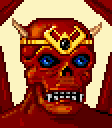
Draxinusom
The leader of the Gargoyle race, who guided them through the end of the Age of Enlightenment and concerns himself with guiding his people through integration with Britannian society. Not known to be based on any real person.

Captain Johne
Captain Johne is a pirate and powerful wizard, who is (through accident) responsible for setting in motion the events of Ultima V, and by manner of atonement, joins you as a companion. Reforming his thieving ways, Johne eventually settles down in Britannia to become a linguist, aiding the Avatar on his quest to stop the Gargoyles from destroying Britannia in Ultima VI. Johne is based on Origin employee John Miles, lead programmer of Ultima V and author of the most successful piece of middleware in the history of gaming, the Miles Sound System.
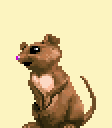
Sherry, the Mouse
An unusually long-lived mouse residing in Castle British with human intelligence and the ability to speak, as well as a fondness for cheese (as fictional mice tend to have). In Ultima VI, Sherry accompanies the player as a companion, and in VII helps to run the Castle British nursery, reading stories to the children as well as Lord British at night. Sherry the talking mouse is based on Sherry Hunter, a woman that Richard Garriott was dating around the time of Ultima VI.

Loubet, the Fencer
A minor character and master fencer of the castle of courage, Serpent’s Hold, Loubet trains the Avatar in swordsmanship and in Ultima V helps him find a lost magic carpet. Loubet is based on artist Denis Loubet, who painted the box artwork for nearly every entry in the Ultima series starting with Akalabeth and contributed many manual illustrations, in-game graphics and 3D cinematics. Like Roger Dean’s association with Yes, or Larry Elmore’s with Dragonlance, Denis’s art is responsible for a large part of the flavor and character of the Ultima games. His work after Ultima includes the online game Ashen Empires.

Dr. Johann Schliemann Spector
A scheming academic and major character in both spin-off Worlds of Ultima games. He is a major villain in The Savage Empire, but becomes a helpful party member after you save him from mind control. In Martian Dreams, he plays the part of your sidekick, helping to set events in motion on 1895 Mars. Dr. Spector is based on famous game designer Warren Spector, Origin Systems employee and producer of Ultima Underworld, who would later go on to become a legend in the industry with Looking Glass Studios and games such as Deus Ex, System Shock and Thief: Deadly Shadows. A minor character from Serpent Isle, Spektor, is also based on him, and Warren Spector posed for both characters’ portraits.

Smith, the Horse
No discussion of Ultima characters is complete without a mention of perhaps the most beloved of them all, Smith the Talking Horse. Smith is a sarcastic and proud animal, but with wisdom and intelligence beyond his years (horse-years, of course), and always when encountered has some absolutely vital clue or piece of information for the player. Unfortunately, this crucial information, while of undeniable value, is always exactly one game out of date. Smith originated in Ultima IV, where he was meant to give the player a vital clue to finishing the game. Unfortunately, this clue had to be worked out in other ways, because a bug in the game prevents Smith from being able to give the related information. In Ultima V, Smith re-appears, and this time manages to give the player the clue that he was supposed to in the previous game. This starts a running gag for the rest of the series, where encountering Smith would reveal to the player some vital bit of info which would have been terrifically helpful had he remembered it when it was important. Smith is, to the best knowledge of any Ultima resource, not based on a real-life horse.