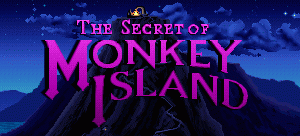
LucasArts’ Monkey Island series is undoubtedly one of the most well known in all of adventure gaming. Sierra’s King’s Quest may be able to take the crown of being “the first”, but it’s definitely Monkey Island, with its clever design, memorable characters and witty dialogue that has endeared a whole generation of gamers.
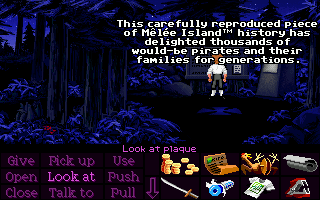
The Secret of Monkey Island
The initial entry, The Secret of Monkey Island, came to being after work completed on Indiana Jones and The Last Crusade: The Graphic Adventure. Ron Gilbert, the director (and guy whose name appeared on the box) wanted to do a fantasy game, but didn’t want to stick with the standard swords and sorcery bit. Instead, he wanted to develop a game focused on pirates, inspired by both the Pirates of the Caribbean ride at Disney theme parks, as well as Tim Powers’ historical fantasy novel On Stranger Tides. During the conceptual stages it was meant to have somewhat serious overtones, but when the game began development, the programmers and scripters, consisting of David Grossman and Tim Schafer, implemented some of their own goofy dialogue as placeholder text. The result was so funny that the rest of the game was planned to have sort of a silly undercurrent running throughout, filled with strange insults and numerous pop culture references, with a particular fondness for George Lucas movies.
LucasArts was quick to make a follow-up in 1991, which garnered extremely strong reviews. Ron Gilbert left the company a bit thereafter, while others continued the legacy in the form of Day of the Tentacle – directed by Grossman and Schafer – as well as Sam and Max Hit the Road. The popularity of the genre exploded with the advent of the CD-ROM, allowing Monkey Island to build up a stronger audience. It wasn’t until 1997 when they followed up with a sequel, this time using gorgeous hand-drawn cel animation and full voice acting, and another three years later, featuring fully 3D characters. By the fourth Monkey Island game, the adventure genre had died out, and it wasn’t until 2009 when it was resurrected by Telltale Games, a company founded by some former LucasArts staff which specialized in episodic graphic adventures.
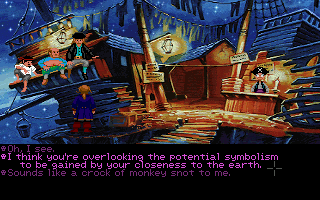
Monkey Island 2
Due to the time span between releases, there’s a pretty sharp divide between the first two Monkey Islands and the next three. In addition to the advances of technology, Ron Gilbert only worked on the first two games, which is one of the reasons why some old school fans tend to turn up their noses at the later entries. That’s not to say that the more recent games are poor (although the fourth one is debatable) – it’s just that the improvement in graphics and sound, as well as the different staff members, resulted in a slight shift in style and humor.
The Secret of Monkey Island was also one of the first games to implement a more player friendly attitude, which contrasted sharply to Sierra’s overtly cruel design philosophies. Still, even though it won’t force you to constantly save and reload, Monkey Island is still a very archetypical adventure game series, filled with halfway insane puzzles that are likely to drive casual fans nuts. The first game isn’t especially difficult, but the second and third have some fairly convoluted puzzles – not coincidentally, they’re also two of the only adventure games out there that actually have difficulty settings, so you can reduce some of the wackier roadblocks to more manageable levels.
There’s also a running gag involving the “secret” of Monkey Island. It’s never explained in the first game, nor any subsequent titles, leaving it a mystery to all but Ron Gilbert himself.
At the core of each game are three main characters – our hero, the improbably named Guybrush Threepwood, his love interest Elaine Marley, and undead nemesis Captain LeChuck.
Guybrush Threepwood
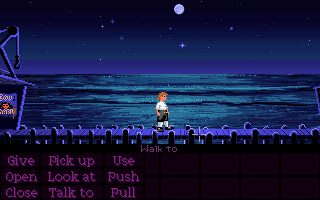
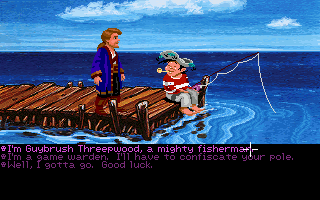
Guybrush wants to be a pirate, even though he’s told he looks more like a flooring inspector. Why? Well, why does anyone want to become a pirate? He doesn’t really seem to know, but we have to assume it’s the same reason any five year old kid wants to be a pirate – to live an exciting life of action and romance, to sail the seven seas and find untold amounts of treasure. Guybrush doesn’t quite understand the reality of his dreams, and much of the humor comes from how completely naive he is. Still, he proves halfway competent enough to defeat LeChuck on numerous occasions, even though he screws up plenty of times in the process. In the second game, he tries to grow a beard, which doesn’t work very well. By the time he’s a more established pirate in the Tales of Monkey Island series, he actually has a vaguely respectable goatee. Guybrush’s only real talent is the ability to hold his breath underwater for ten minutes, and he’s deathly afraid of porcelain, for reasons that have never been explained.
His name evolved during the development process. One of the artists named his sprite “Guy”, while the file extension for the image program was “.brush”. Put together, they became “Guybrush”. His last name just evolved from all of the silliness.
The Secret of Monkey Island
Monkey Island 2: LeChuck’s Revenge
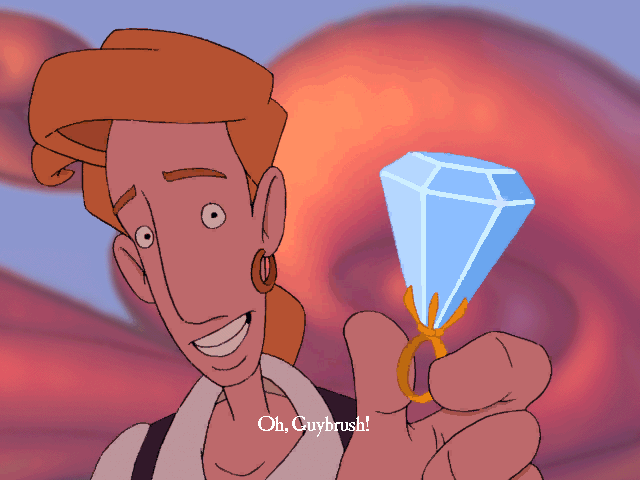
The Curse of Monkey Island
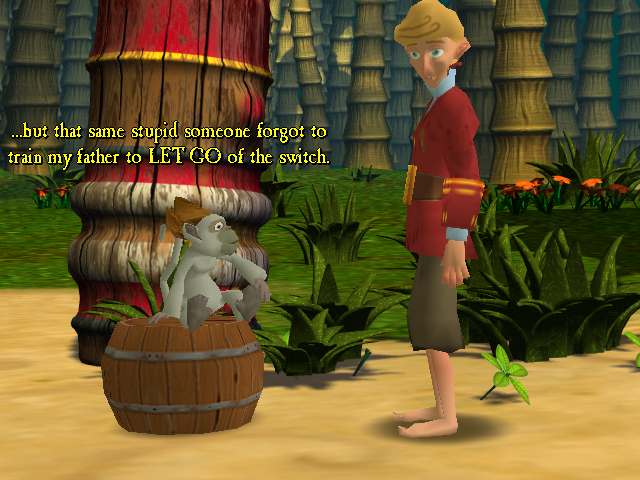
Escape from Monkey Island
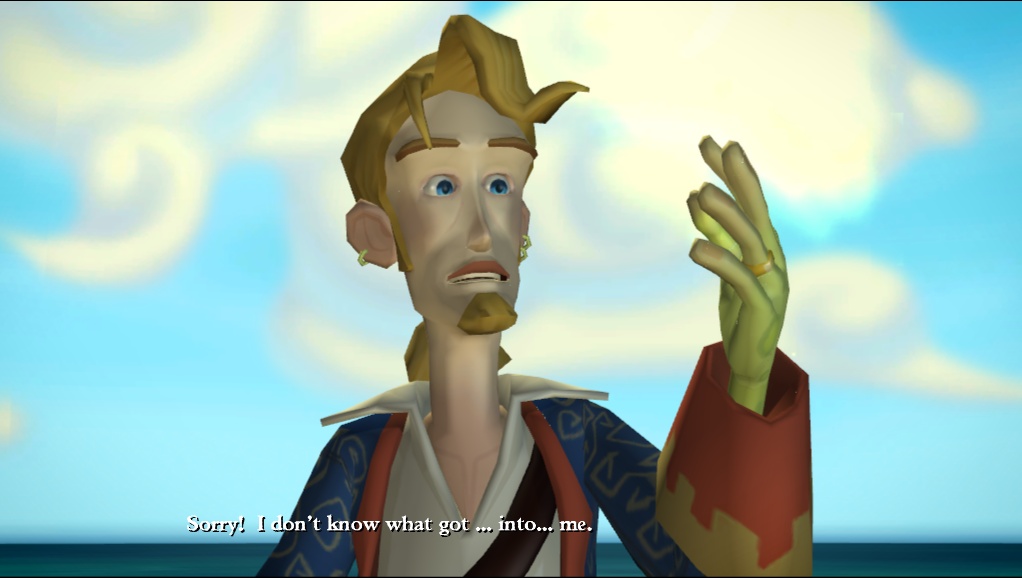
Tales of Monkey Island
Elaine Marley
Elaine Marley is the Governor of Mêlée Island. She’s the kind of damsel-in-distress who can take care of herself without any interference from bumbling wannabe pirates. She first meets Guybrush when he tries to steal an idol from her mansion, but soon finds herself falling in love with him, for some reason. Guybrush continues to pursue her, despite her being somewhat annoyed at his immaturity, but they eventually find themselves married at the end of the third game. Her name evolved from the wedding sequence at the end of the first game, which is a parody of the movie The Graduate.
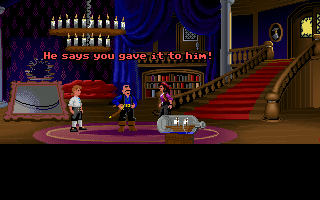
The Secret of Monkey Island
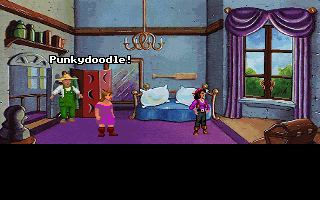
Monkey Island 2: LeChuck’s Revenge
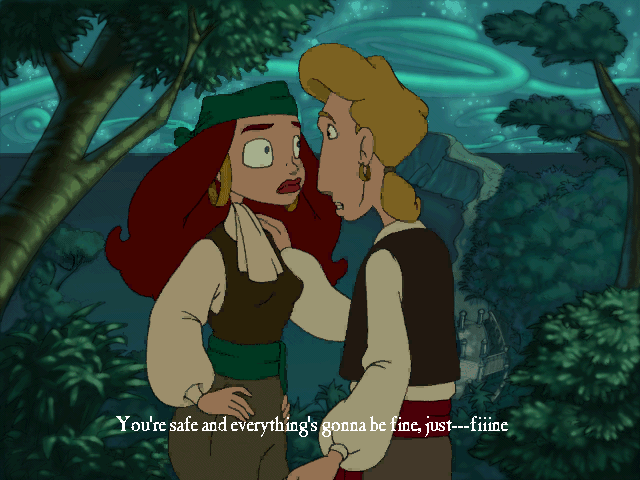
The Curse of Monkey Island
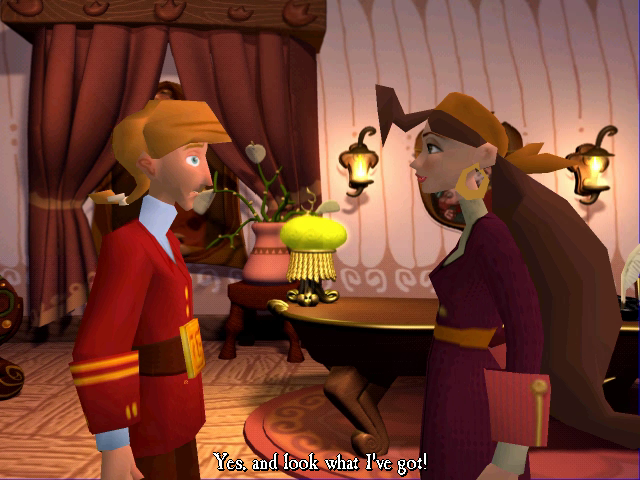
Escape from Monkey Island
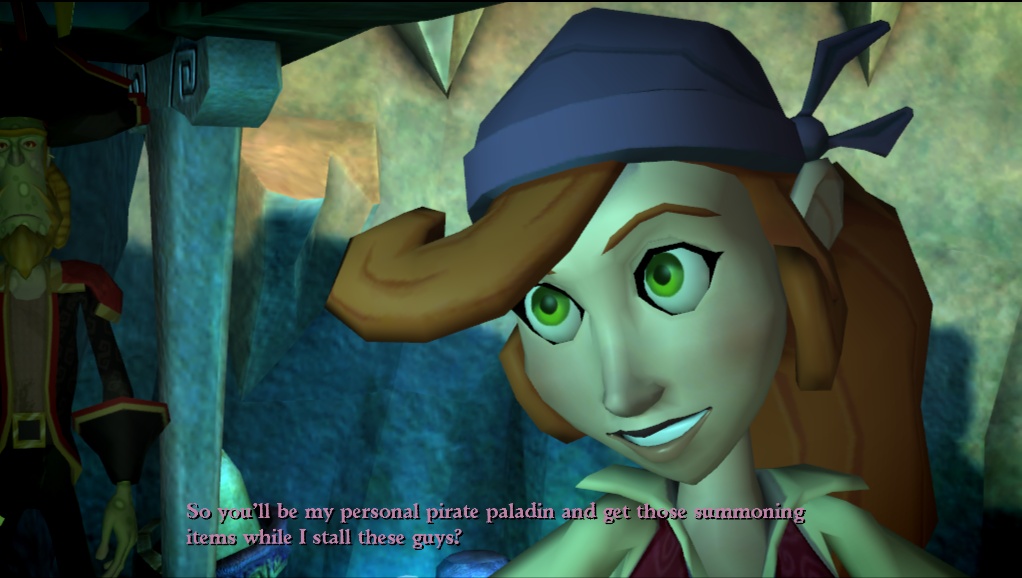
Tales of Monkey Island
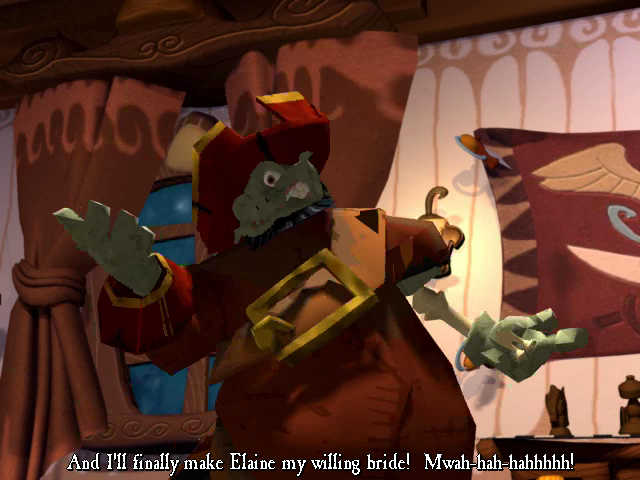
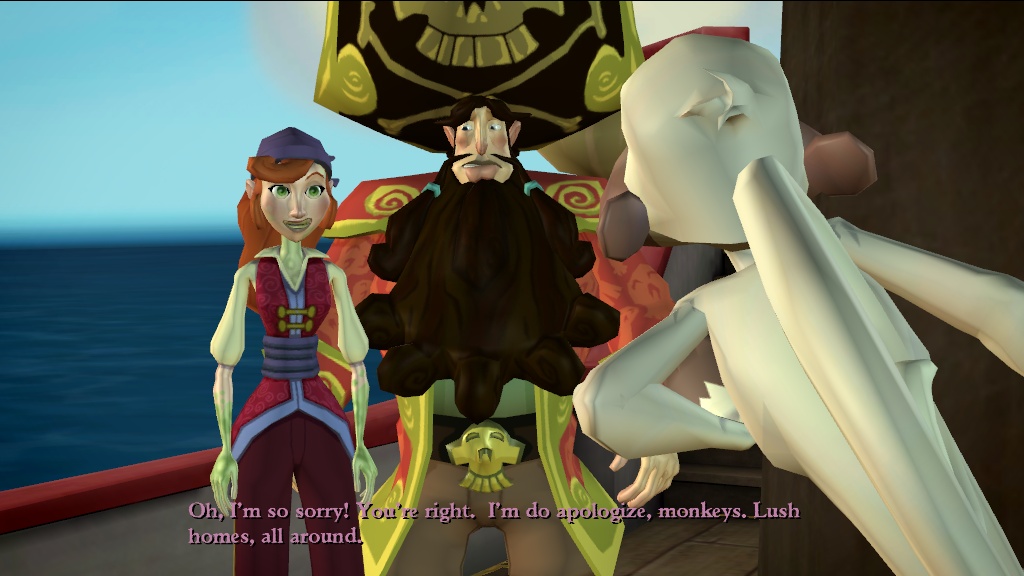
LeChuck
As for Captain LeChuck – during his time on the mortal plane, he was desperately in love with Governor Marley. She told him to drop dead, so he did. As a ghost, he tries to claim her as his bride once again, but is thwarted (kind of) by Guybrush. In the later games, he just wants revenge on Guybrush, as he becomes a zombie, then a demon. In Tales of Monkey Island, his evil is expelled into the air, and he becomes a human once again, apparently reformed from his nasty ways.
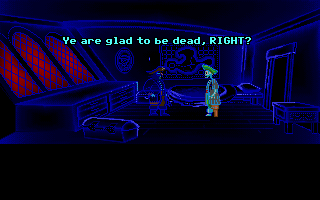
The Secret of Monkey Island
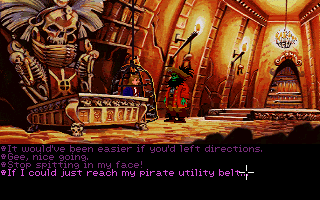
Monkey Island 2: LeChuck’s Revenge
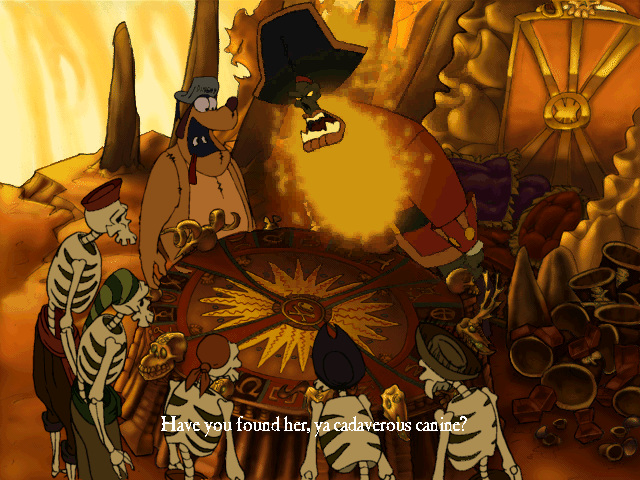
The Curse of Monkey Island
Escape from Monkey Island
Tales of Monkey Island
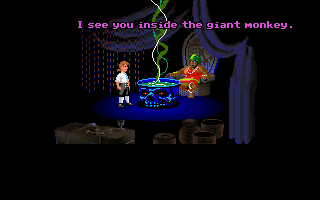
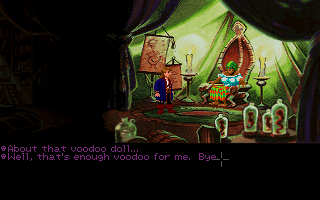
The Voodoo Lady
The Monkey Island games are filled with interesting characters, some of whom pop up numerous times throughout the series. One of the most prominent is the Voodoo Lady, who shows up in each of the five games. She doesn’t actively do much and just sits in her store, which also relocates itself every game, but she does give lots of cryptic advice to Guybrush in each adventure. The whirlwind romances of her past are a big part of Tales of Monkey Island.
The Secret of Monkey Island
Monkey Island 2: LeChuck’s Revenge
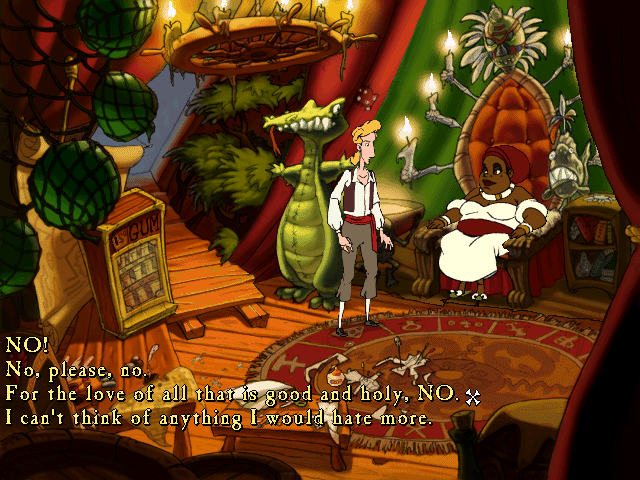
The Curse of Monkey Island
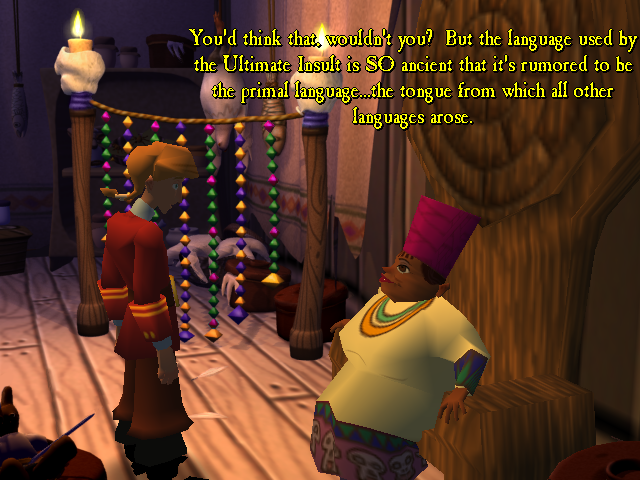
Escape from Monkey Island
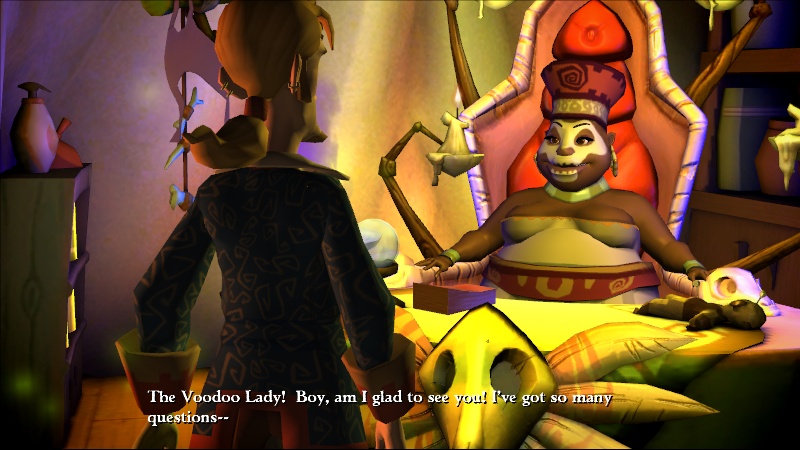
Tales of Monkey Island
Stan
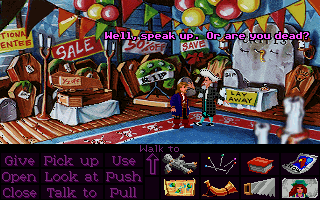
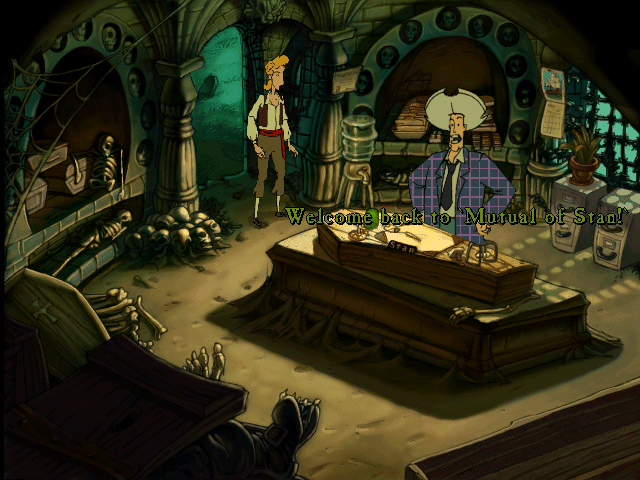
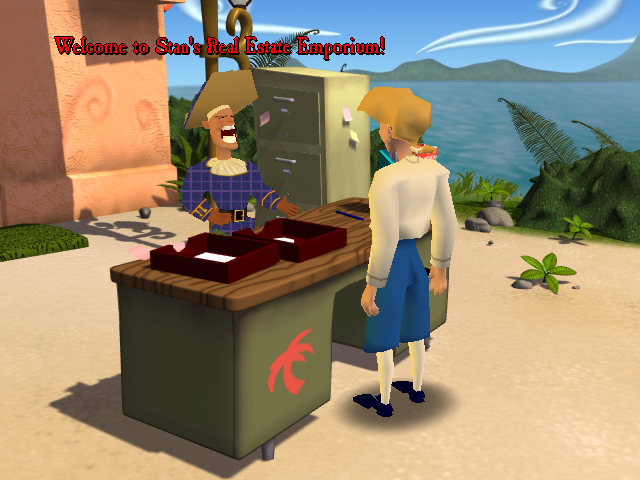
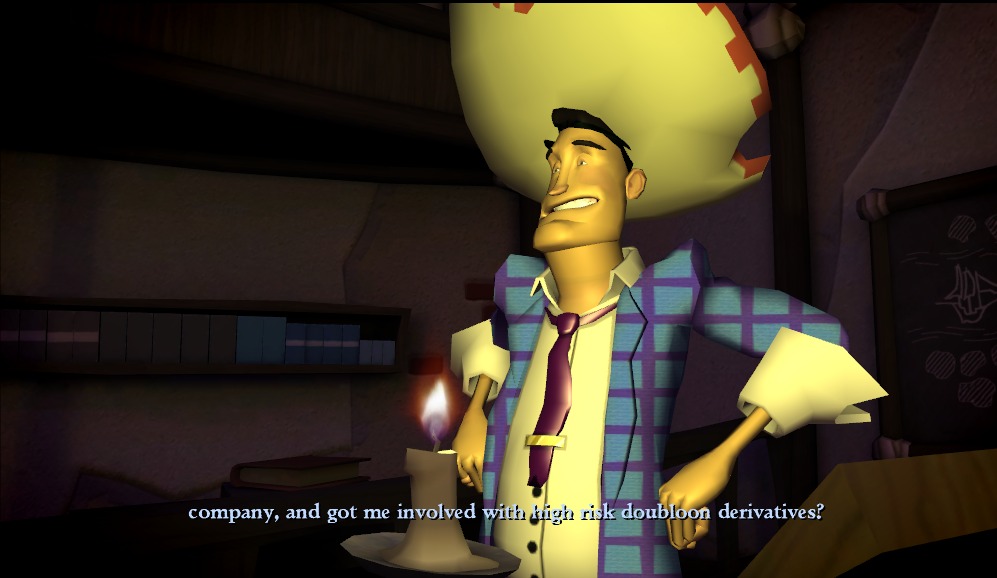
Less directly useful to Guybrush’s quest is Stan, an amalgamation of every irritating salesman on the face of the planet. He’s loud, wears a ridiculous hat and even more ridiculous plaid shirt, and can’t talk without gesticulating wildly. He never actually has the best interest of his customers in mind, but he also proves himself useful in each of the games he’s in. He sells used boats in the first game, used coffins in the second, life insurance in the third and time shares in the fourth. He also shows up as a lawyer in the fourth chapter of Tales of Monkey Island, and does a fairly skeezy job. His plaid jacket is made from “unmoving plaid”, a shortcut used in animation to easily show complicated patterns.
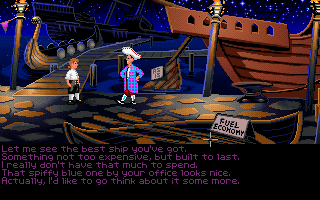
The Secret of Monkey Island
Monkey Island 2: LeChuck’s Revenge
The Curse of Monkey Island
Escape from Monkey Island
Tales of Monkey Island
Wally
Poor Wally. First making an appearance in Monkey Island 2, this short, soft-spoken cartographer thinks only of buying maps, looking at maps, and studying maps, yet one of the puzzles involves stealing his monocle, robbing him of his only true pleasure. (You do end up getting him a substitute later on, at least.) He ends up getting captured by LeChuck, and is somehow convinced (via inspirational seminars and motivation books-on-parrot) to join his undead pirate crew, despite being quite living, and also completely unfearsome.
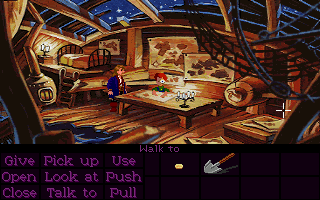
Monkey Island 2: LeChuck’s Revenge
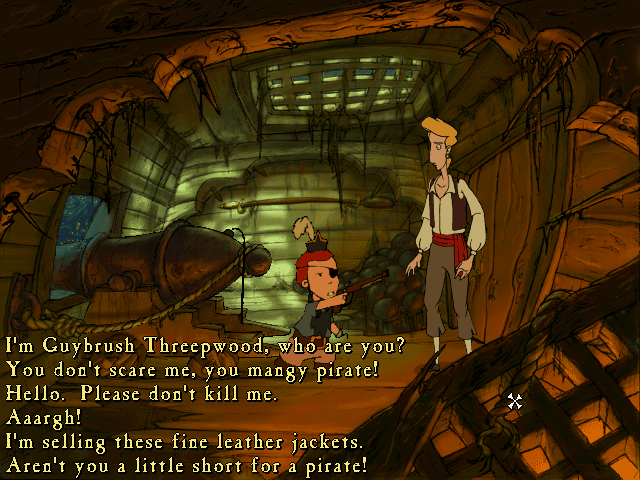
The Curse of Monkey Island
Murray
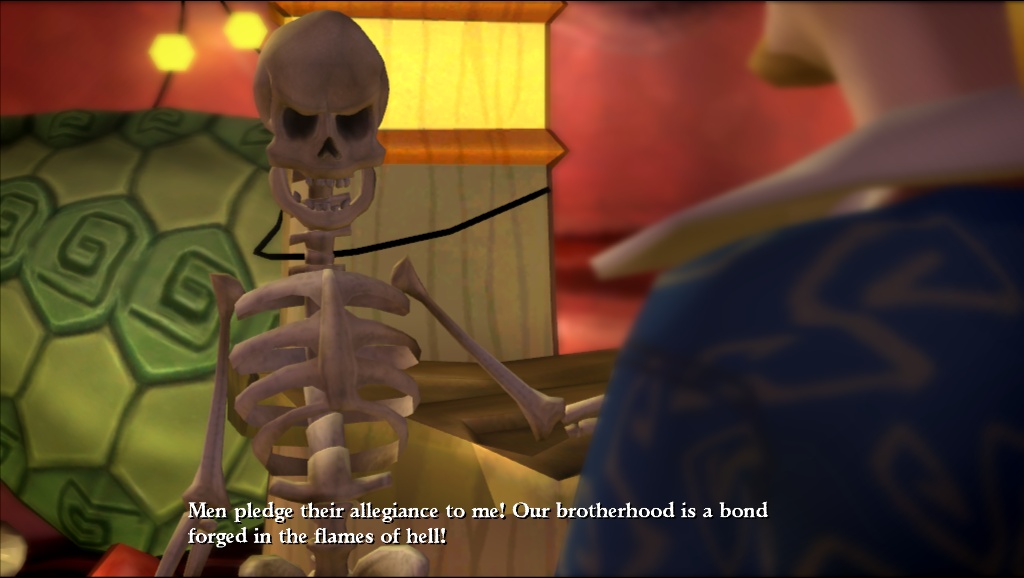
A former member of LeChuck’s pirate crew, Murray is one of the most nefarious beings in the known universe. At least, he thinks he is. He’s actually just a chattering skull with no other powers other than his extreme delusions of grandeur. He makes numerous appearances in the third game, makes a cameo as a (fairly useless) bouncer in the fourth game, and must be manipulated into helping Guybrush in the Tales of games.
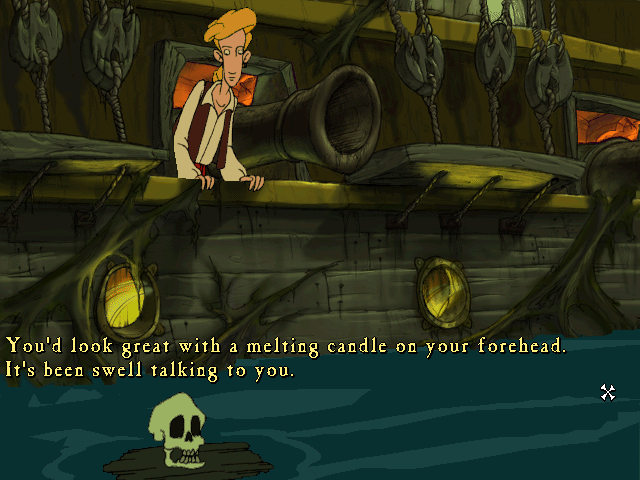
The Curse of Monkey Island
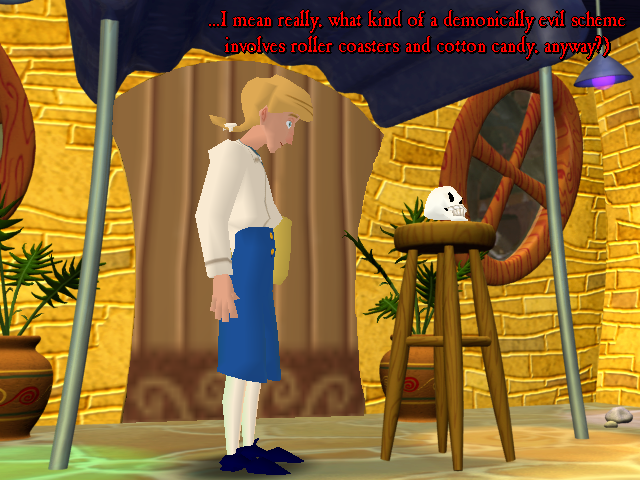
Escape from Monkey Island
Tales of Monkey Island
Herman Toothrot
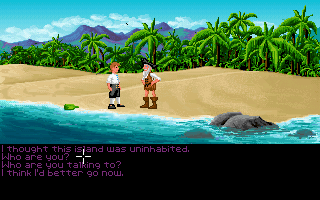
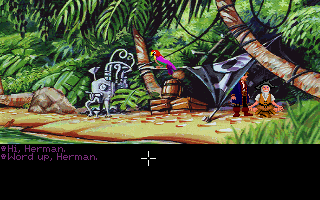
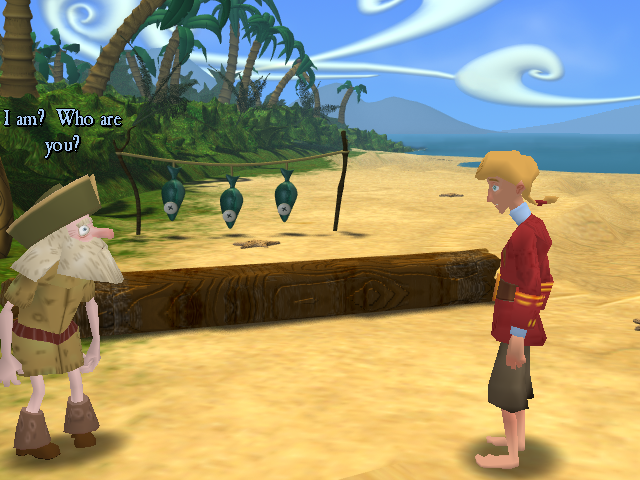
Herman Toothrot is a lonely, and somewhat overbearing, hermit who lives on Monkey Island. He constantly pesters you, and also has some kind of vendetta against pants. He makes a quick (and fairly pointless) appearance in Monkey Island 2 as a master of philosophy, but finds himself stranded back on Monkey Island in the fourth game, this time with a nasty case of amnesia. There’s some fairly substantial retconning in this game to make Herman fit in with a rather poorly thought out plot twist.
The Secret of Monkey Island
Monkey Island 2: LeChuck’s Revenge
Escape from Monkey Island
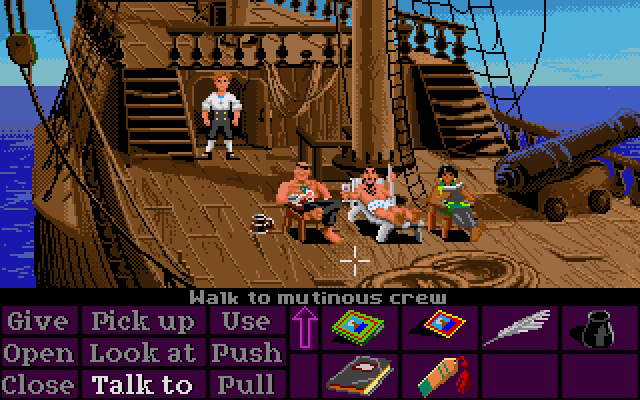
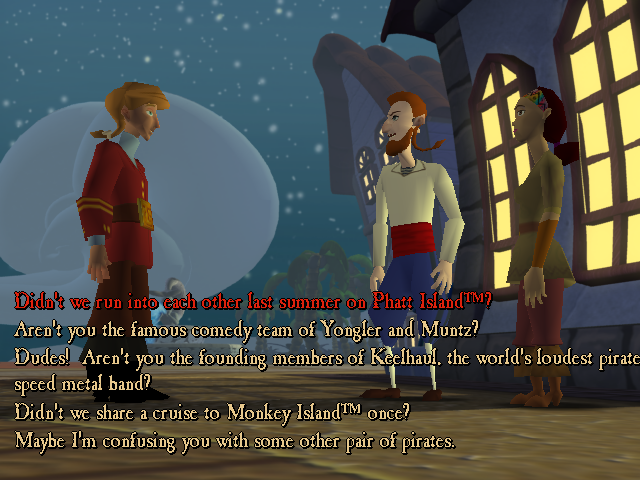
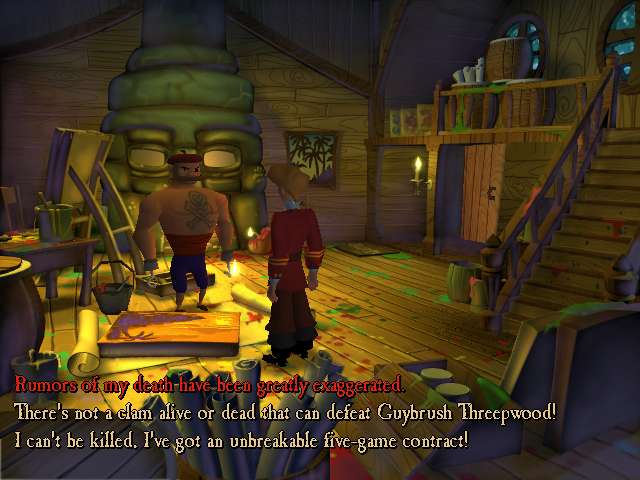
Guybrush’s Crew – Carla the Swordmaster, Otis and Meathook
No matter how good a pirate one may be, it’s impossible to man a boat by oneself. In setting off for Monkey Island in the first game, Guybrush needs to round up a crew from various folks on Melee Island. Amongst them are Carla the Sword Master, whom Guybrush previous beat in a game of Insult Swordfighting; Otis, a vaguely reformed criminal whom Guybrush helps break out of jail; and Meathook, a not-quite-so-fearsome pirate with a huge fear of parrots. He accidentally strands them on Monkey Island at the end of the game, and by the time Guybrush runs into them in Escape from Monkey Island, they’re all dealing with psychological trauma from their abandonment.
The Secret of Monkey Island
Escape from Monkey Island
Escape from Monkey Island
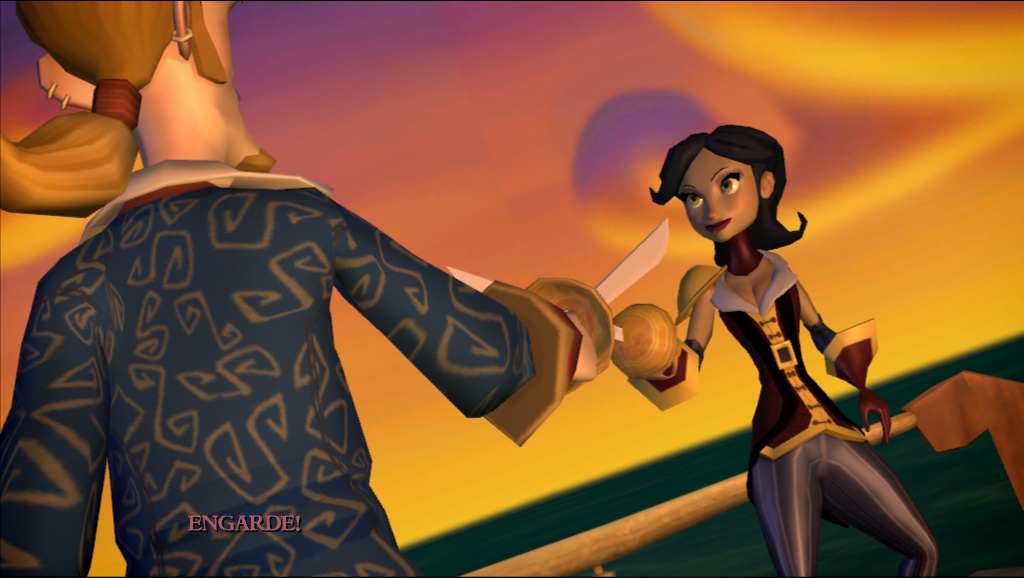
Morgan LeFlay
Morgan LeFlay is a bounty hunter – one of the best in the business – but she’s also a gushing fangirl of Guybrush. As such, she’s constantly conflicted between her pride for her job, and her pretty obvious crush on our mostly oblivious hero. Naturally, Morgan gets a healthy dose of reality once she sees Guybrush in action. As compared to most of the other secondary characters here, she actually plays a fairly large role in the Tales of Monkey Island games.
Tales of Monkey Island
Related Articles at HG101:
 Suikoden (Series Introduction)
  Samurai Shodown (Intro / Characters)
  Mortal Kombat (Introduction)
  Myst (Introduction)
  Dragon Quest (Introduction)
  Sakura Taisen (Introduction)
  Mega Man (Series Introduction)
  Darkstalkers (Introduction / Characters)
  Art of Fighting (Intro / Characters)
  Leisure Suit Larry (Introduction)