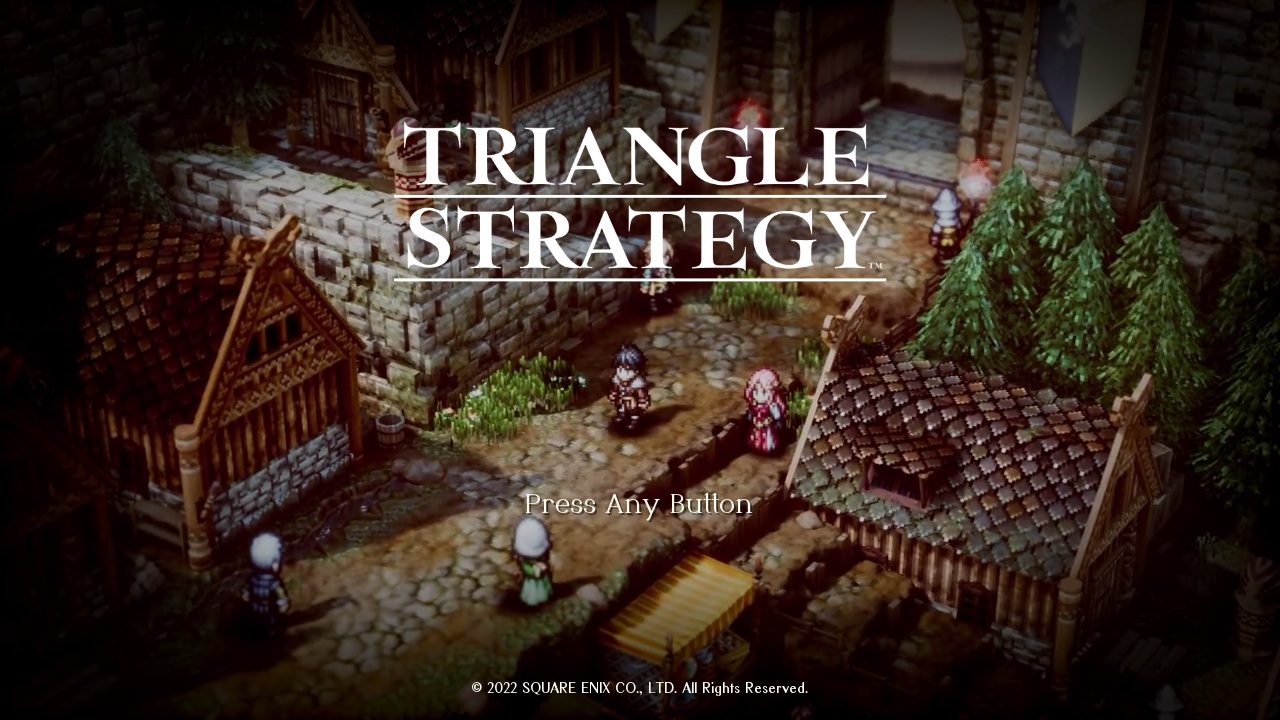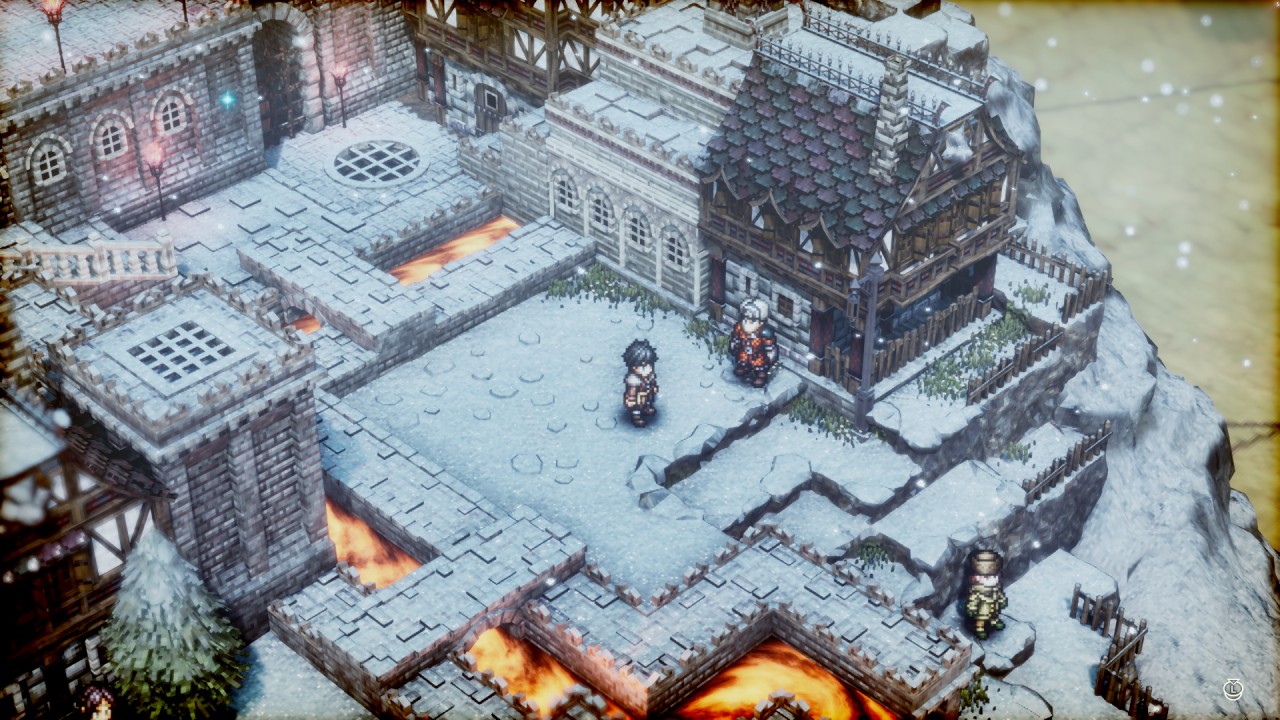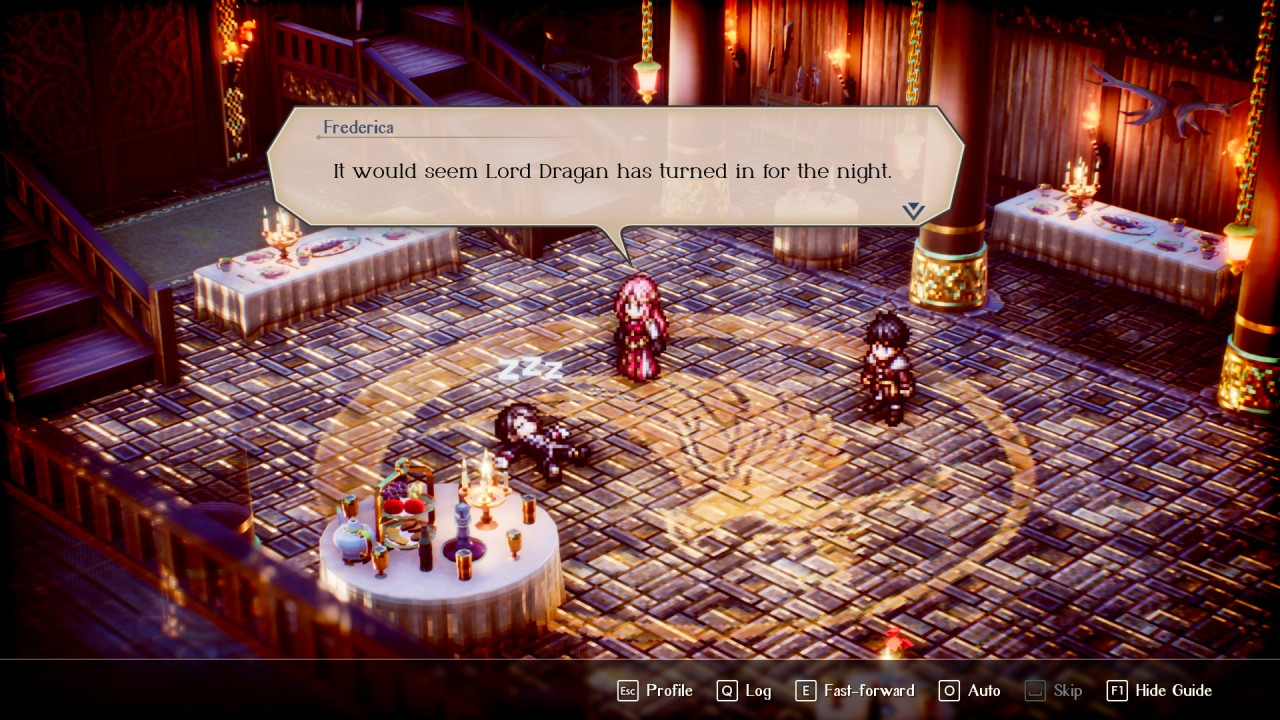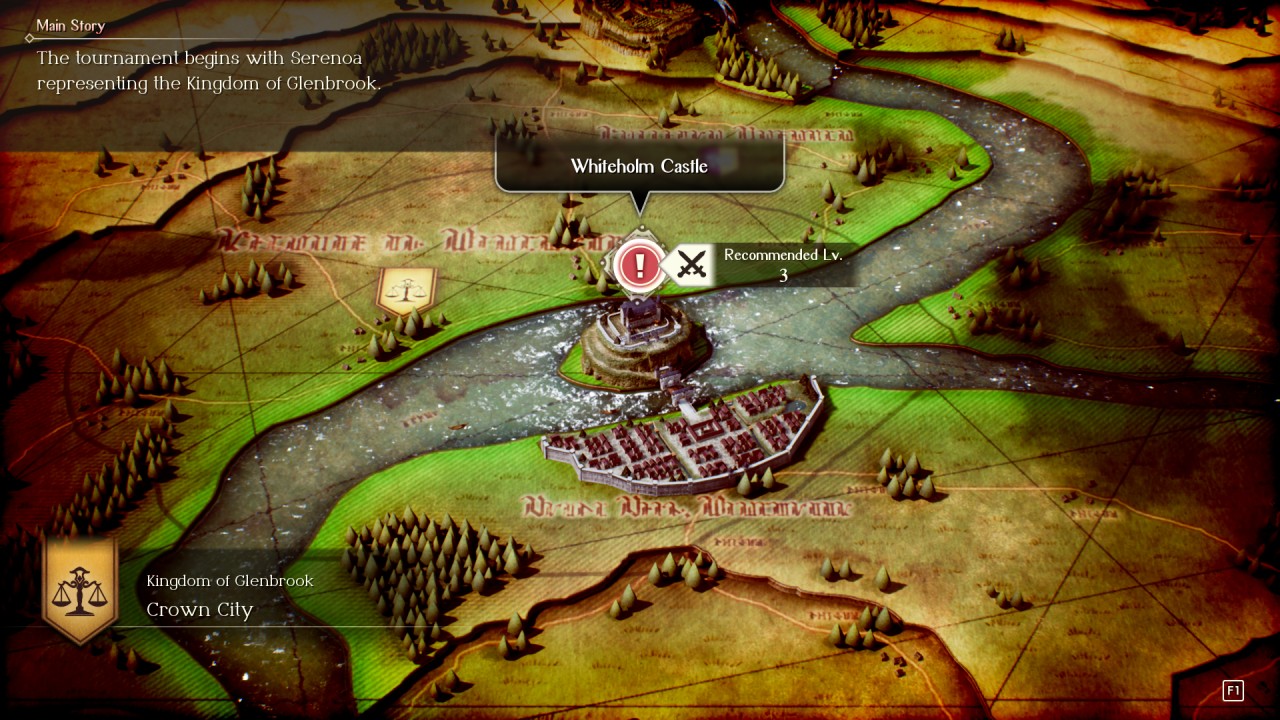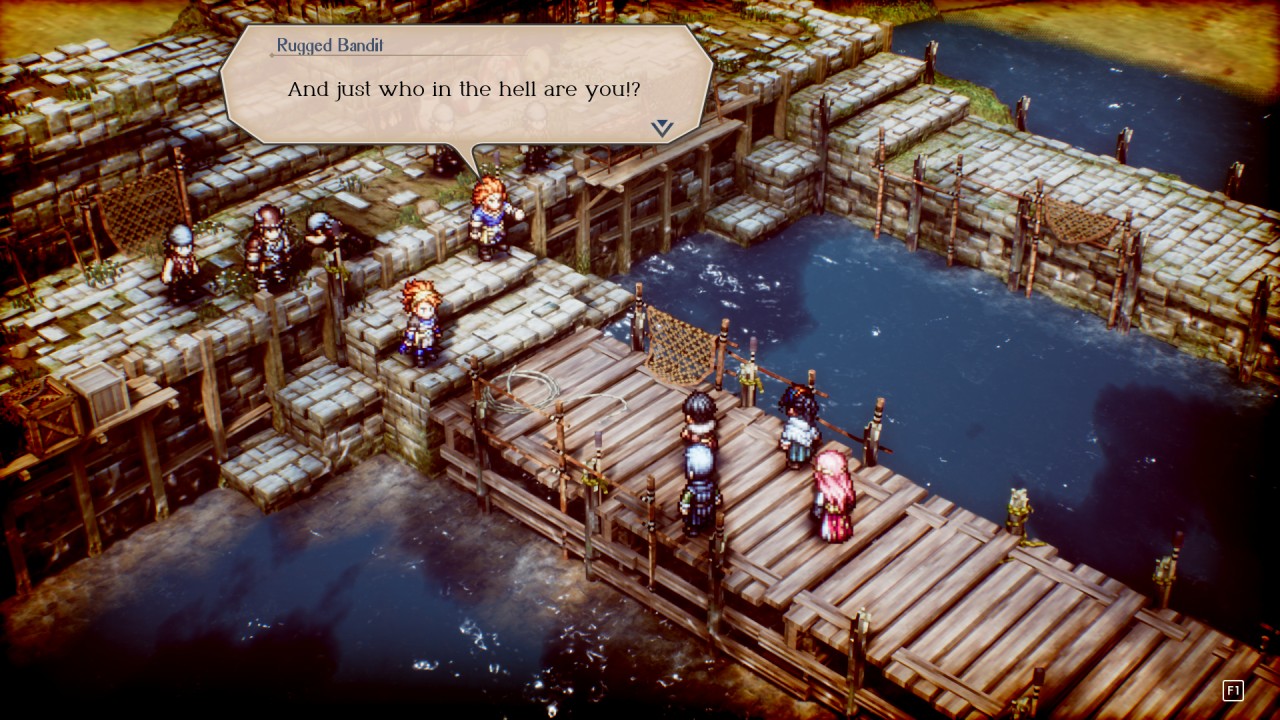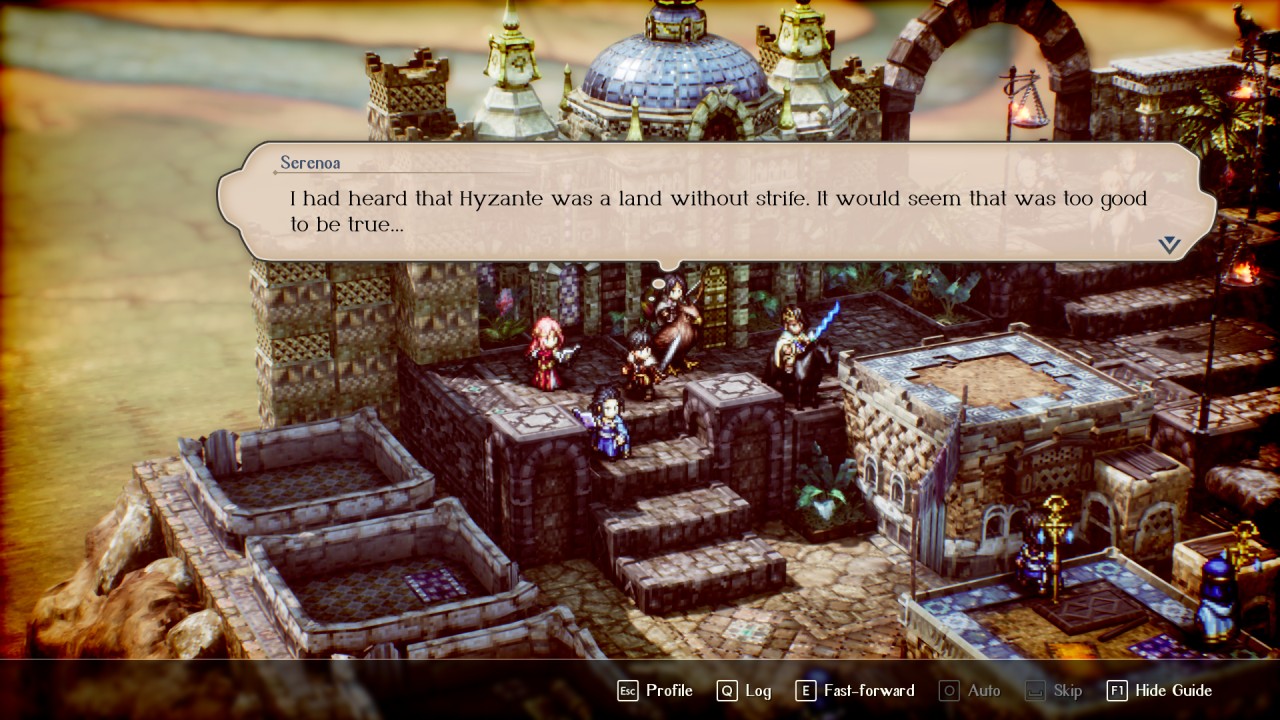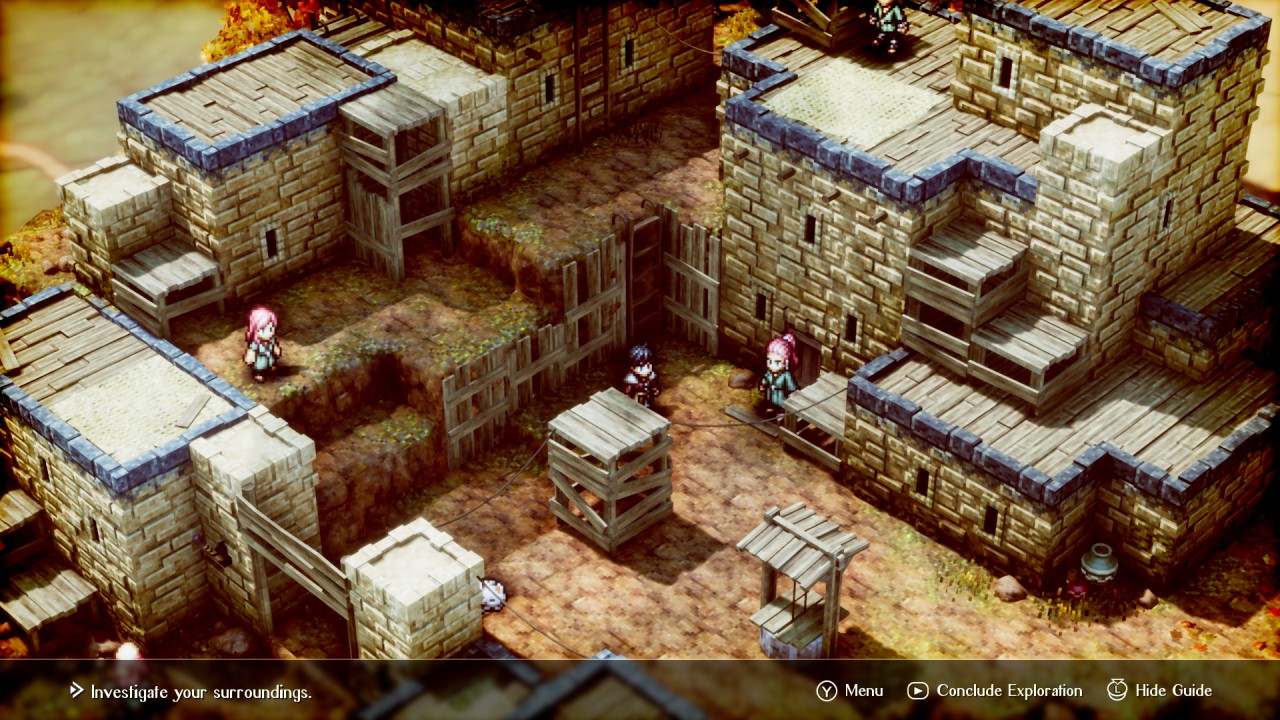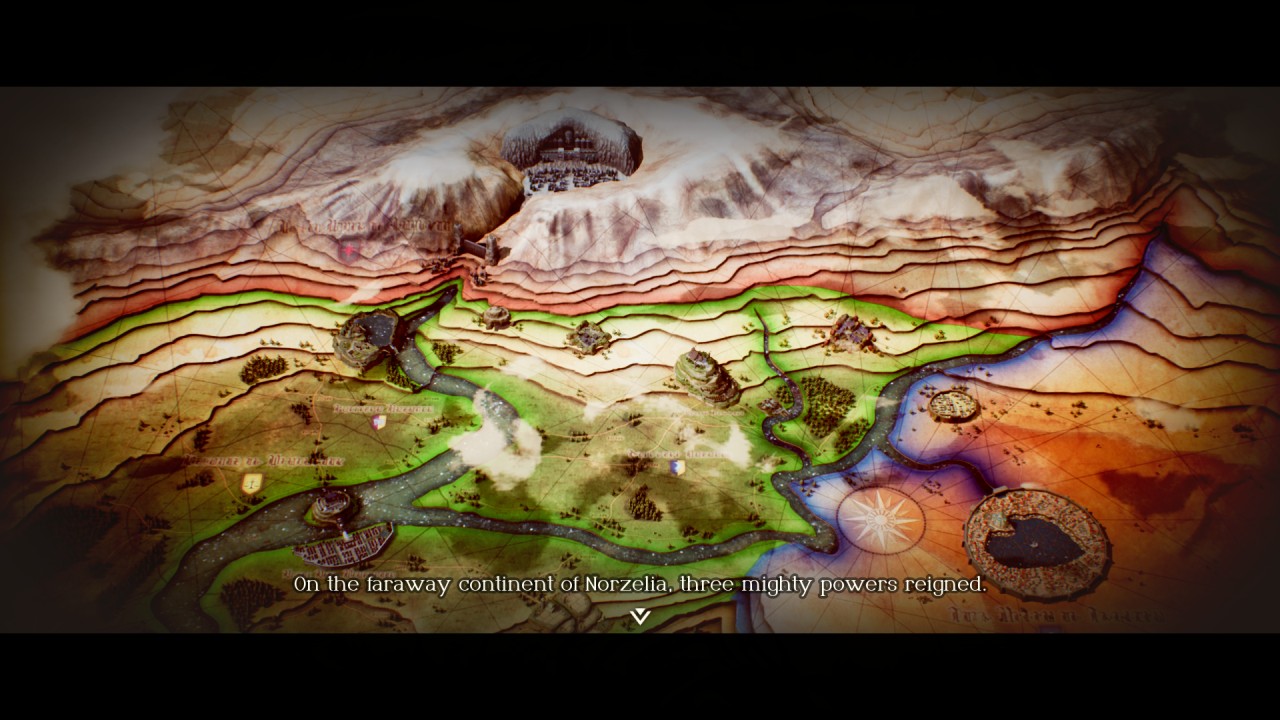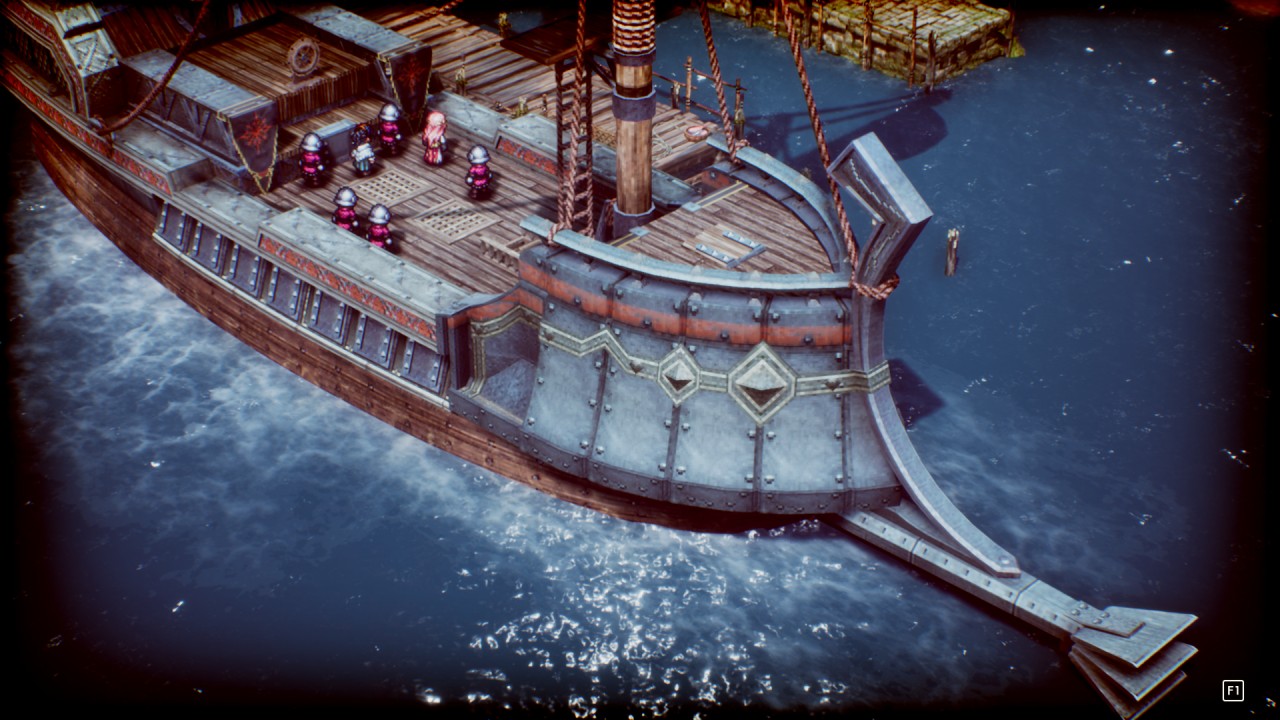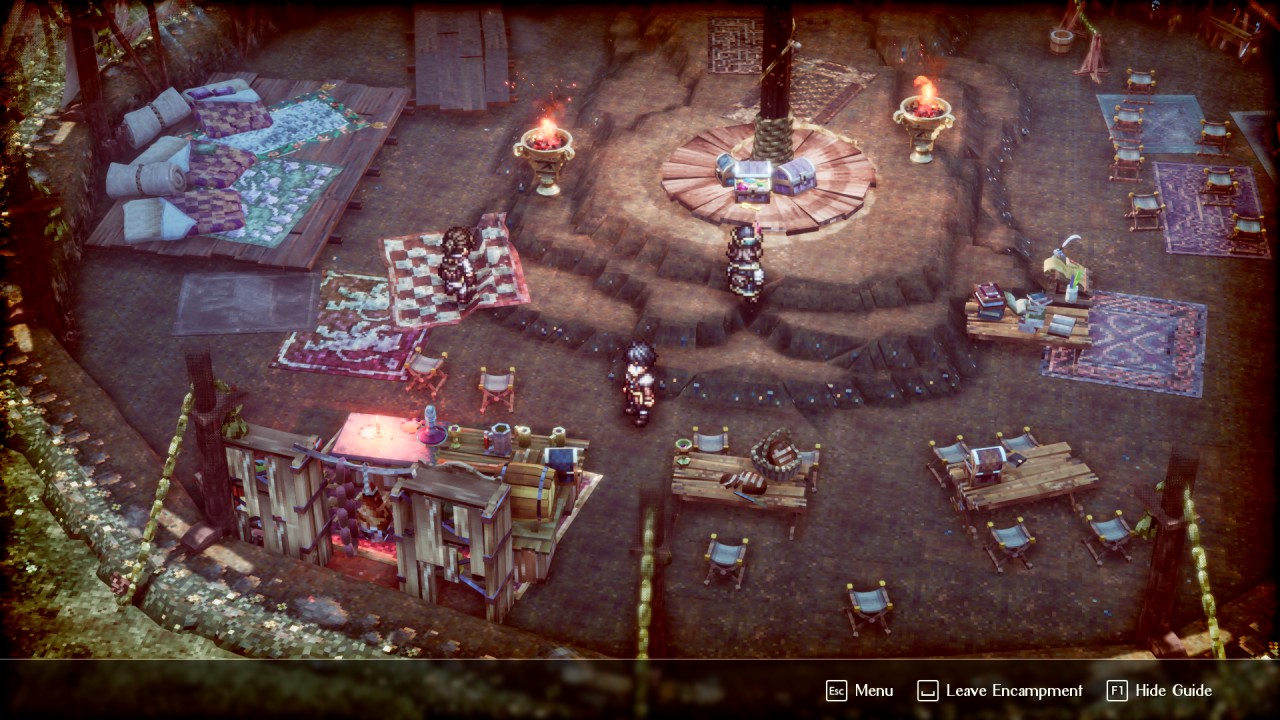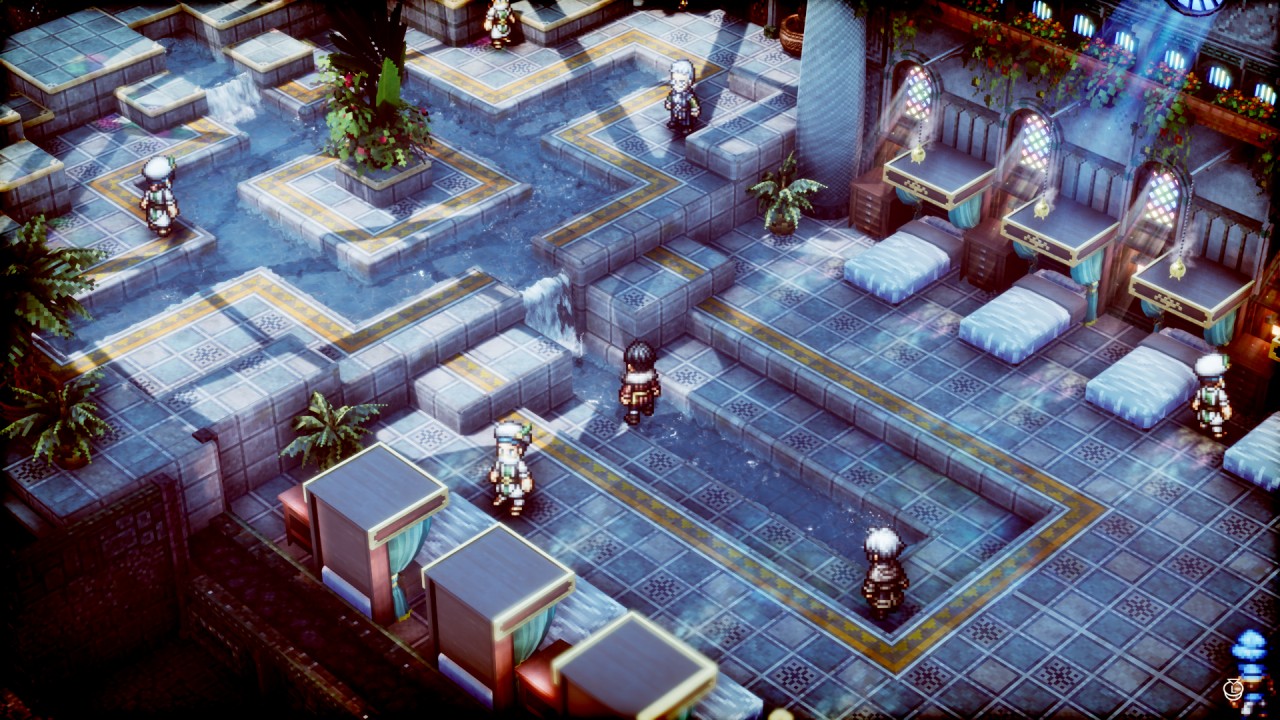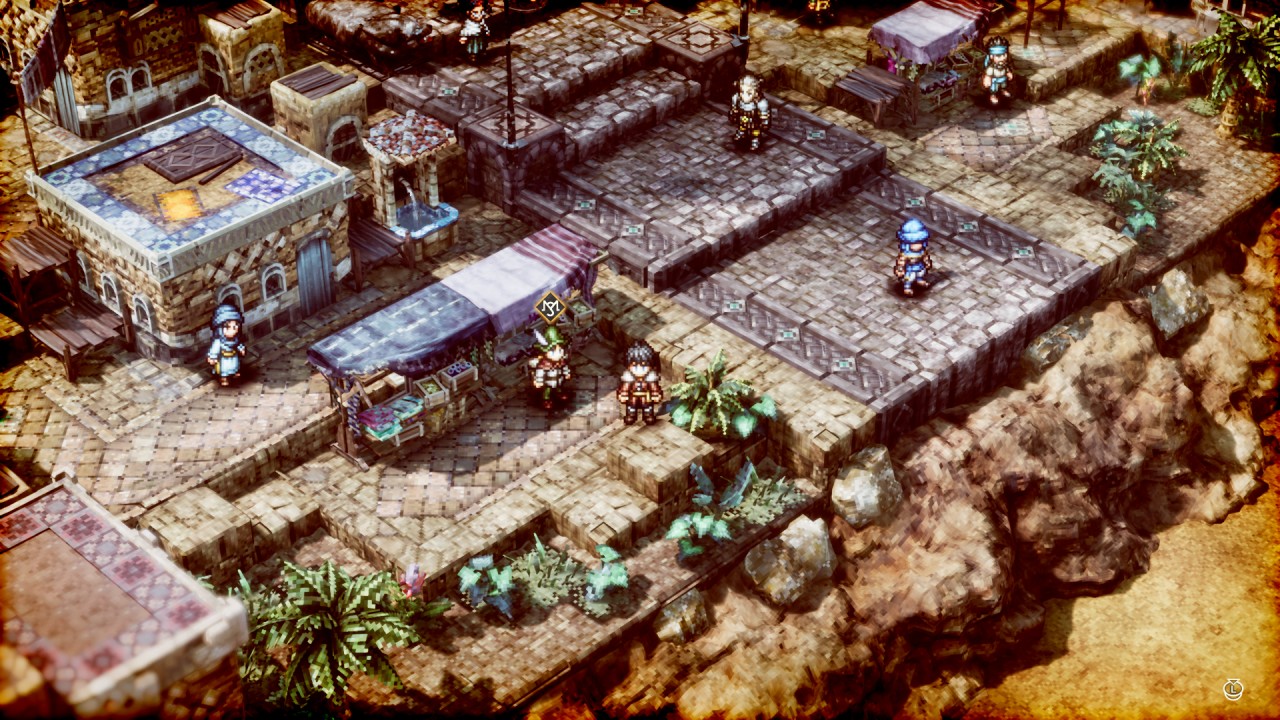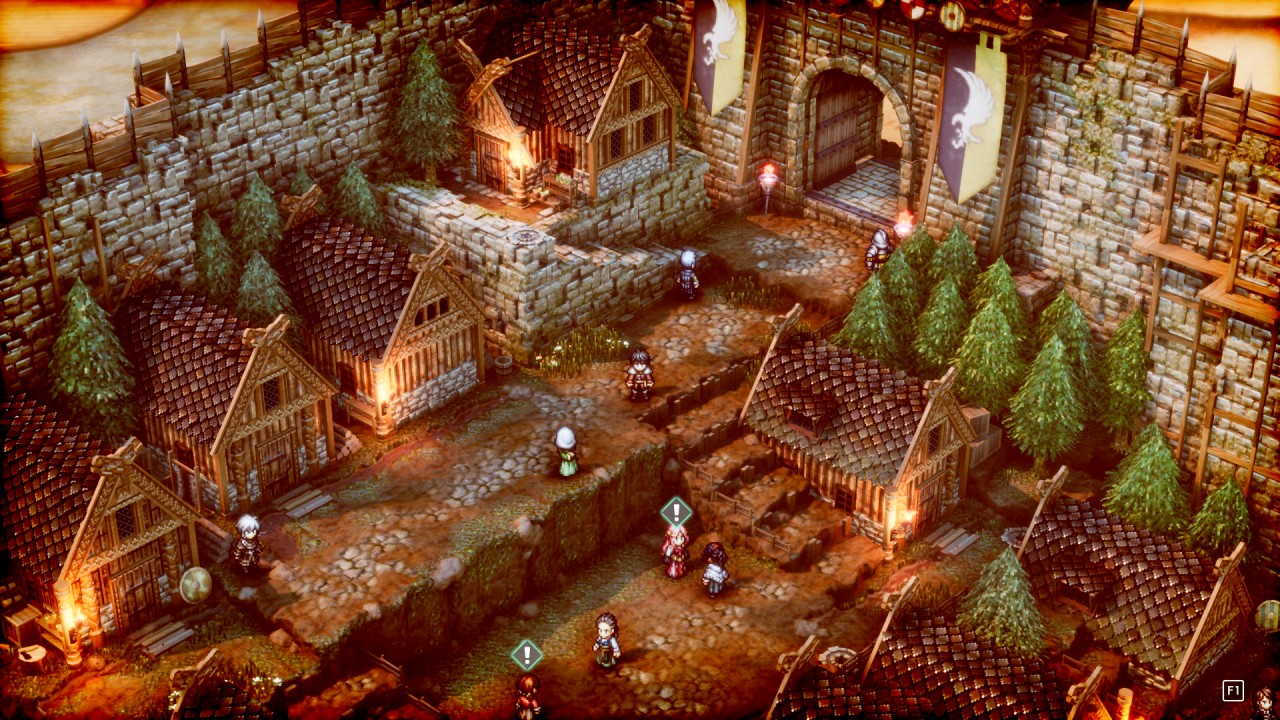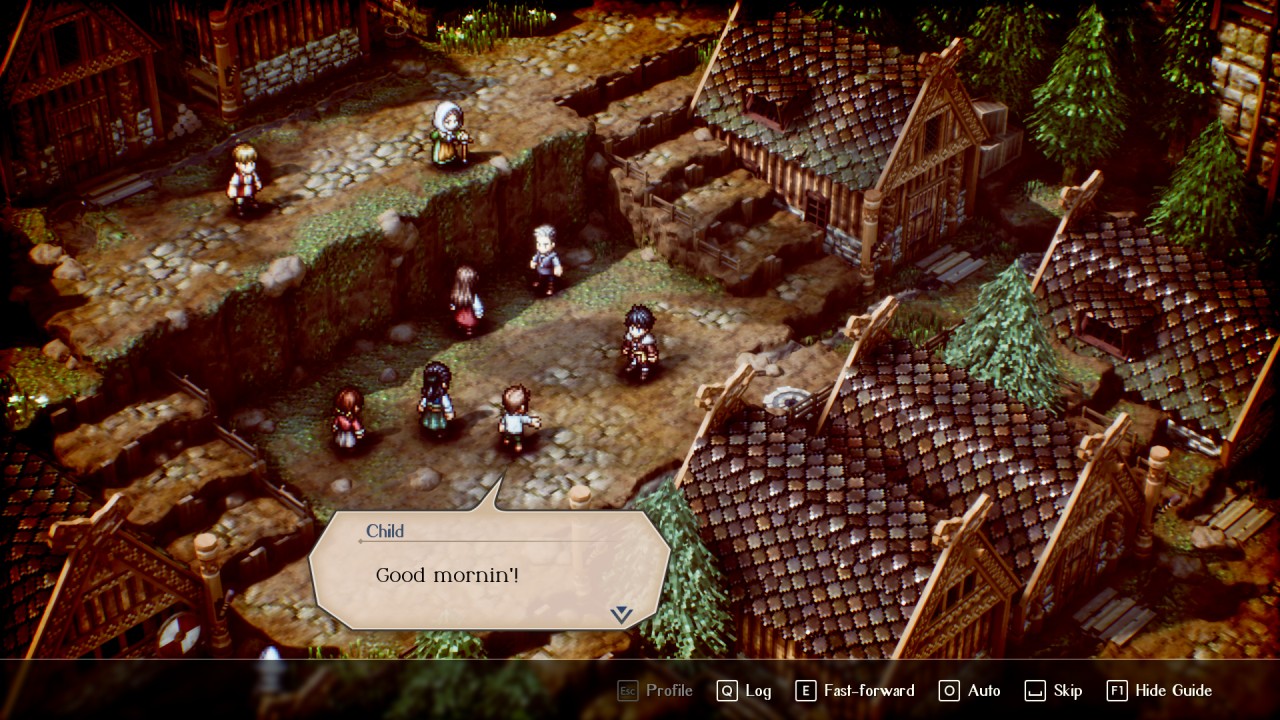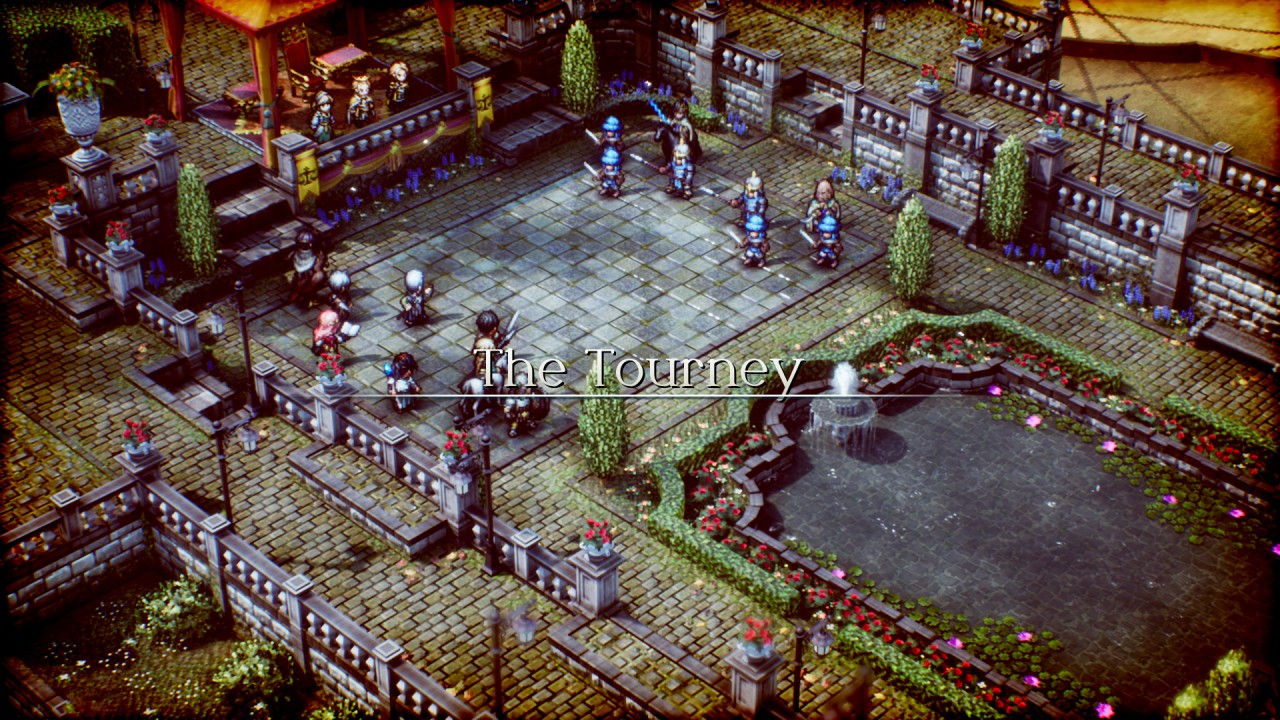
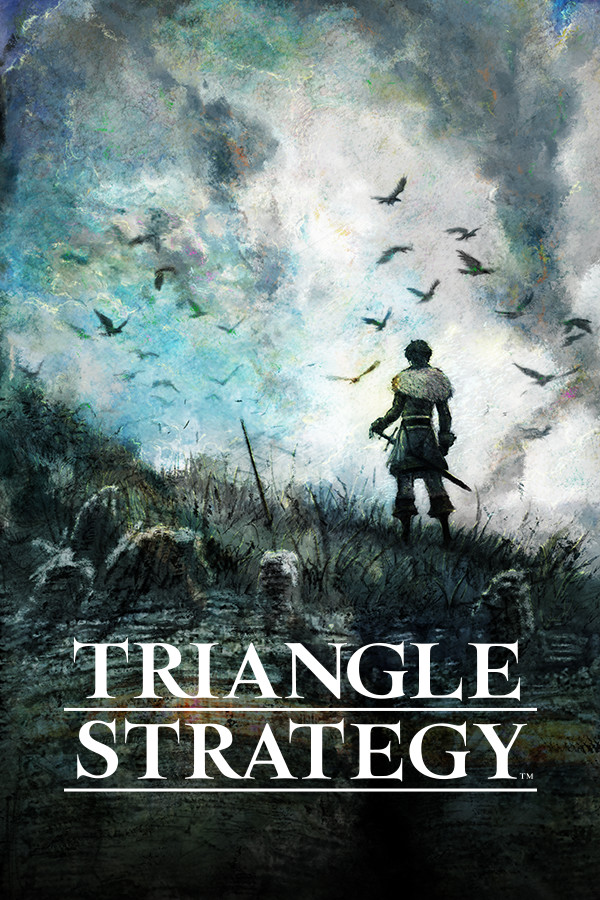
Originally released in 2022 for the Nintendo Switch and later expanded to additional platforms, Triangle Strategy represents the culmination of producer Tomoyo Asano’s long career in RPGs, alongside co-developer Artdink under Square Enix. It is also one of the early titles of the HD-2D artstyle: a blend of pixel-art characters, dynamic lighting, and cinematic camera work set within fully realized 3D environments. The aesthetic deliberately evokes the 16-bit era of JRPGs, especially a title like Final Fantasy VI.
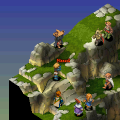
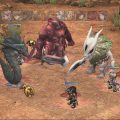
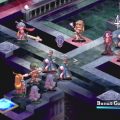
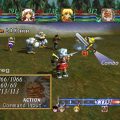
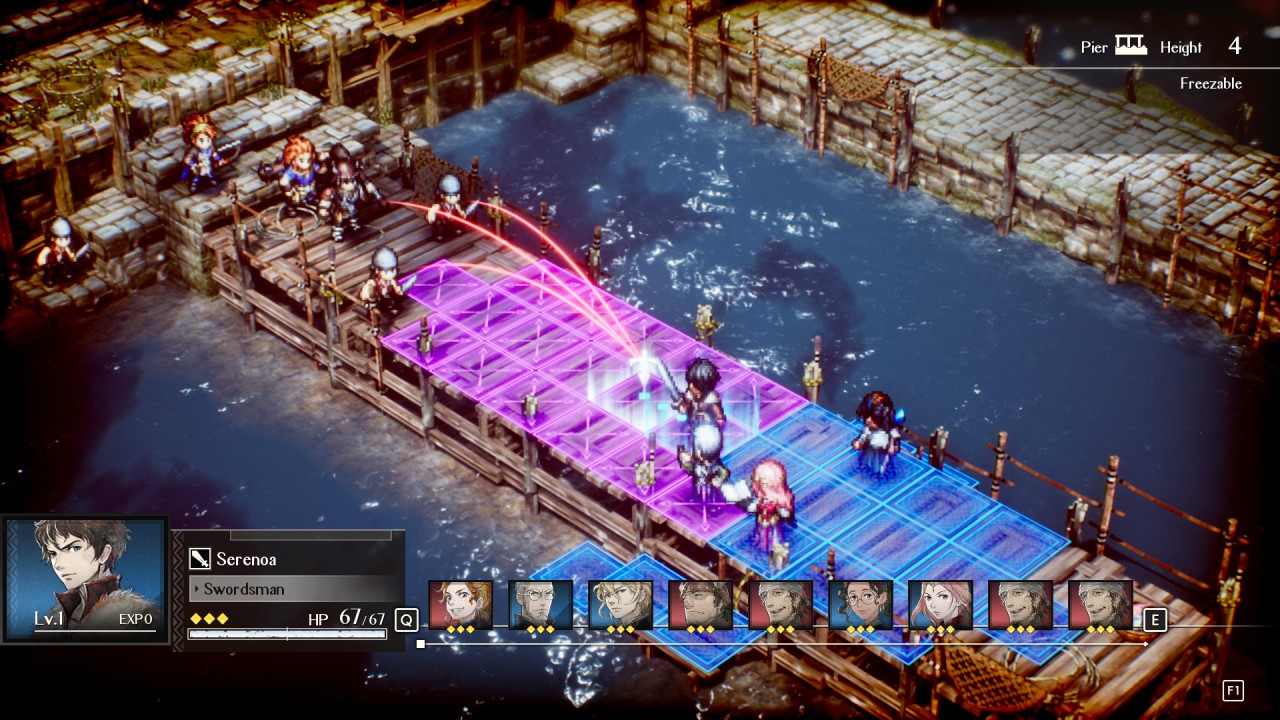
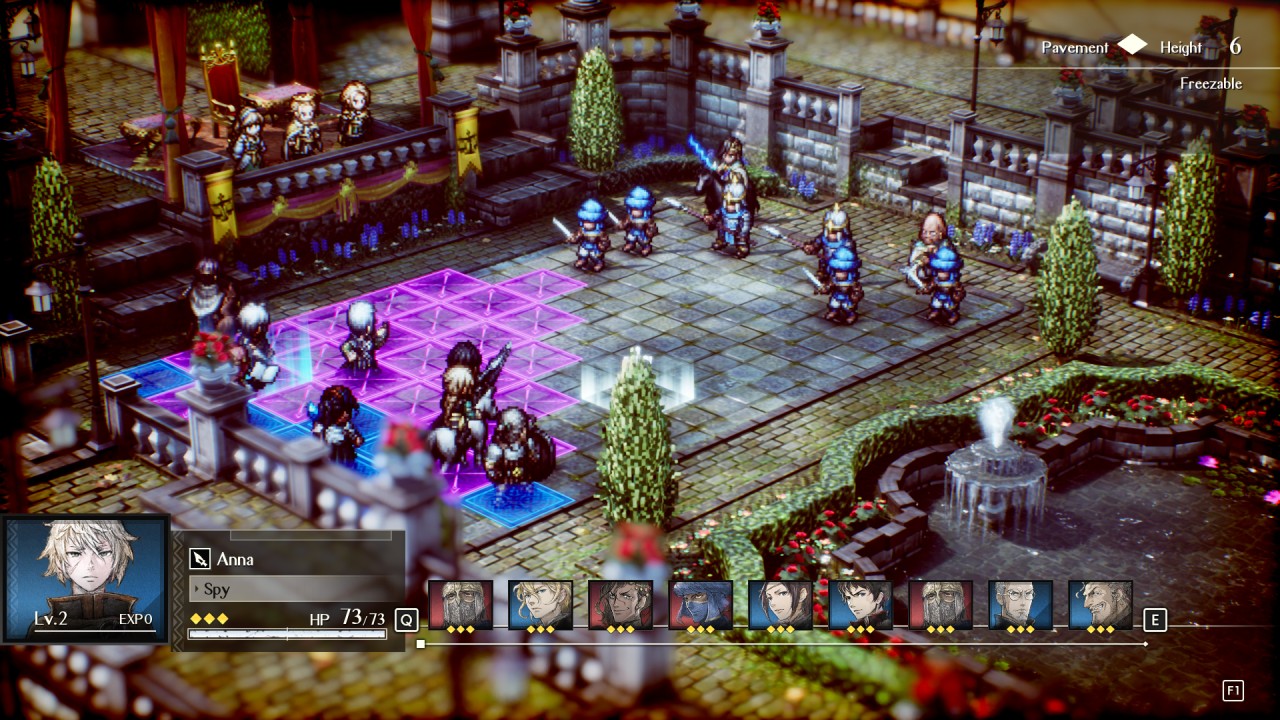
Given Asano’ association with several games with job systems inspired by Final Fantasy V (such as the Bravely Default series) some players might expect a similar approach here. Instead, Triangle Strategy draws more heavily from the tactical lineage of Tactics Ogre than Final Fantasy Tactics. Its cubic battlefields and emphasis on positioning place it firmly within that tradition, even as it refines and modernizes the formula in addition to giving it its own spin with tightly defined character classes.
Akira Senju composed the music, drawing on his background in symphonies as well as TV, film, and anime soundtracks (such as Full Metal Alchemist: Brotherhood). His work on Triangle Strategy is one of his few video game credits, offering over four hours of music. Where Yasunori Nishiki’s “Decisive Battle” (Octopath Traveler) uses stirring, powerful violins reminiscent of Nobuo Uematsu’s FFVI track of the same name (which also featured organ and electric guitar), Triangle Strategy instead delivers more subdued compositions that rarely meet those emotional heights. You won’t hear standout pieces like FFT’s “Trisection” with its shifting pace, or “Antipyretic,” which includes a sweet melody within an otherwise unsettling track. But while unlikely to distract from player decisions, fans of traditional classical styles will still find much to enjoy in pieces that develop in more complex, though less immediately memorable, ways.
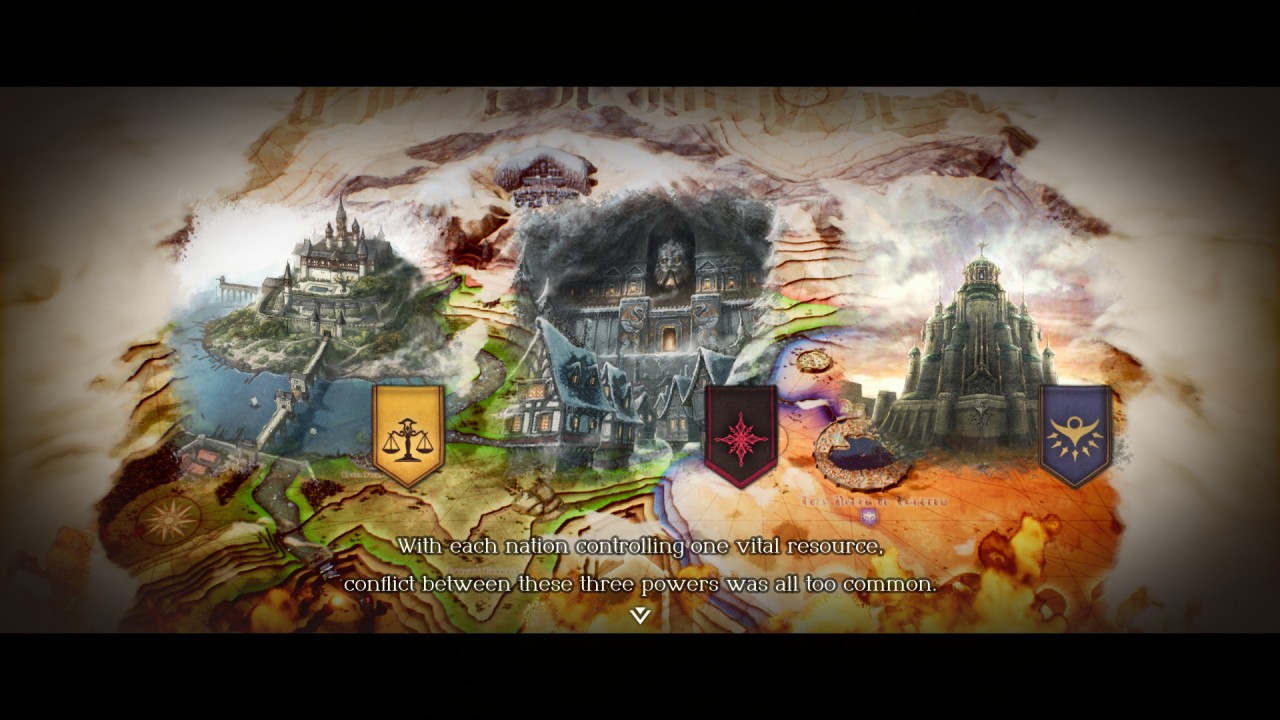
Narratively, the game leans into dense political drama. Its story of three rival nations with dense, intertwining and entangling relationships invites comparisons to A Song of Ice and Fire, while its ideological conflicts and strategic maneuvering echo Legend of the Galactic Heroes, a title with a more proximal influence. The central importance of salt in the conflict make parallels to Dune almost inevitable. Yet Triangle Strategy grounds these influences in personal motivations and political vulnerability, framing its conflicts less as epic fantasy spectacle and more as fragile, human decision-making under pressure.
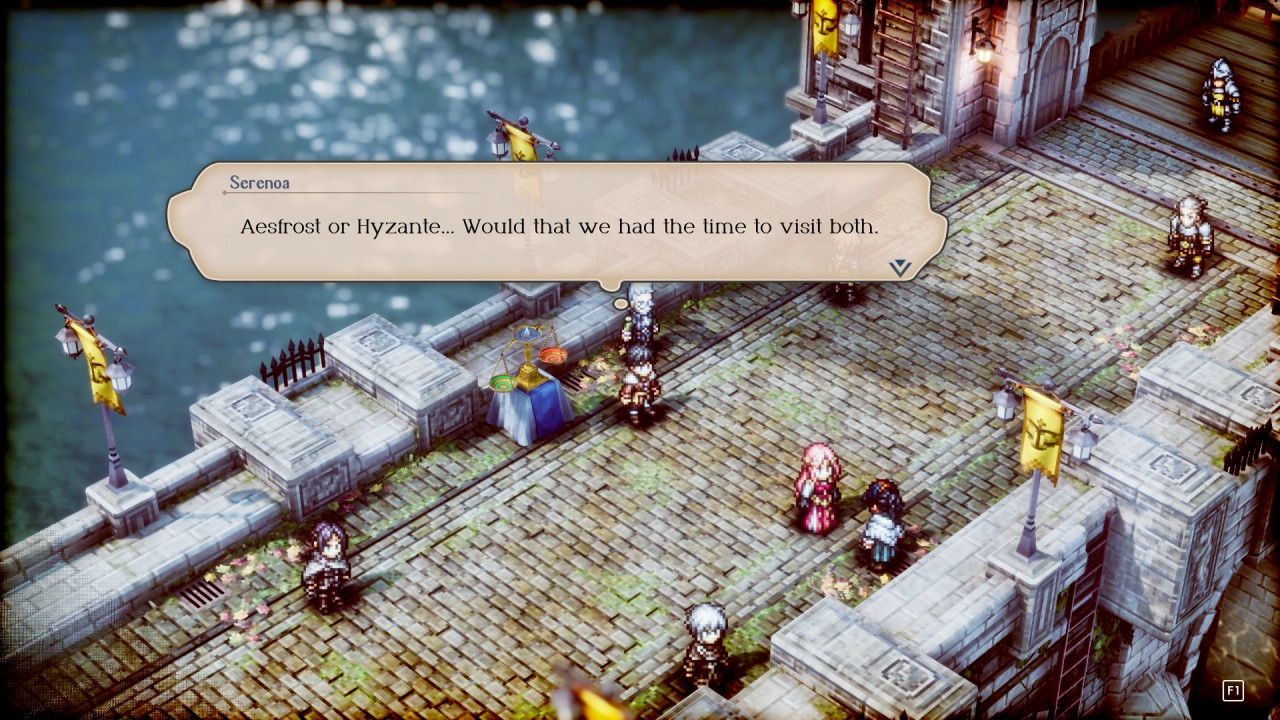
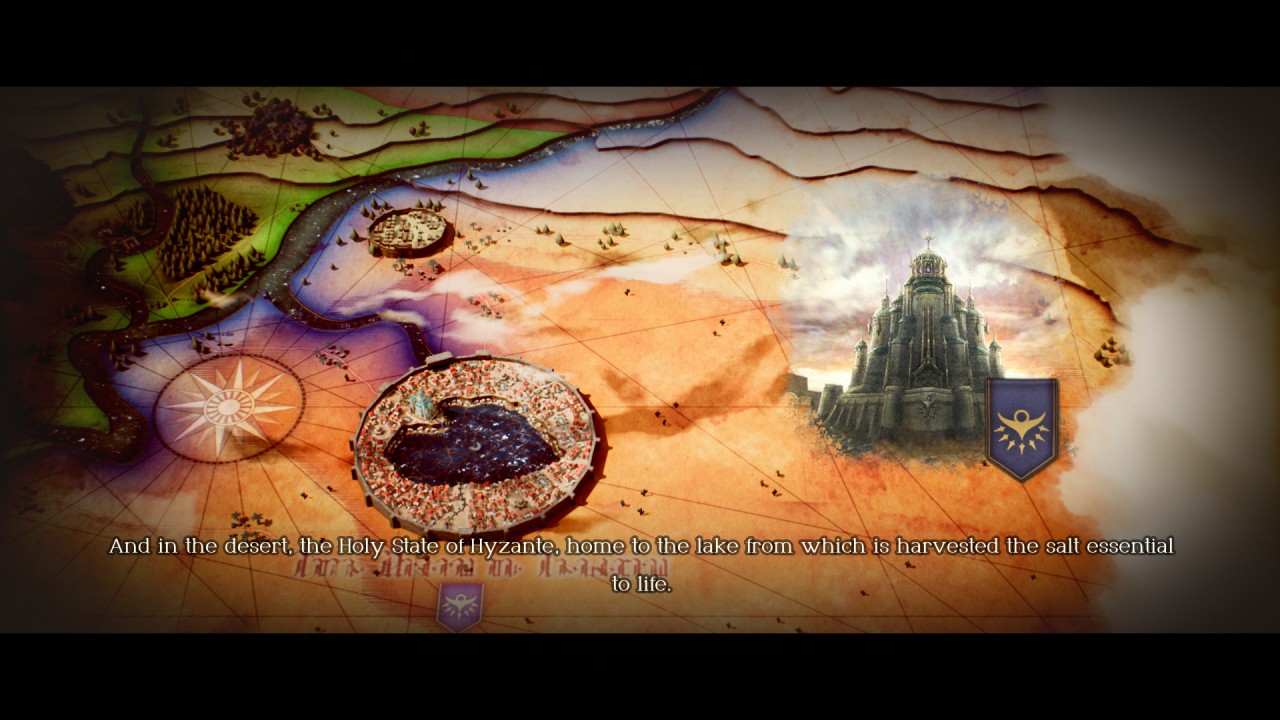
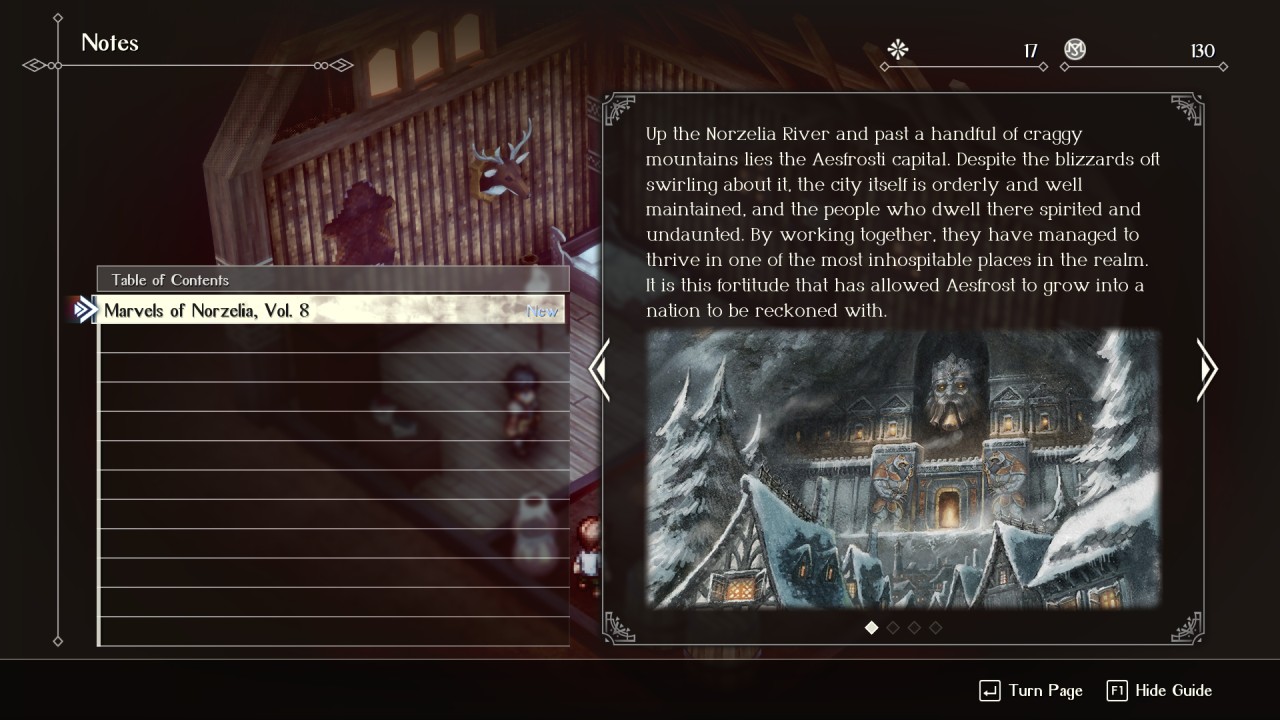
The Triangle of Triangle Strategy is both the three delicately balanced political states of Holy Hyzante, industrious and pioneering Aesfrost, and flourishing Glenbrook as well as the three orienting philosophies (or Convictions) of Morality, Liberty and Utility. While clearly inspired by the moral choices of Law, Chaos and Neutrality of Tactics Ogre, these convictions play a more central, pervasive, and nuanced role throughout the story and game world.
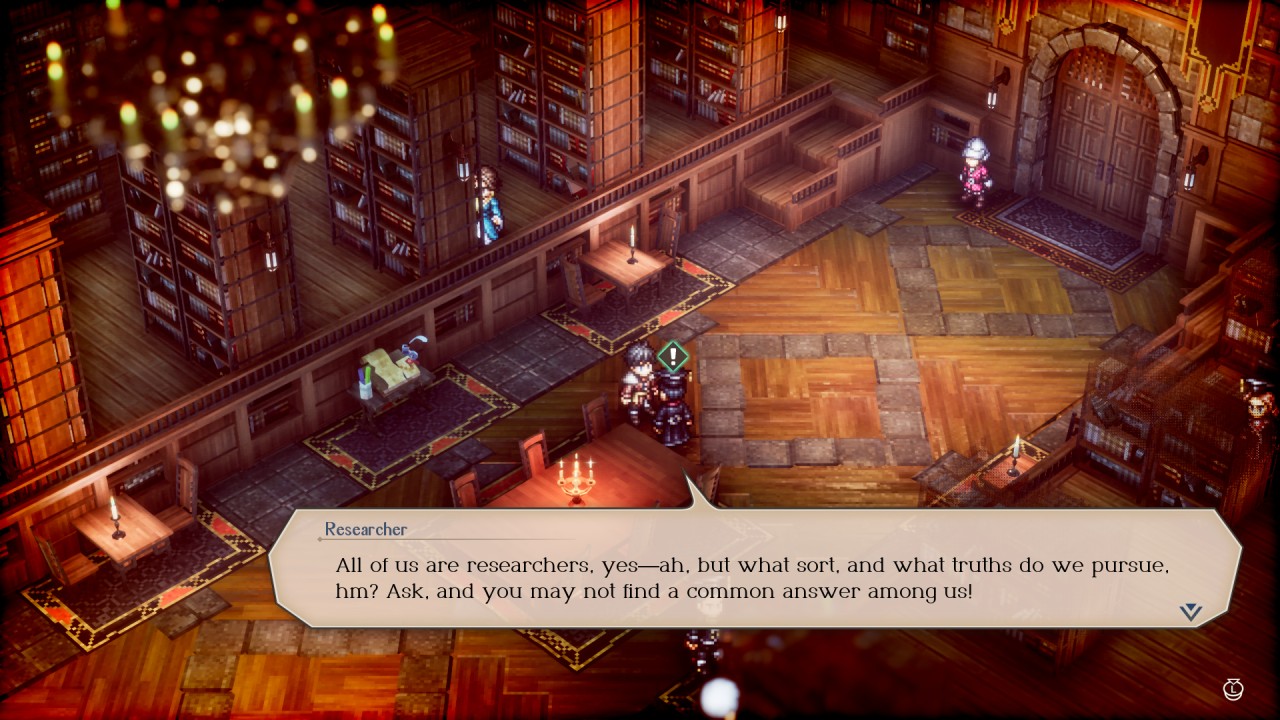
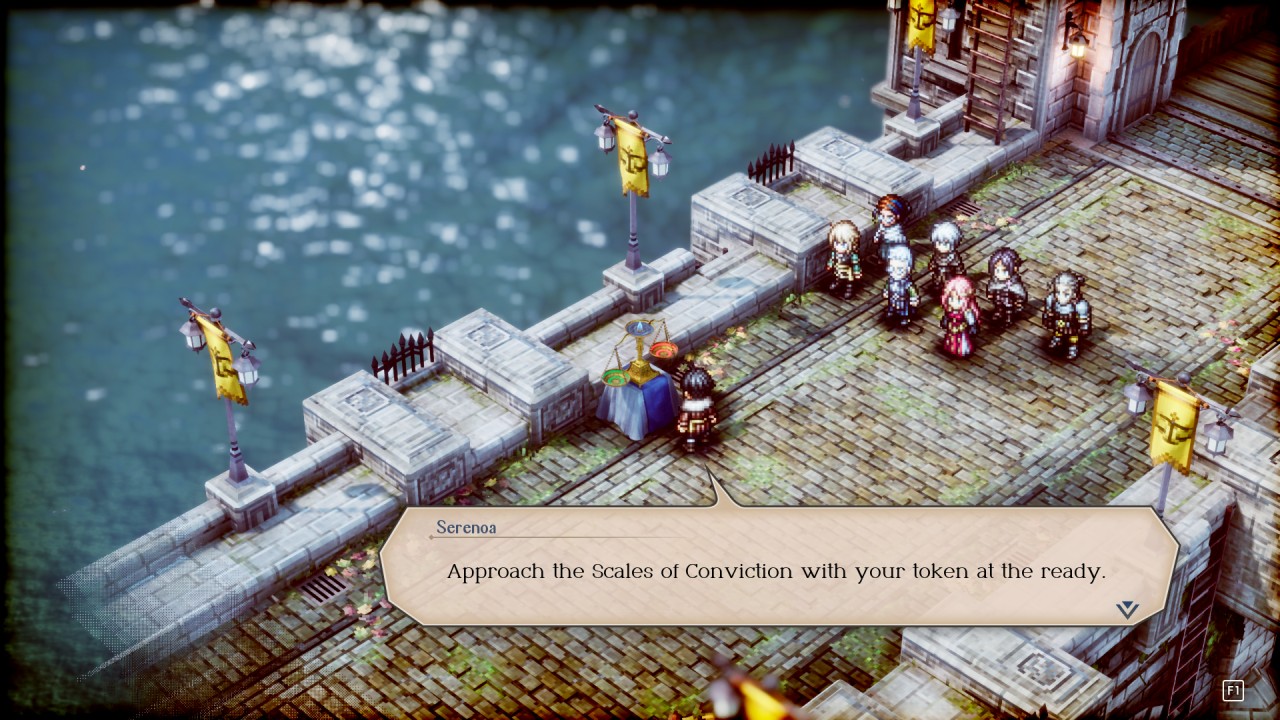
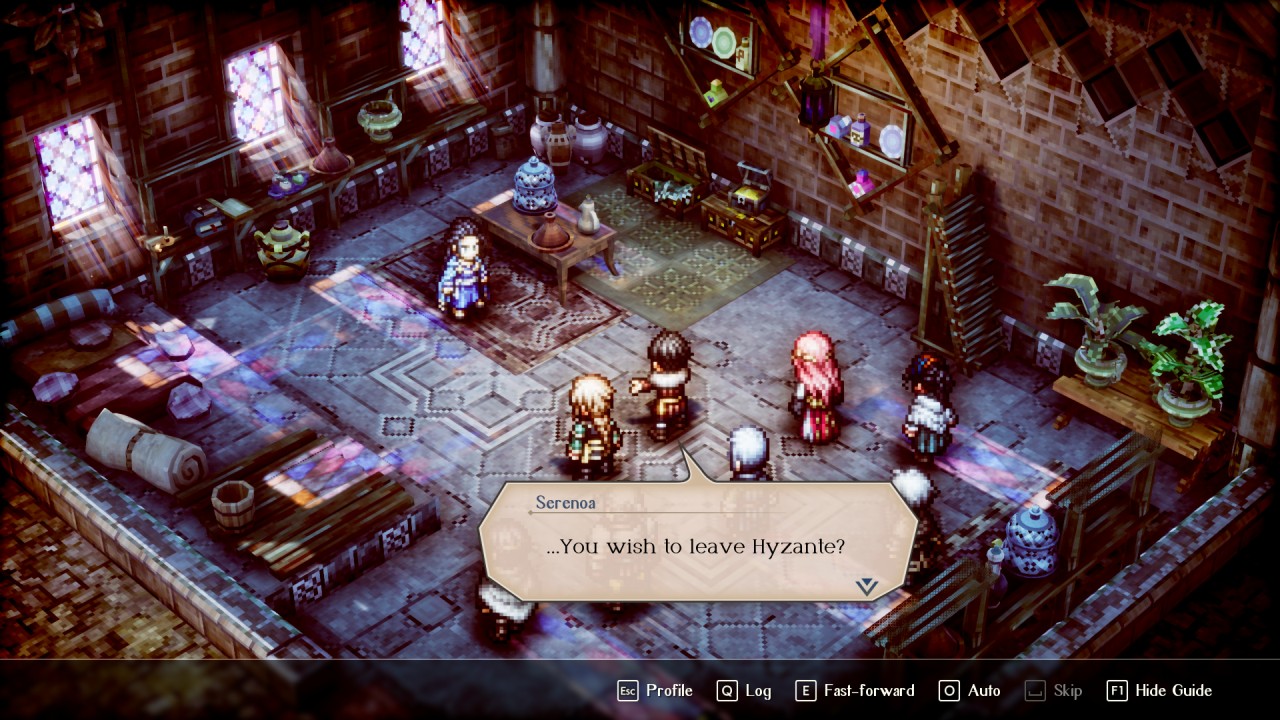
Every few chapters, a dilemma is posed to your house. When choosing which branch of the story to travel down, players will only influence the decision indirectly. Seven characters each have a token that they use to vote, but not Serenoa. Therefore the player, as Serenoa, must advocate for a specific path. Your council will push back and need to be convinced. What goes into swaying your allies includes how you answer those follow up questions, presenting learned information you discover in the exploration sections, and Serenoa’s own convictions, which are formed through gameplay. Mostly Serenoa’s convictions are formed by answering the philosophical questions of townsfolk or your party, but nearly everything you do from talking to people, being overlevelled, using items, or choosing whether to use the games recommended team when deploying for battle will have a small effect on the three convictions. Each of your characters will have their own dominant conviction, as well. But this will evolve as the events of the story change the people of Norzelia.
Characters
Serenoa
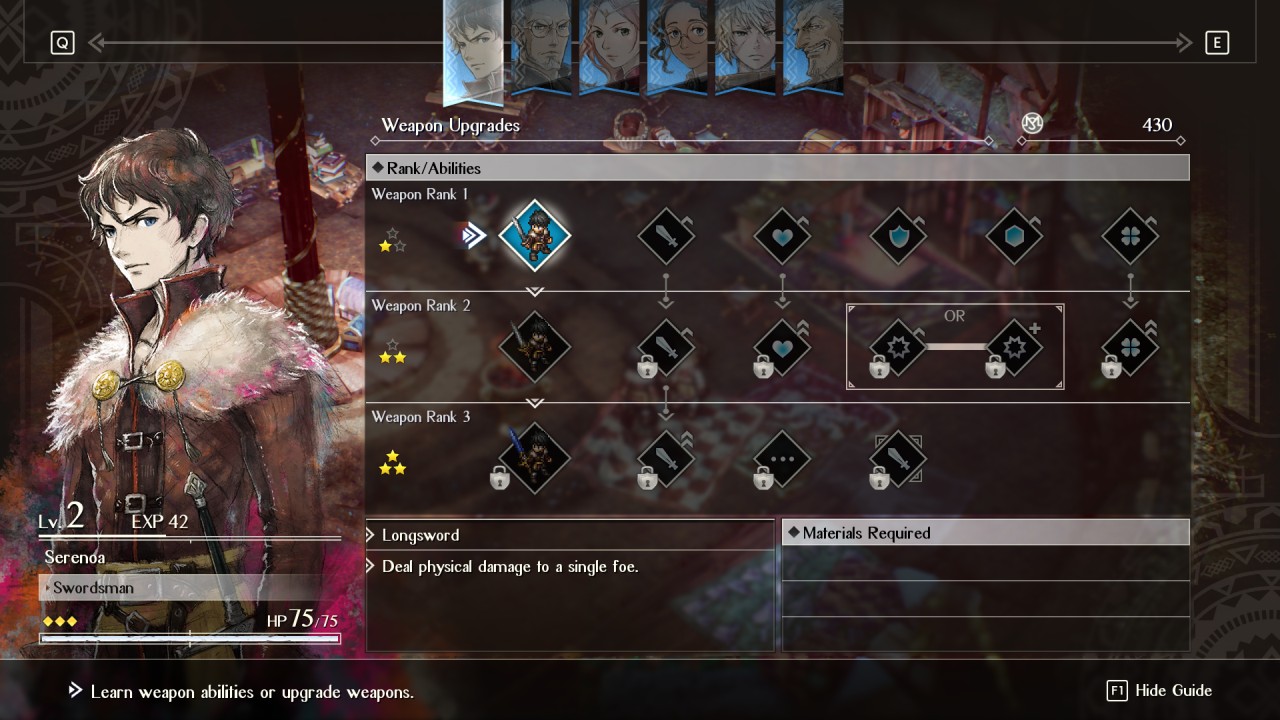
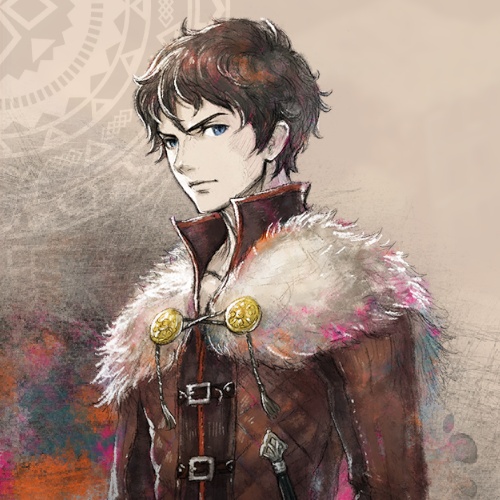
The protagonist who becomes the head of House Wolffort near the beginning of the game. He is the only son of Lord Symon. On the battlefield he is both a good front-line fighter and has several strong support skills. His convictions are forged through the player’s choices and experiences.
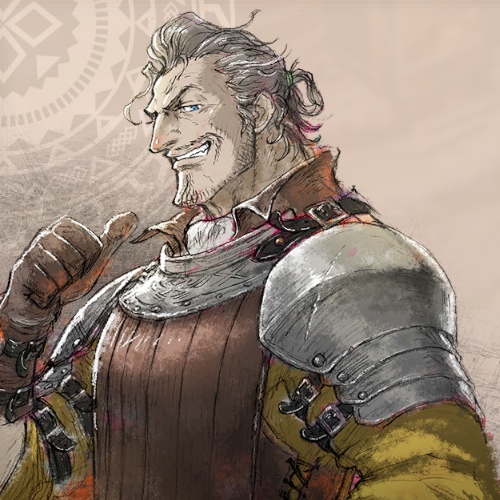
Erador
With an affable demeanor and down to earth perspective, Erador serves as armsmaster and commander of Wolffort’s forces. He provokes the enemy and can take a beating before he goes down.
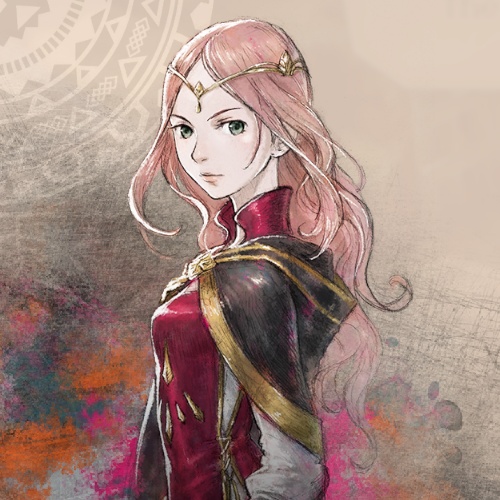
Frederica
A fire mage whose pink hair marks her as a Roselle. While free in her homeland of Aesfrost, the Roselle are slaves in the desert kingdom of Hyzante. Her betrothal to Serenoa plays a hidden role in the ambitions and machinations of others and a fateful role to the plot. She is closely associated with the Liberty conviction which was named Freedom (フリーダム) in the original Japanese.
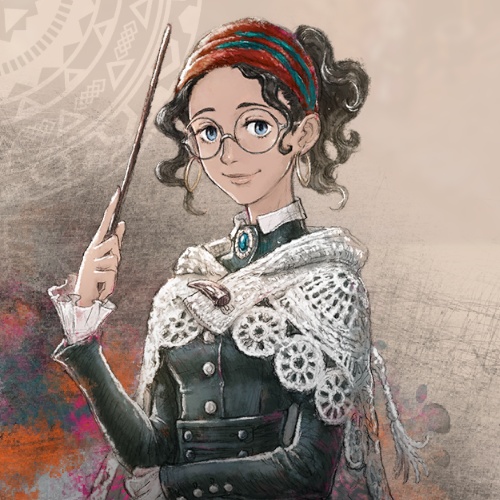
Geela
Frederica’s tutor in the arcane arts who herself once studied in Hyzante. A focused healer that is easy to fit into any team.
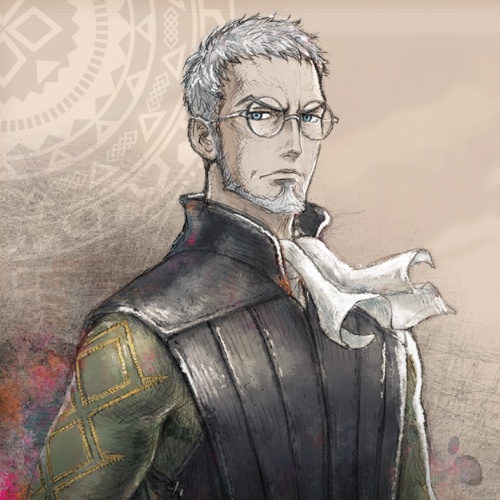
Benedict
His name is analogous to Benefit, which is translated into English as Utility. House Wolffort’s strategist and steward, he is immensely cool under pressure. Benedict will do anything to ensure the survival of his house.
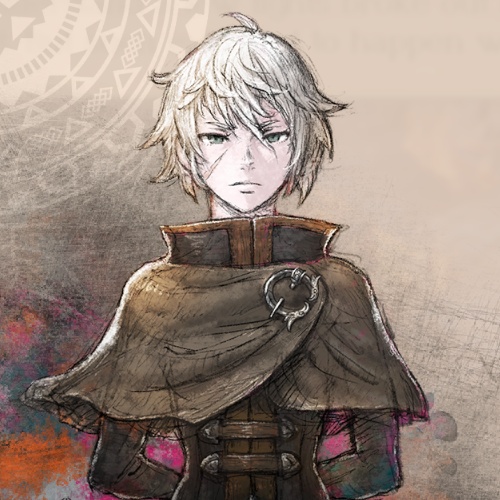
Anna
Expert spy and Benedict’s right hand. She is very often very closed off as to her true opinion when discussing the dilemmas of House Wolffort. She can hide in the shadows and acts twice per turn, giving her a high degree of versatility.
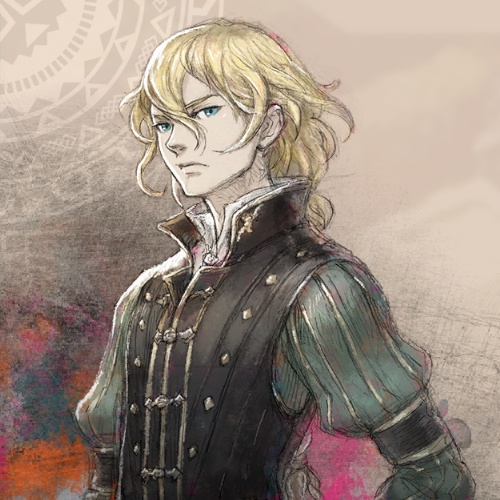
Roland
An idealistic young prince who, as the younger son, is unlikely to be king. Rides a horse into battle and wields a spear, which means he does a lot of damage on the battlefield if you can keep him alive.
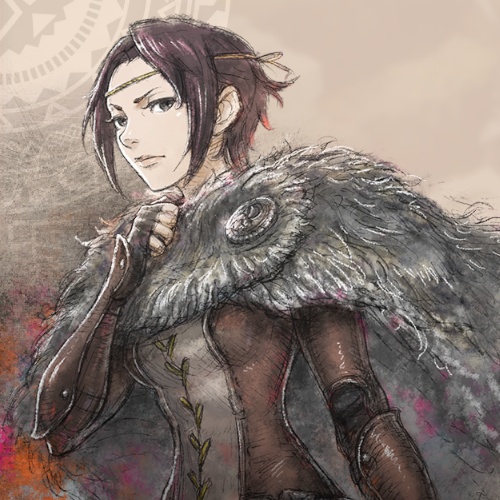
Hughette
A new member of the Glenbrook Kingsguard responsible for prince Roland’s protection. She wields a bow while riding a giant hawk across the battlefield in service of the crown.
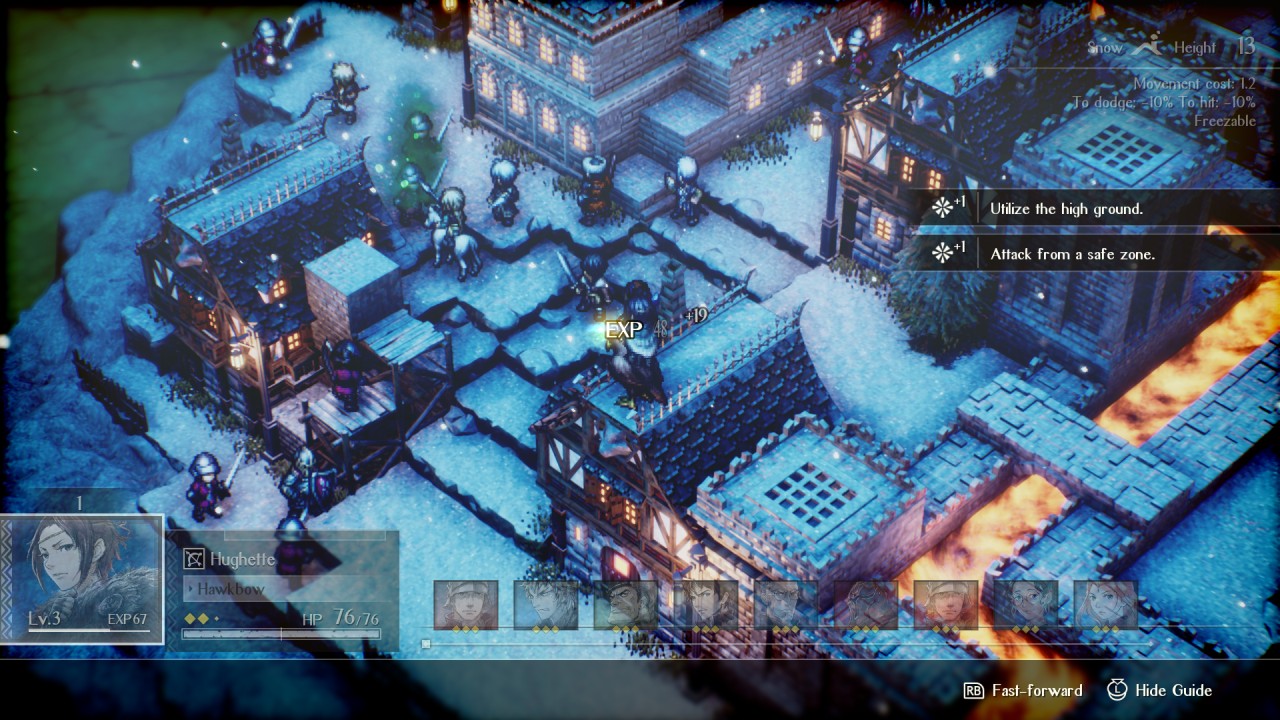
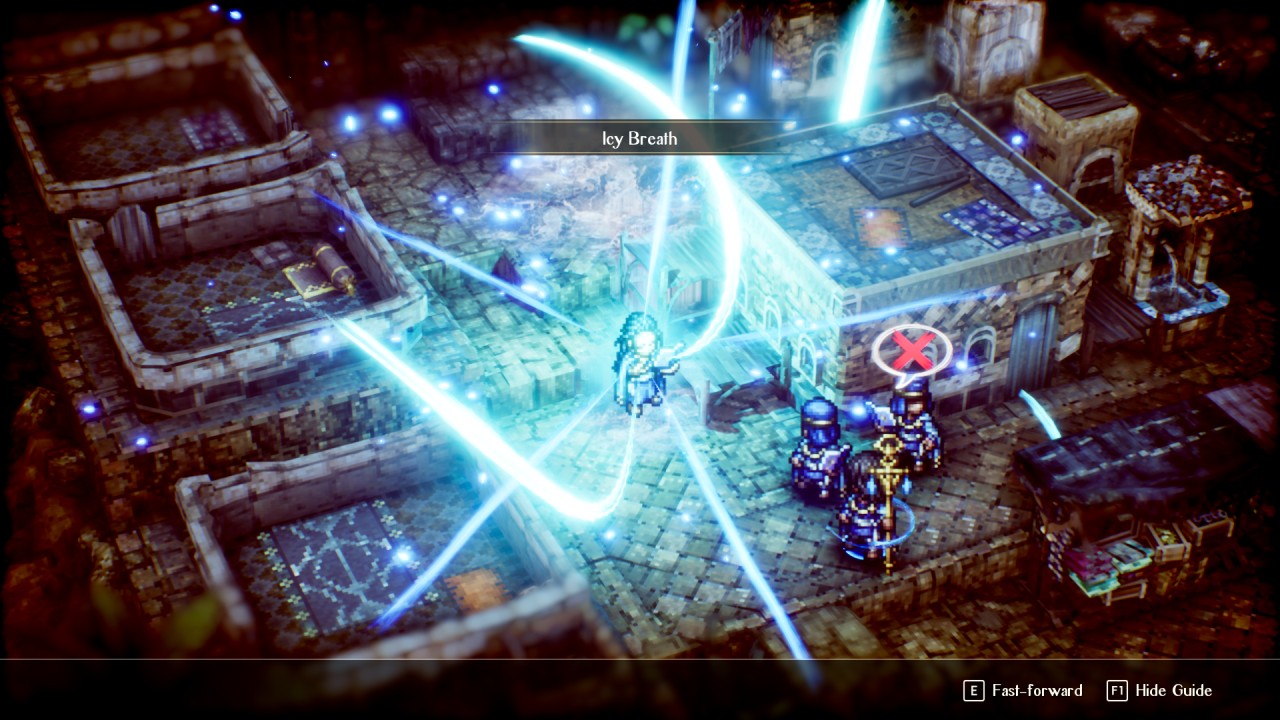
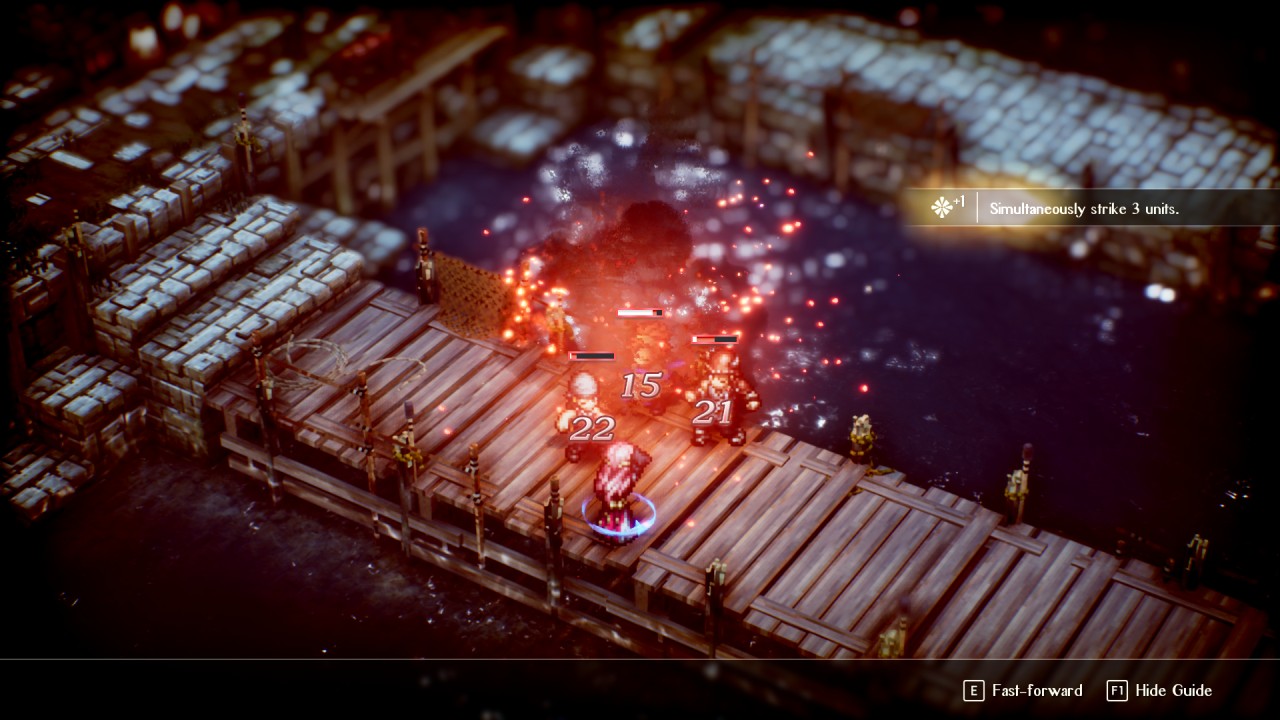
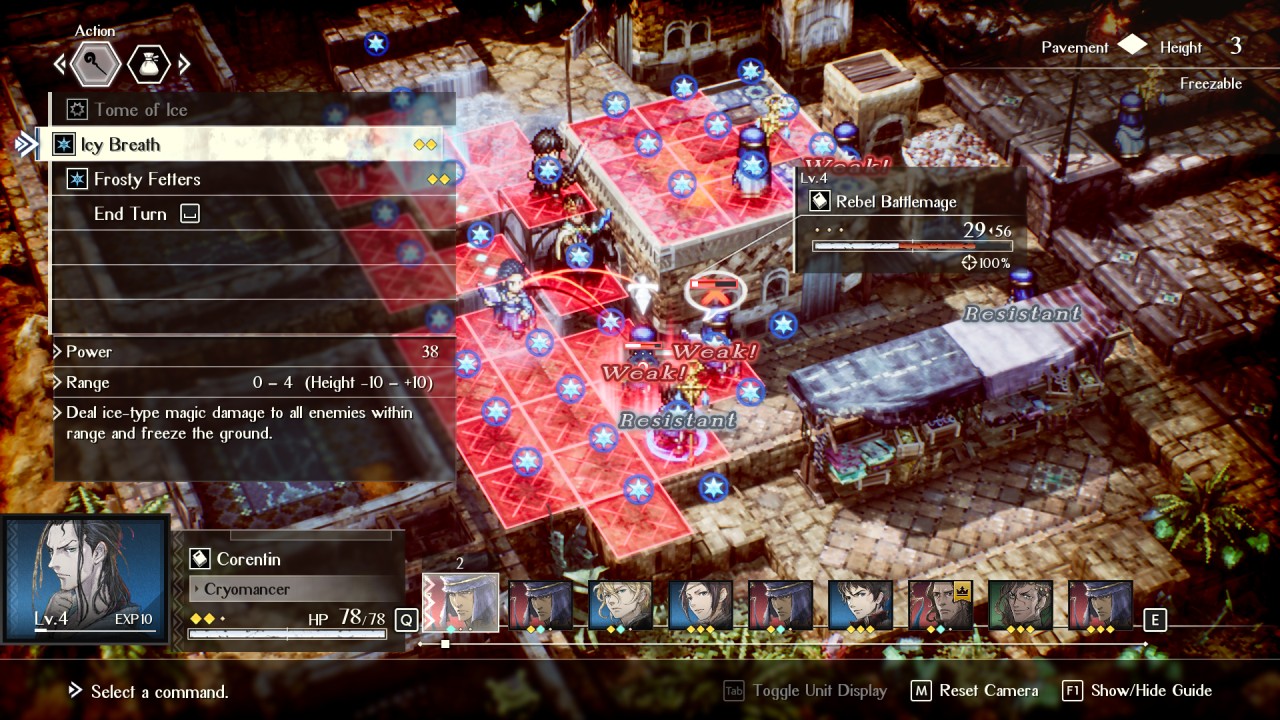
In addition to the core 8 characters that participate in voting and in the story, the game has 22 characters you can recruit. While there is some overlap, each character carves out their own niche with unique load outs. Each feels very different to play and many support each other in unique ways. The fire mage and the ice mage don’t just differ in the elemental damage they do: how they affect the terrain also opens up different strategies. Ice can be used to create walls or pools of water when melted. Fire can ignite oil or dried grasses. Most active abilities cost TP (technique points) which generate at a rate of one per turn. The fire mage can keep up momentum and sling spells turn after turn by finishing off opponents. In contrast, the ice mage can take a more cool headed and planned approach, setting up icy terrain to stand on or use up in a powerful spell. Other characters can use items to restore TP in addition to HP which lets players continue to activate the more powerful abilities. Mastering each unit’s unique tools and nuances is well rewarded.
Both the tactics and the playable characters are the game’s greatest strengths. Here the developers succeed at iterating as well as setting themselves apart from their inspiration. The basic tactical scenario is actually very similar to the 1990s era of tactics games. Built on top of the map conventions established by those games are many incentives to play smart. There are plenty of fun tools to experiment with and many paths to victory with who you select for your team. While there are few customization options for each unit, their focused use on the battlefield ends up enhancing the game’s strengths, creating a strong cohesion with all of the game’s mechanics.
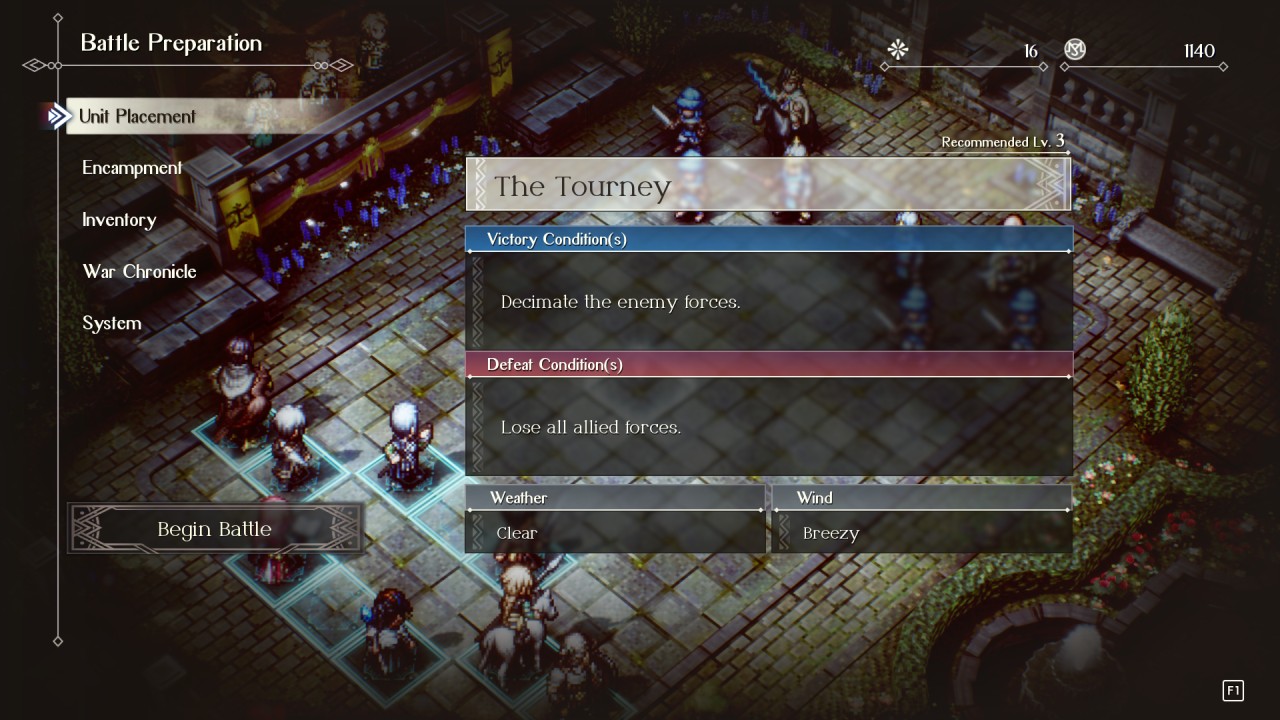
The game rewards strategic play–such as flanking enemies, which grants bonus follow-up attacks–with kudos. These kudos are points that can then be spent to unlock “Quietus” Cards, once-per-battle abilities that can expand your options. They can reposition one of your allies, restore TP so as to execute a stronger move, or even change the order your units fight in. Skilled players will have their eye on the initiative-based turn order, which is easily checked (and in some cases, manipulated).
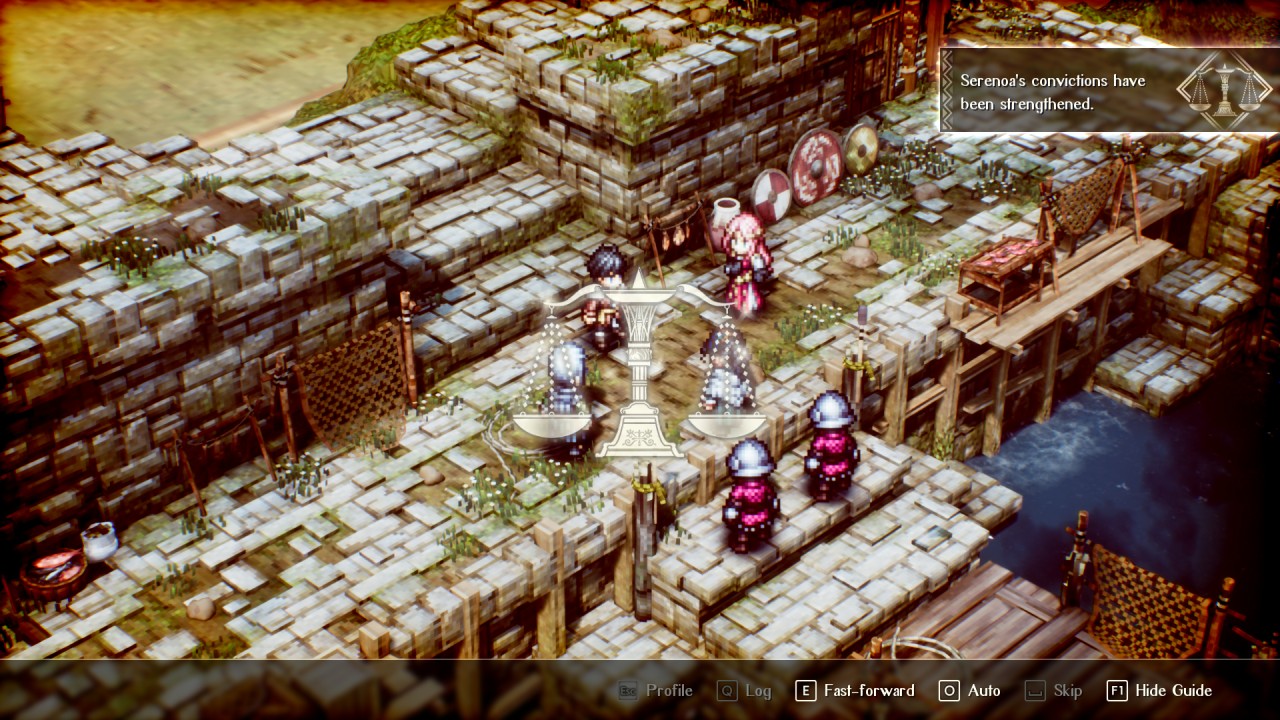
The story and the dilemmas posed to the team during voting sections evoke House Wolffort’s vulnerability as it is forced to consider both its own survival and the livelihood of the people under its protection. The player can feel an overwhelming sense of humility when you are choosing between several bad options. The plot, of course, follows the same general thrust until the final branch where the plot deviates significantly to unique endings. Dune’s Golden Path comes to mind as you try to balance the strengths and weaknesses of each of the three convictions. Altogether, the Conviction system is compelling as long as players are willing to accept they cannot always get the outcome that they want. The story telling is dense, grounded, and generally realistic, but it can also feel slow paced and dry for large portions of the game. After you have played through one ending, New Game + lets you continue with what you have accumulated so far. Your previous path through the game is also recorded for later reference. The maps even have enemies rescaled so you can make full use of your developed roster. Your characters at their level cap of 50 are just as engaging to use as when they were first recruited but now many more complex interactions are enabled. Altogether, Triangle Strategy finds a path to victory so long as players have patience with its deliberate pace.
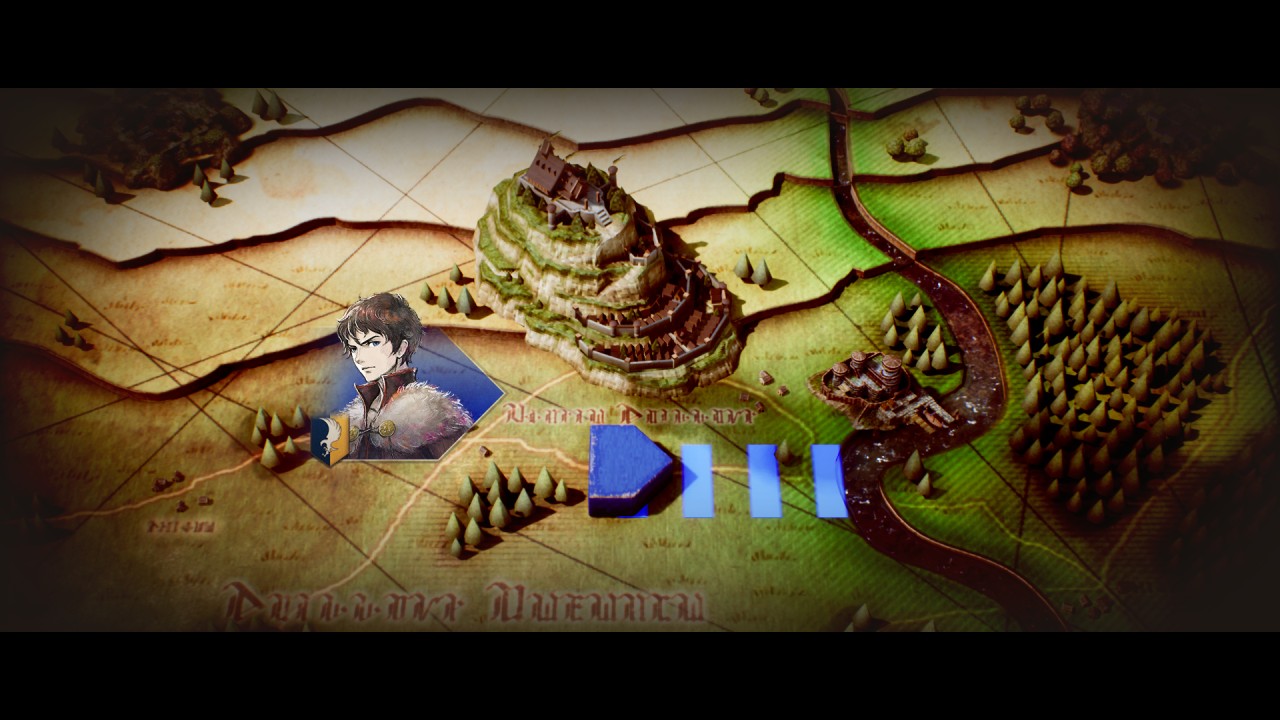
The game received a release for the Meta Quest in 2024. The 3D effects give the impression of looking down on a diorama during the tactical and exploration scenes, but all cutscenes are displayed as flat images. This feeling of playing with a diorama is enhanced by details such as adding a wooden border to the edge of the strategic map of Norzelia and gesture controls that allow you to pick up and move units like pieces in a tactical tabletop wargame. It also allows you to freely rotate and zoom the environments much like a noclip mode allowing you to focus in on details or perspectives that are not possible to see in the other versions.
Links”
Square Enix. “Topics.” 2/18/2021, https://www.jp.square-enix.com/topics/detail/1586/
Square Enix. “Triangle Strategy | Meta Quest Announce Trailer.” 9/25/2024, https://www.youtube.com/watch?v=Q5Y7dKcwZnY