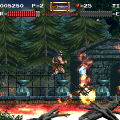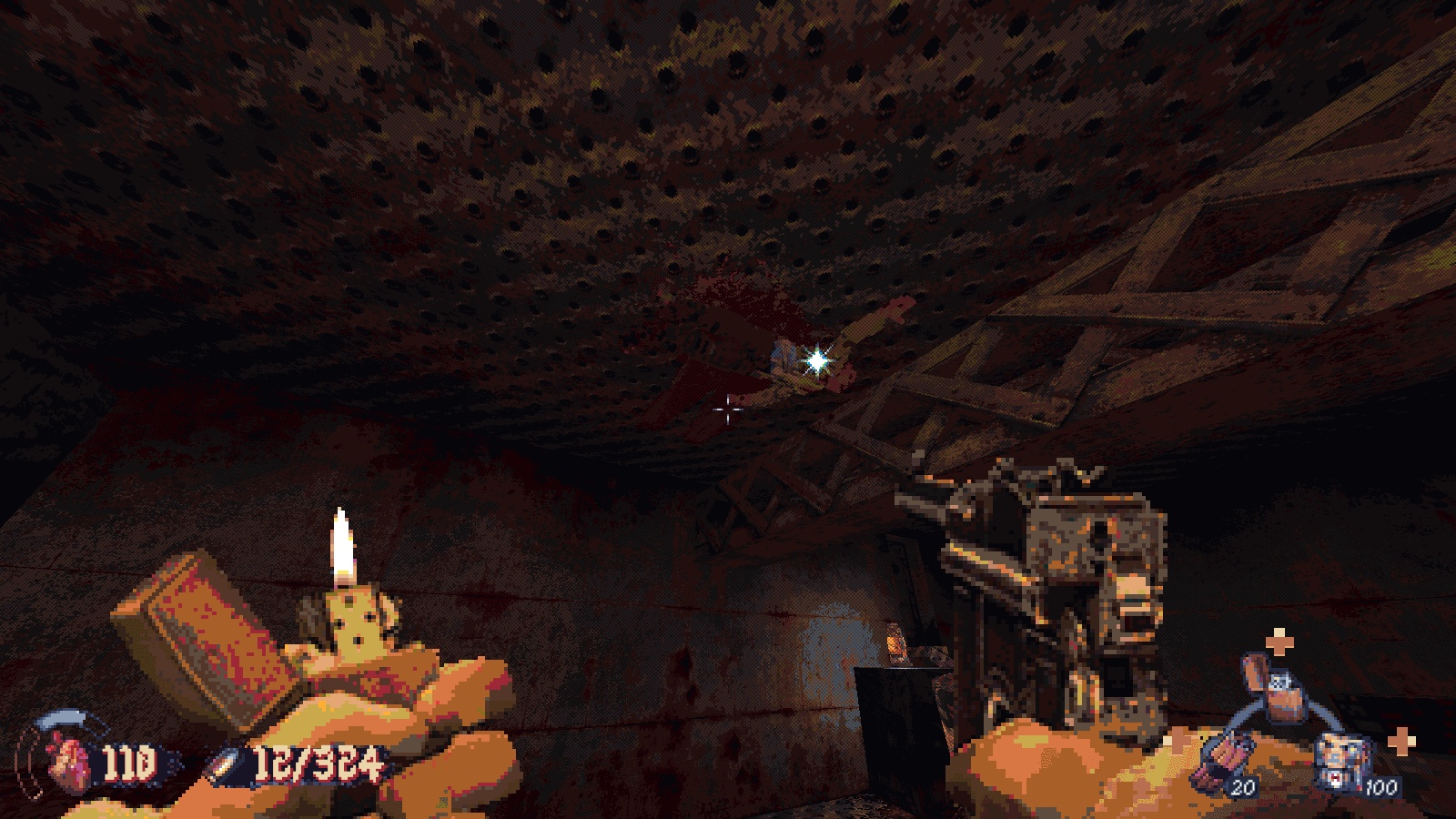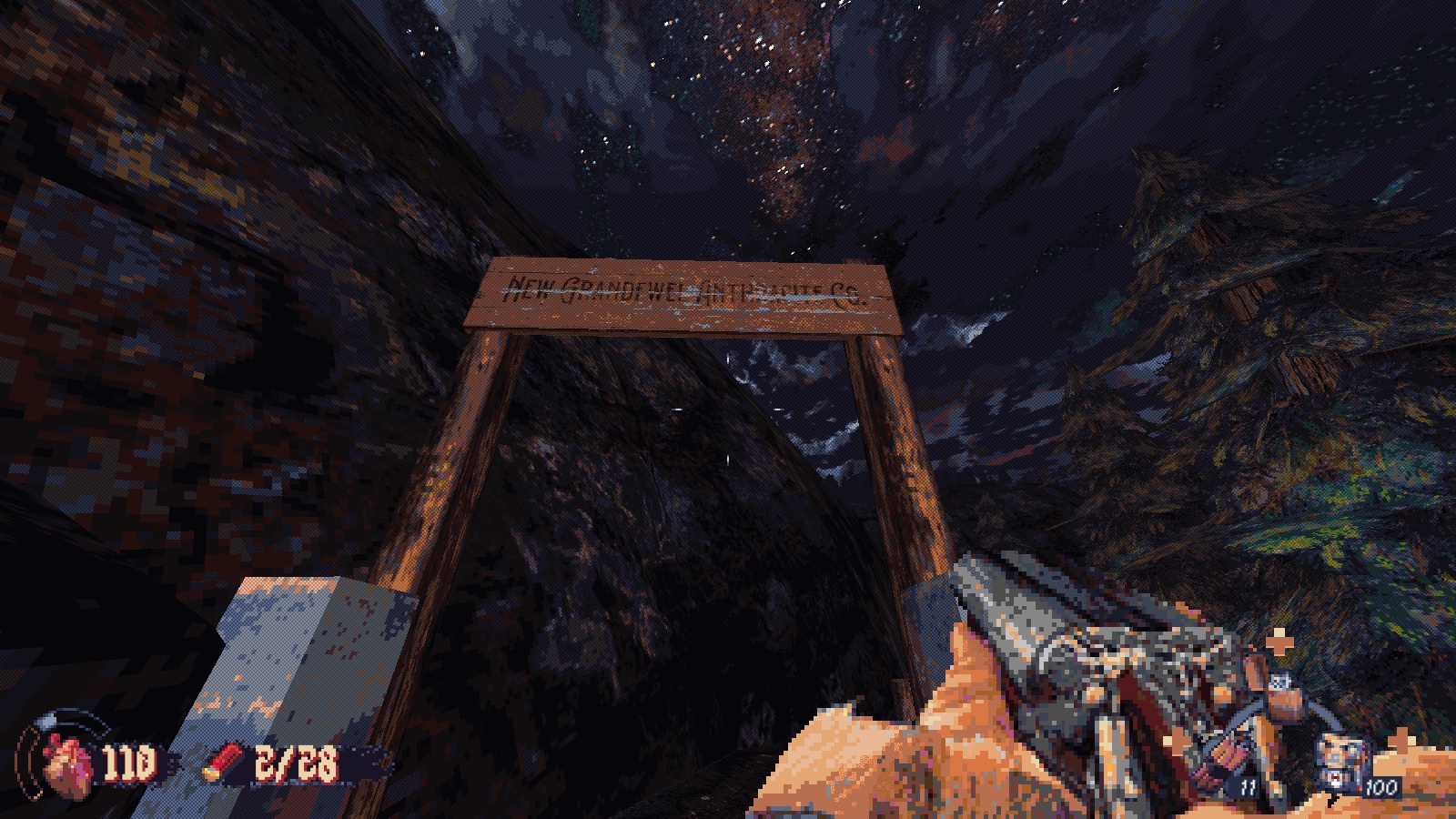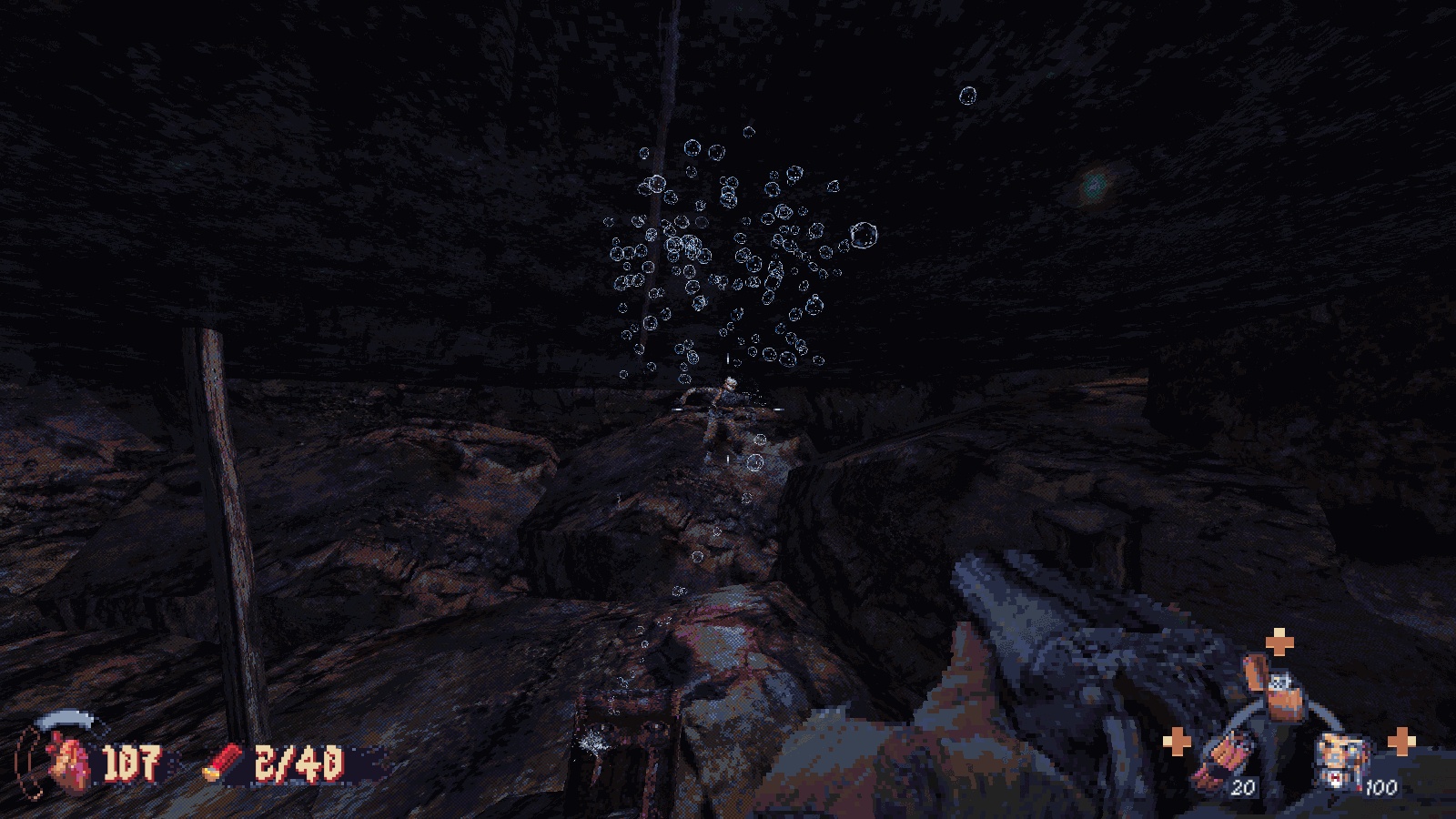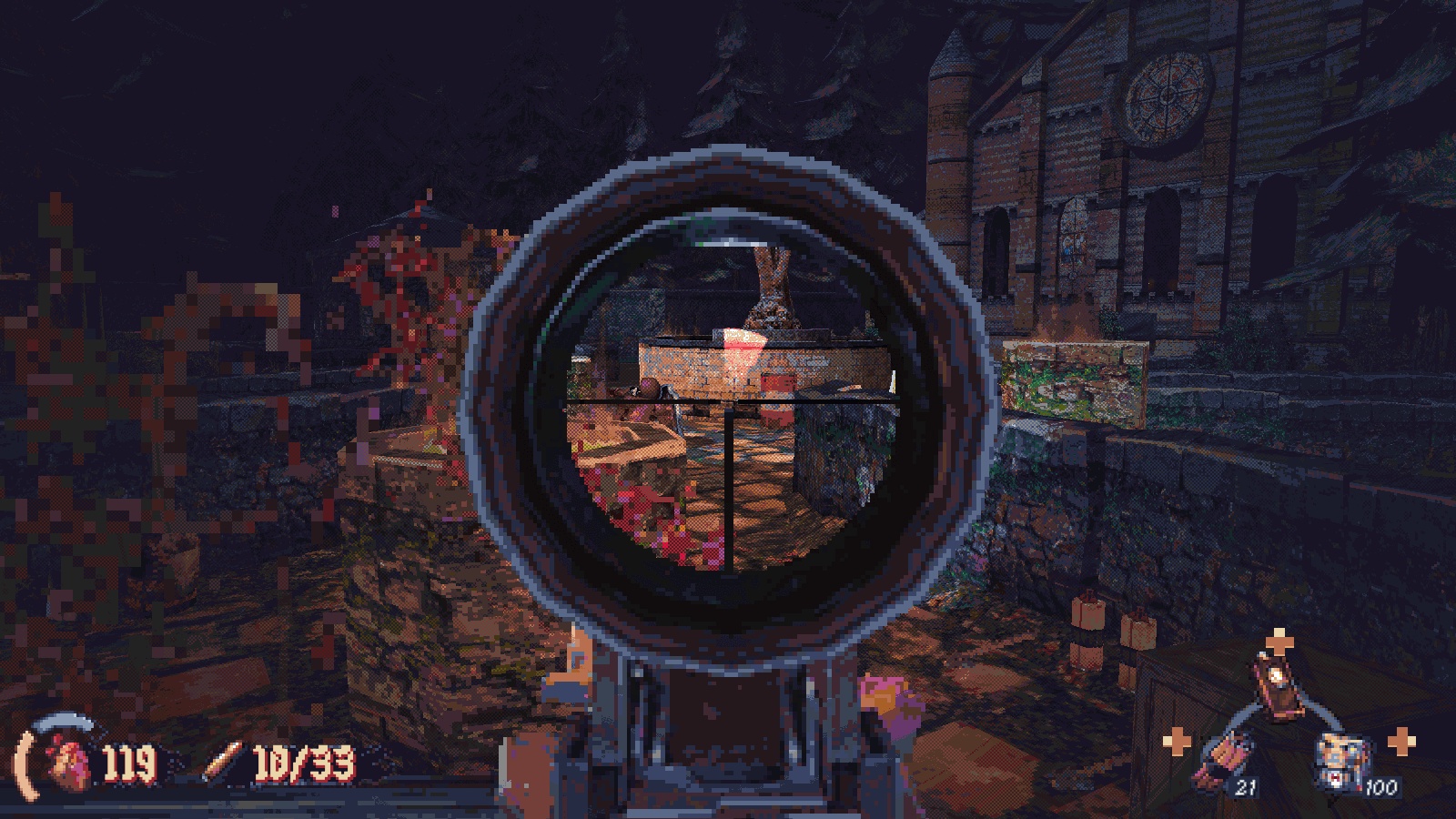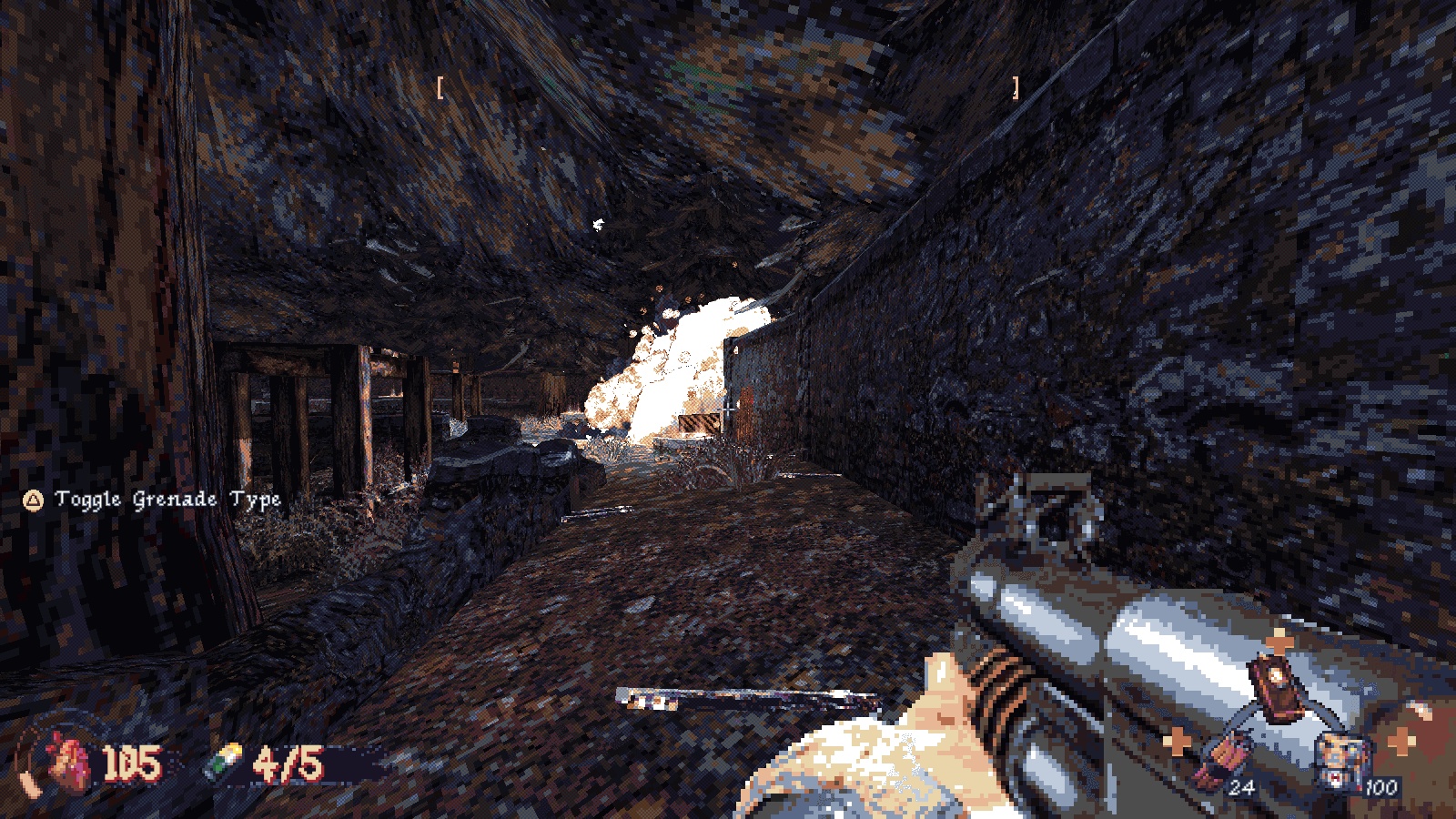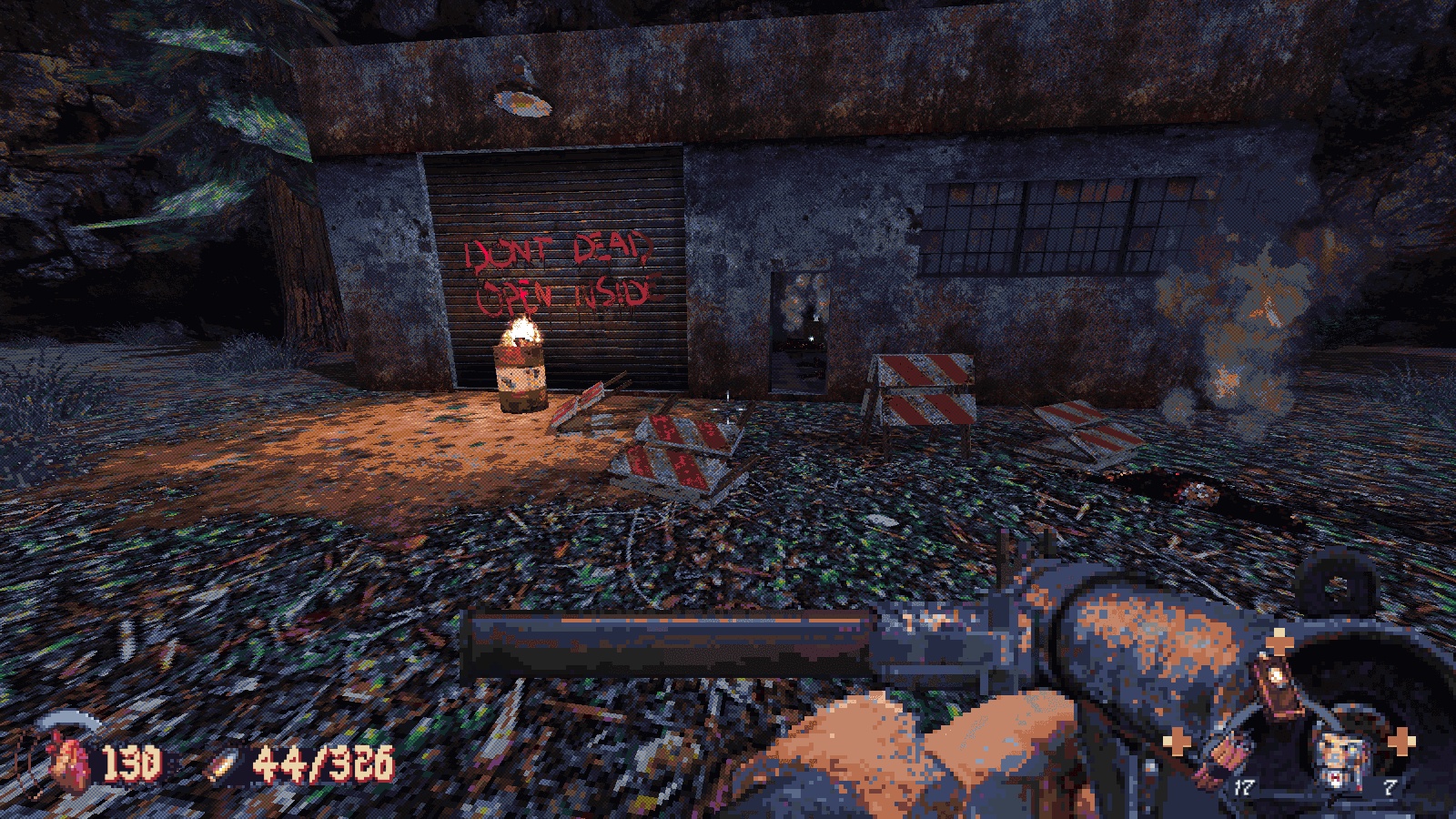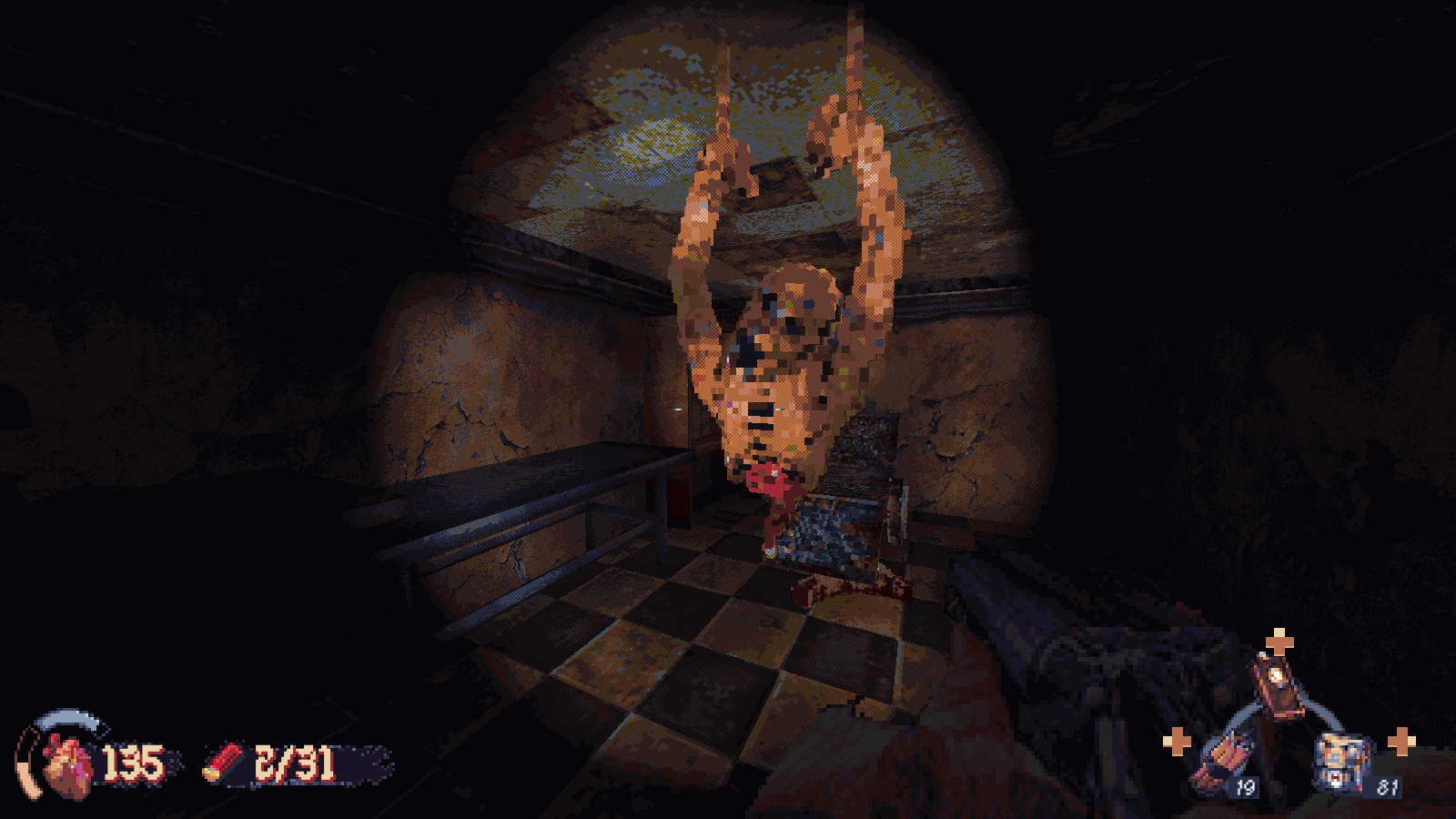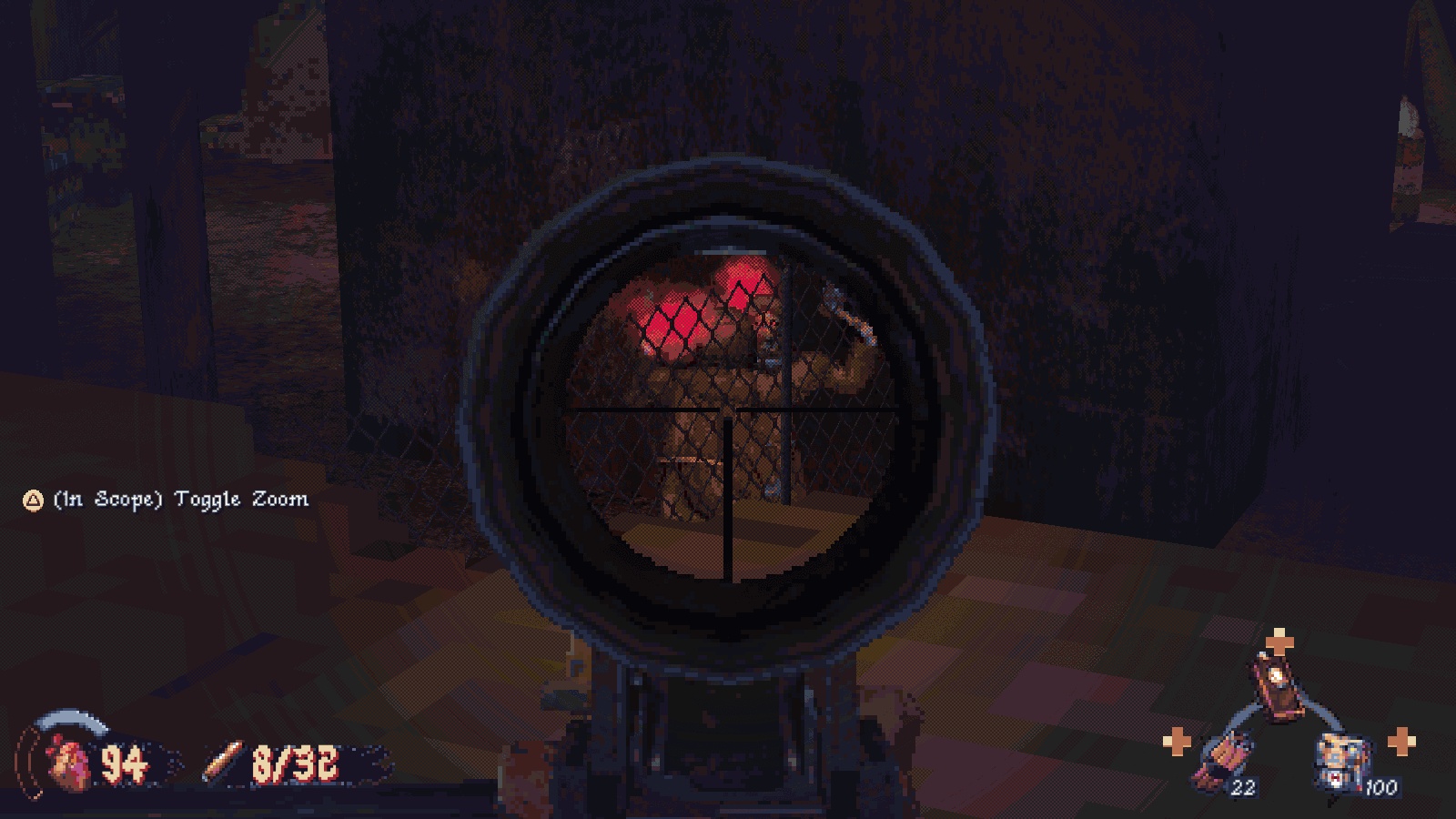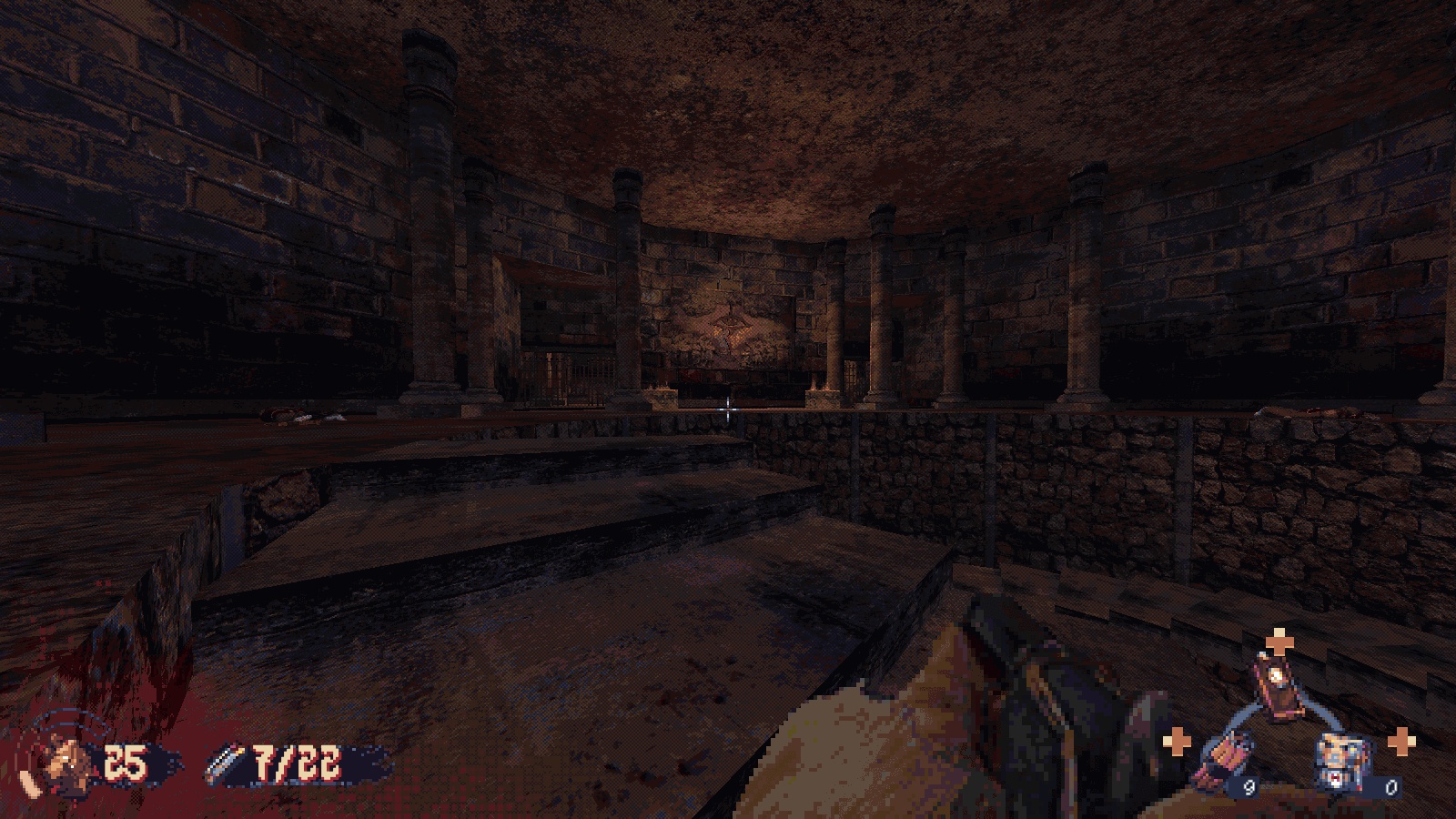

Boomer shooter Cultic comes from solo developer Jason Smith under the Jasozz Games. It’s a fascinating title that pays homage to various older games, but remixes its various elements into something that feels perfectly at home to the eras it pays tribute to. The game’s first half, Chapter One, tells the story of an unnamed detective who worked at the Grandewel PD investigating a cult in the area that is suspected to be responsible for several recent crimes. He is framed for misconduct under false pretenses, and suspended, but keeps investigating them until one day they ken to what he’s doing and leave him for dead in a pit of corpses. It’s in this pile that the game starts, informing the player that this is not one for the faint of heart.
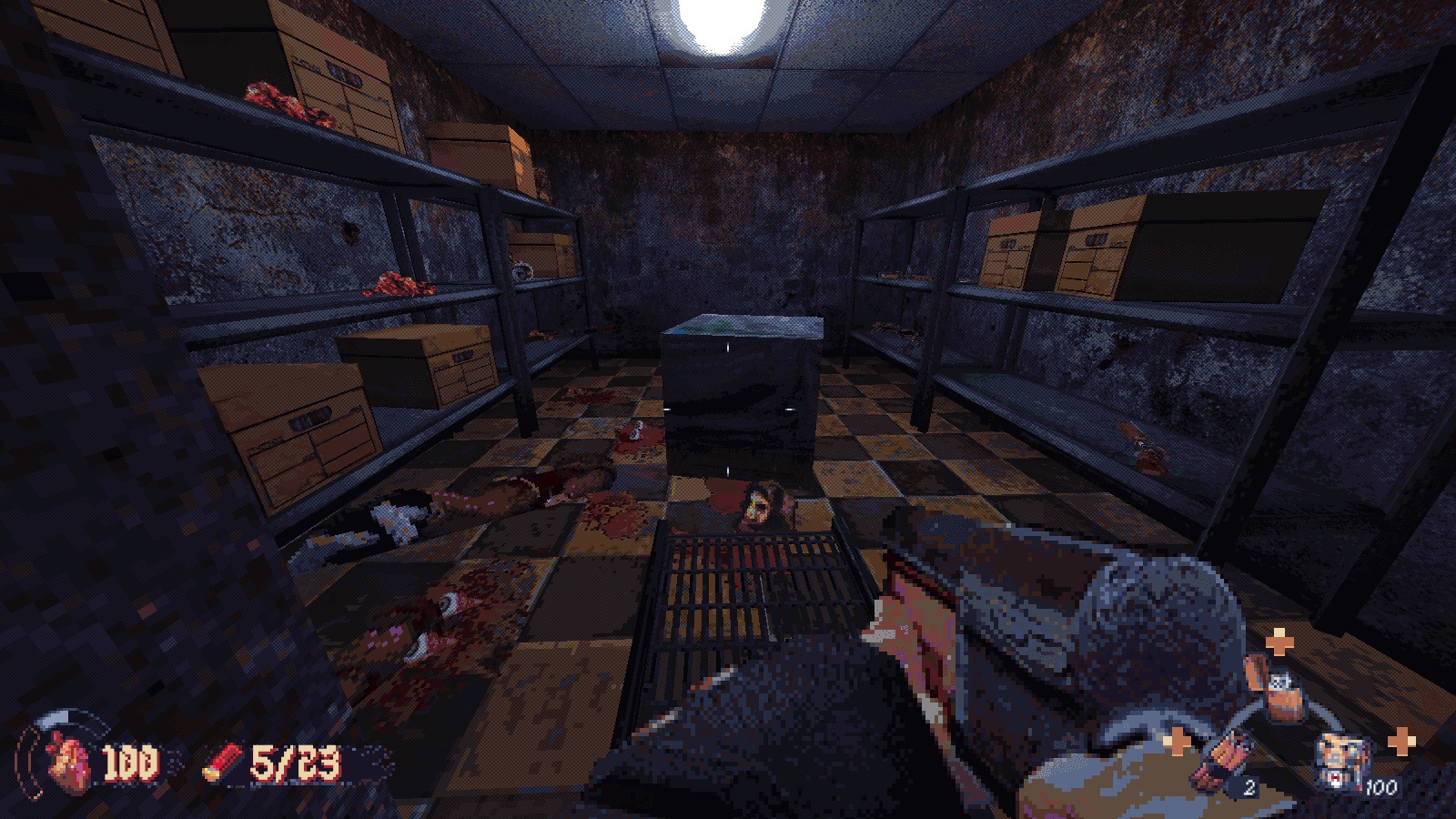
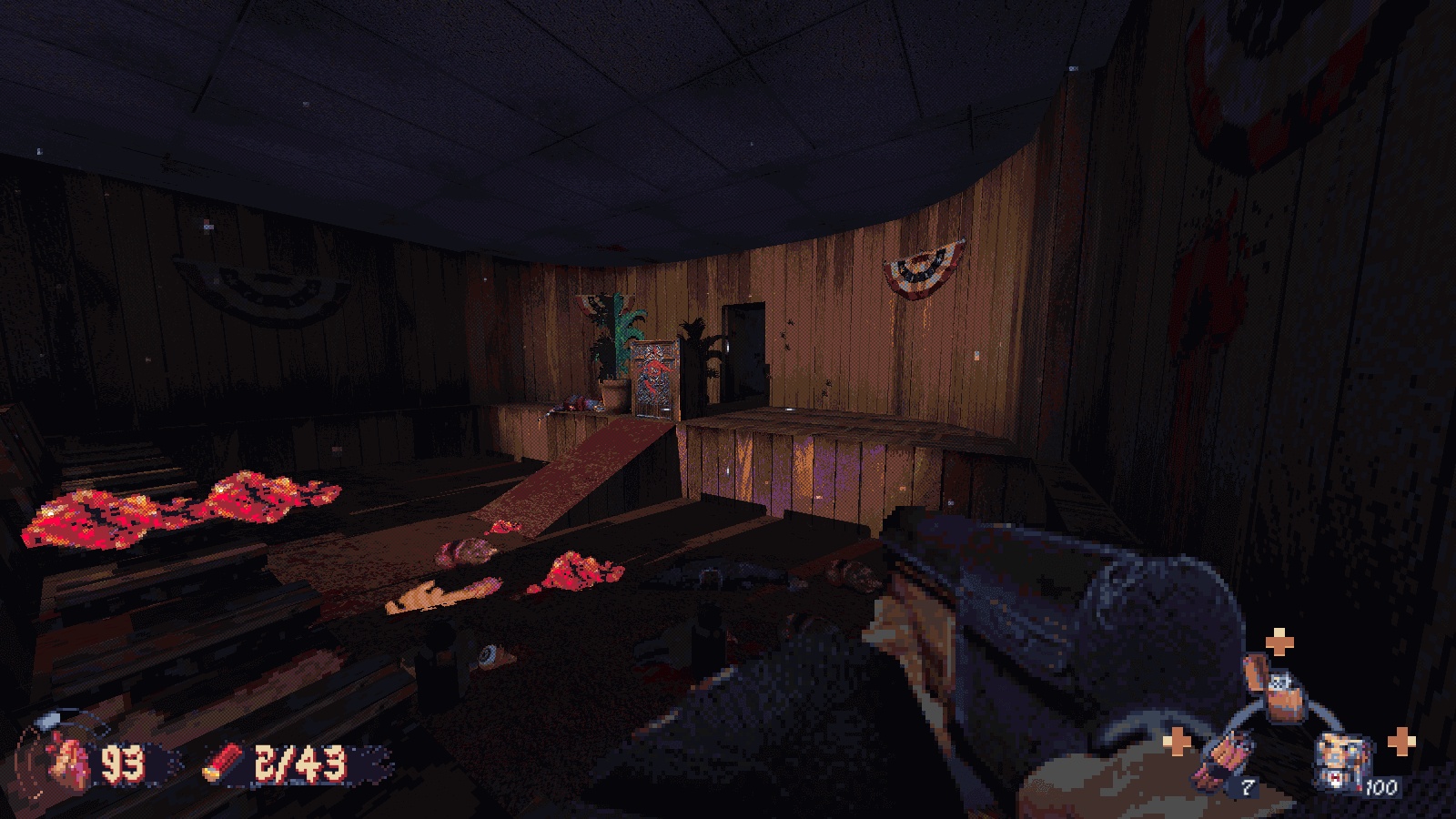
Chapter One’s plot is simple, but the blend of pulp crime with occult horror is a strangely potent combination, and there are always documents scattered around that fill out much of the game’s backstory. Many times you’ll find journals or letters left behind by characters who lived in the area, while others are field notes by various members of law enforcement. These notes combine with the incredibly detailed environments to create a minimalist 90’s comic book style narrative of a man out for vengeance wreaking bloody justice on a group of truly scary people. It’s extremely enjoyable for what it is, and a lot of the fun in the game comes from taking in the environment and seeing how the cult has made it worse.
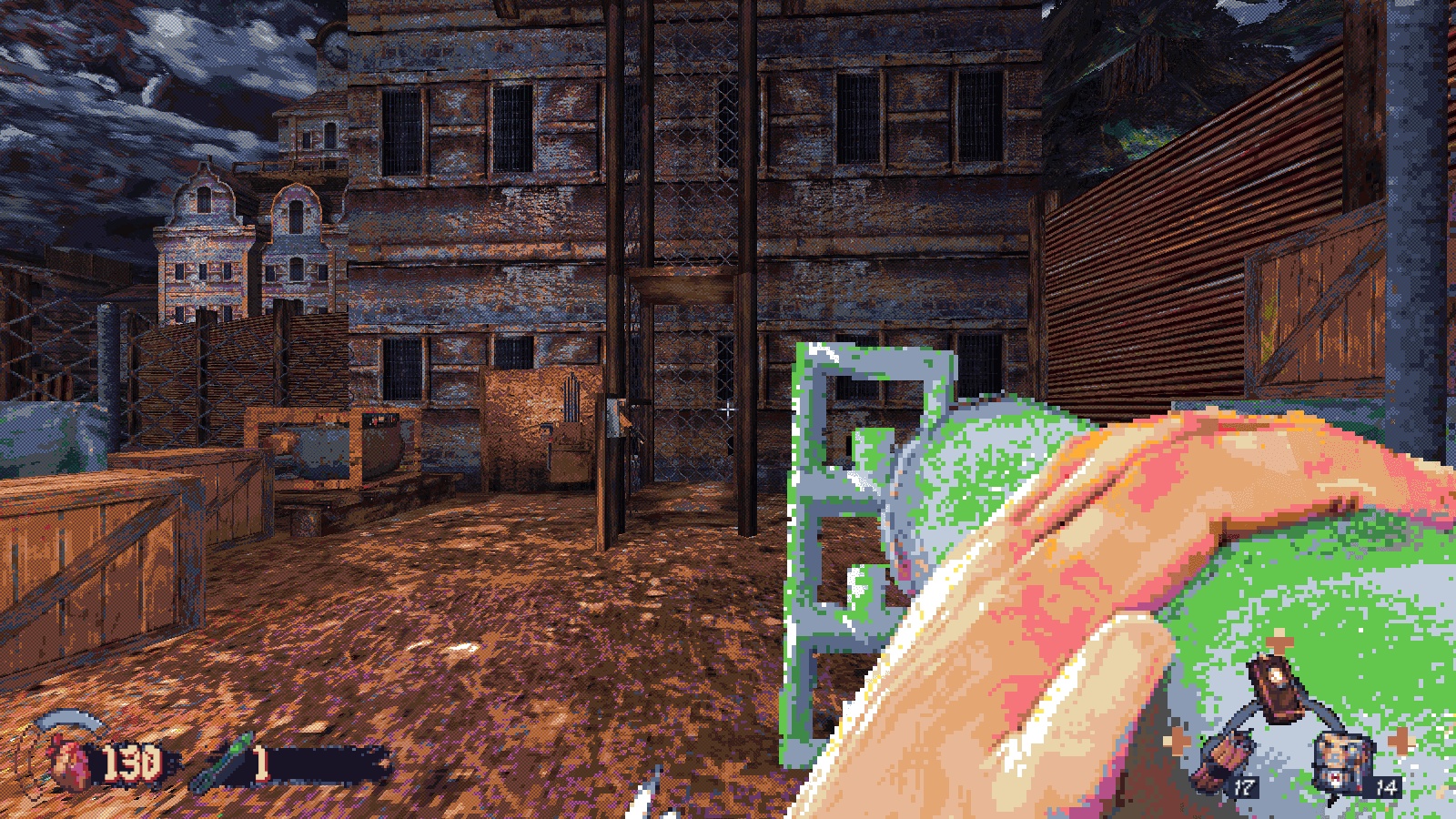
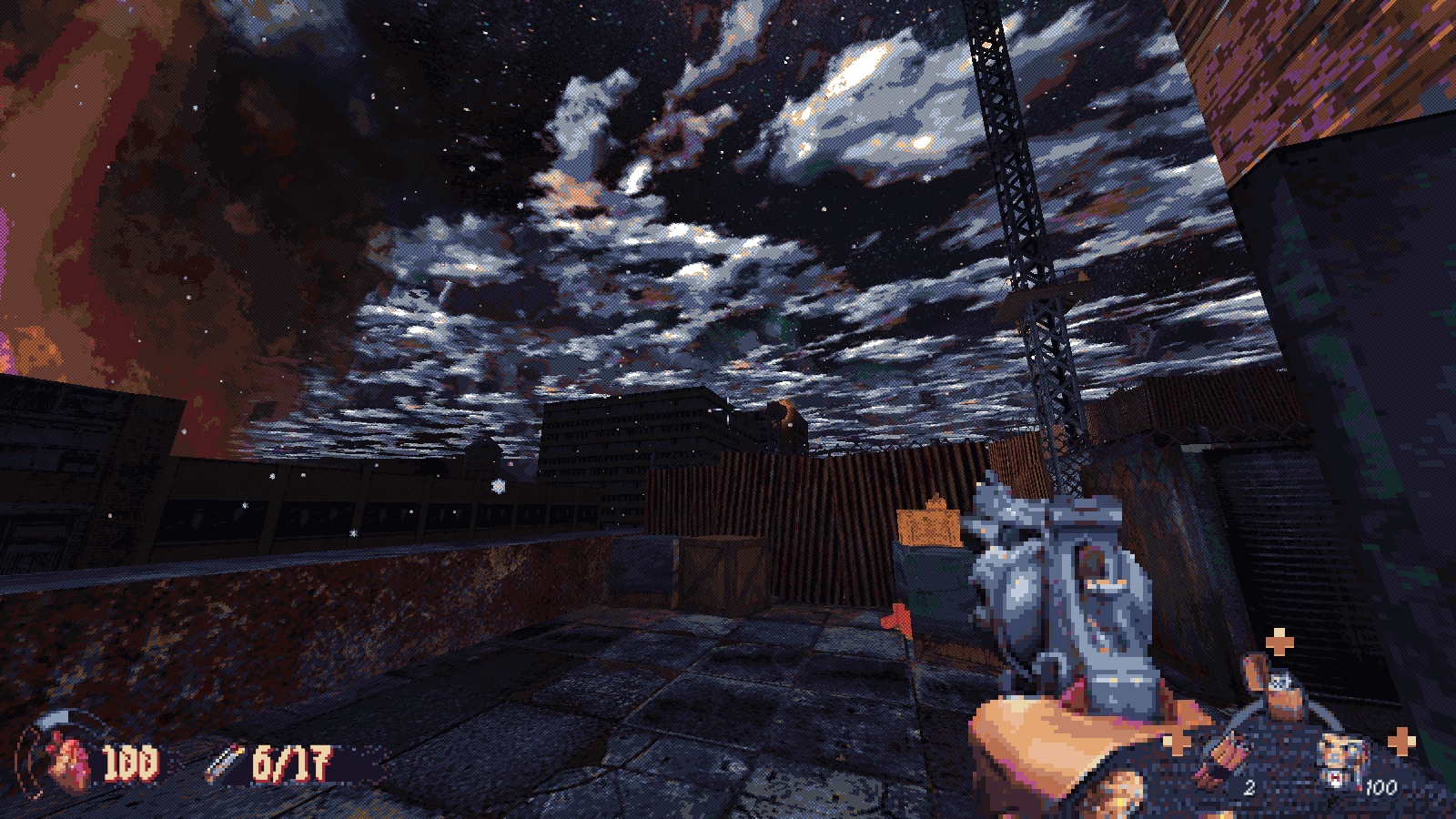
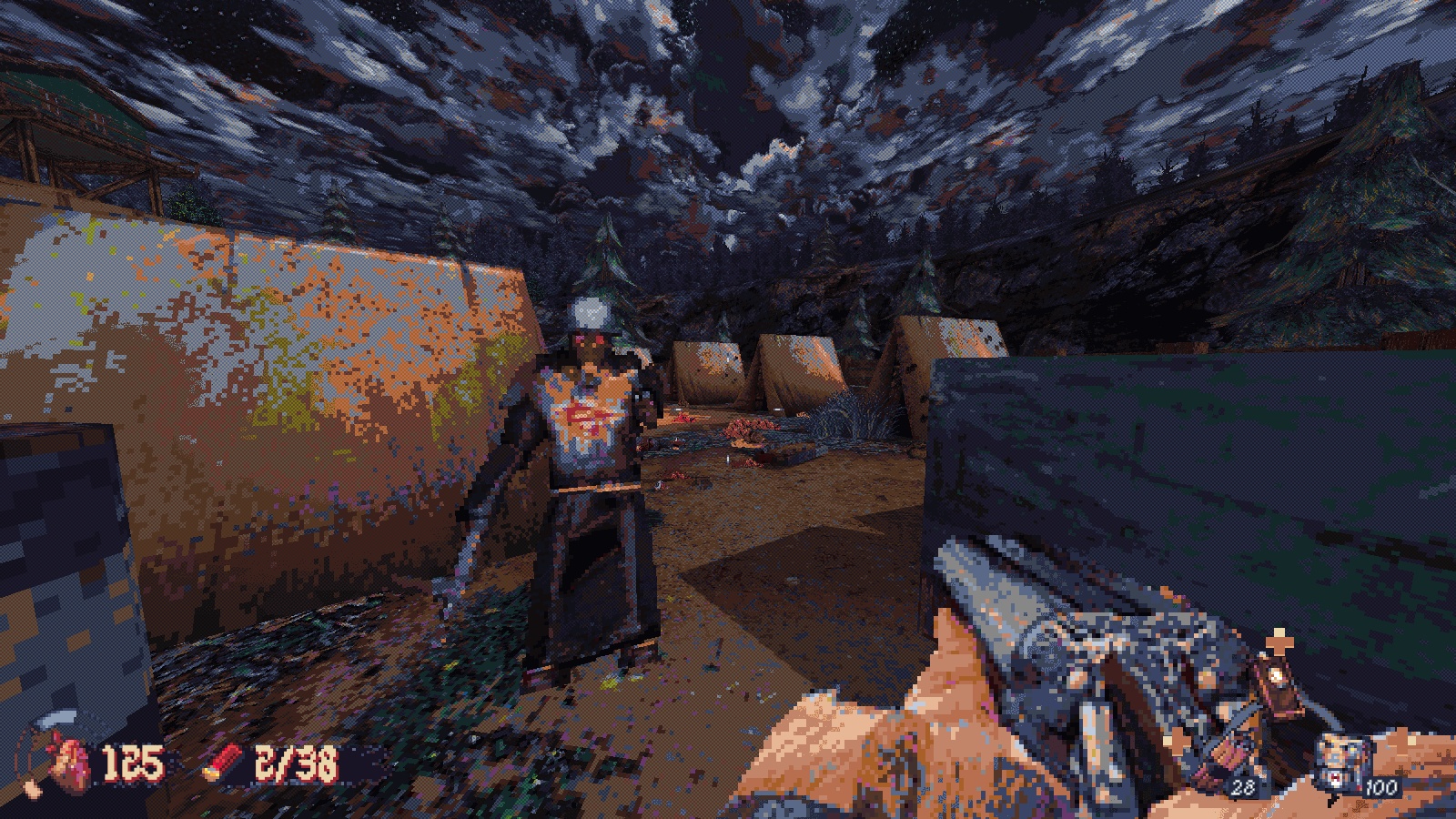
The game’s most readily apparent influence is the 1997 schlock horror shooter classic Blood, with its robed enemies resembling that game’s cultist gunners. The sprite work is immaculate and manages to differentiate itself from Blood thanks to its distinct purple and brown color palette, which is a strange color pairing that works really well. But there are also parts of Resident Evil 4, with how the player is expected to balance the ammo of various weapons as well as set piece moments referencing Leon’s mission wonderfully, as well as shades of more modern titles like Doom (2016), where much of the challenge is not just taking enemies out but also navigating the specifically designed environments.
Everything comes together to create some fantastic combat pacing. It’s not as blisteringly fast as something like Ultrakill or Incision, but still rewards on the fly thinking, because on top of being a shooter, the game also has mild immersive sim elements. Most objects in the environment can be interacted with and thrown. The player can provide some mobile cover by carrying an empty barrel as a shield, or they can break a chair over a cultist, or even more fun, they can throw an explosive barrel and take out several enemies at once. Meanwhile, the game knows that headshots are easy to get, so it’s largely balanced around getting as many as possible. Most enemies take 6-8 handgun bullets to kill with body shots, but only 2-3 with headshots, which means it’s all the more important to land them, especially if you’re playing on higher difficulties where the game demands you play as efficiently as possible at all times.
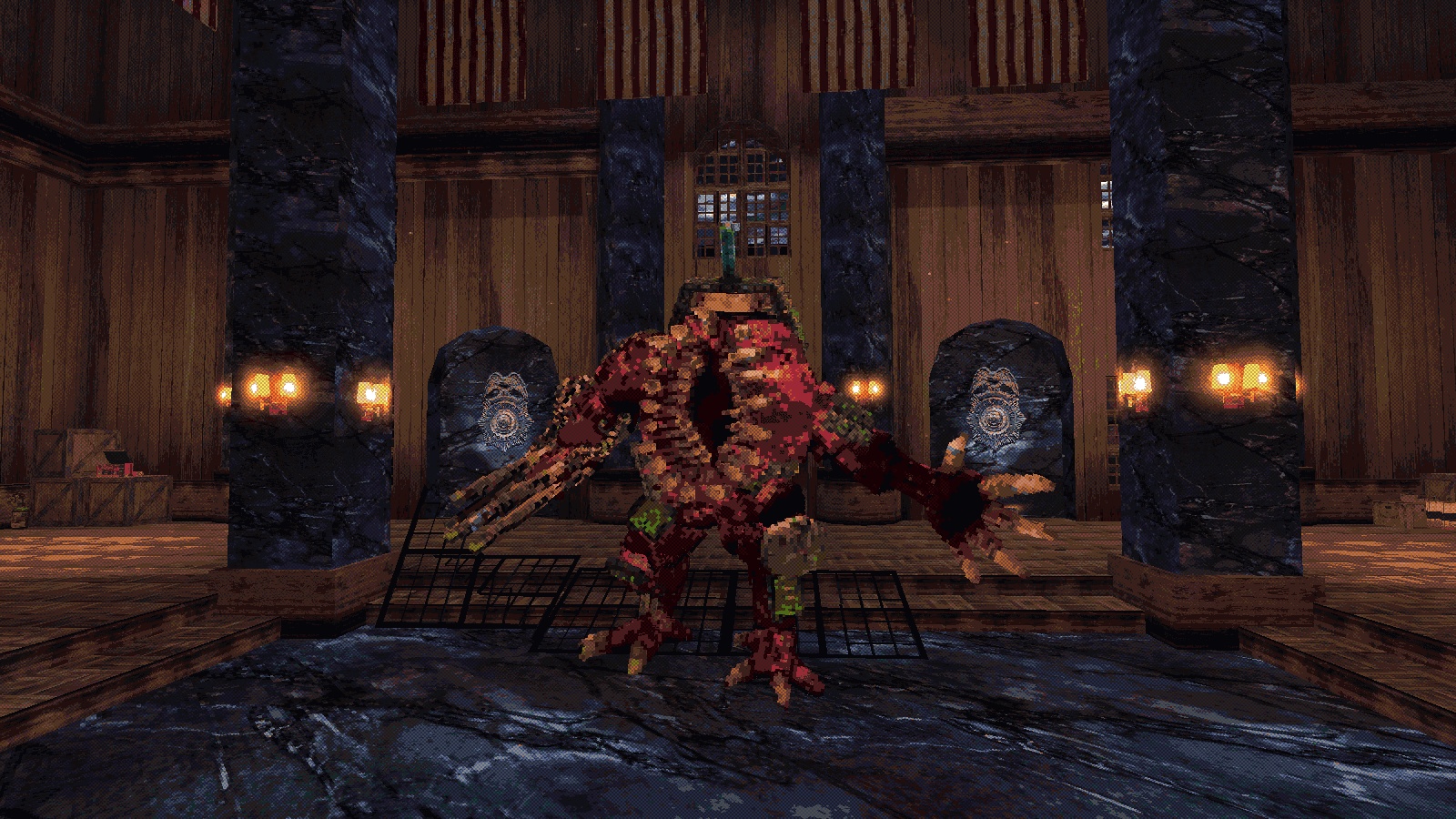
The detective’s quick running speed means it’s easy to pop and jump between cover, and once you’ve learned every enemy type’s patterns, you can out navigate them in a way that almost feels embarrassing. Pistol cultists, for instance, take a moment to aim right before then fire, then pop off four times. Shotgun cultists, meanwhile, will take a brief moment to pull the hammer back before unleashing both barrels in quick succession. These audio tells are important for every enemy type, because near the end you’ll be so heavily opposed that it’s impossible to see exactly where every enemy is at all times.
The game’s arsenal also feeds into the chaotic and fast combat with a standard but well executed set of weapons, all of which can be upgraded at work benches with weapon parts found lying around the levels and in secret areas to be even stronger than they start. Each weapon has specific uses in combat. The pistol is weirdly great at taking out enemies from far away, at least in the early game before you get the lever action rifle, which is laser precise and made to deliver headshot after headshot. The shotgun, meanwhile, has not just satisfying tactile sound effects that accompany its reloading, but also a ridiculously wide hitbox that lets you take out multiple enemies at once if they’re right on top of you. Even the game’s melee weapon, a hatchet that can be thrown, has a gratifying brutality to it and it can absolutely save your life if you find yourself low on ammo. No weapon slot is taken for granted, and by the end the game demands that the player knows how to use each one effectively.
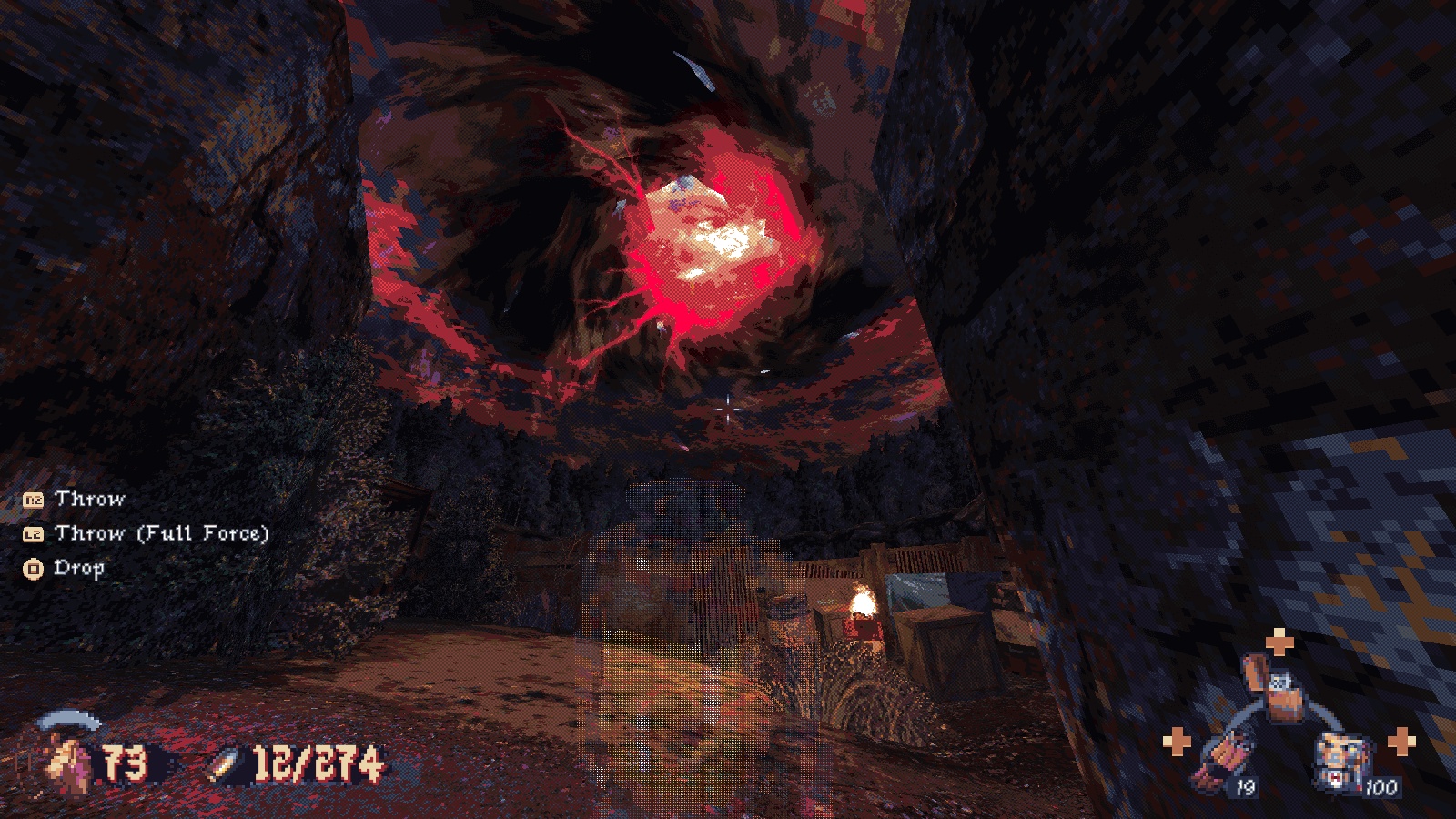
The game knows how to escalate everything as it goes on. The levels, which start decently sized but fairly linear, eventually give way to gigantic canyons and full on war zones where you must wipe out the entire grounds surrounding an asylum that looks about twice the size of the Spencer Mansion from the outside. Not only does each level have distinct segments that are ridiculously high effort, but the way the game ups the pressure with how many enemies it throws at the player feels like something fine tuned by a veteran game designer. The third level, Mine Town, is an early highlight, where the player must first battle their way through a zombie infested pitch black forest before fighting the cult through the town proper. There are various buildings to explore, plenty of great secrets to find, and by the end, you’ve gone through a silo that feels more compelling to explore than it should because of the excellent music that plays.
It should be noted that in addition to just creating this whole game, Smith also composed the soundtrack, which easily sounds like something from a classic 80’s movie. It combines elements of metal, orchestral, and darkwave to create the game’s distinct vibe. It feels at once empowering, but also tragic on a cosmic scale. The grandiose nature of the music gives an emotional tone that lets players understand the Detective’s desperation to get to the bottom of what the cult is doing. It’s excellent stuff all around, all the more impressive since Smith composed it himself.
There’s a short but simply excellent level titled Interlude that released as free DLC for Chapter One. It picks up where the first chapter ends, but instead sees players enter the shoes of a uniform police officer as they are the only survivor of a siege on the Grandewel Police Station. The levels in Chapter One were already very strong, but this is such a great standout even among the first chapter’s great roster. It takes the player through every single level of the building , all the while forcing them to confront the scope of what the cult has been trying to accomplish, because when you finally get to the roof, the city of Grandewel is well and truly overrun. This level also adds the revolver and semi-automatic shotgun, both of which are excellent weapons that reappear in Chapter Two.
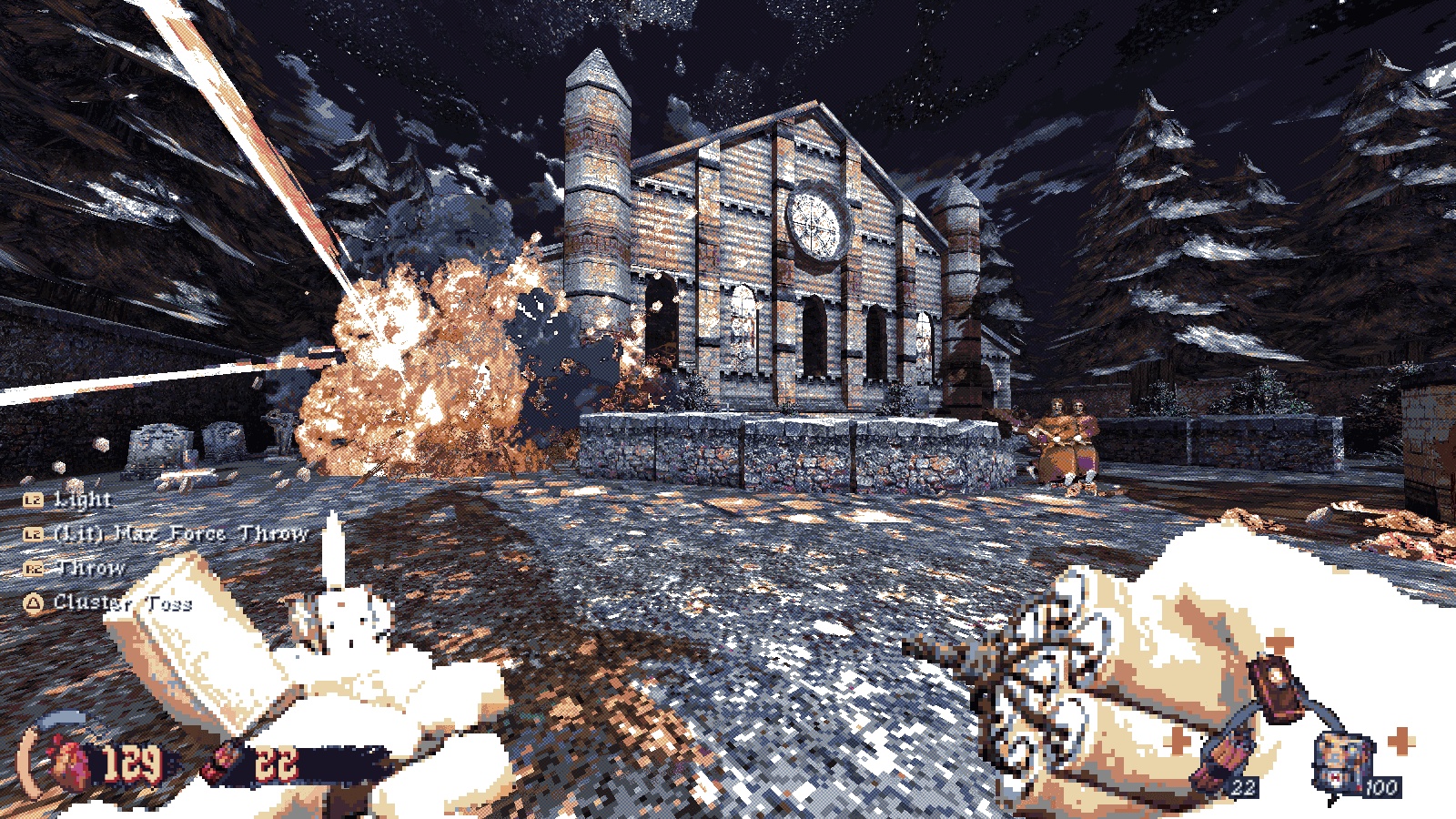
Cultic Chapter One and Interlude is a stellar first half of a game with uncommonly well designed combat and levels. Every part of the game feeds into another to deliver an old school shooter with strongly cinematic and emotional moments of pure adrenaline. It tells a simple but well developed story that’s engrossing and fun to think about without ever getting in the way of its chaotic combat. It would take several years for the story to finish in Chapter Two, but Chapter One is still more than satisfactory on its own.