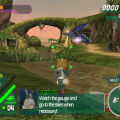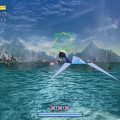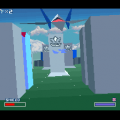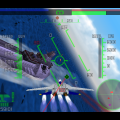

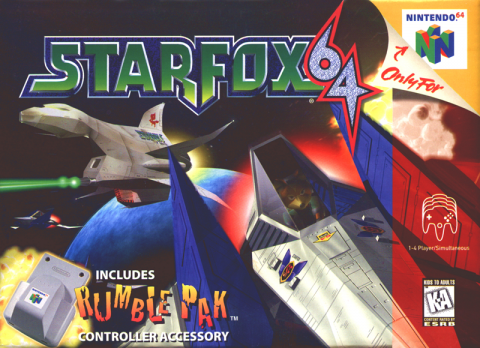
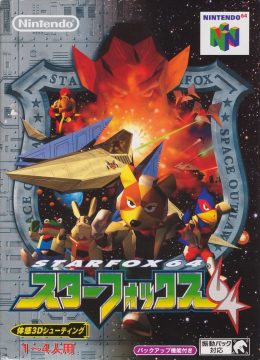
The original Star Fox on the SNES was a huge push forward for 3D titles on console platforms, one which would fully evolve with the next generation of consoles. Obviously, the game’s sequel feels right at home on the Nintendo 64. Whereas most other older 8-and 16-bit titles ended up being drastically reworked to take advantage of the extra dimension, Star Fox 64 is fundamentally the same, but with a ton of improvements and enhancements. Fully textured polygons! A smoother framerate! Full screen visuals! Analog controls! Voiced dialogue! A multiplayer mode! Plus tons and tons of improvements, due to both technical enhancements as well as a better understanding of how to develop 3D titles. Argonaut’s contract with Nintendo had expired by this point, so Star Fox 64 was developed entirely by Nintendo of Japan.
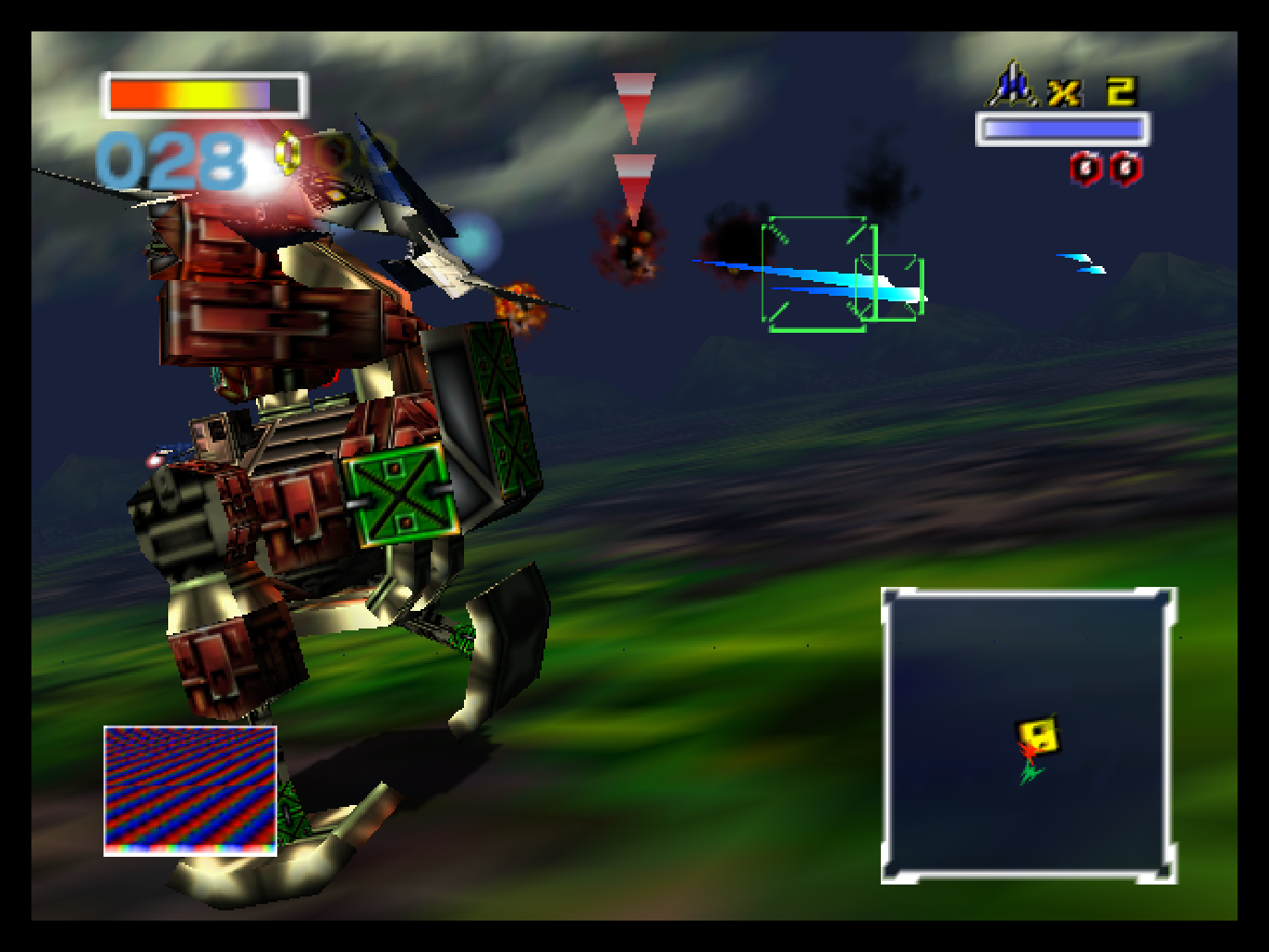
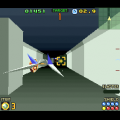
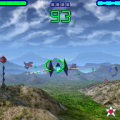
The changes can be felt as soon as you begin the first stage, as you fly over the oceans of Corneria City to begin your assault against the Andross army, who are already tearing up the landscape. Not only does everything feel so much smoother than before, but there are a number of noticeable enhancements, the most welcoming being actual targeting crosshairs. You can also switch between third-person and first-person cockpit view at any time. Along with the acceleration and brake commands, you can also do a somersault, which is more helpful to turn the tides on enemies that approach from behind. Also new is a lock-on missile, perhaps inspired by Panzer Dragoon, Sega’s competing rail shooter from a couple years before. Hold down the button and you fire a homing projectile, which also explodes on impact and can take down several surrounding enemies at once. Using all of these abilities is key to destroying as many enemies as possible and getting high scores. Weirdly, you can only use inverted controls to steer your ship, without any option to switch (at least in the original N64 release).
Another added feature, inherited from the at-the-time unreleased Star Fox 2, is the All-Range mode. In certain levels and boss fights, your ship is taken off the rails, allowing you to fly around in any direction. Since these arenas aren’t very large, if you fly to the edge, you’ll automatically do a loop-de-loop and are put back on track. The goal is typically to take down a large enemy or to destroy a certain number of foes. These, of course, require much more advanced dogfighting skills than in the regular stages. For example, the first stage boss is a gigantic robot whose armor is impenetrable from the front, but has a large glowing weak point on its back.
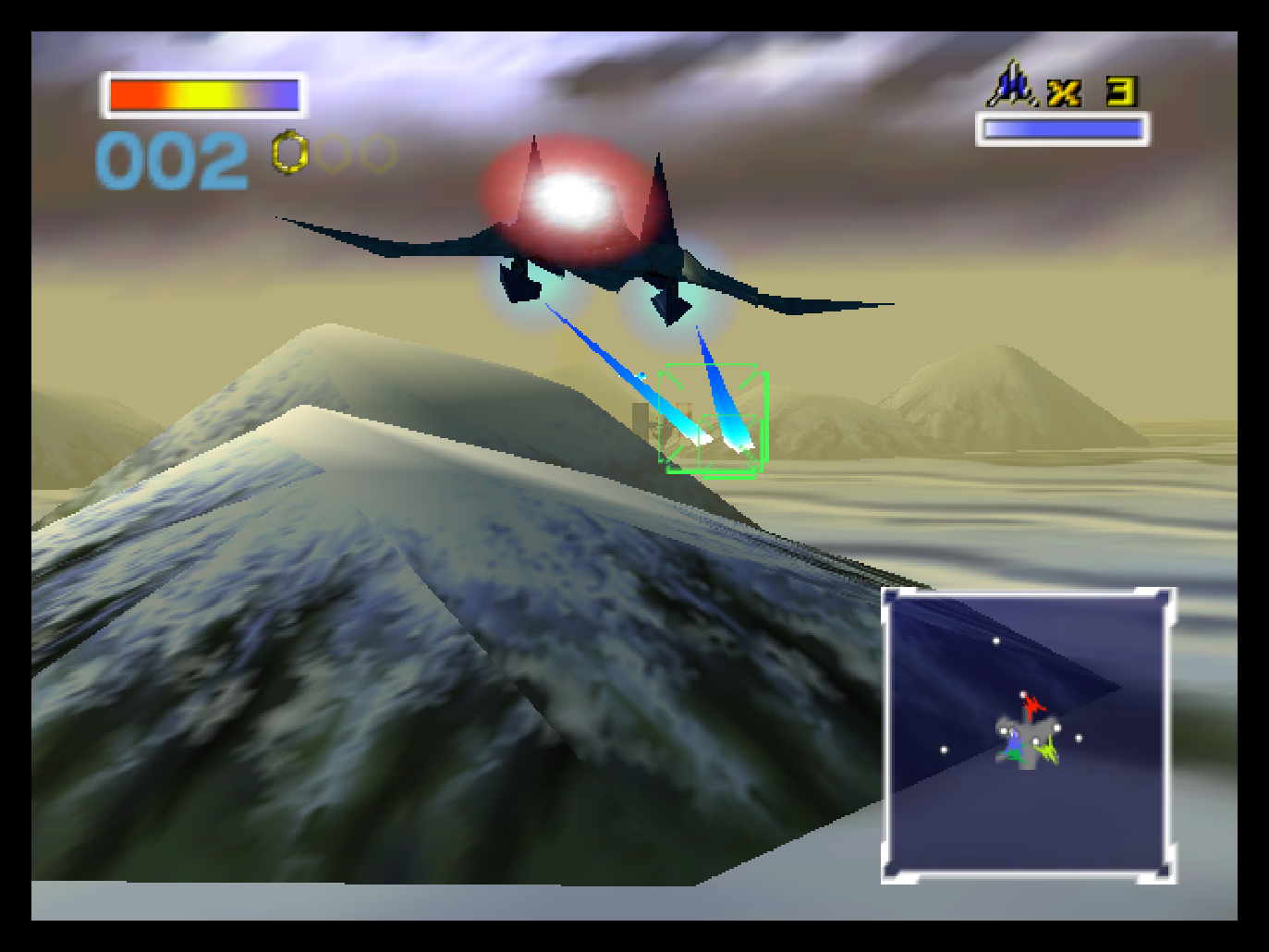
To change up the pace a bit, a few levels stick you in different vehicles. One stage puts you in control of the Landmaster tank, which is mostly stuck to the ground, though it does have limited hovering capabilities. The Blue Marine submarine is used in the underwater stage, Aquas, which is similar to the Arwing but a little slower. It can’t lock-on to enemies, but it does have unlimited torpedoes, which also act as lighting beacons to help see in the darkness of the ocean.
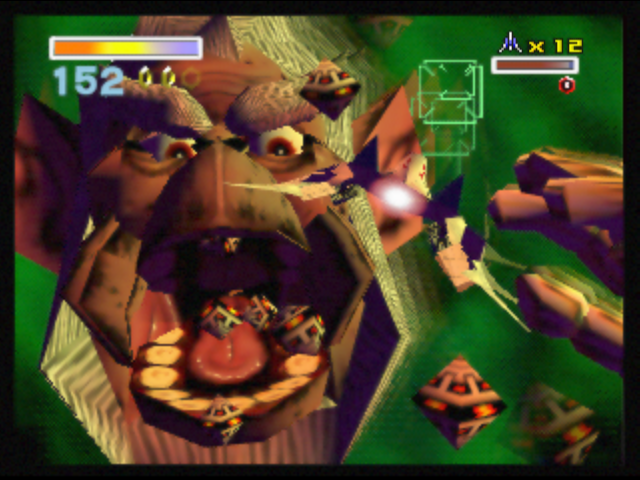
The levels themselves and their accompanying boss fights are much more advanced, as well. MacBeth, one of the Landmaster stages, is an assault on a moving train. The planet Solar is made entirely of lava, so you need to dodge its flaming waves regularly. In the outer space areas, you can take down whole enemy battleships and face off against mechas that are parodies of the Zakus from Mobile Suit Gundam, except with ape heads. The final boss, a projection of a gigantic Andross head along with his two massive hands, seems like it’s what the original SNES game had always wanted to do, with that angular mask and strange, texture mapped cube.
From a storyline standpoint, Star Fox 64 is a remake of its predecessor. The evil Emperor Andross is invading the Lylat System, and you, as a team of mercenaries called Star Fox, are hired to take them down. Many of the levels and planet names will seem familiar, then, even if they look almost completely different thanks to the graphical makeover. It does, however, expand on the characters. The four main crew members didn’t have much individual personality in the original game, which has changed here – Fox is the typical do-gooder leader, Slippy is the rookie (or rather, since he’s the team mechanic he’s not so great of a pilot), Falco is the arrogant hotshot, and Peppy is the wizened expert, having been aged up to be much older than the rest of the team. Along with that is Fox’s relationship to his missing father James, something referenced in the original game but made into a larger part of the hero’s role here.
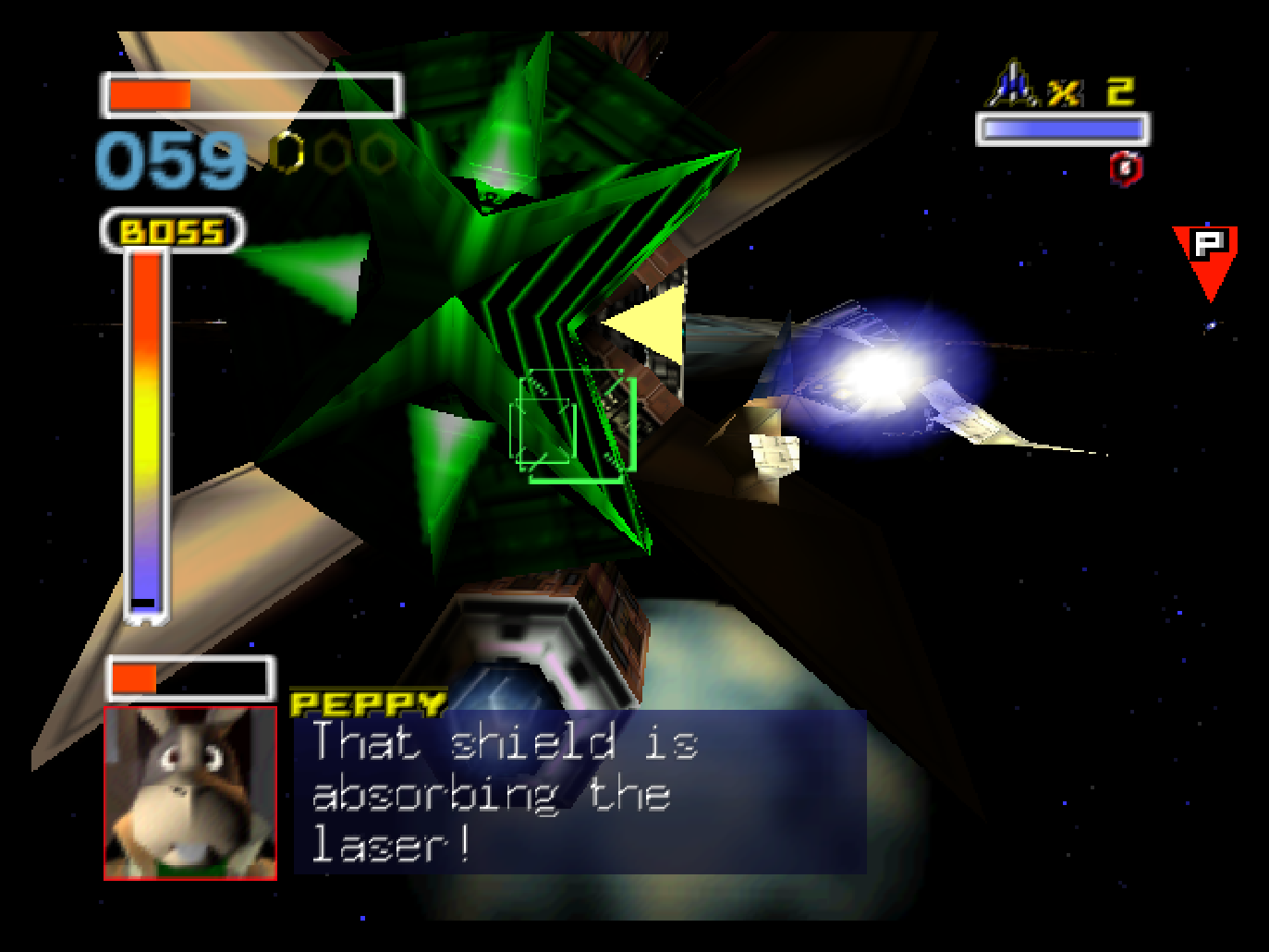
General Pepper still exists to give mission briefings before each stage, and rival unit Star Wolf returns, at least technically, as well. This marked the team’s first appearance in a released game, though they were previously featured in Star Fox 2, which still remained dormant in 1997. This incarnation is led by Wolf O’Donnell and accompanied by the swine Pigma Dengar, the chameleon Leon Powalski, and the ape Andrew Oikonny, who is also Andross’ nephew. Pigma had previously flown with Star Fox, but his betrayal led to James McCloud’s death, adding for additional drama between the teams. Two other minor friendly characters are also introduced, making brief appearances in key stages: the dog Bill Grey, an old friend of the team, and the feline Katt Monroe, whose flirtatious manner suggests a relationship between herself and Falco. Also introduced is the Great Fox, the Star Fox team’s home battleship, which needs to be defended in one mission. This is helmed by the robot ROB 64, who will also pop up in the middle of stages to deliver power-up packs, providing you answer his transmission in a timely manner. His name is a reference to the Robot Operating Buddy toy from the NES era. In Japan, ROB 64 is called the NUS 64 (Nintendo Ultra 64).
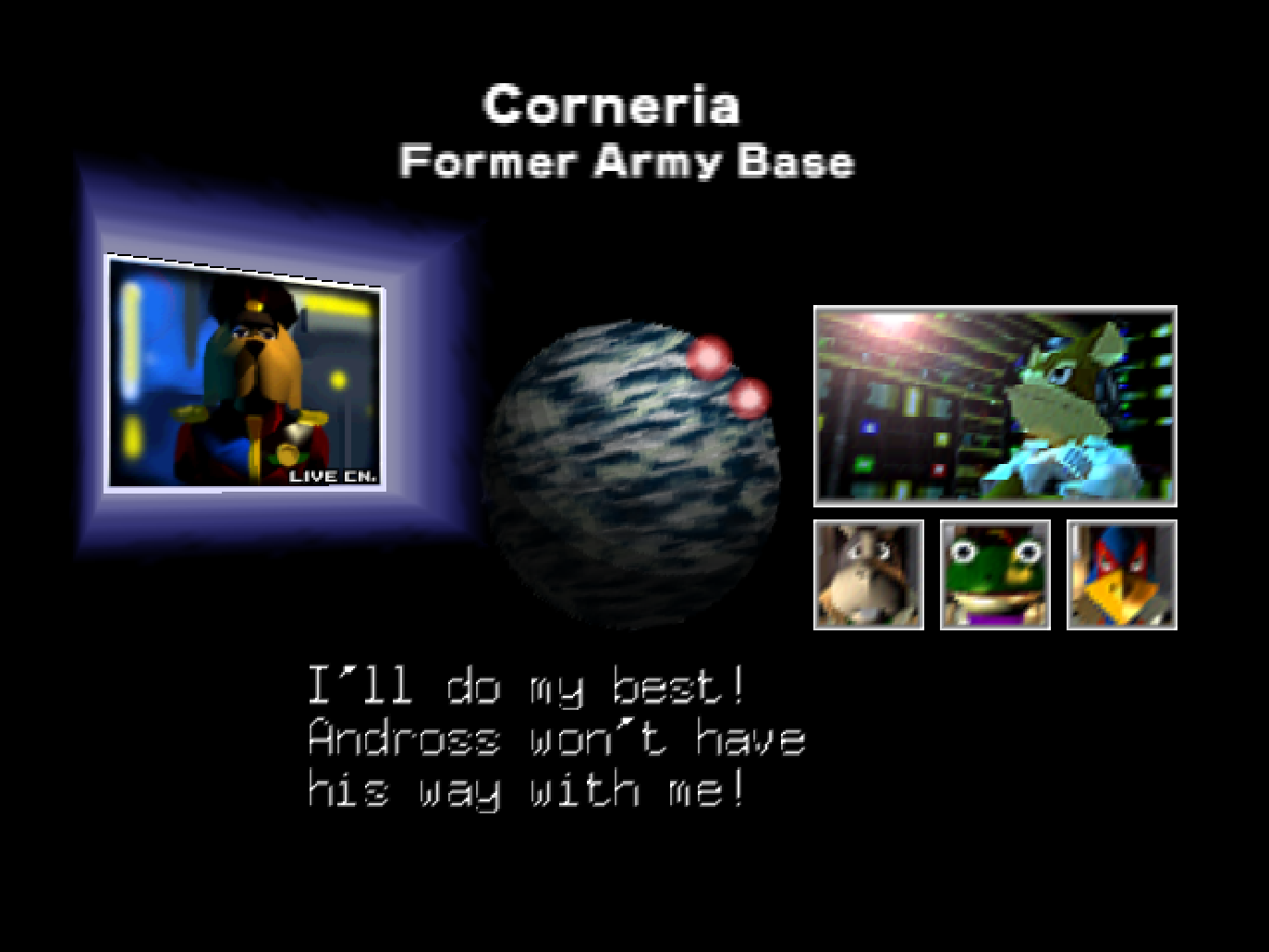
All of the dialogue is now fully voiced, and despite the high compression due to the cartridge format, still manages to sound pretty decent. The voice acting is outstanding, particularly because it leans into the cheesiness, as there’s some very silly, over-the-top dialogue. Wolf’s “I can’t let you do that, Star Fox!” and Peppy’s “Do a barrel roll!” were popular enough to become Internet memes (for some reason). Other lines, like first level boss Granga’s “My emperor… I’ve failed you!” when destroyed, and Fox’s “Andross won’t have his way with me!” before the first level, are both delivered with such melodrama and confidence that they lend a huge amount of personalities to these characters, despite the fact that the dialogue is still relatively sparse. The European version also has the added bonus of “Lylat” language, which turns the speech into the gibberish language spoken in the SNES game.
The music style is completely different from the original Star Fox, opting for a more orchestral tone compared to synth rock. It’s fitting for something that aims to be like a Hollywood movie, though much of it sounds tinny due to the weak Nintendo 64 sound synthesis. Still, the melodies are strong enough that they’ve been remixed in almost every subsequent Star Fox title, particularly the main theme, played when the team checks their systems and then rockets to the first stage.
There are still multiple paths through the game, though unlike in the original, you don’t get to choose them at the beginning. Instead, most levels have secondary objectives which, if successfully achieved, will send you to an alternate stage. Typically, these paths are harder than the default, easy routes. So while there are seven missions from start to finish, there are a total of 16 stages in the entire game (the last level, Venom, has two variations). The catch though, is that the optional objective isn’t directly indicated.
The initial example is the most obtuse – halfway through the first stage, you need to save Falco from attack, then follow him through a series of stone arches. If successful, he’ll challenge you to follow him, sending you to an alternate path and a different boss fight (a remade version of the first level boss of the original Star Fox). After this, you’ll go onto a different second stage. Finding the alternate mission objectives in successive levels is a little more straightforward – in one stage, Peppy tells you to destroy “all” of them, which isn’t literal, but does imply that you need to kill a certain number to reach the alternate stage.
In another example, the level Zoness is filled with searchlights to destroy – if you miss one and they spot you, you’ll skip the alternate path. If you fail one of these, you can pause and choose to restart the stage at the price of one life. If you manage to stay on the hard path through the whole game, you’ll get a better ending after defeating Andross.
There are also medals you can get in each level for superb performances. Again, the requirements aren’t explicitly stated, but typically you need to destroy a certain number of enemies, plus ensure that none of your comrades bite it during a mission. These unlock things like extra vehicles for multiplayer, an Expert difficulty mode, and an alternate title screen (a recurring thing in later games in the series, and technically one that would’ve been introduced in Star Fox 2). Regardless of performance, the game also has a fairly amusing final score screen, presented as an invoice by the Star Fox team to the Corneria army, breaking down how much they’re owed based on the enemies they destroyed.
In general, outside of obtaining the medals, Star Fox 64 is easier than the original, even when fighting on the hardest routes. Part of this is just due to the technical enhancements (you can actually hit and dodge things more accurately), but also because it’s more generous with extra lives. Plus, it’s harder to lose a wing when damaged. Conversely, shooting an ally will actually damage them this time around, so be sure to check your fire.
Star Fox 64 was also the first game to make use of the Nintendo 64 Rumble Pak, which it was actually packaged with in some territories, including North America. By plugging it into the back of the controller, it will shake and vibrate during moments of heavy impact. With the release of Sony’s DualShock controller a few months later, it began a trend that has since become standard in pretty much every console since.
Star Fox 64 is the rare perfect sequel. Outside of maybe the changes to the music style (which is hard to complain about since the new music is still pretty good), it does everything the original does, and does it much better. It was regarded as one of the high points of the Nintendo 64 library even back in the ’90s, and has aged much more gracefully than a vast majority of the system’s catalogue, mostly because it doesn’t struggle with basic things like camera controls.
It’s also the point where the Star Fox franchise peaked, for better or worse. None of the subsequent titles in the franchise ever quite lived up to it, mostly because Nintendo seemed to not really care for the whole “rail shooter” aspect and kept trying various gimmicks to change things up, with each attempt having varying levels of success.
Star Fox 64 was released on the Wii (and later Wii U) Virtual Console, being an emulated version of the game run at a higher resolution than the original, making for slightly cleaner visuals. The Wii version changes a few minor effects and reduces the screen flashing. It’s also missing the rumble effects, but these are present in the Wii U version. Outside of these emulations, in 2011, it was also completely remade for the 3DS.
Star Fox 64 3D – Nintendo 3DS (2011)
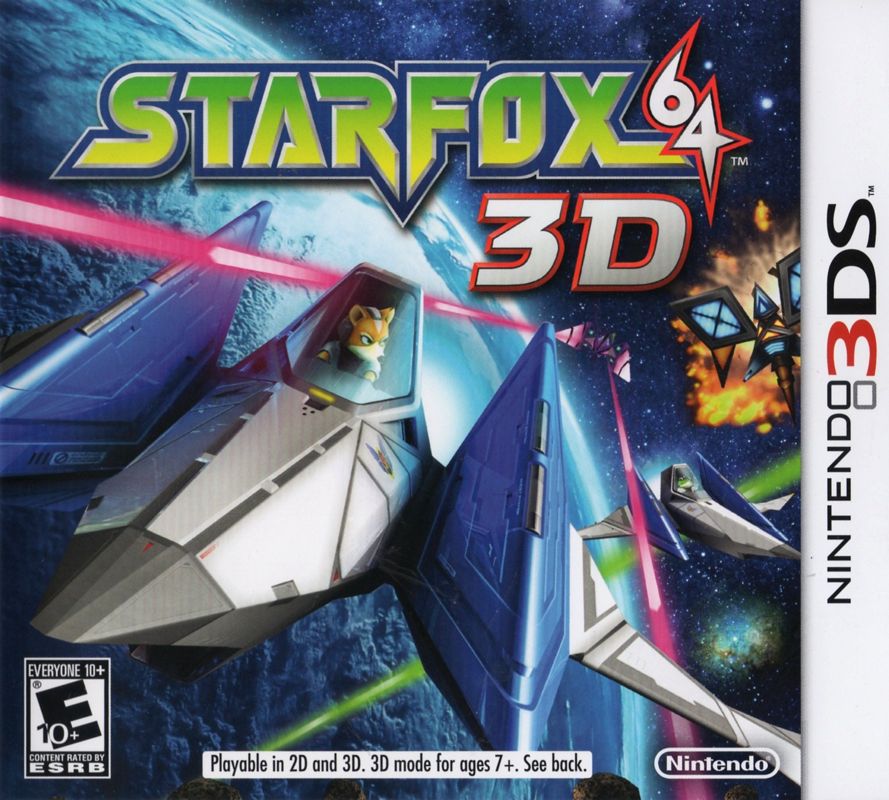
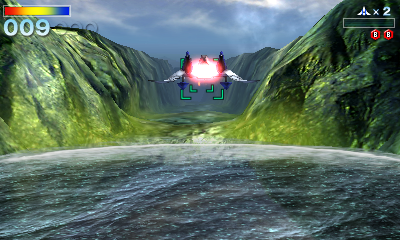
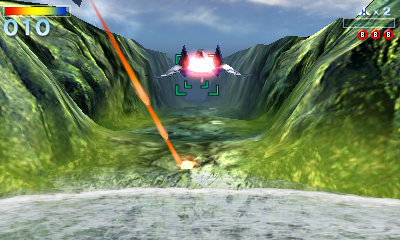
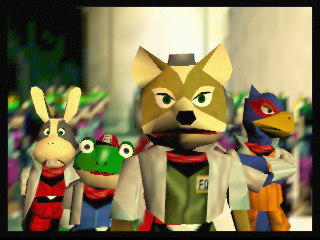
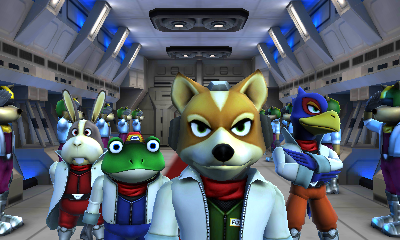
Much like the 3DS port of The Legend of Zelda: Ocarina of Time released the same year, Star Fox 64 3D features completely reworked polygonal geometry and higher resolution textures that make the visuals look remarkably better. Plus the framerate is smoother, and it eliminates the fog that permeated the original release. There are also re-rendered versions of the main characters.
The music here is slightly enhanced, though considering the full orchestrations found in Star Fox: Assault, it’s still not quite as good as it could’ve been. All of the voices have been re-recorded as well, sounding much clearer overall. Some of the original actors have reprised their roles, but the others still sound excellent. (Alas, there’s no option for Lylat speech.) They even give a voice to Yaru de Pon, the tanuki found in the training mode who previously talked in gibberish speech.
Newly added is the option for gyro aiming, allowing for more precise movement than the analog pad provides. There’s an added mode with enemy patterns based around this too, though otherwise there’s nothing in the way of new content. You can also now save the game between missions, though it still keeps track of your lives, so you can still face the possibility of running out and having to start from scratch. Completed levels can also be replayed in a time attack mode.
The multiplayer mode has been completely revised to have new maps that actually have some semblance of design to them. These are now filled with various structures, instead of just being wide open-maps. Plus there are added power-ups that work sort of like Mario Kart, running a slot reel every time you grab one. These can do things like turn you invisible, or slow down all of the other ships with sticky burrs. Unfortunately, you can no longer use the Landmaster tank or fight on foot like you could in the N64 game. It only supports local play, as well. As a neat gimmick, though, the camera records your face and sends it to your opponents, so you can see their facial expressions.
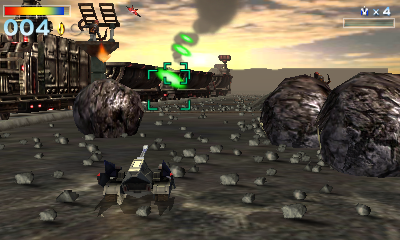
Other than having to play on the small screen, Star Fox 64 3D is an excellent way to play the game – it looks and sounds great, and while the analog pad on the system isn’t ideal, it’s certainly a step up from the N64 stick.
Star Fox – Nintendo Switch 2 (2026)
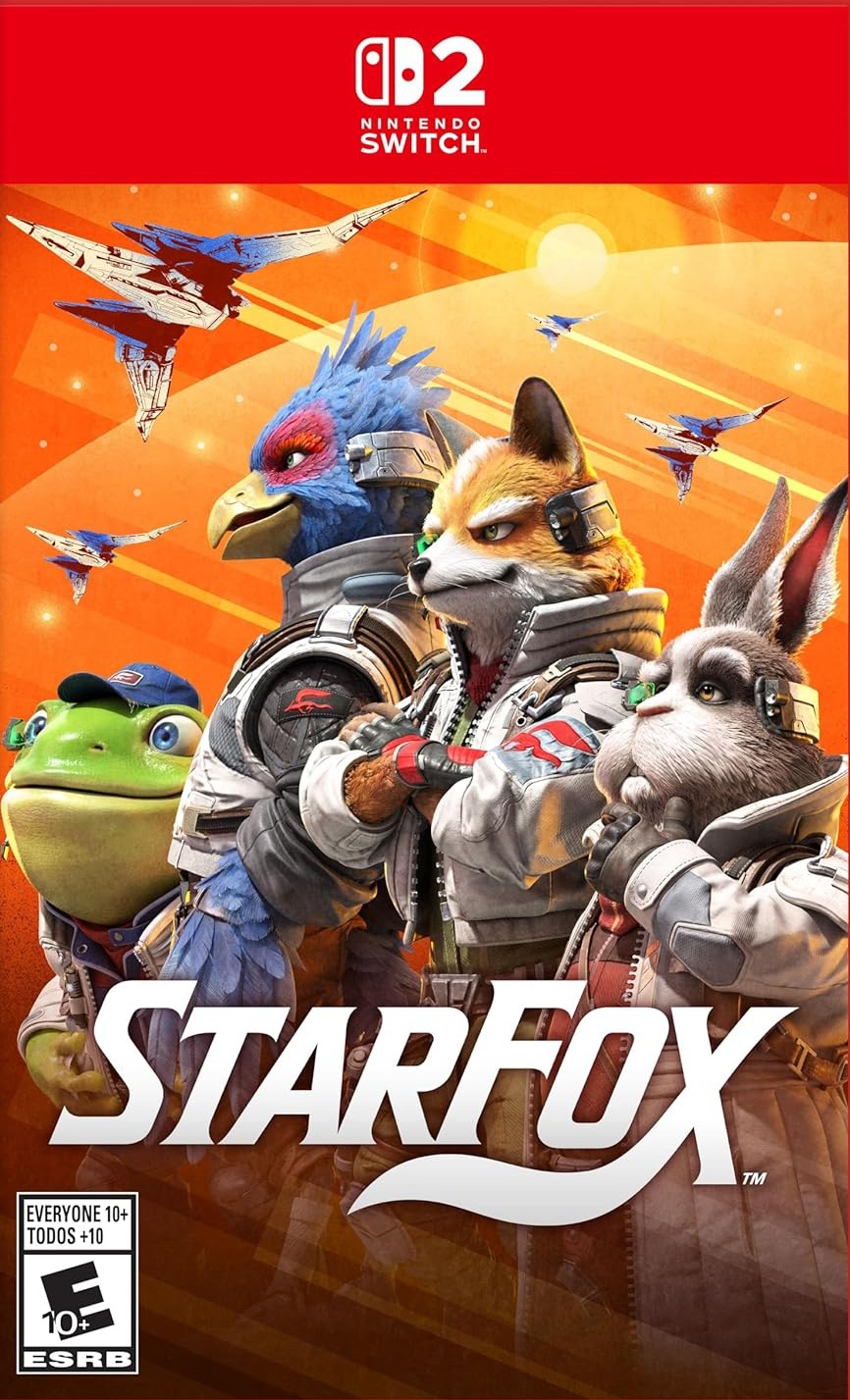
Following Fox McCloud’s appearance in 2026’s The Super Mario Galaxy Movie, Star Fox returned just a few months later for a Switch 2 game. The last game in the series at this point had been 2016’s Star Fox Zero for the Wii U, which was poorly received critically and commercially, so it needed something to bring the name back to glory. With that, they decided to remake Star Fox 64 again, this title just titled Star Fox.
Switch 2
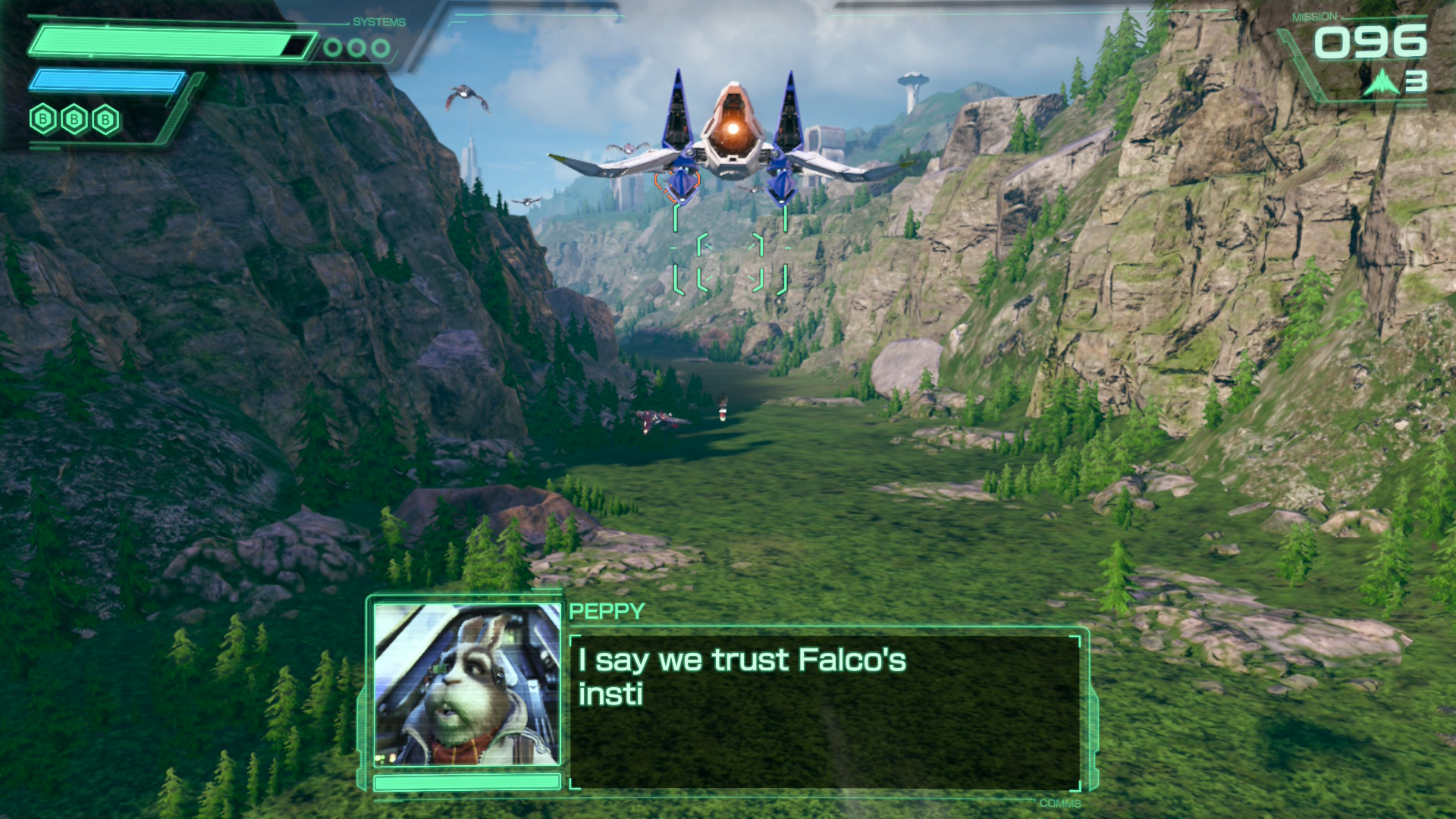
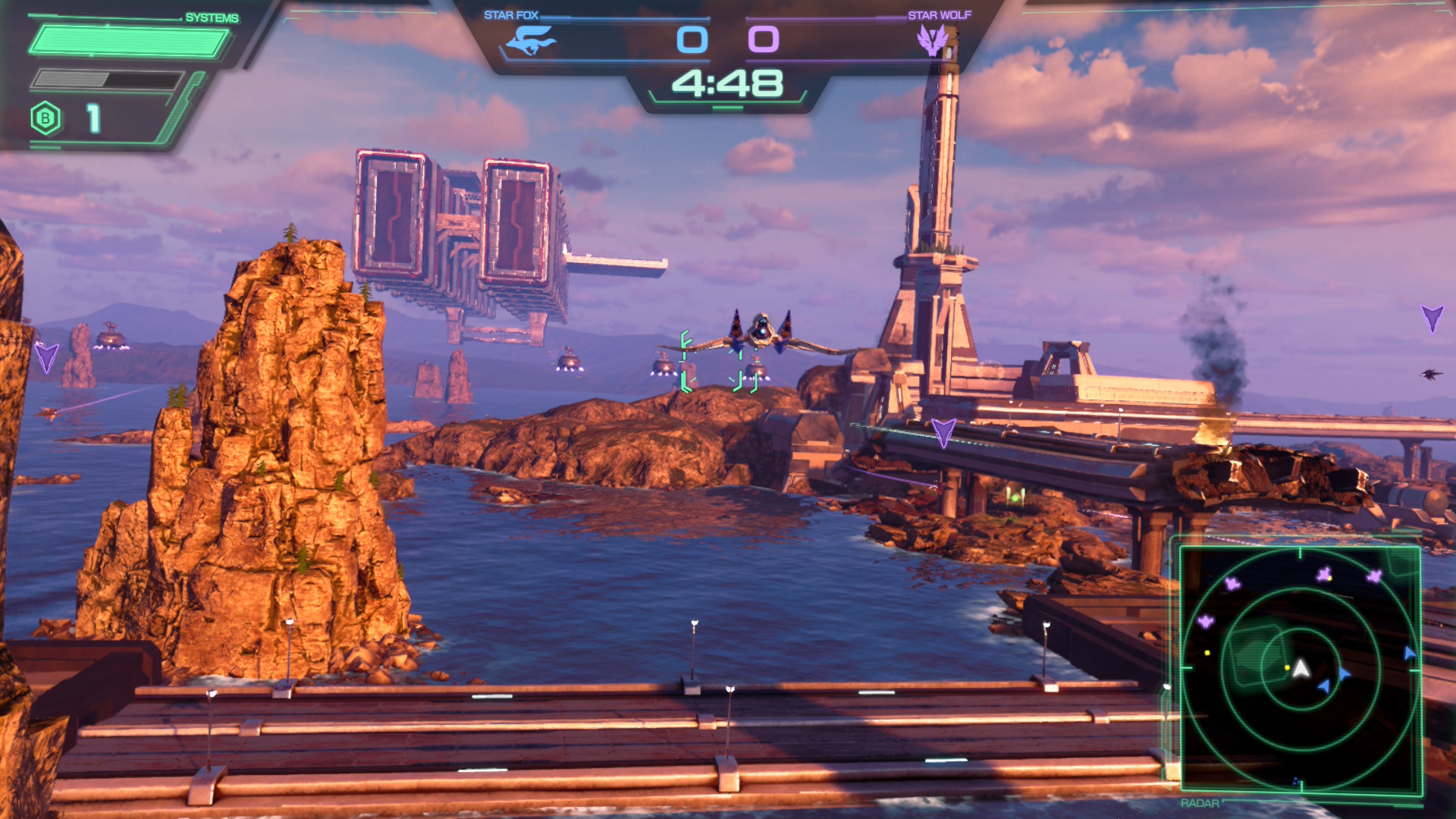
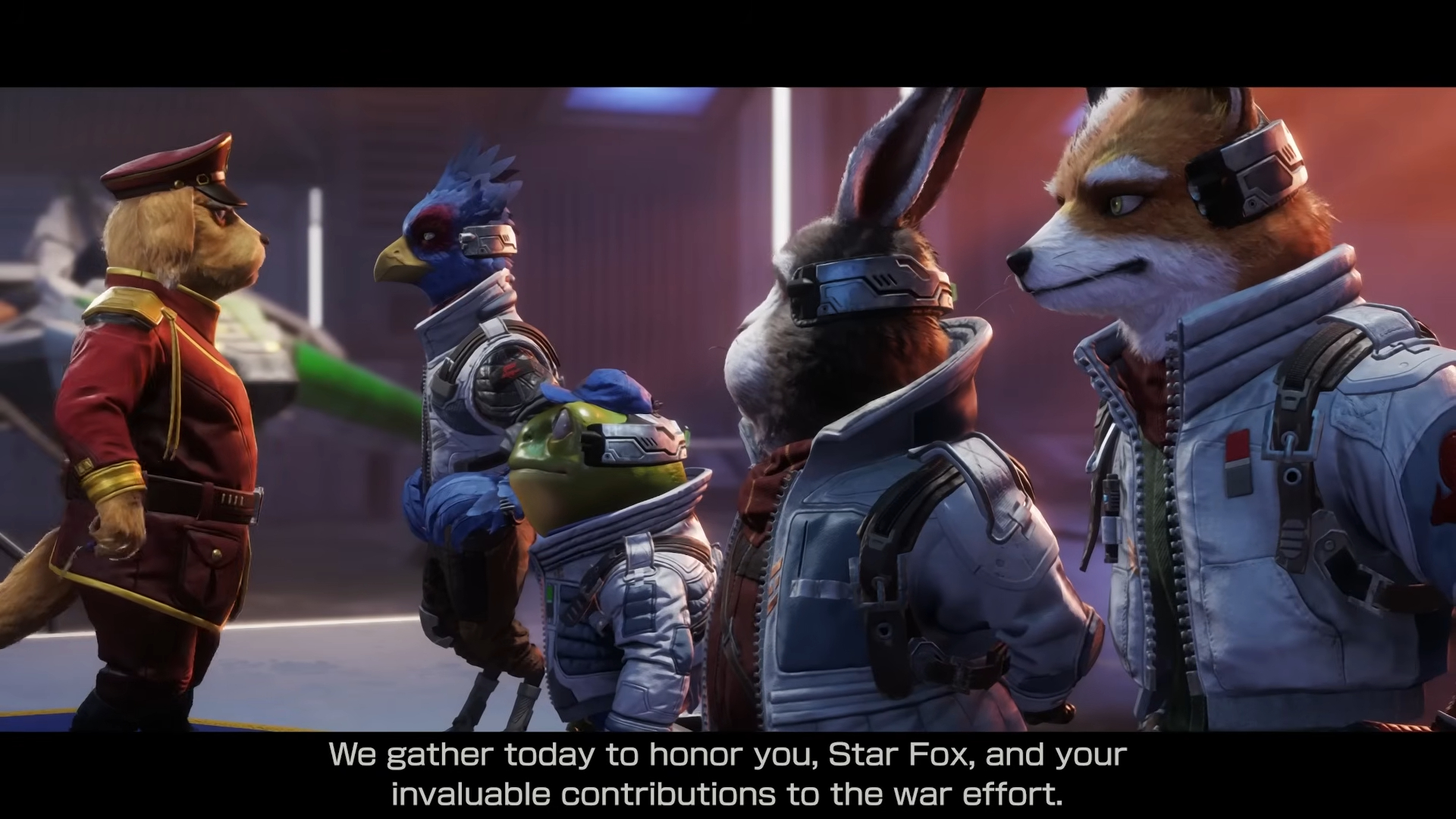
This is another full remake with gorgeous high-definition visuals, a smooth 60 FPS framerate, and an orchestral soundtrack arrangement. The audiovisual glow up is a huge improvement over the 3DS version and is on a whole other level than the Nintendo 64 original. Some of the lighting and other visual effects actually make it a little harder to see, though, like the darkness in Aquas or all of the debris when chasing the Andross robot near the end of the game. Enemies no longer flash when hit either, leaving you to listen to a “clunk” noise to confirm when you’re doing damage, perhaps in an attempt to make the game look more cinematic. All of the enemy patterns are identical, and nothing new has been added level-wise outside of a slightly expanded tutorial.
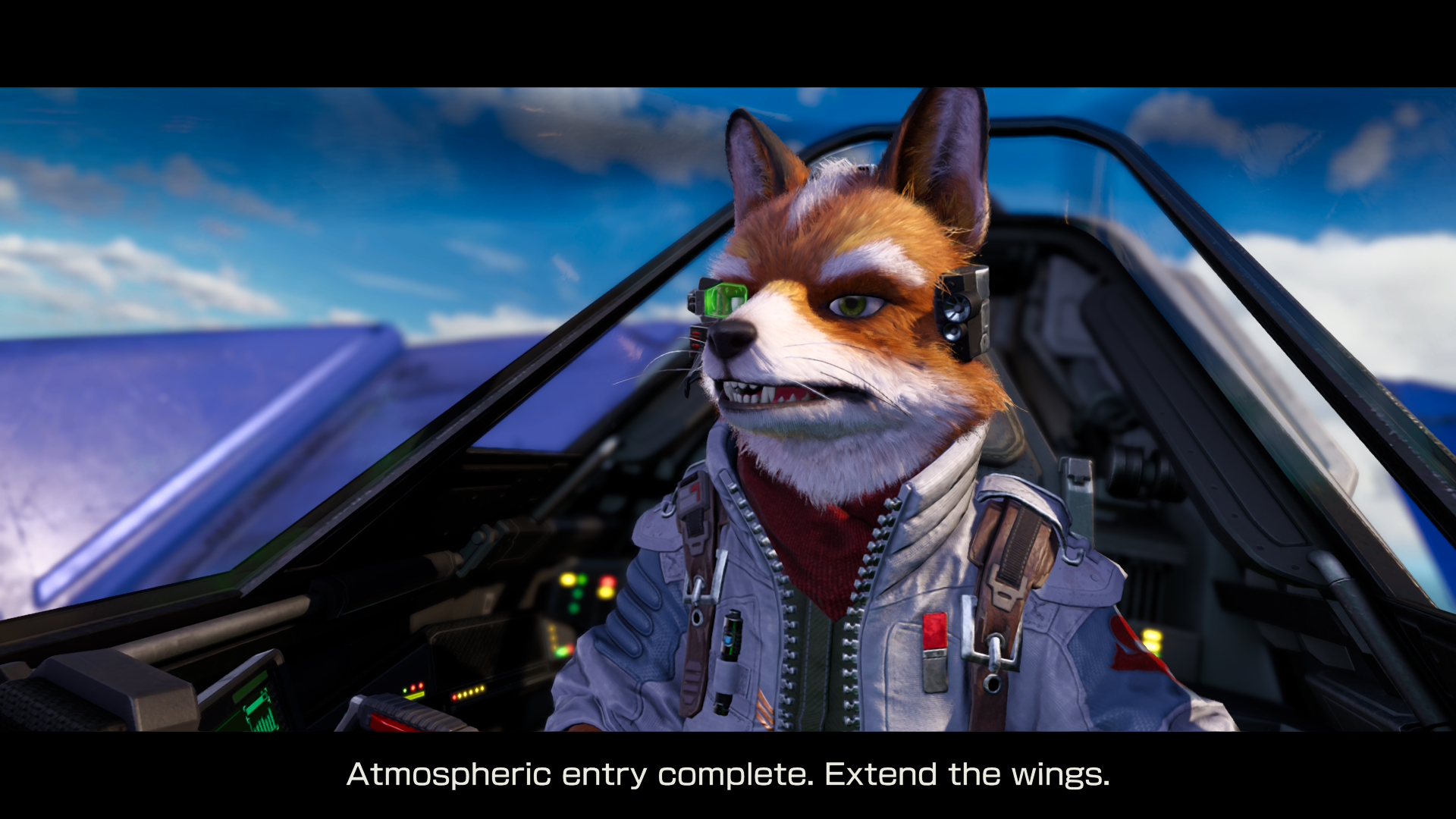
What is greatly expanded is the cutscene and storytelling. All of the characters have been redesigned again, with a slightly more realistic anthropomorphic style, similar to the puppets on the original SNES Star Fox cover. It’s a big change from the cartoony look of the Nintendo 64 original, where Fox looked more like a shiba inu dog than a fox, and even differs from his appearance in the Super Mario Galaxy Movie. All of the cast gets a similar design change, with the biggest being Kat Monroe, who loses her pink fur and gets a far scrappier look.
Switch 2
The previous releases just had quick mission objectives given by General Pepper, but this version has full cutscenes, typically a few minutes length, of the team talking among themselves. There’s even an intro showing the mission where Fox’s father James loses his life. The added emphasis on storytelling extends to the in-game dialogue, which has been entirely written and revoiced with new actors. For example, the first stage begins with Slippy reminding everyone to check their G-Diffusers, which Falco blows off. So of course when it goes haywire later in the stage, Slippy is there to admonish him. Falco also gives stronger hints to follow him through the rock formations so you can access the alternate route. All of this does an excellent job of expanding the personalities that you only got glimpses of in the earlier releases. Some of the bosses dial back the overwrought death cries so they’re not as loveably cheesy, but they still bring lots of energy to their brief roles. There’s also an unlockable database of history and terminology, which brings up backstory elements from supplemental media. We learn that James took out an 80-year loan to purchase the Great Fox command ship, which Fox is still paying off, explaining their mercenary habits.
There are a few new features, too. While there’s no gyro aiming, you can use the Switch 2 Joycons for mouse-style control. A two-player mode lets one person move and the other person aim, though this is hardly satisfying. A new online multiplayer mode features four versus four teams that focus on dogfighting opponents, along with level-specific objectives like controlling territory. There’s also a new Easy mode that decreases enemy damage and always returns downed allied fighters without them sitting out the next stage.
Switch 2
As with any remake, there’s always going to be some element that won’t hit the same way – voice lines that aren’t read the same way, or effects that have changed, or enemy behavior that’s slightly different. But outside of things like these, this is the best Star Fox has ever been. The only downside is that it’s another remake, there’s nothing really new outside of the expanded story – this is the third time we’ve seen Star Fox 64 and if you count the original Star Fox and Star Fox Zero, the fifth time we’ve seen a rendition of this story. But it’s also about the best return to glory as one could hope.
Screenshot Comparisons
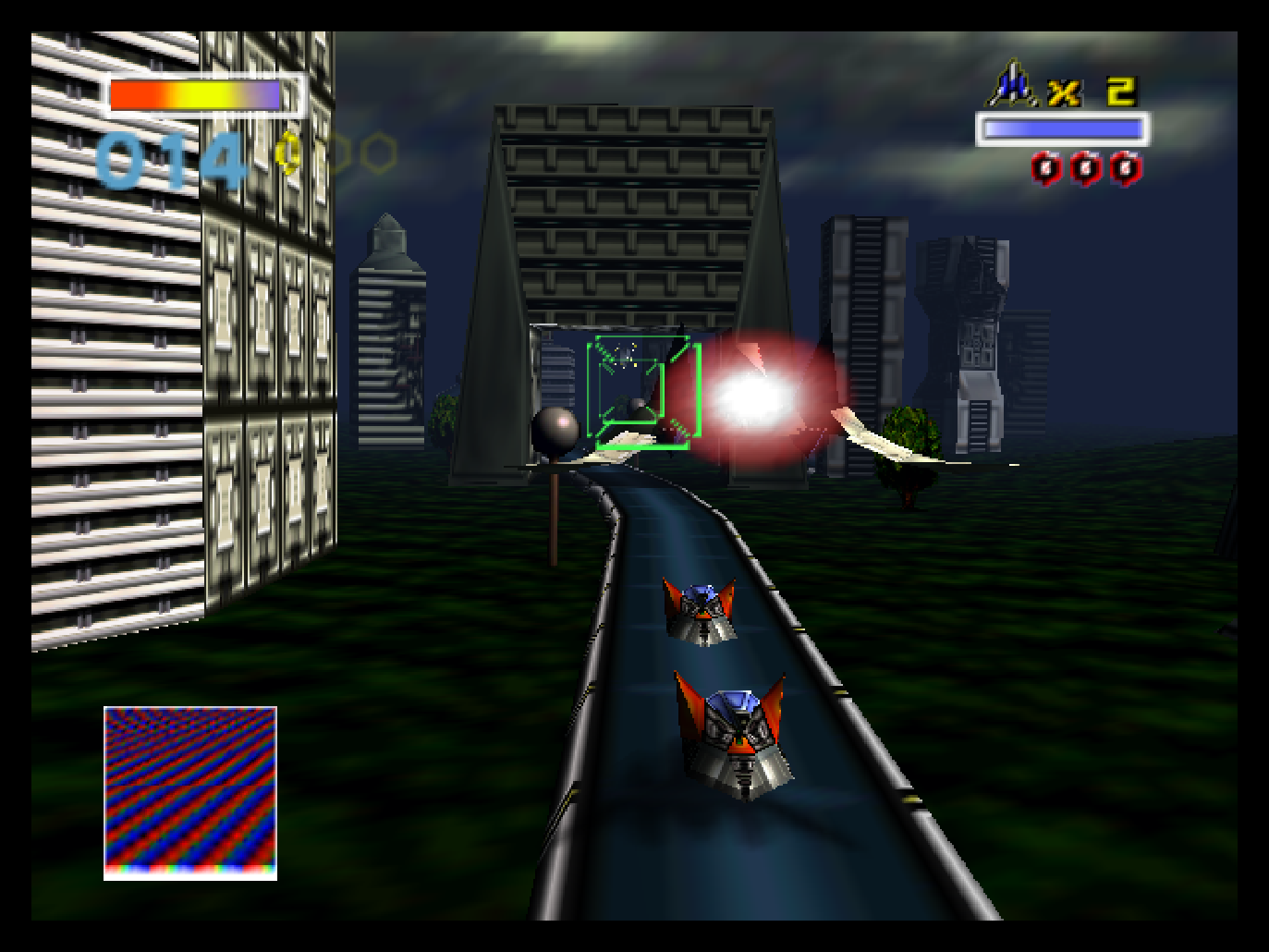
Nintendo 64
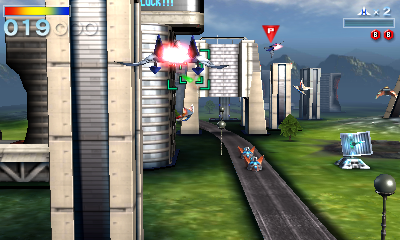
3DS
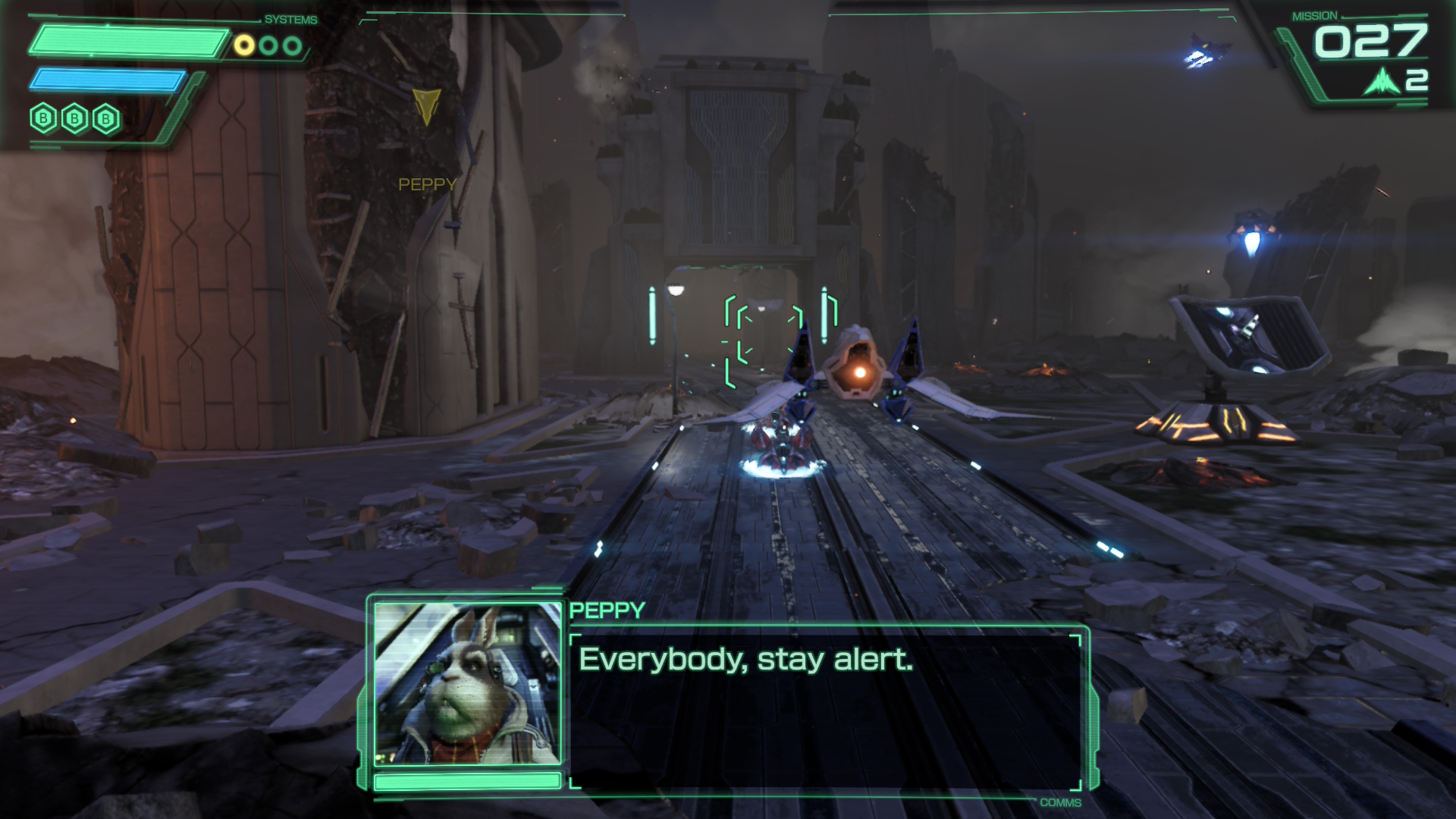
Switch 2
Nintendo 64
3DS
Switch 2