|
|
A History of Korean Gaming
|
|
가더 (Guarder) - PC-DOS (1994)
|
|
Advertisement
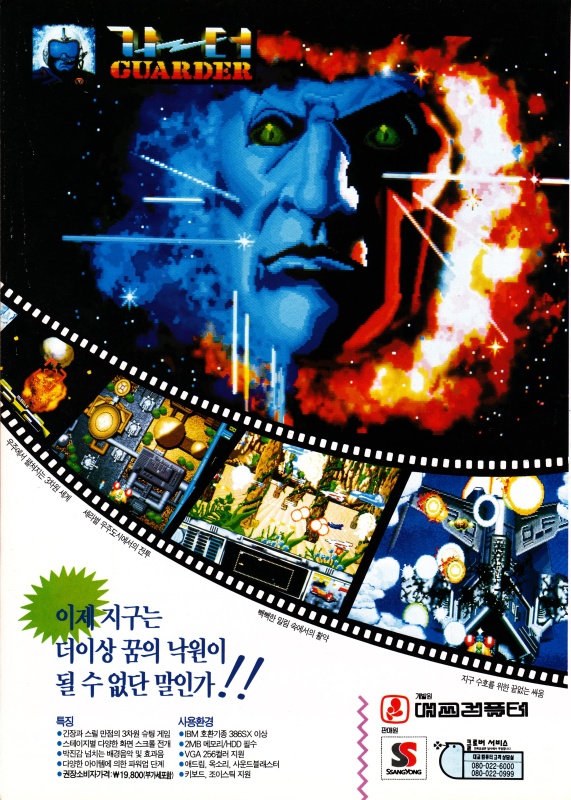
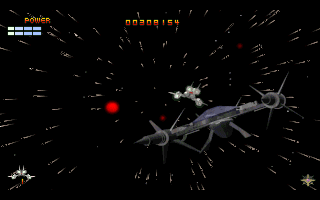
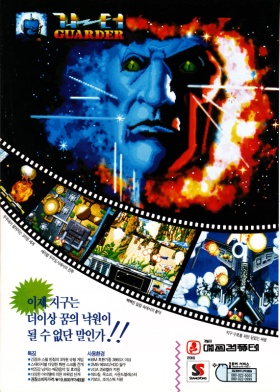
Founded on August 1st, 1989, Daekyo Computer (originally Daekyo Educom, now Daekyo CNS2) originally had made themselves a name with educational software and later multimedia CDs, but a few game loving programmers ended up with the company and managed to push forward development of a few games3.
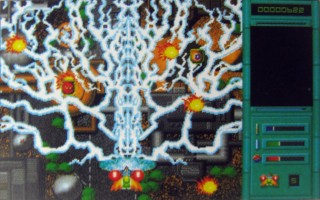
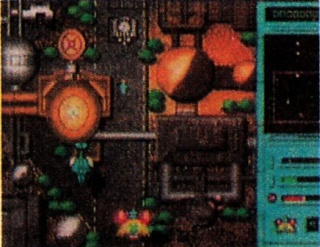
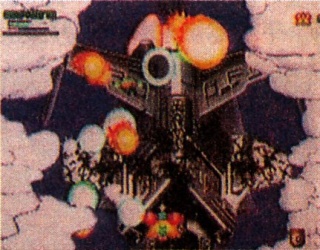
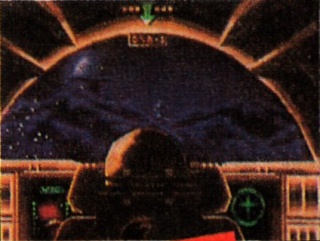
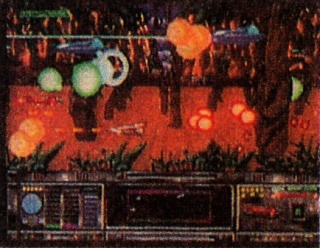
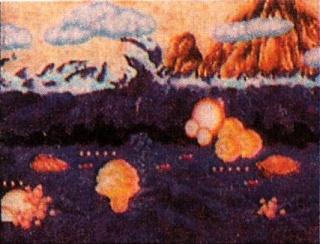
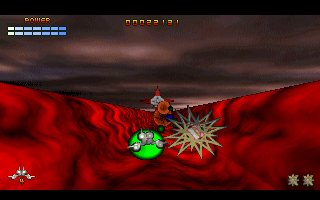
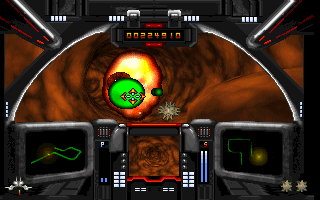
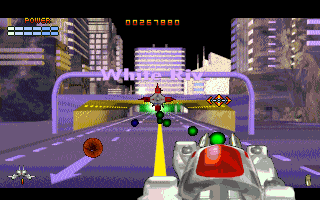
The first product of these efforts was a shmup called Guarder, which continues a trend of shmups with alternating vertical and horizontal stages started by Fox Ranger II and the (possibly unreleased) freeware game Yoke Town. The game also features bonus stages played in cockpit perspective.
|
|
|
|
쥬라기 공원 (Jyuragi Gongwon) / Jurassic Park MUD - MUD (July 25th, 1994)
Jyuragi Gongwon
|
|
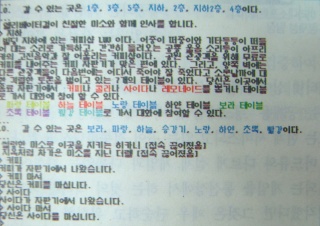
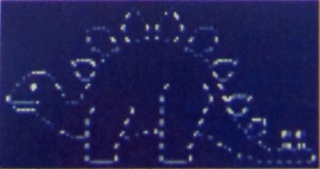
In light of the rising popularity of English Multi User Dungeons in 1994, Sangjeong Data decided to produce the first MUD in native Hangeul script. The team under president O Chungryong didn't create Jyuragi Gongwon from scratch, though, but rather modified the LPMud engine by Lars Pensjö to make it capable of processing Korean text. With that modified engine, they created a MUD based on the then popular Jurassic Park franchise.
Also involved with the development of this game was Song Jaegyeong (also known as Jake Song), who later became the creator of such important titles as Legend of the Wind (Nexon) and Lineage (NC Soft)4. Currently he is working on a new MMORPG Arch Age as the CEO of XL Games.
|
Jyuragi Gongwon
|
|
|
|
단군의 땅 (Dan'gun-ui Ttang) / Dangun Earth - MUD (August 1st, 1994)
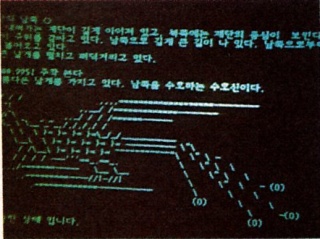
Dan'gun-ui Ttang (1994)
|
|
Only one week after Jyuragi Gongwon, the first genuinely Korean MUD saw the light of day. Dan'gun-ui Ttang took players into the time and place of Korea's founding myth and was full of elements borrowed from other east Asian mythology.
Developed by CEO Gracia Chang (Chang Inkyung), Kim Jiho, Park Seunggu and others at MARI Telecommunications (then still known as Madison Communications5), the game remained one of the most popular Korean MUDs for years and was supported until Mari's demise in 2004. Even beyond, Dan'gun-ui Ttang lived on thanks to the sourcecode being publicly released6. Who knows, there might be some hidden sessions going on even today.
|
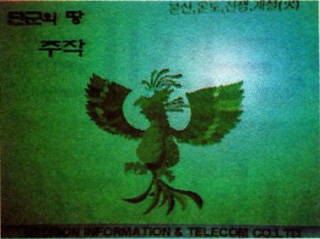
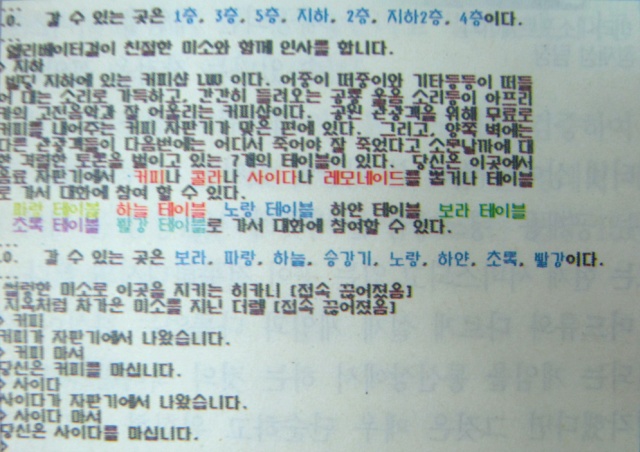
Dan'gun-ui Ttang 1994 documentation
|
|
|
|
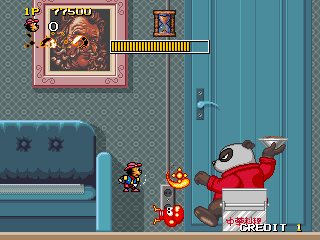
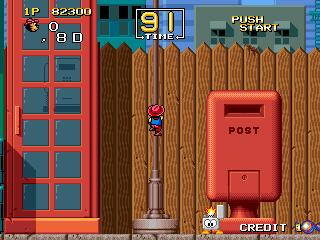
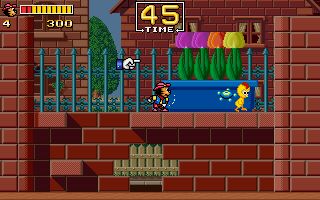
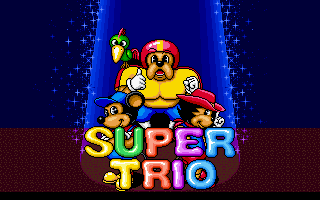
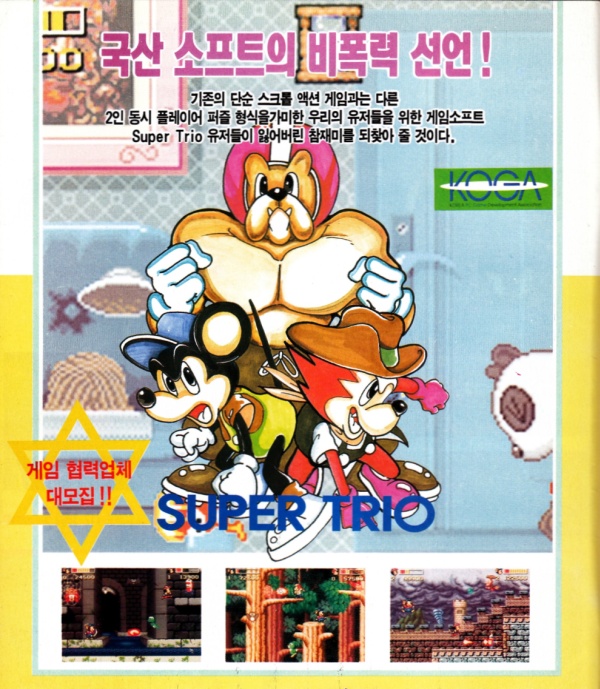
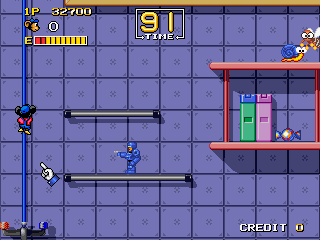
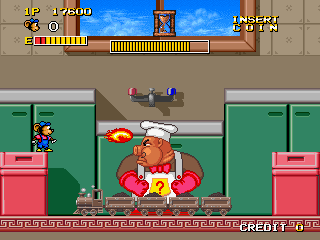
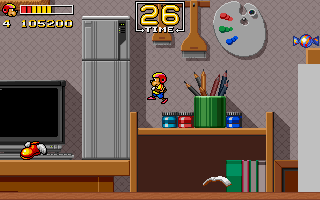
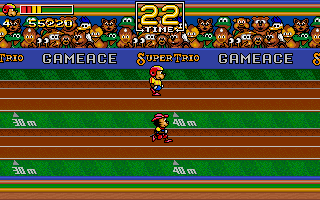
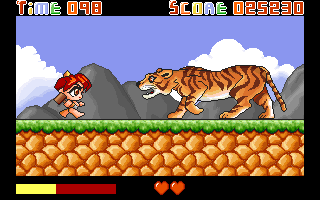
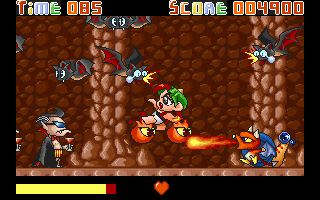
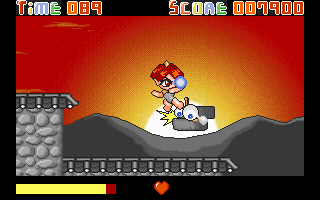
슈퍼트리오 (Super Trio) - Arcade (1994), PC-DOS (1996)
|
|
타임 온 타겟 (Time on Target) - PC-DOS (1995)
|
|
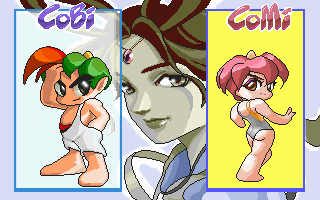
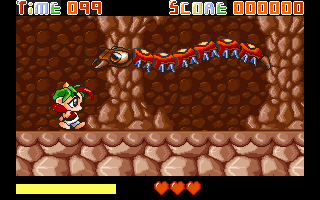
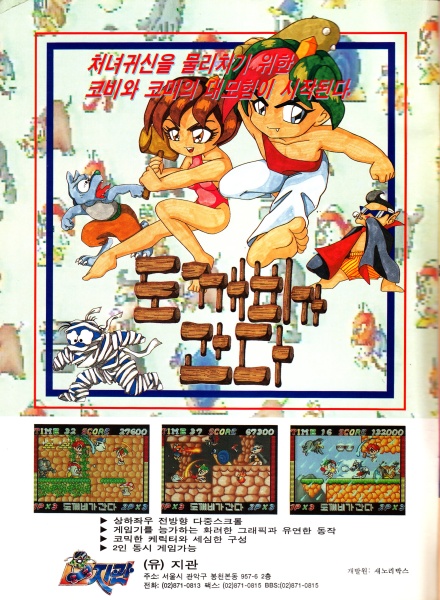
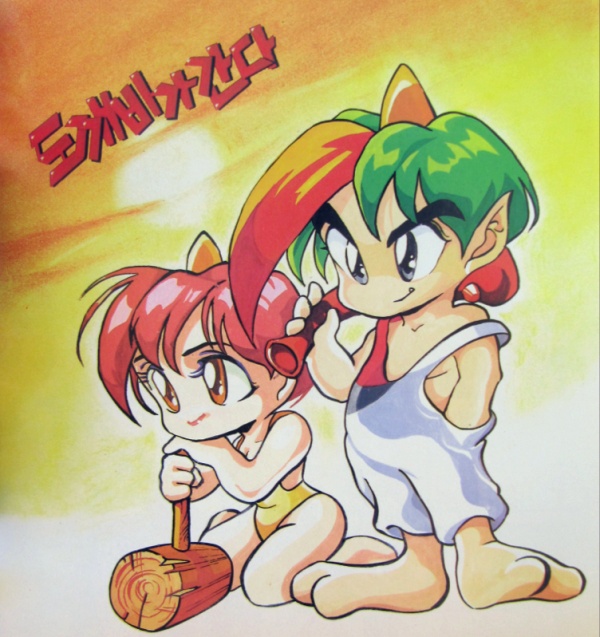
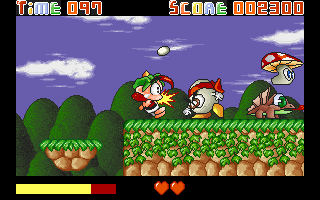
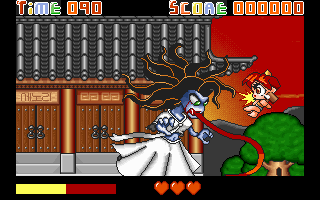
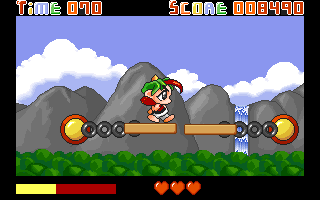
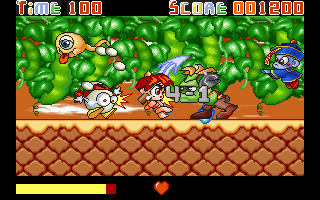
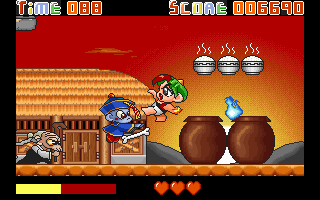
도깨비가 간다 (Dokkaebi-ga Ganda) - PC-DOS (1995)
|
|
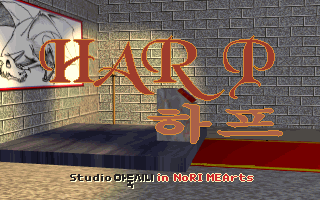
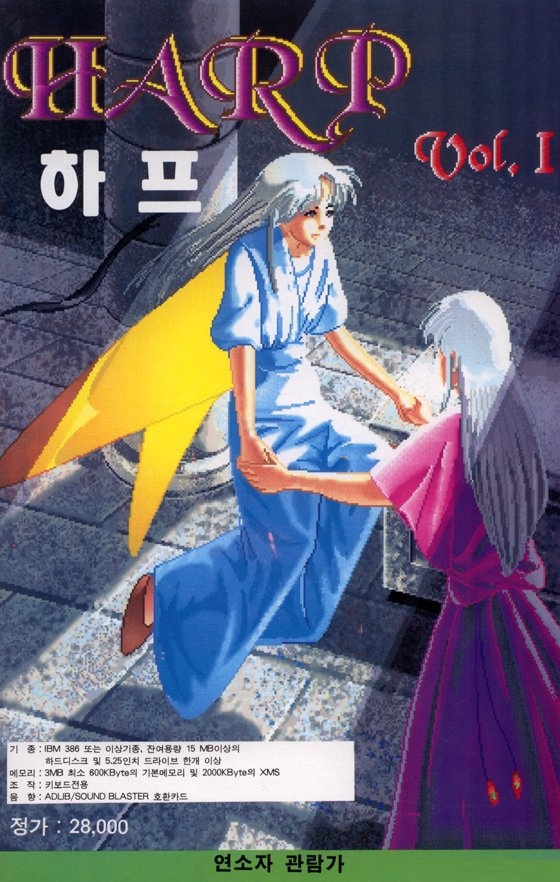
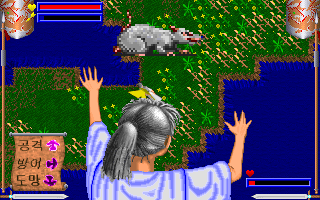
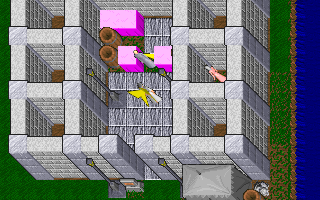
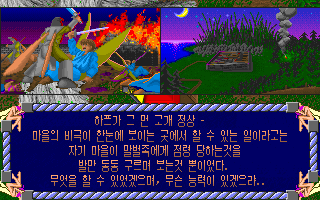
하프 Harp - PC-DOS (1995)
Comparison screenshots
Beta version screenshots
|
|
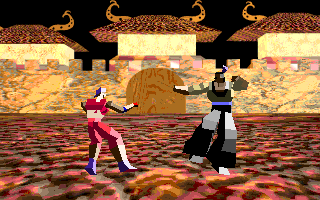
리얼파이터 Real Fighter - PC-DOS (1995)
|
|
트윈스 (Twins) - PC-DOS (September 1995)
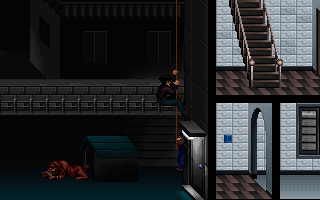
Twins
|
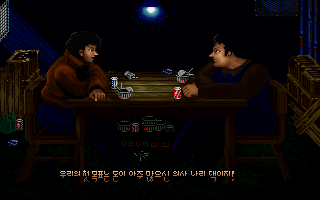
Twins
|
Twins
|
Twins
|
Twins
|
Twins
|
|
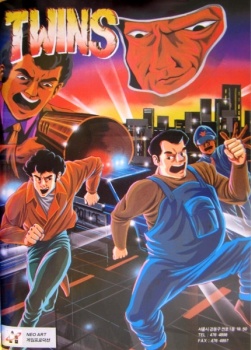
Advertisement
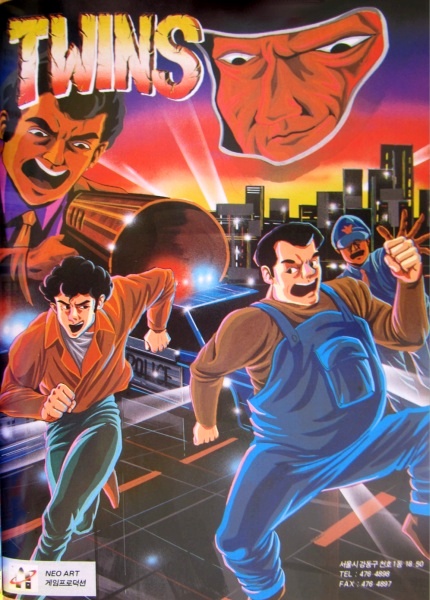
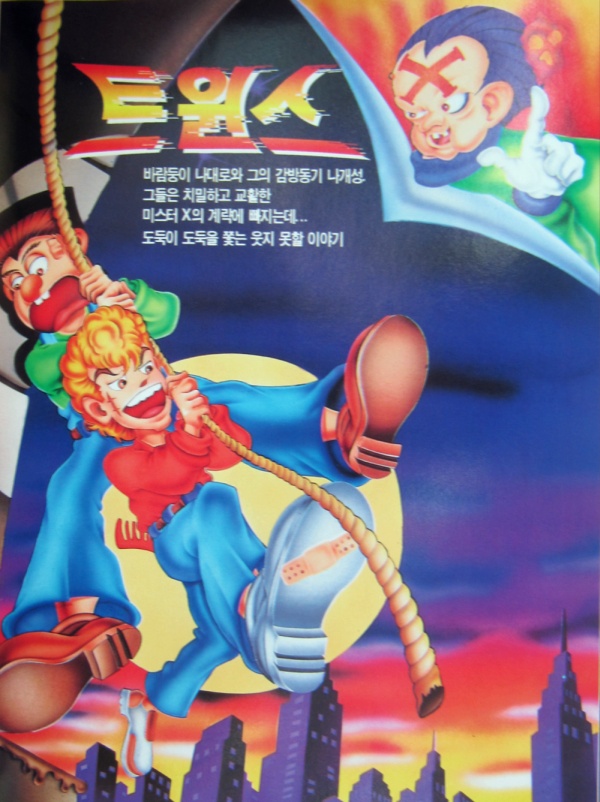
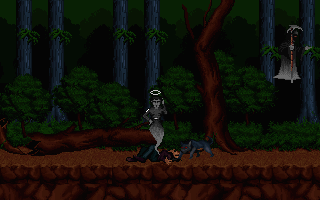
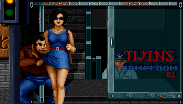
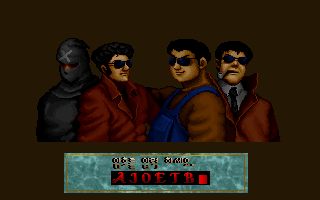
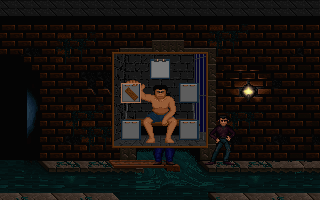
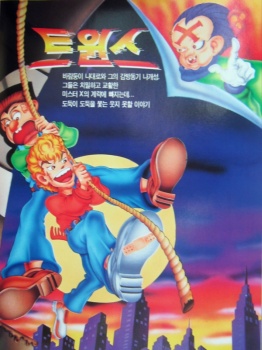
Twins tells the story of the two small-time criminal brothers Na Daero and Na Gaeseong. While both in prison for minor delicts, they make plans for their big coup they intend to land as soon as they are released. They get overheard, however, by one mysterious Mr. X, who from now on crosses all their plans and takes away with their loot. A wild chase begins, in which the twins not only have to catch Mr. X, but are themselves once again hunted by the police.
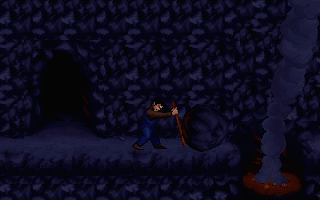
Twins is one of the most interesting and unique old games that hail from the Korean peninsula. As an adventure game based on the interchanging use of multiple characters (two in this case), it compares to the Goblins series by Coktel Vision to some degree. Several style elements, like character "voices" and gestures, also betray the inspiration. Twins doesn't stop here, though, but introduces a lot of new elements. Most of the game takes place in adventure mode, but other than most adventure games the anti heroes are not controlled by pointing and clicking, but directly with the cursor keys. The stout Daero moves the most heavy objects around and is competent in using tools, Gaeseong instead is a swift and nimble pickpocket and athlete. The game in general demands good use of either character's skills. Only in two of the later stages the developers seem to have all but forgotten the concept of their game, as those can be completed entirely with only one of the brothers. Puzzles are never unfair or illogical, but at times the game is very specific about the exact position items have to be used in.
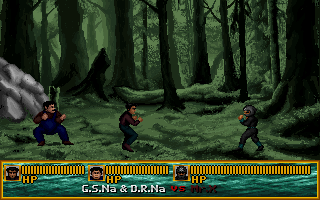
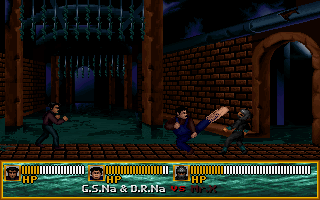
After most stages follows a direct confrontation with Mr. X, that is fought out &mdash well, fighting game style. The controls are not very elaborate, but Deca team knew exactly what they could and couldn't do with the engine, so it controls better than many dedicated fighting games on PC at the time. Mr. X is vastly superior both in terms of health and attack power, but the two brothers can take turns to take him on, with the resting one slowly regenerating health.
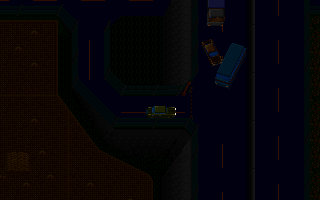
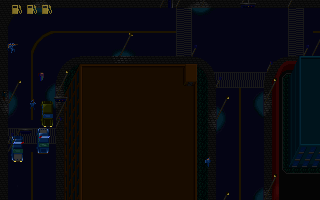
Last are the driving stages, which are the most frustrating. The car controls feel a bit sedate, maneuvers like a u-turn are not possible. Nonetheless it's fun to avoid police cars after gathering some momentum. The brothers can even get out and go on by foot when the car is stuck, but it is all spoiled by how police officers are handled. It is not possible to go anywhere near them, even when in the car. Thus they have the protagonists cornered in no time.
Twins was developed by Deca Team (concept, program, sound) in cooperation with Neo Art (graphics). Only a year after releasing their first game, they got bought out by Jeibi Hitech, where they started to work on the SRPG Tartarus9. Before that game was finished however, the studio changed owners once again, this time to Softry10, where their next few games were completed. Members of Neo Art ended up at Games&Multimedia, to work on the RPG Protocoss11. After the closure of Softry / ST Entertainment, former Deca Team lead Hong Gwangpyo founded Deca Entertainment, a company that developed online games, but never released anything12.
Twins
|
|
Twins
|
Twins
|
Twins
|
Twins
|
Advertisement
|
|
|
|
바리온 (Baryon) - PC-DOS (November 1995)
Baryon
|
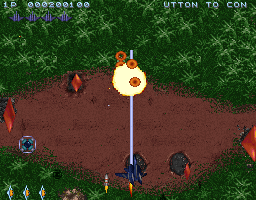
Baryon
|
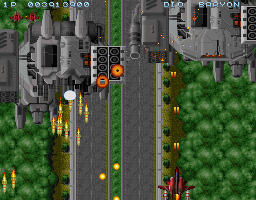
Baryon
|
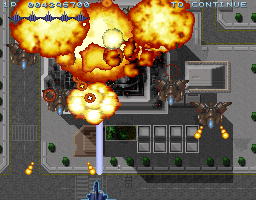
Baryon
|
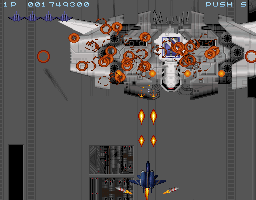
Baryon
|
|
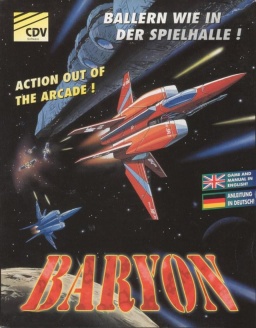
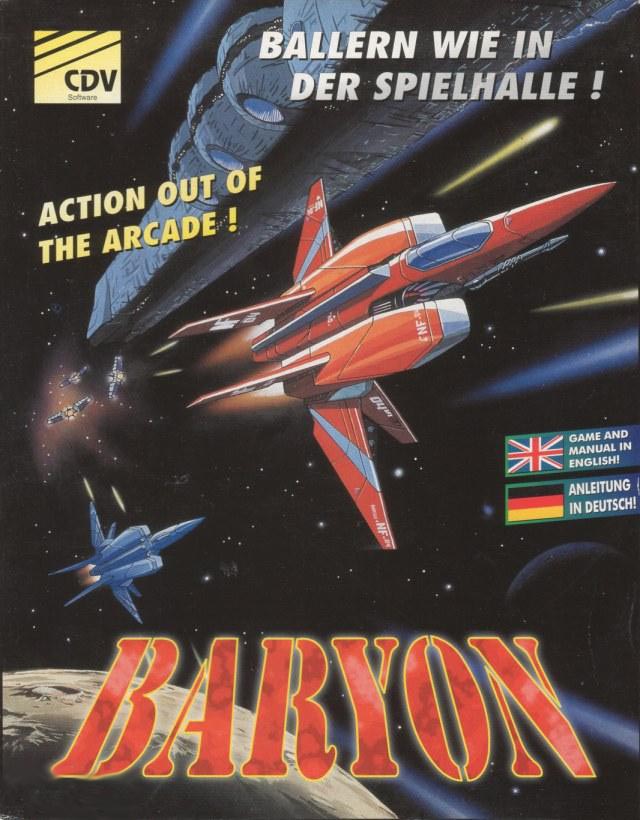
European cover
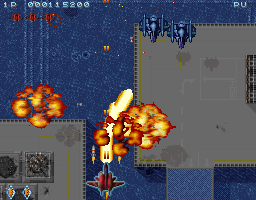
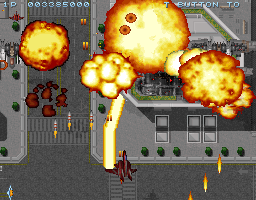
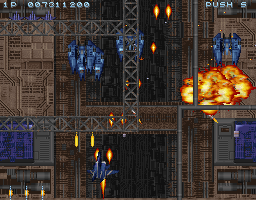
In late 1996, American shareware users were taken by surprise by one of the best PC exclusive shoot 'em ups to ever grace MS-DOS. Baryon seemed to come out of nowhere, delivered by the niche shareware distributor The Game Factory, but developed at the elusive Acro Studio. While no one in the West had ever heard of them before, they had actually made themselves a name in Korea with the freeware shooter Chosseolleong (초썰렁), well known among early Korean netizens for its incredibly smooth scrolling8.
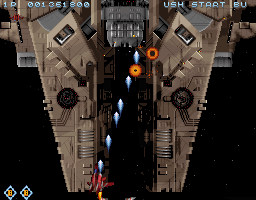
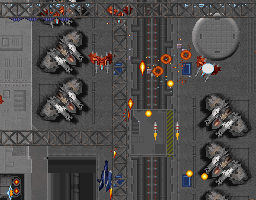
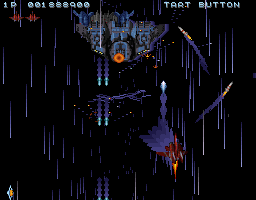
Baryon follows in it's antecede's footsteps in that regard, but it doesn't stop there. Acro Studio created one of the most visually appealing shooting games in its time, with tons of special effects, neat details and whole screens full of explosions. There is a price to pay for the furious presentation, though, as Baryon runs in a weird (for VGA, anyway) 256x200 screen mode, and not all graphics card handle it equally well. The music unfortunately is underwhelming. The compositions are good, but their arrangement lacks punch, no matter whether they run in Sound Blaster or MIDI mode. They also aren't looped, making for seconds of awkward silence during the stages until they start over again. Yet the overall presentation is just stellar, even excelling the contemporary genre reference Raptor: Call of the Shadows, with which it also shares similar aesthetics.
Game mechanics in Baryon are completely different, though. As an uncompromising arcade action fest, Baryon does without any of the managment elements of its competitor and concentrates on plain and simple shooting. There are two ships with different weapon systems, which can of course be manned by two players simultaneously. There's not much to the upgrade system, as its just two main and secondary weapons each, besides the obligatory smart bombs. It's strength, however, lies in its functionality, and there's no such thing as a useless choice. Stages are rather long, but there's always so much going on that they hardly ever get boring. Only the bosses are a bit disappointing, some of them even ridiculously easy, at least on the slowest setting. One of them literally just sits there waiting to be destroyed after all its weapon systems are obliterated.
In place of selectable difficulty modes, Baryon lets the player set the speed the game runs in, from almost slow motion to literally inhumanly fast. By default, the game is almost easy to beat. It is also more forgiving than most Korean PC shmups, despite the strict limitation to 4 credits. Still, even though it is not too much of a chore to eliminate the enemies, players aiming for high scores are pressed to also catch the red diamonds dropped by certain enemy types, which more often than not lead into own set death traps.
|
Baryon
|
Baryon
|
Baryon
|
Baryon
|
Baryon
|
|
|
|
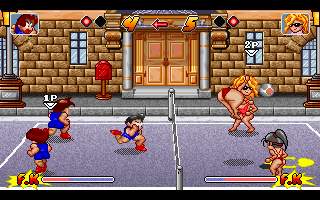
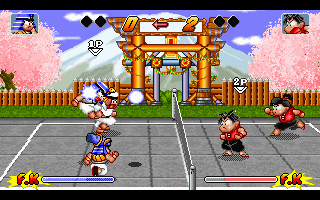
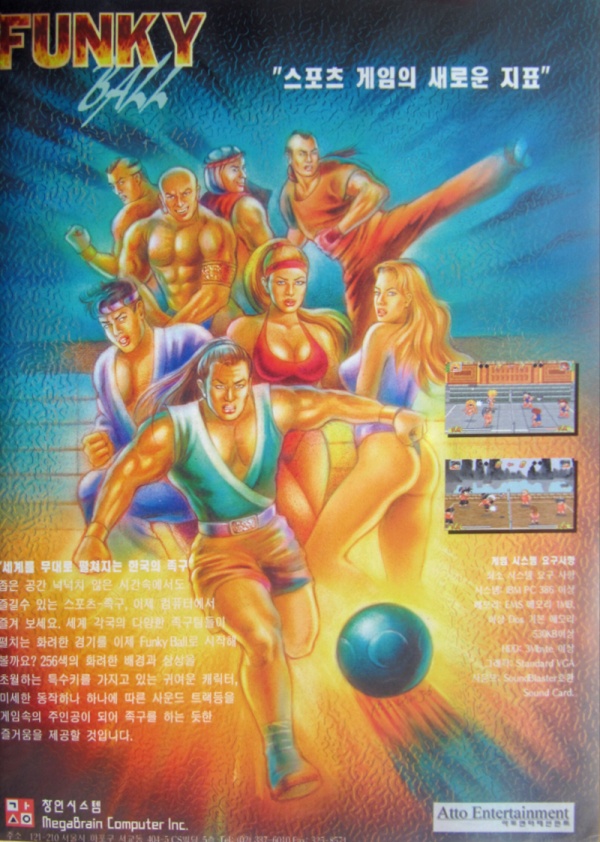
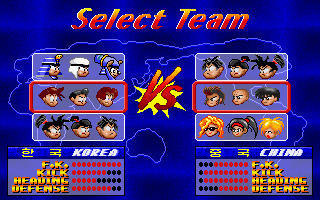
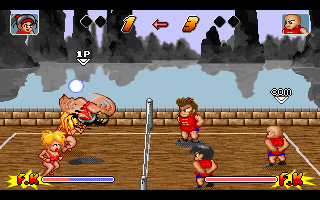
Funky Ball (펑키볼) - PC-DOS (1995)
|
|
References
1. http://www.ruliweb.com/ruliboard/read.htm?main=ps&table=img_screen_packpc&left=g&num=23652
2. http://www.daekyocns.com/company/history.asp
3. IBM PC World in Game World 1/1995, page 62-63
4. http://www.thisisgame.com/board/view.php?id=636639&category=201&subcategory=9
5. PC World 8/1994, page 113-114
6. http://web.archive.org/web/20040606060521/www.magewar.com/archmage/dangun/dangun.html
7. IBM-PC World in Game World 1/1995, page 37
8. IBM-PC World in Game World 5/1995, page 23
9. PC Champ 3/1996, page 89
10. PC Champ 10/1996, page 86
11. GameCom 4/1996, page 74
12. http://webcache.googleusercontent.com/search?q=cache:aWPQQQit9pMJ:www.ckinfo.net/01/status_game.php+%22%EB%8D%B0%EC%B9%B4+%EC%97%94%ED%84%B0%ED%85%8C%EC%9D%B8%EB%A8%BC%ED%8A%B8%22&cd=1&hl=en&ct=clnk&client=firefox-a&source=www.google.com and http://cafeanimate.net/zboard/view.php?id=info&no=12866
|
A History of Korean Gaming
|
|