
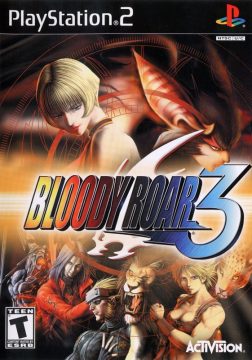
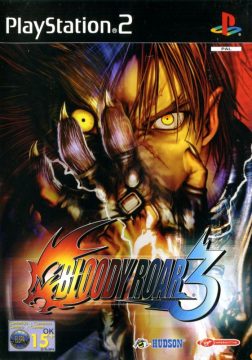
Bloody Roar 3 is the game where the series really starts to feel like it’s really hitting its stride. It has some rough edges, however, which make it feel more like a prototype for the later Primal Fury. The new changes make for a game that certainly feels different from the previous game, and it stands out fairly well on its own merits.
After the fall of the ZLF, Yugo begins an organization called the World of Co-Existence, dedicated to peace between humans and zoanthropes. Things quickly get worse as a strange mark starts appearing across zoanthropes that seems to be slowly killing them, along with an increase in zoanthrope violence. The cast set off to investigate this new mystery, which is primarily done by fighting each other until somebody manages to beat up the culprit. Every character from BR2 makes a return appearance, with all of them getting their movesets tweaked as well.
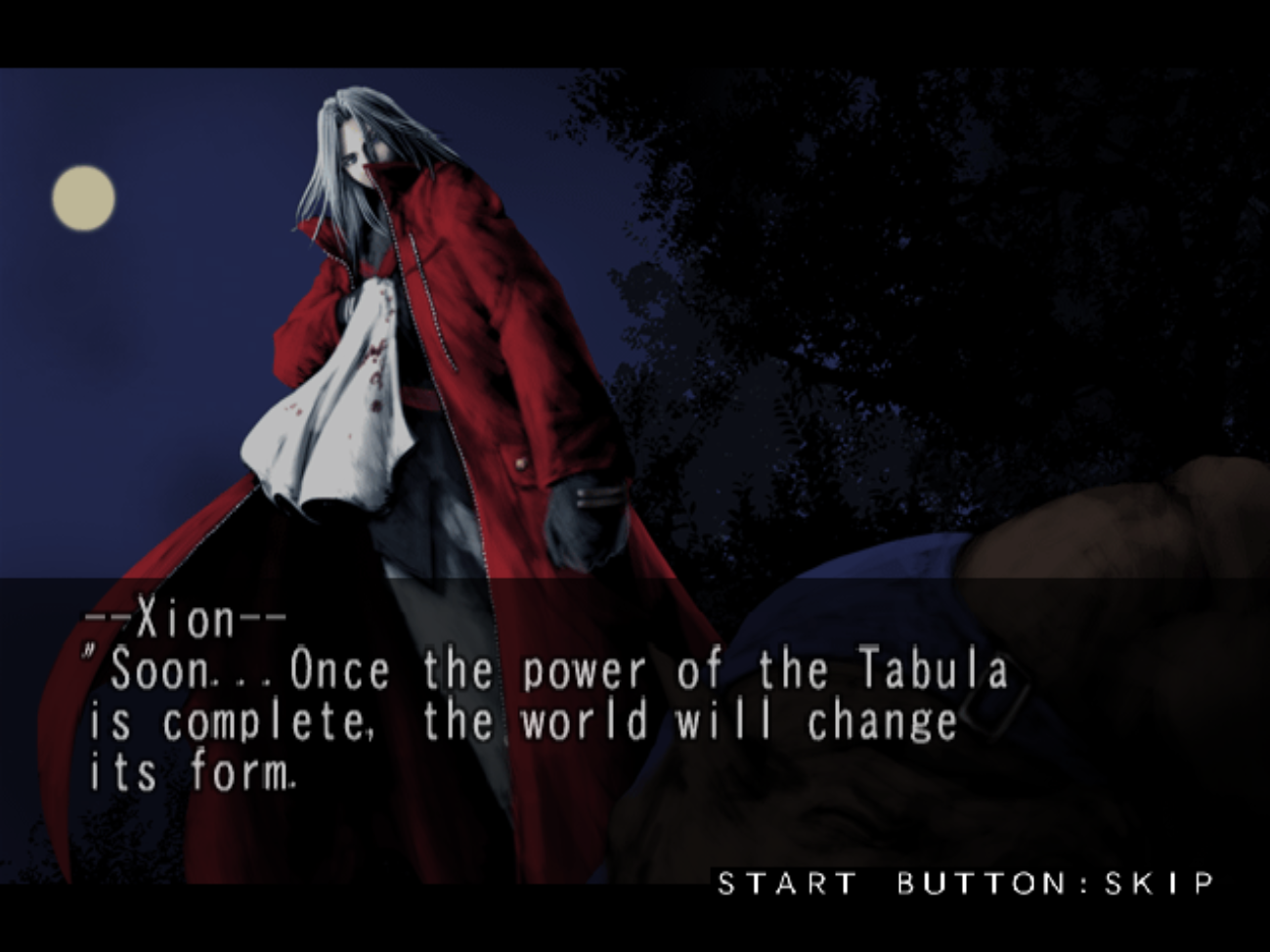
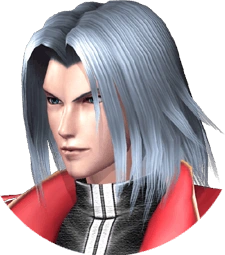
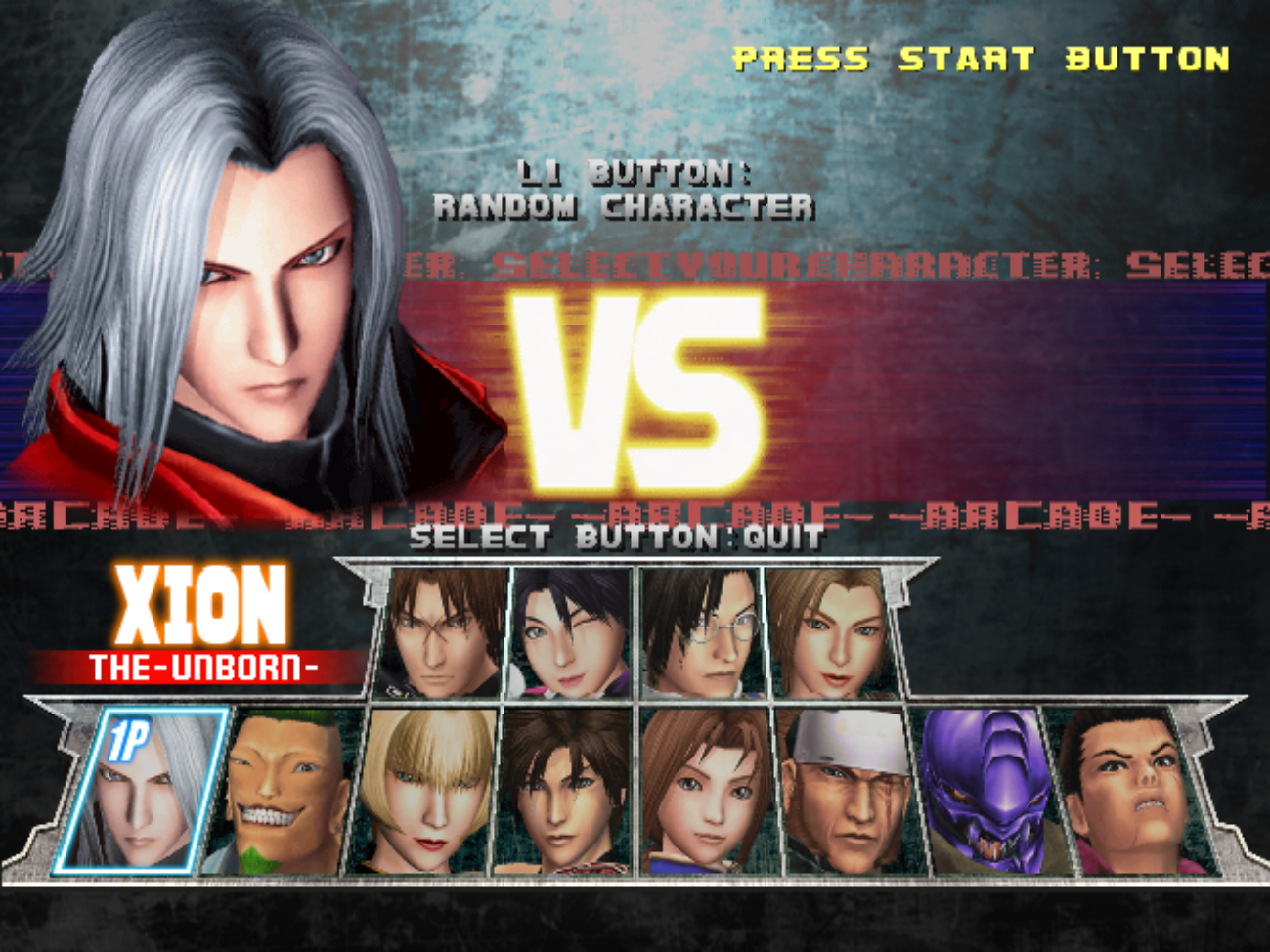
Xion the Unborn
BR3’s main antagonist and the only new character you’ll begin the game with. An “Unborn”, for those curious, is an insect-esque metallic creature that makes one wonder if Eighting were running low on animal ideas. Meant to be a proper rival to Yugo, Xion has been possessed by a demonic entity called the Unborn. It wants him to kill zoanthropes and seek out an artifact that’ll unleash it upon the world. After BR3, when his possession has been beaten out of him, his possession comes and goes. In his ‘normal’ state, he’s just neutral and generally broody.
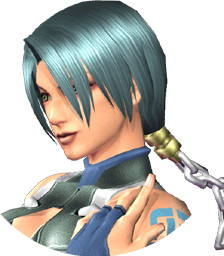
Uranus the Chimera
The secret boss of both BR3 and Primal Fury, Uranus is a Tylon experiment that was created alongside Uriko. Uranus doesn’t really have a story in either of her two appearances. She’s basically a playable version of Uriko from the original game, with even more overwhelming moves. According to the developers, she’s meant to be a character for people not good at fighting games who just want to mash out their frustrations. Because of this, her offense is crazy enough even by series standards that she’s banned in competitive settings.
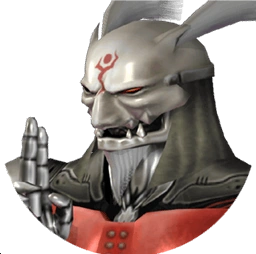
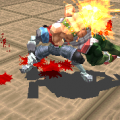
Kohryu the Iron Mole
After ending up melting in the original Bloody Roar, a manufacturing company scooped him up and put his remains into a robot. He can also fire a rocket arm at his opponent, making him one of two characters in the series to have a projectile attack. In Bloody Roar 4, he wants to seek out and kill the “new” Bakuryu, which is about as involved in the plot as he gets.
There’s been an assortment of new changes, almost all of them much more obvious once you start using them in a fight. Every character now has a second Beast Drive with some even getting a third, although you’ll have to pull off the full motion to be able to make use of them. Even if your Beast Drive doesn’t land, however, just performing the move will instantly restore all your recoverable health. While this does help the fighter who’s losing the round, it’s also an often risk-free mechanic that’s a little too easy to make use of. Beast Drives now also have the same motion across every character, with makes pulling out the full damage version in the heat of a fight a little easier.
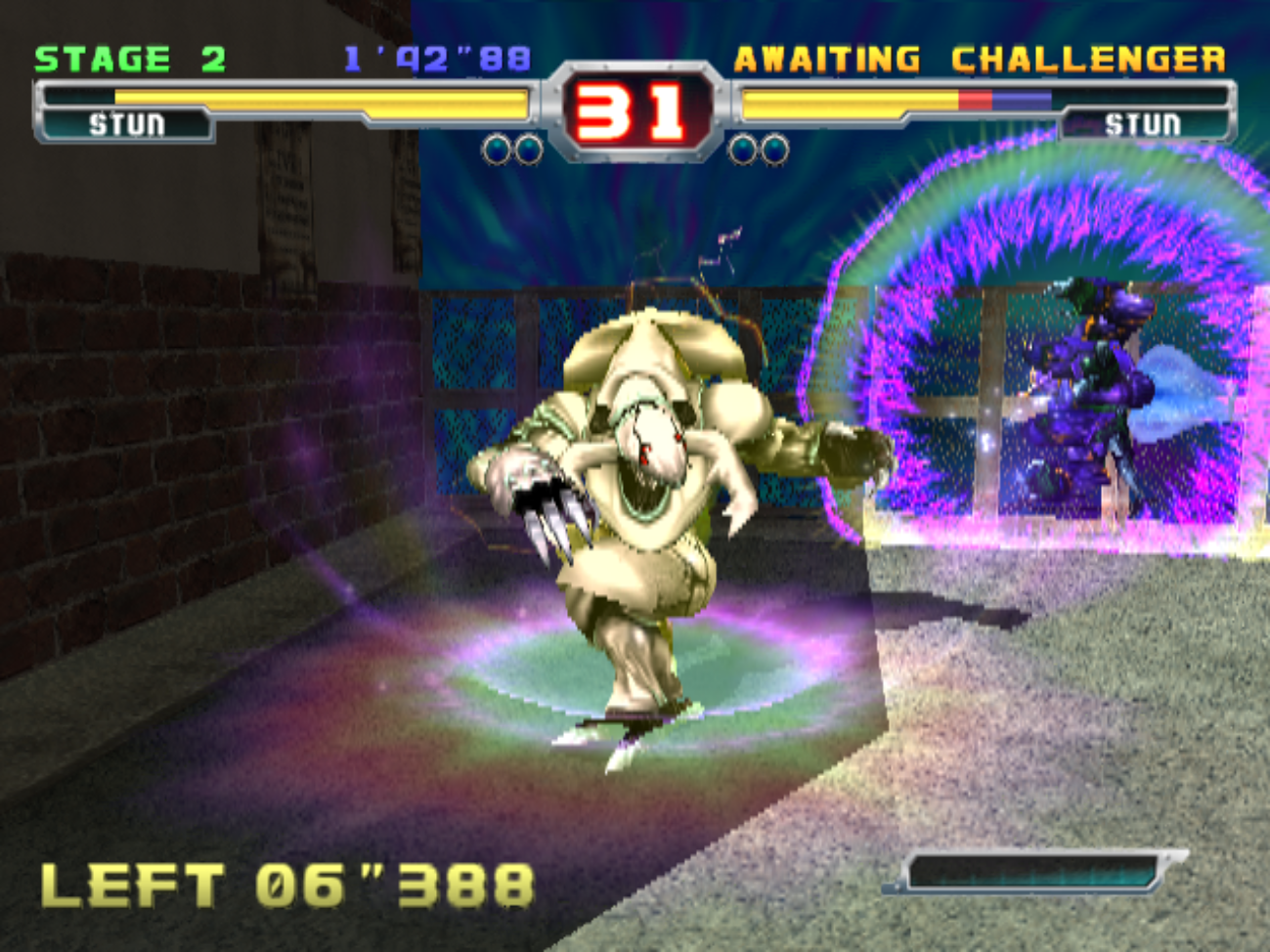
The new Hyper Beast mode gives every fighter a third level of power, usable whenever a character’s beast gauge is full. On top of a further boost to attack power and defense, this mode also makes your moves come out a lot faster. On top of that, it allows for moves to be cancelled into other moves where that wouldn’t work before, giving you a huge boost your combo potential all around. You can also perform unlimited Beast Drives while it’s active, forcing your opponent’s defense to be on point. The tradeoff is you only get 12 seconds worth of Hyper Beast per usage, and once it’s gone, you won’t be able to transform for the rest of the match. That’s not something you ever really want, so it’s a mechanic best used only if you think it’ll help you win.
The guard escape has been reworked entirely, and now requires you to press forward and guard just before an attack connects with you. If you have the timing right, your character will duck, leap, or lean as necessary, which certainly looks pretty cool when it works for you. Each successful input will avoid any one hit except for throws, regardless of the attack’s height, strength, or even your facing. While the timing is pretty strict, the main benefit is that it recovers near instantly, allowing for punishes you wouldn’t normally be able to do. Each successful evade also earns you a little bit of beast gauge, letting you reach your transformation just a little faster.
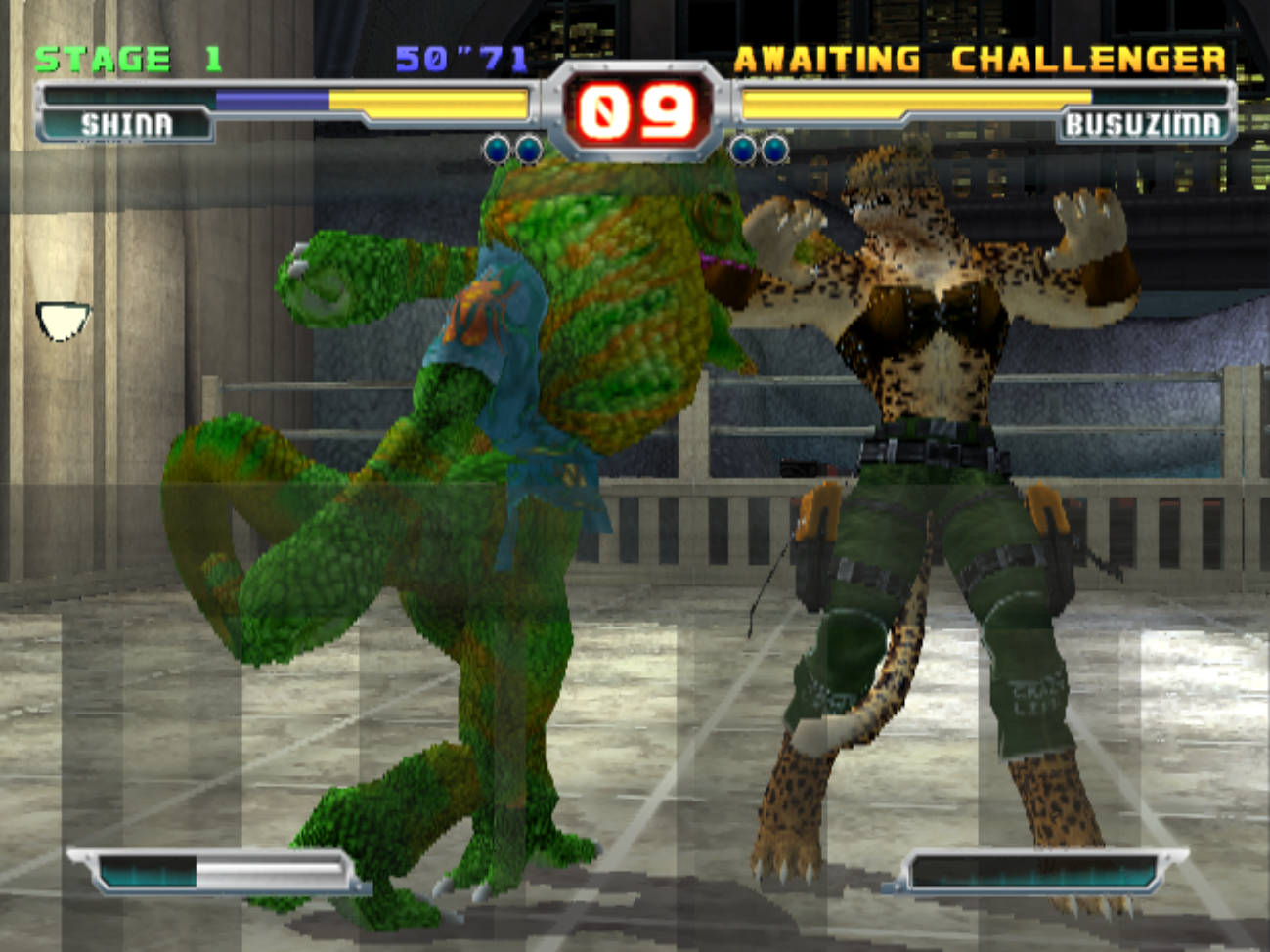
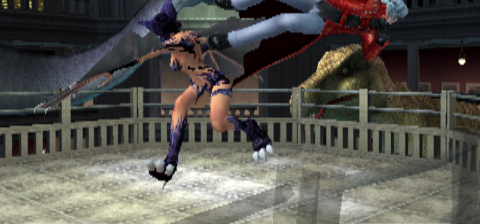
On offense, the biggest new change is the ability to perform to leap after an opponent, done by pressing up after performing a launching attack in beast form. For the first time by default, you’re also able to sidestep freely, useful for keeping your back away from the wall. Stages have been more distinct, and the game loses the ringouts in favor of making the stages a little more distinct. One stage set in a dinosaur museum starts in a half-octagon, where knocking a fighter through the walls will have the fight continue on the floor below. Another stage is set in a narrow sewer corridor, where a pair of side barriers make things especially tight until a few strong hits shatter them and open things up.
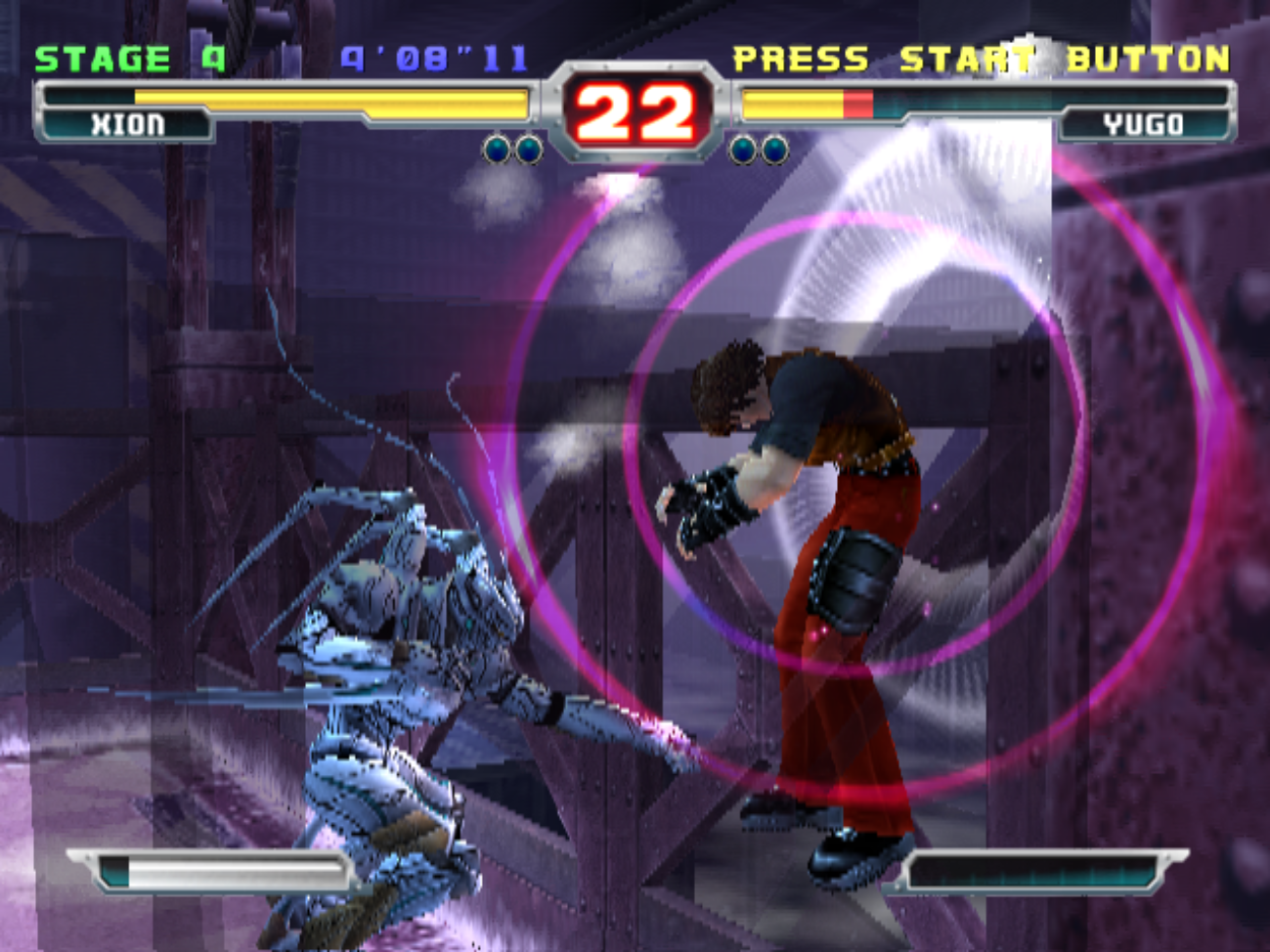
The hardware running the arcade version has been upgraded to Namco’s PS2-based System 246. The difference is certainly obvious, with the game making an effort to keep its higher poly characters closer to the camera. The new stages also stand out far more, like the museum stage where animatronic dinosaurs move and roar in the background, or the freezer stage where you can see the characters’ icy breath. While there’s only one soundtrack this time around, this time it makes an effort to mix the electronic and metal, making for a somewhat more varied soundtrack.
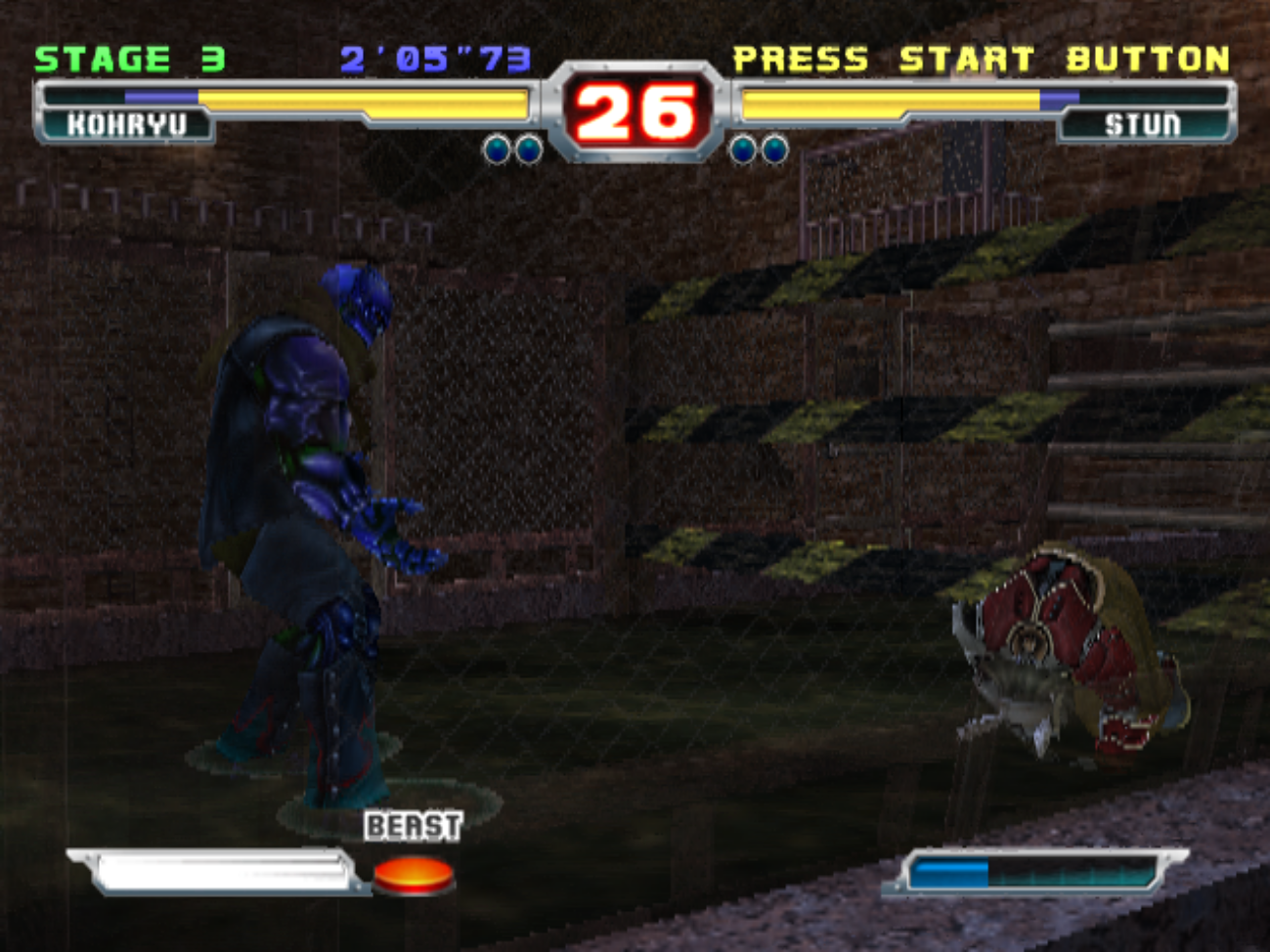
The entire game also feels like it plays a little faster than previous entries, something which helps focus this entry focus even more on what it’s good at – fast offense and constant shifts in momentum. None of the new changes radically change the game, but almost all of them make for a smoother experience. That said, as a sequel it’s a little light on new content, with only one new character that could be called truly new. While Primal Fury resolves that and some of this game’s rougher parts, this game still has enough of its own unique feel that it’s not completely made redundant.
The PlayStation 2 version is still almost imperceptible from the arcade release, despite the leap in hardware. The story mode is gone, replaced with some brief story scenes that start and end each character’s arcade mode.