
- Metroid
- Metroid II: Return of Samus
- Super Metroid
- Metroid Fusion
- Metroid: Zero Mission
- Metroid: Other M
- Metroid: Samus Returns (3DS)
- AM2R: Another Metroid 2 Remake
- Metroid Prime
- Metroid Prime 2: Echoes
- Metroid Prime 3: Corruption
- Metroid Prime Hunters
- Metroid Prime: Federation Force
- Metroid Dread
- Metroid Prime 4: Beyond
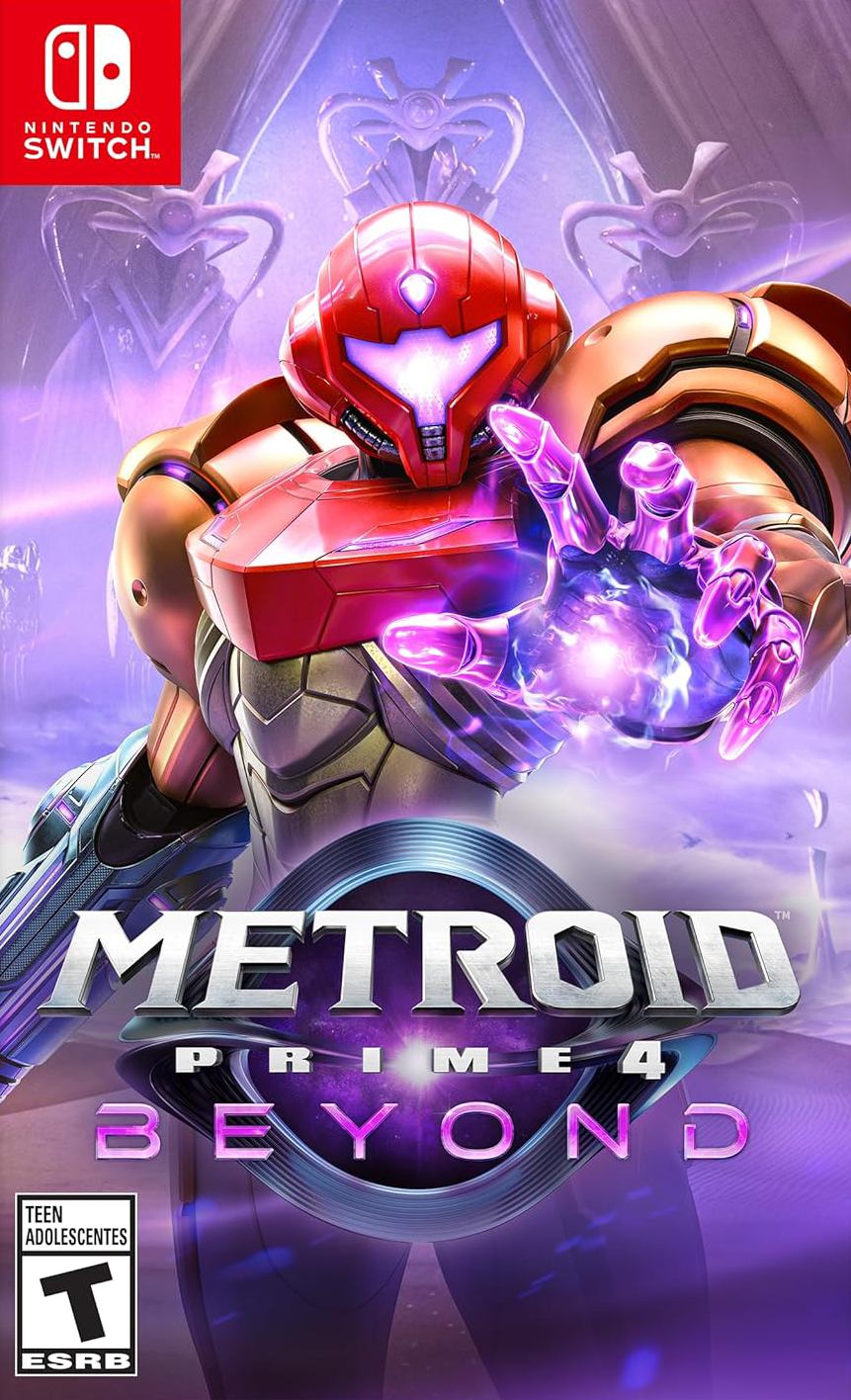
American Switch Cover
Metroid Prime 3 was released in 2007, in the early days of the Wii. After then, the series went through some rocky developments, including the poorly received Other M, and two portable spinoffs, Prime Hunters and Federation Force, neither of which are traditional Metroid titles. After an alright remake of Metroid II for the 3DS, the series was salvaged with 2021’s Metroid Dread, bringing back 2.5D action to the main storyline. But what of Metroid Prime 4? It began development in 2017 with Bandai Namco, before being cancelled roughly a year later and development moved back to Retro Studios. After seven years, it finally saw release in 2025, for both the Switch and Switch 2. Understanding the long development timeline illuminates how Metroid Prime 4 turned out the way it did.
The game begins with Samus and the Galactic Federation fending off a base. During the attack, Samus and a handful of the squad members are transported to the planet Viewros, where they uncover the secrets of the Lamorn civilization and gather the five Teleporter Keys that will help them find their way back home. It’s during this adventure that Samus will once again encounter Sylux, a rival bounty hunter who first appeared in Metroid Prime Hunters and was last seen at the end of Federation Force.
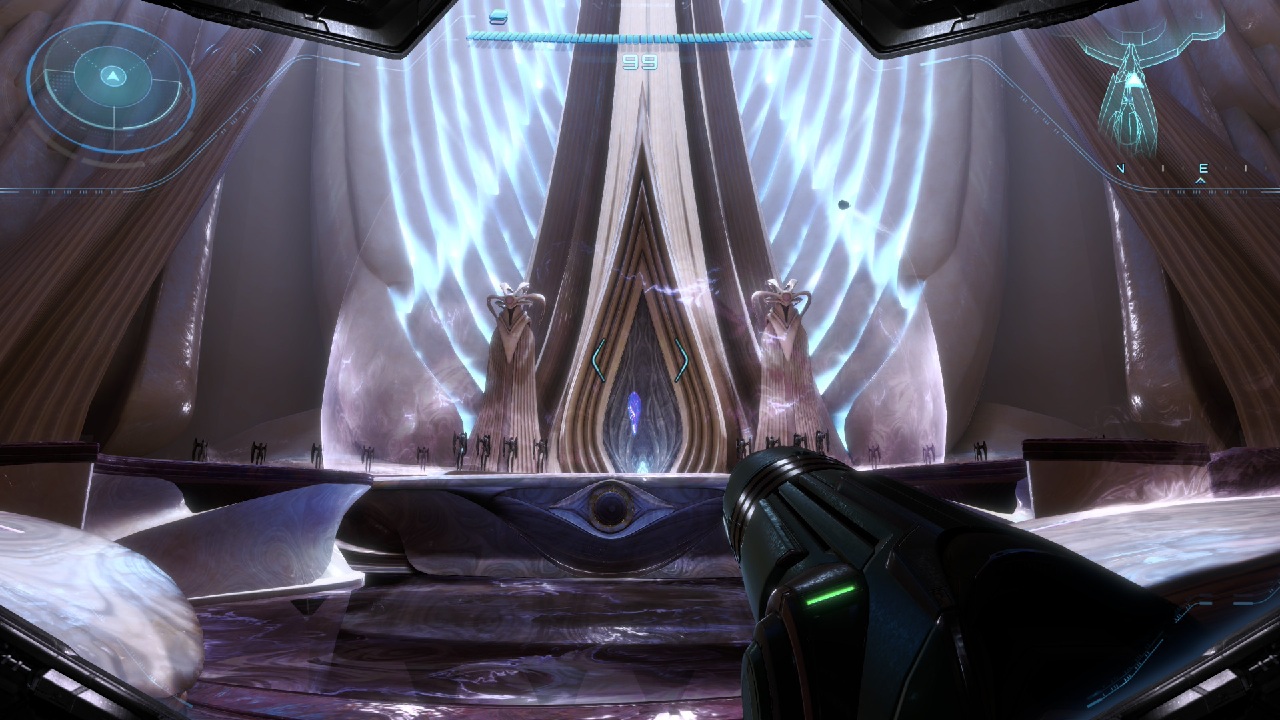
On the surface level, Metroid Prime 4 feels much like it always has. In addition to the dual-stick control scheme from Metroid Prime Remastered, it also uses gyro aiming and, on the Switch 2, supports mouse aiming. The Switch 2 version also optional supports 120 FPS (at the expense of 4K resolution) for slightly snappier response, but it feels just as smooth as it always has.
The main gimmick of Prime 4 are the psychic abilities – in practice, this lets you move stones along paths to unlock doors, or guide homing shots to reach faraway switches. But despite the concept, the game doesn’t really do much with these outside of a few simple puzzles. Otherwise, most of the items are the same as before, just with the word “psychic” in front of them. You’ll also find three types of elemental beams – fire, ice, and thunder, each fueled by separate Beam ammo type, as well as a few gun specific upgrades.
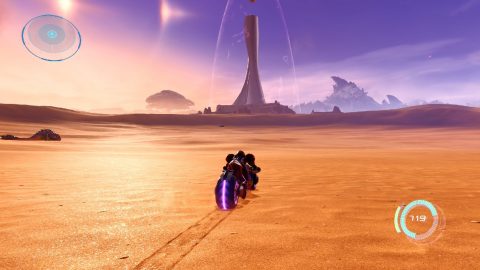
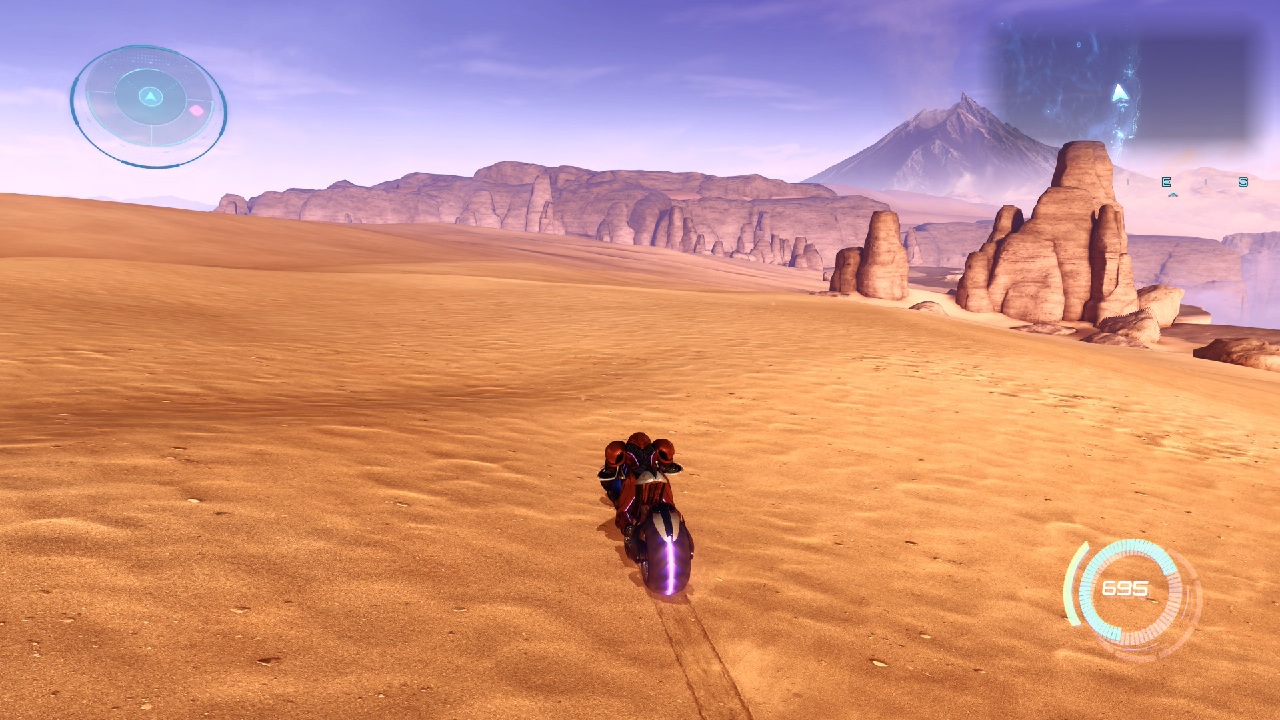
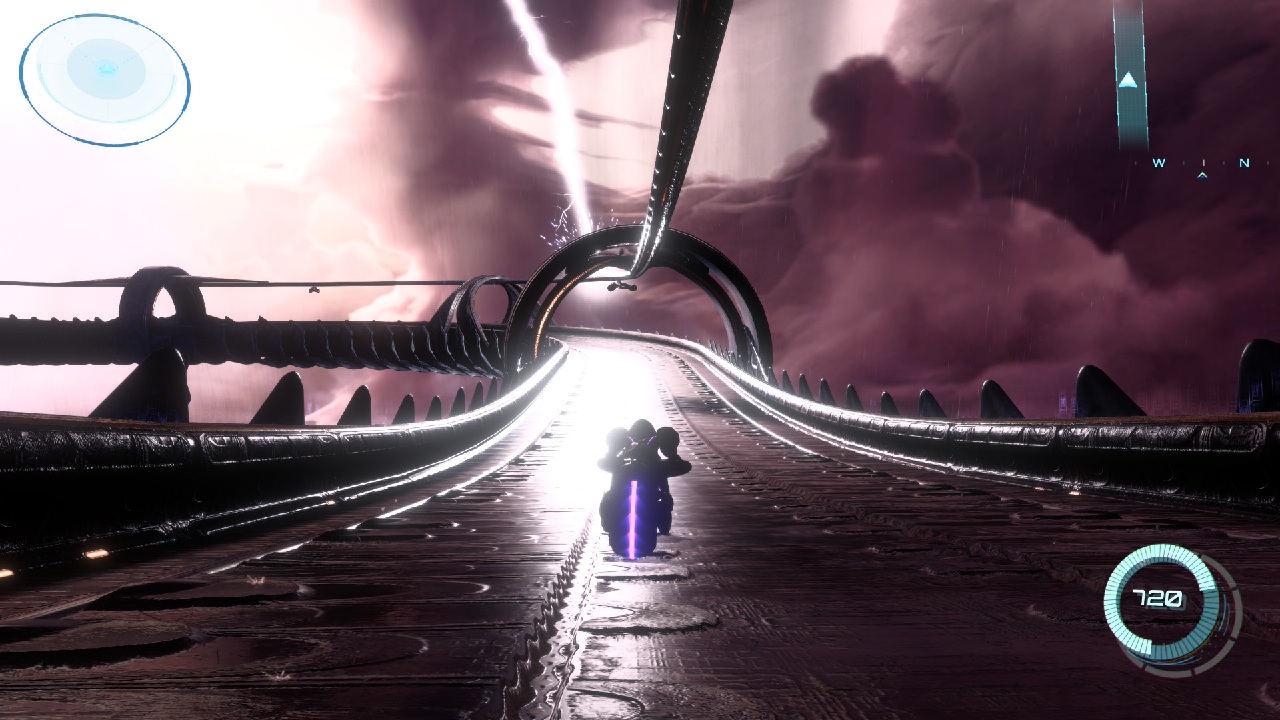
At first, it barely feels like Prime 4 has missed any beats, but its structure is wildly different from the previous Prime games, or even any other regular Metroid entries. The game has five main areas: Fury Green, a lush jungle next to an enormous tree; Volt Forge, a series of towers next to a perpetual lightning storm that functions as a factory; Flare Pool, a base built inside of a volcano; Ice Belt, a laboratory deep in the tundra; and the Great Mines, a series of caves that go deep underground. Rather than being interconnected with each other, they’re all spread out across Viewros and separated by the Sol Valley desert, which acts as a central hub. Sol Valley itself is enormous and is practically impossible to navigate on foot. Instead, Samus can call upon Vi-O-La, a purple motorcycle that allows you to easily zoom across the expansive sand dunes. In practice, the structure is more like a Zelda game, with a central overworld and discrete dungeons.
In most of the areas, you’ll come across some stranded Federation soldiers: Myles MacKenzie, a nerdy engineer; Reger Tokabi, a tough guy sniper; Ezra Duke and Nora Armstong, a stereotypical gruff military guy paired with a Samus fangirl; and VUE-995, a hulking combat robot. They’ll guide you through each section, sometimes just communicating over the radio and other times fighting alongside you. While they can take damage and become disabled, you can easily heal them, so you don’t need to worry too much. The stages themselves are shockingly linear, with only occasional diversions to find hidden items. The linearity would be more forgivable if the puzzles were more interesting, but they’re so simple they barely register as puzzles.
Once you’ve beaten the boss, then your buddy (or buddies) return to the base in Fury Green, which you’ll need to visit regularly. Generally, Metroid generally works better when it’s just Samus exploring on her own. These side characters feel pretty intrusive, but at the same time, they have their moments – for example, Armstrong squees with delight when she witnesses Samus turn into a Morph Ball, and VUE-995 helps Samus across a chasm by picking her up and chucking her like a football.
Once you get access to Vi-O-La, it seems like you can explore the desert however you wish. But in reality you can’t, and there’s still a set order to beat the areas. In most cases, you’ll also need to backtrack to a previously completed area to find some piece of equipment, bring it back to base, and then equip it before moving on to a new section. You can drive anywhere around Sol Valley, but there’s really not much to see or do. Compared to other open world games, it’s not particularly large, since you can cross from one side to the other in just a few minutes, but most of it is just empty sand and rocks. There are a few shrines to find, at least, where you can find some item upgrades and other goodies, providing you have the right equipment.
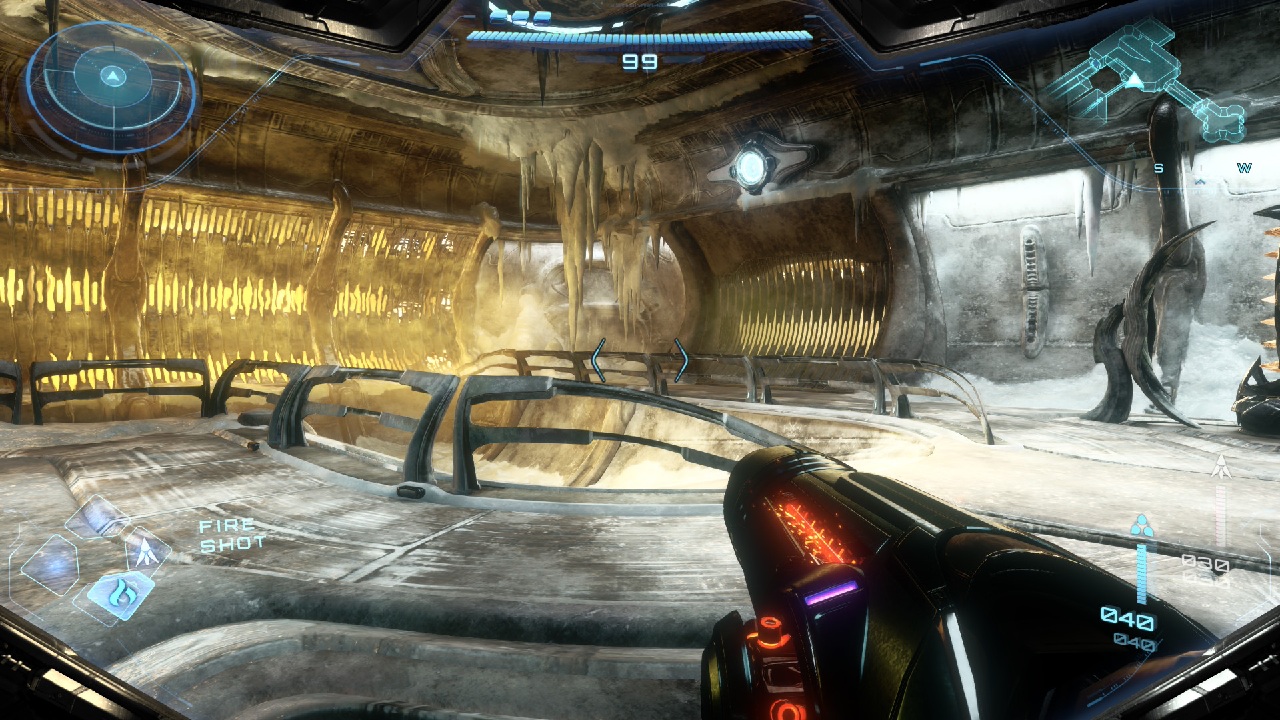
During most of the game, you’ll only briefly be traveling over Sol Valley, but it becomes a much bigger part of the journey once you near the endgame, where you’re given a few other quests. You’ll need to scavenge for some equipment in order to fix an enormous robot to help you into the central Chronos tower; this is a fairly straightforward task and it’s only annoying because you can visit the crash sites at any time but can’t actually do anything with them until you’re given the mission in the late game.
Of course, it’s a Metroid staple to revisit previous areas with new equipment, allowing you to reach new areas and grab items previously out of your reach. But due to the levels’ linearity, this ends up feeling tedious, even with the shortcuts you can open up. Part of the reasons why the original Metroid Prime games were so engrossing is because of its interconnectedness. After spending enough time running back and forth across the world, you began to recognize each room and every landmark. It felt real. Metroid Prime 4 does not feel real; because you only visit each area a few times, and only really need to re-explore them at the end game when you have all of the power-ups, they end up feeling like just any other sci-fi video game level.
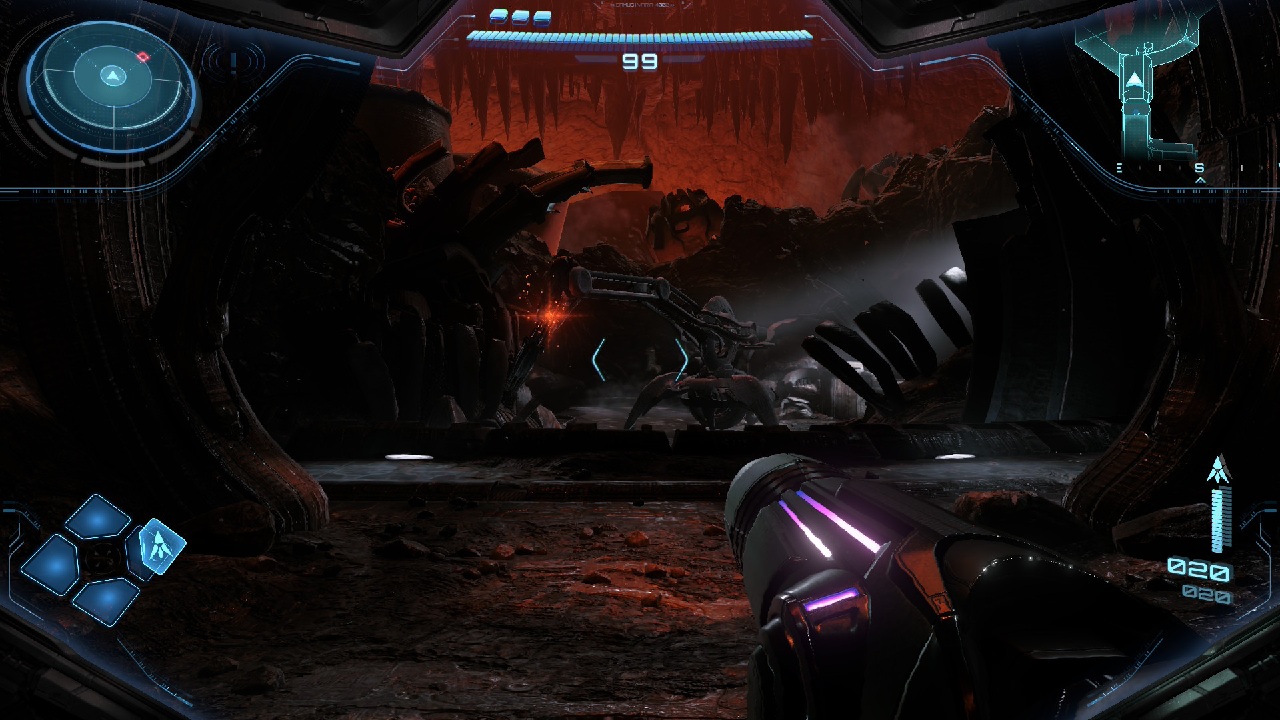
This is a critical area where Prime 4 fails at being a Metroid game, but on its own terms, isn’t necessarily debilitating. What’s far more annoying is the quest to grow the memory fruit in that enormous tree, which you need to do by ramming into and collecting the green crystals scattered all over the desert. You can smash and collect these at any point and can even cash them in for a few extra pieces of equipment. But you absolutely cannot proceed to the final area unless you’ve collected an absolutely absurd number – even if you’ve spent the entire game smashing everything you’ve come across, it likely still won’t be enough, requiring that you take some extra time to hunt for more crystals. By the time you reach 70% or so, you get a radar that helps out. And you can get huge bonuses in the shrines or by using Super Bombs on the large boulders you’ll occasionally find. But at the end of the day, it’s still a tedious fetch quest. What’s particularly baffling is that it resembles Triforce map quest from the end of The Legend of Zelda: Wind Waker, something which almost no one liked, to the point where the Wii U port had to dial it back. But here’s Nintendo, making the same mistake, more than twenty years later.
Metroid Prime 3 already felt more linear and guided than the previous two games, so the fact that Prime 4 continued in that direction isn’t necessarily shocking, but that game came out eighteen years prior. In fact, Prime 4 feels like it was developed in a bubble, completely divorced from the influence of other game design trends. Its design is something out of the mid-2000s, when it seemed like every game wanted to have a large open world, regardless or whether it needed it, or whether it could populate it with anything interesting. It also ignores the fact that gamers were clamoring for more challenging games, without being told what to do by characters like the Galactic Federation folks. This all stands in stark contrast to Metroid Dread just a few years prior, which was conscious of where it stood in the great Metroidvania pantheon and did its best to carve out its own spot. This is definitely where you can feel the effect of Prime 4’s long development cycle.
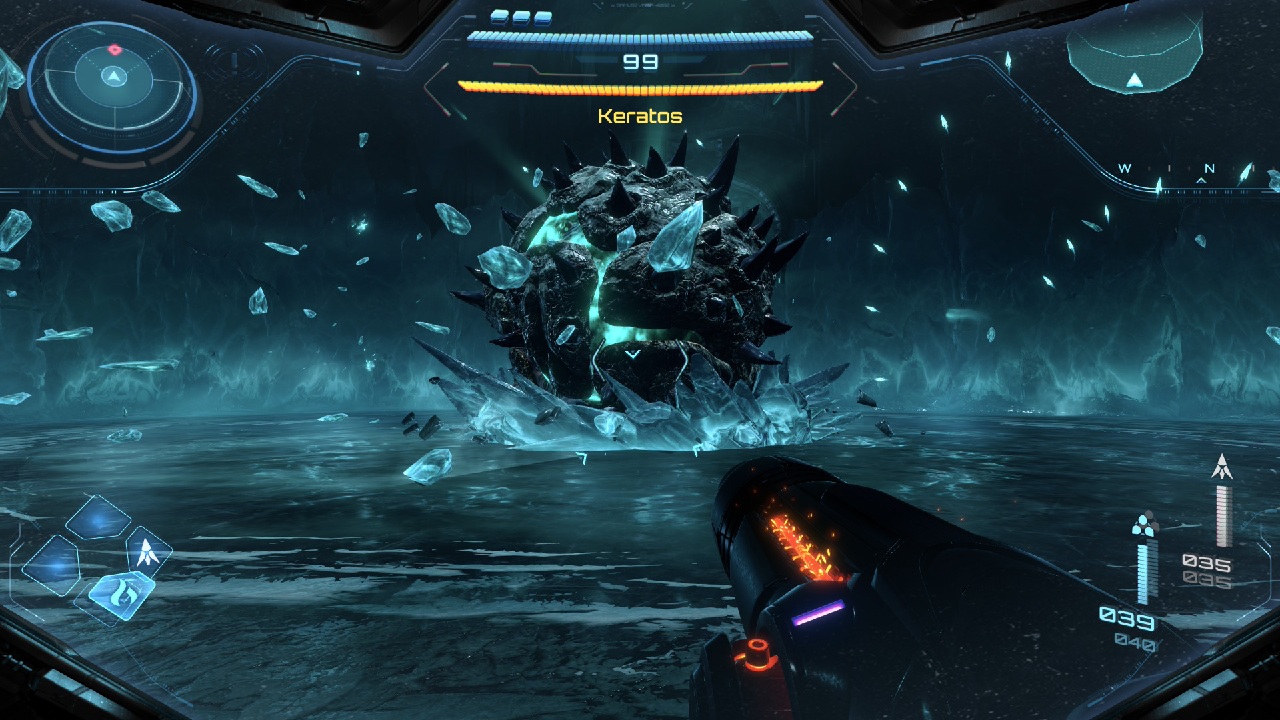
Other issues grow annoying the more you play it. Combat has never been the high point of the Prime games, but most of the enemies consist of variations on the same Griever enemies over and over. Metroid Prime 3 introduced free aim, allowing you to adjust your firing trajectory apart from the lock-on; here it’s necessary to use in a few boss battles, since the lock-on will target an invincible part of the enemy and you need to shoot around it. The problem is that the enemies move so quickly and take so many hits that it’s hard to effectively hit them when using the standard dual analog sticks, almost requiring that you switch to motion or mouse controls. It’s also easier to just avoid using the lock-on at all in these cases, but dodging is still tied to the lock-on, making an already complicated control scheme even clumsier. Also, it feels like there are many more useless scans which don’t provide any interesting info and just exist to waste your time or pad out the number of scannable items.
The main thing that makes Metroid Prime 4 worthwhile through all of its low points is that it looks and sounds utterly gorgeous. It may seem shallow, but presentation always mattered when creating the 3D world of the Prime games, and this is one area where it maintains and even exceeds the same quality it always has. Metroid Prime 3 was so long ago that it still originated in the SD era; Prime 4 is the first title created specifically for an HD console, and it pulls out all of the stops. Most of the area themes are familiar to the Prime games, but it’s that extra graphical sheen that makes them standout – the lush flora of Fury Green, the lightning strikes of Volt Forge, the feeling of raw electricity that runs through Ice Belt once you activate its generator, and the green goop contrasting with the red lava in Flare Pool. It also has some truly outstanding music, much of it provided by regular Metroid composer Kenji Yamamoto. The guitar-based Vi-O-La theme is a standout; while it’s annoyingly locked behind an amiibo, you can access a jukebox and play it when driving around the desert, which makes it far more exciting.
The best that can be said about Metroid Prime 4 is that there are many fascinating, beautiful places to explore, and it still feels great to navigate the environments. But some truly bad design decisions drag it down, which only become evident the longer you play it – some of them can be chalked up to failed experimentation (the motorcycle and open desert), but others just don’t understand the appeal of Metroid (the linear stages) or are just fundamentally rotten (the crystal collecting). There’s a quote misattributed to Shigeru Miyamoto that states “a delayed game is eventually good, a rushed game is bad forever”, but Metroid Prime 4 is built on so many flawed ideas that it just would never work without being redesigned from the ground up.