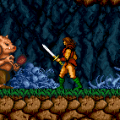


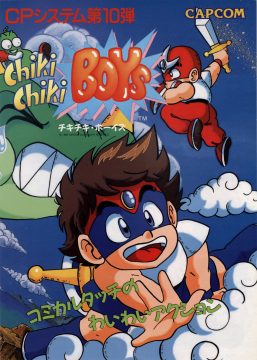

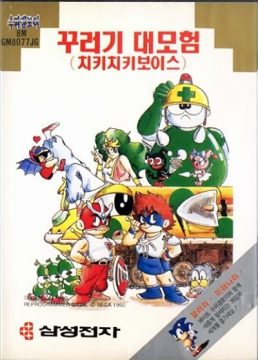
When it comes to Capcom arcade games, most people think of things like Street Fighter, Darkstalkers, and Final Fight. While they’d establish and lean harder into these recognizable franchises and fighting games in general throughout the 90s, their earlier arcade days had them pushing quite a few side-scrolling action platformers. Ghosts ‘N Goblins and Strider were the biggest winners of this foray, but games like Black Tiger, Trojan, and Tiger Road all offered distinct approaches to the genre. Chiki Chiki Boys (or Mega Twins outside of Japan) came in at the tail end of this sequence of games in 1990 (alongside Magic Sword), yet it’s arguably the least complex and most friendly of them all. Instead of having to deal with one-hit kills, high-stakes platforming, or various takes on darker forms of fantasy, Chiki Chiki Boys offers a lighthearted, charming romp with co-op that’s simple to grasp, but engaging enough to make a playthrough worthwhile.
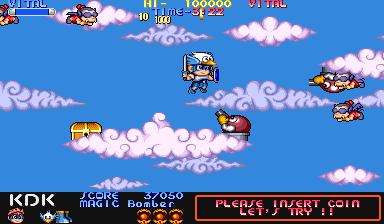
The game takes place in the land of Alurea, which was peaceful for so long that it wasn’t equipped to defend itself against the clown Riepohtmahn and the monster hordes he commands. The twin sons of the Alrurean royal family are evacuated while the rest of the kingdom falls. After 15 years, the twins are old and trained enough to begin their journey to take the kingdom back. Along the way, they need to find the two legendary stones called “Dragon Blue Eyes” in order to restore the kingdom to its former glory. Despite the simple plot, there are actually two possible endings contingent on whether or not you’re able to find a hidden key required for the second Dragon Blue Eye.
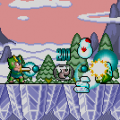
Chiki Chiki Boys can be most closely compared to Westone’s Wonder Boy in Monster Land, though it’s simpler in some ways despite being newer. With one or both twins, you proceed through linear levels with nothing but a sword, shield and a handful of magic spells to your name. Enemies burst into coins as you defeat them and you’re incentivized to examine every part of each level in order to find loads of hidden treasure chests, some of which may contain valuable upgrades. In the Japanese version, you also need to find a pair of boots to access your maximum jump height, but every other version makes that the default jump height instead. Your sword strikes are quick and dispatch most enemies easily, but for bosses, spells are much more effective, so boss fights can take far too long without them. Your magic options include columns of fire, a magic bomb, magic balls that ricochet, and a typhoon that targets anything above you. If you run out of magic, you can still do a decently powerful attack once a bar fills up, so you’re not completely left out to dry.
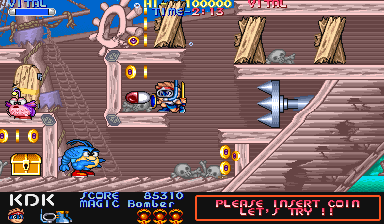
Despite the simplicity of combat, Chiki Chiki Boys does have subtle elements to make things interesting for those who desire mastery. The twins have different attributes, with the older blue twin having stronger sword attacks and the younger red twin getting five casts of magic compared to his brother’s three. After enough sword swings, you’ll do a stronger slash with enormous range, so once you have an idea of what the timing is, you can space yourself accordingly to hit enemies from safety. Coin drops are randomized to some extent and it’s even possible to get random 2x multipliers. Both of these factors are actually determined by the name the player(s) enter at the start, so those doing optimal runs will want to find the best possible names.
The first three levels can be done in any order and consist of a trek through a forest and lava cave, a battle in the skies that puts you up against a two-headed dragon, and a journey through the ocean that leads into a sunken ship and plenty of dangerous aquatic life. The difficulty of each level remains the same regardless of order, but the deities you rescue at the end increase your pool of findable magic spells, so there’s a bit of strategy in choosing a play order that’ll grant you access to the spell you want ASAP. Level 4 is effectively the rest of the game, taking place across five full-fledged stages with their own batches of bosses. Once you reach level 4, you’ll start finding bikini-clad women that are tied up and rescuing them gets you points and hints that detail upcoming challenges or how to get the good ending. For the English release, the women were removed entirely, which also made Capcom change it so the final boss just drops the second Dragon Blue Eyes.
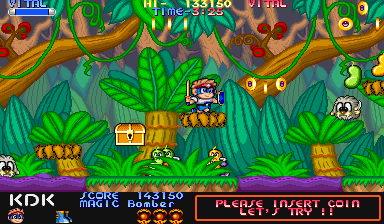
Levels in this game are very straightforward, but manage to throw in a good amount of variety in both mechanical and visual ways. Some levels provide ropes you can attach to, whereas others will put the boys’ ability to climb on walls to good use. A couple of vertically oriented auto-scrolling sections force you to do some platforming and frequent miniboss encounters do a good job of making you prove your mastery of their attack patterns. Some levels give you a cute bird hat for flying around freely and water levels offer a similar amount of freedom. Enemies rarely have more than one attack, but the game offers a nice variety ranging from walking edamame to fuzzballs that can dig underground.
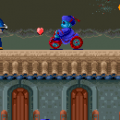
The twins’ constant determination shines through their facial expressions, which makes the way they freak out when they get hit or pull out a white flag when they lose all the more charming. Every level is extremely colorful and backed by a soundtrack that loves to sound triumphant, even when you’re in the depths of the trap-filled monster lair, yet they also leave room for ominous imagery to catch you off-guard. One level has massive monster silhouettes flash in the background and the arena where you fight a skeleton warrior is full of unidentified bones. The visuals do an excellent job of endearing you to Alurea and its characters in general even with the game’s short runtime, all but guaranteeing it leaves a lasting impression.
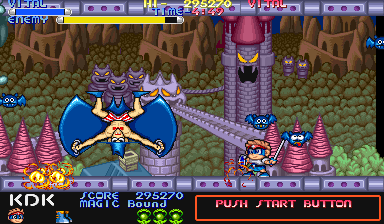
The arcade version of Chiki Chiki Boys didn’t receive any direct ports until the Playstation 2 via Capcom Classics Collection Volume 2. This is a straightforward port, but it does offer options like high score tracking, save states, and unlockable art, tips, and music for meeting basic goals. There was also a port to the PSP via Capcom Classics Collection Remixed, which offers the same features and unlockables. The most recent port can be found in Capcom Arcade Stadium for PlayStation 4, Xbox One, PC, and Nintendo Switch. This version is accurate while offering even more options like region swapping, online leaderboards, and challenge modes, making it a good and convenient option for anyone interested.
Genesis
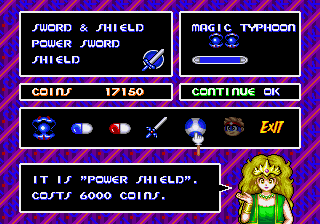
For many people, the Genesis/Mega Drive port of Chiki Chiki Boys (which curiously wasn’t called Mega Twins outside of Japan) is the most recognizable version of the game. Developed by Thinking Rabbit, this port sacrifices co-op play and downgrades the presentation in various ways (eg. less background details, inserted black screen transitions), but makes beneficial changes while retaining the speed and tight controls from the arcade version. One such example relates to the hints in level 4, which are now dispensed by fairies in all regions. Most notably, the coins you collect can now be used to purchase healing items, magic refills, three tiers of weapon and health upgrades, and additional continues between levels. This system makes coins an essential part of the game even for players who don’t care about score since upgrades are no longer found in stages. Having a dynamic that encourages you to be extra thorough while also knowing when to save and when to spend adds just the right amount of complexity without ruining the original’s breezy formula. If you have no need for co-op, there’s an argument to be made for this being the best version.
The PC Engine CD port was developed by Flight Plan, remains exclusive to Japan, and sticks closer to the arcade original than the Genesis port did. The backgrounds retain more detail (though parallax scrolling is gone) and most of the music is enhanced with new versions thanks to the CD format. This version has co-op, but doesn’t have a shop system nor does it let players swap between twins. The biggest issue with this port is that it’s noticeably slower than the arcade and Genesis versions with frequent frame drops, which makes the game feel worse in unintended ways. It’s not a bad version and it’s worth checking out to hear the redone music, but with the arcade original easily available, there’s little incentive to go for this version otherwise.
The Amiga and Atari ST received a port of the game in 1991 courtesy of U.S. Gold and Twilight Games. These versions are virtually identical to each other and both attempt to follow in the footsteps of the arcade original, but fall short in several ways. While the visuals are pretty decent in terms of detail and size, the action feels greatly compromised with questionable hitboxes that make it hard to safely hit enemies. The music and sound effects are almost non-existent, which greatly harms the game’s overall presentation. These versions also have utterly bizarre box art featuring realistic takes on the twins, who are wearing overalls and wielding knives with a sinister look on their faces.
Three more ports were planned for the Amstrad CPC, Commodore 64, and ZX Spectrum and were to be handled by Tiertex, but all three ended up being canceled due to issues with publisher U.S. Gold. The Amstrad and ZX Spectrum versions looked to be well done considering the limitations of both computers, but the C64 version stood out as a particularly strong bet for its intention to retain co-op and that it was being worked on by Wayne Billingham and Mike Ager, both of whom had successfully ported Alien Storm to the computer. Incomplete versions of all three have been preserved and are playable; more information on the story of their preservation can be found via Games That Weren’t.
Despite being easily accessible today, Chiki Chiki Boys remains one of Capcom’s less appreciated games. It never received any sequels and its characters don’t even get the honor of an appearance in any of the company’s future games. In the book All About Street Fighter Zero 2, concept art of Ken’s stage shows the blue twin in the pool on the right side of the level, but they were replaced for the final release and denied a chance at a cameo! It’s well worth the short time it takes to play through, whether you’re flying solo or with someone else, and there’s a lot to like about it. It’s charming, approachable, and offers the tight, flashy, pattern recognition-heavy gameplay that Capcom has always been great at providing.
Links
https://tcrf.net/Mega_Twins_(Arcade)– Regional differences in the arcade version and more via The Cutting Room Floor
https://tasvideos.org/Forum/Topics/3605?Highlight=114404&CurrentPage=1&PageSize=25&Sort=CreateTimestamp – A forum topic on TASVideos, which includes discussion on how names affect the game in the Genesis version
https://www.gamesthatwerent.com/2021/08/mega-twins/ – Information on the C64, ZX Spectrum, and Amstrad CPC versions via Games That Weren’t
https://w.atwiki.jp/gcmatome/pages/6661.html – @Wiki page on the game with assorted information
Screenshot Comparisons
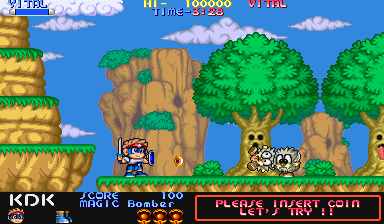
Arcade
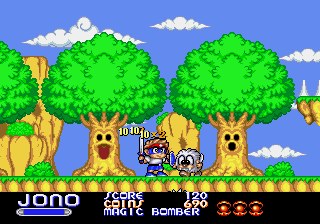
Genesis
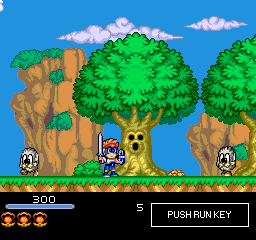
PC Engine CD
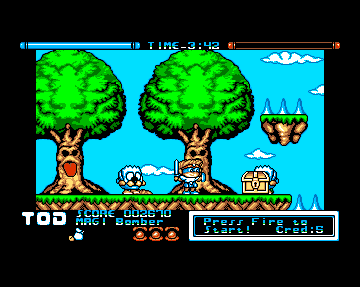
Amiga
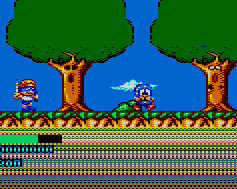
Amstrad CPC
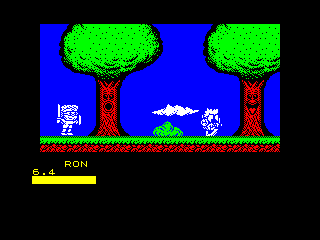
ZX Spectrum