
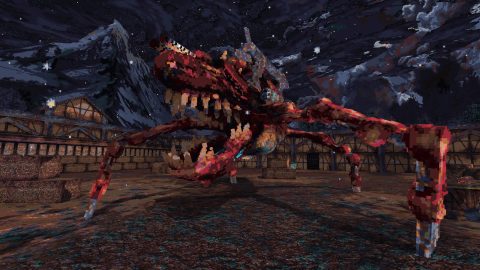

Cultic Chapter One was an already extremely impressive game. Telling the story of a detective who runs afoul of a mysterious cult, it was a step-by-step journey through a mountainous region that featured rather excellent level design, a killer soundtrack, and first person shooter gameplay that found its own chaotic, distinct rhythm of combat. There was a three year waiting period between chapters, and it turned out that the time was well spent- solo developer Jasozz Games somehow improved almost everything about the game with Chapter Two, and the result is an expansion pack that not only concludes the story, but feels like a full sequel in its own right.
One of the highlights of the first part was the ambitious level design. Levels were large and dense, filled with small quirks common to the genre like secrets hidden in grates, huge environments to compensate for the fact that you can move around quickly, and combat that merged with the enemy placement and soundtrack to deliver a sense of cinematic excitement without ever taking control from the player. Chapter Two picks up directly where the first one left off in terms of level complexity and challenge. The penultimate level of One was already a gigantic, prolonged push through a massive underground temple, so Chapter Two opens on the entire ruined city of Grandewel. The detective wakes up in the morgue from the police station you fought through in the Interlude chapter, and emerges to find the streets of Grandewel not just ruined, but completely overrun. The Cult of the Will has utterly destroyed everything the mountain community was, so you, as the Detective, set out to put an end to it once and for all, unsure of how you’re even alive.
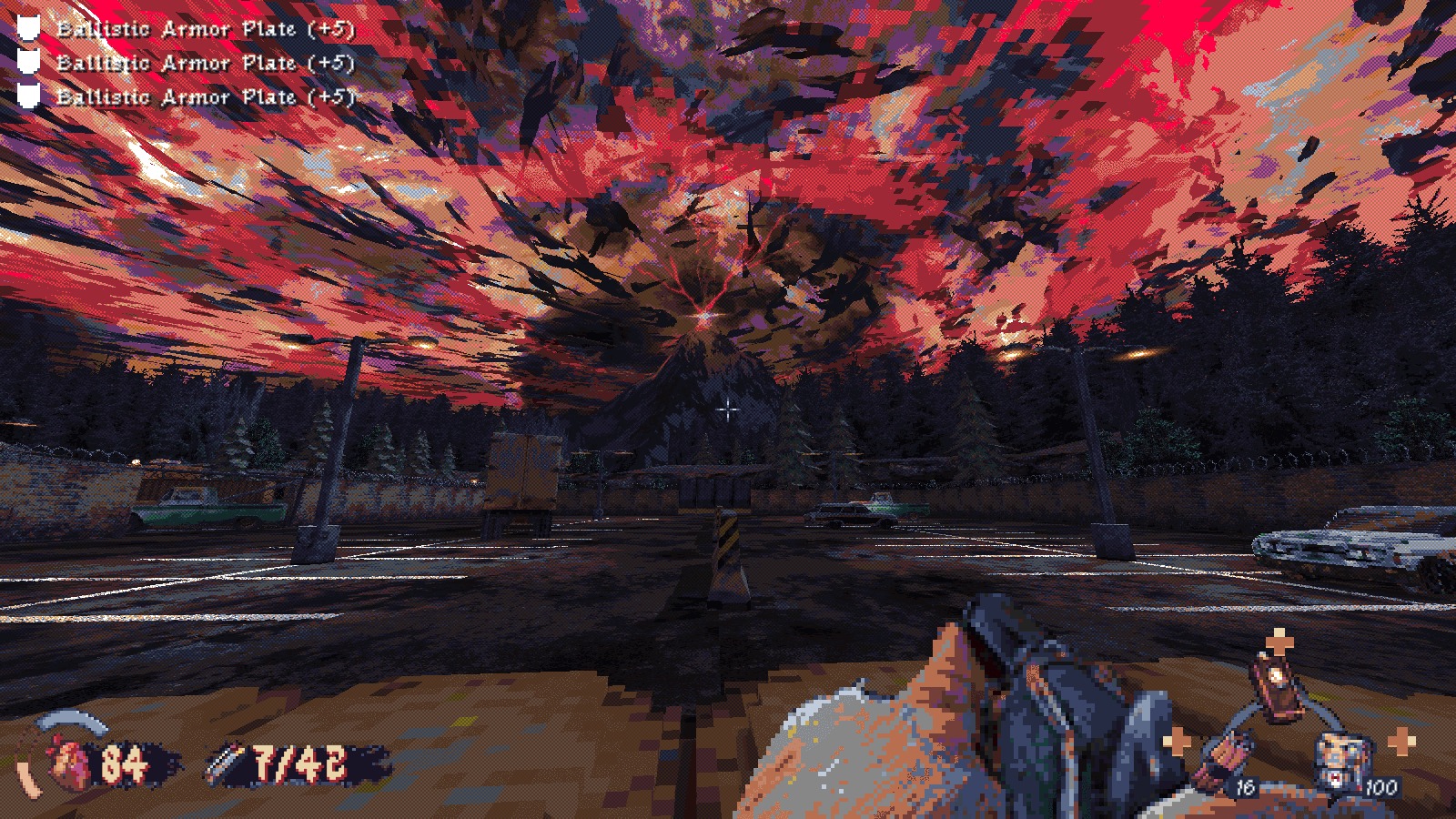
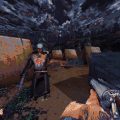
This first level sets the bar incredibly high for this expansion/ sequel. There’s an emphasis on verticality that only showed up in a few previous levels, since the cult has set up military checkpoints, sniper nests, and more. There are several directions you can go in, although you’re likely to run into a roadblock like a locked door or something since there is a critical path. This first level is long, taking about forty five minutes to get through, and it takes you through several smaller segments that feel distinct from one another. In just this first city level, you’ll go through several blocks of street, an apartment building, a parking garage, and more. This provides Chapter Two’s mission statement: give the players massive, convincing real world locations that veer between tones effortlessly.
That’s because within these distinct segments, the game shifts gears several times. Shooting in the streets is the classic combat rhythm of the first on a larger scale since the enemy count is upped significantly. But when you get into one of the apartment buildings, darkness washes over everything, and your lighter only provides so much light. You’ll run into one of the new enemy types in this darkness, quiet, spike armed zombies who are almost completely silent and are instead signaled by the game via their glowing white eyes. Even though you accumulate roughly half of the arsenal here, the sense of vulnerability and unease still shines brightly in these parts.
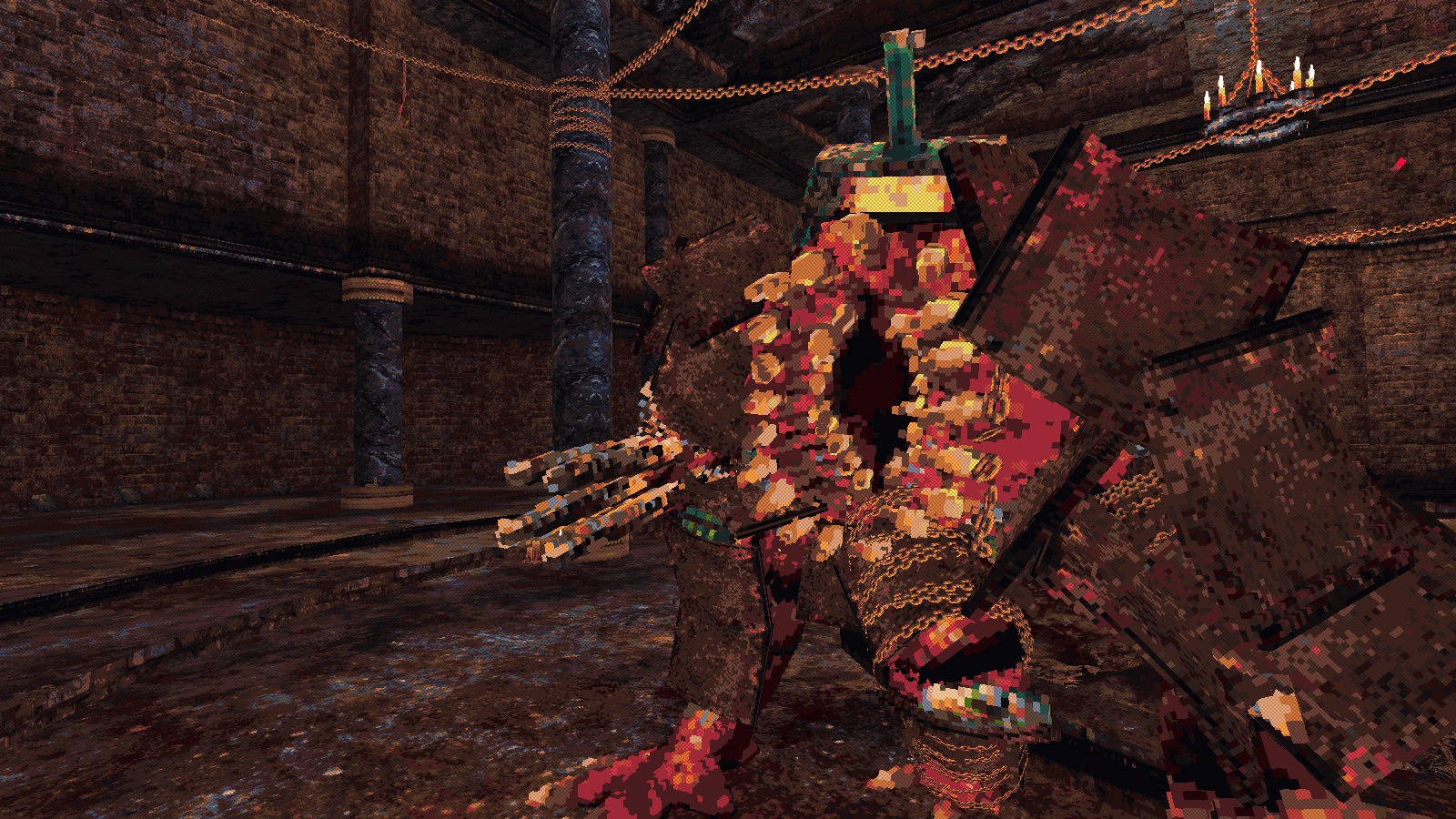
One of the best tricks the game pulls with this opening level is the deceptively simple storytelling. The game’s plot ultimately boils down to “destroy this cult,” but the game cleverly extrapolates on this with the lore documents scattered around levels. You learn more about what The Will is, and see firsthand the result of the cult’s violence, and learn that this is a massive conspiracy; you’ll find notes about property buyouts, mysterious shipments of explosives arriving in town, and more showing that the cult has been planning the eradication of this region for a long time. It feels deeply unnerving and insidious, especially since it’s implied that the community was caught off guard. The narrative has more than a few last minute surprises, too, ones that up the emotional stakes of the game’s simple story.
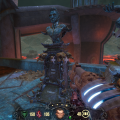
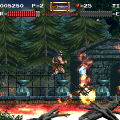
The step by step journey is consistently impressive, with several excellent levels, like a swamp that is a bloody, brutal crawl through tree huts, or a battle across a massive farm space that includes a side detour into a haunted house that’s relatively simple but also incredibly memorable for the tricks it pulls. The game arguably saves the best parts for near the end, though, with a triple threat of levels really showcasing just how good developer Jason Smith got at creating believable environments in a lofi setting. One of them is an amusement park, complete with things like a haunted house, a large pirate ship area, a food stand, and more. It’s entirely open ended what order you tackle the objectives in these areas, and then the level’s second half is a dungeon crawl through a massive castle. This is the largest level in the game, with close to 300 enemies, and it’s immediately followed up by a train level that’s best left unspoiled. Not only does it deliver on the spectacle you’d expect from a game that homages Blood, but it packs in one of the best surprises in any shooter, too. Following these two long, epic levels, is a haunted mansion that removes most of your weapons and serves as the climax to the game’s horror elements. There’s not a whole lot of combat, and instead it’s more about figuring out the puzzle of the game’s environment, finding the keys you need to open secret passages, and such. Just about every level is excellent, but these form a nearly perfect three level stretch.
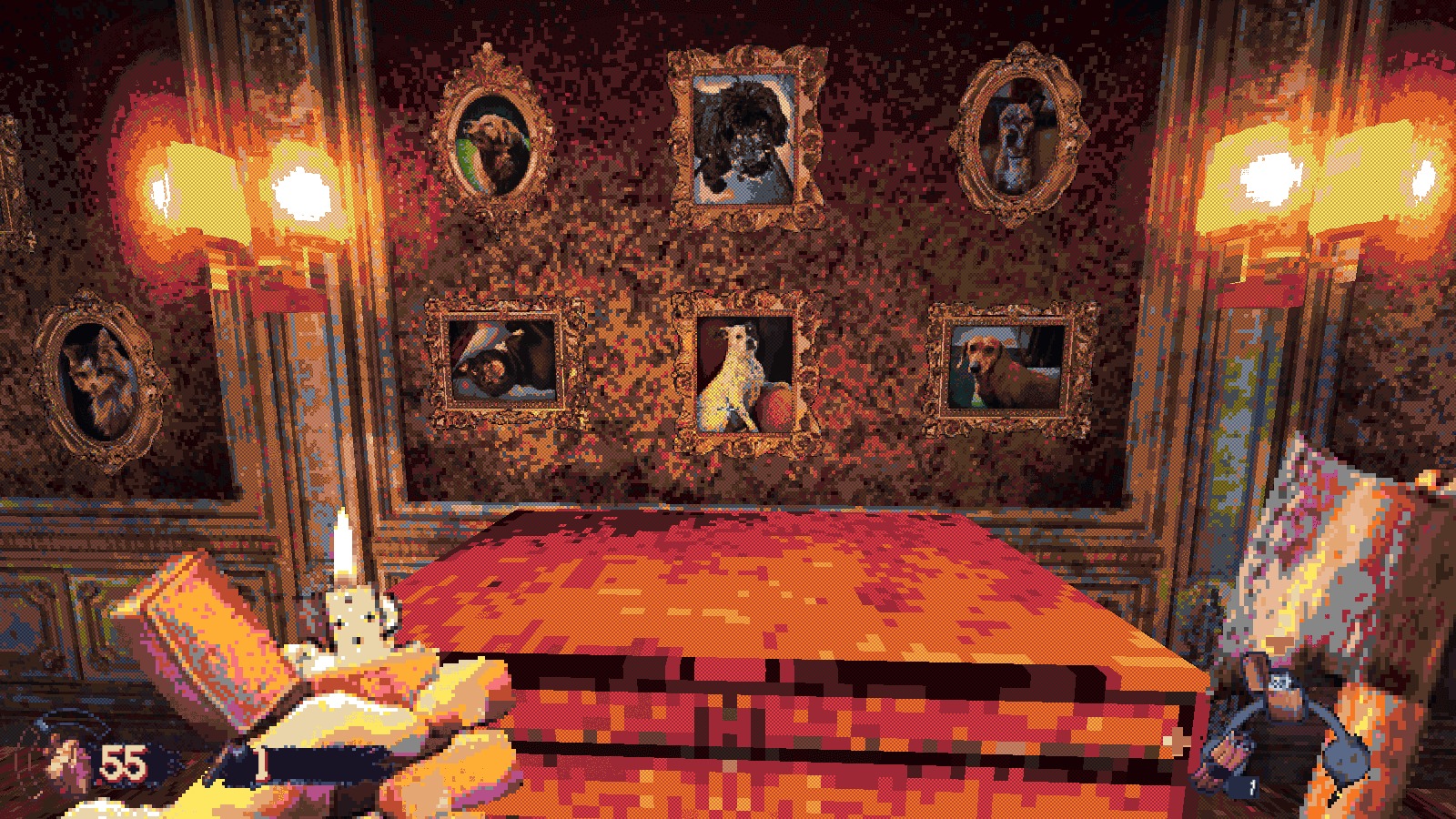
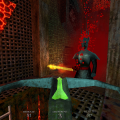
The game also expands the first chapter’s arsenal. The revolver and semi automatic shotgun from Interlude are both available as alternatives to the lever action rifle and double barrel, respectively, and you can get a bolt action rifle to complement the semi-automatic sniper. This lets players be a bit more free when it comes to their arsenal; and the game knows just how powerful these weapons are, because it pushes the limits of its own combat. In the very first level, it’s mere minutes before you’re fighting waves of enemies comparable to the ending of the first chapter with just a revolver, a double barrel, and some dynamite. It expects the player to be familiar with the combat, and even introduces some new enemies like a heavily armored automatic shotgunner to keep applying pressure. As always, there are small tricks that can be used to make short work of just about anything, but the challenge in Chapter Two starts where Chapter One ended and only goes from there.
Cultic Chapter Two feels like a gift that never stops giving. The game’s expanded arsenal and enemy roster is fine tuned to deliver frantic combat that’s both improvisational and rewarding for careful planning. The level design is simply superb, with tons of secrets to find, and a commitment to making the locations feel plausible even though the game is unrealistic looking. And its narrative closes off everything set up in the first chapter wonderfully, telling much of its story through the level design and thoughts of the characters who have suffered at the hands of the Cult of the Will. Chapter Two is an extremely impressive follow up no matter how you look at it, and cements Cultic’s place as one of the best modern boomer shooters.