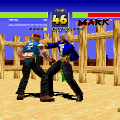

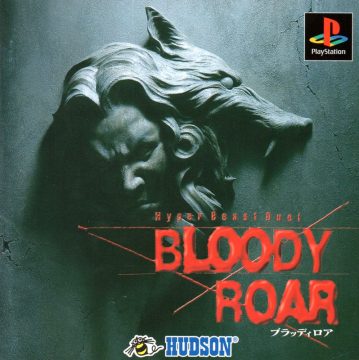
By the mid 90s, the biggest craze in the arcades had become the 3D fighting game, as popularized by Virtua Fighter and Tekken. Soon after, big developer in the arcade industry, as well as a few of the smaller ones, were determined to make their own push into the market. Not all of them succeeded – even titans like Konami or Midway were capable of putting out something like Battle Tryst or War Gods. Raizing, mostly known for their SHMUPs before this game, would eventually make their own try at the genre. For their part, they come out with a pretty fine series – not quite at the heights of the genre, but often well remembered all its own.
Despite the multiple sequels it recieved, Bloody Roar nowadays gets treated as nostalgia fodder for a specific generation; or for those who particularly enjoyed the muscular fighting animals. Reviews for the games often hovered around the 6s and 7s, with reviewers noting a perceived lack of depth. That’s not entirely accurate, as although the games are often far more approachable than similar games of the genre. Later games in the series work to add more mechanics and provide returning characters with new moves to make their play styles more distinct. There is admittedly a real emphasis on style, given the over-the-top characters and their cool looking moves, but the best game in the series is still far from “broken”.
Bloody Roar is set in a world much like ours, except with one particular difference. Werefolk of various species, referred to collectively as “zoanthropes”, exist amongst normal humans. How exactly they spawned isn’t said for sure, but it’s implied on the game’s old website to be nature’s vengeance against man. The background conflict involves not only the zoanthrope’s attempts to exist peacefully with humanity, but the machinations of those who hope to steal their power as well. Some games offer more plot than others, with the later games settling on brief prologues to kick off the arcade mode along with their endings.
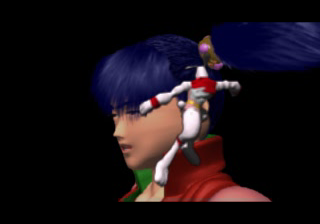
The evil Tylon Corporation has been kidnapping zoanthropes for their plans to create an army. Their latest project is Uriko, a young zoanthrope who’s been mutated into a living weapon. Eight zoanthropes have gathered to fight, some against Tylon, some for them, and some trying to save their failing circus. This original entry clearly had some growing pains to work through, with three of its eight fighters never making another playable appearance. Depending on your tastes, though, you might find at least one neat idea among them.
Characters
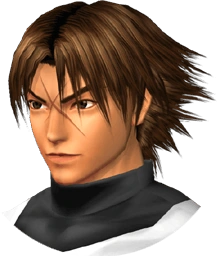

Yugo the Wolf
The hot-blooded series protagonist, Yugo begins the series trying to find out the truth behind his father’s death. After that, he becomes a professional boxer, taking on the second Bakuryu as his adopted son. Past the second game, he more or less just shows up where the plot is. Eventually, his boxing style fleshes out to include multiple combo trees and the ability to quickly sway towards his opponent, making him great at pressuring his opponent.
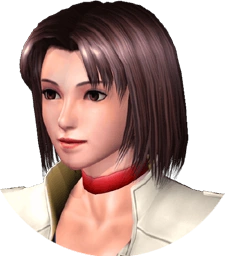
Alice the Rabbit
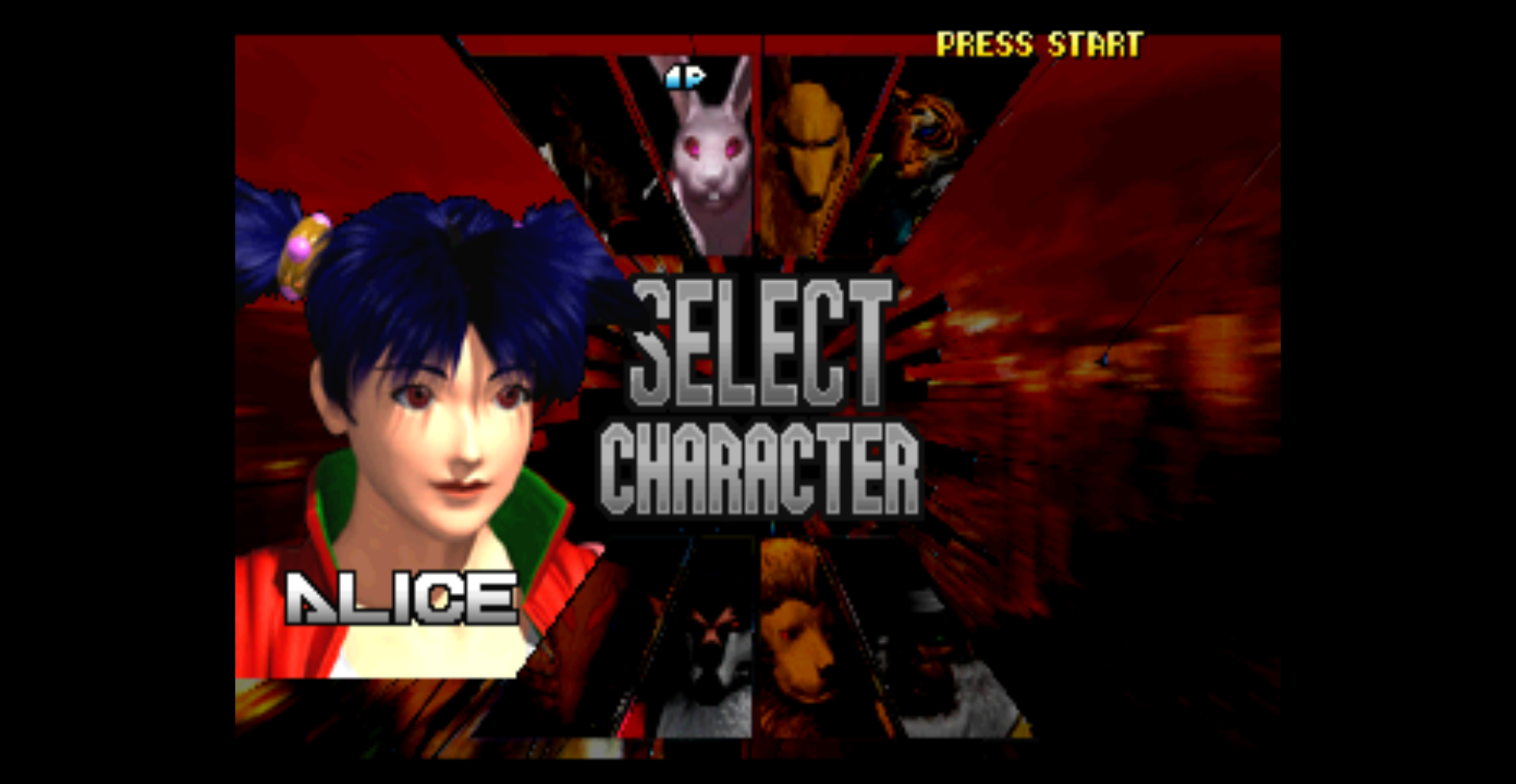
Alice was a test subject in the Tylon Corporation’s labs along with Uriko, but managed to escape and eventually help free the other girl. In following games, she goes from being a nurse to being part of a group dedicated to peace between humans and zoanthropes, and goes on following Yugo into the current plot. In Primal Fury she gets a huge visual makeover, losing her big blue pigtails and bright pink nurse outfit in favor of plain brown hair and a somewhat more sensible outfit.
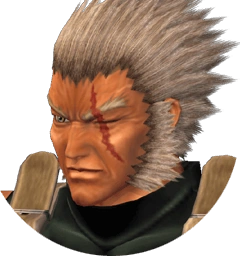
Gado the Lion
A gruff but well-meaning mercenary of renown, Gado kicks off the first game by destroying the Tylon’s headquarters. By doing so, he avenges his friend, who happens to be Yugo’s deceased father. In Bloody Roar 2, everybody falsely suspects he’s the leader of the terroristic Zoanthrope Liberation Front. This gives him the somewhat shoehorned role of final boss of the game’s arcade mode. From then on, he’s generally out to fight for peace by wrestling and mauling people, alongside his adopted daughter Shina.
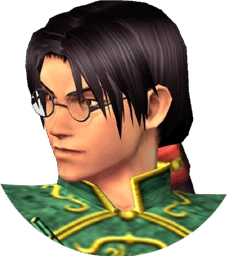
Long the Tiger
A master martial artist and former assassin who did work for Tylon, Long eventually left his violent life. At first living the life of a hermit to try and deny his nature as a zoanthrope, he eventually agrees to teach Uriko his style. Eventually trying to live life as a normal human, he ends up wandering into the plot multiple times. Long introduces a unique mechanic called the ‘combo ring’, which more or less allows for much longer, varied, and damaging strings than most of the cast can perform.
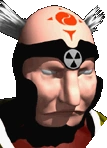
Bakuryu the Mole
An arrogant ninja assassin who works for Tylon, whose primary goal is to use science to become the ultimate zoanthrope. All the stuff the corporation puts in him eventually ends up melting him into a puddle. This isn’t much of a loss, since he gets replaced with a younger guy with less dumb looking hair with much of the same moves. After that, he becomes a cool robot with a rocket punch, so the melting was really only a good thing for him.
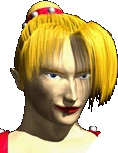
Hans the Fox
Referred to as just “Fox” in game, Hans is a particularly unhinged, zoanthrope-hating assassin for the Tylon Corporation. Much like Vega, he’s particularly obsessed with his own beauty, but comes off much more effeminately. In his ending, he kills a random person who turns out to be his mother, promptly goes insane, and never shows up again. His moves end up being spread across several later characters, however.
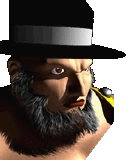
Greg The Gorilla
The series’ first comic relief character, Greg is simply out to hire zoanthropes for his failing circus. Despite his silly looking moves, he’s still at least fast enough to hold up with the rest of the cast. He’s the game’s resident grappler, with an especially dangerous upwards throw that can be looped into an infinite combo. This would be his only appearance, with Stun taking his role as grappler. In the Japanese versions, he has a darker skin tone; which is very unfortunate. But hey, you can knock his hat off! That’s fun, right?
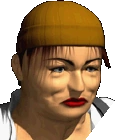
Mitsuko the Boar
After her daughter Uriko is kidnapped by the Tylon corporation as a test subject, Mitsuko sets off on a rampage to get her back. She succeeds, and in doing so never returns as a playable character. Taking the role of a heavy hitter type, some of her moves ended up being given to Stun in the following game. It’s somewhat of a shame, as the idea of a middle aged mom as a fighting game character certainly makes her stand out.
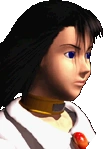
Uriko the Chimera
The final, unplayable boss of the game, Uriko was kidnapped by the Tylon Corporation as one of their test subjects. When you first encounter her, she appears as a little girl before turning into an imposing young woman to fight. Once you empty her beast gauge, however, she transforms into a hulking mutant with a new set of moves, such as vomiting acid onto her opponent. She’s eventually rescued by her mother Mitsuko, and becomes a series mainstay.
The basic controls give you three buttons for punches, kicks, and “beast” moves, which make use of the attributes of your character’s particular beast form. As in most 3D fighting games, characters have multiple ways to launch their opponent airborne, allowing for juggle combos. Depending on the way they’re launched, however, the defense can ‘recover’ and regain midair control. Many combos that look like they could be devastating to your health bar can be escaped from if you recover with the right timing. You can’t be reckless with it, though, because recovering at the wrong time means the opponent can land even more damage on you than if you never recovered at all.
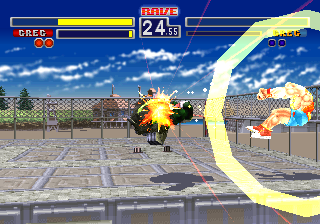
Defense also has a lot of of options, with a “light guard” automatically blocking all high attacks just by staying in neutral, and a “heavy guard” done by holding back to block. A light guard is faster to recover from, possibly letting you get in a punish on your opponent’s slower moves. The “heavy guard” is slower to recover from, but won’t get chipped by beast attacks or broken by certain heavy attacks. If you’re dealing with a predictable offense, you can perform a ‘guard evade’ by tapping a direction just after you block a hit, making your character side-step and possibly leaving your opponent wide open. Every character also has a ‘guard attack’, a somewhat slower attack that provides all the defense of a high guard during its start up, useful for shutting down predictable pressure.
The game’s ensemble feature is based around the “beast gauge”. Every match begins with it partially full, meaning you can press your beast button to instantly transform into your fighter’s beast form with a flash of light. You might also wish to be more prudent, landing hits and taking damage to build the meter to full. Once you’re ready to morph, there’s a couple of ways to do so, each with their own advantages. Transforming in neutral creates a small shockwave that sends opponents who aren’t guarding flying away, while transforming while running lets you perform a lunging attack that may catch your foe by surprise.
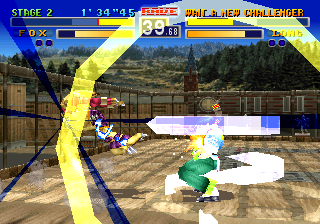
Beast mode is an upgrade on every way from your weak human form, starting with your attack power and defense. While you’re in beast form, the beast button will now give you access to an assortment of new moves and strings, often involving the sharp claws and extra strength granted by your new form. Many of these will also deal chip damage on opponents using their light guard, forcing them to use their slower defense to avoid extra damage. Launching attacks launch characters higher, and characters get more ways they can cancel their attacks into other attacks. Not only does this mean you have way more ways to keep your opponent mixed up with your offense, but the hits you do land can turn into much more damaging combos.
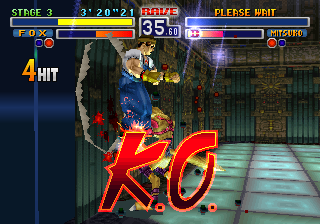
Defensively, you take less damage, and a portion of the health you do lose will regenerate quickly. You’re also heavier, which means you won’t be as subject to quite as many juggles as you would be in human form. Along with jumping higher, you’re also able to leap off the wall, letting you hit at angles you wouldn’t normally be able to hit. Ideally, you’d want to be in beast form all the time. There’s some strategy to when you beast out, however.
While you’re morphed, taking damage will also reduce your beast gauge. Should you get knocked prone or juggled while it’s empty, you’ll lose your beast form, losing all that precious recoverable health with it. You’ll then have to fill the meter back up entirely to get to the point you can start building your gauge again, which can put you at a big disadvantage if your opponent’s been more careful with their meter. Since the state of your beast gauge carries between rounds, you’ll constantly need to be considering when and if you need to morph. Sometimes it’s better to save it for later, like when a round or your opponent’s beast gauge is nearing its end.
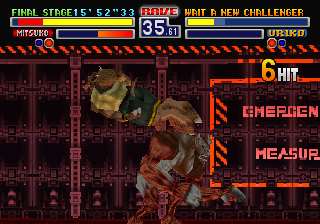
Something else you’ll always wanting to be watching are the walls surrounding the arena. Many attacks will send fighters flying, adding a little extra damage should they collide with a barrier. During the final round, too many collisions with a wall will take it out entirely, thus making it possible for an attack to knock an opponent right out of the ring for instant defeat. Defeat an opponent with a particularly strong attack and they’ll be knocked out of the arena right with the wall, a particularly satisfying finish when it happens. Especially when the game shows it off through instant replay, with multiple camera angles.
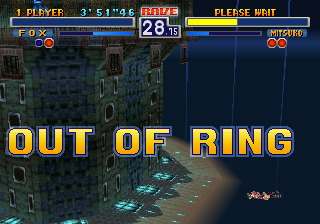
Despite all its mechanics, Bloody Roar might be one of the most approachable fighters of its kind, rivaled only by oddballs such as Evil Zone. Every move can be done just by holding or double tapping a direction as you perform a button, or simply doing a quarter circle motion. Because of this, it generally takes no time at all to figure out a character’s particular style, or which of the moves in their arsenal are the ‘coolest’. While it also means new players might be prone to mashing, a good player has enough options on defense they can generally power through it and get in a punish.
What it all leads to is a particularly intense game where the art of “neutral”, the act of moving in and out trying to land that good clean hit, mixes with the art of landing that great combo. Attacks and moves recover so quickly that “turns” pass from one player to another much more quickly than competing 3D fighters. Given the emphasis on horizontal movement and the way the inputs work, often times the game ends up feeling more like a 2D fighter, giving the game a feel all its own. Still, this early on, there’s some flaws, mostly in that characters don’t have the more refined movesets that make them feel more distinct. There’s exceptions, such as Greg’s emphasis on throws or Long’s lengthy strings, but most characters can feel somewhat similar.
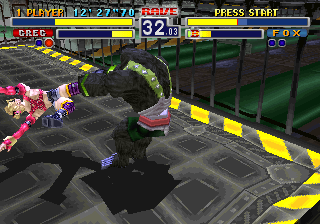
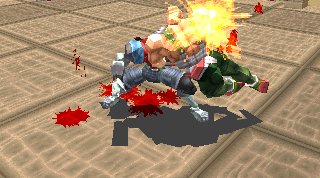
Credit also has to be given on just how good the simple act of hitting people feels in this game. The hits feel appropriately weighty, with the heaviest hits sending opponents into a wall in a near instant. Blood gushes out in large sprays every time teeth and claws connect, with certain hits causing fighters to visibly puke. Despite the lack of any death or dismemberment, there’s a certain brutality to it almost never seen in Japanese fighters. There’s really nothing quite like watching a wolfman swing around the cute teen appeal character like a ragdoll, blood flying everywhere.
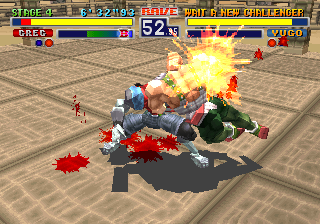
The game uses Sony ZN-1 hardware, putting it about on par with the original Playstation. It looks fine enough considering, but what really impresses is how well it maintains its sixty frames per second, no matter how heated the action gets. Perhaps as a compromise, the stages are a little bland, mostly being rings surrounded by empty space, with only the backgrounds to really set them apart. The music’s probably the low point of presentation; most of it is electronic that feels oddly low energy, which means it never quite fits with the action on screen.
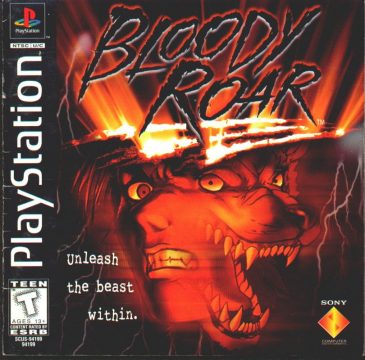
The PlayStation version features a fully accurate conversion at its core, but adds quite a lot on top. There’s a couple of mechanical additions, such as the option to enable a side dodge you can perform at will. There’s also the ‘Rave’ mode, which can be activated at any time while you’re in beast form. While Rave is on, your beast gauge steadily drains, but you move faster and get much less recovery on your moves, allowing for devastating combos with much less effort. Both of these options make for a rather different feel from the original arcade version, but can be disabled at will.
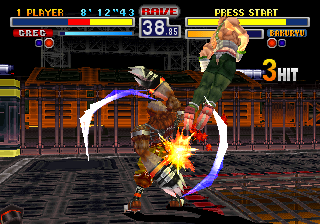
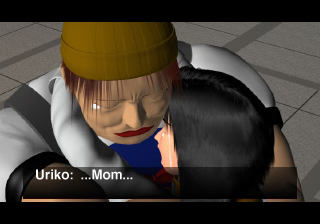
You’ve also got the standard additions seen in most arcade fighter conversions of the time, like unique character endings and time attack, survival, and training modes. Those endings are sadly somewhat weak, being a series of still pictures with silent subtitles laid underneath, regardless of region. Finishing the game with different characters also unlocks bonus features, like the ability to remove walls, or the ability to guard. This version also features a new, optional set of CG portraits, enabled by default in the Western releases. While the arcade version features English voices for all releases, the Japanese PS1 release redubs most of the characters into Japanese, something that’d carry forward in all future Japanese releases.
There’s also a brand new soundtrack, although the original arcade soundtrack can be enabled as well. This new soundtrack is mostly metal, heavy on the guitar, and while it fits much better than the original music, most of the in-fight music tends to blend together. The highlights would have to be the bluesy rock song that plays during the endings, as well as the particularly relaxed song that plays as you enter your high score.
As the original game in its series, this particular entry is missing a lot of the depth and what made later games special under its hood. Still, while later games would certainly improve things, the foundation here already feel fairly well placed. On its own merits as an arcade game, it has a lot of competition to go against, with games like Fighting Vipers matching its speed while offering a little more complexity. On the PlayStation, however, it stands out much more, offering a sort of 3D fighter that Sony’s console wasn’t really as famous for. You’re still however better off with most of its following sequels, however.