A History of Korean Gaming
|
<<< Prior Page |
|
Goldstar / LG / Hanbit: |
금성 Goldstar / LG

|
Founded: |
October 1, 1958 (Goldstar) |
|
Status: |
game division spun off (1999) |
|
Key People: |
李海承 이해승 Lee Haeseung: |
|
Website: |
www.lge.com |



한빛소프트 Hanbit Soft

|
Founded: |
January 6, 1999 |
|
Status: |
owned by T3 Entertainment |
|
Key People: |
김영만 Kim Yeongman: |
|
Website: |

조이임팩트 JoyImpact

|
Founded: |
October 18, 1999 |
|
Status: |
merged into Hanbit Soft (2010) |
|
Key People: |
김태은 Kim Taeeun: |
|
Website: |
www.joyimpact.com (offline) |
The Lucky Goldstar conglomerate entered the game business in March 1993, when Goldstar Electronics opened the very first game development school in the country at the Goldstar Gyoyuk Center1, at about the same time also starting as a publisher2. They had a number of domestic publishing partners early on, like Danbi, A+ and Ablex, and even entertained their own development team Sanjini, cast from graduates of their own school. Goldstar/LG also published the 3DO in Korea and pushed forward a few exclusive titles, but the console flopped just like everywhere else in the world.
In January 1995, the entire group was unified under the LG banner, whereas before some parts were known as Lucky, some as Goldstar and some as Lucky Goldstar. By that time actually two branches of the company were releasing PC games, LG Software for games by outside studios and LG Media for internal developments. The two were merged in January 19973.
LG Software's smartest business move ever was taking over the Blizzard license starting with Diablo (Warcraft II was still released by SKC), which turned out a real cash cow for the company, at latest when it released Starcraft to legendary success.
In late 1998, though, LG proceeded to move out of the games business, restructuring LG Soft and renaming it to LG LCD (today LG Display)4. The game division, however, made a successful effort to establish itself as an independent business, and from then on became known as Hanbit Soft5. Everyone expected Hanbit to continue publishing Blizzard games, but—supposedly through the influence of Kim Yeongman's rival from LG days, Han Jeongweon (who eventually became the CEO of Blizzard Entertainment Korea in 20046)—the publishing rights for Diablo 2 went to CDVille. Hanbit resolved the issue by buying the smaller publisher outright on April 20th, 20007 (which also brought them other lucrative licenses, like Half-Life) and restructuring it into a development team, but its former key staff left to continue publishing PC games as Abyss8 until 2002. Another subsidiary to Hanbit became Softian (formerly Hamkke-haneun Soft).
Hanbit continued publishing retail games well into the 2000s, but also started to get into the online business. The online game portal HanbitOn was established in March 2005 as a hub for the games under Hanbit service. Besides publishing a number of outside studio titles like nTreev's Pangya, IMC Games' Granado Espada and Hellgate London by Flagship Studios, they also bought into JoyImpact and made them their subsidiary in October 20039. More stocks were bought in 2008, and the team was finally integrated wholly into Hanbit in February 201010.
Another quasi-2nd party used to be the online game developer T3 Entertainment, which on May 19th, 2008 actually became the main shareholder of Hanbit Soft, making the publisher its subsidiary11.
Joyimpact games published under the Hanbit banner are listed here, but since T3 Entertainment was thoroughly active in the years before their alliance with Hanbit, that company has its own profile page, to keep this page from getting all too chaotic. The only "game" Joyimpact ever released before the alliance with Hanbit was the avatar chatting client LoveLove JJP.
Games
일지매전 ~만파식적편~ (Iljimae-jeon: Manpa Sikjeok-pyeon) - IBM PC (October 1994)
Produced by Danbi with support by Goldstar, this game is introduced at the Danbi profile.
Quick Info:
|
Developer: |
Danbi System |
|
Publisher: |
Goldstar Software |
|
Genre: |
Shoot-'em-Up: Rail |
|
Theme: |
Cyberpunk |
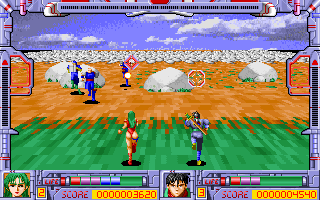
Iljimae-jeon: Manpa Sikjeon-pyeon (IBM PC)
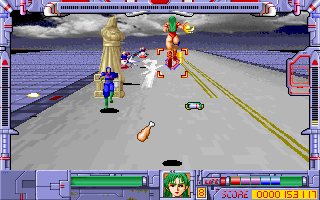
Iljimae-jeon: Manpa Sikjeon-pyeon (IBM PC)
아기공룡 골디 (Agi Gongnyong Goldie) - IBM PC (1994)
An edutainment / multimedia game aimed at children. The title very obviously rips off the Dooly franchise.
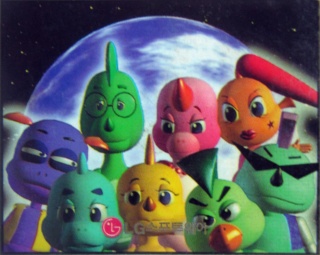
Agi Gongnyong Goldie (IBM PC)
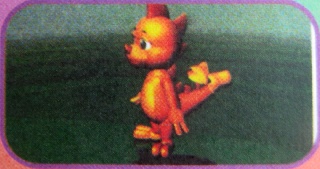
Agi Gongnyong Goldie (IBM PC)
일지매전 ~만만파파식적편~ (Iljimae-jeon: Manman Papa Sikjeok-pyeon) - IBM PC (May 1995)
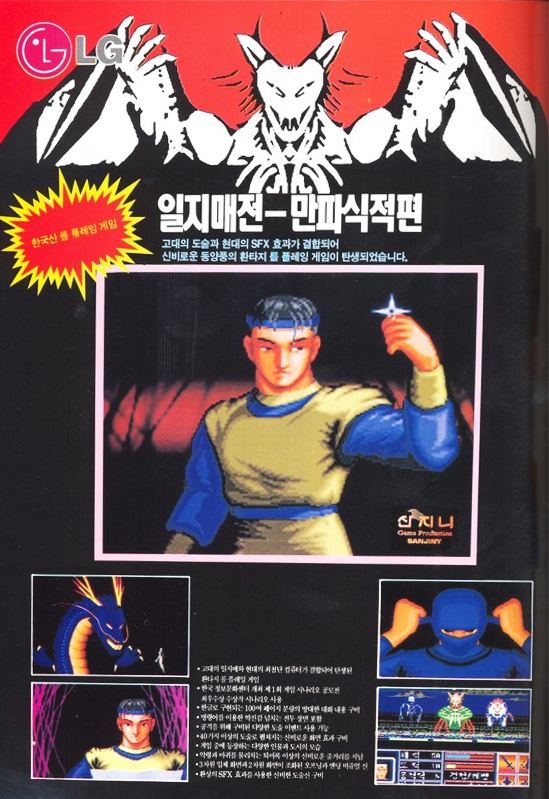
Advertisement
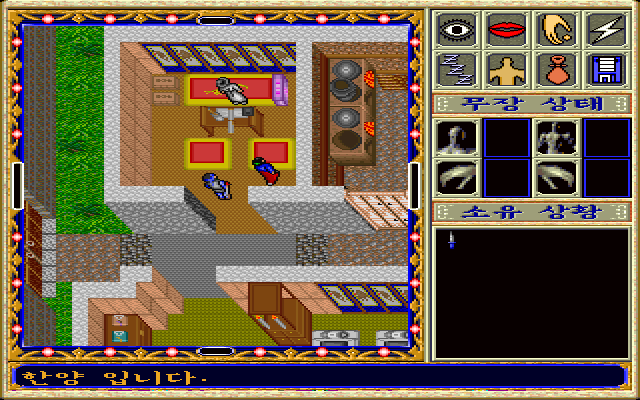
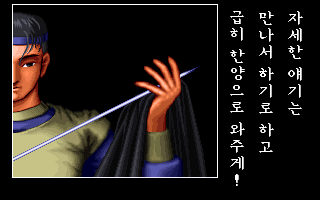
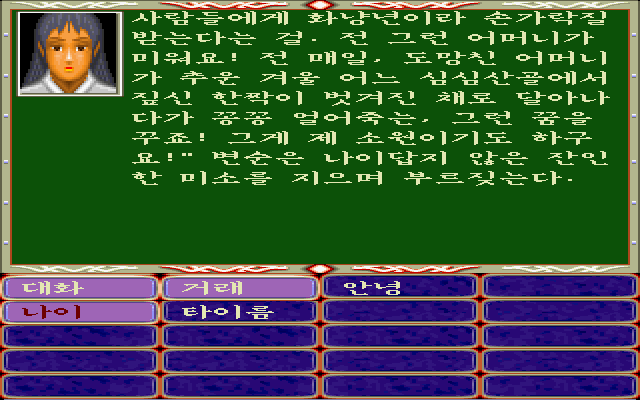
Goldstar directly hired the first absolvents of the Goldstar Game School as the internal team Sanjini, and assigned them to produce an RPG based on the winning entry of a 1993 scenario writing competition12. The tale around the search for a magical flute whose music was the only means to bring peace back the insurgence-ridden country is rooted in Korean folklore, but for once the writer didn't base it directly on a particular folk story like the Hong Gildong-jeon. It rather takes historical places, events and persons like the scholar Heo Gyun to weave an intriguing story, which makes it one of the more unique titles in Korea's early PC game history.
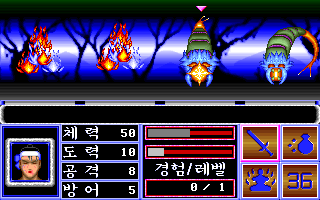
The final product they presented about a year later showed itself in tune with the genre's origins on the peninsula. Just like Sin'geom-ui Jeonseol seven years before, Iljimae-jeon was clearly inspired by the Ultima franchise, but also the influence of more simplistic approaches began to show. So the player would be able to grab everything that wasn't nailed to the wall and engage in extensive conversations via keywords, but the combat system turned out very akin to games like Dragon Quest.
Quick Info:
|
Developer: |
Goldstar Software (Sanjini) |
|
Publisher: |
Goldstar Software |
|
Genre: |
RPG |
|
Theme: |
Fantasy: Far East |
Iljimae-jeon (IBM PC)
Iljimae-jeon (IBM PC)
Iljimae-jeon (IBM PC)
Iljimae-jeon (IBM PC)
돌아온 영웅 홍길동 (Doraon Yeongung Hong Gildong) - Windows (December 1995)
Film Poster
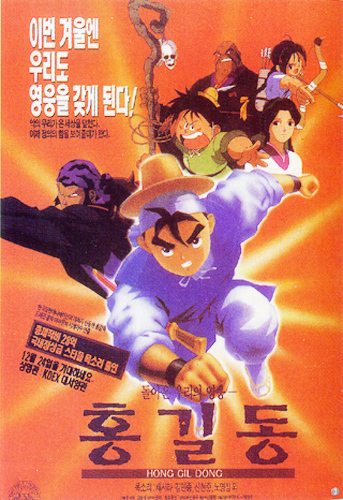
From LG's Dolkkot Studio hails one of the many games based on Korea's flagship folk tale, or in this case rather based on the animated movie based on the tale.
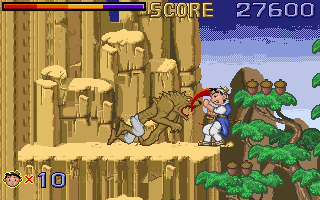
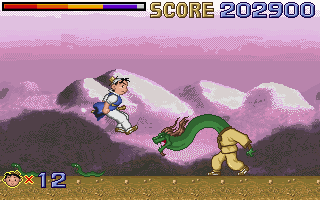
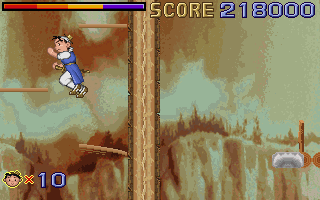
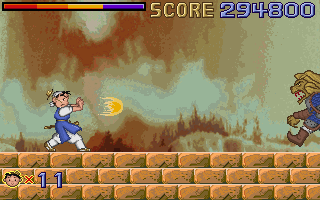
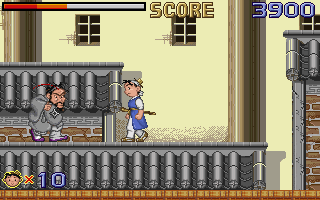
Like most adaptions of animated movies for kids, Doraon Yeongung Hong Gildong is a platformer, not unlike many close-to-contemporary Disney video games (Aladdin, Lion King, etc.).
Yet the Korean game doesn't adhere to the same quality standards as those, and besides its share of bugs, the gameplay feels unpolished. When hit, Hong Gildong gets thrown back, which not only can cast him off cliffs, but also straight through walls that are otherwise impenetrable. The collission detection is so brutal that it's often almost impossible for the hero to hit enemies with his sword without getting hit himself, quickly forcing him to use up his limited supply of ranged attacks. For that reason the third boss (about halfway through the game) already is next to invincible without a huge amount of luck.
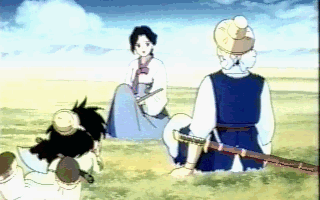
Once again flaws almost typical for Korean games in this period, obvious lack of balancing and bugfixing, spoil a product that could have turned out quite nice with just some more time and money for the development. The level design feels inspired, with short cuts and hidden pickup items aside from the straight path to the exit, and the presentation is on par with the aforementioned Disney games. Cute ingame graphics and (semi-)orientalistic tunes are supplemented with funny clips from the movie in between levels, although encoded in low quality.
Quick Info:
|
Developer: |
LG Software (Dolkkot Studio) |
|
Publisher: |
LG Software |
|
Genre: |
Platforming |
|
Theme: |
Fantasy: Far East |
Doraon Yeongung Hong Gildong (IBM PC)
Doraon Yeongung Hong Gildong (IBM PC)
Doraon Yeongung Hong Gildong (IBM PC)
Doraon Yeongung Hong Gildong (IBM PC)
Doraon Yeongung Hong Gildong (IBM PC)
Doraon Yeongung Hong Gildong (IBM PC)
아기공룡 둘리 (Agi Gongnyong Dooly) / The Little Dinosaur Dooly - IBM PC (July 1996)
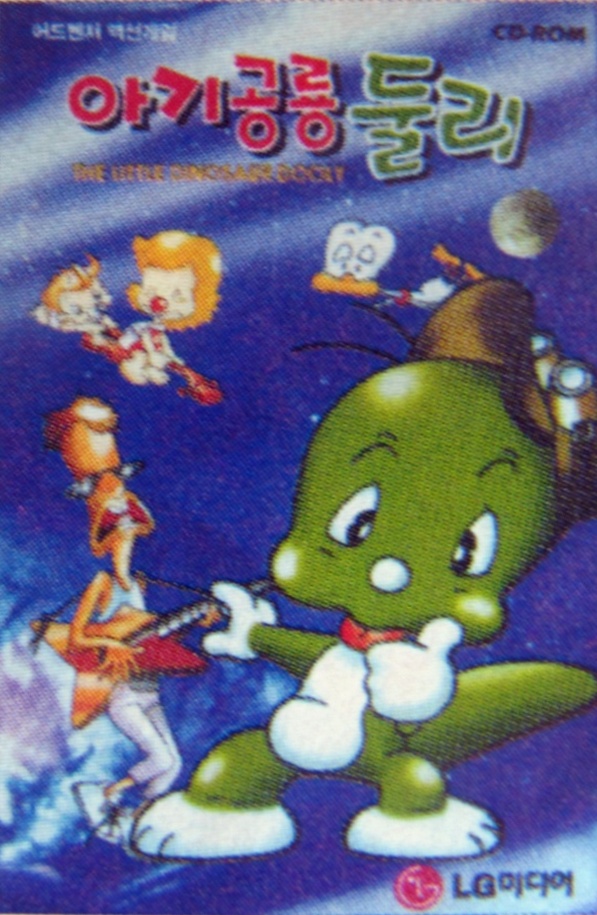
Cover
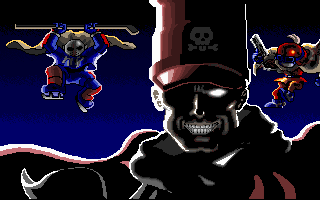
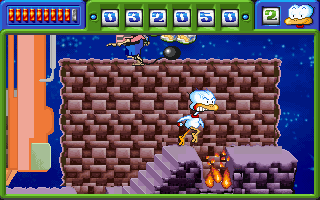
The only franchise that has been milked for more Korean games than Armageddon and Hong Gildong, is Agigongnyong Dooly (Baby Dinosaur Dooly). LG Media used the license for another cutesy platformer, which proved to be quite successful, selling 12,000 copies within two months13.
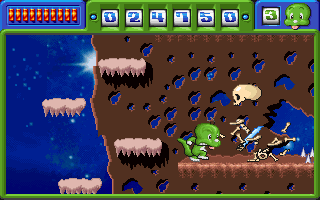
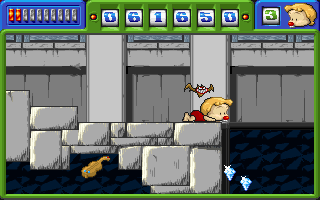
The result was a much more polished game than Doraon Yeongung Hong Gildong, though not quite as pleasing to the eye. Besides Dooly himself, one gets to chose between him and three more protagonists from the series, all with attack animations befitting of their characters. The differences are limited to the graphics and hit frames, each has basically a standard, dash and (limited) ranged attack.
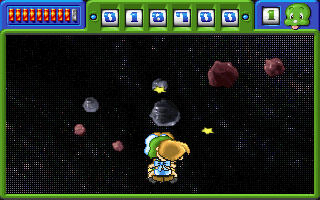
Stage design feels a bit loose at times, but never uninspired, and there are some genuinely challenging platforming sequences. The enemies are a threat mostly because the hit detection still isn't quite transparent, and one gets hit faster than one would think. A rocket riding pseudo 3D sequence and snippets from the animated series in between stages help to mix up things.
Quick Info:
|
Developer: |
LG Media |
|
Publisher: |
LG Media |
|
Genre: |
Platforming |
|
Theme: |
Licensed |
The Little Dinosaur Dooly (IBM PC)

The Little Dinosaur Dooly (IBM PC)
The Little Dinosaur Dooly (IBM PC)
The Little Dinosaur Dooly (IBM PC)
The Little Dinosaur Dooly (IBM PC)
The Little Dinosaur Dooly (IBM PC)
파이어월 (Firewall) / Firewall: Man vs. Machine - 3DO, IBM PC (1996)
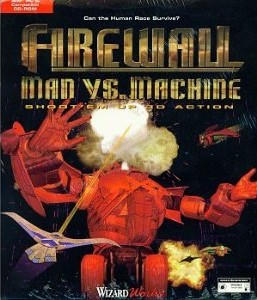
American PC Cover
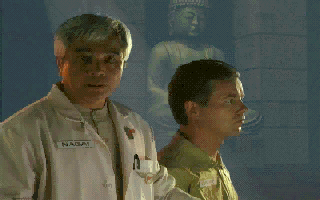
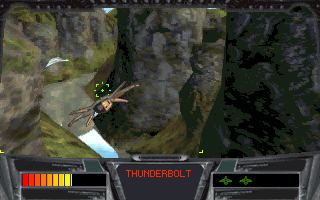
Goldstar/LG had bet on a losing horse in the console business with the 3DO, but they put up a fight like no other of the console publishers in Korea, securing deals for a number of exclusive 3DO games never sold outside of the peninsula. Firewall though was released in North America as well, if only as a PC version. No wonder, as Firewall was officially produced in cooperation with the US-based Visionary Media. Cooperation in this case apparently meant that LG's participation was mostly limited to funding and publishing, as the staff directly involved in the game was almost all-American (or at least not Korean).
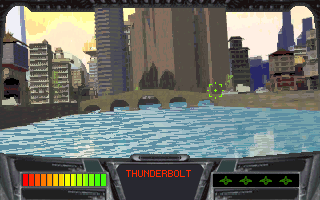
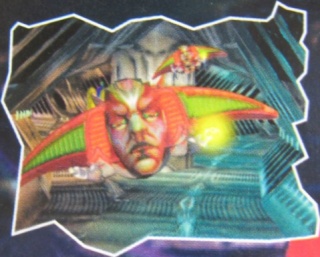
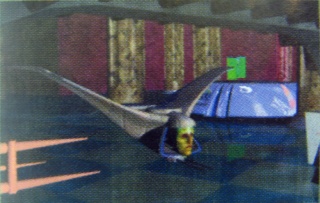
The game is a FMV-based shooter like Star Wars: Rebel Assault. There are first person levels where the player is limited to shooting the enemies with a somewhat awkward aim, but also stages played in a 3rd person view with obstacles to avoid. More than half of the game takes place in "cyberspace" which makes for some way-out looking graphics, in a 1990's sense. For what it is, Firewall is a fairly competent game, but the action grows unreasonably hard fast.
One cannot help but think that the American developers didn't quite get what the Koreans wanted of them, though, what with the setting in a futuristic China and a Japanese main actor in the hilariously badly acted cutscenes. Feels like "It'll do as long as it's gonna be kinda Asian-ish".
Quick Info:
|
Developer: |
Visionary Media |
|
Publisher: |
LG |
|
Genre: |
Shoot-'em-Up: Rail |
Firewall (IBM PC)
Firewall (IBM PC)
Firewall (IBM PC)

Firewall (IBM PC)
Firewall (IBM PC)
Firewall (IBM PC)
배틀 블루스 Battle Blues - 3DO (1996)
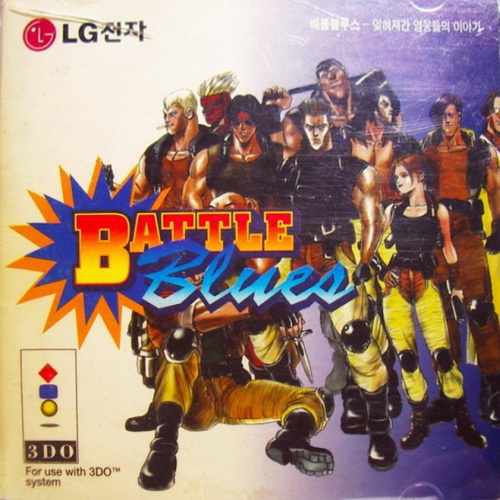
Cover
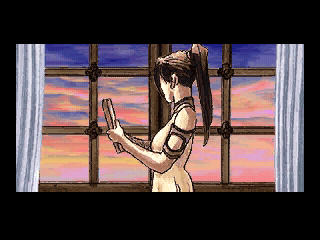
Although it was developed by an independent team called Shin's Entertainment, LG secured Battle Blues as an exclusive title for their 3DO system. The SRPG puts a strong focus on story, which is told in FMV sequences. These are hand-drawn and are quite atmospheric with their sketchy look, although the animation is very basic, often they just string together a number of stills.
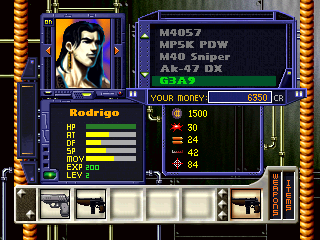
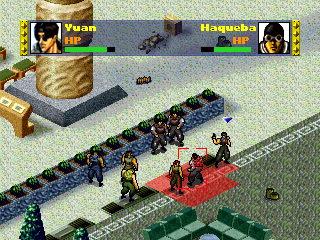
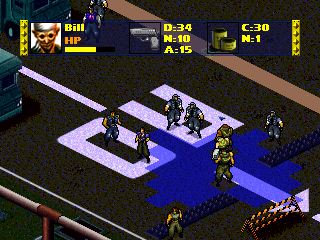
While the visual design reminds of famous squad-based TBS, the gameplay is a far cry from the tactical finesse of a X-Com or Jagged Alliance. The strategic options are limited to buying and selling weapons in betweeen skirmishes, which are fought out strictly turn based. Enemies are visible from the very beginning, line-of-fire is implemented all too rudimentarily. (Humans in between shooter and target are ignored wholesale, while immobile obstacles are always treated like solid walls, no matter how small they are.) Dead allies are always revived in the next part of the mission, only when the leader bites the dust it's instant game over. Ammunition (or the lack thereof) carries over though.
In the end, there's not much one can do except trying to lure single enemies into ambushes, but even that is almost impossible. There's a high random factor to damage, and the difficulty level gets really unfair really fast.
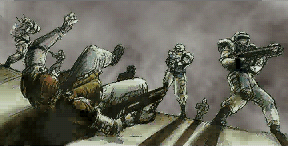
Battle Blues (3DO)
Quick Info:
|
Developer: |
Shin's Entertainment |
|
Publisher: |
LG |
|
Genre: |
Strategy |
|
Theme: |
Cyberpunk |
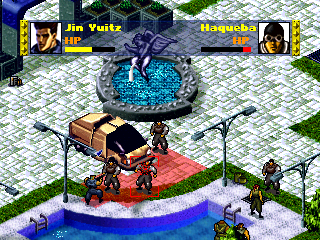
Battle Blues (3DO)
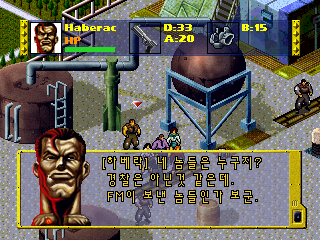
Battle Blues (3DO)
Battle Blues (3DO)
Battle Blues (3DO)
Battle Blues (3DO)
Battle Blues (3DO)
아마게돈 (Armageddon) - 3DO (1996)
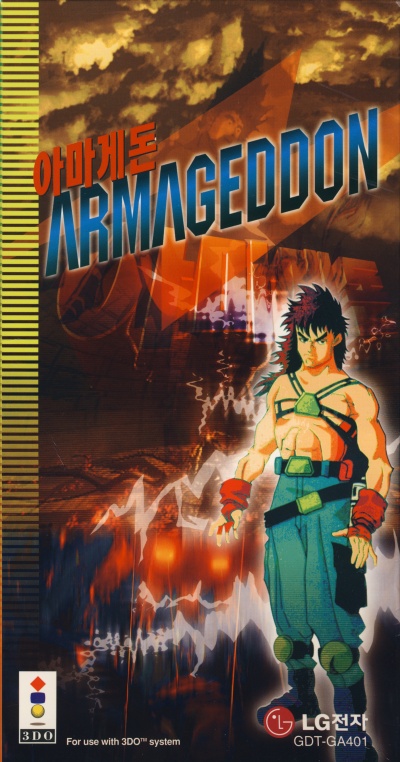
Cover
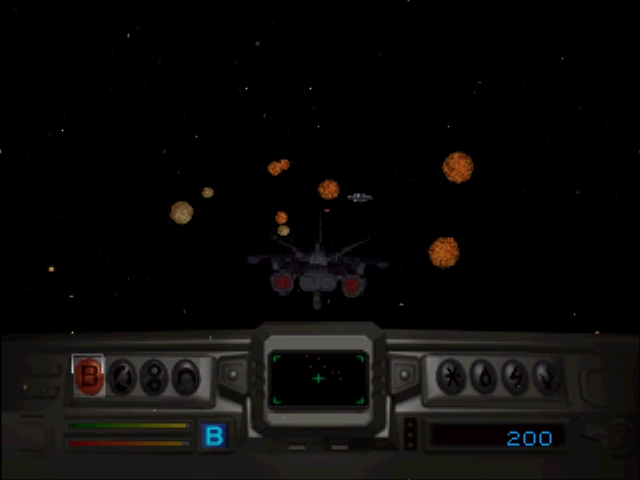
Armageddon is, like the Mirinae game of the same title, based on the animated movie by Lee Hyunse. The game is a pseudo-3d space shooter like Wing Commander, though its production values are nowhere near Origin's series. Previously, LG had announced a more interesting-looking polygonal 3D game in cooperation with Ablex.
Like all of the Korean 3DO games by LG, Armageddon is extremely rare. LG originally announced a PC port of the game as well14, but never followed up on the promise.
Quick Info:
|
Developer: |
LG Software |
|
Publisher: |
LG |
|
Genre: |
Shoot-'em-Up: Rail |
|
Theme: |
Space Combat |
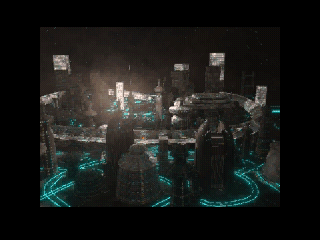
Armageddon (3DO)
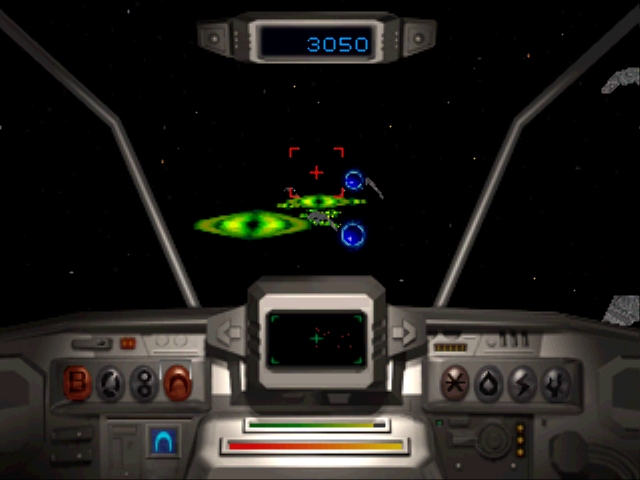
Armageddon (3DO)
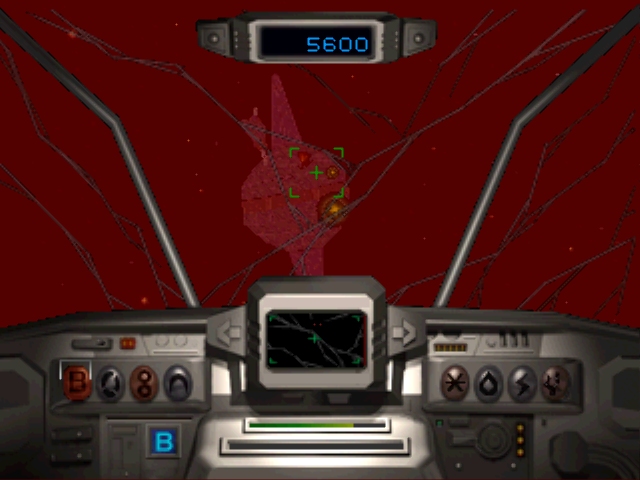
Armageddon (3DO)
Armageddon (3DO)
스톤엑스 / Stone Axe: Search for Elysium - Windows (June 14, 1997)
Cover
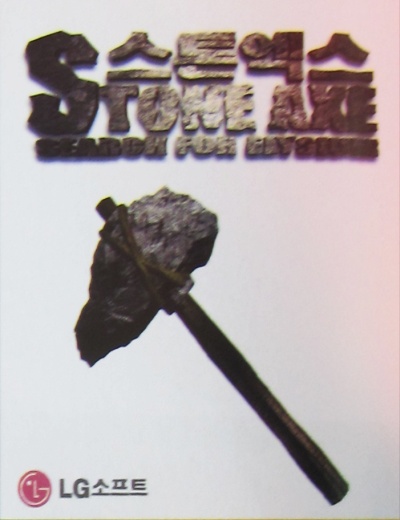
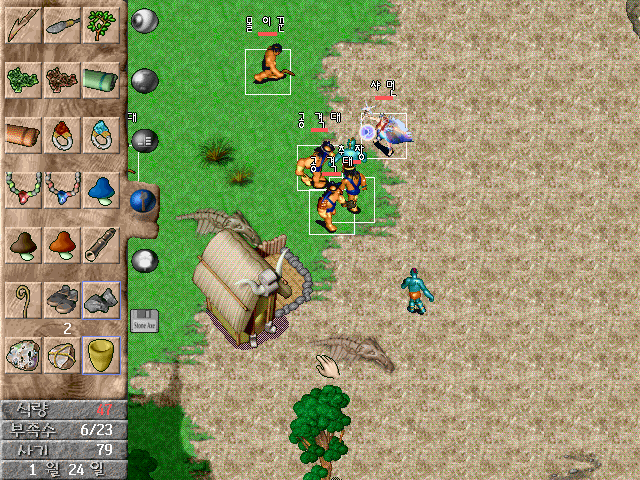
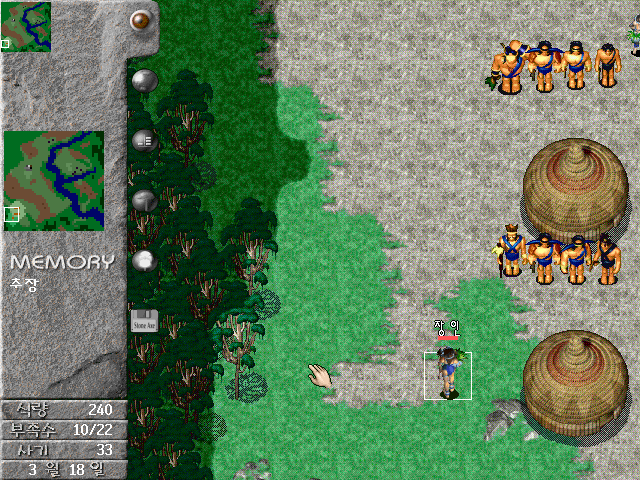
RTS game about rivaling prehistoric tribes. Inconventional elements like item and food management and a particularly cryptic interface make this challenging to play even when disregarding the language barrier.
Quick Info:
|
Developer: |
LG Soft |
|
Publisher: |
LG Soft |
|
Genre: |
Strategy |
|
Theme: |
Prehistoric |
Stone Axe (Windows)
Stone Axe (Windows)
Tahl: Uncover the Evil Within (탈) - Windows (July 1999)
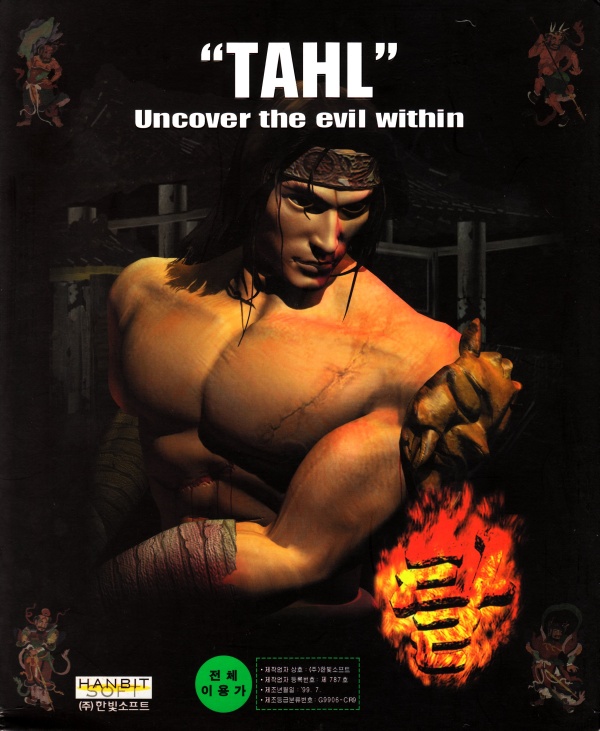
Cover
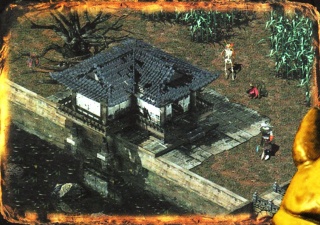
The development of Tahl started at LG, but it was published by Hanbit after the split. Like many Korean RPGs (Iljimae, Mangguk Jeon'gi) the scenario was based off the winning entry of a game writing contest contest15.
Looking at the game superficially, it looks just like a Diablo clone, although the dungeons are not generated randomly. There's also no safe hub for the player to recover and the game drops players right inmidst haunted ruins full of ghosts and zombies, making the game very difficult. A multiplayer mode is also missing, instead one gets to recruit (bad) AI controlled mercenaries.
Hanbit also announced a port for the PlayStation16 in cooperation with the Japanese company Urban Plan (who made the PSX port of the Double Dragon NeoGeo game)17, but it was never released.
Quick Info:
|
Developer: |
LG Soft |
|
Publisher: |
Hanbit Soft |
|
Genre: |
Action RPG |
|
Theme: |
Fantasy: Far East |
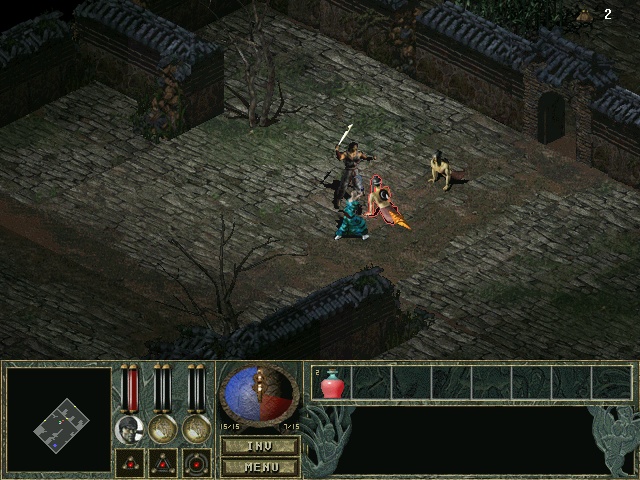
Tahl (Windows)
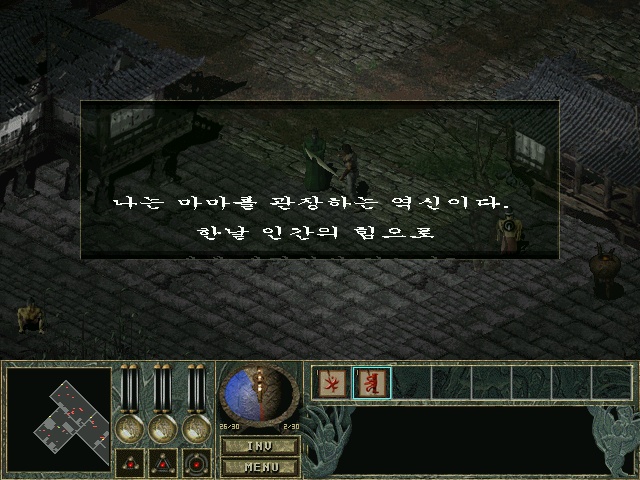
Tahl (Windows)
Tahl (Windows)
Tahl (Windows)
References
1. PC Power Zine 11/2000, page 212
2. Game Champ 4/1993, page 39
3. PC Champ 1/1997, page 128
4. LG Display Company History
5. PC Power Zine 3/1999, page 165
6. ZDNet Korea 3/14/2011
7. PC Power Zine 5/2000, page 168
8. ETNews 9/27/2000
9. Gamejob - Hanbit Soft Company Profile
10. Daily Game 2/11/2010
11. This Is Game 5/19/2008
12. PC World 8/1994, page 102
13. ETNews 9/20/1996
14. PC Champ 4/1996, page 93
15. [citation]
16. PC Power Zine 11/1999, page 164
17. Ilgan Sports 2/25/2002
|
<<< Prior Page |
|
Goldstar / LG / Hanbit: |