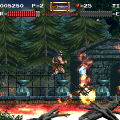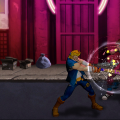

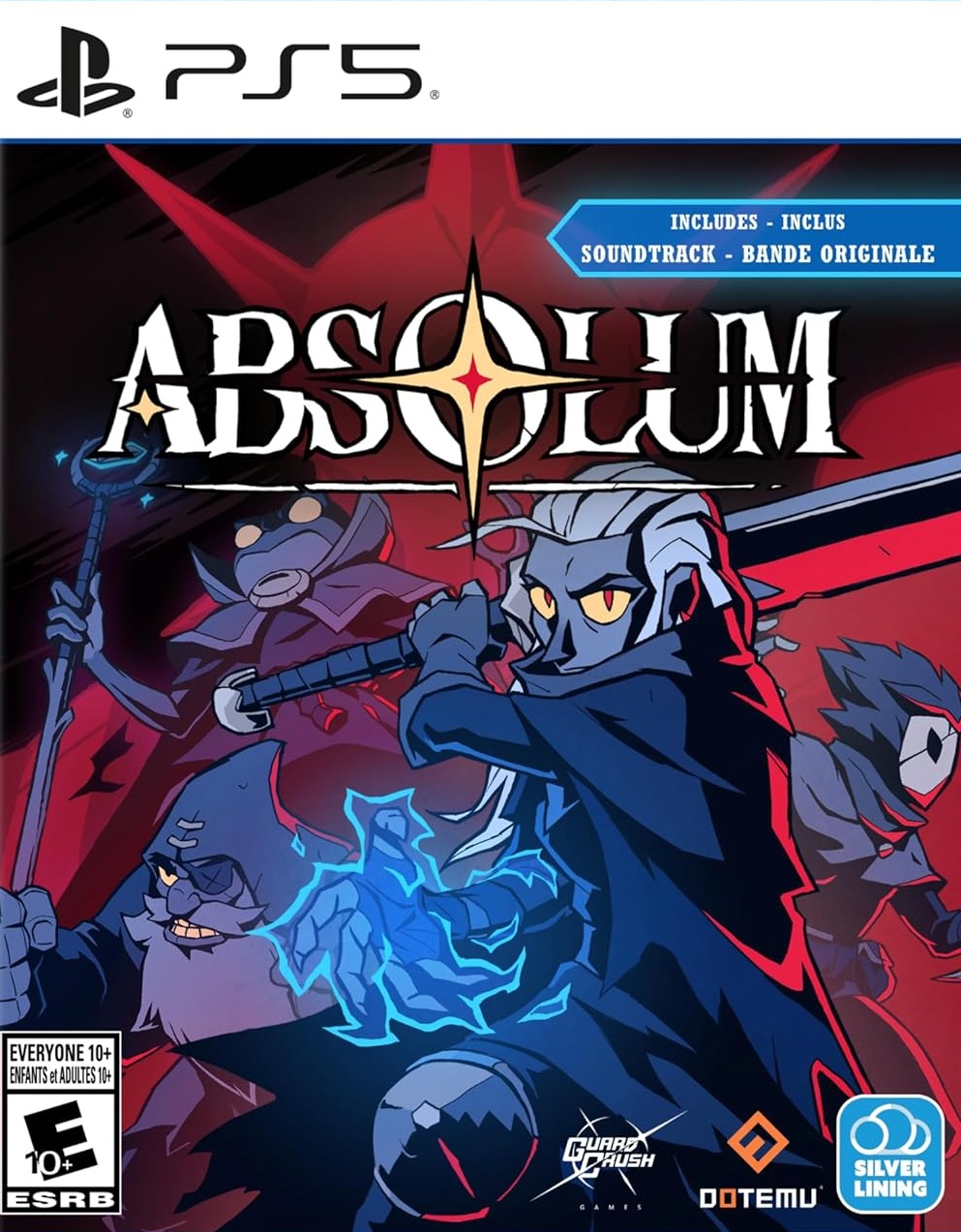
Guard Crush Games’ first title, Streets of Fury, featured some surprising depth and playability underneath its goofy digitized aesthetic. Streets of Rage 4 proved to be a brilliant re-invention of the classic franchise that in some ways even outmatched the games of old. Although clearly its own game and its own universe, Absolum takes clear inspiration from games like Golden Axe and Capcom’s Dungeons & Dragons brawlers. Setting the game further apart from previous works are its roguelike elements. While this makes it part of a rather massive pond, the two halves hit together into a fantastic hole.
The combination of beat-em-up and roguelike sounds farfetched at first, but makes some sense given the former’s arcade origins. Much like any roguelike, run out of chances and you’ll be forced back to the start of the game, hopefully a little more prepared than before. The usual metaprogression element of modern roguelikes still applies here, but you still can’t entirely rely on that to carry you through the rest of the game.
After a magical cataclysm struck the world of Talamh, Azra the Sun King has taken control. His Crimson Order oppresses the populace and hunts down magic-users across the land. Four heroic wizards gather together to try and stop Azra’s dominion, saving both the land and magic itself. Should they fall in battle, the mighty Root Mother will revive them at the start of their journey, ready to set forth again. It’s a fairly gray situation with few real good guys; even the playable characters are clearly looking for revenge rather than heroism.
Despite the somewhat bleak setting, it’s a fairly well told story that never really gets in the same way. Similar to Hades, the more you play, the more story and worldbuilding you’ll get out of it. Friendly NPCs will offer new tidbits, and new characters and locations will make themselves known. Quests will appear on the map for you to aim for on your next run, whether offered by NPCs or determined by the player characters themselves. It helps cushion the blow of your inevitable failures somewhat, feeling like every time you play there’s something you’ve missed, as small as a secret cache to a hidden boss encounter.
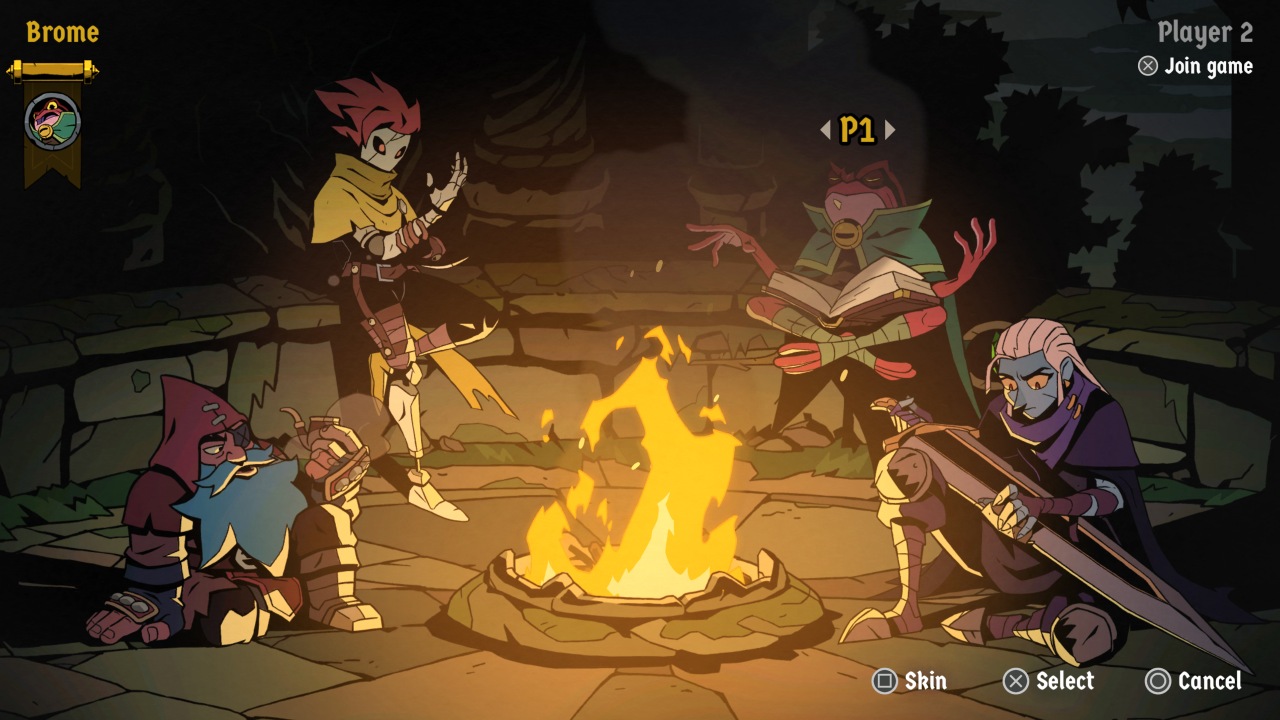
Galandra the elven swordsmaiden hails from the land of Yeldrim, where the cataclysm began. A knight never to be, she seeks to finish her training in what’s left of her ruined homeland. She stands as the “average” of the four characters, a solid all-rounder who excels at nothing in particular. Karl the dwarf is the only one of his kind not turned into an undead fiend, going into the fight with his fist, face, and a mighty blunderbuss. Although his combo capability suffers compared to the others in the cast, he excels at crowd control. Cider the automaton thief is out to find the mystery to their true identity. In combat, they’re the fastest of the four, with huge combo capability and an assortment of tricky but powerful arcanas. Brom the frog seeks revenge on Azra for exterminating his kind, but still seeks out the faint hope of one remaining batch of eggs. He relies more on his magic meter for maximum effectiveness than the other characters, and generally prefers to deal damage from a distance.
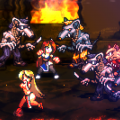
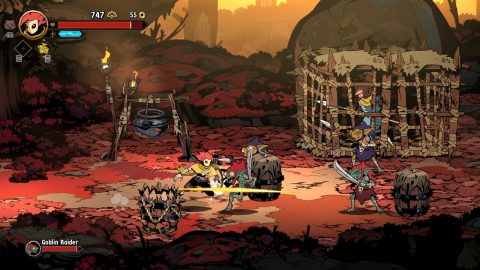
You’ll find some of the usual brawler staples as part of your basic moveset. A basic attack combo can be combined with attacks from a running or jumping state. You’re encouraged to keep on the offense with your enemies as much as you can, and you’re given plenty of opportunities to do so. Enemies you knock away can be juggled with follow-up hits, and even prone foes aren’t safe from your arsenal of attacks. You’re given a ton of freedom to play with the combo system, and when you can send an enemy bouncing up and down the screen, it remains a blast every time.
Rather than your typical crowd-clearing special move, however, each character has a unique ‘skill’ attack you’ll frequently make use of. These range from arcing sword swings to lunging headbutts, and are often a big part of keeping your combos going. These moves are also part of the games ‘clash’ mechanic, where hitting an enemy with a skill just before one of their attack lands parries them, often opening them up for a painful counterhit. There’s also a dodge move you can make use of to shift in any direction, either offering a quick counter-attack or a way to interrupt most enemy attacks.
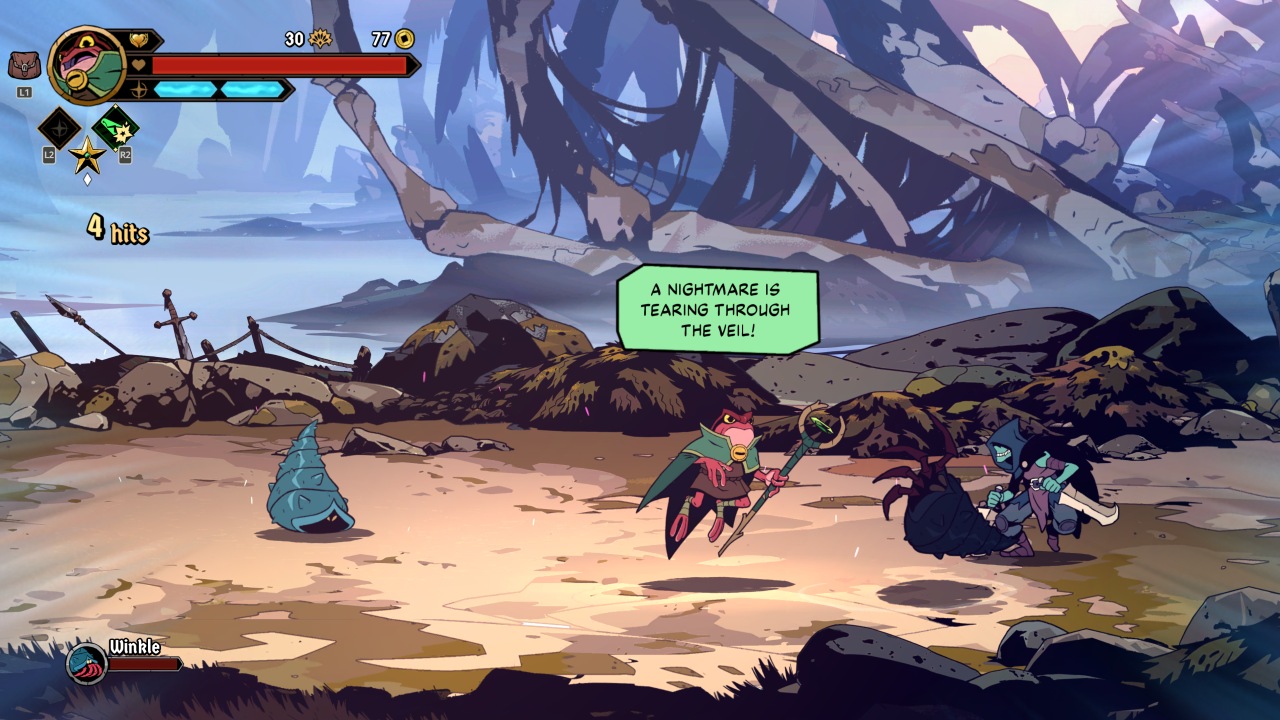
Harkening back to the game’s particular inspirations are throwable weapons that can be collected and thrown at will, interrupting attacks and dealing respectable damage at range. Further inspiration can be seen in the various mounts you’ll occasionally find, offering their own powerful attacks and generally serving as the replacement for more traditional weapon pickups. Your biggest damage dealers will often be your ‘arcana’, a secondary special attack that costs a chunk of a gradually regenerating mana bar. These vary greatly in their utility, ranging from upwards sword slashes, to long-range magical beams, to summoning a clockwork puppet to draw away enemy aggro. Finally, rarest of all are ‘ultimates’ that can deal huge damage, but with only a handful to be found and used per run.
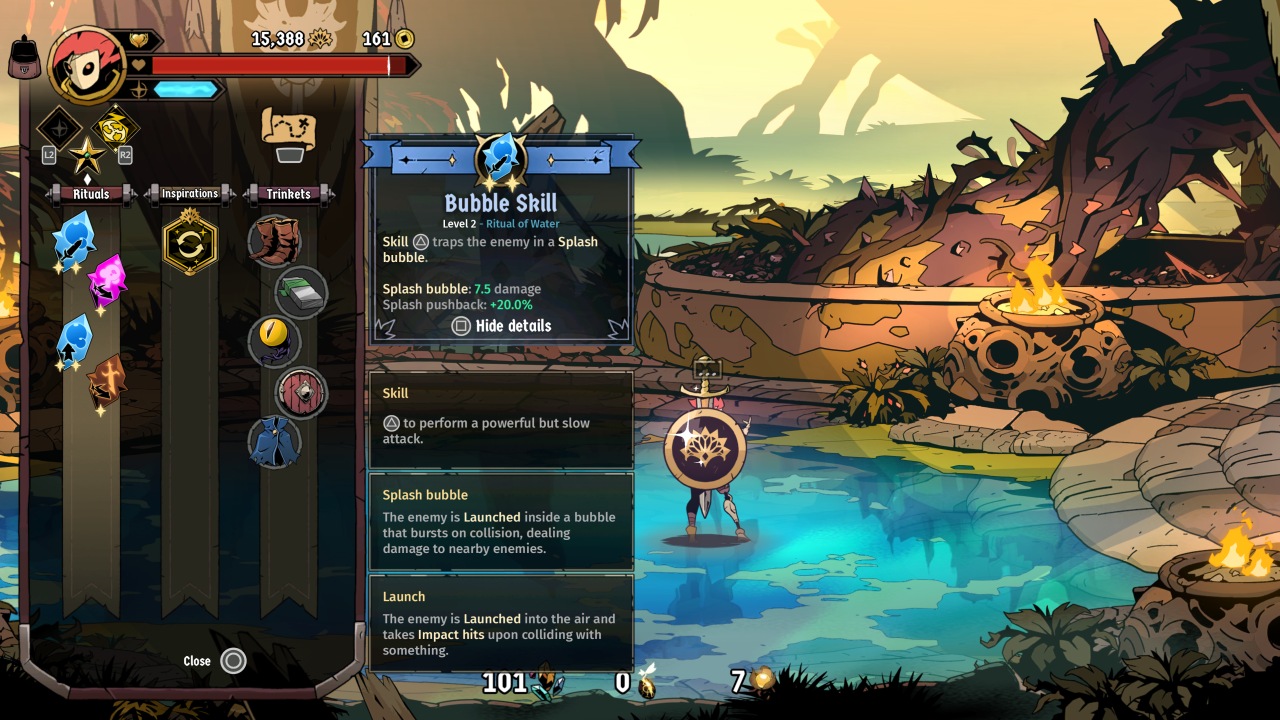
The roguelite elements meld nicely with the beat-em-up core, providing a lot of ways on how you want to approach your build. Clearing an area of enemies gives one of a variety of awards, often currencies to be spent either during or between runs. Rituals of different elements can be bound to different attacks, with each element enhancing your attacks in a particular way. Every so often the gold you’ll find can be put towards items in a shop, enhancing your stats or offering buffs under the right conditions. Perhaps most valuable of all are Inspirations, character-specific enhancements like a divekick, or being able to deal far more damage from behind.
As is standard for the subgenre, it’s very much possible to build yourself into an absolute monster if you’re careful with the upgrades you pick. With the right choices and some luck, you’ll be able to flood the screen with summoned allies, or throw projectiles everywhere to shred enemy health bars. You can influence this somewhat by taking the right paths to reach the rewards you want, giving you a headstart on that perfect build. There is some system mastery required to really have a real chance of success, which may be somewhat of a harder sell for the traditionally skill-focused beat-em-up genre.
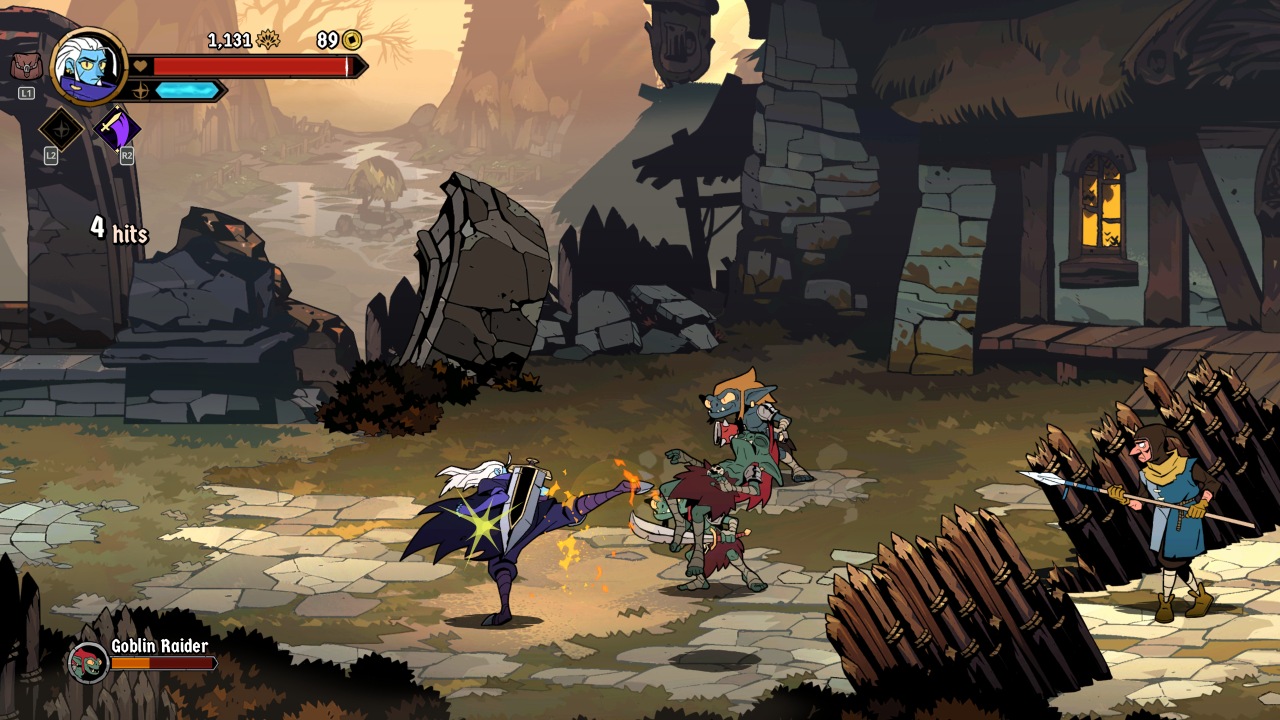
That’s not the game ever feels too easy; even while you’re juggling enemies up and down the screen, there’s almost always some other enemy you have to keep an eye out for, ready to interrupt you. Even the environment often works against you, featuring pits that will take you as quickly as an enemy, or falling rocks to avoid. The enemies themselves are well varied in their approaches and attack patterns, each one still feeling distinct in their own way. Ranged attackers mix with fodder that attack quickly, soon joined by mages and berserkers that can armor through your hits. Rarely, they’ll even perform a juggle on you themselves, although such combos are rare enough that you’ll never feel their attacks are inescapable.
Bosses prove to be where your first major roadblock will be. With varied attack patterns and the ability to armor your way through attacks, more than a few of your runs will end to them. This is where mastery of the clash and deflection mechanics can prove extremely helpful, once you’ve learned how they fight. The endgame in particular proves to be especially fiendish, from a very tough fight with Azra, followed immediately with the game’s true final boss. This fight kicks off by stealing one of your precious revives, and should you not have one, the fight and your run end in immediate failure.
The game is difficult, certainly, but aside from that particular surprise, it never feels entirely unfair. It almost never feels like that there was something you couldn’t have avoided if you had played a little smarter. Reaching the end without putting a hefty amount of resources into your meta-progression is nigh-impossible, although this is hardly unusual for this sort of game. You’ll purchase new options for future runs, as well upgrading your stats to improve your survivability, slowly but surely reaching further towards the end. Should that slow buildup prove too slow, the game also allows you to freely adjust how much damage you give and receive, giving everyone a chance to see the entirety of the game.
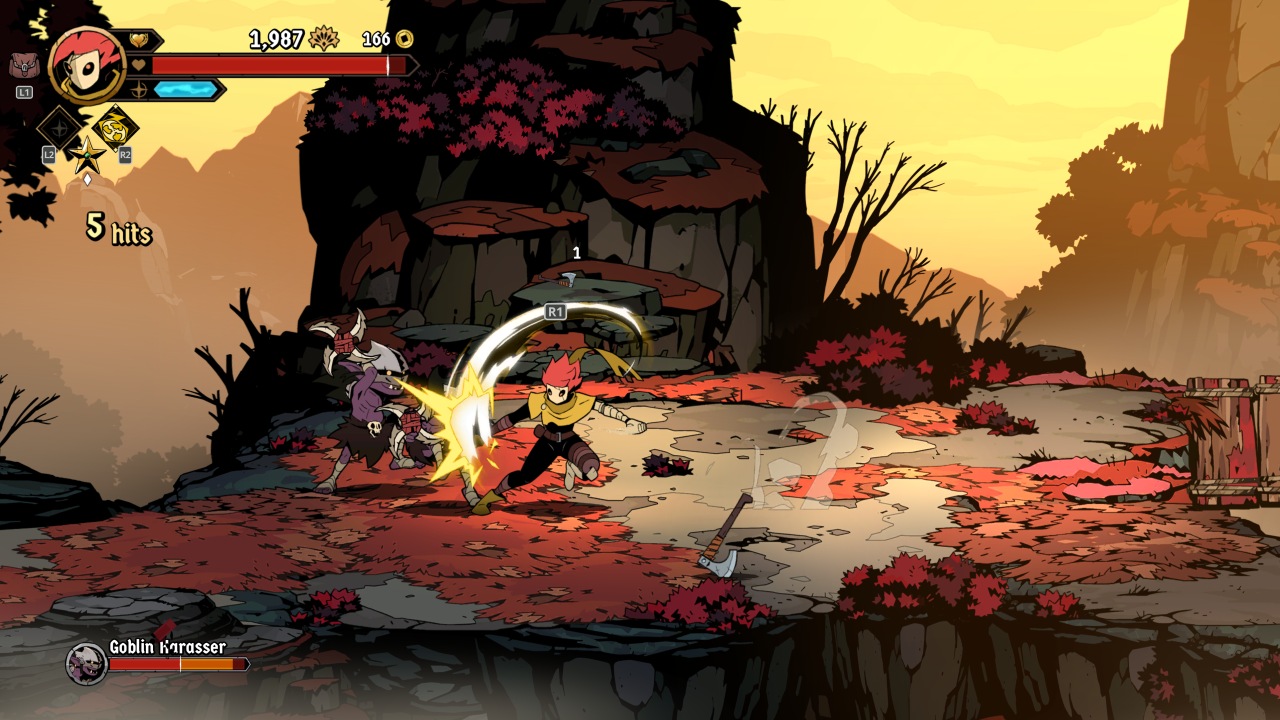
The act of landing blows on enemies always feels snappy, the feeling of landing that perfect deflect is always thrilling. The pacing of moving from area to area is near perfected, with never a moment where you feel like you’re caught in a slog.The one caveat is that the game has a rather ham-fisted way of extending its playtime before you see the ending, which will prove to be an unpleasant surprise to the unprepared. The fact that there’s always some new thing to see, some new reason to take a path you haven’t tried in a while, still helps mitigate even this.
The game’s art style takes most from European comics, with a muted, melancholy palette that fits the grim tone. The backgrounds are especially well-done, with the hand-animated characters all fitting in beautifully. The music, while far different from the developer’s previous games, fits well enough. The soundtrack features a mix of composers, with Ori and the Blind Forest’s composer Gareth Corker handling the majority. The highlight may well be Mick Gordon’s surprising appearance with the Underking boss fight, mixing his traditionally grungy guitars with sampled horn snippets straight from an old fantasy movie.
While the roguelite genre may feel inescapable at this point, Absolum stands as such a solid foundation that one more example certainly doesn’t hurt it. Compared to its competition, some may find it not as charming or intricate as Hades, or as easy to play as Double Dragon Gaiden. On its own merits, it rivals and at times even overtakes the legendary Streets of Rage 4. Everything that makes it unique only makes it stand out further in the increasingly crowded beat-em-up revival.