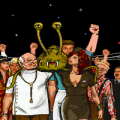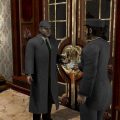

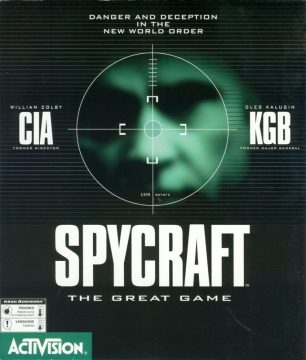

A lot can be said about Activision’s stewardship of the Call of Duty series and its bent towards conservative American audiences, to the point they had Oliver North, a man nearly nailed for high treason during the Reagan administration turned Fox News personality, input on and have a role in Black Ops 2. However, what can’t be said that it was their first try at this. Go back to 1996 and you’ll find an FMV adventure game about a CIA agent uncovering a massive conspiracy threatening a post-Cold War world, which includes a former CIA deputy director and KGB defector among its consultants and cast.
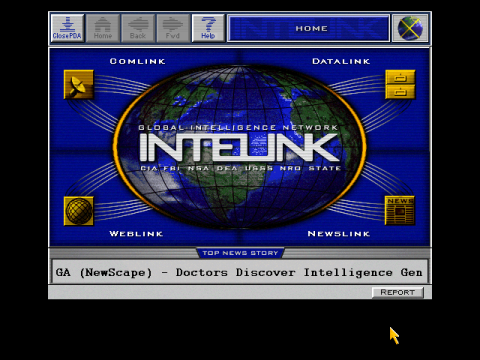
Spycraft: The Great Game is a fascinating history piece. It might just be one of the best games made in the FMV heavy format that was all over PC gaming at the time, one of the rare few that managed to get genuine accolades at the time when people were sick of these. It also picks of-the-time material to focus on, telling a story about US and Russian relationships after the fall of the Iron Curtain, with a proper espionage writer in James Adams – and that’s not even getting into the two elephants in the room.
William Colby and Oleg Kalugin were very active spies during the Cold War, responsible for assisting in assassinations, political instability in each other’s own countries, and turning agents against their own governments. Colby, in particular, was a high ranking member of the CIA who’s had his hands involved in Vietnam, that alone making him a target for conspiracy theorists, and for good reason.
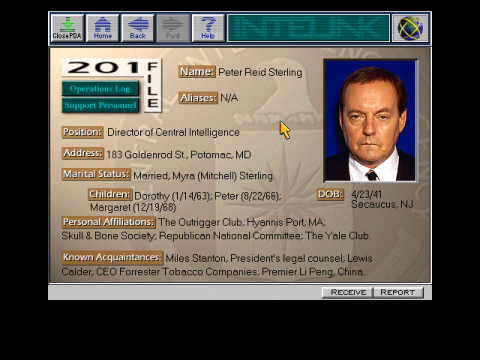
By the time they ended up helping with Spycraft, they had become disillusioned, Kalugin due to politicians ultimately turning against him and becoming frustrated by being re-assigned to focus on the home populace instead of other countries, with Putin’s rise becoming the last straw (and a figure he’s still very critical against today). Colby, on the other hand, ended up testifying during the Church hearings, being so open about the various dirty business the CIA was involved in (including planned assassinations, MK Ultra, and much more) that it resulted in him being pushed out of the intelligence community for that honesty.
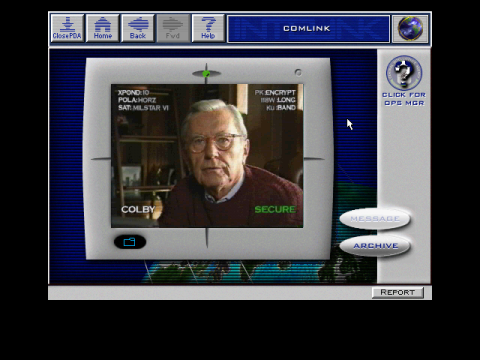
The two apparently got along when they ended up on Spycraft together, old spies who respect each other’s resolve and skill. In terms of acting, Colby had some short scenes where he would give advice to your character as an adviser, if a bit wooden due to his lack of acting experience, while Kalugin had some natural charm he made use of for his one scene to give a lead on the mission. For as small as their roles were, though, they would be central to the game’s advertising. Activision bet big on this game, still struggling after the Atari industry crash in the 80s, and a lot of ambition went into the final project. Multiple story branches and endings, full proper cinematography rarely seen in FMV games, all crammed on three disks.
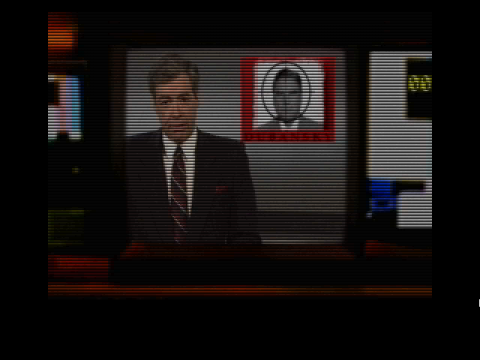
How much influence Colby and Kalugin had on the game is questionable, though maybe they had something to do with one story choice where not torturing a suspect is the correct option. What is notable is that the game’s tone paints intelligence work as morally gray, trying a more realistic and politically detached take with what gets results is justified for getting that result. The game sets this up early, with a speech about “the great game” of espionage and the challenge of playing it well. That definitely reminds of the Call of Duty series, particularly the Black Ops games and their often more cynical take on military action and conspiracy, though while also sticking to a very American perspective that dehumanizes all involved on some level.
Still, the lack of engaging with the moral questions at all could arguably still fall into shades of propaganda. It’s losing sight of the more interesting and engaging parts of the subject matter – really highlighted when you realize Kalugin was almost attacked on set when a worker recognized him and accused him of killing his father. The shade of End of History theory nonsense that was big at the time does also make for an interesting historical artifact.
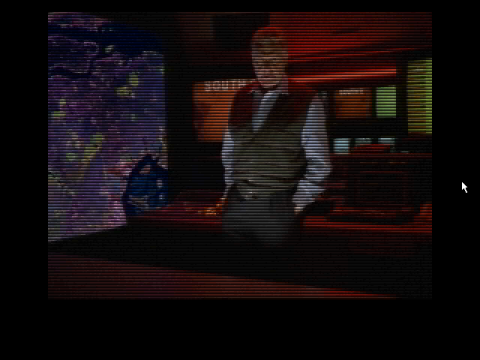
The story is mostly interested in exploring a post-Cold War world and how Americans and Russians work together to deal with problems with their intelligence agents, but sticking to a very American focused perspective. You play as Agent Thorn, a rookie CIA agent who ends up in the middle of a massive investigation revolving around mysterious assassinations, including another CIA agent and a Russian presidential candidate. Much of the cutscenes are down to business meetings and discussing recent finds, with some highlight moments mixed in for major story moments. The assassinations aren’t just mentioned, but shown, with one of them quite shocking, helping the game feel like it has a genuinely moving story as you go about your investigation.
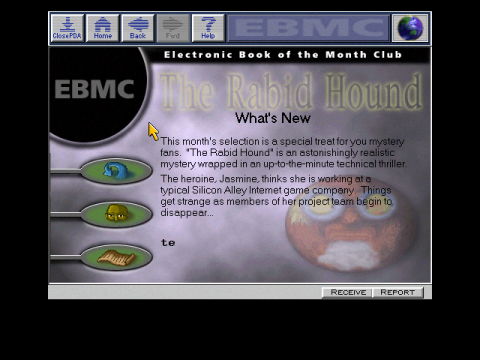
Berris’ work as the live action director is well above all other FMV contemporaries from the time, using built sets instead of digitized actors on green-screen, talented character actors who give their all instead of going for big names that end up slumming it (see Walken in Ripper), and some creative lighting choices that make most every area feel unique. There’s even an opening tracking shot to help build the mood of the game, like a genuine opening scene for a feature film. The decision to use HTML to create fake web pages and an early online system for player discussion even helps with making the experience as involving as possible, much of the gameplay taking place in computer programs, document pages, and so forth.
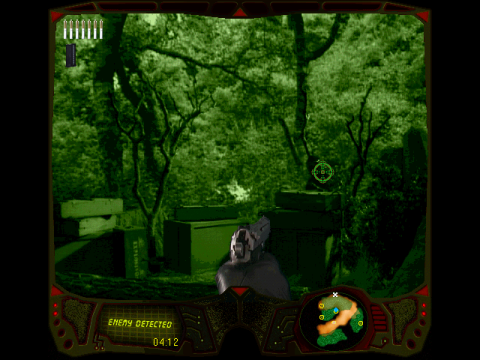
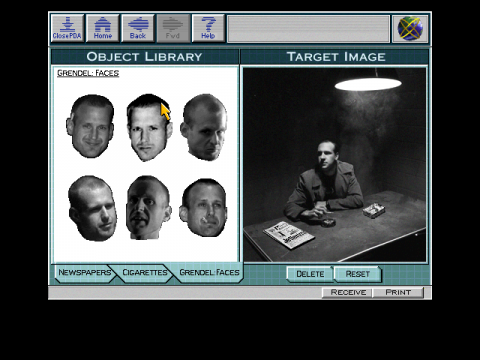
The puzzles are quite clever, using spy fiction and a bit of fact to create unique types of puzzles that wouldn’t be common in games until the 2010, with odd exceptions like Uplink in the early 2000s. We have early Photoshop, a program to trace the trajectory of bullets, various databases with hyperlink navigation, audio examining tech, and plenty more toys to mess around with to find necessary info. The only real stinker mechanic is a confusing first person shooter mode where you have to pay attention to a radar rather than your environment, but it’s barely used. The game also gets a bit too open around the first trip to Russia, causing some puzzle overlap, actually trying to solve these puzzles proves challenging, rewarding, and most importantly, not disconnected from the story.
Where many adventure games, and especially FMV ones, had a bad habit of including disconnected puzzles for the sake of injecting gameplay at often unnecessary story beats, Spycraft has a focus on making sure every puzzle directly connects back to the story and what you are trying to accomplish. They even affect the various routes and endings present, branching paths being extremely rare for the era in American games. Just how far those branches went is even more surprising, including straight up side flips. The end result is a truly impressive game, that got a lot of positive reviews at the time, but its heavy system requirements and the stigma against FMV games of the era kept it from really breaking through. As for now, the open structure at points can confuse if you’re not paying attention – taking notes is recommended, particularly a “to do” list once you get to Russia.
Also not helping the game’s chances at the time was William Colby’s mysterious disappearance on April 27th, two months after the game’s release during a routine canoe trip. His body would turn up on May 6th, most likely suffering a heart attack or stroke and drowning during that, though there’s no shortage of conspiracy theories around his death arguing against this. If any further plans were in the works, since the game does end with a sequel tease, this would have been the final nail in the coffin. What we’re left with is one of the best FMV games of the era, if not the best, tainted with the reality of where America went after its release, not unlike the early Police Quest games when compared to what would follow when Ken Williams invited the man behind the Rodney King riots in his office.
It is a classic that has been overlooked by many, and also a significant stepping stone to the dominance of one of the most corrupt giants in the industry, and the blueprint they would use in some of the most politically ugly games ever made. A truly controversial legacy, not unlike the men involved in its creation.
Related Articles at HG101: