

What do you get when you mix the unique battle system from Megaman Battle Network, the high-speed intensity of Eschatos, Cho-Ren-Sha 68k and other similar shoot-em-ups, and the addictive gameplay loop and procedurally-generated challenges of Balatro, Rogue Legacy and its modern indie kin? You get Thomas Moon Kang and Humble Games’ One Step From Eden, one of the coolest games to have come from the roguelite boom of the 2010s and 2020s, and one that sticks far, far closer to old-school roguelike tradition than it may first appear.
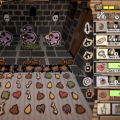
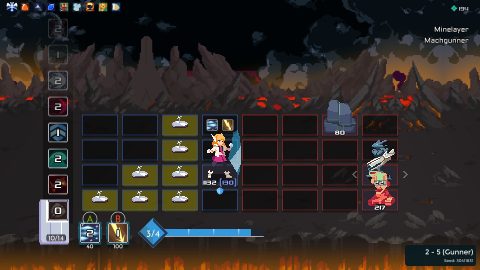
Combat plays out in a 4×8 grid split in two 4×4 sectors populated by enemies, obstacles, hostages and other assorted destructible objects. With only the leftmost sector to move around in and four castable Spells, one perk-granting Artifact and an unique Weapon to start with, the player is challenged to clear the grid of enemies to advance – do so, and you are rewarded with experience points that build towards a new Artifact, a choice of one out of three Spells to add to your Deck and money to spend in any shops you find along the way; pick a Spell, try it out, mess around with your growing, randomly-shuffled deck, advance to the next stage, rinse and repeat. One Step From Eden eliminates the often-tedious overworld traversal of the Battle Network games in favor of focusing exclusively on action, with run progression being dictated by an arcade-like system where players progress through a sequence of worlds, each capped off with a boss battle and a choice of which area to tackle next. The stages themselves are procedurally-generated battle scenarios spread across a thrice-split, six-step branching structure leading up to the boss encounter, and revolve around a variety of objectives – all while sharing the exact same movement and combat mechanics.
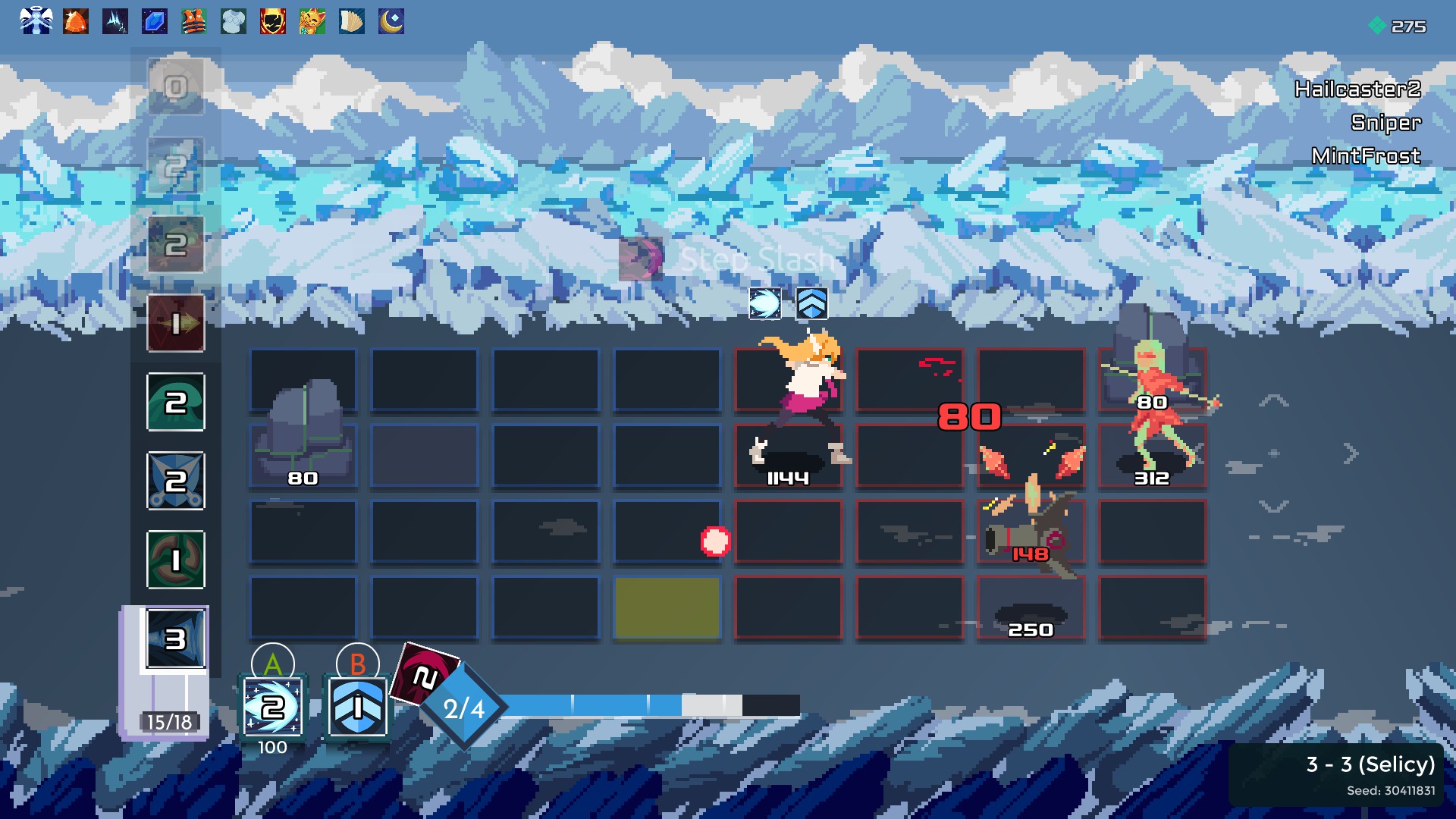
The drastic changes to the Megaman Battle Network formula that One Step From Eden makes don’t limit themselves to the between-battle progression, as the game also gets rid of one of MMBN’s most distinguishing features: the Custom Gauge. In its place is a regenerating Mana gauge which limits the number of Spells which can be cast in quick succession and the ability to freely shuffle your deck of Spells whenever you wish by hitting the left trigger, an option whose utility grows over a run as you amass a collection of Artifacts that synergize with it. In fact, synergy is the name of the game in One Step From Eden, as all game mechanics – player health, shields, mana amount and regeneration, defense, different kinds of damage, status stacks and procs, and even movement – can be made to interact with one another through the careful and combined use of Spells and Artifacts, and the difference between a good build and a bad build often lies in the synergies one has or hasn’t taken in consideration when building their decks, and how reliable those are in battle. Spells of a certain type can be made to show up as possible rewards more often through a choice offered in the player’s deck screen, accessible between stages, and the drop rate for rarer Spells is regulated by the Luck stat, which, in a very shoot-em-up-like twist, also controls the game’s difficulty.
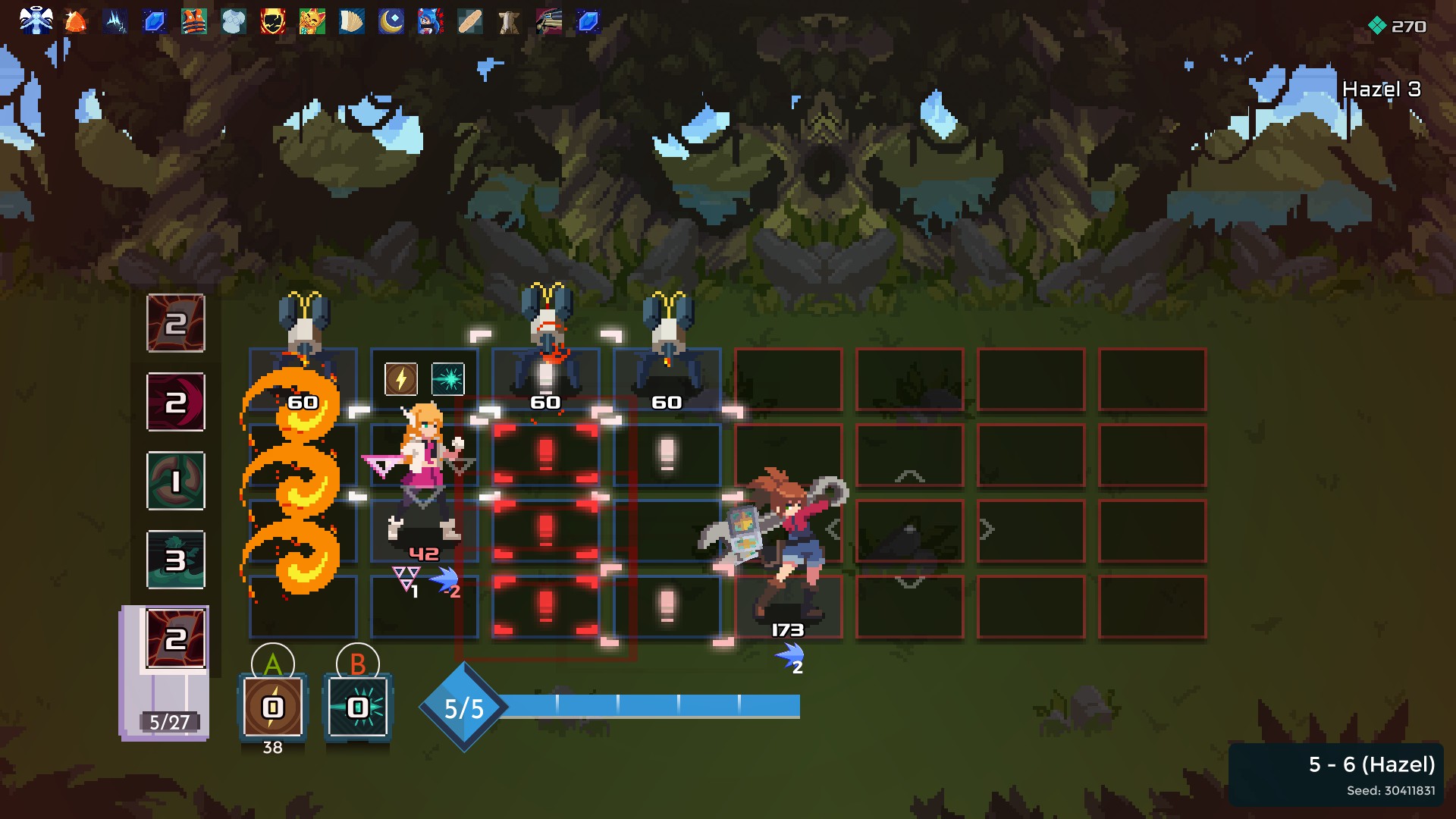
The playable characters and their starting gear, despite looking like rejected Guilty Gear characters, are mere suggestions on how to plan ahead, build your deck and play; in that way, One Step From Eden is similar to traditional, turn-based roguelikes in how it challenges players to find the most optimal combination of tools and tactics for their playstyle (aided or hindered by their character of choice) – while also allowing a near-infinite amount of those to blossom naturally through emergent gameplay. All of the classic roguelike battle tactics – including, but not limited to, enemy and terrain manipulation and using curses and debuffs in your favor – can be applied here, which, when combined with the intricate manners in which systems can interact with each other and the real-time combat’s unrelenting speed and challenge, can make for incredible moves, artful dodges and crazy comebacks that’d make even the finest one-on-one fighters envious. The excellent level of visual clarity and audio feedback here is also taken straight from versus fighters, and is the cherry on top of a great presentation that combines minimalist UI design with GBA-like pixel art and a fantastic synth score chock-full of memorable tunes (the unique boss themes in particular stand out as incredibly catchy).
All in all, One Step From Eden is a must-play for fans of any of the many genres it throws together, and stands on its own legs as an excellent game with loads upon loads of replay value even if one isn’t familiar with its inspirations. It’s available for all current-as-of-2020-and-beyond platforms, with the PC version of course having built-in mod support for even more replay value and chaos.