Shadow of Memories (シャドウ オブ メモリーズ) / Shadow of Destiny - PlayStation 2, Xbox, Windows, PlayStation Portable (2001)
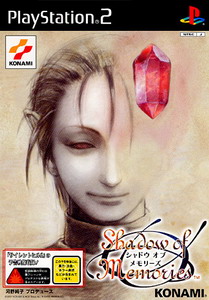
Japanese PS2 Cover
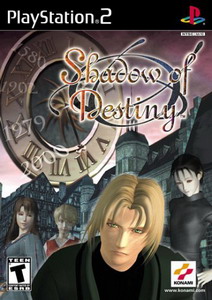
American PS2 Cover
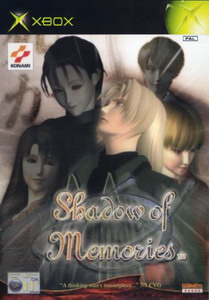
European Xbox Cover
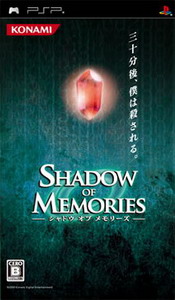
Japanese PSP Cover
Time Travel in Video Games
Time travel stories hold an universal appeal to mankind. Be it simple visits as a mere spectator without influence, like Charles Dickens' Christmas Carol, the "visitor from the past", like the British medieval wizard Catweazle, or elaborate cause-effect constructs about the manipulation of the flow of time like the Back to the Future trilogy - people have always obsessed over the idea of changing one's past, killing Hitler, or getting an outlook on the future.
So it hardly comes as a surprise that video gaming, too, is full of time travel stories. We've prevented the alien invaders from destroying Earth as the Duke himself in Duke Nukem Zero Hour - not without giving his past self a call through the centuries - snatched time crystals from the Time Splitters, hunted Dinosaurs together with the Native American Turok, and much, much more.
However, most of these games share one common characteristic: time travel is merely used as a plot device, while games that incorporate the flow of time into their gameplay are rather few and far between in comparison. Some RPG or adventure games have experimented with time causalities, where your actions in one time period aid to your advancement in the future. Chrono Trigger, The Legend of Zelda: Ocarina of Time, and Onimusha 3 all follow the basic concept of manipulating persons or objects in the past to achieve your goals in the present. Another approach is taken by Prince of Persia: Sands of Time. Other than the original, whose only relation with time was to limit your adventure to one hour, the Prince here holds the Dagger of Time, which gives him the power to slow down the flow of time, or actually rewind it a few seconds to undo his mistakes. This kind of gameplay device was (somewhat) recently refined by the downloadable adventure/platformer Braid.
By far the most consequential example of gameplay-relevant actual time travel for a long time was delivered by Lucasarts' comedy adventure Maniac Mansion: Day of The Tentacle, whose three protagonists are stuck in seperate timelines, and can only interact by flushing objects through the time travel toilet (yeah, you read that right). The main drive around most of the puzzles was to change something in the past, so that problems would be solved in the present or future. Day of the Tentacle should stay the lonely king of time travel in games for a whole eight years, until Konami released Shadow of Memories for the PlayStation 2 in 2001, which became finally a worthy queen on its side.
The story begins
The story of Shadow of Memories opens with a murder - your own. After a dozing off while having a cup of coffee, your protagonist, Eike Kusch, gets assaulted immediately as soon as he leaves the cafe, knowing neither who killed him nor why. However, instead of resting in peace for eternity, Eike finds himself in a surreal room, summoned by a strange androgyne voice, who grants him the opportunity to go back in time to prevent his untimely demise. After avoiding the immediate threat through simple means several times, like gathering a crowd so that the killer can't possibly strike unseen, he soon realizes that there's a major force after his life, and he seems to be destined to die. Therefore, he heads on to a journey through four time periods, going as far back as 1580, to change his eternal fate.
Characters
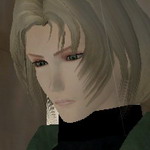
Eike Kusch
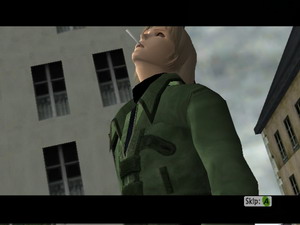
Eike is the protagonist of the game, who seeks to solve his own murder case. His past is an even bigger mystery. He has no family and seems to be a mere visitor in Lebensbaum, for Eckart Brum is his only known acquaintance here.
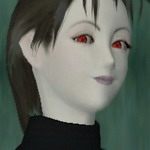
Homunculus
The strange being that brings Eike back to life and provides him with the power to travel through time to change his fate. He pretends to act only out of goodwill towards Eike, but his true motivations are unclear. His name - as well as others in the game - is a spoiler when you're familiar with Goethe's Faust.
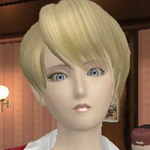
Dana
She works as a waitress in Café Sonne, Eike's favourite coffee shop. Just as him, she has no family, and thus feels it difficult to find her place in life.
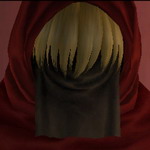
The Fortune Teller
This mysterious woman seems to know more about Eike's destiny than he does himself. Not only does she provide him with insight about the works of fate, but she also can inform him when he is going to die next.
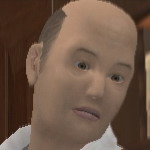
Eckart Brum
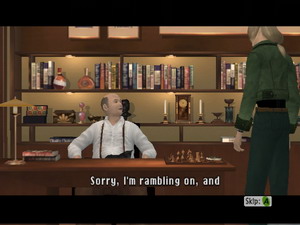
Owner of the museum in Lebensbaum, he is an old friend of Eike. Since he has lost his wife and daughter a long time ago, he lives alone with a bunch of cats in his family's mansion.
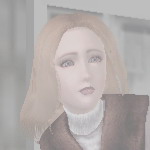
Miriam Brum
Eckart's wife. She was killed under dubious circumstances twenty years ago, her newborn daughter taken away by he murderer.

Alfred Brum
He is Eckart's ancestor in early 20th century. Just as his descendant, he lost his wife, but he lives with his daughter and son.
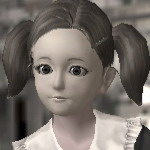
Sibylla Brum
After her mother's death, she quickly assumed the role of homemaker. She seems to experience a bit of resentment due to having to grow up so fast.
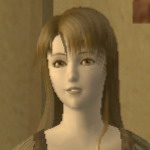
Margarete Wagner
The first friend Eike finds in medieval times and the daughter of an alchemist. She doesn't quite adhere to the norms of her society and dreams of a different life.
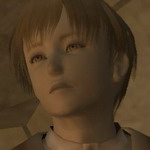
Hugo Wagner
Margarete's cheeky little brother. Growing up with his mother's ilness and his fathers obsession with alchemy makes him an emotionally confused young boy.
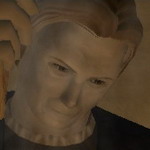
Wolfgang Wagner
The alchemist in medieval Lebensbaum, father to Margarete and Hugo. He spends his days in a laboratory in the cellar, searching for a cure to his wife's illness.
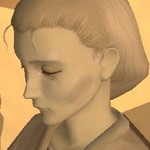
Helena Wagner
Much to the distress of her whole family, the alchemist's wife is suffering from an incurable and fatal ilness.
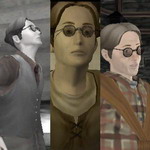
The Franssens
A famous painter, a photographer and a movie director. In every period Eike comes into contact with this lineage of visual artists, all of them looking alike. If they were evil and mean, they could be called the Tannens of SoM.
Welcome to Lebensbaum
While Shadow of Memories' story and characters are already heavily inspired by Goethe's works, Lebensbaum (literally "Life Tree", although there is a real plant with the botanic name Arbor Vitae), the town where it takes place, is depicted as a typical German Old Towne. In fact, the developers' inspiration can be clearly traced back to Rothenburg ob der Tauber. Its market place with the city hall, and especially the Plönlein, one of the most famous road partings in the world, are more than just hinted at. It's much less of an accurate replica in other parts, though. There is, however, no way of knowing if Lebensbaum is supposed to consist of more than just the rather small Old City, since the city wall is completely intact and closed, and the entire plot unfolds inside of them, giving you neither reason nor opportunity to leave.
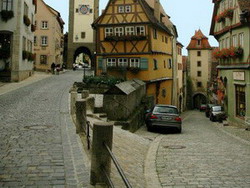
The Plönlein in Rothenburg ...
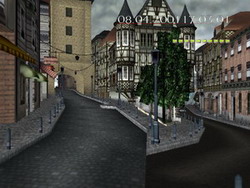
... and in Lebensbaum
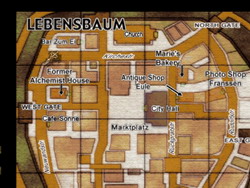
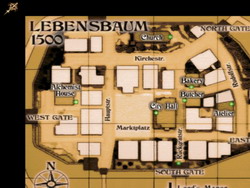
Two maps of Lebensbaum in different time periods
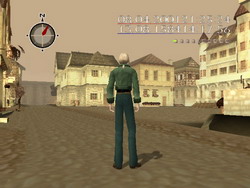
1584
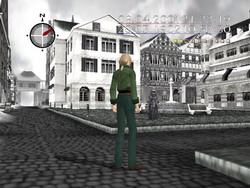
1902
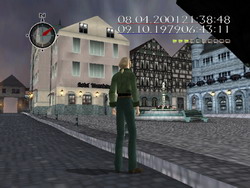
1979
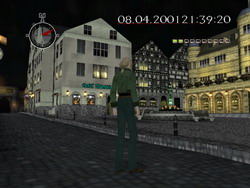
2001
The market place through the ages
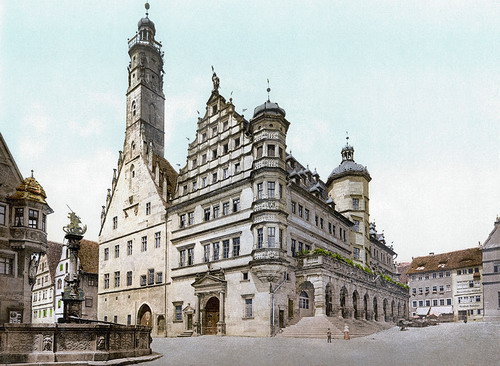
Rothenburg's city hall in 1900
How to travel through time
Shadow of Memories would be considered as an adventure game, at least insofar that there are no action elements and you're just supposed to solve problems using your head. However, the game is strongly rooted in the Japanese adventure tradition, which favors a more streamlined approach than most Western players are accustomed to. Most of the tasks consist only of talking to the right person at the right time. Sometimes you are required to use an item or give an answer in a dialogue, but almost all of those puzzles - if they even can be called that - are simple, hardly imposing any challenge on the player. The 3D graphics and the Western European setting are probably the only things that rendered overseas publishing deals for this game possible.
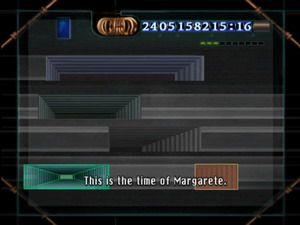
So, most of the time, you're just walking between places to gather hints, talk to people, and find the occasional item, whereas a map and a compass guide you through the town, and if you still get lost, Eike also keeps a notebook so that you can check your current objective at any given time. The game's specialty comes into place when you notice that it's just not the right time to solve your problem. Here, you use your ability to shift time, that Homunculus has bestowed on you in form of the "digipad", a pocket-sized device that simply lets you select the time period you want to travel to. Obviously, you can't travel to any old time period. Rather, you need to have any kind of "personal connection" to the time. For example, you can only travel to a certain character's ancestor's time after you find an old photograph of him.
You have to take care not to spend too much time in the past, though - your "present" time is constantly passing as well, and if you fail to get back before your "fated hour" - that is, the time you're supposed to die according to fate - you'll vanish into oblivion. (This is where the game's model of time travel can be criticized for inconsistency, as "San Dimas Time", named after Bill and Ted's hometown in Bill & Ted's Excellent Adventure, usually doesn't make any sense. It can, however, be explained away with your attachment to time periods that you hold a personal connection to. So possibly you need to come back to a time according to your biological age - who knows?). This is also the only way to truly disappear - after every "normal" death, Homunculus resurrects you to his strange room in the void between time, not without mocking you for your failures, but also giving valuable hints as to what you did wrong.
Time in the game is usually passing by in real time, but cutscenes and dialogues have a set amount of time they're supposed to take. This gets added to your clock afterwards, even if you should chose to skip the scene, which only becomes possible in later playthroughs. But the clock isn't everything you have to pay attention to - your time machine also consumes one of ten energy units for each travel. So you have to look out for new units lying around every once in a while, lest you run out of charges, and are stuck in your current time period until you find some.
However, the strongest appeal of Shadow of Memories lies in your influencing the present by changing the past. The question of "what if" usually provides the answer to your problems. One of your very first assassinations is executed from an ambush behind a tree. If it weren't for that tree, the murderer couldn't have assaulted you. So what do you do?
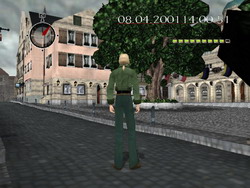
This tree is your doom.
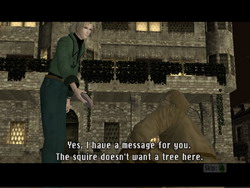
To the root of the evil.
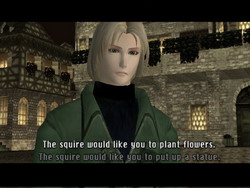
Pick your choice.
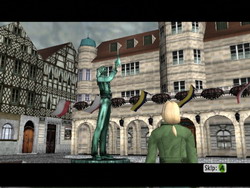
Saved... for now.
The story stretches over eight chapters, plus a prologue and an epilogue, during which your life is threatened nine times. After overcoming each of them, you get the opportunity to save your game. You don't need to play a chapter to the end in one sitting to prevent losing your progress, though, as a quick save is generated at your current location when you quit the game. Just make sure you don't accidently overwrite it.
Alternate timelines
As seen in the example of the tree, sometimes you can make choices as to how exactly you're manipulating the past. Most of them are either purely cosmetic, or wrong choices only lead to your repeated death. There are, however a few major choices that determine the outcome of your adventure. No worries, the game makes sure you recognize those by asking for your confirmation to that particular choice once again. All in all, there are six different endings (plus even variants of some), each of which unveils its own fragment of the truth to the greater mystery. So to really learn what's going on, you need to see all of them, multiplying the time it takes to truly complete the game . This aspect is direly needed, since a first playthrough barely takes any more than 3-4 hours, and when you're able to skip cutscenes later on, the whole story can probably be finished in less than an hour (even the ingame "real time" doesn't exceed one day and one night, despite the great temporal distance covered). There has been discovered voice-over for even one more ending that isn't included in the final game in the files of the PC version. It seems to be a variant of the A-ending, much like there's two different versions of ending B in the game.
But also many of the minor choices lead to quite a few encounters and cutscenes you can miss. The game actually keeps track for every single sequence, and after it is finished once, presents a total percentage of scenes seen per chapter, so absolute completionists will probably have to invest quite a lot of time before they can feel satisfied.
Did you ever gnash your teeth by the fact that your character in a video game always had to stay stupid and ignorant to the most obvious tricks and traps, while you knew what's gonna happen beforehand all the time? Not so in Shadow of Memories. When you've unlocked all normal endings, you can play know-it-all by recognizing Homunculus and showing little surprise to the news of your death. This only makes for a very short sojourn into the world of Shadow of Memories, but is a neat touch nonetheless, and offers Eike the opportunity to solve his fateful dilemma once and for all.
A View (and listen) of the past
Shadow of Memories first appeared on the PS2 in a time when developers had just managed to make games that looked slightly better than they would on the Dreamcast, and it kinda shows. The characters, while sporting a comparably high polygon count, can't escape that certain plastic doll look that was rather common in those day's games. The surroundings are even more of a mixed bag. While most of the few interiors look very good and really feel authentic to each respective time period, outdoor objects like houses, cars and trees are composed of noticeably fewer polygons, and the textures range from astonishingly high-res to utter garbage. No wonder you can switch to looking around in first person only inside of buildings, while you're confined to rotating the camera around Eike at the outside.
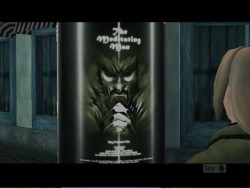
Wanna guess which one of these posters is plot relevant?
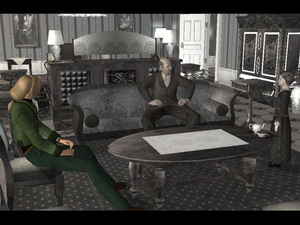
Each time period is indicated by its very own color scheme. In medieval times, everything has a sepia tone, 1902 is black and white, and the 1970s are just a little bit pale, while Eike always keeps his present-day colors, which makes for an artistic look.
In 2002, the game was ported to PC, which, other than obviously higher resolutions and a few (underwhelming) additional graphical effecs, didn't do much to the visuals. Later that year, an Xbox version was released exclusively in Europe, which, rather than to improve the visuals, brought new problems, like a less stable framerate and occasional disjointed textures, which made it look almost worse than the PS2 version. It also lacks some promotional videos that could be unlocked on the PS2.
Shadow of Memories seemed all but forgotten long since, when suddenly Konami announced a new port for the PSP in 2009. This handheld version looks great, almost on par with the PS2 game. The framerate doesn't quite keep up when walking around in the town, and purists count missing polygons in the interiors, but it's quite impressive what Konami's programmers pushed the PSP to. Surprisingly, the entire game was even re-dubbed. The new voice over sounds similar enough, maybe a little bit more professional and the text was slightly polished in a few lines, but in turn it sacrifices quite a bit of the cheesy value without being really that much of an improvement. Fans of the original will especially miss Charles Martinet's stunning performance as Homunculus from the first dub. Otherwise it remains vastly the same, only the introductionary FMV got "remixed" with visual filters and changed music, and now (annoying) tutorial screens pop up during the game.
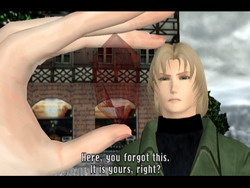
Transparencies on PC
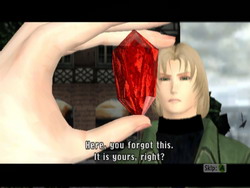
Blurring on XBox
Music in Shadow of Memories is kind of a rare commodity. Most of the time, you'll walk in silence, to the ticking of a clock, or to a pretty low-key standard melody. During cutscenes, there are a few atmospheric tunes to be found, but don't expect anything that'll blow you away.
The sound effects sound very artificial, but the voices are overall fitting very well, if not always quite convincingly acted, and especially Homunculus sounds totally creepy, and he's voiced by Charles Martinet, of all things, whom most people should know from the immortal phrase "It's a me! Mario!". Eike sounds a bit like a wuss, though. As an interesting note, the "voices" of the cats in the game are done by Junko Kawano, the designer and producer of the game herself.
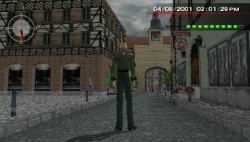
Shadow of Memories on the PSP
At the end of time
In the end, it's hard to explain to people why Shadow of Memories is such a great game. That's because, objectively speaking, it isn't. It's short, it's not very polished, and there's no such thing as a challenge, neither to your reflexes nor your brain. In fact, it's just barely enough game to make you accept it as such and not dismiss it as an interactive movie/novel and thus a non-game.
Its strengths clearly lie in the atmosphere and intriguing, complex plotline, whis is rarely equaled in video games. Part of this is certainly thanks to inspiration from classical literature (a working title for the game even translated to "Night and Day of Walpurgis", referencing an event in Goethe's Faust), from which it borrows the themes of fate and the artificial creation of life, but the modern time travel elements give the themes covered a whole new twist, and by no means can it be called plagarism. Knowing Faust might foreshadow some of the plot twists, but that only helps to enhance the experience, since by far not everything plays out like you come to expect due to this knowledge.
Links:
X-Cult Information and downloads to the unused ending and concept art.
Quick Info:
|
Developer: |
|
|
Publisher: |
|
|
Designer: |
|
|
Genre: |
|
|
Themes: |
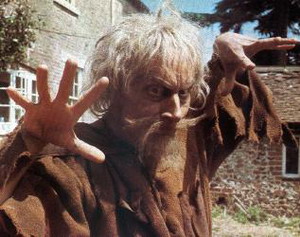
I don't fear this electrickery you call "Peeastoo".

Riding the toilet to the founding fathers (Day of the Tentacle)
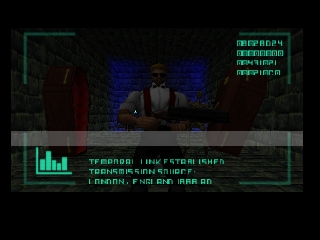
"I'm you, genius. Only back in Time." (Duke Nukem Zero Hour)

The introductory stroll through the town (Xbox)

Waking up at Café Sonne (Windows)

Am I... dead? (Xbox)

The silliest level borders ever - angry dogs! (Xbox)

Only one of many deaths you're going to die (Xbox)
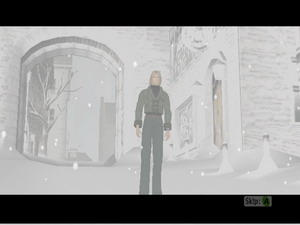
On a cold winter day ... (Xbox)
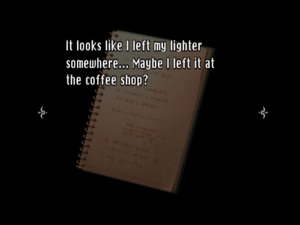
Your useful notebook (Xbox)
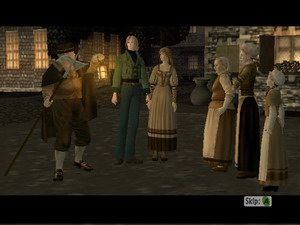
Uh, I'm in a tight spot (Xbox)

The church (Xbox)

Pedestrians are rare in Lebensbaum (PS2)
The time machine (Xbox)

One of the duller puzzles - give meat to dog. Is there anything dogs aren't abused for in this game? (Xbox)

The shady Homunculus (Xbox)

So this is what time looks like (Xbox)
Ever wonder why there's no color on old photographs? (Windows)
In Mr. Eckart's study (Xbox)
No Eike, smoking will kill you! (Xbox)
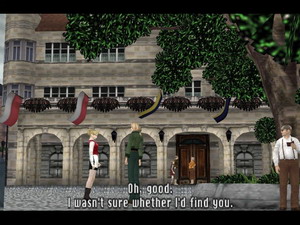
Who's that suspicous looking guy next to that ugly tree? (Windows)
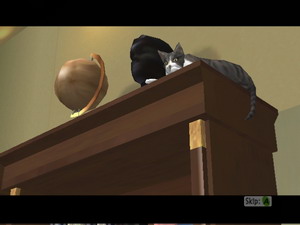
One of the cutest kitties in video game history (Xbox)
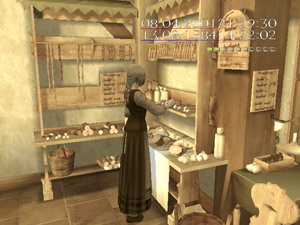
Looking around in 1st person (Xbox)
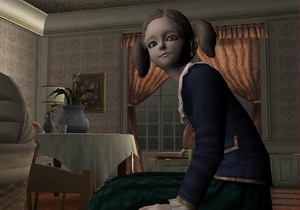
An early promotional screenshot, still without color filters (PS2)
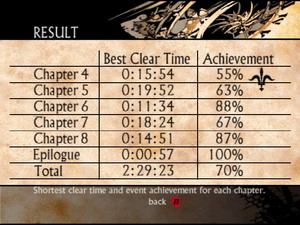
End Results (Xbox)
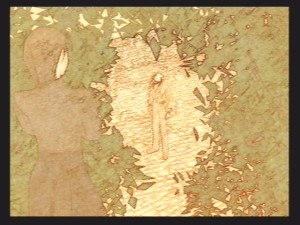
The sketchy-filtered intro FMV
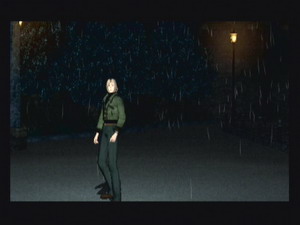
There are days where you just ought to stay in bed ...
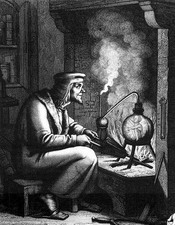
The creation of the Homunculus in Faust
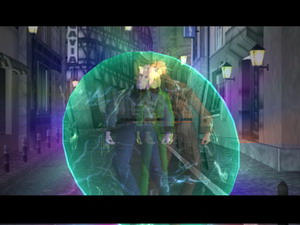
See ya in the future (Xbox)
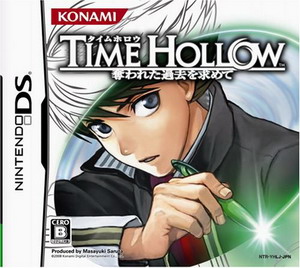
Japanese Nintendo DS Cover
The announcement of Shadow of Memories' writer and producer Junko Kawano's new game, Time Hollow, was exciting news for fans...at first. As it turns out, the game shares little of what makes Shadow of Memories so engaging, other than time travel playing a major role in the plot. Instead of a literature-inspired setting, we get a quite stereotypical anime story, complete with a whole bunch of teenagers and their everyday problems. The plot, revolving around the disappearance of the main character's parents, is actually more akin to The Butterfly Effect, in that it deals with your actions not having the expected consequences, so that you have to correct your doings again and again.
The gameplay takes a major step backwards as well. Shadow of Memories wasn't quite a pinnacle in that department, either, but Time Hollow is a prime example of a classic visual novel style game. It's much more linear, leaving you hardly any choices at all, and on top of that, instead of a complete town in 3D to explore, there's only a bunch of static backgrounds, and the gameplay consists of little more than clicking all over until the next interesting story portion, reading all of irrelevant banter that pops up. It can still be enjoyable if you can warm yourself towards the setting, but it certainly isn't what you'd expect from a game that is refered to as a "spiritual successor" to Shadow of Memories.
Quick Info:
|
Developer: |
|
|
Publisher: |
|
|
Designer: |
|
|
Genre: |
|
|
Themes: |

Good to know!


