|
|
A History of Korean Gaming
|
|
재미나 Zemina / 새한상사 Saehan Sangsa
|

|
|
Profile:
|
|
Born out of the country's thriving bootleg industry, Zemina (the name can be read as "It's fun!" in Korean) became one of the first companies to also steadily release domestically programmed games. Most of these were still ports or reinterpretation of known games, like Super Mario Bros. or Tetris. However, in later years, their games became more and more independent of their archetypes, but they never emancipated themselves completely from other companies' material. The following game introductions are confined to titles where it can be confirmed that their role consisted of more than just hacking their "copyright" into the game.
While Zemina were a MSX developer first and foremost, most of their titles got also converted to the Samsung Gam*Boy/Master System. They even released one game under official license, Konami's Nemesis 3, as Salamander 2, all the while still selling pirate copies of the Japanese company's pre-1987 games. Like many companies at that time, their endeavors weren't limited to software products, but they also manufactured a number of accessories. Their catalogue included cartridge port divider modules, a MSX music cartridge, RAM expansions and a Famicom-to-MSX converter. The games were developed by at least three different teams: Lead developer Kim Eulsuk and Koo Eunjoong were responsible for Brother Adventure and the Super Boy series, Lee Kyuhwan and Lee Sanghun did Double Dragon and The Three Dragon Story, and team MBITM under Jeong Chanyong finally created the Bubble Bobble ports and Micro Xevious. There's a number of games left that don't contain any credits, though.
After Zemina's president Jeong Hyeonsu passed away around 19892, the Zemina brand and employees were taken over by an enterprise called Saehan Sangsa. In July 1990, Saehan Sangsa first exported a number of games, ram slot expansions and music add-ons in value of reportedly US$70,000 total to a Netherlands-based distributor called Centrum3. Later also the MSX Club Gouda imported Korean cartridges, mostly by Zemina. The games were sold in humble quantities in Europe, though.
There are and have been literally dozens of businesses that go by the name Saehan Sangsa in Korea, so it is quite impossible to secure any more information about it, although the copyright for all later Zemina games was registered in the name of one Kim Yeongjeong4. In 1992, Zemina's internal programmers left to form the company Open, and there have been no more Zemina games since then, so Saehan Sangsa either went out of business or quit putting out games by that time.
|
|
|
형제의 모험 (Hyeongjae-ui Moheom) / Brother Adventure - MSX (December 1987)
Brother Adventure
|
|
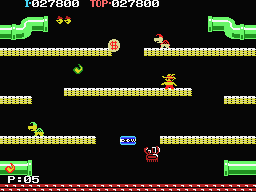
Zemina's first game is basically Mario Bros. The sprites are all redrawn and the characters renamed, so Titan is conquering the sewer with his brother Gamma. All the enemy types, levels and bonus rounds are in, but flickering is even worse than on the NES. Mario's trademark skidding is missing in this version, which makes it somewhat more playable, but physics behaviour is a little odd, to say the least. The best thing about this version is that music is played during the levels, where Mario Bros was rather silent.
|
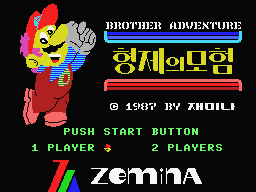
Brother Adventure
|
|
|
|
뉴 보글보글 (New Boggle Boggle) - MSX (May 1988)

Cover
|
|
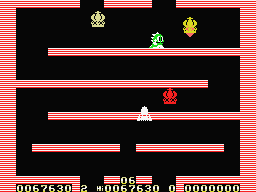
Now Taito's Bobble Bobble was actually officially ported to the MSX, but because of it's sheer popularity in Korea Zemina tried it with their own version. New Boggle Boggle is a remix with completely new levels, but the execution is all kinds of bad. The dragons get constantly stuck in the environment, enemy behaviour is broken and enemies get free from the bubbles much too fast. There's also a lot of missing features, like the EXTEND letters and various special items. Worst of all, the music sounds like an elementary school student tried to imitate the melody on a carillon.
New Boggle Boggle hasn't been developed by Zemina's internal developers, but rather a team called MBitM, which should carry on to contribute games published under the Zemina label, until they turned into the PC developer Namu Software.
|
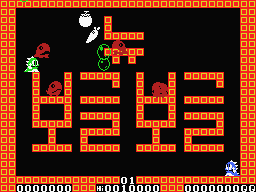
New Boggle Boggle
|
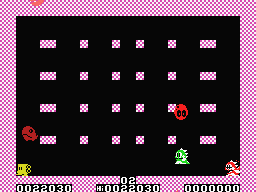
New Boggle Boggle
|
|
|
|
더블 드라곤 (Double Dragon) - MSX (January 1989)
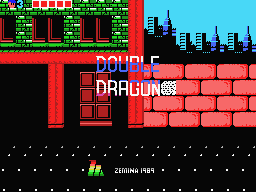
Double Dragon
|
Double Dragon
|
|
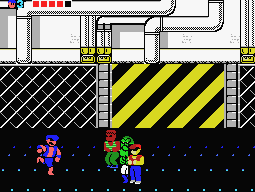
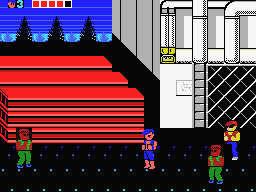
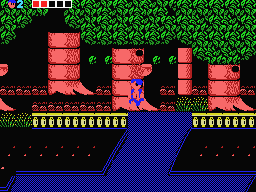
After their first few releases, Zemina seemingly became bold enough to use the games' official names for their ports. Double Dragon is one of their technically weaker early programs. The enemies all have a neat black box around their heads and move about as smoth as the digits on a digital watch. The game has only three types of foes, a bright skinned guy, a dark skinned guy and green Abobo. There's not even a proper final boss, just another Abobo who takes hundreds of hits. The moveset is converted properly, though some maneuvers like throwing are a bit tricky. Very rarely enemies drop a throwing knife, which is the only available weapon. Everything wouldn't be too bad if it weren't for the extremely annoying AI for enemies, who always sneak around areas the player can't reach.
Interestingly enough, this game was not created by Zemina's former staff, but it seems they now hired Lee Kyuhwan (art design) and Lee Sanghun (programming), who had before made their first experiences with Legendly Knight and should lead the Kingdom Under Fire series to fame more than 15 years later.
The artwork for the box was stolen from Jaleco's Famicom Disk System fighting game Fuun Shaolin Ken
|
Double Dragon
|
Double Dragon
|
|
|
|
슈퍼보이 I (Super Boy I) - MSX, Master System (January 1989)
Super Boy I (MSX)
|
Super Boy I (MSX)
|
|
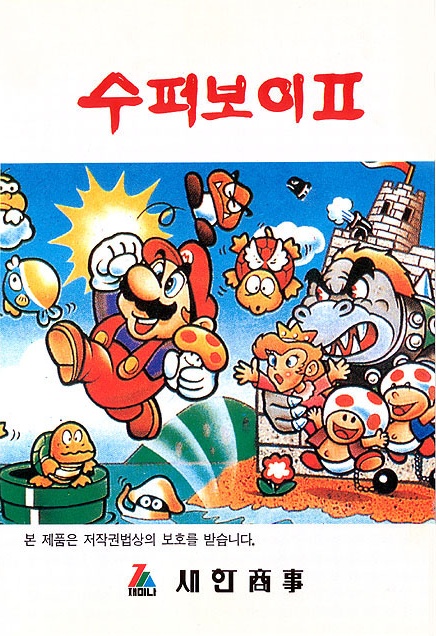
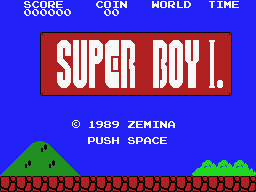
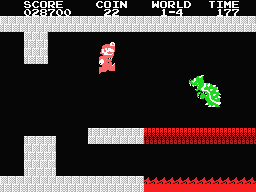
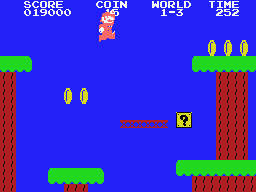
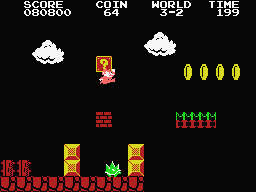
Zemina's take on Super Mario Bros. On the first four worlds of that game, to be precise. It seems the 32KB roms Zemina used had become to small for the full game (Super Mario Bros itself has only 6KB more, but the missing level data would have taken much less space as the graphics). But that's not the only thing amiss. Instead of being greeted in every castle by a mushroom with the legendary words 'Thank you Mario, but (...)', there's just an empty room with the statement "Sorry Nothing". The princess herself is missing as well.
A lot of gameplay mechanics also don't work quite the same as in the original, whether it was because of the incapability of the MSX, the programmer or just the limited cartridge space. Elevators are no simple platforms that start falling down when stepped on, there are no Water levels, and all the little secrets that gave the game its charme to begin with, like warp zones, bonus levels and entering pipes aren't implemented at all. Powerup distribution is much more harsh, as the blocks that are supposed to hold them are subject to a random generator as well.
All things considered, the whole program feels more of a consolation attempt for MSX owners than a full-fledged port.
|
Super Boy I (MSX)
|
Super Boy I (MSX)
|
|
|
|
슈퍼보이 II (Super Boy II) - MSX, Master System (January 1989)
Gam*Boy Cover
|
|
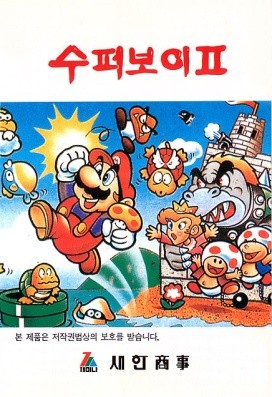
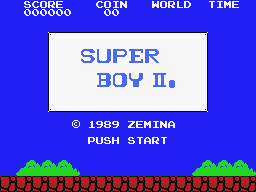
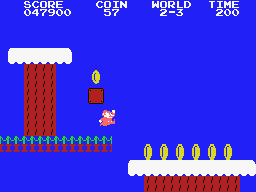
This game is to Super Boy I what the Japanese Super Mario Bros. 2 (Known in the west as The Lost Levels) is to the first game by Nintendo, or even less so, as the evil mushroom isn't implemented. Once again the game ends after stage 4, with no such thing as an ending.
Super Boy II is the first Zemina game that is confirmed to have received a Master System conversion. As both machines had a similar system architecture, MSX games could be easily converted to the Sega system. There was no actual porting work done, so the game is virtually identical on both platforms.
|
Super Boy II (MSX)
|
Super Boy II (MSX)
|
|
|
|
슈퍼 버블버블 (Super Bubble Bobble) - MSX, Master System (September 1989)
|
|
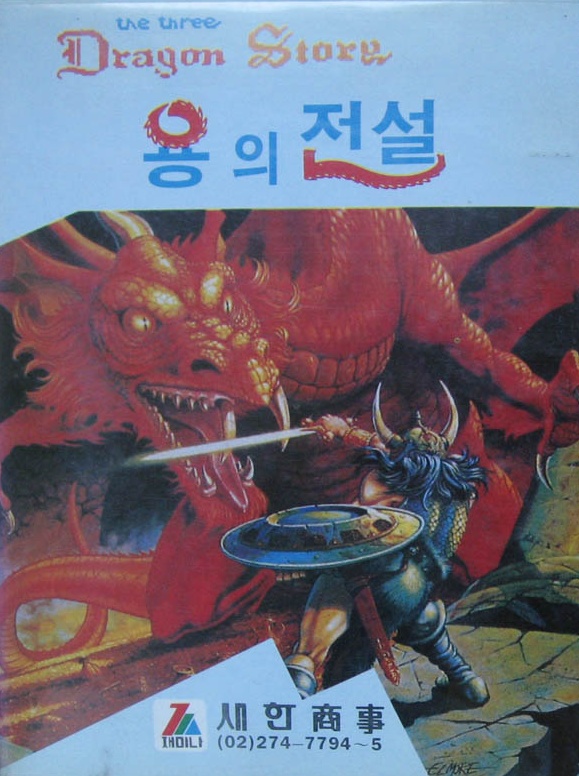
용의 전설 (Yong-ui Jeonseol) / The Three Dragon Story - MSX, Master System (October 1989)
The Three Dragon Story (Master System)
|
The Three Dragon Story (Master System)
|
The Three Dragon Story (Master System)
|
The Three Dragon Story (Master System)
|
|
Gam*Boy Cover
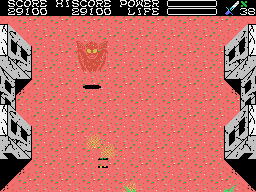
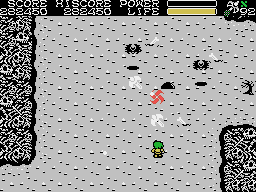
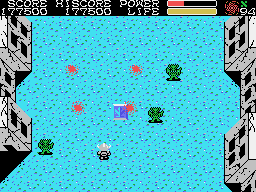
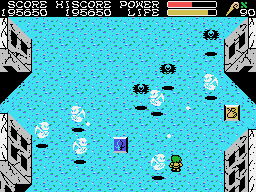
At first look this seems to be a clone of Konami's Knightmare, but it is vastly improved upon on every aspect but one. Damn, this could have been such an awesome game for the MSX.
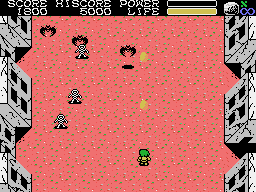
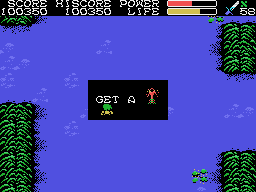
The graphics are all new, though some still betray their inspiration, like the hero's helmet, that is a powerup here. There's ten weapons and various other items to be found in initially invisible boxes, that need to be discovered by shooting at them. Multiple weapons can be carried at the same time and swapped through when needed.
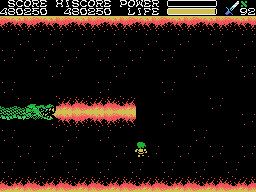
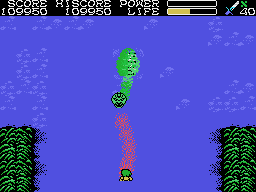
There's various types of enemies, cool looking bosses and stages. Other than in Knightmare, the player gets a health bar that makes him resistent to about four or five hits. There's also a power bar that can be upgraded to increase the weapons' power, but every enemy hit draws from it much more rapidly than from the life bar.
So what's the catch? This game is beyond hard. It puts Nintendo Hard, Retro Hard, and any other thinkable kind of hard to deep shame. Anyone who can ever beat even the first boss without using cheats may be legitimately called a god. Bullet hell years before the term was coined, the enemy takes about a hundred hits, grows fast as the Roadrunner towards the end, and every single failed attempt leads back to the very beginning, such a thing as extra lives or continues don't exist in this game.
Too bad about what could have been a rather awesome shmup. Another one developed by the duo Lee Kyuhwan / Lee Sanghun. Makes one wonder what has driven them to this kind of "balancing".
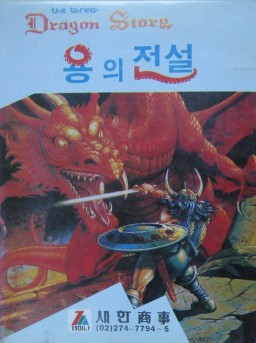
The title artwork might be familiar to long time players of Dungeons&Dragons, as it is ripped straight from the Basic Rules book (12th to 14th print)5.
|
The Three Dragon Story (Master System)
|
The Three Dragon Story (Master System)
|
The Three Dragon Story (Master System)
|
The Three Dragon Story (Master System)
|
|
|
|
뉴 보글보글 2 (New Boggle Boggle 2) - MSX, Master System (1989)
New Boggle Boggle 2
|
|
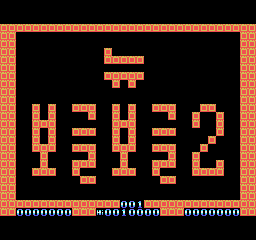
Three times a charm, is what Zemina and Team MbitM thought, obviously, and produced yet another Bubble Bobble iteration, this time with a whole 150 stages.
|
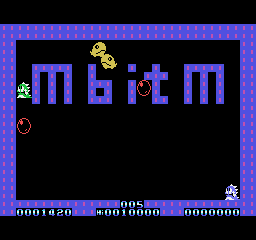
New Boggle Boggle 2
|
|
|
|
삼각의 비밀 (Sagak-ui Bimil) / Block Hole - MSX, Master System (1990)
Block Hole
|
|
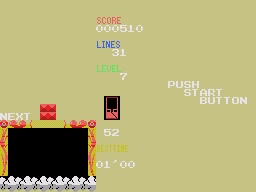
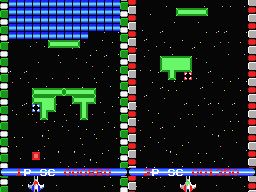
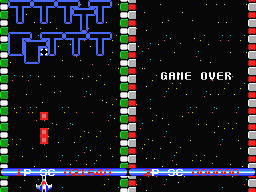
Block Hole is something special in the Zemina library. Released in 1990, they were practically racing Konami for the port of their Tetris-Shooter Quarth. However, while Konami long since had switched to the MSX2, Zemina's bet was on the first revision of the computer. Naturally, graphics and sound are vastly superior in the official port, and the controls are more responsive, but the Zemina version was not without merits. It featured an additional 2 Player mode, where both players could disturb each other by decreasing the size of the opponent's playing field. The gameplay itself is similar, although on the MSX1, it is not uncommon to lose because of the worse controls.
|
Block Hole
|
|
|
|
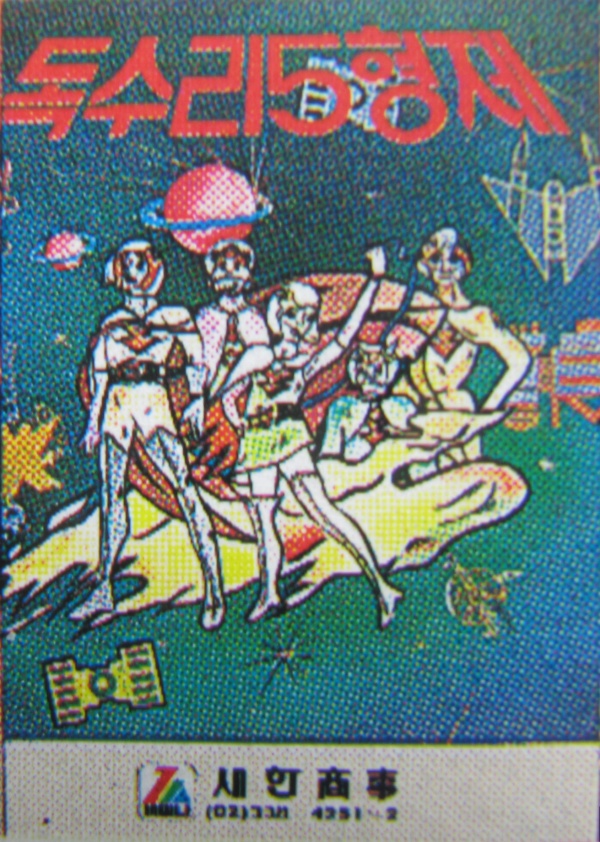
독수리5형제 (Doksuri 5 Hyeongje) / Eagles 5 - MSX, Master System (July 1990)
Eagles 5
|
Eagles 5
|
|
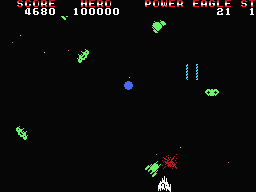
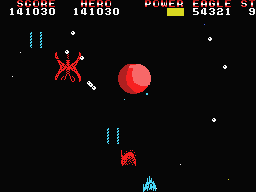
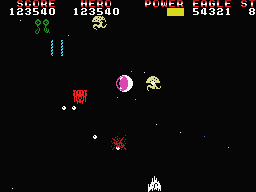
Around 1990 developers were getting the hang of MSX programming it seems, and some very solid games were created that year. Eagles 5 won't win any beauty contests, but it makes great use of the machine's capabilities. There's alway going on a lot on the screen, everything moves smoothly, and while there are occasional slowdowns and flickerings, both are kept to a minimum. There's also a ton of different enemy types, from mechanic to biologic to geometric ones. The unchanging space background with the planet in the middle gets a bit boring, though.
Not only does the game know what it can demand from the MSX1, but also what to expect from the player. The game is hard, but not inhumanly so. Enemies don't spare any bullets and attack in whole squadrons at a time, but the player's ship is protected by a rechargeable shield, and with the right amount of speed upgrades, dodging is a piece of cake. The bosses are almost too easy, and despite their individual sprites, they all act more or less the same.
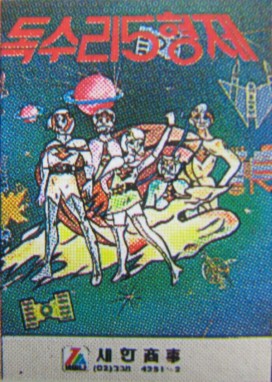
The games is named after the Korean title of the anime series Gatchaman and uses the show's characters for the title art, but ingame it refers to the five levels the ship's weapons can be upgraded in. Any hit downgrades the weapon systems, only in the fifth and last stage they're locked in until the ship is destroyed. As with The Three Dragon Story, losing just once immediately ends the game.
The game is credited to the cryptic abbreviation GNG, which doesn't seem to have been decoded, yet. Reportedly, the game has also been developed at team MBitM, though.
|
Eagles 5
|
Eagles 5
|
|
|
|
제비우스 (Xevious) / The Micro Xevious - MSX, Master System (1990)
The Micro Xevious
|
|
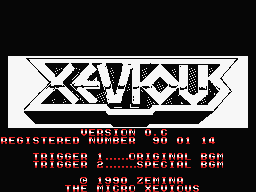
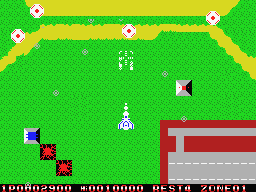
Another game that was officially available only on the MSX2. Humbly subtitled "The Micro Xevious", it is based on the arcade version, but of course it can't do much to imitate that game's qualities. Like most 8-bit computer ports it got rearranged and stripped of some elements6. The technical execution is less than stellar this time, and there's a fair share of glitches. Worst is the scrolling, which goes stepwise like in Knightmare or The Three Dragon Story. However, while it worked when the player controlled a knight by foot, it just feels wrong in a futuristic shooter, where the plane is supposed to be moving fluently. Two kinds of background music can be selected. "Original" is the same terrible 1-second loop from the arcade version, but "Special" is a neat little melody.
|
The Micro Xevious
|
|
|
|
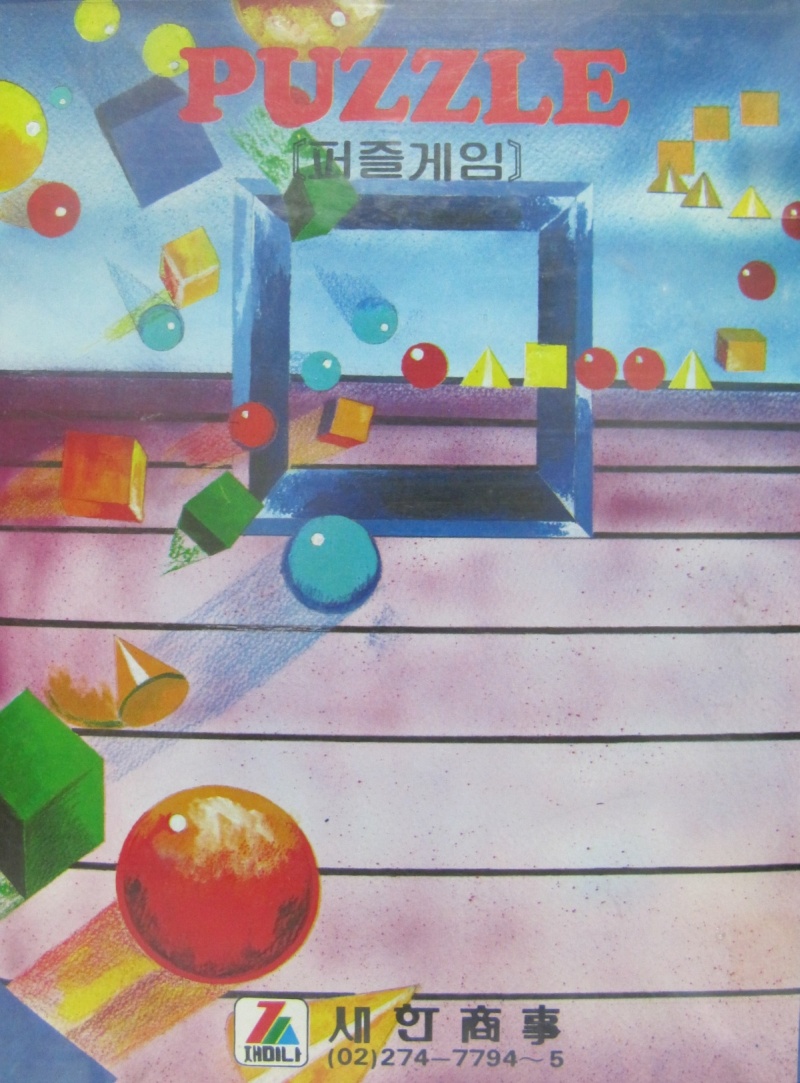
퍼즐게임 (Puzzle Game) / Puznic - MSX, Master System (1990)
Zemmix Cover
|
|
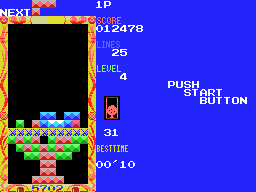
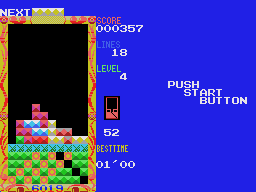
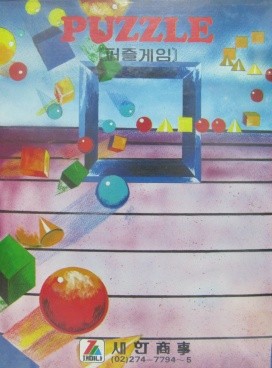
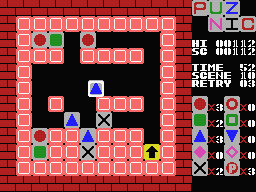
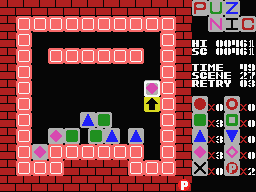
Taito's Puzznic got officially ported to about a dozen platforms, but not the MSX, so Zemina produced relief one more time. For some reason the title on the box differs with the ingame one, where it's origin is made clearer as Puznic. The nudies that got deleted from any other version than the Japanese arcade board are missing here too. As in the original, levels are cleared by dragging stones vertically, until two or more of equal color meet and disappear.
The MSX game contains a completely new set of 48 levels and some new gameplay elements. Stones are moved in half steps here, which makes for interesting new situations. There is a special item that can make any block disappear alone. This might fool players into thinking they can use it to correct some mistakes, but its use is limited to three, and there's exactly three stones in the game that are impossible to delete without it. After the last stage, the game starts from the beginning, so the game ultimately ends when the first stage that requires to delete a single stone is entered for the second time.
|
Puznic (MSX)
|
Puznic (MSX)
|
|
|
|
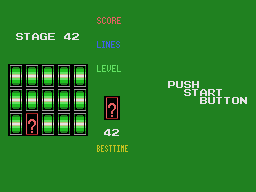
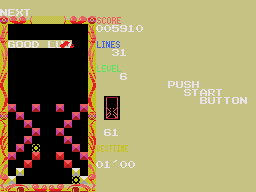
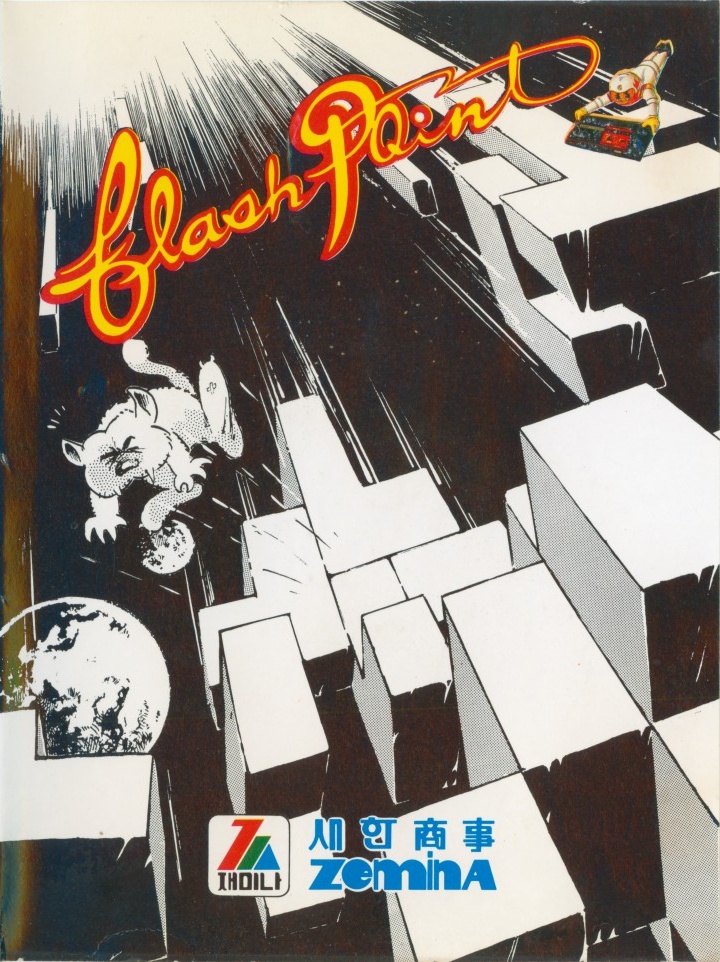
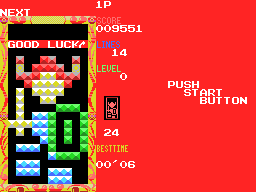
후레쉬포인트 (Flashpoint) - MSX, Master System (January 1991)
|
|
|
사이보그 Z (Cyborg Z) - MSX, Master System (August 1991)
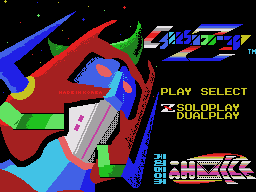
Cyborg Z (Master System)
|
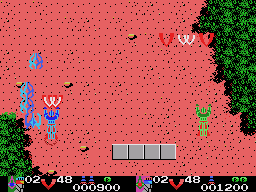
Cyborg Z (Master System)
|
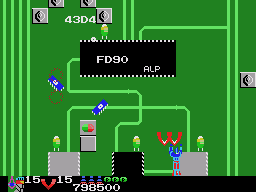
Cyborg Z (Master System)
|
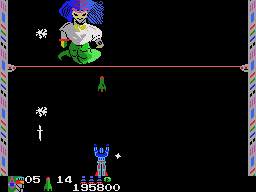
Cyborg Z (Master System)
|
|
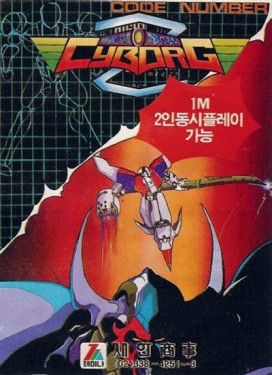
Zemmix Cover
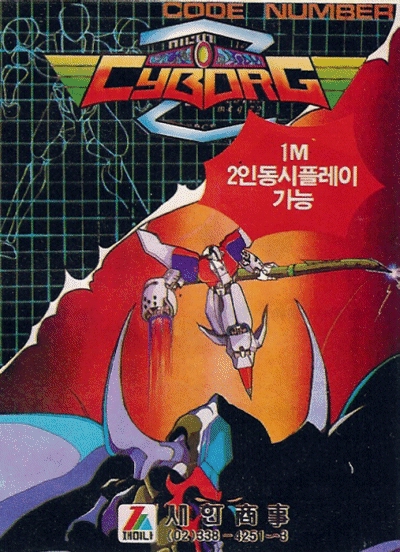
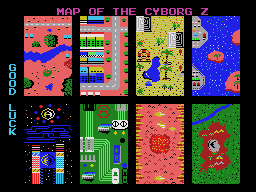
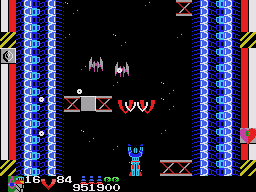
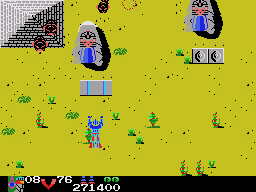
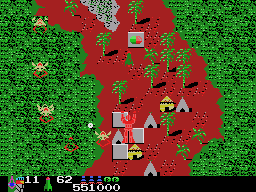
This seems to be one of the rarest Zemina games, after all by 1991 people had started to turn to more advanced hardware. The company finally made the transition to Megabit roms (equals 128KB), so this contains a lot more graphics than previous Zemina products, as well as eight distinct levels. The character is a copy of the giant mecha Mazinger Z from the 1972 anime series, including his trademark Rocket Punch attack. The game has the same weapon system as The Three Dragon Story, with the multiple weapons that can be cycled through. It is much more forgiving, though, and the mecha is allowed a number of extra lives.
Each one of the rather long levels has a mid- and final boss fight, the latter one takes place on a seperate screen. Afterwards, the player can earn upgrades and extra lives in a bonus round. Like the earlier game, Cyborg Z also suffers from the MSX's terrible vertical scrolling abilities.
|
Cyborg Z (Master System)
|
Cyborg Z (Master System)
|
Cyborg Z (Master System)
|
Cyborg Z (Master System)
|
|
|
|
원시인 (Wonsiin) - MSX, Master System (October 1991)
Wonsiin (Master System)
|
Wonsiin (Master System)
|
Wonsiin (Master System)
|
|
Zemmix Cover
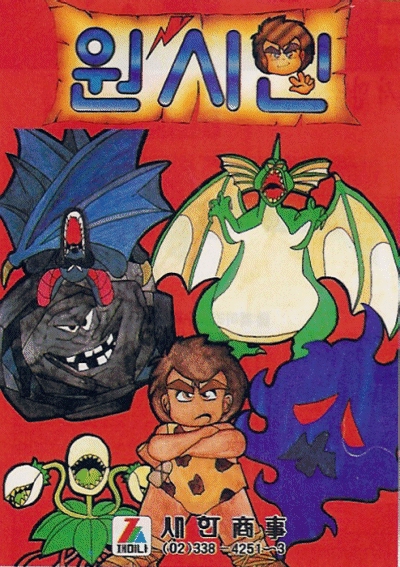
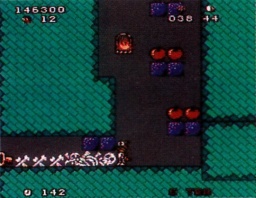
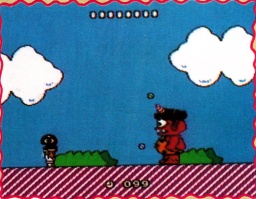
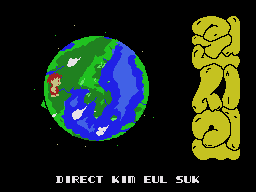
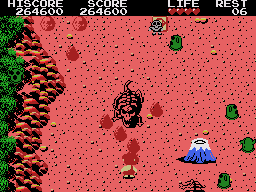
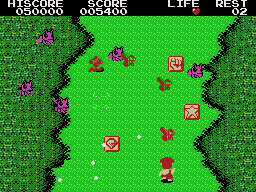
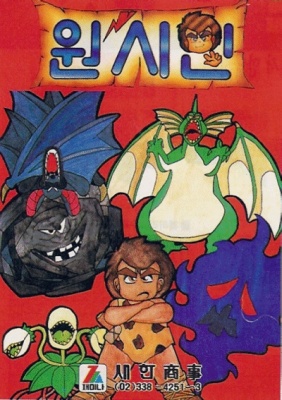
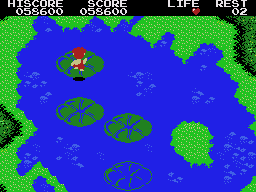
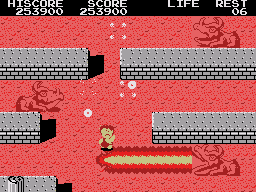
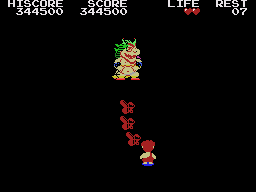
Wonsiin is a port of the Famicom game Shin Jinrui: The New Type (Adventures of Dino Riki in the US), which apparently gave Zemina opportunity to exploit their vertical shmup code even once more. Typically, the scrolling is choppy here, too. There have been several other small compromises, but overall Wonsiin is a decent port of the Knightmare inspired game. Especially some elements that one would think would have been sacrificed on the MSX, most impressively the attacking dinosaur skeletons, are intact. Still, Wonsiin ends after three stages, leaving out the final challenges. Those are based on the first three tilesets, so they probably wouldn't have used up much space, so maybe Zemina thought them unnecessary.
Like in the NES game, the caveman shoots his way through the autoscrolling vertical stage, upgrading his weapon from spears to stone axes, boomerangs and a flame thrower(!) and has to jump over the odd obstacle to finally reach the bosses. For some reason, those are switched around between stages, and also got their patterns improved a bit. The final boss looks suspiciously similar to Bowser. The game is very tough, but not The Three Dragon Story tough.
In early 1992, Zemina announced the sequel Wonsiin 2, which didn't get finished before the development staff left to form Open, and was most likely realized as Wonder Kid.
|
Wonsiin (Master System)
|
Wonsiin (Master System)
|
Wonsiin (Master System)
|
|
|
|
슈퍼보이 III (Super Boy III) - MSX, Master System (1991)
Super Boy III (MSX)
|
Super Boy III (MSX)
|

Super Boy III (MSX)
|
|
Zemmix Cover
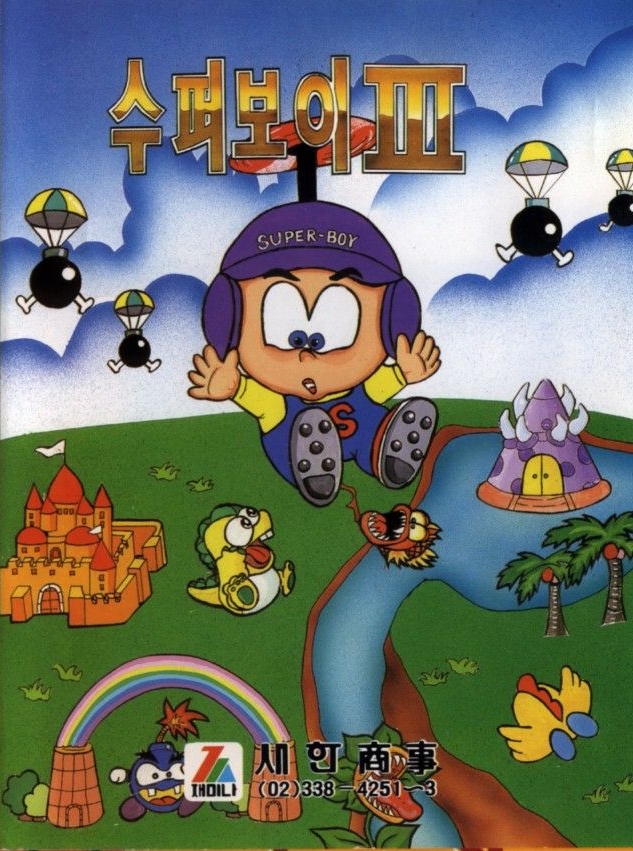
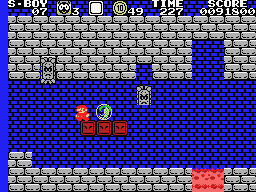
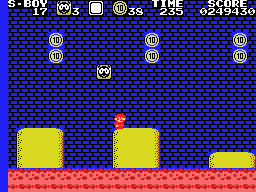
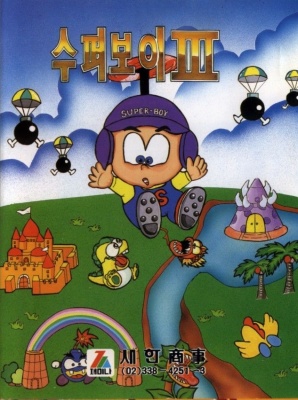
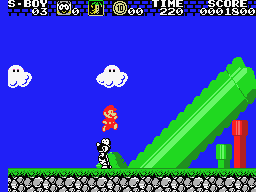
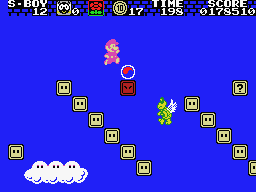
The third part in Zemina's only long-running series. One would expect half of Super Mario Bros 3 cloned, but only Mario's sprite and few others are ripped from that game. Everything else is redrawn, though mostly stolen from Super Mario World. This makes for some awkward elements, like diagonal pipes realized as stairs.
The game consists of 16 levels, which equals the number in both previous Super Boy games, but this time, they're entirely new. At the end of every level awaits a Hammer Brother, the final boss is the fat one from SMB3. Mario's(?) walking speed is extraordinarily slow, but even running he's not really fast. Extras are limited to those that are in since the first game. Quite everything looks like how the next Super Mario game would have turned out if Miyamoto wouldn't have had any more ideas. Seeing how almost everything in the game is newly pixeled, one cannot help but wonder why they didn't just create their own characters to begin with. Was the developer really so unimaginative? Other games by Zemina like Cyborg Z suggest differently.
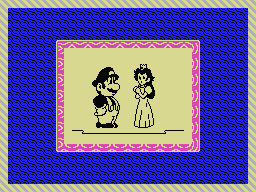
In other news, the hero of the series finally gets to rescue his first princess in the short ending.
|
Super Boy III (MSX)
|
Super Boy III (MSX)
|
Super Boy III (MSX)
|
|
|
|
스트리트마스터 (Street Master) - MSX, Master System (1992)
Street Master (MSX)
|
Street Master (MSX)
|
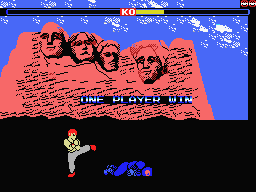
Street Master (MSX)
|
|

Zemmix Cover
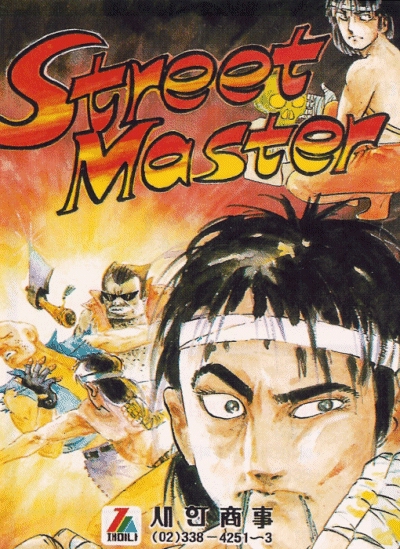
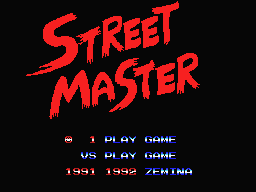
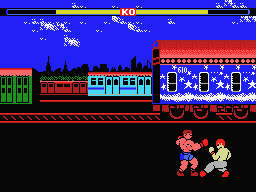
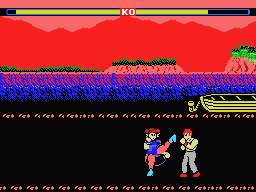
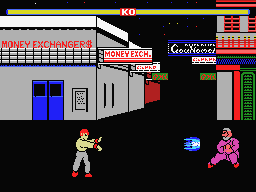
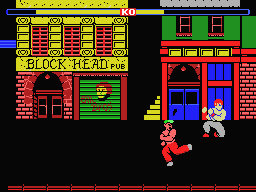
The last game from another copyright owner Zemina spawned on the MSX was Street Fighter. Based on the first game, it also sports a few challengers from Street Fighter II. The five enemies are Joe, Chun Li, "Ninja" (for some reason they dropped Geki's name), Bison (the boxer, in his SFII-attire) and Gen. The player always takes the role of Ken, Ryu isn't available (although the sprite is actually colored like him). In 2-player mode the second player, who fights on the left side in this game, gets to chose between the 5 enemies. Player one is denied that privilege, though.
Street Fighter 1 was soon forgotten after its release because of its atrocious controls. Well, in Street Master, they're even worse. The only moves that can get the player near the AI opponents are the special moves, against which the enemies are helpless. So the only viable and at the same time incredibly cheap strategy is to spam these over and over again. It's nonetheless quite possible to lose that way, as the execution is only recognized spontaneously every once in a while.
The game seems like a stepback compared to some other Zemina games, technically. The graphics don't look so bad, but the black boxed enemies return again. That's why the lower half of the screen is black, anyway, but it becomes visible when they jump. When all opponents are beaten, the game just drops back to the title screen, without showing any credits or even a short message.
|
Street Master (MSX)
|
Street Master (MSX)
|
Street Master (MSX)
|
|
|
|
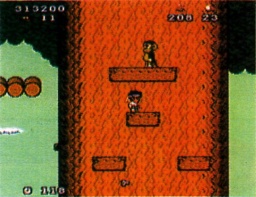
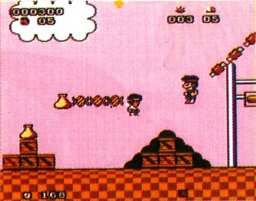
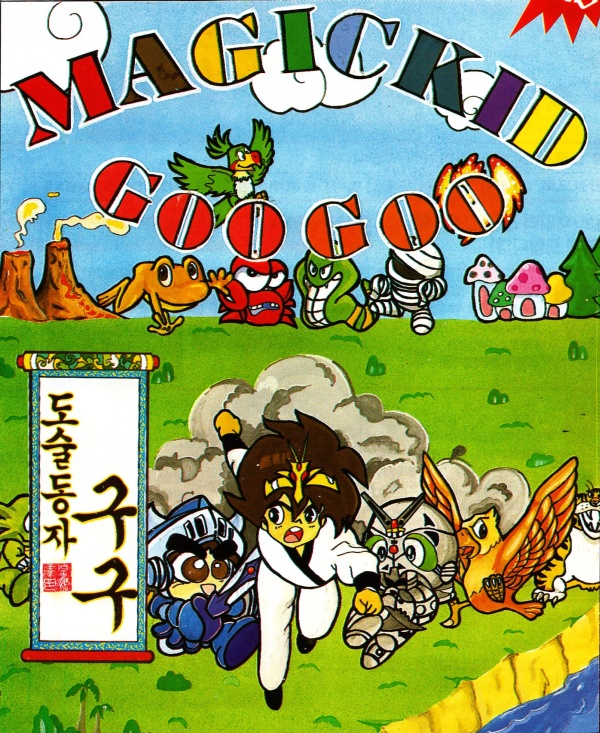
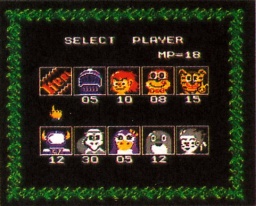
도술동자 구구 (Dosuldongja Googoo) / Magic Kid Googoo - Famicom (1992)
|
|
슈퍼보이 4 (Super Boy 4) - Master System (December 20th, 1992)
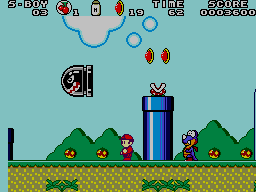
Super Boy 4 (Master System)
|
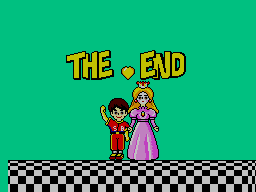
Super Boy 4 (Master System)
|
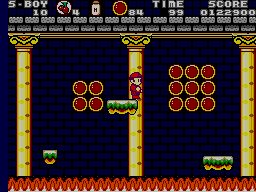
Super Boy 4 (Master System)
|
|
Another step in the evolution of the Super Boy series, without any real surprises or new ideas. Only this time, the game was developed for the Samsung Gam*Boy / Master System exclusively, so it remains the visually most advanced Zemina game. It was independently released by the Zemina Gametown store after the end of Saehan Sangsa7. As most of the Zemina developers had formed Open by that time, it was most likely either a belated release or an outsourced job.
A lot of graphics are once again hijacked from Super Mario World, but as with the third game, many of them are redone. Other than the previous games, more and more original enemies appear in the later stages, like cuttlefish or butterflies. In the end, a few anthropomorphic frogs serve as the sole bosses. Super Boy himself now looks distinctive from Mario for the first time, and instead of eating mushrooms to grow bigger, he is drinking milk.
While the game contains a lot of visual elements of SMW, a lot of them are not used for gameplay means at all. The berries Yoshi used to eat are plain decoration (there is no yoshi in this game), and what were trampoline platforms in Nintendo's masterpiece are just simple platforms. It seems not everything works as expected in this game as well, there's a part that clearly suggests to kick a turtle shell to destroy bricks, but it just bumps back from them, occasionally falling through.
The game also has to be credited for the most ugly princess ever. She positively looks like a zombie in the ending. But then again, so does Super Boy.
|
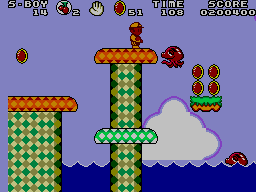
Super Boy 4 (Master System)
|
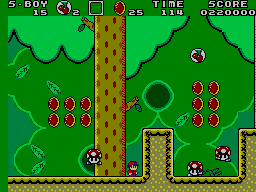
Super Boy 4 (Master System)
|
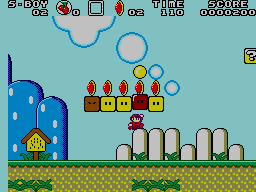
Super Boy 4 (Master System)
|
|
|
|