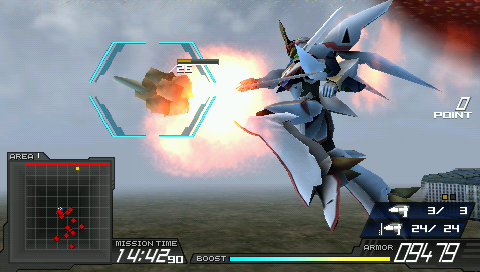
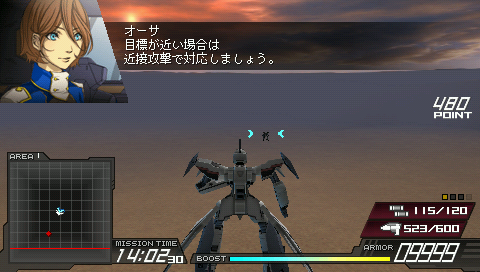
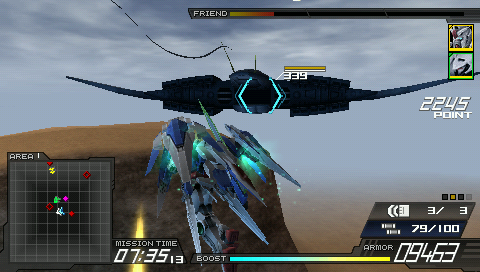
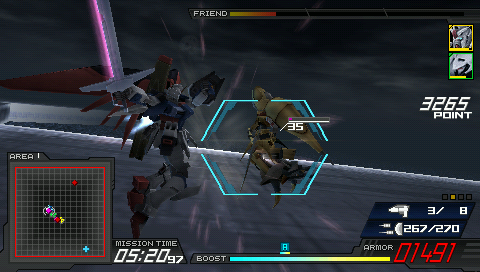
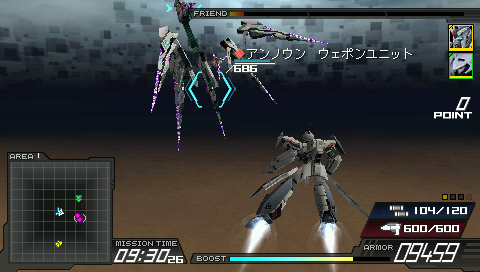
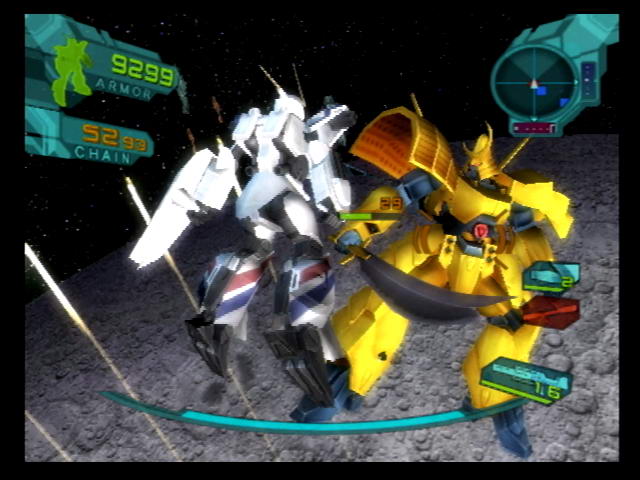
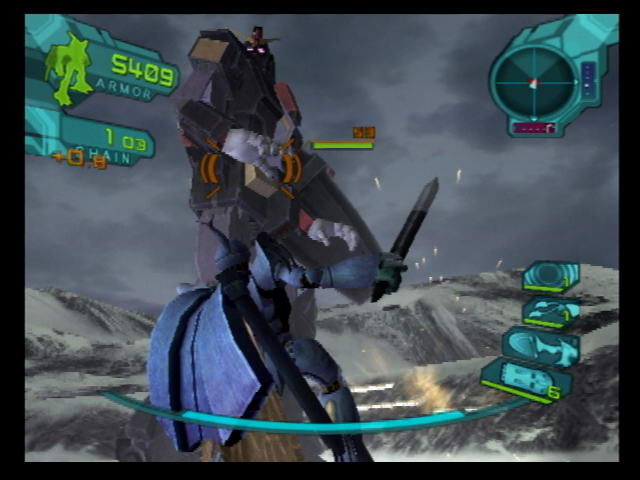
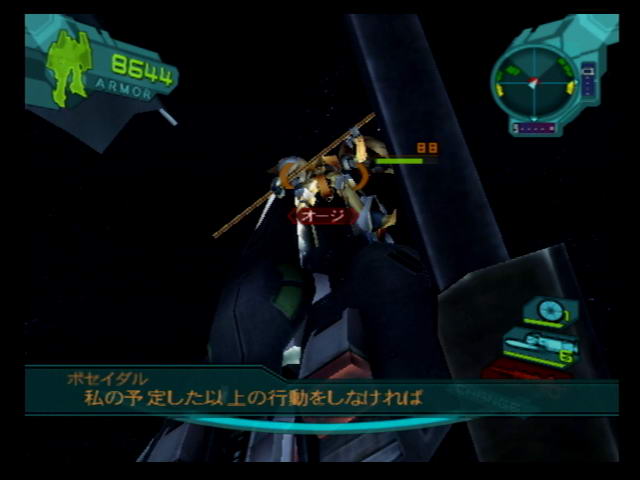
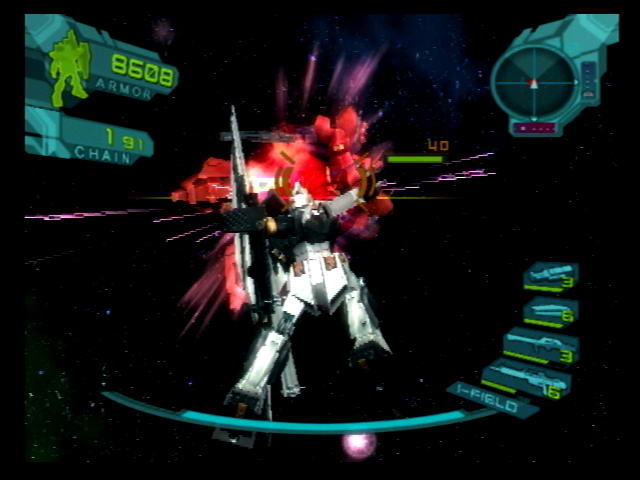
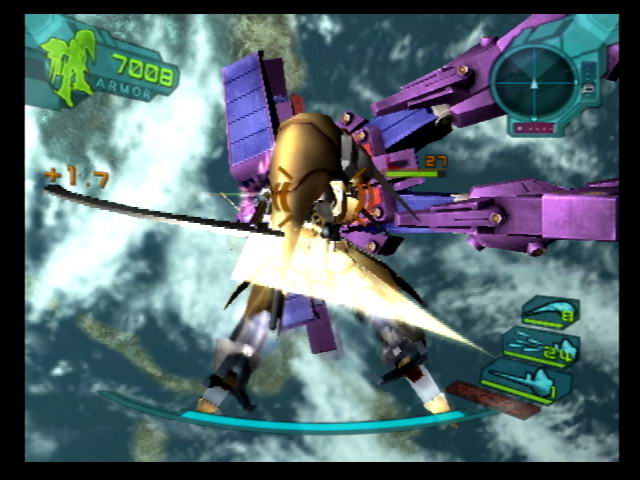
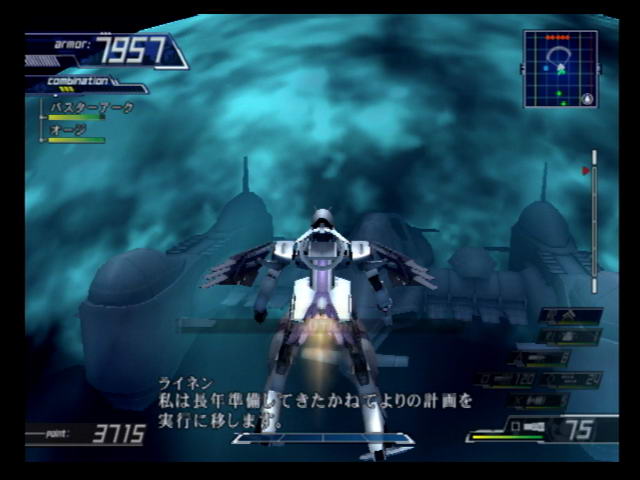
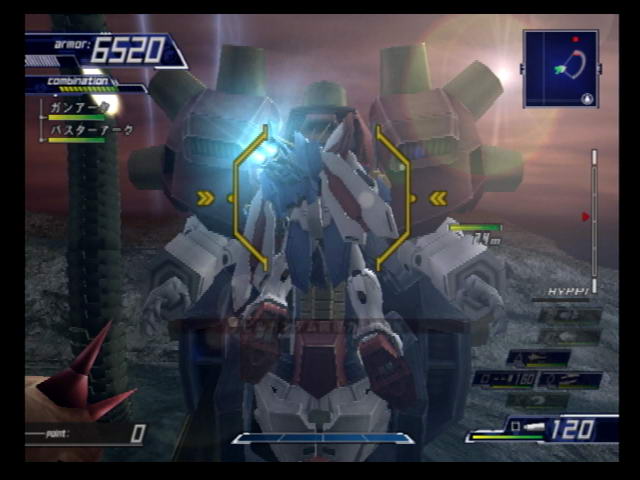
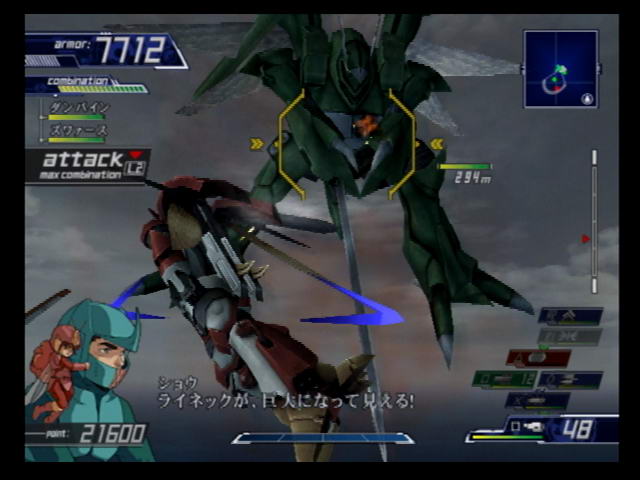
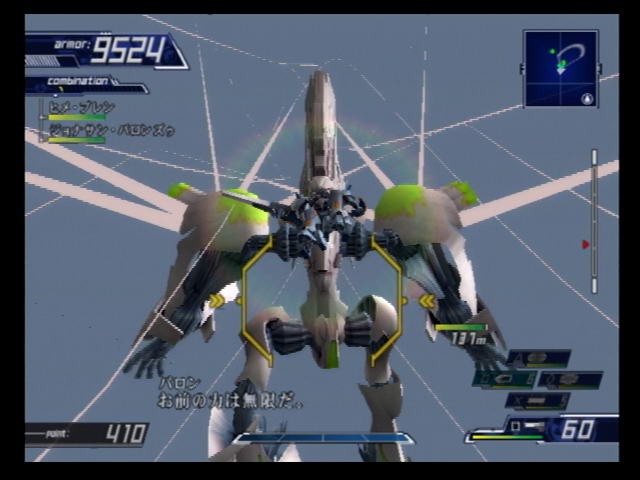
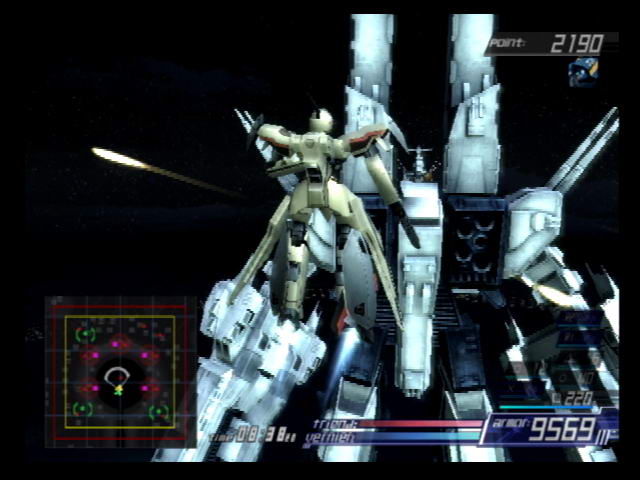
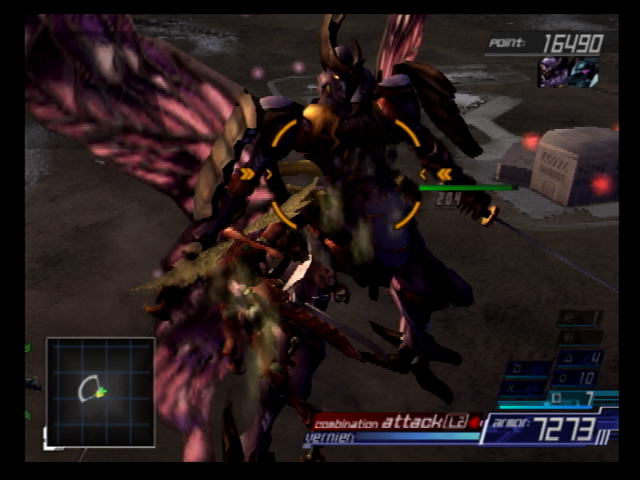
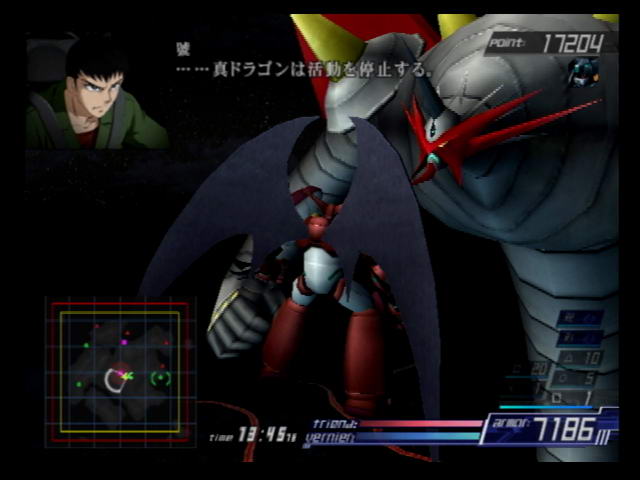
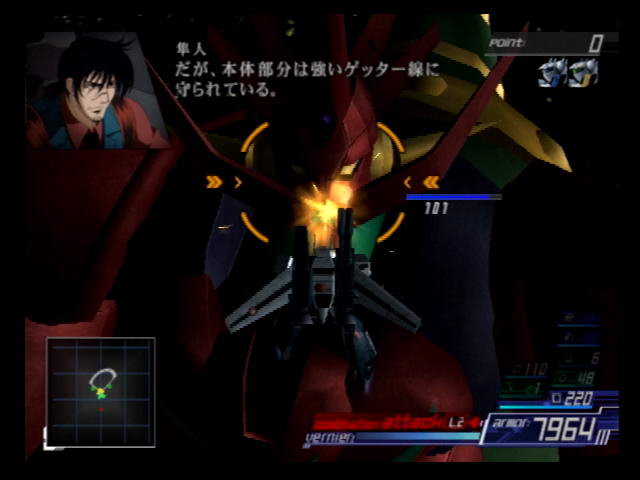
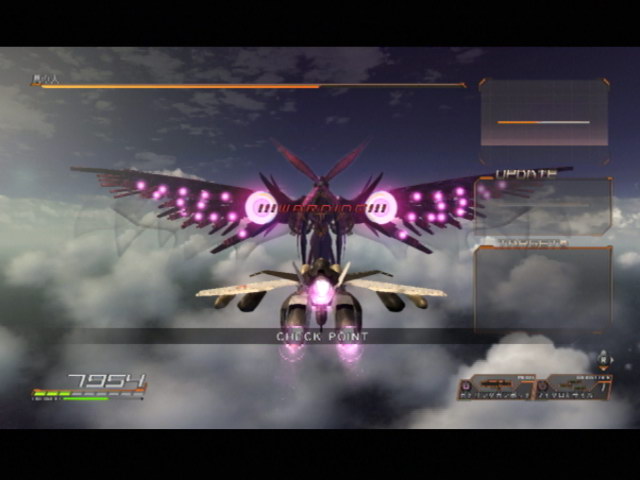
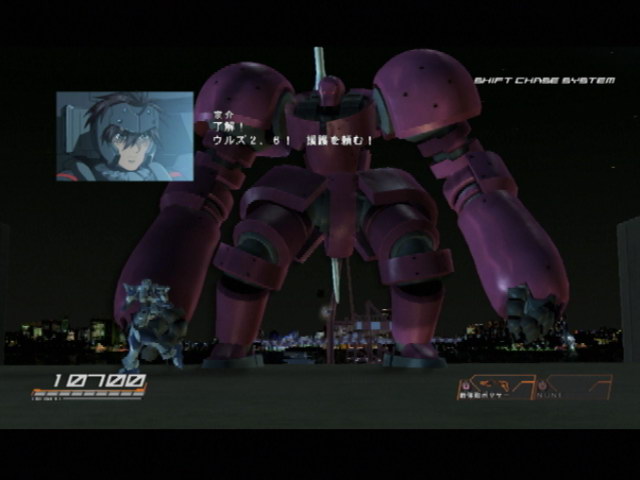
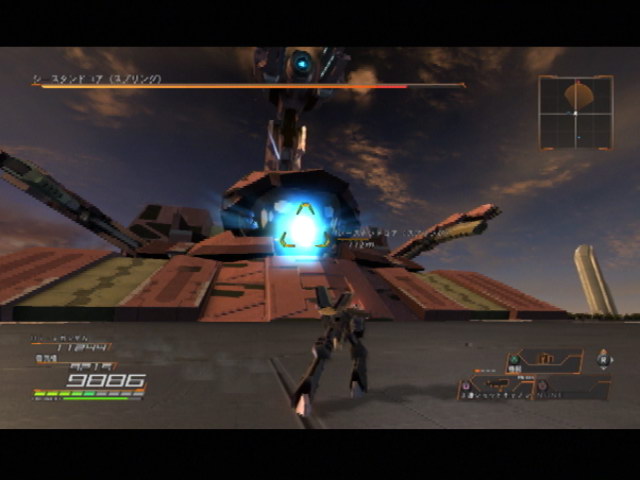
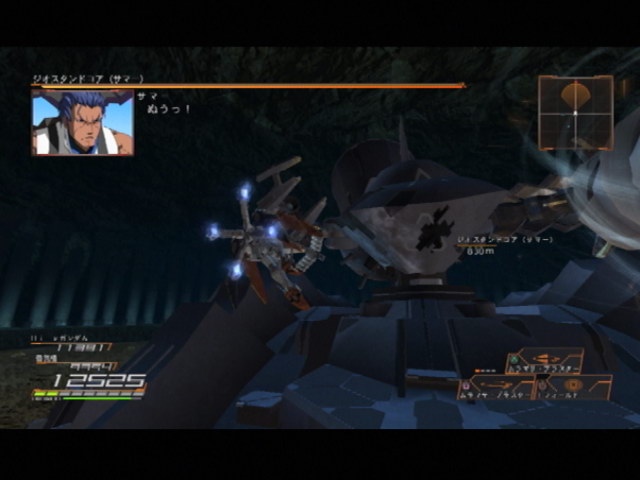
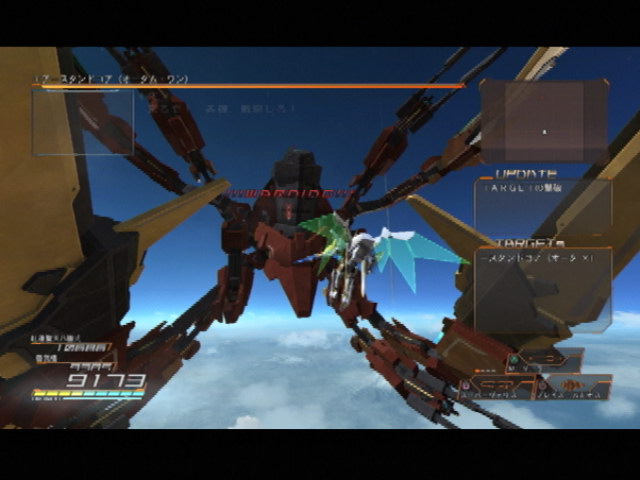
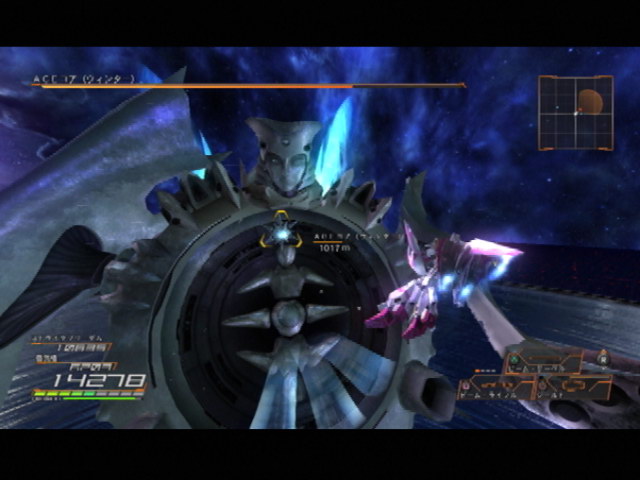
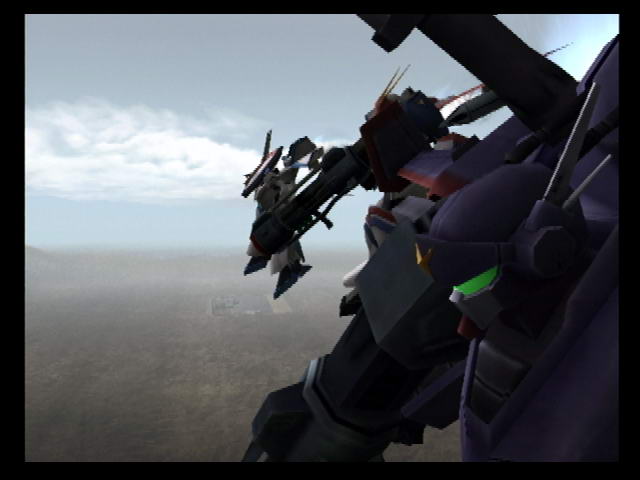
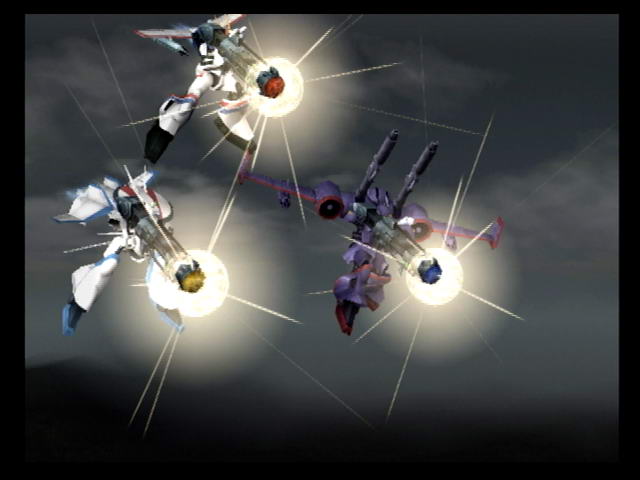
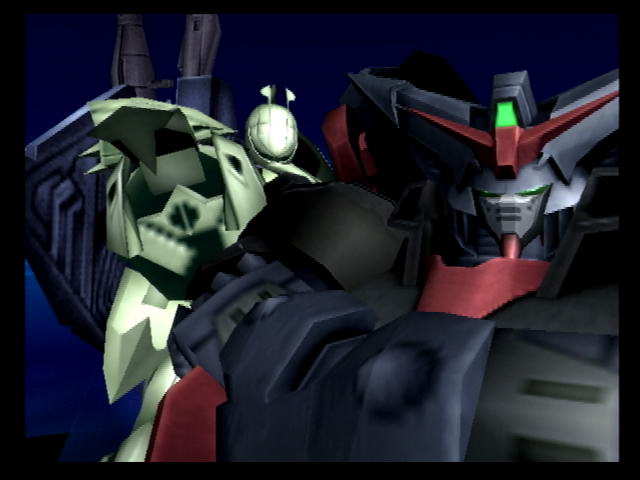
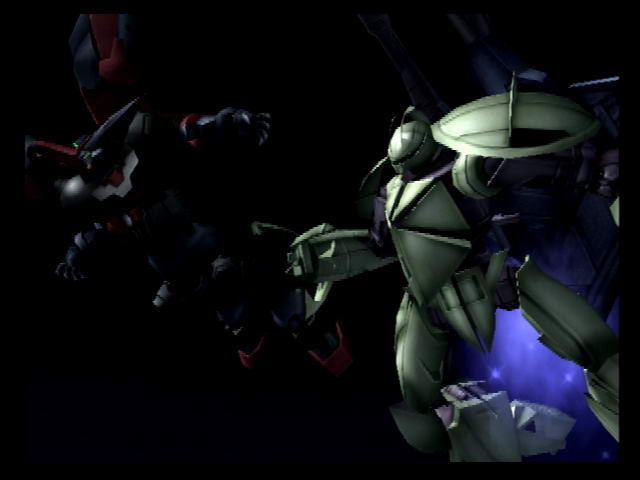
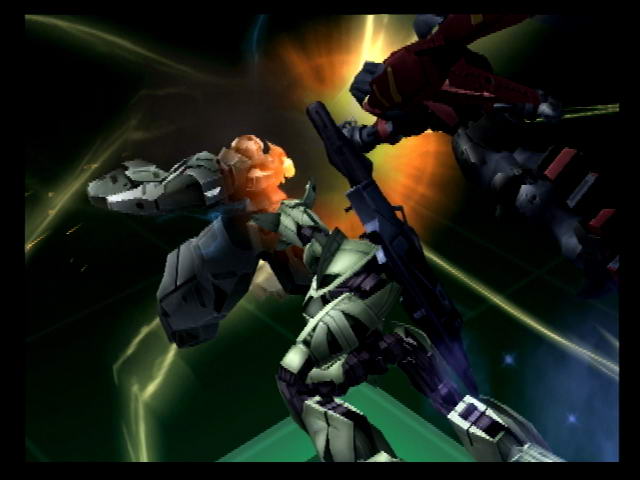
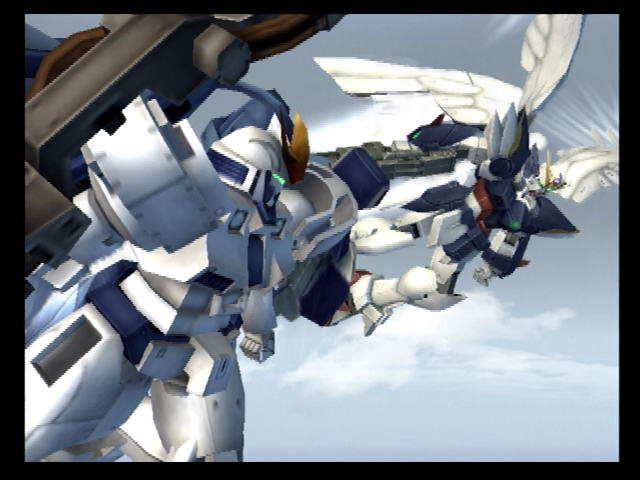
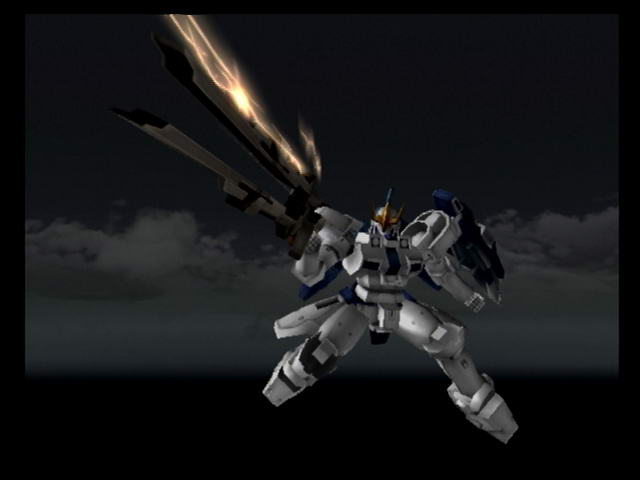
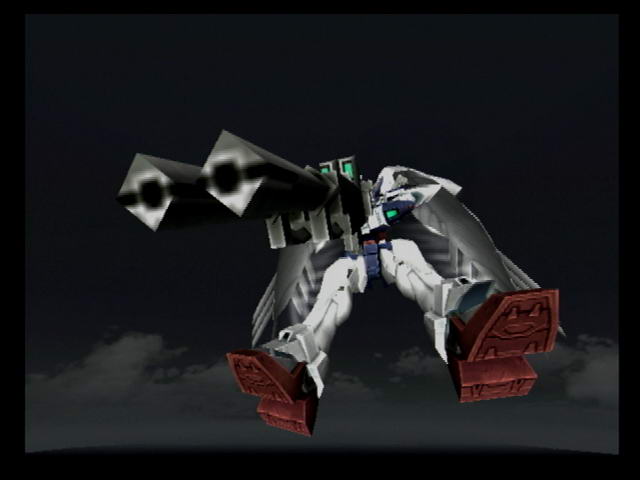
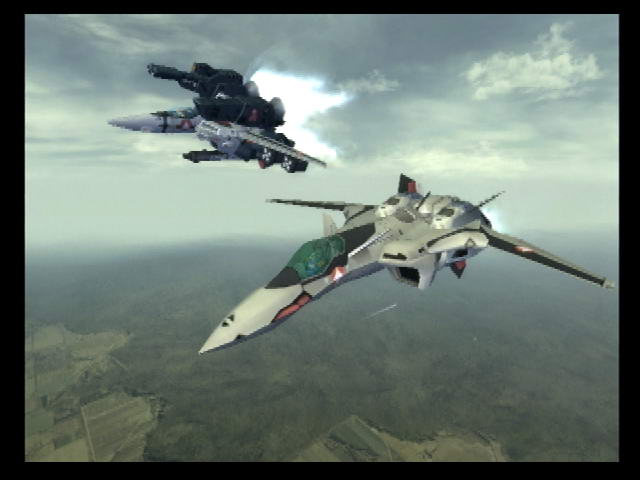
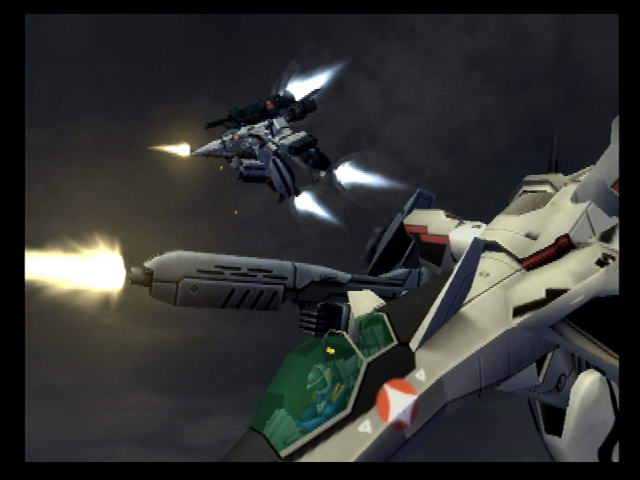
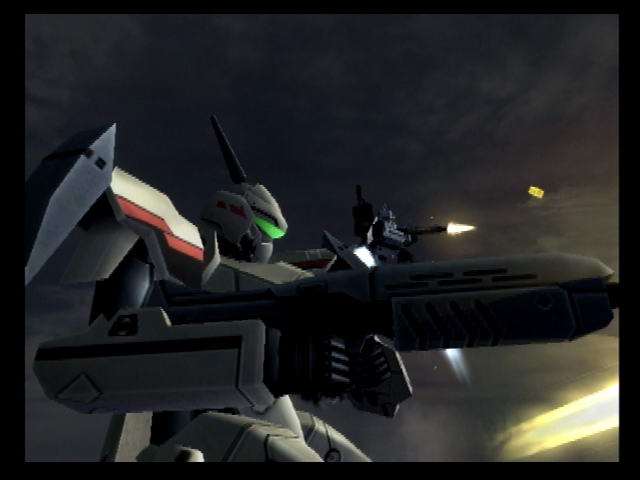
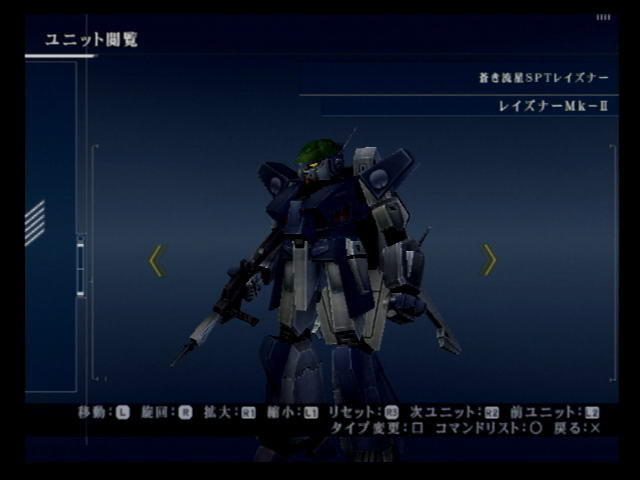
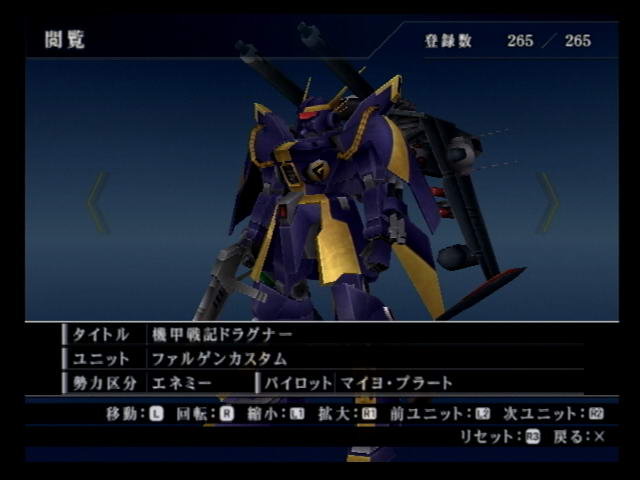
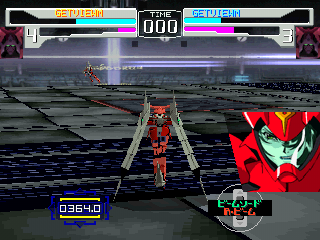
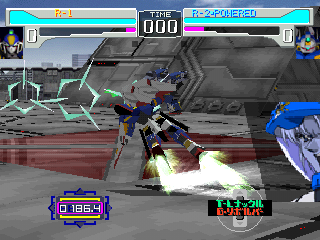
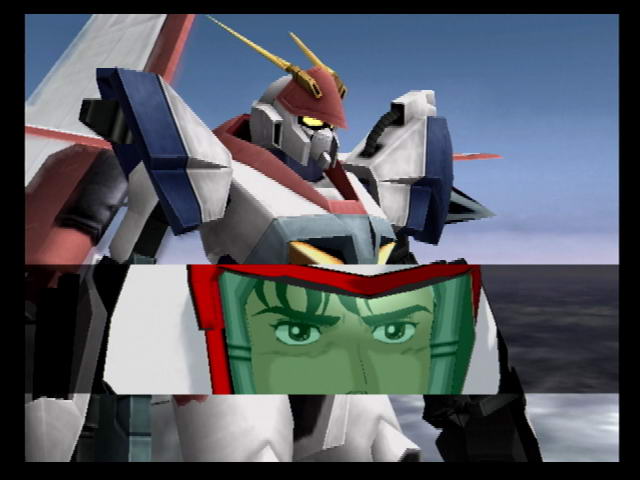
ACEP mixes elements from both the PS2 games and ACER. The old functional boost setup returns and gives you the ability to perform ACER-style boosting by holding the button instead of tapping it. Unfortunately, boosting here is very weak and has practically no tolerance for damage because an enemy can fire a shot completely perpendicular to your flight path that will not only hit you but stop you dead in your tracks as well. Valkyries can once again fly in battroid mode, and the craptastic rhythm-tapping for your main weapon is gone. The lack of buttons on the PSP relegates the transformation, targeting and weapon change functions to the directional pad, and necessitates the return of ACER's weapon panels.
While the tension gauge does not make a return, your weapons' ammo no longer reloads. Instead there are resupply points sporadically placed in each mission that restore your ammo and hit points when you land right next to them. However, they cannot be used indefinitely and are often guarded by enemies that need to be taken out before being usable.
Custom soundtracks are back, but the setup is a bit obtuse. It involves dropping the MP3 files into predefined folders on the memory stick that correspond to specific instances in the game. There's an in-game menu detailing which instance plays which track but without knowledge of Japanese you're stuck fumbling in the dark.
The mission structure departs from the series norm and takes after the PSP Gundam games. Each mission is generally divided into two or more areas separated by small portals at the edge of the map. Depending on the mission, your path through these areas is either linear or requires going back and forth between them. There's a set time limit to finish each mission, and running out of hit points returns you to the fray with a fraction of your health and one minute deducted from your remaining time. The damaging energy fields from ACE3 come back along with new jamming devices that block your radar until you destroy them.
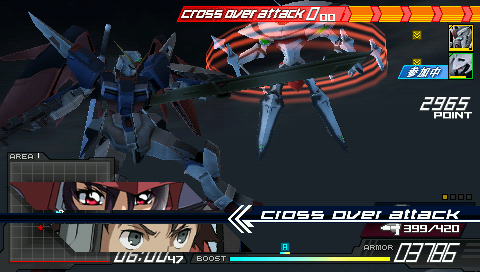
The combination attack gauge returns with some differences. Filling up in three segments, it gives you the option of either summoning your wingmen for a powerful attack or activating a bullet time effect that allows your squad to pile up cumulative damage on the target that only registers once the gauge runs out.
Also new in ACEP is the custom action system. Finishing missions and killing powerful enemy grunts rewards you with chips. These chips can be used to develop new abilities that can be equipped to any mech using the customizable weapon panels. These abilities range from different attacks to armor/ammo restoratives and status boosts.
The final addition is full cooperative multiplayer over ad hoc where you and two other players can tackle any of the missions as a single squad. Unfortunately there weren't any other people to test it around with.
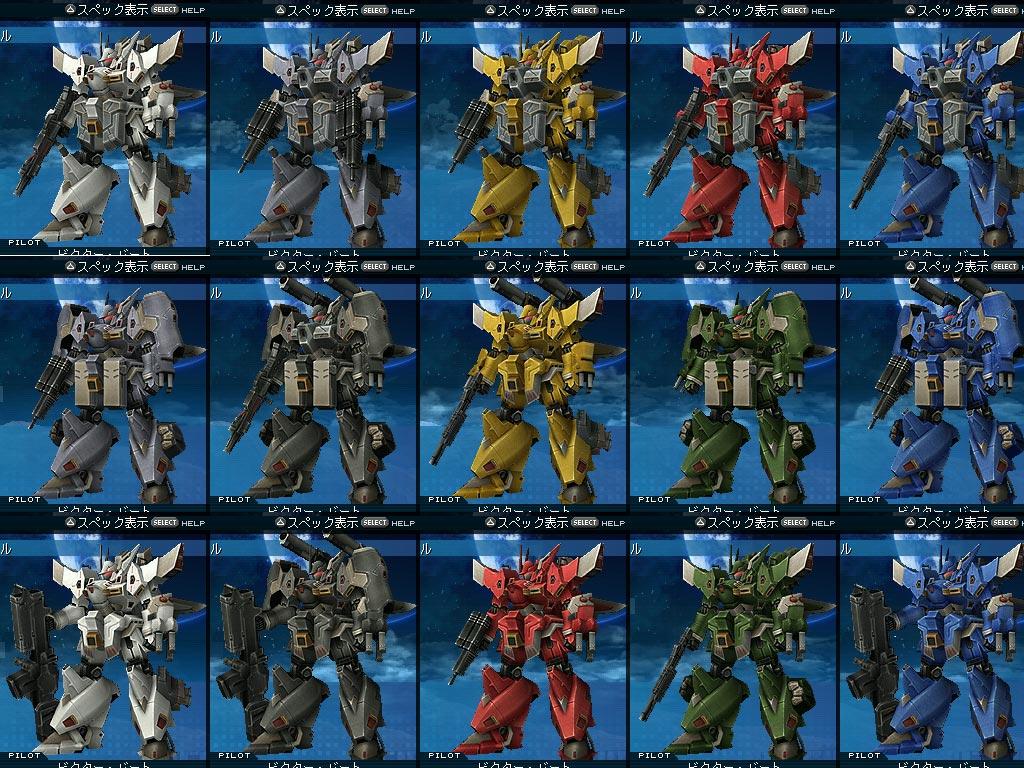
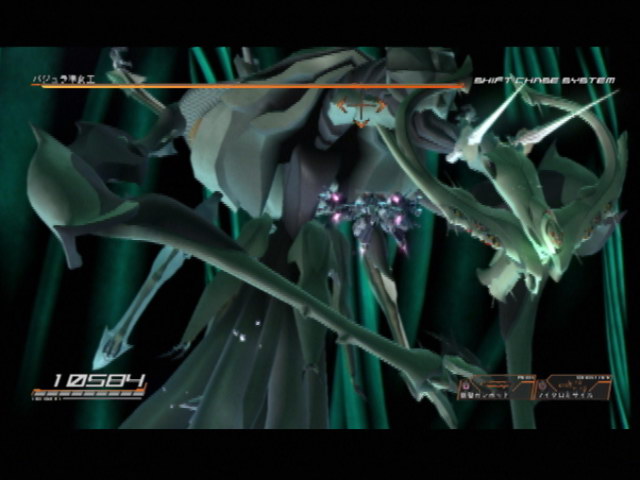
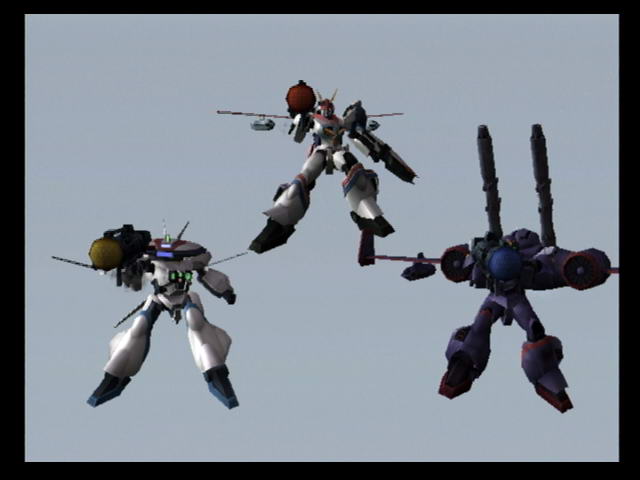
While these new additions would fundamentally make for a solid game, ACEP suffers from the restrictions and development practices of the PSP. For starters, there's no attack power stat to upgrade on your mechs, which leaves custom actions as your sole means of becoming stronger and dealing more than peashooter damage to later enemies and bosses. Problem is, there are dozens of different chip types and coming by them requires copious amounts of grinding, as is mandated by the mentality of needing to pad out PSP games with repetitive busywork. This also slinks its way into the requirements for unlocking new mechs, which brings back the secret objectives from the PS2 game. Whereas those had only one secret objective per mission, a single missions in ACEP can have anywhere between twenty to thirty secret objectives. The amount of effort it would take to unlock one or two mechs in ACEP would have unlocked the entire playable roster of the previous games. Furthermore, the lack of a narrative to string the missions together leaves much of the game a soulless experience, illustrated by the boss fights against giant polygonal entities that start out fun and challenging but soon grow plodding and repetitive.