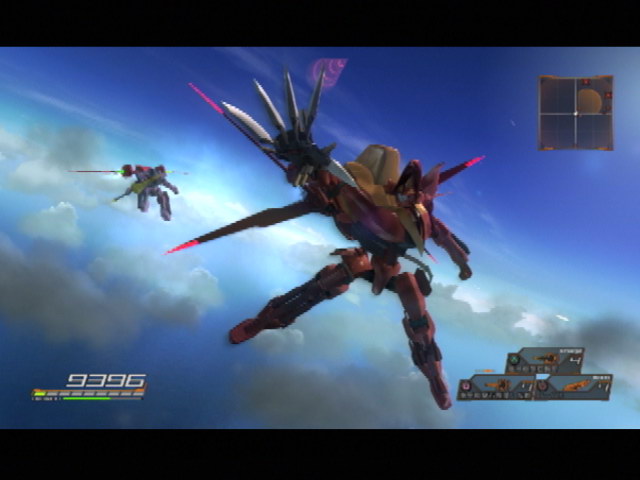
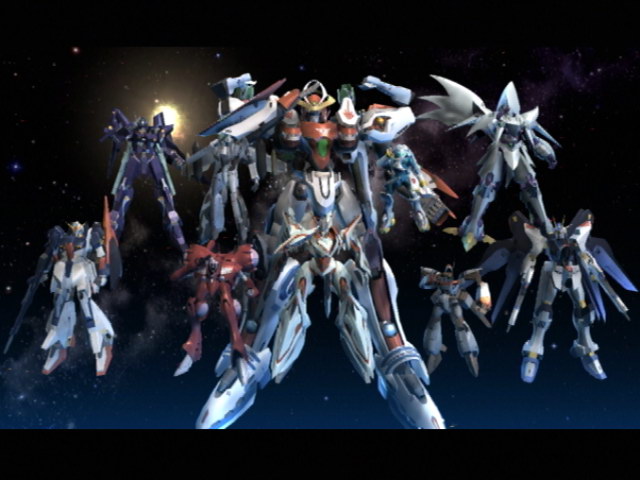
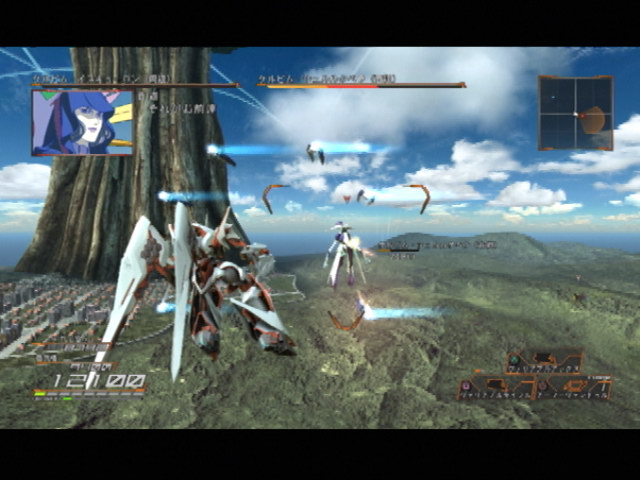
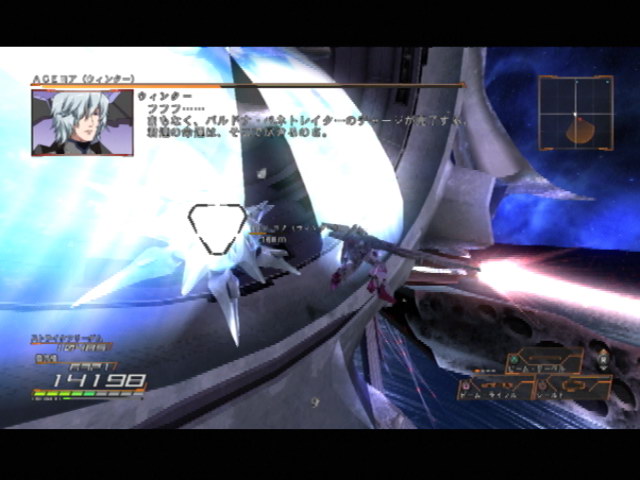
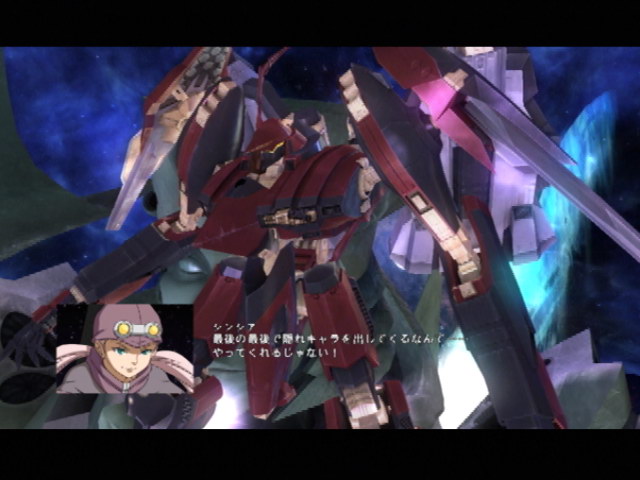
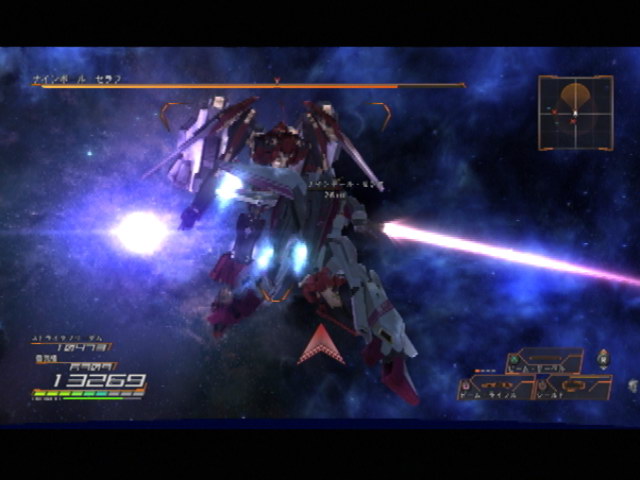
Whereas Banpresto, now absorbed into Namco Bandai, was content to let From Software handle everything for the last three games, they decided to get more hands on with ACER, resulting in quite a few odd design choices. The first major change involved stripping down the boosting system and reducing it to little more than a method to travel quickly between locations. You can no longer fire your weapons when boosting and repeatedly boost dashing between shots becomes necessary to your survival. Unfortunately this is further compounded by forcing you to press the X button to dodge rather than just double tapping the direction, and the amount of times you can boost dodge is now determined by your pilot’s stats instead of the boost gauge. Additionally, a lot of mechs can no longer hover in place and must be constantly elevated manually, which is pretty silly considering the game still heavily revolves around fighting in the air.
Another oddity veterans and newcomers alike will notice is that on some mechs the main weapon cannot be fired repeatedly just by pressing the shoot button. Instead, there’s a very asinine game mechanic that involves tapping the button to very specific rhythm in order to get off a constant volley of shots, and this rhythm is different for each mech and often very difficult to consistently pull off in the heat of battle. Melee attacks have also been changed. Instead of relying on alternate button inputs to get different combos, you achieve them by preceding the button press with directional inputs or a half second delay. This results in combo animations so slow that either your target will escape or you’ll get pelted by the surrounding enemies before you can finish. This one-two punch of frustration knocks us into the game’s most controversial addition: The tension gauge.
In the previous games, all of your mech’s attacks were readily available from the start and were only restricted by their reload times. ACER ditches that system completely in favor of the new tension gauge. Somewhat similar to the morale system from the Super Robot Wars games, the gauge is what allows you to unlock your mech’s more potent attacks during the mission. Generally the gauge fills by attacking and destroying enemies, allowing you to stock several bars of tension to spend on attacks. Since your mech’s abilities are no longer directly available on the HUD, you have to cycle between them in groups of three which can be partially customized. Unfortunately, whether you land the attack or not the tension will be used up and you’ll have build it up again using your default gun and melee weapon, which along with your abysmal tension gain rate at the game’s onset makes using certain mechs an incredible chore.
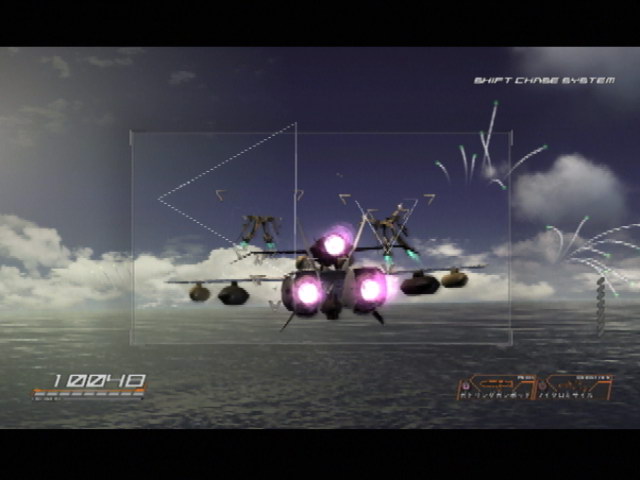
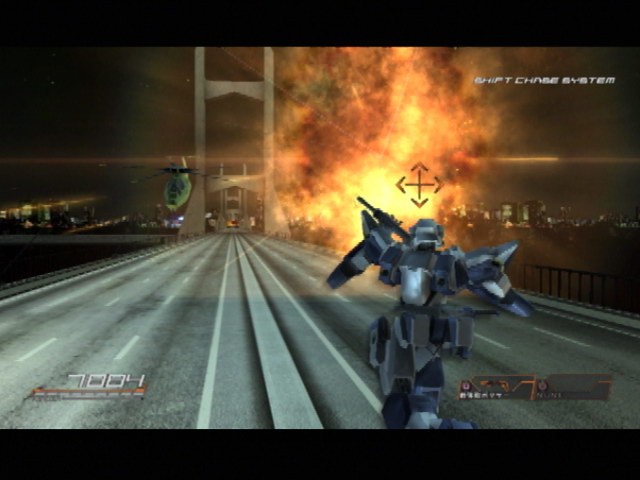
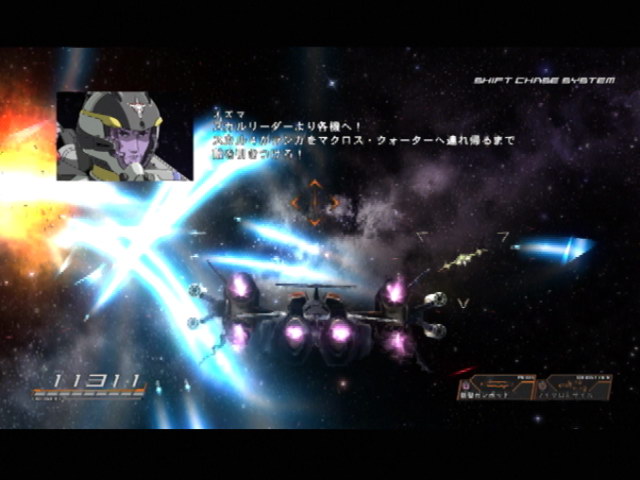
Other new features include Chase Mode, which consists of short on-rail shooter sequences used in some the introductory stages. Pilots now have upgradable stats that, among other things, allow them to unlock more melee combos and two new attacks for each mech: The Rush Attack and the Limit Break. Rush Attacks are charged and are either a rapid stream of shots targeting multiple enemies in succession or a single strong attack, while Limit Breaks cause your mech to glow red and initiate a short invincible charge at the target, which upon hitting will cause your mech to mercilessly wail on them at point blank range. It’s the only attack in the game that won’t waste tension if it doesn’t connect.
Combination attacks and passive support abilities are gone, and in their place are support attacks. Every mech has one of several types, ranging from offensive attacks to defensive spells like healing, tension boosts and jamming against enemy missiles. They cost health to use and depending on your pilot and mech stats can only be used two or three times at most before leaving you or your wingmen near death.
Missile attacks which have been prevalent since the second game are still as effective as ever, but now you’re limited to targeting only what’s inside a rectangular reticle as opposed to the entire screen. The shield function introduced in the ACE3 has now been expanded. Putting up your shield holds you in place and negates damage from most enemy attacks. Physical shields break after a set amount of damage while energy shields drain your tension.
ACER’s opening song is the bombastic “Re:Birth” which comes courtesy of Acid Black Cherry. To the dismay of fans however, the BGMs of all the included series with the exception of Macross Frontier’s have gone back to being instrumental only. This point is made moot however by ACER’s incredibly robust custom soundtrack feature, which allows you to set the tune of your choice to the individual segments of each mission.
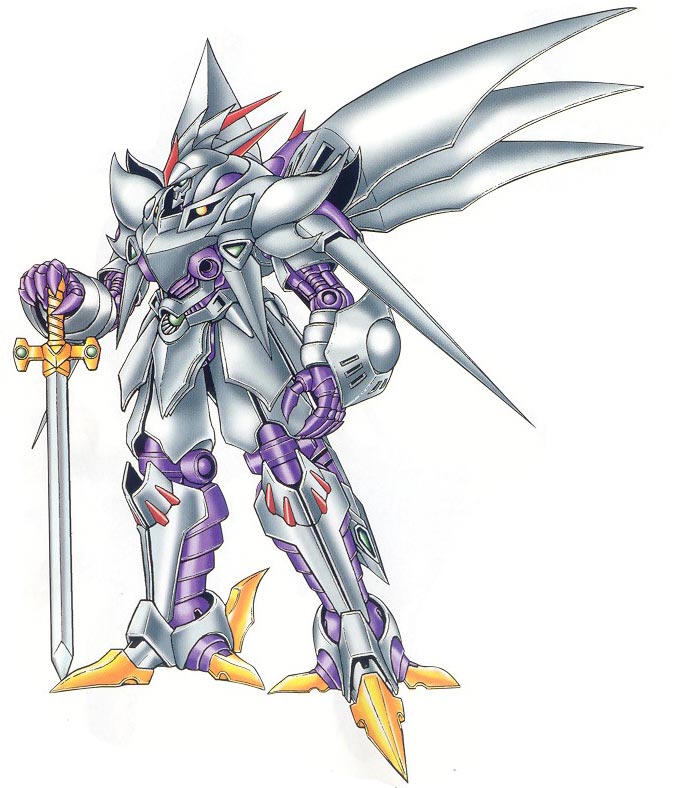
At the start of the game, you’re asked to choose a series from the game’s line-up. This determines the starting stages where you follow the protagonists from the point where they get transported to Aria until they meet the rest of the cast. Aside from that and a single branching path, the rest of the game’s progression is linear. However you can go back to replay previous missions at anytime to grind for upgrade points. Finishing the game nets you a unique ending for your chosen series and unlocks a secret mech for use in your next playthrough. With the secret objectives done away with, unlocking everything means having to finish the game eleven times, though given the game’s short length (18-19 missions on any path) it’s not too much of a drag. Playing through the game multiple times also gradually unlocks Extra Missions 1 through 10. Unlike the previous games, these missions are actually varied and fun since they revolve around overcoming challenges with a specific mech. Two of them even let you play as unique mech not available anywhere else in the game. Though there’s not much to say about blasting Vajra with the sluggish Macross Quarter, the other secret unit is so cool it deserves its own section which we’ll get to later.
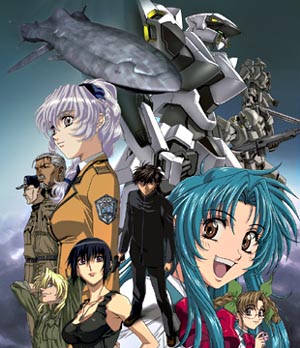
On the whole the game is a mish-mash of design choices that favor certain mechs at the cost of the playability of others. Picking a mech to play with boils down not to which is your favorite but to which isn’t crippled by the game engine and only after sinking substantial amounts of points into upgrades does the game become less tedious overall. While adding the arm slaves from Full Metal Panic was an interesting experiment, the game makes little compensation for the fact that 95% percent of the enemies in this game can simply fly out of their reach and that their grappling hooks were sloppily implemented afterthoughts. Not to mention that they’re entirely unavailable in missions taking place in the sky. In fact even after finishing the game several units from other series are still locked out of certain missions for pointless plot reasons. You can’t even play with the armored valkyries; which have once again been restricted to space missions; in the practice stage because there’s no space variation of it like the previous games. There’s also partial loss of camera control due to mech transformations hogging the right analogue stick, forcing you to hold a button before you can rotate the view around you.
Although the playable roster of mechs has shrunk noticeably compared to ACE3, it’s the secret unlockables that took a hit in quality. There are several awesome secret mechs, but the other half are literally recolored or downgraded variants of existing ones and practically none of the bosses in the game are playable.
The inclusion of Macross Frontier, which at the time of ACER’s release was still a hot property in Japan, and the bizarre favoritism given to its handling also raises suspicion of executive meddling by its license owners Big West and Studio Nue. To elaborate: Frontier is the only series in the game that gets its major plot points covered, as well as the only series to have its vocal songs included in the game’s soundtrack. The latter point gives us a peculiar situation during certain missions where anytime a cutscene includes a song from Frontier it’s completely unskippable. Depending on who you ask this was either mandated by the licensing agreement or a technical issue related to synching the song. Either way this leads to what is easily the game’s biggest low point: The final Frontier mission which plays out the big battle from the last episode of the TV series is literally a fifteen minute unskippable cutscene interspersed by a few brief segments of Chase Mode. In a bizarre ploy to nearly force as much exposure of this horrible stage as possible, completionist players are required to “play” it with every unit in the game to unlock a trophy.
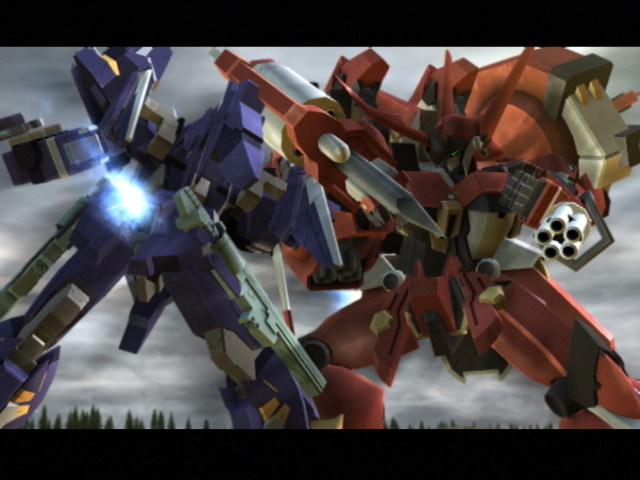
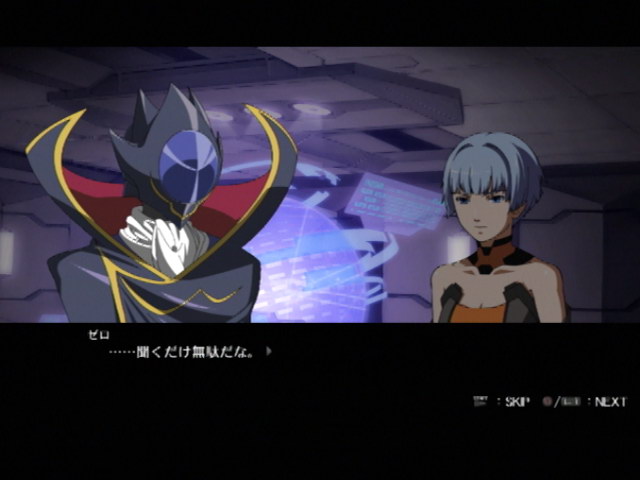
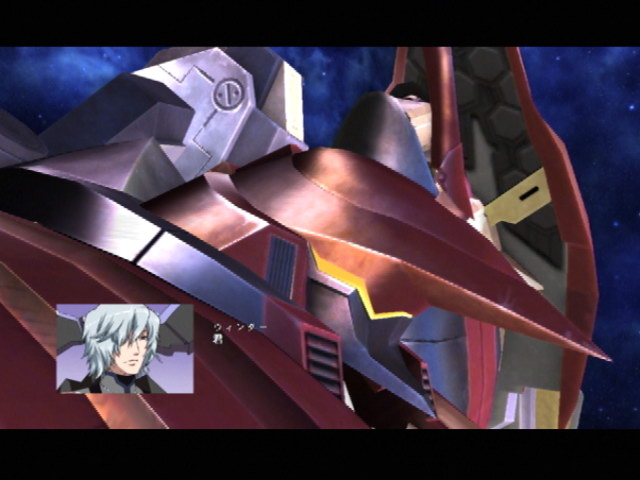
Arguably the most telltale sign of Banpresto’s heavy involvement with ACER is the way the story is presented. The dialogue scenes between missions are lifted straight out of a Super Robot Wars game, with talking heads and loads of text, character interactions and in-jokes. While the mid-mission cutscenes ditch the cel-shaded character art in favor of tiny character portraits that belt out recorded lines without any kind of lip-synching. It’s incredibly jarring how little Banpresto understands the difference between working on a strategy RPG and an action game, illustrated rather profoundly in the game’s final mission. ACER’s finale; a frantic gauntlet of five consecutive bosses (six if you meet the requirements for the hidden one); has a combined cutscene runtime of over 50 minutes! That’s nearly an hour spent watching mechs hover in the air from different angles doing nothing while their pilots endlessly prattle on about the machinations of the plot, their love lives and why toast always lands butter side down.
ACER is a neutered dog. It ditches nearly everything that made the last three games so easy to pick up and enjoyable in favor of adding artificial difficulty and wasting enough resources on a bloated plot to power a couple of Playstation 1 RPGs.