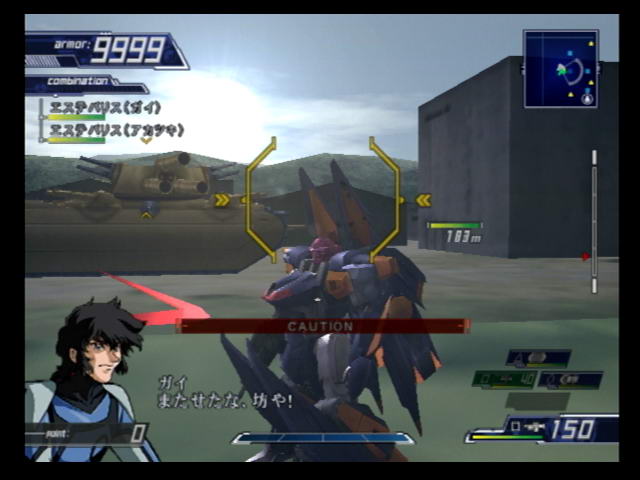
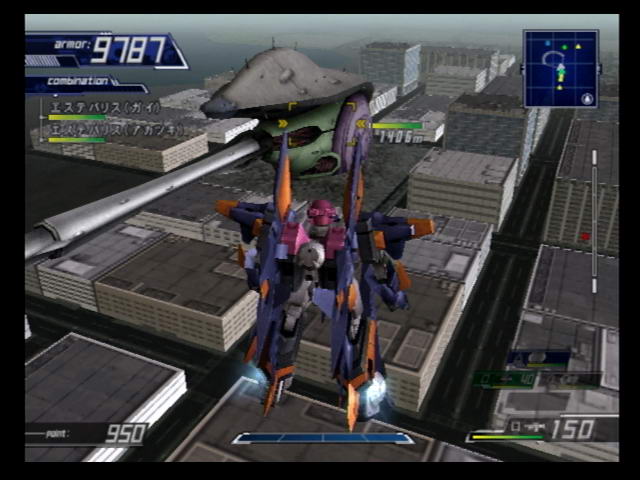
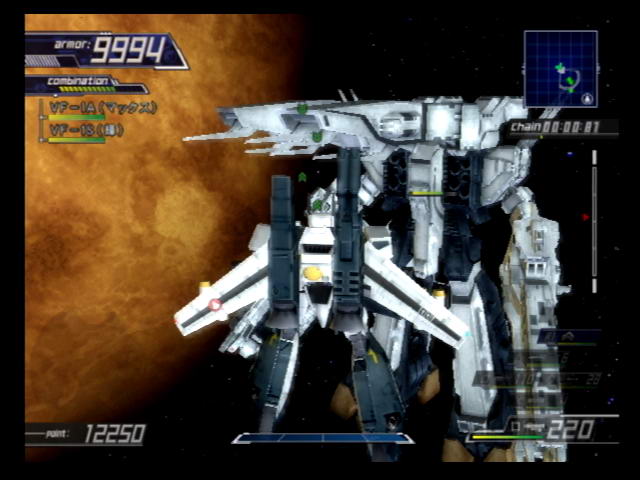
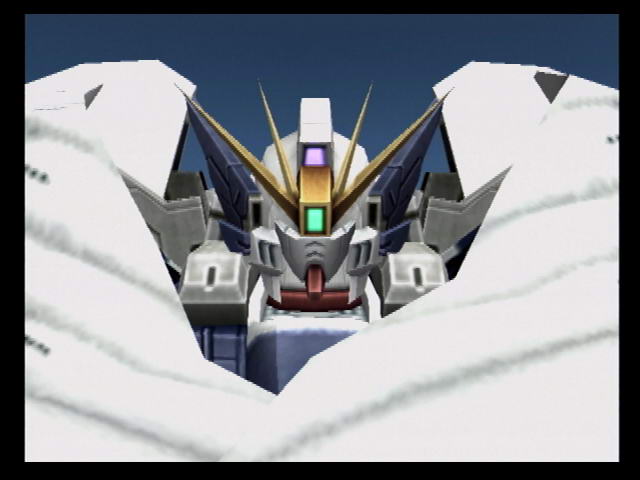
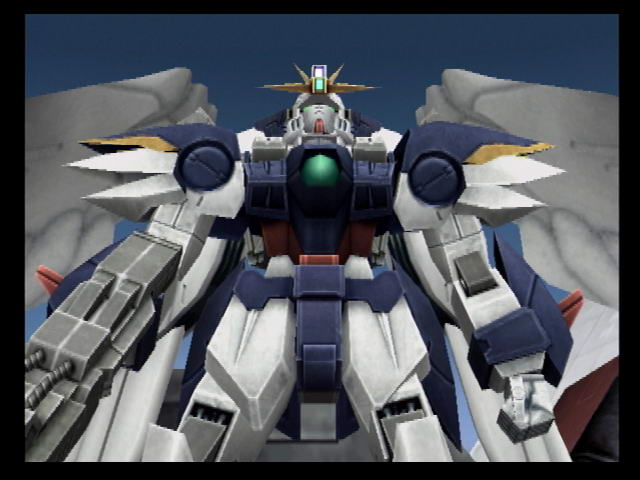
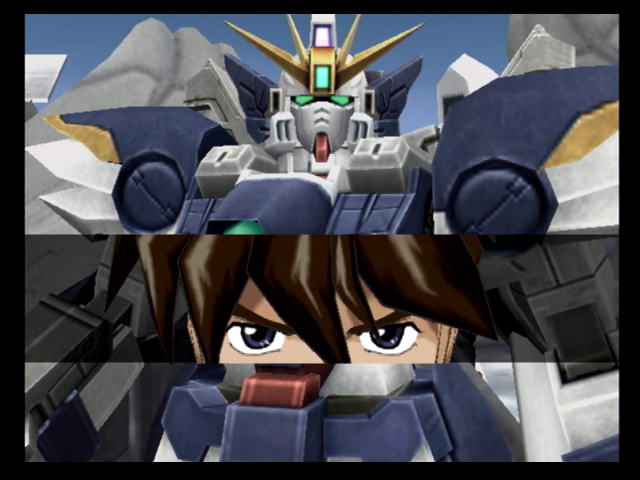
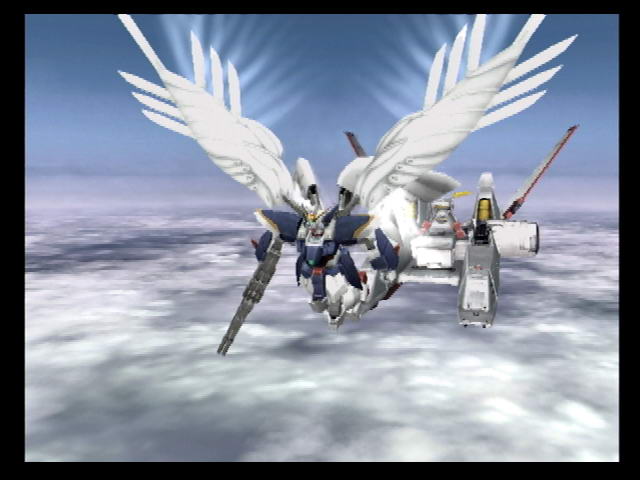
The
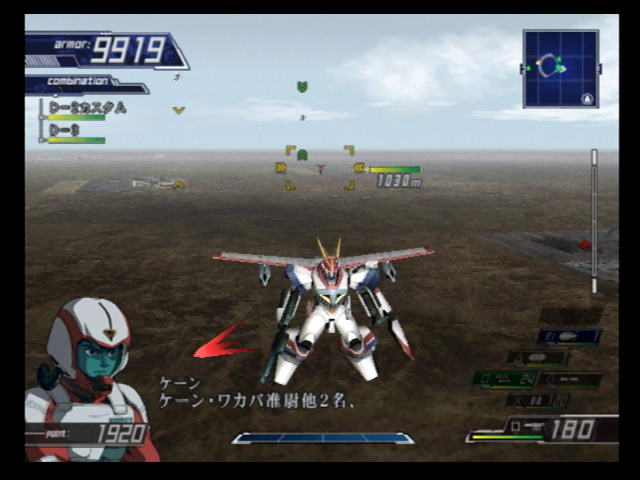
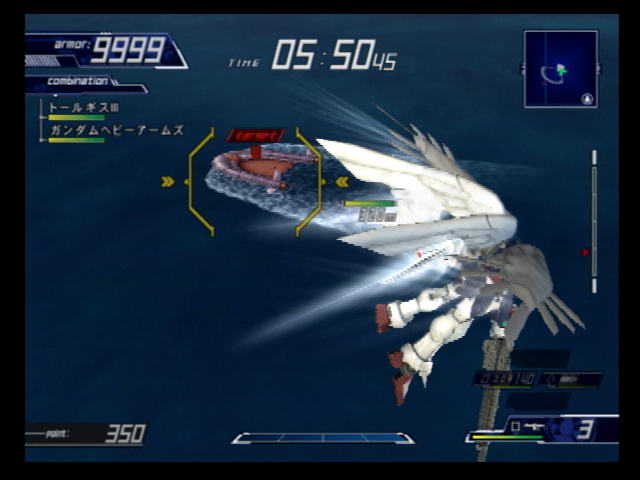
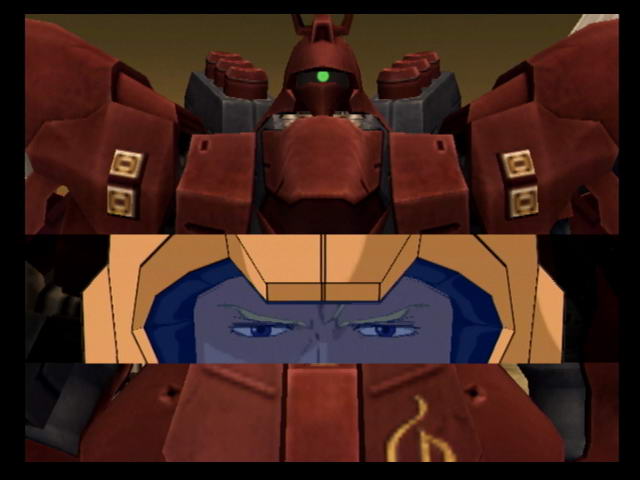
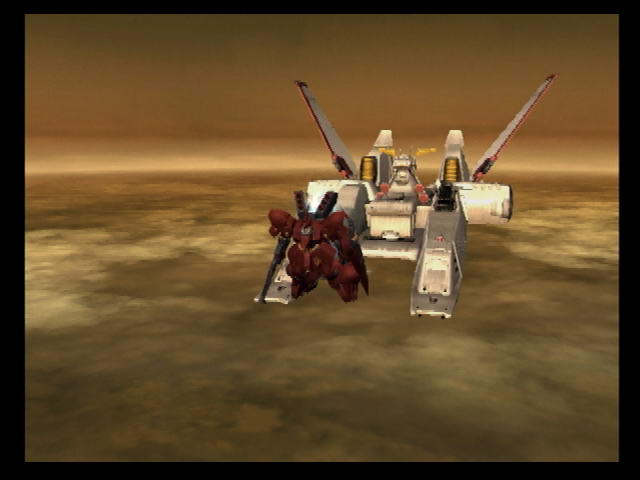
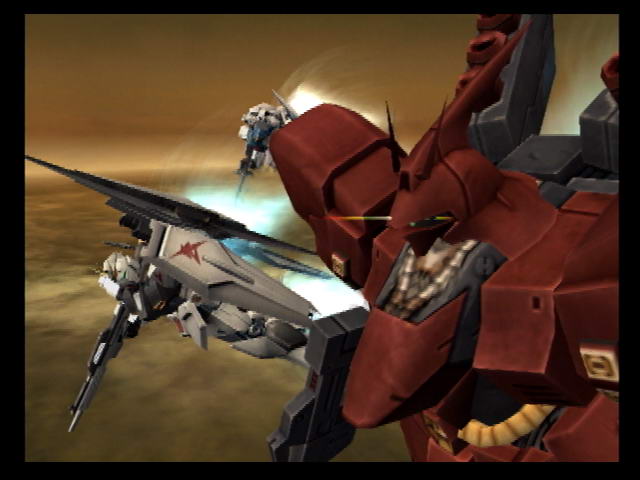
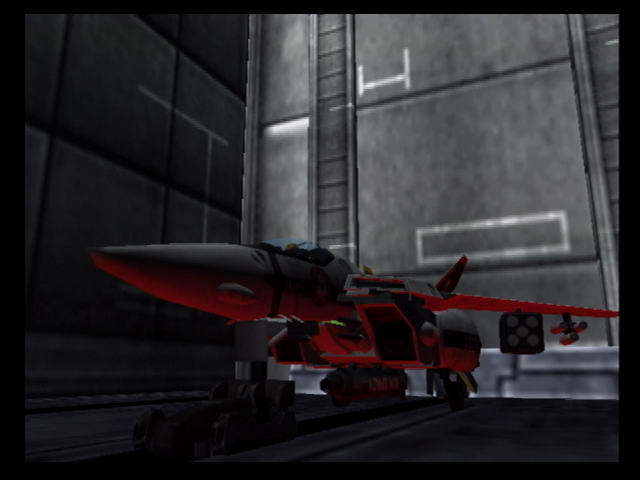
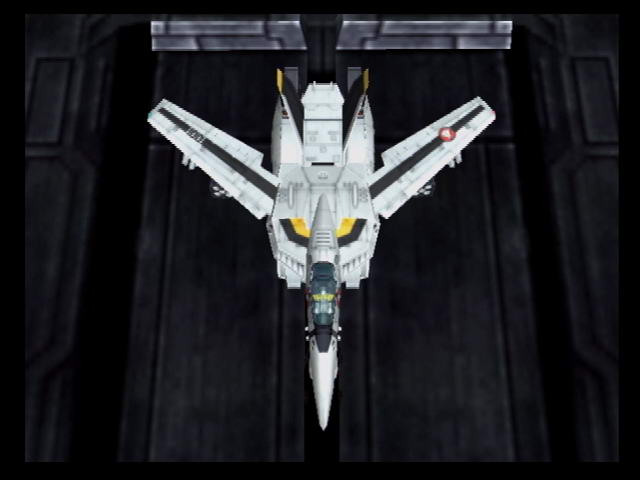
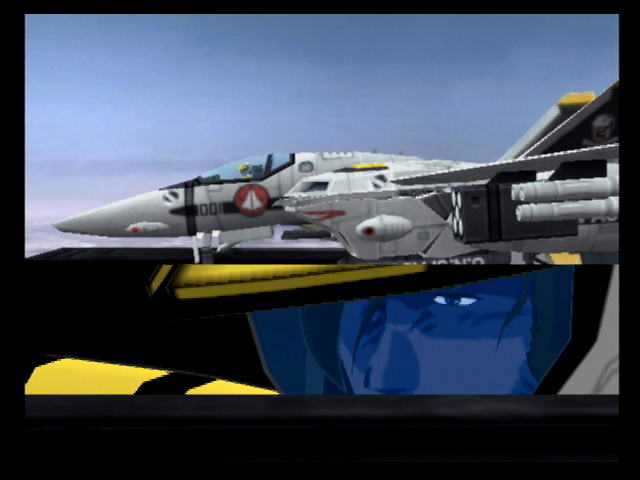
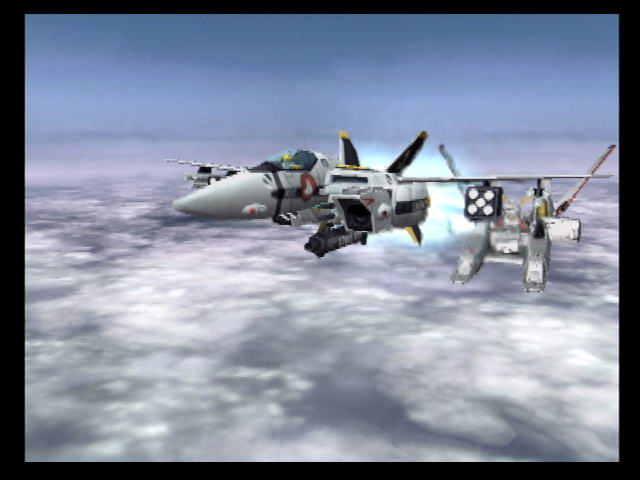
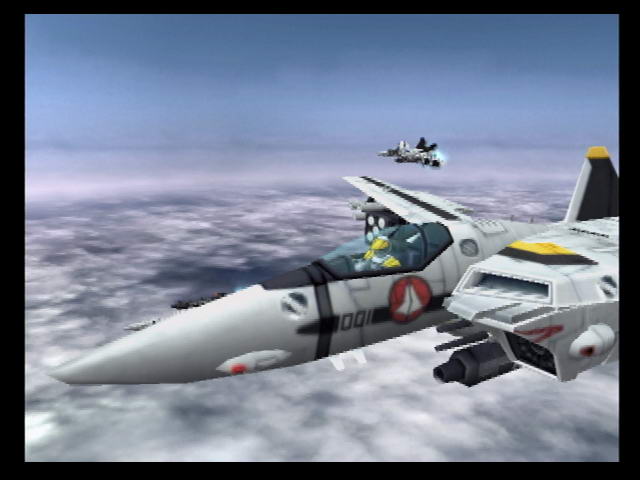
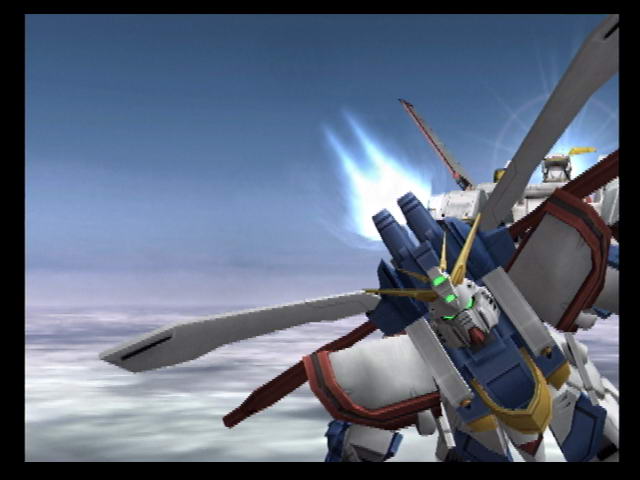
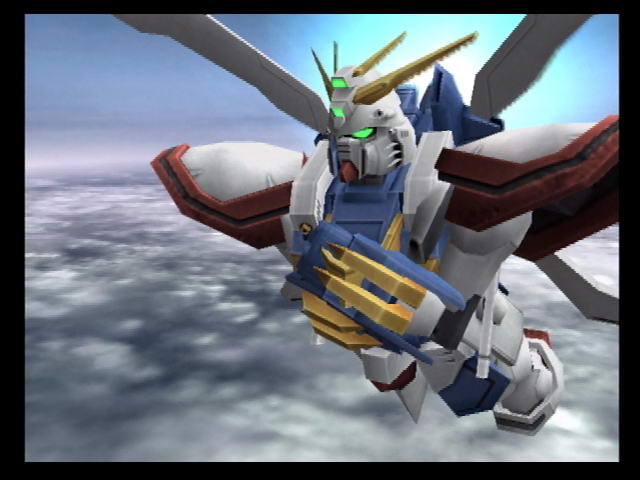
game engine and graphics have been majorly revamped, with the already pretty
mecha models given a new coat of gloss. The control scheme also received
a slight modification. Instead of being context-sensitive, melee attacks
are now assigned to the sub-weapon button, and holding the L1 button maps
up to six weapons/abilities to the buttons on the right side of the controller.
Unfortunately, this means that you have to give up half the control of your
mech since the boost, altitude control and targeting functions are temporarily
overwritten until you let go of the L1 button. It's a pretty big sacrifice,
but becomes tolerable with practice. This change also helped to make close-combat
units more useful as they were a bit underwhelming in the first game. The
alternate control scheme from the first game loses its reliability on target
distance in favor of using the L1 button to cycle between your armaments
ala ZOE. Although the weapon icons are now smaller, they're color coded
so you know which weapon has multi-target capabilities and there's a small
progress bar that shows how long it takes before they reload.
Other improvements
include the ability to use machine guns to shoot down incoming missiles,
the ability to dodge by dashing vertically, extended combos and Dynasty
Warriors-style weapon clashes. Mecha can also earn experience points which
count towards unlocking new combos and new forms. The first game's bi-polar
upgrade system was ditched for a more standard version, and there's now
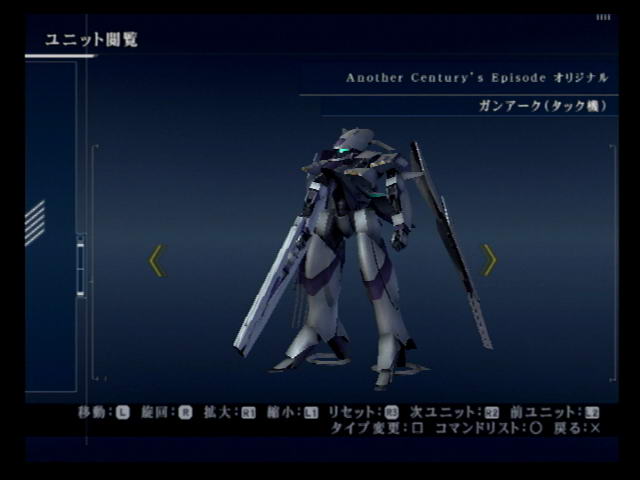
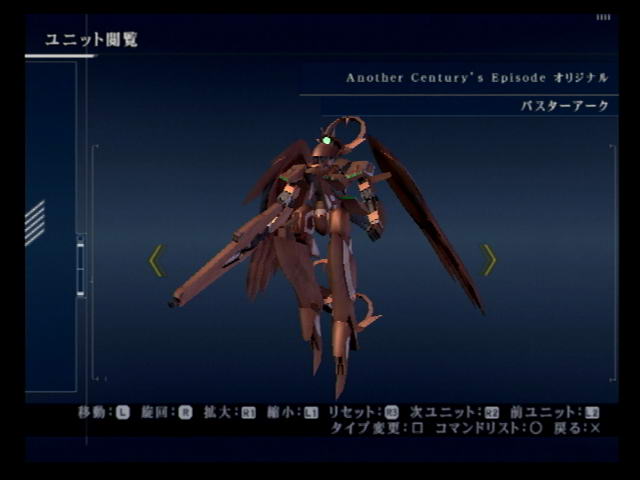
a 3D viewer that's lets you check out all the shiny ships and mecha in the
game as well as view the attack animations of the playable roster. During
intermissions you can also read news articles and emails from other characters
on the status of the world. It makes for pretty nice immersion, if you can
understand the moon language. Another much needed addition is the simulator
that allows you test out your new toys before using them in actual missions.
In the first game, you had the option of deploying wingmen. But for some
reason they never actually appear in the mission to assist you so the feature
was kinda useless. ACE2 fixed this and added an extra perk: when a special
gauge is filled by racking up kills (or having your armor in the red zone),
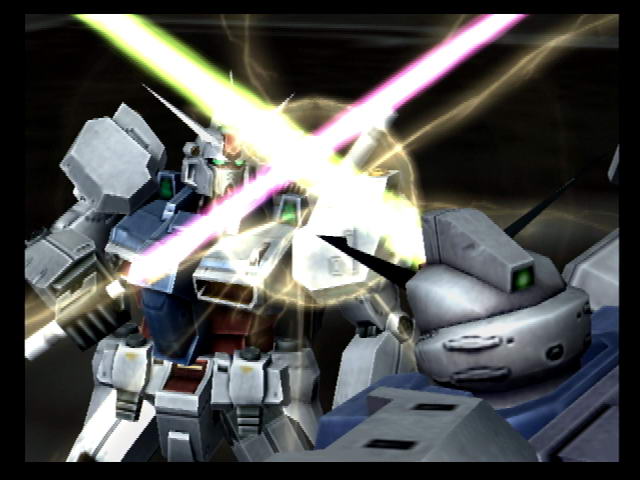
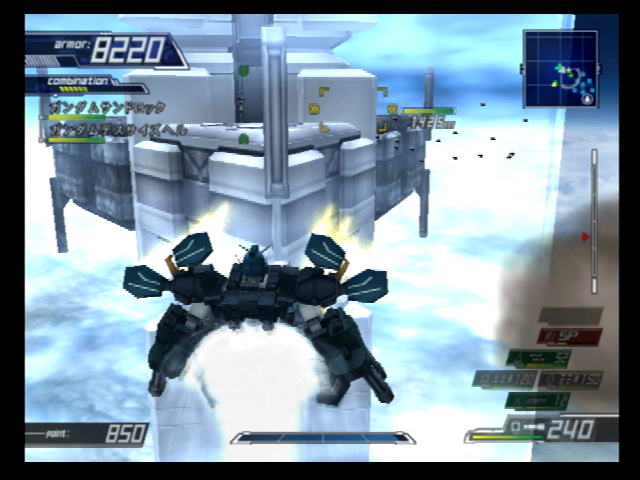
you can lock on to a target and press L2 to perform a combination attack.
You're then treated to a short cutscene of your squad blowing the crap out
of the poor recipient. Moreover, if you use certain combinations of mecha
from the same show you'll get special cutscenes that do even more damage.
Very useful for bosses early on.
When starting, the first thing veterans of the original will notice is
the exponentially increased ammo count. There's also an emphasis on multi-lock
missiles and charge attacks which only a handful of units could do in the
first game. This gives a false sense of security and tricks players into
thinking the game is easy until they realize the reason for all the extra
munitions. See, the enemies, especially the Zendrati from Macross, come
at you in swarms that never let up on the barrage of deadly fire.
Add to that the possible threat of a boss at the end and most people will
end up finishing a mission with less than half their armor, so not running
out of ammo so fast is a brief comfort. Further compounding the difficulty
is the limitations of the targeting system, which makes it cumbersome to
select the proper enemy while the rest pepper your back with bullets. This
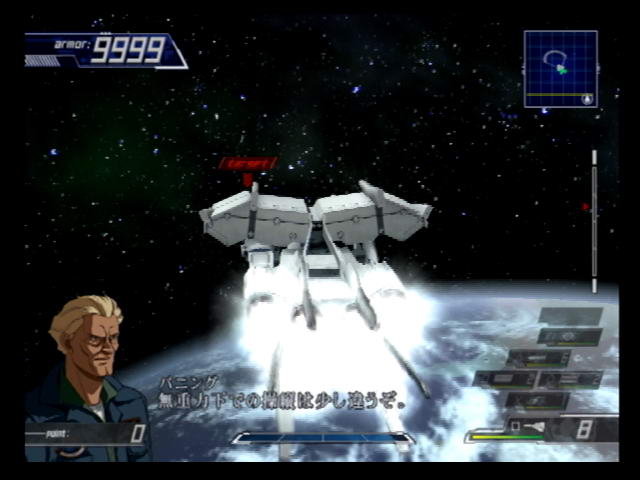
first becomes apparent when you tackle an
orbital elevator stretching high above the stratosphere. Since the towering
structure
is a huge mess of targets, the only way to target the enemies defending
it is to turn around completely and move away from the elevator, which puts
you right in the crosshairs of the long range cannons at the top of the
blasted construction. That was one of the very few times I ever had to rely
on the new items feature, which allows you to select a single one-time use
restorative or enhancement module to take with you on a mission.
Some mecha now have one or more extra forms which gives them modified
stats or new attacks. In the case of armor attachments, it's possible in
a few cases to purge the extra stuff during the mission with L3+R3, which
was reserved for special attacks or transformations in the first game. As
mentioned before, certain forms work only in either Earth missions or space
missions in keeping with the mostly accurate presentation of the mecha.
Speaking of presentation, the style and series interaction is much improved
over the first game. Whereas characters never appeared in cutscenes in ACE,
here they're rendered with nice looking, if somewhat bright, cel shading.
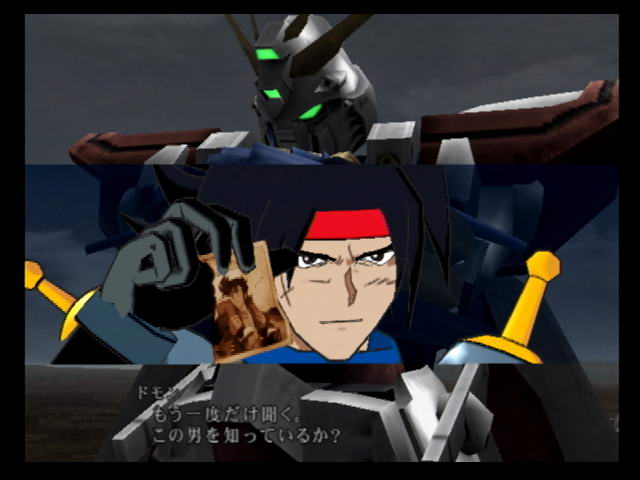
One of my favorite parts of playing Super Robot Wars games is seeing how
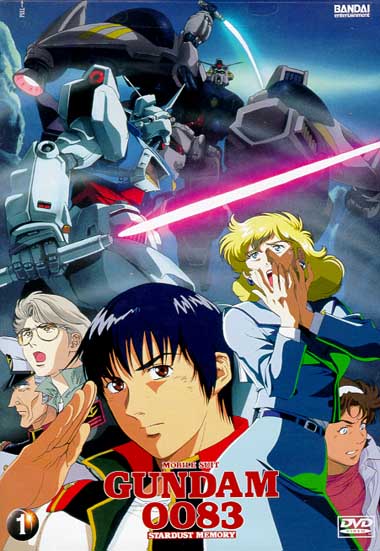
G Gundam gets introduced into the plot, which usually happens in one of
two ways: either the Devil Gundam pops up in the middle of a battle with
Domon chasing after it, or Domon interrupts a fight and starts asking everyone
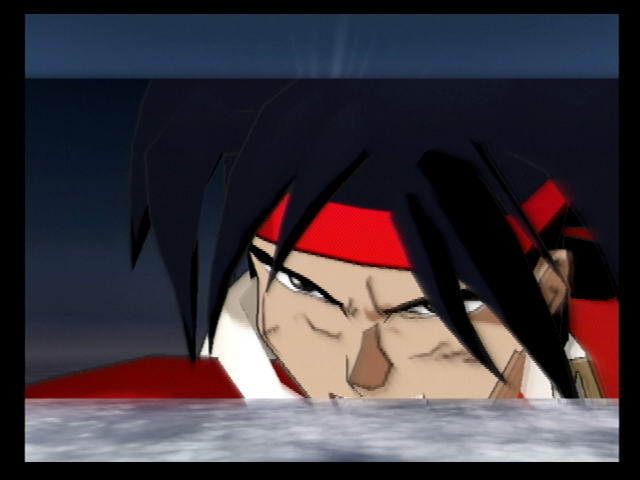
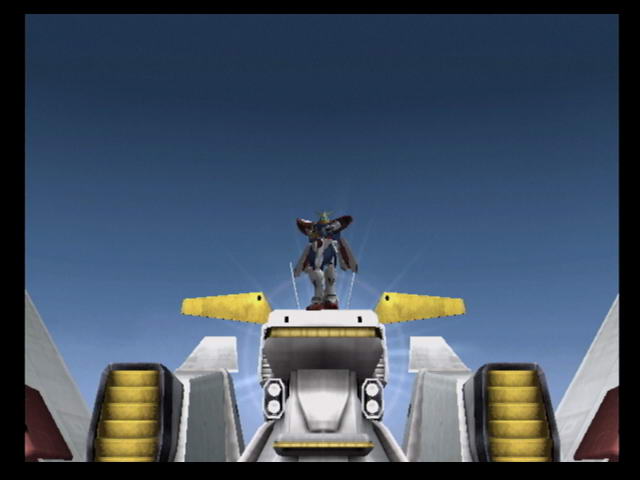
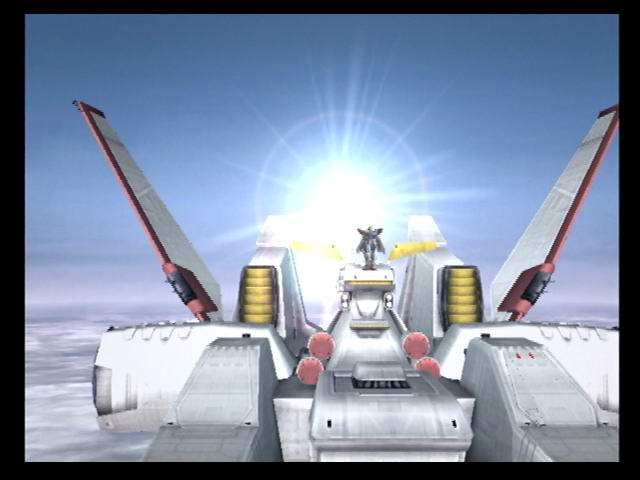
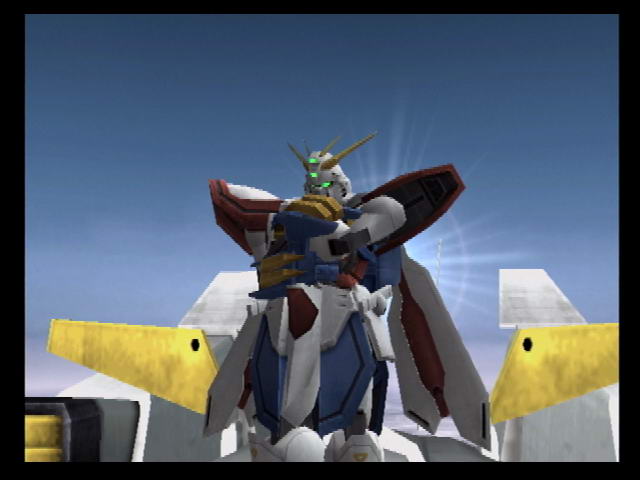
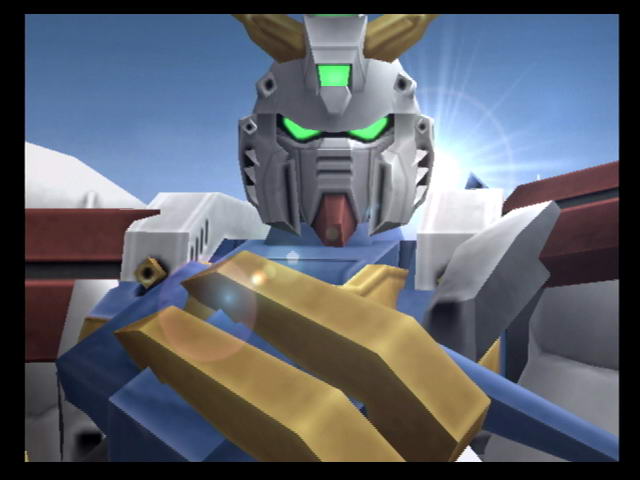
if they've seen his brother. The latter case is what happens in ACE2, where Domon casually destroys an enemy long range cannon used to bombard the player
during a mission then proceeds with the questioning, followed by him
incinerating the poor grunt who
tried to attack him with his God Finger attack.
ACE2 is not perfect, however. Despite having a whooping 72 missions,
about eighty percent of them fall under the same repetitious mold. There
are far too many missions where escorting and protecting a ship is either
a primary or secondary objective, and this is a recipe for frustration because
several secret objectives require keeping your ship's health above a certain
level or getting it to a destination under a time limit. It's one thing
to run out of ideas but it wouldn't have killed Banpresto and From Software
to reuse some of the more interesting missions from the first game. Another
sore point is that From Software hasn't addressed the issue of figuring
out your headings in space missions. It doesn't actually detract from the
gameplay, since most of the time you're automatically propelled in the direction
of your target or have a big 3D arrow pointing towards the objective. However,
there were a couple of secret objectives in the first game that required
finding a target at the edge of the map and destroying it before it disappears.
This was mostly a minor annoyance, but it's pretty glaring in ACE2. In
one mission, for example, the secret objective is to destroy several unmarked
ships on the map with no clue where to find them except a static 3D map
in the pause menu, which has no interest in telling you which direction
you're facing. It's bad enough when you're trying to squint your eyes against
the bland space backgrounds, but that particular stage's background is
very busy. The soundtrack also takes a bit of a dip because the opening
tracks of some of the shows don't really lend themselves well to exciting
battle themes. While this is really a matter of preference, I have to question
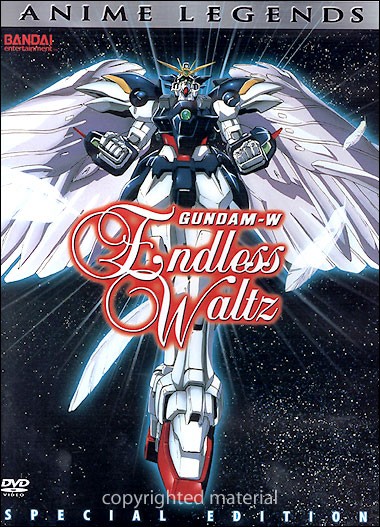
decisions like using a somewhat calm piano and violin piece like "White
Reflection" as Endless Waltz's theme while omitting the faster tempoed
and far more appropriate "Last Impression".
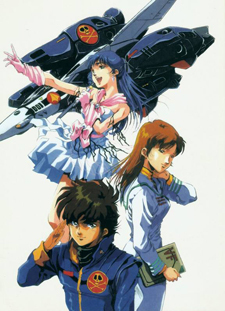
The biggest disappointment has to be the anti-climatic finale. The final
level is two back-to-back stages of blasting endless Zentradi waves followed
by a quick trip through the corridors of their capital ship to find the
Zentradi commander Bodolza and kill him...in a cutscene. Yes, we all know
that he didn't put up much resistance in the movie, but first of all, this
is a video game, and second, you fought Bodolza in both the Banpresto Macross
arcade shooter and the 3D Sega AM2 Macross game, so why not here? Has
From Software realized at the last minute that they focused too much on
the combat and couldn't do something creative for the last boss? A darn
shame.
Finishing the game once again opens up Free Mission mode and Extra Mission
1 & 2. They're joined by Extra Mission 3 and standalone duels against the
main mech(s) from each represented series. Extra Mission 3 is a survival
challenge where you take on endless hordes of Serpents (the grunt mecha
from Endless Waltz). Also, any mech with a full experience bar gives you
the option of turning off its limiter (for a price), giving it unlimited
ammo for most of its weapons. It kind of permanently breaks the game, but
it's still a lot of fun.
To capitalize on the popularity of the vocal tracks added to the third
game, ACE2 was re-released as a Special Vocal Version containing vocal
tracks for its series roster, but due to some convoluted licensing
issues the opening theme
"Glorious" was lost in the process. The two versions are identical
otherwise, so there's not much point to getting the new version if you've
played the original unless you REALLY like the soundtrack.