|
|
A History of Korean Gaming
|
|
시그마택 Sigmatec / 시엔아트 SiEn Art / 시엔정보통신 SiEn Information Communication
|

|
|
Founded:
|
June 1993
|
|
Status:
|
defunct (1998)
|
|
Key People:
|
이찬원 Lee Chanwon:
President
|
|
Website:
|
www.sienart.com (offline)
|
|
Profile:
|
|
Founded as Sigmatek Studio, this developer went to more frequent name changes than any other, to Sigmatek Entertainment to SiEn Arts and, finally, to SiEn Infocom. In 1996, SiEn started to expanded by creating a publishing division1, as well as an internet/multimedia division later that year2. In May 1997, the company announced their retreat from the game business to concentrate on homepage service, cancelling all their games in development, except for the RTS Cheonha Tongil3, which they eventually didn't finish, either.
The company mostly known as SiEn Art is kind of an unloved child among Korean gamers, it's hard to find anyone to fondly remember their games at all. Still, SiEn Art products are until today about the most readily available among games of their time.
|
|
|
이아스 (IAS) - PC-DOS (1994)
|
|

Cover
Sigmatek debuted with a vertical scrolling shmup rather typical for the genre except for an interesting secondary weapon used so specifically attack enemies' projectiles. The technical execution, hovewer, left much to be desired, mostly because of choppy scrolling and a very instable framerate.
|
|
|
|
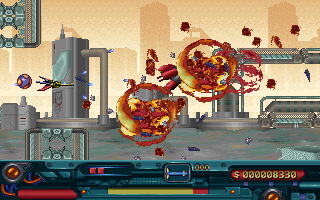
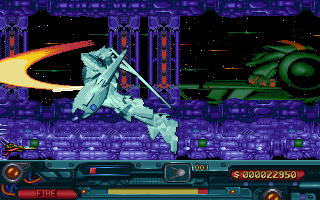
대혈전 (Daehyeoljeon): The Great Fighter - PC-DOS (May 1995)
|
|
Into the Sun (인투더썬): Projected Distruction - PC-DOS (July 1995)
|
|
비치바리볼 (Beach Volleyball) - PC-DOS (August 1995)
|

Advertisement
|
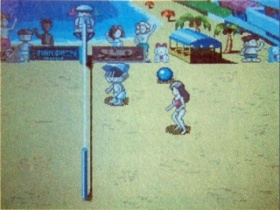
SiEn Art's only sports game also is the rarest of all their releases. There is the notion that it first and foremost was intended for play at one of the video game TV shows, with the actual retail release as a mere afterthough.
Beach Volleyball
|

Advertisement
|
|
|
|
메카닉워 (Mechanic War) - PC-DOS (October 1995)
|
|
티피의 모험 (Tipi-ui Moheom) - PC-DOS (1996)

Tipi-ui Moheom
|

Tipi-ui Moheom
|

Tipi-ui Moheom
|
|
Tipi-ui Moheom (Tipi's Adventure) appears as a gem that sticks out from the rest of SienArt's catalog, at least visually, thanks to the fact that the game relies on beautiful dot graphics. Rendering only shows its ugly head with the final boss, which is only recognizable as a dragon through its sillhouette.
The gameplay isn't too shabby, either. Controls are tight and responsive with only occasionally aggravating collision detection. The stages are wide and give room for exploration, but not to a confusing degree. Level design is a bit on the bastardly side, though, not rarely hiding important platforms behind the foreground and with plenty of invisible passages. The game is never so mean as to drive players mad while searching for the three colored gems and the statues they have to be inserted to in order to open up the doors that lead to each stage's boss. Even stage 6, which is covered over its full size by an irritating foreground wall pattern, is surprisingly intuitive to conquer. And then it's already over.
That's right, six stages and a final boss, that's it. Korean platformers always tend to be rather on the short side, but rarely is it as disappointing as in Tipi's Adventure. It wouldn't take a uniqe graphics template for each stage, but creating a few more challenges with the tiles at hand hardly would have been too much to ask. As it stands, Tipi-ui Moheom can't evade the aftertaste of being little more than a demo for what could have been a very good game.
|

Tipi-ui Moheom
|

Tipi-ui Moheom
|

Tipi-ui Moheom
|
|
|
|
바바리안 (Barbarian) - PC-DOS (1996)
|
|
멘터사이드 (Menticide) - PC-DOS (1996)
|
|
인디케이트 (Indicate) - PC-DOS (1997)
|
영혼의 검 (Yeonghon-ui Geom) (1994)
메카닉플라모델 (Mechanic Pla Model) (1994)
메다의 전설 (Meda-ui Jeonseol) (1995)
쓰리걸 (3 Girl) / Phantasy of Three Girl (1996)
최후의 기회 (Choehu-ui Gihoe) / Final Occasion (1996-1997)
로미오와 줄리엣 (Romeo & Juliet) (1996-1997)
천하통일 (Cheonha Tongil) (1996-1997)
|
References
1. Game Champ 3/1996, page 86
2. GameCom 11/1996, page 55
3. PC Champ 6/1997, page 94
|
A History of Korean Gaming
|
|