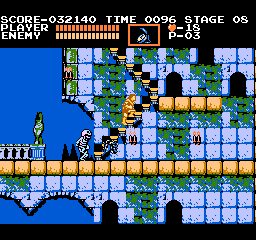
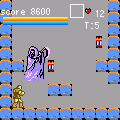
Here's an interesting Easter Egg from
the original Castlevania thanks to Rob Strangman! Beat the game once and
head to the second part of level two. Climb the stairs, get to the top of
the screen and jump on the first moving platform. A blinking treasure will
come out of the ground. Here's an interesting Easter Egg from
the original Castlevania thanks to Rob Strangman! Beat the game once and
head to the second part of level two. Climb the stairs, get to the top of
the screen and jump on the first moving platform. A blinking treasure will
come out of the ground. If you examine it closely, it's a Moai head! Devoted
Konami fans will recogize this Easter Island statue from the Gradius series,
which seems to be obsessed with them for some odd reason. The same secret is also
located in Castlevania Chronicles. If you examine it closely, it's a Moai head! Devoted
Konami fans will recogize this Easter Island statue from the Gradius series,
which seems to be obsessed with them for some odd reason. The same secret is also
located in Castlevania Chronicles.

Above is a picture of a backpack contributed by a reader Jean Greagor who won it off of eBay - and we have absolutely no clue what it is. It looks too high quality to be fan-made, although that color scheme certainly is pretty awful. Whatever it is, it's an amusing curiousity.
     
There are a number of unused items found in the ROM of the original Castlevania - most noteably a cross, a cupcake, and a love letter. Thanks to the Cutting Room Floor for this info.
Since Castlevania was rather popular back in the day, Konami farmed it out to other companies
to port it to other platforms. Naturally, the results were less than....good.
IBM PC (DOS)
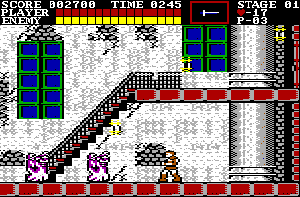
First off is the PC version. The game looked pretty similar, though the graphics looked
a bit crappier, for some reason. Unfortunately, the biggest flaw is that it's incredibly
jerky - animation, scrolling, everything lacks fluidity. What's more is if you don't have
an old perfectly compatable Adlib soundboard, all of the music and sound effects will
come through the PC Speaker. NOOOOOOOOOOOOOOOOOOOOOOOOO.
Amiga
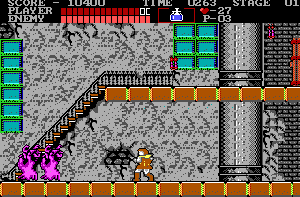
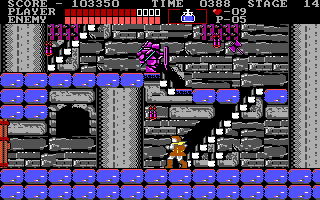
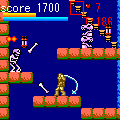
Next up is the Amiga version. This one actually looks pretty damn cool - almost all
of the graphics have been redrawn entirely, and extra details added. The enemy design is
somewhat questionable, however. The music, in Amiga
MOD format, is pretty decent too. Unfortunately, the stumbling block here is the controls.
There's considerable lag between when you hit the "attack" button and when your character
actually whips. And since the "up" key is used for jumping, to use special weapons, you
simply have to hold down the "attack" button for a second. Not very intuitive. Some enemy
patterns have been altered as well. There are a couple of amusing additions, such as
the high score screen, and you can actually jump on stairs. And for some reason, the song that plays when Simon first
enters the castle is the theme "Underground" from the Famicom Disk version of Castlevania -
which wasn't used at all in the American/European cartridge release. As a side bit of trivia,
this version was ported by Novotrade, who later made the Ecco the Dolphin games on the
Genesis. They then changed their name to Appaloosa and butchered the two PSX Contra games.
A special thanks to MrPerfect of Mr. P's Castlevania Realm for
the screenshots of the later levels - he had infinitely more patience than I, who quit in frustration around the second
level. All of the screenshots can be found here
Commodore 64
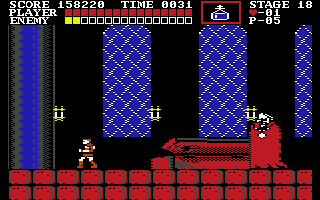
Then there's the Commodore 64 version. I have to admit I have a fetish for the C64 SID (the music chip)
so this version is cool just for the music. But the graphics are naturally awful (sub-NES quality)
and the gameplay rather slow and iffy as well (damn them and their one action button - in many ways
it suffers the same problem as the Amiga version.)
Vs. Castlevania
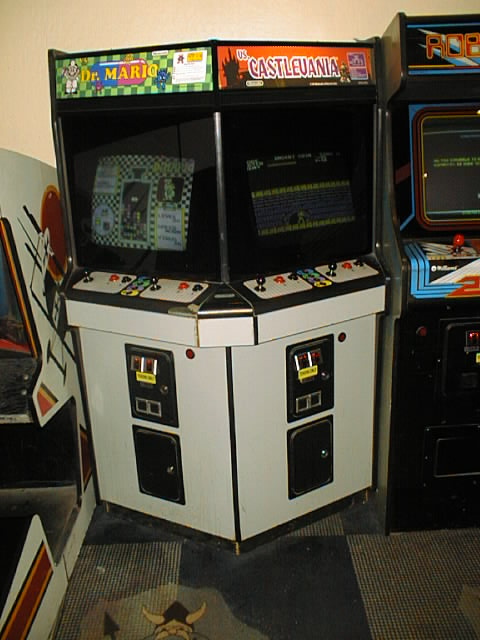
Nintendo had a system of arcade games known as the Vs. series. It basically amounted to two
cabinets with two monitors linked together, running NES games, so people could play two player games on
different screens. Games like Super Mario Bros. and Dr. Mario were released like this,
as was Castlevania. The odd thing was that the two player mode was alternating, so there's wasn't much point to the two screens for this particular game. The only gameplay difference are the variable difficulty levels. There's the standard mode, which is the same as the regular NES Castlevania game except enemies do more damage. The Hard mode does
even more damage - at some points, two hits will kill you. There are also minor palette differences, most likely
due to the differences between a TV screen and an arcade monitor. Thanks to Morgoth Galaxius for this info.
Playchoice 10
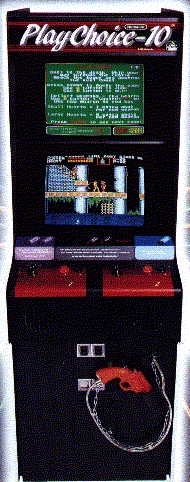
Castlevania was also one of the many games that made it on Nintendo's Playchoice 10 system
(where you put in a quarter and got to play a selection of NES games for a limited amount of
time.) It was the same as the NES game, just with the same slight color differences of the Vs. game.
Castlevania on Cellphones
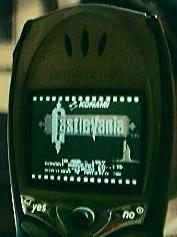
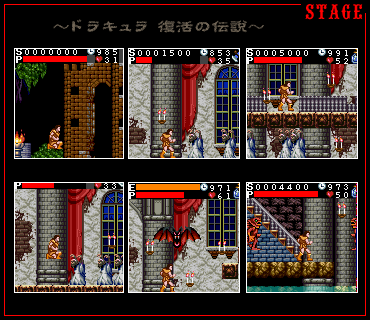
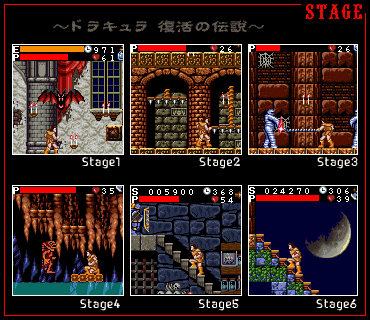
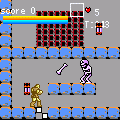
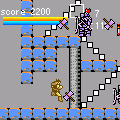
Castlevania also made it onto cell phones recently in Japan. Unfortunately, it doesn't seem to be available anywhere else
at the moment. They also released an updated version more recently (the bottom pictures.)
|